Make the pie dough. Wrap in plastic wrap and refrigerate for at least 30 minutes or for up to 24 hours. If frozen, allow the dough to thaw completely.: As the dough chills, you will notice the butter firm up and the gluten relax, which helps when you roll it out later; a cold dough gives you flakier layers in the finished crust. The surface should feel cool to the touch and slightly springy after refrigeration. Common mistake to avoid is working with dough that is too warm, which will tear and lose its structure; if that happens, pop it back into the fridge for 20 to 30 minutes before proceeding. The tactile cue is key, aim for a dough that yields under gentle pressure but does not stick excessively to your fingers.
In a large skillet, heat the oil over medium-high heat. Add the onions and cook until browned all over, stirring frequently. About 30 to 40 minutes. Set aside.: Early on the onions will sizzle and smell sharp, then gradually they soften and turn translucent before taking on golden, then deep brown edges; this transformation brings a sweet, caramel aroma that fills the kitchen. As the onions brown, stir often to promote even color and prevent burnt bits, adjust heat down if the pan smokes or dark spots appear too quickly. A frequent error is rushing the caramelization with high heat, which yields bitter edges; patience and steady stirring produce glossy, jammy onions with rich flavor.
Preheat oven to 400°F.: When the oven approaches this temperature, you should feel a steady, dry warmth from the vent and hear the faint hum of the fan as it holds heat. Preheating ensures the crust begins to set and brown immediately when it hits the oven, giving you a crisp edge and a properly baked interior. Avoid placing an unheated baking sheet into a cold oven because the crust may become soggy and overbaked; always wait until the oven reads the target temperature.
On a lightly floured surface roll out the dough to a circular shape about 10 to 12 inches in diameter. Add more flour to the surface as needed to prevent sticking.: Rolling should feel smooth, with the dough releasing easily as you turn it; the surface should show faint flour dusting without becoming dry. Rotate and lift the dough frequently to ensure it does not cling, and use light, even pressure to keep the thickness uniform. A common misstep is over-flouring, which can make the crust dry; if the dough resists, chill briefly and then continue rolling.
Gently transfer the dough to a pizza stone or baking sheet. (Before doing this, you can sprinkle the stone or baking sheet with semolina flour or fine cornmeal. This isn't completely necessary, but helps to ensure the dough won't stick to the stone).: Moving the dough is delicate work, you should feel a slight give as it settles onto the baking surface; if you hear dragging or see tears, support the dough with your hands or a rolling pin beneath as you lift. The semolina adds tiny gritty pockets that prevent sticking and crisp the bottom, giving a pleasing texture contrast. Prevent tearing by using slow, steady motions and avoid stretching the edges out of shape during transfer.
Add the caramelized onions in the center of the dough, leaving about 1 to 2 inches of dough around the edges. Place the cheese over the onions, and then arrange the tomato slices over the cheese (you may not use all of the tomato slices).: As you layer, the smell will shift from sweet onion to a more complex, layered scent as the Gruyere cheese and tomato combine; the cheese creates a cushion that melts and holds the tomatoes, preventing soggy spots directly on the dough. Arrange the slices so they overlap slightly for an even cook and an attractive top. A common issue is overcrowding the center which traps excess juice; leave the margin as instructed so the crust can fold and crisp.
Liberally sprinkle salt and pepper over all of the tomatoes and then sprinkle on the chopped thyme.: Seasoning here awakens the tomato flavor, drawing out juices and elevating the savory notes of the Gruyere and caramelized onion . The aroma of chopped thyme will add herbaceous top notes that brighten the overall profile. Be mindful not to over-salt, especially if your cheese is on the saltier side; taste a small scrap of tomato with a little cheese beforehand if you are unsure.
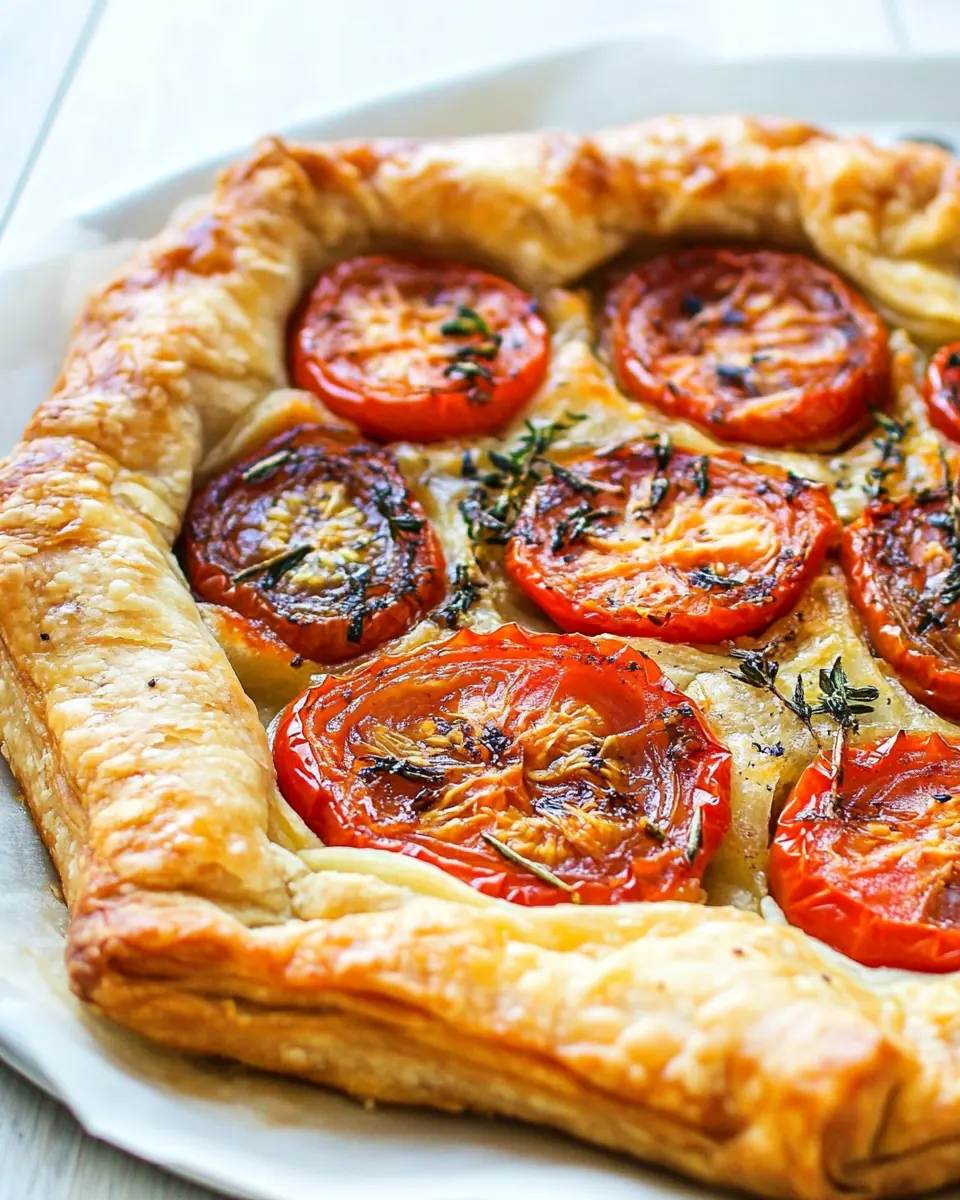
Use your hands to gently pull the edges of the dough toward the center of the galette. Bring the sides of the dough so about 2/3 of the tomatoes are visible.: Folding the edges creates that signature rustic look while trapping some filling juices, and you will hear a soft, papery rustle as the dough is manipulated. The crust should overlap the filling snugly, creating a rim that browns and crisps; handle the dough gently to avoid tearing. One mistake is folding too tightly which can squeeze juices out and cause leaks; aim for a loose, graceful fold that still frames the filling.
In a small bowl, mix the lightly beaten egg with 1 tablespoon of water. Brush the egg wash all over the top portion of the dough.: The egg wash will give you a glossy, honeyed brown crust and help the folded edges develop an even color. Brushing should be done with a light hand so the wash does not drip onto the filling where it can create gummy spots. If you skip this step the crust will still bake, but it will lack that deep, appetizing sheen; avoid pooling the wash in crevices to prevent uneven browning.
Bake for 35 to 40 minutes, or until the dough is lightly browned and the interior is bubbly. Use a couple of flat spatulas to gently transfer the galette from the stone (or baking sheet) to a cutting board. Allow to rest for 15 minutes before slicing. Serve warm or at room temperature.: As the galette bakes you will hear a gentle crackle as the crust browns and see steam rise from the bubbling interior, releasing savory, baked aromas. The edges should be a golden brown with flecks of deeper color where the butter has caramelized, and the center should bubble slightly where the cheese and tomato juices mingle. Avoid cutting too soon; resting helps the filling set so slices hold together. A common error is underbaking, which leaves the center floppy; ensure the crust is firm and the center is visibly bubbling for a properly baked galette.