Preheat the oven to 425℉ (220℃).: When you step into the kitchen you should notice the oven hum coming up to temperature, a dry warmth that promises a crisp top. Preheating ensures the casserole will start browning immediately rather than steaming, which preserves that golden crust. If the oven is not hot enough the top will take longer to brown and the interior may dry slightly. A common mistake is skipping preheat, which leads to uneven baking and soggy topping. If your oven runs hot, reduce to 410 to 415 to prevent overbrowning.
Cook the noodles, slightly undercooking them. I cooked for 7 minutes instead of 8 stated on the package.: You should feel a tender bite when you test the pasta , not mushy, because it will finish cooking in the oven while absorbing sauce. The pot will give off starchy steam and the water will look cloudy, which helps the sauce cling later. Overcooking here is the most common misstep, creating a gummy casserole; drain promptly and rinse only if you prefer to halt cooking immediately. Reserve a cup of cooking water if you want to adjust sauciness later.
Add butter to a large pan and melt on medium heat. Add mushrooms and onions, sauté for 6-8 minutes, stirring occasionally, until the veggies soften. Add Italian seasoning and garlic powder, sauté for one more minute.: As the butter melts it should foam slightly and fill the pan with a nutty aroma. Add the sliced mushrooms and diced onion so they sizzle and brown, releasing savory juices that create a deeply flavored base. Stirring occasionally allows odd edges to caramelize without steaming the vegetables. The seasoning added at the end brightens the mixture; garlic powder melds smoothly and avoids raw sharpness. A common error is cranking the heat too high, which scorches the butter and leaves a bitter note, so keep the pan at medium and adjust as needed.
Add cassava flour and stir until well combined.: The flour will coat the softened vegetables and absorb fat, forming a roux like layer that will thicken the sauce once liquid is added. You will feel the texture change as the pan becomes slightly pasty and the aroma shifts from raw starch to warm, cooked notes. Stir thoroughly to avoid lumps and ensure even thickening later. If you add liquid too quickly without mixing, you will get clumps, so take a moment to integrate it fully.
Add the stock, milk and cream cheese and cook stirring, until the sauce thickens and becomes creamy.: Pouring in the warm or room temperature stock and milk should create a gentle hiss as the liquid meets the hot pan, and the mixture will begin to loosen then slowly thicken. As you fold in the softened cream cheese , the sauce will transform into a glossy, clingy coating that tastes rich and slightly tangy. Keep the heat moderate and stir so the sauce does not stick or separate. If the sauce seems too thin after thickening, simmer briefly to concentrate it; if too thick, whisk in a splash of stock or milk. A key mistake is boiling vigorously which can break the dairy, so maintain a gentle simmer.
Turn off the heat. Taste and add more salt and pepper if needed. Add frozen peas, stir to combine. No need to cook the sauce with the peas, they will cook in the oven, this way it will be fresh and have a nice green color.: With the pan off the heat the sauce will settle and become silkier, making it easier to assess seasoning. Stir in the frozen peas , which will release a faint cold burst and a bright green streak through the sauce. They will finish cooking in the oven, preserving texture and color, so there is no need to pre cook them. The common mistake here is over salting before tasting, especially if your canned tuna or stock is already salty; always taste first and adjust sparingly.
Add cooked pasta and drained tuna to the pan and mix everything together.: The warm sauce will cling to the slightly underdone pasta , coating each piece so you can see a glossy sheen. Flaked tuna folded in should distribute in visible ribbons, not disappear into the sauce. Mix gently to avoid breaking the pasta or over shredding the tuna . A common misstep is stirring too vigorously which can make the casserole mushy; fold with care so textures remain distinct.
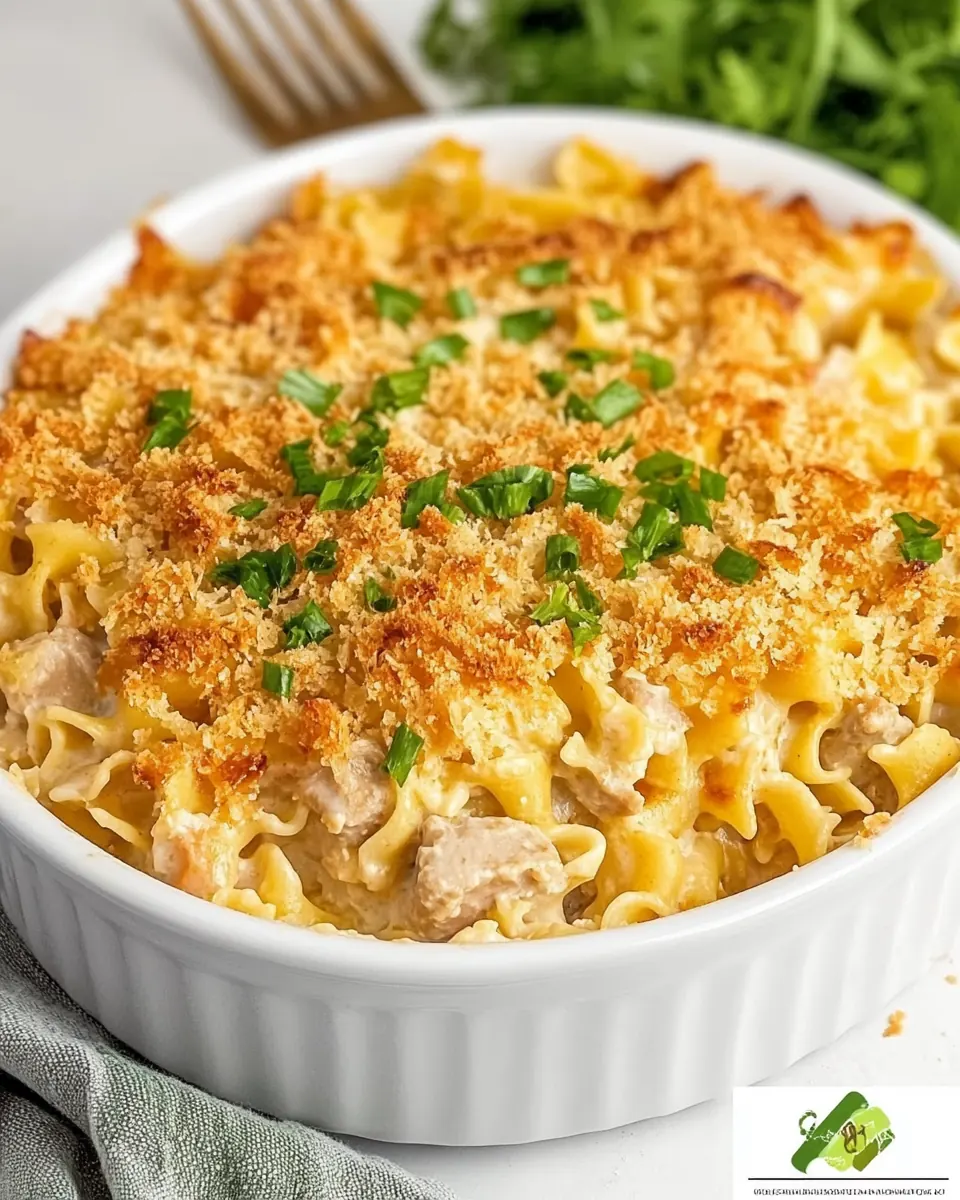
Transfer the mixture to the 9×13-inch baking dish, top with grated cheddar cheese, parmesan and optional gluten-free breadcrumbs.: Spoon the mixture into the baking dish so it sits level, leaving a little space at the edges for bubbling. Scatter the grated cheddar and parmesan evenly so they melt uniformly and the breadcrumbs form a delicate crust. The top should glisten and look well covered; pockets without cheese may dry out. If you add breadcrumbs, toss them with a tiny drizzle of melted butter to encourage golden browning. Avoid piling too much topping in one area, which can burn while other parts remain pale.
Bake in the preheated oven until the cheese is bubbly, about 15 to 20 minutes.: As the casserole bakes you will hear the gentle bubbling and smell the melted cheese taking on a roasted, nutty scent. The edges should be bubbling and the top a warm golden brown when it is ready. Baking ensures the pasta finishes cooking and the flavors marry under gentle heat. A common error is leaving it in too long for a dry interior, so check at the 15 minute mark and pull when the top is attractively browned and bubbling. Let it rest for a few minutes before serving so the sauce firms slightly for cleaner portions.