Preheat the oven to 350 degrees F. In a large bowl whisk together the flour, cornmeal, sugar, baking powder and salt.: As the oven heats you will notice a faint warm scent of electronics and insulation settling into the kitchen air, which signals that your baking environment is consistent. Ensuring the oven reaches the correct temperature before the batter goes in gives the cake its initial oven spring, creating a light crumb instead of a dense loaf. A common mistake is starting with a cold oven which causes uneven rise and a gummy center. If your oven runs hot or cool, use an oven thermometer to confirm accuracy.
In a smaller bowl, whisk together the milk, eggs, vanilla paste and extract. Add the wet ingredients to the dry and stir until just combined, then stir in the melted butter until combined. Spray a 9-inch springform pan with nonstick spray and pour the batter in the pan.: Right away you will see the mixture take on a uniform, pale tone with little specks from the cornmeal . Whisking aerates these dry ingredients, distributing the leavening so the cake rises evenly and preventing pockets of baking powder which can leave bitter spots. If you skip proper whisking, the rise may be uneven and the texture inconsistent, so take time to incorporate until the mixture looks homogeneous.
To make the crumb topping, whisk together the sugar, cinnamon, salt and melted butter until combined. Whisk for a good minute or two until the sugar begins to dissolve, then use a wooden spoon to stir in the flour. The mixture will be crumb-like and dry. Almost like a sludge or paste. This is what you want! Sprinkle the crumb on top of the cake.: The wet mixture should become glossy and slightly thicker, with the vanilla flecks visible in the liquid. This combination infuses aroma and binds the batter, and whisking ensures the eggs break up and blend fully, which contributes to an even crumb. A common pitfall is under whisking, which can leave streaks of egg white that affect texture, so whisk until smooth and uniform.
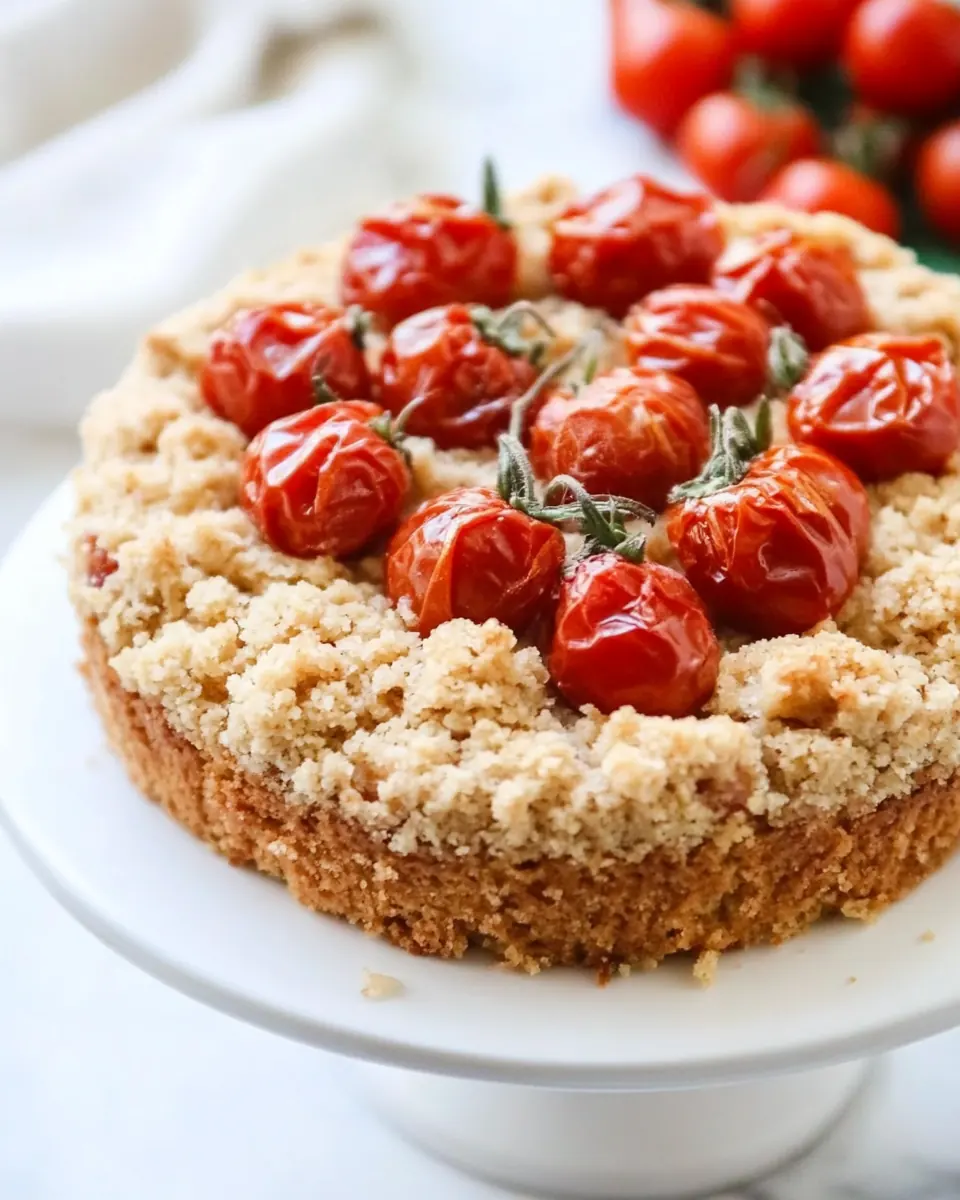
Bake the cake for 40 to 45 minutes or until a toothpick inserted in the center comes out clean. Allow the cake to cool before serving, then serve with the candied tomatoes and whipped cream.: At this stage, after the wet hits the dry, the batter will look slightly lumpy and moist, not glossy. Gently folding prevents developing excess gluten, which would make the cake tough, and the final addition of slightly cooled melted butter adds shine and richness. Overmixing is the most frequent error here, so stop when the streaks of flour disappear and the batter looks cohesive.
Preheat the oven to 325 degrees F.: Pouring the batter evenly into the prepared pan gives consistent thickness and even baking. You should see the batter settle into a smooth top; if it pools in one area the cake will bake unevenly. A simple trick is to tap the pan gently on the counter to release any large air pockets. Avoid overfilling, as the cake needs room to rise without spilling over.
Cover a baking sheet with a piece of parchment paper and place the quartered tomatoes on top. Sprinkle the sugar on the tomatoes 1 tablespoon at a time, making sure to coat each tomato (and using more if necessary!). After coating I like to push them around a bit so they are almost sitting in a bed of sugar. Roast the tomatoes for 25 to 30 minutes (I do this while making the cake) then remove the pan and allow them to cool completely.: This mixture will become glossy and slightly thick as the sugar begins to dissolve into the warm butter. The aroma of brown sugar and cinnamon will intensify, signaling that the topping is ready. If the sugar does not begin to dissolve, the crumb may be grainy and fail to clump; whisk for a minute or two until it integrates slightly.
Whisk for a good minute or two until the sugar begins to dissolve, then use a wooden spoon to stir in the flour: As you work the flour into the buttery sugar, the mixture will transform into a crumb like, slightly dry paste with loose clusters. That texture is desirable because it bakes into crunchy pockets while leaving tender crumbs beneath. A common mistake is adding too much liquid at this stage, which results in a paste that will not crisp properly; keep the consistency crumbly.
The mixture will be crumb like and dry: You want the topping to hold light clumps rather than forming a batter, because the dry clusters will brown and crisp in the oven creating the signature crumb texture. Pressing the mixture will allow you to test it, but avoid compacting the crumb into a single sheet, as that reduces the contrast between cake and topping. If the crumb seems too loose, a brief chill helps it clump slightly before topping the cake.
Almost like a sludge or paste: Despite this odd description, you should aim for small clumps that are moist enough to hold together when pinched, yet still fragile. The smell will be buttery with warm sugar notes, and visually you'll see light specks of cinnamon dispersed throughout. If the topping looks oily and flat, you likely added too much melted butter ; fold in a little more flour to restore structure.
This is what you want: The right crumb will bake into golden pockets that offer crunch and caramelization. Trust this texture because it delivers the contrast that elevates the cake. A troubleshooting pointer is to reserve some crumb aside to scatter mid bake if you want extra crispness, but generally the prepared amount is balanced for texture and flavor.
Sprinkle the crumb on top of the cake: As you scatter the crumb, think of creating an even, rustic blanket rather than a smooth sheet, letting some pockets show through. The crumb will sink slightly during baking and then crisp at the edges, giving a collage of textures. A common error is packing the crumb down which prevents it from crisping; instead, lightly distribute for maximum contrast.
Bake the cake for 40 to 45 minutes or until a toothpick inserted in the center comes out clean: During baking you'll notice the top turn golden, the edges pulling away slightly from the pan, and a warm, sweet aroma filling the kitchen. A clean toothpick indicates set crumb; if wet batter clings you need additional time. Overbaking will dry the cake, so check at the lower end of the window and trust visual cues like even browning and a gentle spring when touched.
Allow the cake to cool before serving, then serve with the candied tomatoes and whipped cream: Cooling lets the crumb set and prevents the topping from sliding off when sliced. The cake will still be slightly warm which pairs beautifully with chilled whipped cream and the sticky tomatoes. A frequent misstep is slicing too soon, which leads to a collapsed crumb and messy presentation, so wait until the cake is mostly cooled.
Preheat the oven to 325 degrees F: Lowering the oven for the tomatoes ensures they slow roast and concentrate sugars without shriveling too quickly. The lower heat lets them release juices and caramelize gently, creating glossy, jam like pieces. If you roast at higher temperatures the tomatoes can split and burn rather than candy.
Cover a baking sheet with a piece of parchment paper and place the quartered tomatoes on top: Arranging the quartered cherry tomatoes cut side up helps them hold a small pool of sugar and juice as they roast, and the parchment prevents sticking while making cleanup easy. Spread them evenly so air circulates and they roast uniformly. Crowding the pan will steam the tomatoes instead of caramelizing them.
Sprinkle the sugar on the tomatoes 1 tablespoon at a time, making sure to coat each tomato: Adding the sugar gradually allows you to control coverage so each tomato is lightly coated and not buried. The sugar draws moisture out as it melts, creating a syrupy coating that glazes the tomatoes during roasting. Too much sugar at once can cause clumps that burn, so distribute carefully and press lightly if needed to ensure contact.
After coating I like to push them around a bit so they are almost sitting in a bed of sugar: This technique ensures even contact between sugar and tomato surfaces, helping the tomatoes roast into little sugar pools that become intensely flavored. The gentle movement also helps small tomatoes nestle so their juices mingle, amplifying the final syrup. Avoid overhandling, which can bruise the tomatoes and make them release too much liquid.
Roast the tomatoes for 25 to 30 minutes then remove the pan and allow them to cool completely: You will see the tomatoes collapse slightly and develop edges of deepened color, and the kitchen will smell like concentrated tomato jam with caramel notes. Cooling is essential because the syrup firms up and the tomatoes finish attaining a candy like texture. A common error is serving them while still hot which makes them too runny on the plate; cool fully for the best presentation and texture.