Cut the onion and the red bell pepper into short strips or slivers.: The first sensory clue is the sound of the knife as it moves through the onion and red bell pepper , a crisp, satisfying rhythm that tells you you are prepping well. Uniform strips ensure even cooking, so take a moment to slice thoughtfully, and you will notice more consistent caramelization and char during sautéing. Mistakes to avoid include cutting uneven pieces which can lead to some pieces burning while others remain undercooked, so keep a steady pace and a sharp knife.
Heat 2 tsp. oil in a large heavy frying pan over medium-high heat, add the onions and cook until onion is starting to brown, about 5 minutes.: When the olive oil shimmers, add the sliced onion and listen for a gentle sizzle, that sound means the pan is hot enough to start browning. As the minutes pass you will smell sweet, nutty aromas and see edges pick up golden color, which builds a flavorful base. Stir intermittently to promote even browning, and watch closely around the five minute mark so the onion caramelizes without burning. A common mistake is using too low heat, which causes the onion to sweat and become pale instead of developing those deeper flavors.
Remove the onion to a bowl.: After the onion has started to brown, its aroma will be rich and slightly caramelized, a sign it is ready to rest. Transferring it to a bowl prevents it from continuing to cook while you work on other elements. This pause helps preserve texture and prevents overcooking, which would make the onion lose its pleasant chew. Avoid leaving it in the hot pan where residual heat can push it past the sweet spot into bitterness.
Add another 2 tsp. olive oil, add the bell pepper and cook until done and starting to char, about 5 minutes. (You can also cook onions and peppers together if your pan is extra large.): Introduce the next batch of olive oil , then the red bell pepper , and notice the brighter, higher pitched sizzle. As the pepper softens and occasional blackened edges appear, you will smell a slightly smoky sweetness that complements the onion. Stir so the pieces char lightly without turning mushy; if the pan is overcrowded they will steam instead, which reduces that pleasant caramelized flavor. If you have a very large pan you can cook peppers and onions together, but when space is limited I prefer separate stages for optimal color.
While onions and bell peppers cook, wash the mushrooms, dry, and cut into 1/2 inch thick slices.: As you prep the mushrooms , their earthy aroma becomes more pronounced after rinsing and slicing. Dry them well so they brown instead of steaming in the pan; a damp surface prevents searing and leads to soggier texture. Cut evenly into half inch slices to ensure consistent cooking. A typical error here is to skip drying, which results in a soft, less flavorful finish.
Add a 2 tsp. more oil to the pan, heat the oil, and then cook the mushrooms until they are softened and well-browned. (You might need to do this in two batches if your pan isn’t large enough but I fit them in the big frying pan I used.): When the third portion of olive oil is heated and the pan radiates warmth, add the sliced mushrooms . You should hear an immediate sizzle and see moisture bead and then disappear as the surface browns. The goal is to achieve deep golden edges and concentrated savory notes, which happens when mushrooms are left undisturbed for short intervals so they can sear. If your pan is not large enough, cook in batches to avoid steam and loss of color. Overcrowding is the most frequent misstep at this stage, because it prevents the desired caramelization.
Remove the mushrooms to a different bowl.: Moving the well browned mushrooms to their own bowl preserves their texture and keeps them from overcooking while you finish the vegetables. You will notice a rich, concentrated mushroom scent in the bowl, indicating you achieved good searing. This separation also allows you to control the final combined cooking time, ensuring each component maintains its best texture. Leaving them in the pan too long can make them mushy and reduce the dish's overall appeal.
Put the onions and red peppers back into the pan, turn heat to medium, sprinkle paprika over the veggies, and saute for about 2 minutes, until the paprika is fragrant.: Return the cooked onion and red bell pepper to medium heat and sprinkle the paprika evenly. As you stir, the spice will bloom, releasing a toasty perfume and deepening the pan's color. This brief sauté is crucial because it transforms paprika from a dry powder into a fragrant flavor booster. Avoid letting the paprika sit too long without stirring as it can scorch and turn bitter.
Season to taste with salt and fresh ground black pepper.: As the paprika wakes up, sprinkle salt and fresh ground black pepper incrementally, tasting as you go. Salt helps extract moisture and concentrate flavors, while pepper adds a sharp lift. Seasoning at this stage ensures flavors build layer by layer rather than being flat at the end. Over-salting can be a pitfall, so add in small amounts and correct later if needed.
Then add mushrooms and any accumulated juice and cook until the liquid has evaporated.: Reunite the browned mushrooms with the vegetables along with any juices they released, and simmer until the liquid reduces. You will see the pan transform as the liquids concentrate and flavors intensify, producing a glossy coating on the vegetables. This reduction stage concentrates umami, and it ensures the final texture is stew like rather than watery. If the liquid does not reduce, raise the heat slightly and stir to encourage evaporation, but avoid burning.
Turn heat to low, wait about one minute to let the mixture cool down so the sour cream doesn't curdle, and then add the sour cream and gently stir to combine with the vegetables.: Lowering the heat and pausing is a small but essential step; the residual warmth is enough to incorporate the sour cream without curdling. After a minute you can add the sour cream and stir gently until it melds into a silky sauce that clings to the vegetables. The aroma will shift to a creamy tang, and the texture will smooth out nicely. Adding dairy to very hot food risks separation, so this cooling pause prevents that common error.
Cook just until the sour cream is heated through, do not boil.: Warm the stew briefly so the sour cream becomes pleasantly warm but never let it reach a rolling boil. You should see gentle steam and feel the heat through the pan, with a glossy, cohesive sauce. Boiling can cause the dairy to split and change texture, so keep the heat low and stir occasionally until everything is uniformly heated.
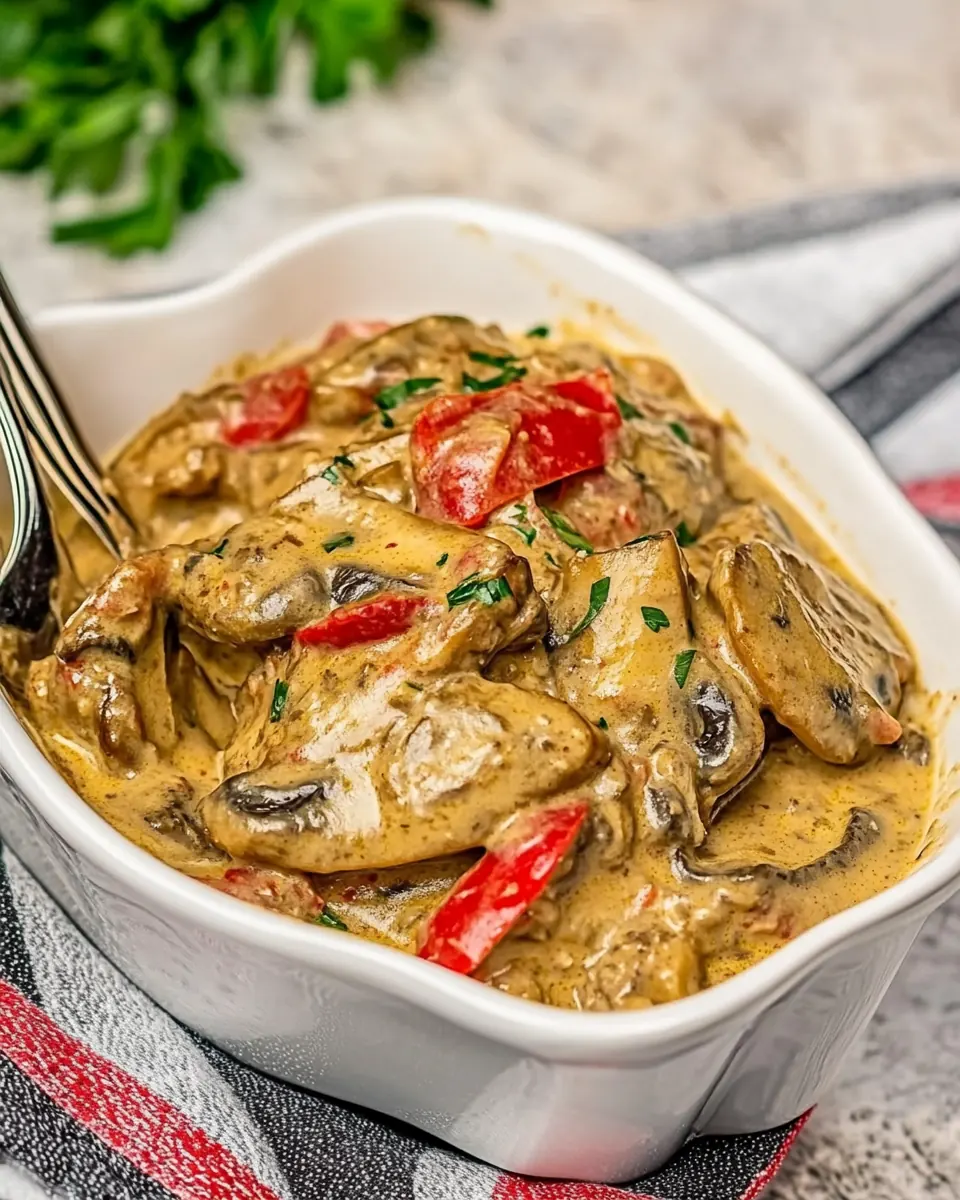
Serve hot, over cauliflower rice if desired.: Serve the stew while it is steaming and fragrant, spooning it over a bed of cauliflower rice or your preferred base. The visual contrast of the deep brown mushrooms and bright peppers is inviting, and you will notice the aroma of paprika and sautéed vegetables as soon as you lift the lid. If serving with a grain or vegetable base, ensure it is warm so the textures marry well. A cold accompaniment can dull the experience, so reheat briefly if needed before plating.