Place a large pot of salted water over high heat and bring to a boil. Cook pasta to al dente, per package instructions. Drain and set aside.: The first sensory cue is the rolling, bubbling surface and the slightly ringing sound as water moves. Adding salt to the water seasons the pasta internally, so it is important not to skip this step. A common mistake is under salting the water, which leaves the finished dish bland, so be generous enough that the water tastes like the sea, but do not overdo it if you are using a salty broth later. Watch for a steady, strong boil before adding the pasta so it cooks evenly and does not clump together.
Meanwhile, in a large saute pan, melt butter over medium heat. Add onion, celery, carrots, and butternut squash and cook until onion is translucent and the rest of the vegetables are tender, about 7 minutes.: You will know the pasta is al dente when it offers slight resistance when bitten, with a tender exterior and a firmer center. Drain promptly to avoid carryover cooking, which would make it too soft. A common pitfall is overcooking, which leads to limp texture and prevents the sauce from clinging properly. Reserve a small cup of pasta water if you like, it can help loosen or bind the sauce later, but do not let the pasta sit in standing water after draining because it will continue to soften.
Add garlic, thyme, and 1/2 teaspoon salt and saute for another minute, stirring frequently.: The butter should foam and give off a rich, nutty aroma as it melts, coating the pan. When it starts to shimmer, add the onion , celery , carrots , and butternut squash . These vegetables should sizzle gently but not brown aggressively. The goal is to soften and build sweetness, so cook until the onion is translucent and the others are tender. A common error is overheating, which can brown or burn the vegetables and introduce bitter notes. Stir frequently to ensure even cooking and watch for a glossy, softened texture before proceeding.
Sprinkle in flour and cook, stirring constantly, for one minute. Continuing over medium heat, slowly add broth, stirring constantly, and bring to a boil. Reduce heat to medium-low and simmer until the mixture thickens, stirring frequently, about 5 minutes.: Right after adding the minced garlic you should notice an immediate fragrant lift, a heady, savory perfume that signals it is time to move quickly. The thyme should tease out earthiness and blend with the softened vegetables. Sauteing only about a minute prevents the garlic from turning bitter. A common mistake is leaving it too long and getting a burnt, acrid flavor, so keep stirring and remove from direct heat if things start to darken too fast.
Stir in pasta and peas.: As you add the flour , it will coat the vegetables and begin to smell toasty as you stir. This brief cooking takes away the raw, chalky taste and sets the stage for a silky sauce. The texture will shift to a loose paste that clings to the vegetables, and you should maintain constant stirring so it does not form lumps or stick to the pan. Under cooking the flour results in a pasty edge to the sauce, while overdoing it can darken the roux and change the flavor, so one minute is the sweet spot for this quantity.
Taste and add additional salt along with freshly ground black pepper, to taste.: As you stream in the vegetable broth , you should see the roux loosen and transform into a smooth sauce. The surface will shimmer and steam, and small bubbles will begin to rise as it heats. Stirring constantly prevents lumps and ensures an even emulsion. Bring it to a boil so the sauce activates and then lower the heat to simmer. A typical error here is pouring the broth in too quickly, which can create clumps; patience yields a smoother, silkier finish.
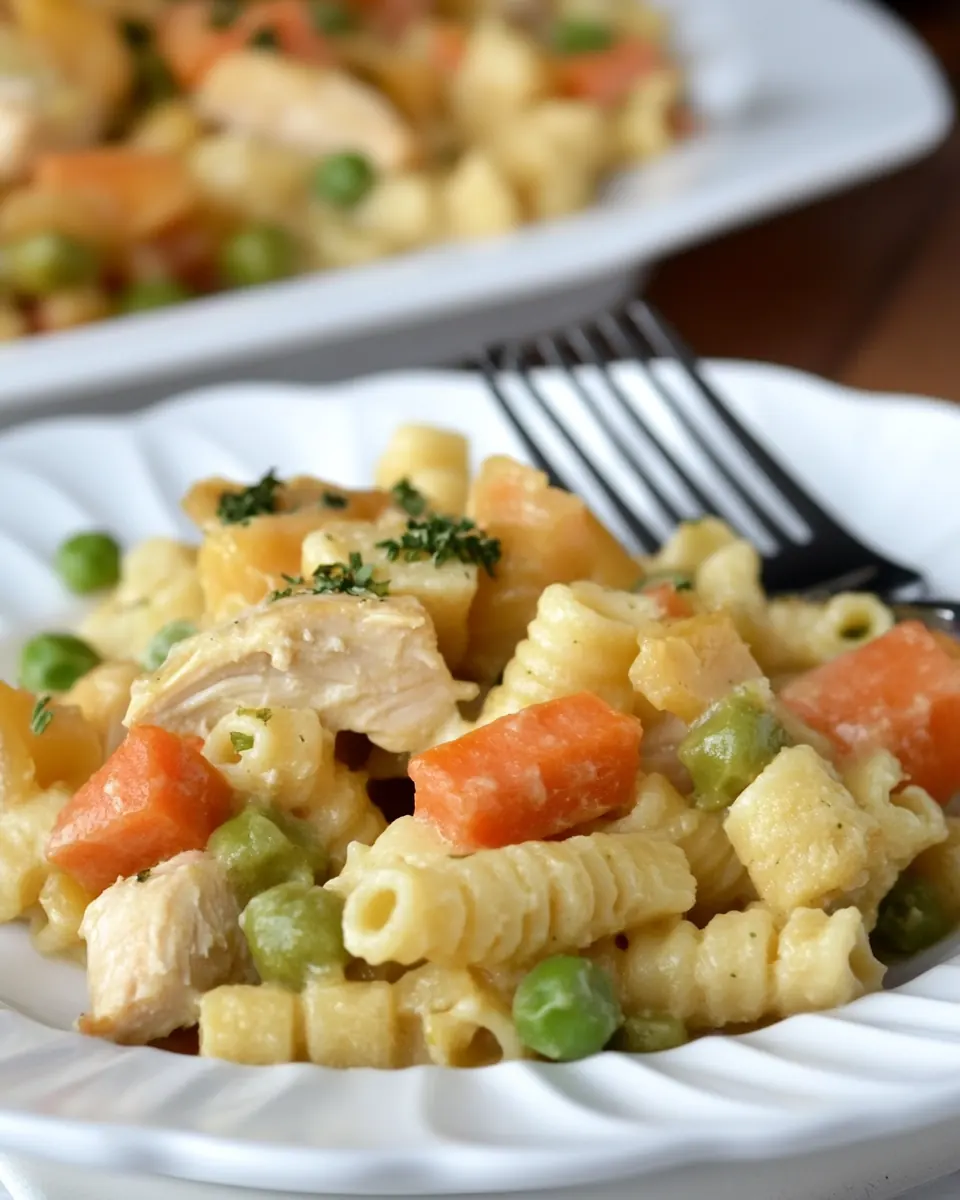
To add meat, scoop about 1 1/2 cups pasta mixture to a separate pan over low heat. Gently mix in 1/2 cup diced, cooked chicken per serving and cook until the entire mixture is heated through.: During the simmer the sauce will thicken and coat the back of a spoon. You will see it become more translucent and glossy, and the aroma will deepen into a savory, rounded smell. Stir often to avoid sticking and to monitor viscosity. If it thickens too much, a splash of reserved pasta water or extra broth will loosen it. A mistake to avoid is letting it reduce until it dries out, which will concentrate salt and make the texture gluey rather than creamy.
Serve immediately.: When you fold in the drained pasta and frozen peas , the peas will quickly thaw and offer bright, popping green against the creamy sauce. The pasta will pick up the sauce and become glossy. Toss gently so the ingredients combine without mashing the peas or overworking the pasta. Over stirring can break the pasta and release starches that make the sauce too thick, so be delicate for the best mouthfeel.
Taste and add additional salt along with freshly ground black pepper, to taste: Now is the moment to fine tune seasoning. Take a small taste warm, and adjust with more salt if the sauce needs lift, and freshly ground black pepper for a bit of bite. The sensory cue is balance, where sweetness from the vegetables is offset by savory salt and a faint peppery finish. The common oversight here is to salt too early and forget to account for salty broth or chicken if you will add it, so adjust gently and taste again after any additions.
To add meat, scoop about 1 1/2 cups pasta mixture to a separate pan over low heat: When you transfer a portion to warm with diced chicken , you will hear a quiet warming hiss and smell the melding of flavors as the sauce and meat come together. Warm the mixture slowly so the chicken heats through without drying out. The reason to do this separately is to prevent overcooking the rest of the batch and to allow precise warming. A common mistake is overheating until the chicken becomes tough, so keep the pan low and stir gently until everything is uniformly warm.
Gently mix in 1/2 cup diced, cooked chicken per serving and cook until the entire mixture is heated through: As the chicken warms, you should notice steam rising and the sauce coating the pieces, locking in juiciness. Stir carefully to avoid shredding the meat, and stop as soon as the mixture is reheated to prevent dryness. Overcooking will make the chicken stringy and reduce tenderness, so aim for warm, not hot, center. The benefit is a hearty, protein boosted bowl that retains creamy texture and balanced flavor.
Serve immediately: Serve when piping hot so the sauce is at its silkiest and the textures are at their best. The final sensory experience should include warm steam, glossy sauce, and a combination of tender vegetables with the satisfying bite of pasta . A common mistake is letting it sit too long, which cools and thickens the sauce; if you must hold it, reheat gently with a splash of broth to restore creaminess.