Place potatoes in a pot of boiling water. Let them cook until fork-tender, about 20 minutes.: The sound of the water should be a steady, full boil when you add the potatoes , which helps them cook evenly. You will hear the water settle into a rolling simmer as the potatoes cook, and the skins may ripple slightly, indicating even heat penetration. The why here is even cooking from the outside in, preventing a too soft exterior and a hard center. A common mistake is adding potatoes to water that is not hot enough, which can lead to uneven texture and longer cook times. Keep the pot large enough so they have room to move, and salt the water lightly if you want seasoning from within.
While the potatoes are boiling, mix vinegar with field garlic, garlic mustard leaves, and salt and pepper to taste in a small bowl.: You will notice a change in sound as the water calms and softens, and the aroma of the potatoes becomes gently sweeter. The flesh becomes yielding to a fork with little resistance, which is the visual and tactile cue to stop. This timing helps maintain shape while ensuring they are soft enough to accept the dressing. Overcooking leads to crumbly, mealy texture, so check a few pieces early to avoid that pitfall.
Remove the hot potatoes with a slotted spoon, and once slightly cooled, roughly slice them.: As you assemble the dressing, the fragrance of the spruce tip infused vinegar will open and mingle with the green scents of the leaves, producing a bright, foresty perfume. Combining these ingredients while the potatoes cook lets the flavors settle and mellow slightly before meeting the warm starch. Whisking briefly emulsifies the olive oil with the vinegar, creating a velvety mouthfeel. A common error is seasoning too heavily before tasting, so start with a small pinch of salt and build from there.
Add warm potatoes to a medium bowl and toss gently until well coated with dressing (you will have some leftover extra dressing).: As you lift each piece, the residual steam will carry the scent of the cooked potatoes and the pot liquor; set them somewhere to rest until they are cool enough to handle. The ideal texture for slicing is warm and cohesive, not piping hot or falling apart. Rough slices create surfaces for the dressing to cling to, making each bite flavorful. A typical mistake is slicing them while too hot, which can cause them to break and turn mushy, so wait for that slightly warm, manageable stage.
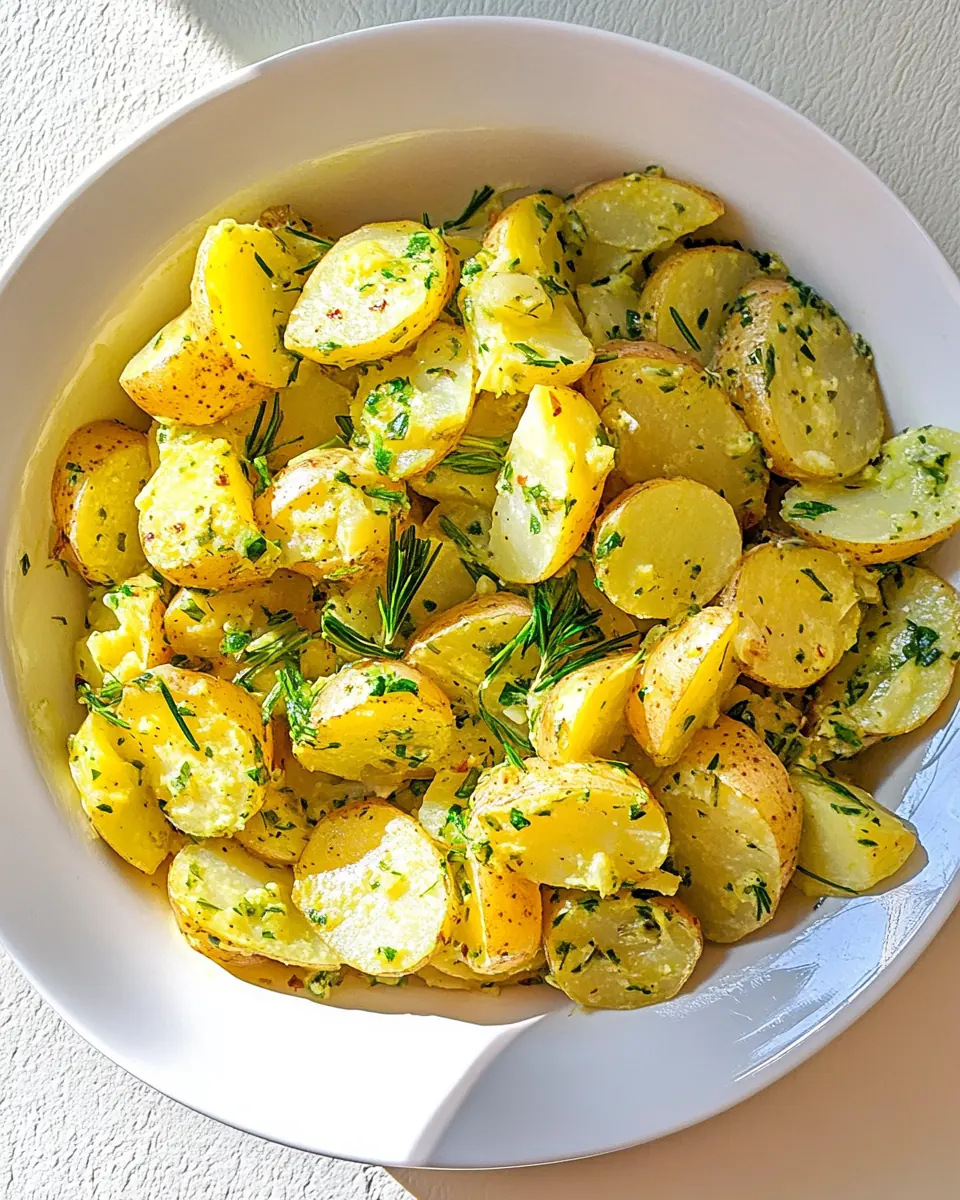
Transfer your potato mixture to a serving bowl and top with herbs for serving.: The moment the warm potatoes meet the dressing, you will notice a soft hiss as heat wakes the oil and vinegar, releasing their aromas. Toss lightly so the dressing coats without crushing the pieces; maintain a delicate hand to preserve texture. The warmth helps the dressing absorb into the surface, creating a seamless flavor. If you overwork them you risk getting a paste like consistency, so gentle folding is key. Save any leftover dressing for a drizzle later, in case the salad dries out.
Serve warm, or refrigerate for 30 minutes before serving.: When you move the salad, the visual impact of bright green leaves against golden potato slices creates appetite appeal. Scatter any remaining torn leaves on top so each portion gets a hit of fresh, peppery flavor. The contrast in temperature, with warm potatoes and cool leaves, elevates the eating experience. A common oversight is adding all greens too early, which lets them wilt excessively; reserve the final garnish for the last moment.
Serve warm, or refrigerate for 30 minutes before serving: Serving warm emphasizes the aromatic quality of the dressing and the comforting texture of the potatoes , while a short rest in the fridge tightens flavors and offers a bright, slightly firmer bite. If you choose to chill, allow the salad to sit uncovered for a few minutes after refrigeration so aromas can breathe before plating. Avoid leaving it too long chilled or the texture will firm up and the oil may congeal, dulling the flavor.