Make the creamy base: Place the almond milk, cashews, white beans, miso paste, and Dijon mustard in a blender and process until smooth. Set aside.: Place the almond milk, cashews, white beans, miso paste, and Dijon mustard in a blender and process until smooth. Set aside. : Start by blending the almond milk with the cashews , the initial portion of cannellini beans , white miso paste , and Dijon mustard to create a uniformly smooth mixture. As you blend, notice the texture shift from grainy to velvety, and pay attention to the aroma which will become subtly savory and nutty; this is a good indicator the cashews have broken down properly. The reason this matters is that a truly smooth base ensures the soup will have a luxurious mouthfeel without gritty bits, and it helps the miso integrate evenly into the broth. If the blender feels strained, pause and scrape down the sides, then pulse again to prevent overheating the motor. A common mistake at this stage is under blending which leaves small cashew fragments, leading to an uneven final texture; to avoid this, blend until the liquid looks glossy and pours smoothly.
Make the soup: Heat the olive oil in a medium-large Dutch oven or large pot over medium heat. Add the scallions, celery, carrot, mushrooms, and salt and stir. Cook, stirring occasionally, until the mushrooms are tender, 8 to 10 minutes.: Heat the olive oil in a medium-large Dutch oven or large pot over medium heat. Add the scallions, celery, carrot, mushrooms, and salt and stir. Cook, stirring occasionally, until the mushrooms are tender, 8 to 10 minutes. : Heat the extra-virgin olive oil until it shimmers gently but does not smoke, then add the chopped scallions , celery , and carrot along with the sliced cremini mushrooms and the measured salt . Listen for a soft sizzle as the vegetables hit the pan, and watch the mushrooms release moisture then reabsorb it, concentrating their earthy scent into the pot. Stir occasionally so nothing sticks, and look for the vegetables to become translucent and the mushrooms to soften and take on a deeper color, which typically takes around 8 to 10 minutes. This step develops the base flavors through gentle caramelization, which is crucial because it transforms simple vegetables into a savory backbone for the entire soup. A frequent oversight is cooking at too high a temperature which causes the aromatics to brown too quickly or burn; if you see dark spots forming, lower the heat and add a splash of water to deglaze and recover the fond.
Add the garlic, rosemary, thyme, cannellini beans, pepper, and water and stir. Cover and simmer for 20 minutes.: Once the vegetables are softened, stir in the minced garlic , minced rosemary , the thyme bundle, the next portion of cannellini beans , freshly ground black pepper , and the measured water . You will notice a fragrant lift as the garlic and herbs begin to heat, releasing aromatic oils that merge with the umami already building in the pot. Covering the pot traps steam and allows the flavors to meld gently, producing a rounded broth as the beans and vegetables release their starches. Simmering for the recommended time softens everything to the right texture and concentrates flavor without breaking down the ingredients into mush. Watch for a gentle bubbling, not a roiling boil; if the pot boils too vigorously, reduce the heat to maintain a calm simmer. A common mistake here is skimming too much early on which can lower flavor concentration, so keep the lid slightly ajar if you need to control foam but avoid constant stirring which interrupts the melding process.
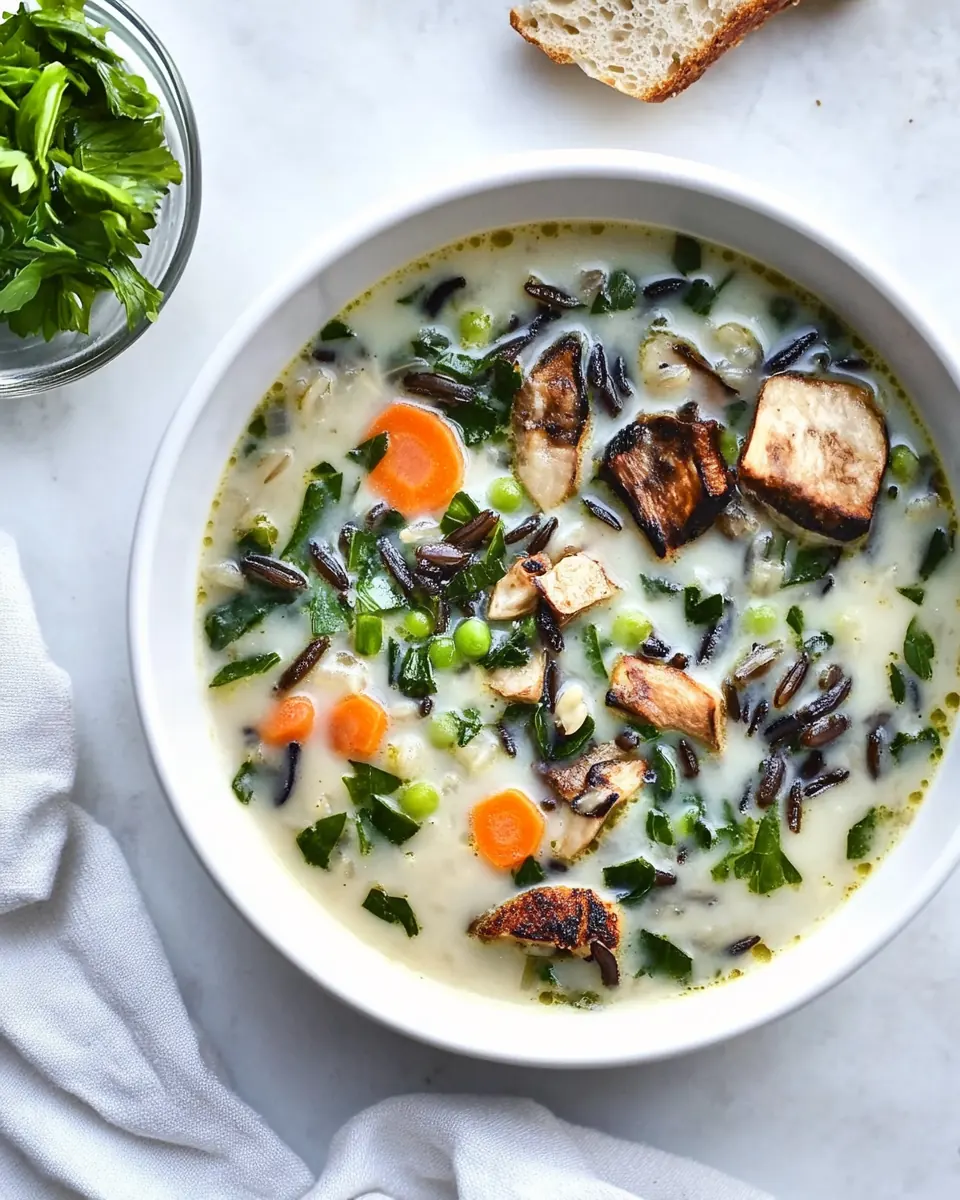
Remove the thyme bundle and stir in the cashew mixture, rice, 1 tablespoon lemon juice, and kale. Simmer over low heat until the kale is wilted, about 5 minutes. Season to taste and serve with more lemon juice, parsley and pinches of red pepper flakes, if desired.: After the simmer, take out the thyme bundle and then pour in the blended cashew and bean base you set aside, followed by the cooked wild rice , the initial tablespoon of fresh lemon juice , and the chopped kale . You will immediately see the broth take on a richer, creamier appearance and smell a deeper meld of flavors. Stir gently so the rice disperses and the kale begins to soften; the color will change to a brighter green as it wilts. Simmering over low heat for about five minutes allows the kale to tenderize just enough while preserving its texture and nutrients, and it helps the blended base heat through without curdling. If the soup feels too thick at this stage, add a splash of the reserved water to loosen it. People sometimes overcook the kale here, which causes it to lose its vibrant color and turn mushy, so watch the pot and remove it from heat once the leaves are tender but still vibrant.
Season to taste and serve with more lemon juice, parsley and pinches of red pepper flakes, if desired.: Finish by tasting and adjusting the seasoning, adding more fresh lemon juice if you want extra brightness, extra chopped parsley for herbal freshness, and a pinch or two of red pepper flakes if you want heat. The final seasoning ties together the creamy, savory, and herbal elements and should bring a clean, lively balance to the bowl. Take note of the mouthfeel and the way the acidity lifts the broth; a single squeeze of lemon often transforms the entire pot. Be cautious about adding too much salt at the end because the white miso paste can already contribute sodium; always taste before adjusting. A typical misstep is skipping the final tasting and assuming the soup is done, which can leave flavors muted.