To make the walnuts: Preheat oven to 325˚F. On a small sheet tray, combine the walnut pieces with the maple syrup, oil, and salt. Toss to coat, then place in the oven. Roast for 15 minutes, until the walnuts have slightly darkened in color and are fragrant. Remove from the oven and set the oven to 425˚F.: Preheat oven to 325˚F. On a small sheet tray, combine the walnut pieces with the maple syrup, oil, and salt. Toss to coat, then place in the oven. Roast for 15 minutes, until the walnuts have slightly darkened in color and are fragrant. Remove from the oven and set the oven to 425˚F : When you open the oven door after roasting at 325˚F you should smell warm, toasty, nutty aromas, and the maple will have created a glossy sheen on the walnuts . This gentle roast warms the oils inside the nuts and brings out sweetness, so you’ll notice a richer flavor and a subtle crunch. A common mistake is leaving them unattended, they can burn quickly once the sugars start to brown, so check near the end of the time. Listen for a soft popping and look for even coloring without deep dark spots, which indicates they are done. If they seem sticky, let them cool so the maple sets and firms the coating.
To roast the squash: cut off the stem and bottom of the squash, cut in half and scoop out seeds, cut into 1” thick wedges. Place on a sheet tray and toss with olive oil and kosher salt. Place each wedge cut side down on the tray.: cut off the stem and bottom of the squash, cut in half and scoop out seeds, cut into 1” thick wedges. Place on a sheet tray and toss with olive oil and kosher salt. Place each wedge cut side down on the tray : As you cut the winter squash , you’ll notice its dense flesh and fragrant, slightly sweet scent. Tossing with olive oil helps the surfaces brown and caramelize, creating those savory roasted notes that contrast the interior’s creaminess. Laying the wedges cut side down encourages direct contact with the hot sheet, speeding browning. A frequent error is overcrowding the pan, which causes steaming instead of roasting, so give each wedge breathing room. You should see the oil shimmering slightly on the skin and feel the weight of a stable wedge before putting it in the oven.
Roast at 425˚F for 15 minutes. Remove from the oven, flip the wedges, and return to the oven for another 5 to 10 minutes. Squash should be tender but not falling apart, and have a good browning color. Let cool, then cut into bite-sized pieces.: The high heat produces audible sizzling as the sugars caramelize and the edges color, and you’ll get fragrant roasted notes. The first side should show deep golden patches; flipping exposes the other side to the heat for even color. You want a fork to slide in easily but the pieces should still hold shape, because that texture pairs best with the crisp walnuts and tender lettuce . Avoid over roasting, which leads to mushy pieces that make the salad weigh down. Let the wedges cool enough so they don’t wilt the lettuce when mixed, and then chop into bite sized pieces that present well on the plate.
Assemble the salad: Place the black pepper walnuts on a cutting board and finely chop until most of the nuts are in small pieces. Place about 3/4 of the walnuts in a large bowl, then add the dill, olive oil, rice vinegar, sugar, and salt. Stir to combine, then add the squash, tossing to coat.: Place the black pepper walnuts on a cutting board and finely chop until most of the nuts are in small pieces. Place about 3/4 of the walnuts in a large bowl, then add the dill, olive oil, rice vinegar, sugar, and salt. Stir to combine, then add the squash, tossing to coat : When you chop the maple roasted walnuts , they release an extra nutty perfume, and the small pieces will distribute texture evenly through the salad. Combining the chopped nuts with the chopped dill and dressing ingredients creates an emulsion that clings to the squash , so each piece is seasoned. As you stir, notice how the colors shift to a glossy finish and the scent of dill emerges. A common misstep is adding the dressing too early to hot squash, which can wilt the lettuce later, so ensure the squash is cooler before mixing. If the dressing seems loose, a few extra chopped walnuts can help it adhere better.
Roast the walnuts, then roughly chop. Add to the bowl along with the chopped dill. Add the olive oil, vinegar, sugar, and salt, stirring to combine. Roughly cut the squash into bite-sized pieces and add to the bowl with the dressing, tossing to coat.: After chopping the roasted walnuts , the bowl will take on a fragrant, toasty aroma. The rice vinegar and olive oil meld into a smooth dressing that glazes the squash and carries the bright herb notes of dill . Use gentle tossing motions to avoid breaking the squash apart, watching for glossy sheen and even coating. Mistakes here include overhandling the squash or adding too much salt, so taste as you go and stop when the balance feels right. Aim for a cohesive look where every piece is lightly dressed.
Finally, add in the lettuce along with about half the Parmesan. Toss until the salad is well combined and the lettuce is coated with the dill-walnut mix. Taste and adjust flavors as desired.: The tender lettuce should remain crisp and slightly chilled, offering a cool counterpoint to the warm squash . Toss just enough to distribute the dressing and let some of the heat from the squash warm the leaves slightly, which releases extra aroma. The parmesan adds savory, umami edges and a light creaminess when mixed in. Avoid over tossing, because the leaves will bruise and lose their texture. If the salad tastes flat, a tiny pinch more salt or a splash more rice vinegar will brighten it.
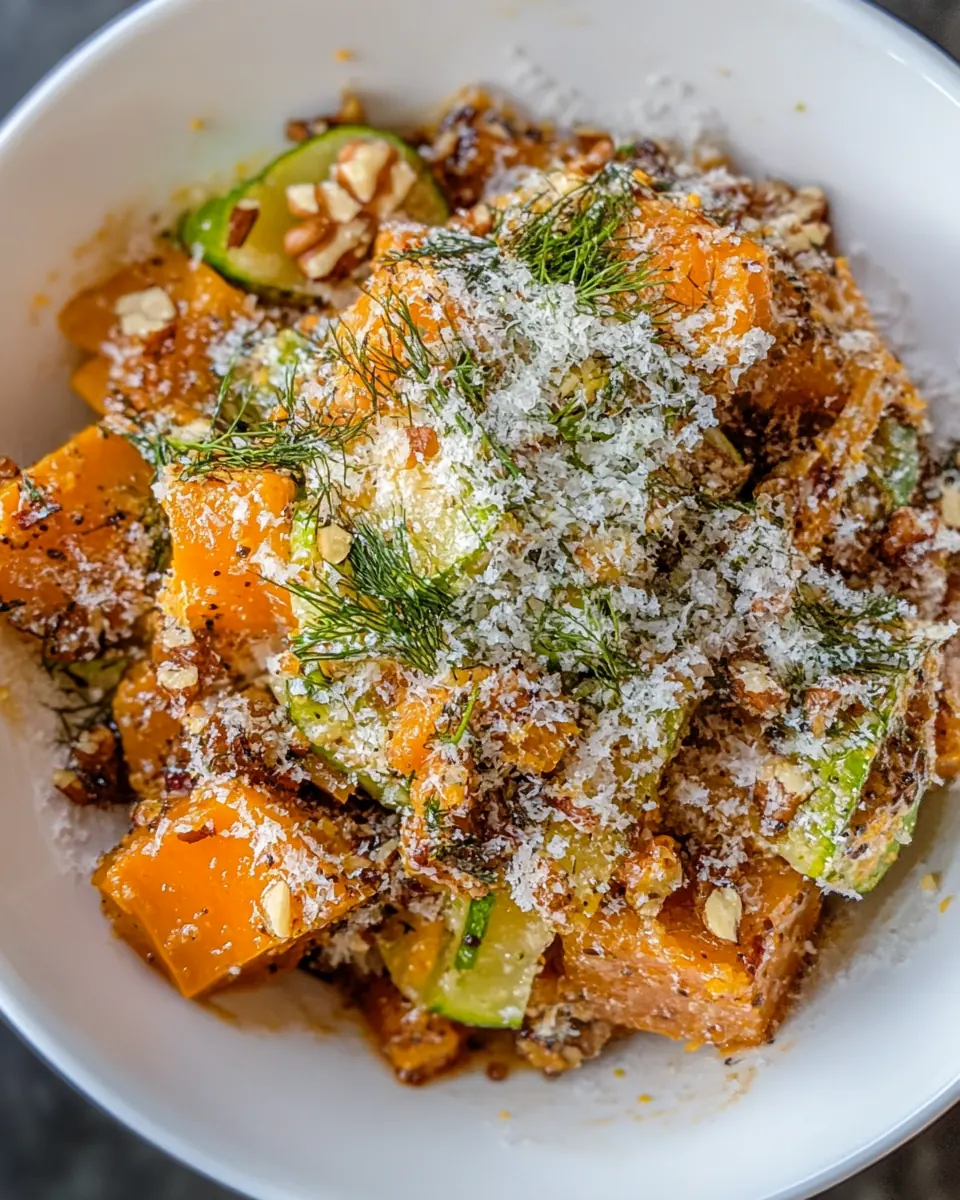
Divide the salad into four bowls and finish with the remaining walnuts and parmesan before serving.: Serving immediately preserves the contrast between crisp lettuce and warm roasted elements. Sprinkle the reserved chopped walnuts and remaining parmesan for visual appeal and extra crunch and savor. You should hear a soft crunch and notice a layered aroma as you present the bowls. A common error is letting the salad sit too long after adding the lettuce, which makes the leaves limp, so serve promptly for the best texture and presentation.