Winter Squash Salad with Dill Walnut Dressing
Winter Squash Salad with Dill Walnut Dressing showed up on my table one crisp October evening when I wanted something bright and satisfying after a long day in the market. I remember carrying a heavy, oddly shaped winter squash under my arm and feeling both triumphant and a little intimidated, because squash can be stubborn to tame. I decided to lean into its sweetness and roast the wedges until they sang with caramelized notes, then build a salad that felt like fall in a bowl.
That first version became an instant favorite in my home because it balances textures in a way that keeps you interested bite after bite. The walnuts get a crisp, sweet coating that crackles under your fork, while the squash stays tender and silky. I love how the dill adds a lifted herbaceousness that brightens everything, and the dressing is the kind of thing I would happily spoon over roasted vegetables for days. Friends who prefer simple flavors always ask for the recipe, and the lettuce keeps the dish light so it never feels heavy even on cooler nights.
Recipe Snapshot
50 mins
20 mins
30 mins
Medium
300 kcal
American
Gluten-Free, Low FODMAP
Salads
Oven, Sheet tray, Large bowl, Cutting board
Why This Winter Squash Salad with Dill Walnut Dressing Is a Winner
Bright contrast of textures
I adore how this Winter Squash Salad with Dill Walnut Dressing plays with crunch and tenderness. The roasted winter squash becomes soft and almost custardy, while the maple roasted walnuts crackle beneath your teeth. That contrast keeps every forkful exciting, and you won’t get bored halfway through the bowl.
Layered, balanced flavors
We get sweet, savory, and herbaceous notes working together. The maple on the walnuts gives a gentle sweetness, the roasting adds a toasty depth to the squash, and the chopped dill introduces a green, slightly grassy lift. The dressing ties it all together without overpowering any component.
Simple techniques, impressive results
I love that the methods are straightforward, and yet the result feels elevated. Roast, toss, and assemble, and you have something that looks like it required more effort than it actually did. For busy nights when I still want food that looks intentional, this recipe is a go to.
Flexible and crowd friendly
This salad scales easily, and it travels well to potlucks. The components can be prepared slightly ahead, then combined just before serving so the lettuce stays crisp. I often bring it to gatherings because people always ask what’s in the bowl.
Seasonal star
During the fall months this recipe screams comfort and familiarity. It makes the most of late season produce, and it’s one of those dishes I return to when the days get shorter and I want food that feels like an embrace.
What You Need for Winter Squash Salad with Dill Walnut Dressing
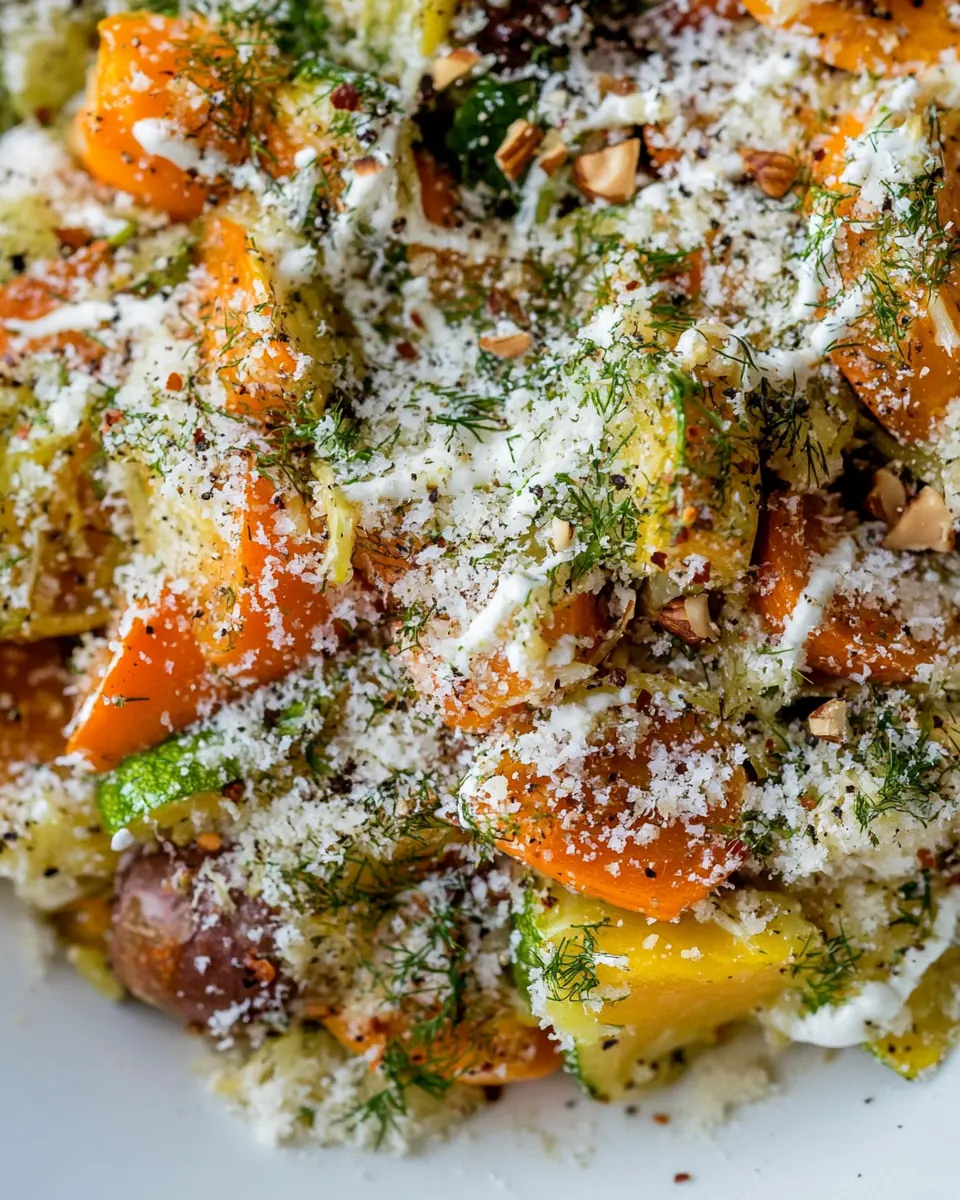
This salad is built on a philosophy of contrasts and restraint. A handful of well chosen ingredients do the heavy lifting, so each element can sing. The key players are roasted winter squash for sweet, tender body, maple roasted walnuts for crunch and warmth, and a dill forward dressing that brings brightness and cohesion.
- 1 cup (120 g) raw walnut pieces: Provide toasted crunch and rich, buttery flavor while forming the base of the walnut dressing when blended with sweeteners and oil; contributes healthy fats and texture contrast to the salad.
- 2 tablespoons maple syrup: Add natural sweetness and a glossy finish to the dressing while balancing the bitterness of nuts and herbs; helps create a cohesive, slightly caramelized flavor profile.
- 4 teaspoons neutral oil: Emulsify and thin the walnut dressing while adding a neutral mouthfeel that doesn't compete with other flavors; aids in blending ingredients smoothly.
- 1 teaspoon kosher salt: Season the squash and dressing with a clean, bright savory note that enhances overall flavor; helps bring out the natural sweetness of roasted squash.
- 2 teaspoons black pepper: Contribute subtle heat and aromatic depth to the dish; ground black pepper brightens flavors and contrasts the richness of the dressing and cheese.
- 1 medium 2 lbs thin-skinned winter squash( such as red kuri, kabocha, or delicata): Provide the main roasted component with sweet, nutty flesh and tender texture when cooked; offers seasonal character and pairs well with the dill walnut dressing.
- 2 tablespoons olive oil: Coat the squash for roasting to promote browning and caramelization while adding a fruity, savory richness to the exterior.
- 1 teaspoon kosher salt: Season the squash for roasting to enhance flavor and balance sweetness; helps to draw out moisture for better caramelization.
- 1/2 cup (12 g) loosely packed chopped dill: Add fresh, anise-like brightness and herbaceous complexity to the dressing; chopped dill lightens the richness and provides aromatic lift.
- 3 tablespoons olive oil: Bind and add silky body to the dressing while contributing a mild fruity olive oil flavor; helps create a smooth, emulsified dressing.
- 1 tablespoon rice vinegar: Provide gentle acidity to the dressing to balance fat and sweetness; rice vinegar adds mild tang without overpowering delicate herbs.
- 1 teaspoons sugar: Contribute a touch of sweetness to balance the vinegar and salt; helps round the flavor of the dressing and complement roasted squash.
- 1/2 teaspoon kosher salt: Season the dressing with a restrained salty note to enhance flavors without overwhelming the herbs or cheese.
- 1 large head of butter lettuce or roughly 8 handfuls of loose lettuce leaves: Provide a crisp, tender bed for the roasted squash and dressing, adding fresh texture and a mild, buttery flavor to the salad.
- 1/2 cup grated parmesan(for serving): Add nutty, savory umami and a salty finishing touch when grated over the salad; enhances depth and pairs well with walnuts and dill.
Winter Squash Salad with Dill Walnut Dressing Instructions
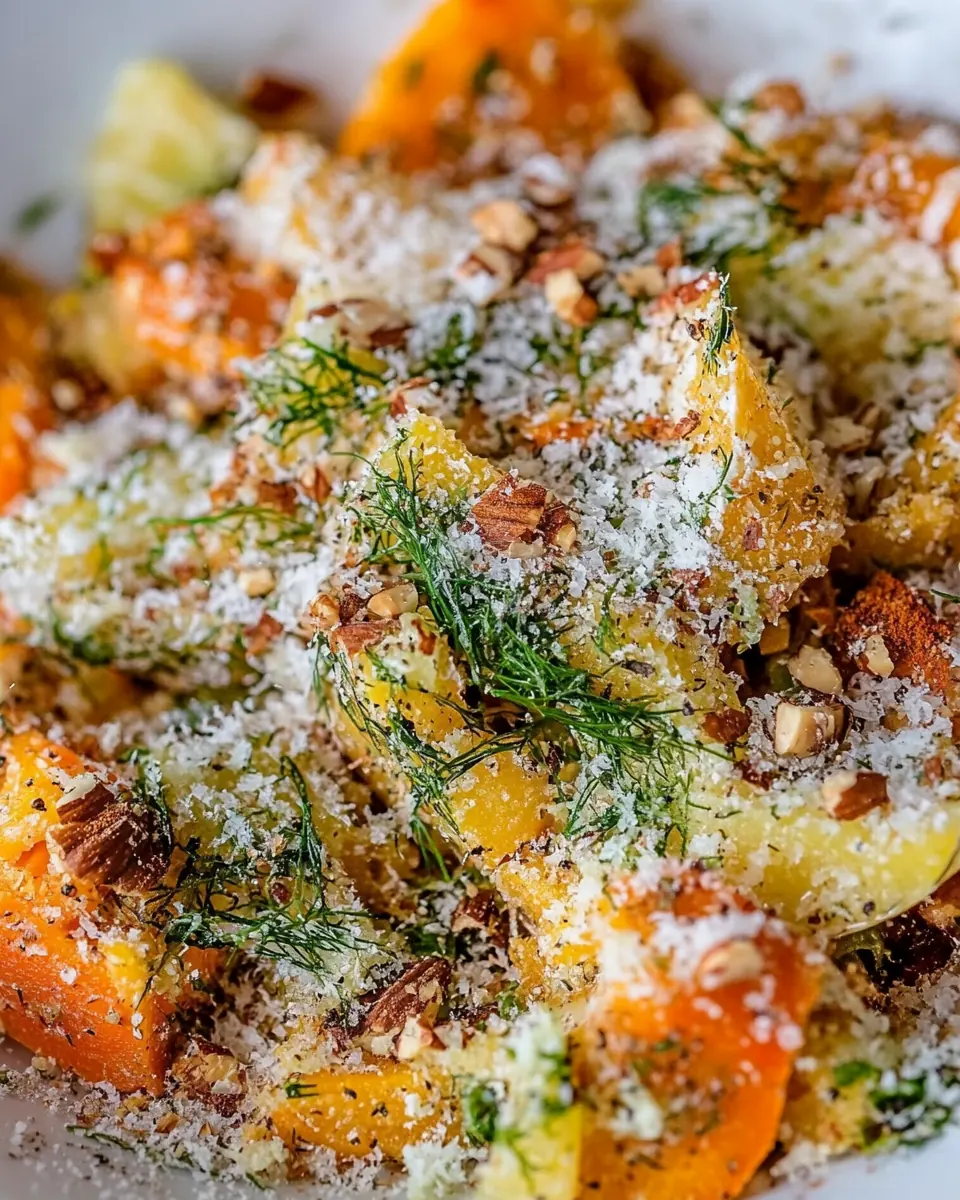
I like to think of this recipe as a gentle choreography of roasting and tossing, where timing makes everything fall into place. Each component can be prepared with a little attention, and when they come together the salad feels composed and lively. Below are the steps I follow when I build this bowl.
- To make the walnuts: Preheat oven to 325˚F. On a small sheet tray, combine the walnut pieces with the maple syrup, oil, and salt. Toss to coat, then place in the oven. Roast for 15 minutes, until the walnuts have slightly darkened in color and are fragrant. Remove from the oven and set the oven to 425˚F.: Preheat oven to 325˚F. On a small sheet tray, combine the walnut pieces with the maple syrup, oil, and salt. Toss to coat, then place in the oven. Roast for 15 minutes, until the walnuts have slightly darkened in color and are fragrant. Remove from the oven and set the oven to 425˚F : When you open the oven door after roasting at 325˚F you should smell warm, toasty, nutty aromas, and the maple will have created a glossy sheen on the walnuts . This gentle roast warms the oils inside the nuts and brings out sweetness, so you’ll notice a richer flavor and a subtle crunch. A common mistake is leaving them unattended, they can burn quickly once the sugars start to brown, so check near the end of the time. Listen for a soft popping and look for even coloring without deep dark spots, which indicates they are done. If they seem sticky, let them cool so the maple sets and firms the coating.
- To roast the squash: cut off the stem and bottom of the squash, cut in half and scoop out seeds, cut into 1” thick wedges. Place on a sheet tray and toss with olive oil and kosher salt. Place each wedge cut side down on the tray.: cut off the stem and bottom of the squash, cut in half and scoop out seeds, cut into 1” thick wedges. Place on a sheet tray and toss with olive oil and kosher salt. Place each wedge cut side down on the tray : As you cut the winter squash , you’ll notice its dense flesh and fragrant, slightly sweet scent. Tossing with olive oil helps the surfaces brown and caramelize, creating those savory roasted notes that contrast the interior’s creaminess. Laying the wedges cut side down encourages direct contact with the hot sheet, speeding browning. A frequent error is overcrowding the pan, which causes steaming instead of roasting, so give each wedge breathing room. You should see the oil shimmering slightly on the skin and feel the weight of a stable wedge before putting it in the oven.
- Roast at 425˚F for 15 minutes. Remove from the oven, flip the wedges, and return to the oven for another 5 to 10 minutes. Squash should be tender but not falling apart, and have a good browning color. Let cool, then cut into bite-sized pieces.: The high heat produces audible sizzling as the sugars caramelize and the edges color, and you’ll get fragrant roasted notes. The first side should show deep golden patches; flipping exposes the other side to the heat for even color. You want a fork to slide in easily but the pieces should still hold shape, because that texture pairs best with the crisp walnuts and tender lettuce . Avoid over roasting, which leads to mushy pieces that make the salad weigh down. Let the wedges cool enough so they don’t wilt the lettuce when mixed, and then chop into bite sized pieces that present well on the plate.
- Assemble the salad: Place the black pepper walnuts on a cutting board and finely chop until most of the nuts are in small pieces. Place about 3/4 of the walnuts in a large bowl, then add the dill, olive oil, rice vinegar, sugar, and salt. Stir to combine, then add the squash, tossing to coat.: Place the black pepper walnuts on a cutting board and finely chop until most of the nuts are in small pieces. Place about 3/4 of the walnuts in a large bowl, then add the dill, olive oil, rice vinegar, sugar, and salt. Stir to combine, then add the squash, tossing to coat : When you chop the maple roasted walnuts , they release an extra nutty perfume, and the small pieces will distribute texture evenly through the salad. Combining the chopped nuts with the chopped dill and dressing ingredients creates an emulsion that clings to the squash , so each piece is seasoned. As you stir, notice how the colors shift to a glossy finish and the scent of dill emerges. A common misstep is adding the dressing too early to hot squash, which can wilt the lettuce later, so ensure the squash is cooler before mixing. If the dressing seems loose, a few extra chopped walnuts can help it adhere better.
- Roast the walnuts, then roughly chop. Add to the bowl along with the chopped dill. Add the olive oil, vinegar, sugar, and salt, stirring to combine. Roughly cut the squash into bite-sized pieces and add to the bowl with the dressing, tossing to coat.: After chopping the roasted walnuts , the bowl will take on a fragrant, toasty aroma. The rice vinegar and olive oil meld into a smooth dressing that glazes the squash and carries the bright herb notes of dill . Use gentle tossing motions to avoid breaking the squash apart, watching for glossy sheen and even coating. Mistakes here include overhandling the squash or adding too much salt, so taste as you go and stop when the balance feels right. Aim for a cohesive look where every piece is lightly dressed.
- Finally, add in the lettuce along with about half the Parmesan. Toss until the salad is well combined and the lettuce is coated with the dill-walnut mix. Taste and adjust flavors as desired.: The tender lettuce should remain crisp and slightly chilled, offering a cool counterpoint to the warm squash . Toss just enough to distribute the dressing and let some of the heat from the squash warm the leaves slightly, which releases extra aroma. The parmesan adds savory, umami edges and a light creaminess when mixed in. Avoid over tossing, because the leaves will bruise and lose their texture. If the salad tastes flat, a tiny pinch more salt or a splash more rice vinegar will brighten it.
- Divide the salad into four bowls and finish with the remaining walnuts and parmesan before serving.: Serving immediately preserves the contrast between crisp lettuce and warm roasted elements. Sprinkle the reserved chopped walnuts and remaining parmesan for visual appeal and extra crunch and savor. You should hear a soft crunch and notice a layered aroma as you present the bowls. A common error is letting the salad sit too long after adding the lettuce, which makes the leaves limp, so serve promptly for the best texture and presentation.
Making Adjustments
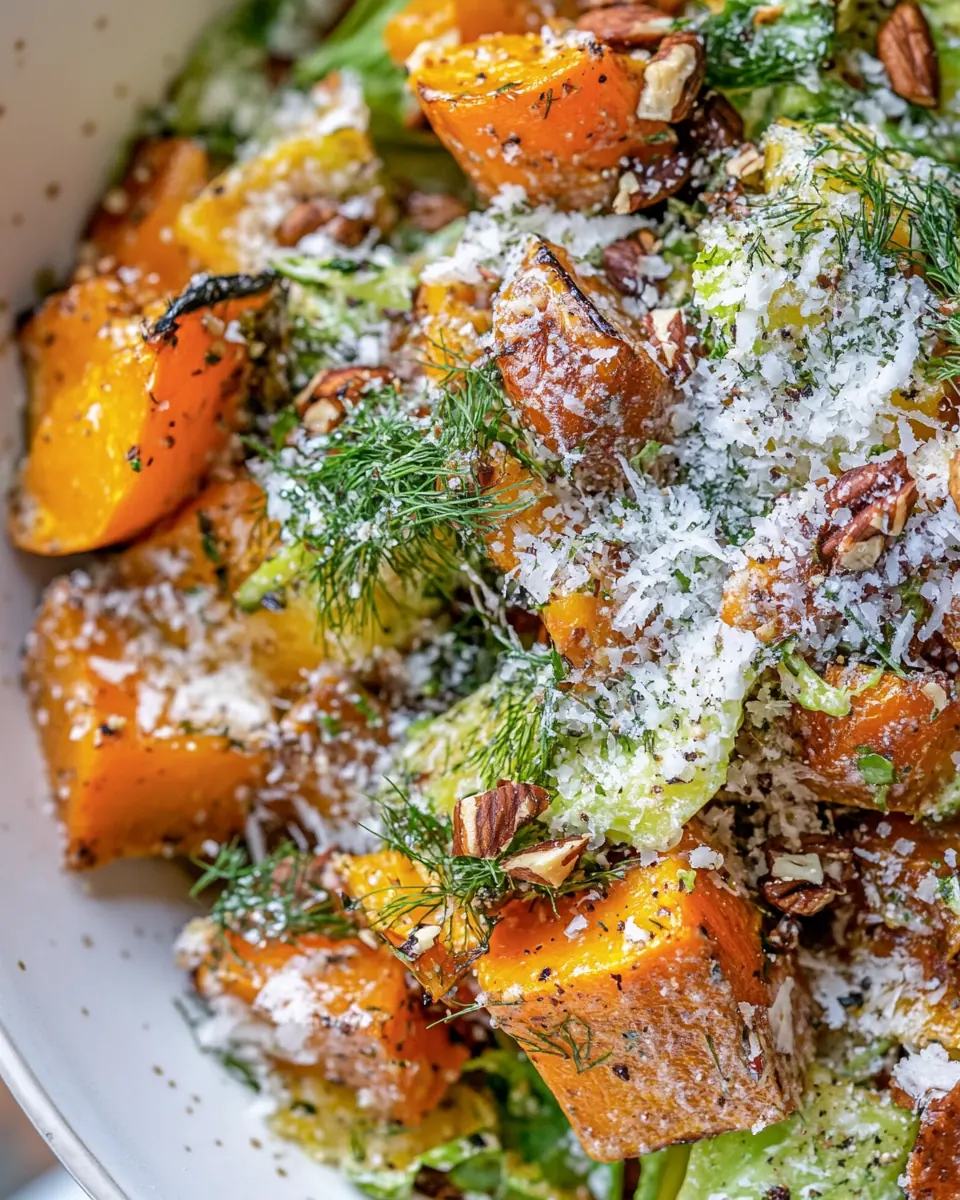
I often tweak this salad slightly depending on what I have in the kitchen and the mood of the meal. Small adjustments can shift the emphasis from richer to lighter or from earthy to bright, and they let you personalize the bowl without changing its core identity.
- Swap oils sparingly If you want a slightly fruitier roast, use a high quality olive oil for the squash, but avoid strongly flavored oils that will overpower the dill.
- Control walnut to squash ratio Increase the walnuts if you want more crunch, or reduce them if you prefer a silkier mouthfeel from the squash.
- Adjust acidity carefully Add the rice vinegar in small increments and taste, because a little goes a long way in brightening the dressing without making it sharp.
- Make ahead strategy Roast the walnuts and squash up to a day in advance and store separately; assemble with fresh lettuce just before serving to keep textures optimal.
- Warm or cool service Serve immediately if you want contrast between warm squash and cool lettuce, or chill the squash for a fully cool salad depending on preference.
- Parmesan timing Add half the grated parmesan when tossing and reserve the rest to finish the dish for a fresh, salty flourish.
What to Pair With Winter Squash Salad with Dill Walnut Dressing
This salad works beautifully as a centerpiece or as a supporting side. Its balance of textures means you can pair it with a variety of proteins and grains, and it suits occasions from casual lunches to special dinners in the fall. I like to plan pairings that complement its roasted sweetness and bright herb notes.
- Serve as a main for a light lunch Pair with crusty bread and a simple bean salad to make a satisfying mid day meal where the salad remains the star.
- Side for dinner gatherings Bring it to a family style table alongside roasted chicken or a grain pilaf for a balanced plate that highlights seasonal produce.
- Occasion friendly This salad fits well at holiday tables during fall and early winter celebrations, offering a vegetable driven option for guests seeking lighter fare.
- Storage tips Refrigerate components separately in airtight containers; keep the lettuce unwashed until just before tossing to preserve crispness for up to two days.
- Seasonal pairings Complement with roasted root vegetables or a warm lentil dish during cooler months to build a comforting, seasonal spread.
- Presentation idea Serve in shallow bowls and finish at the table with extra grated parmesan and reserved chopped walnuts for a visually appealing finish.
- Occasion suggestions Great for cozy dinners, potlucks, or as a festive side on special occasions where a vegetable forward dish is appreciated.
FAQ
Conclusion
This salad stands out because it balances roasted sweetness, crunchy texture, and bright herbal notes in every bite. It’s approachable to prepare yet feels special enough for company, making it a reliable recipe to reach for during the fall months. Try it the next time you want a vegetable forward dish that still feels celebratory, and I think you’ll be surprised at how quickly it becomes a staple in your meal rotation. Serve it fresh, enjoy the contrasts, and don’t be afraid to make small adjustments to match your taste.
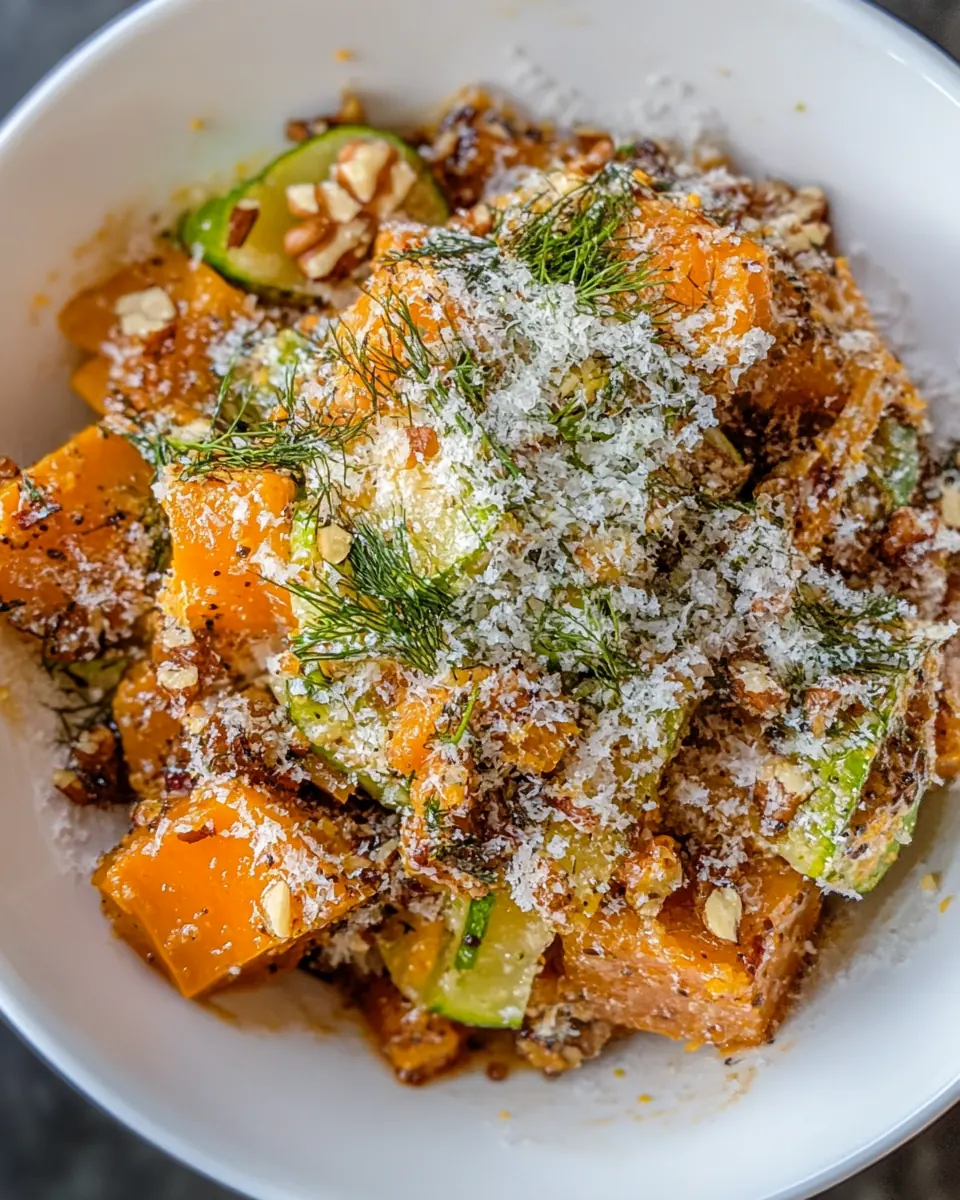
Winter Squash Salad with Dill Walnut Dressing
Ingredients
Equipment
Method
- To make the walnuts: Preheat oven to 325˚F. On a small sheet tray, combine the walnut pieces with the maple syrup, oil, and salt. Toss to coat, then place in the oven. Roast for 15 minutes, until the walnuts have slightly darkened in color and are fragrant. Remove from the oven and set the oven to 425˚F.: Preheat oven to 325˚F. On a small sheet tray, combine the walnut pieces with the maple syrup, oil, and salt. Toss to coat, then place in the oven. Roast for 15 minutes, until the walnuts have slightly darkened in color and are fragrant. Remove from the oven and set the oven to 425˚F : When you open the oven door after roasting at 325˚F you should smell warm, toasty, nutty aromas, and the maple will have created a glossy sheen on the walnuts . This gentle roast warms the oils inside the nuts and brings out sweetness, so you’ll notice a richer flavor and a subtle crunch. A common mistake is leaving them unattended, they can burn quickly once the sugars start to brown, so check near the end of the time. Listen for a soft popping and look for even coloring without deep dark spots, which indicates they are done. If they seem sticky, let them cool so the maple sets and firms the coating.
- To roast the squash: cut off the stem and bottom of the squash, cut in half and scoop out seeds, cut into 1” thick wedges. Place on a sheet tray and toss with olive oil and kosher salt. Place each wedge cut side down on the tray.: cut off the stem and bottom of the squash, cut in half and scoop out seeds, cut into 1” thick wedges. Place on a sheet tray and toss with olive oil and kosher salt. Place each wedge cut side down on the tray : As you cut the winter squash , you’ll notice its dense flesh and fragrant, slightly sweet scent. Tossing with olive oil helps the surfaces brown and caramelize, creating those savory roasted notes that contrast the interior’s creaminess. Laying the wedges cut side down encourages direct contact with the hot sheet, speeding browning. A frequent error is overcrowding the pan, which causes steaming instead of roasting, so give each wedge breathing room. You should see the oil shimmering slightly on the skin and feel the weight of a stable wedge before putting it in the oven.
- Roast at 425˚F for 15 minutes. Remove from the oven, flip the wedges, and return to the oven for another 5 to 10 minutes. Squash should be tender but not falling apart, and have a good browning color. Let cool, then cut into bite-sized pieces.: The high heat produces audible sizzling as the sugars caramelize and the edges color, and you’ll get fragrant roasted notes. The first side should show deep golden patches; flipping exposes the other side to the heat for even color. You want a fork to slide in easily but the pieces should still hold shape, because that texture pairs best with the crisp walnuts and tender lettuce . Avoid over roasting, which leads to mushy pieces that make the salad weigh down. Let the wedges cool enough so they don’t wilt the lettuce when mixed, and then chop into bite sized pieces that present well on the plate.
- Assemble the salad: Place the black pepper walnuts on a cutting board and finely chop until most of the nuts are in small pieces. Place about 3/4 of the walnuts in a large bowl, then add the dill, olive oil, rice vinegar, sugar, and salt. Stir to combine, then add the squash, tossing to coat.: Place the black pepper walnuts on a cutting board and finely chop until most of the nuts are in small pieces. Place about 3/4 of the walnuts in a large bowl, then add the dill, olive oil, rice vinegar, sugar, and salt. Stir to combine, then add the squash, tossing to coat : When you chop the maple roasted walnuts , they release an extra nutty perfume, and the small pieces will distribute texture evenly through the salad. Combining the chopped nuts with the chopped dill and dressing ingredients creates an emulsion that clings to the squash , so each piece is seasoned. As you stir, notice how the colors shift to a glossy finish and the scent of dill emerges. A common misstep is adding the dressing too early to hot squash, which can wilt the lettuce later, so ensure the squash is cooler before mixing. If the dressing seems loose, a few extra chopped walnuts can help it adhere better.
- Roast the walnuts, then roughly chop. Add to the bowl along with the chopped dill. Add the olive oil, vinegar, sugar, and salt, stirring to combine. Roughly cut the squash into bite-sized pieces and add to the bowl with the dressing, tossing to coat.: After chopping the roasted walnuts , the bowl will take on a fragrant, toasty aroma. The rice vinegar and olive oil meld into a smooth dressing that glazes the squash and carries the bright herb notes of dill . Use gentle tossing motions to avoid breaking the squash apart, watching for glossy sheen and even coating. Mistakes here include overhandling the squash or adding too much salt, so taste as you go and stop when the balance feels right. Aim for a cohesive look where every piece is lightly dressed.
- Finally, add in the lettuce along with about half the Parmesan. Toss until the salad is well combined and the lettuce is coated with the dill-walnut mix. Taste and adjust flavors as desired.: The tender lettuce should remain crisp and slightly chilled, offering a cool counterpoint to the warm squash . Toss just enough to distribute the dressing and let some of the heat from the squash warm the leaves slightly, which releases extra aroma. The parmesan adds savory, umami edges and a light creaminess when mixed in. Avoid over tossing, because the leaves will bruise and lose their texture. If the salad tastes flat, a tiny pinch more salt or a splash more rice vinegar will brighten it.
- Divide the salad into four bowls and finish with the remaining walnuts and parmesan before serving.: Serving immediately preserves the contrast between crisp lettuce and warm roasted elements. Sprinkle the reserved chopped walnuts and remaining parmesan for visual appeal and extra crunch and savor. You should hear a soft crunch and notice a layered aroma as you present the bowls. A common error is letting the salad sit too long after adding the lettuce, which makes the leaves limp, so serve promptly for the best texture and presentation.
Notes
- Swap oils sparingly If you want a slightly fruitier roast, use a high quality olive oil for the squash, but avoid strongly flavored oils that will overpower the dill.
- Control walnut to squash ratio Increase the walnuts if you want more crunch, or reduce them if you prefer a silkier mouthfeel from the squash.
- Adjust acidity carefully Add the rice vinegar in small increments and taste, because a little goes a long way in brightening the dressing without making it sharp.
- Make ahead strategy Roast the walnuts and squash up to a day in advance and store separately; assemble with fresh lettuce just before serving to keep textures optimal.
- Warm or cool service Serve immediately if you want contrast between warm squash and cool lettuce, or chill the squash for a fully cool salad depending on preference.
- Parmesan timing Add half the grated parmesan when tossing and reserve the rest to finish the dish for a fresh, salty flourish.