Preheat oven to 425 degrees. Toss squash with olive oil, salt and pepper and place on baking sheet in one even layer. Bake 10 minutes, turn and bake another 10 minutes until browned and soft. Remove from oven and set aside.: The air in the oven should smell warm and slightly sweet as it comes to temperature, which helps the butternut squash develop those golden, caramelized edges quickly. You want a hot environment so moisture evaporates from the squash surface, encouraging browning rather than steaming. A common mistake is starting at a lower temperature, which yields soggy, pale cubes rather than browned ones. Make sure the oven rack is in the center so heat circulates evenly.
Rinse wheat berries in cold water. Drain. Place wheat berries + water into small saucepan and sprinkle with salt. Cover and bring to boil. Reduce to simmer and cook covered for 45-50 minutes or until cooked. These will usually stay pretty chewy, fyi.: As you toss, the olive oil will sheen the squash and the salt will begin to draw out a little moisture, helping the exterior caramelize. When the pieces are arranged in a single layer, each cube gets direct heat and can brown on all exposed surfaces, producing a toasty aroma and slight crisp at the edges. Crowding the pan traps steam and prevents browning, so spread the cubes out for best results. Use a rimmed baking sheet to keep juices contained.
In a large serving bowl, toss kale, feta, pistachios, craisins, roasted squash and wheat berries together with my favorite salad dressing. Serve.: You will hear a faint hiss as the squash sizzles and start to see color after the first 10 minutes, then turning encourages even browning. The scent will shift from raw starch to a nutty, roasted note, and the centers should feel tender when pierced with a fork. Avoid leaving them too long, or they will collapse and become mushy; if one edge is browning faster, rotate the pan for uniform color.
Remove from oven and set aside: Letting the roasted butternut squash rest briefly concentrates its flavor and cools it enough so the warm pieces do not wilt the baby kale immediately on contact. The texture will firm up slightly as it cools. A common error is tossing piping hot squash into the greens, which can make the leaves limp and lose their bite, so allow a short resting window.
Rinse wheat berries in cold water: Rinsing the hard red wheat berries removes any dust and a slight surface starch, and the water runs clear when they are clean. The cold rinse also refreshes the grains and helps prevent them from foaming when they hit the pot. Skipping this step can result in a cloudier cooking liquid and a slightly different texture.
Drain: After rinsing, let the wheat berries drain briefly so excess water does not dilute the cooking liquid. The tiny beads will glisten and feel firm. If you skip draining, you may find the initial simmer is uneven, and waterlogged grains can take longer to cook properly.
Place wheat berries + water into small saucepan and sprinkle with salt: When the wheat berries meet warm water, you will notice the pot quiet down into a steady simmer, and the grains slowly expand. The added salt seasons the kernels from the inside out as they hydrate. Be mindful to use a pot with a lid that fits well so steam is trapped, allowing even cooking. Using too deep a pot without enough water can lead to uneven cooking.
Cover and bring to boil: Bring the pot to a gentle boil where tiny bubbles break the surface, then reduce to a simmer. The aroma at this stage is plain and grain forward, but soon develops a toasted complexity. Boiling too vigorously can jostle the berries and open them prematurely, while barely simmering can stretch cooking time, so aim for steady small bubbles.
Reduce to simmer and cook covered for 45 to 50 minutes or until cooked: Cooking will transform the wheat berries from hard beads into pleasantly chewy grains; expect a firm center with a tender exterior when done. Steam trapped by the lid ensures even hydration. A typical mistake is assuming they are finished too early, which yields an unpleasantly hard center, so taste a bit near 45 minutes and continue until the desired chew is reached.
These will usually stay pretty chewy, fyi: The signature chew is intentional and provides contrast in the salad; they should not be mushy. When you bite, there should be a slight resistance followed by a nutty release of flavor. If they are too firm, simmer longer with a splash of extra water; if too soft, you may have overcooked them, which changes the salad's texture considerably.
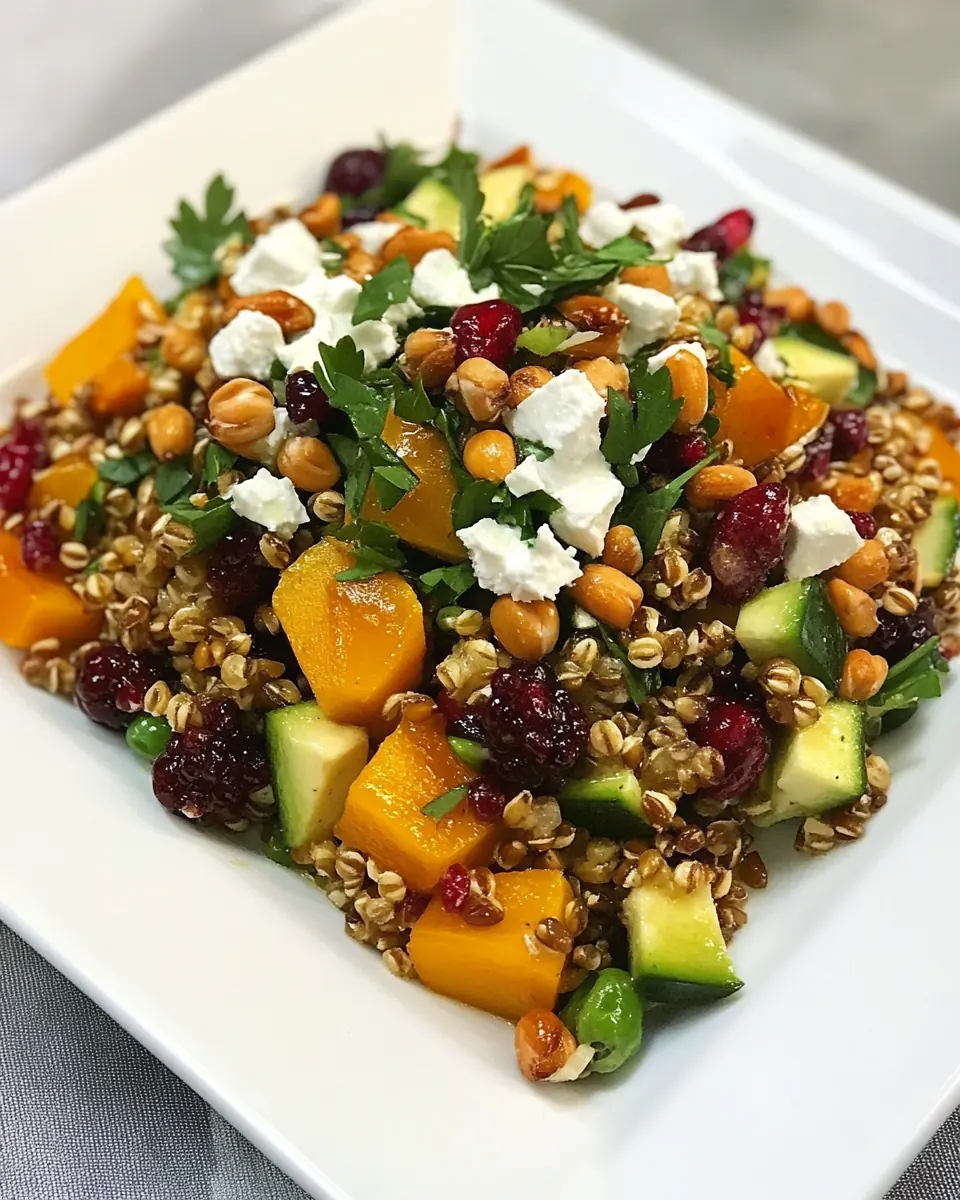
In a large serving bowl, toss kale, feta, pistachios, craisins, roasted squash and wheat berries together with my favorite salad dressing: At this final assembly, the kitchen fills with a mosaic of aromas, sweet maple, tangy feta cheese , and herbaceous tarragon. Toss gently so the baby kale stays vibrant and the roasted butternut squash pieces keep their integrity. The dressing should coat rather than drown the components, creating a glossy finish and balanced mouthfeel. A common error is overdressing, which results in limp greens and a cloying taste, so add dressing gradually and taste as you go.
Serve: Present the salad on a wide platter or in a shallow bowl so each ingredient is visible and easy to serve. The contrast of colors and textures should be appealing, with flecks of feta cheese and bright craisins punctuating the plate. Serve slightly warm or at room temperature for the best flavor interplay. Serving it piping hot will wilt the greens, and serving it overly chilled can mute the aromas.