Stir together the ingredients for the za’atar spice blend in a small bowl.: The aroma will change immediately, releasing toasted sesame nuttiness and lemony sumac . You will notice the texture shift as the dried herbs and spices form a cohesive, slightly coarse blend. This matters because a uniform blend coats the chicken evenly, ensuring every bite tastes balanced. One common mistake is skimping on toasting the sesame, which leaves the blend flat. If any spice smells stale, replace it, because fresh spices make the biggest difference here.
Place the chicken in a zip lock bag or sealable container and drizzle with olive oil. Sprinkle with 2 tablespoons (or more) of the za’atar spice blend and sea salt. Seal the bag and shake/rotate the bag until the chicken is well-coated in spices and oil. Allow chicken to marinate at least 15 minutes, up to 12 hours.: As you toss the chicken with the oil and spice, the meat will begin to glisten, and the oil helps the spices adhere and promotes browning. The tactile cue is when the chicken is evenly coated and you can see the speckled herb mix. Why it matters: proper coating locks in moisture during roasting and builds a crust. Avoid overfilling the bag because crowded pieces will steam instead of roast, leading to pale, less flavorful meat.
Preheat the oven to 450 degrees F. Place chicken in a casserole dish in a single layer, allowing space between each breast for even cooking. Bake chicken 20 minutes, or until the internal temperature reaches 160 degrees F. Transfer chicken to a cutting board and allow it to rest 5 to 10 minutes before slicing.: The salt dissolves slightly on the surface and helps the chicken form a seasoned crust. When you press the spices into the chicken , you should see them adhere rather than fall off. This step is key for layering flavor from the inside out. A common error is adding too much salt up front without tasting the assembled bowl later, so I recommend conservative salting here and adjusting after tasting.
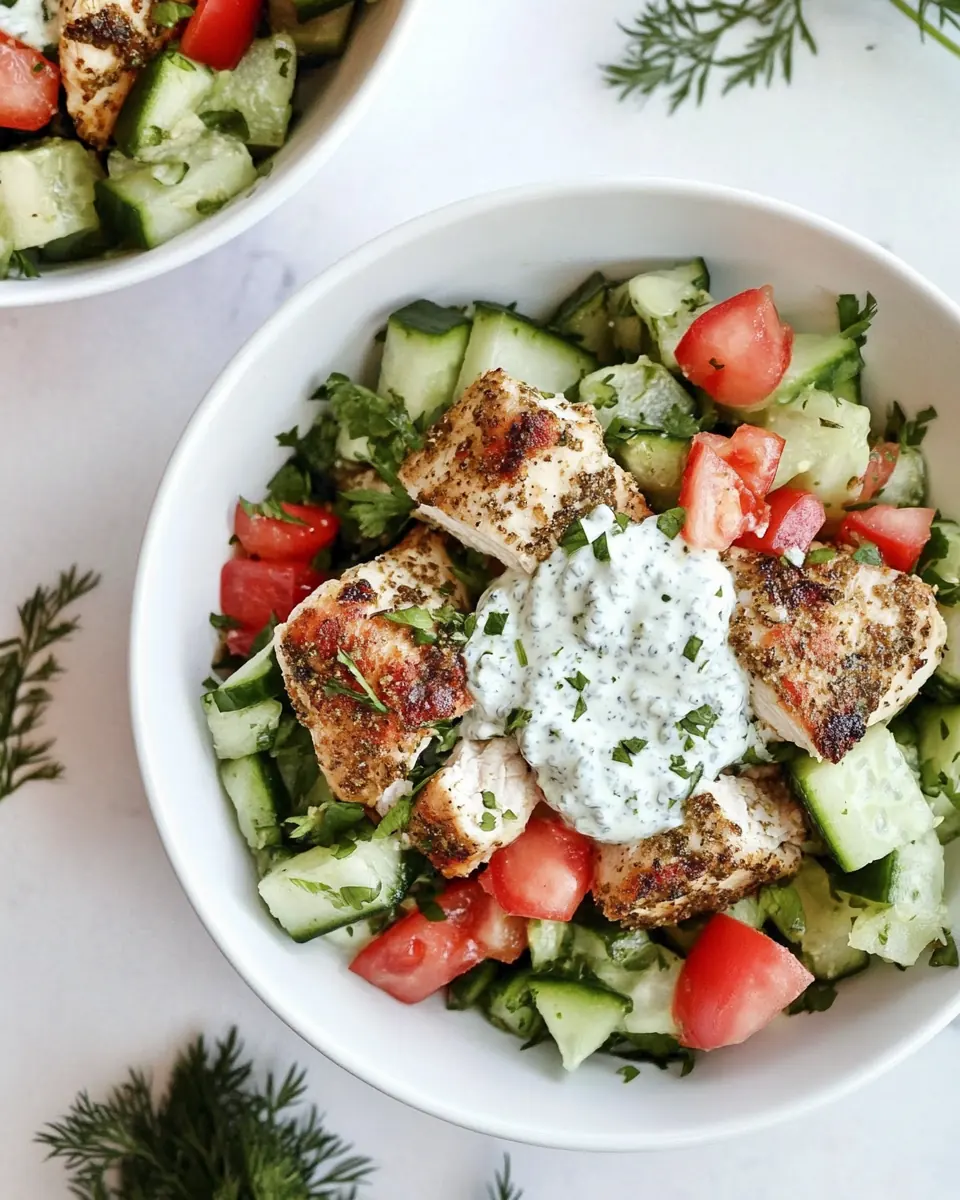
Form bowls by dividing rice, chicken, and cucumber salad among 3 to 4 bowls. Drizzle with kefir raita and serve.: The sound of the pieces shifting in the bag is reassuring, and visually you want uniform speckling of the blend across each breast. This mechanical motion replicates the effect of massaging, ensuring every surface is seasoned. It matters because uneven coating leads to inconsistent browning and flavor. Do not leave raw chicken at room temperature for more than a short time while you finish other prep tasks, to stay food safe.
Stir together the ingredients for the raita in a bowl until combined. Taste for flavor and add sea salt to taste. Refrigerate until ready to use.: As the chicken rests, the flavors penetrate the muscle, and the meat relaxes, making it juicier after cooking. You will notice a subtle change in scent, with the herbs becoming more pronounced. Marinating longer deepens flavor, but overly long in acidic mixtures can make textures slightly mealy, so adhere to the timing. Temperature control is important, so always marinate in the refrigerator if overnight.
Combine the ingredients for the salad in a mixing bowl and toss together to combine. Set aside until ready to use.: When the oven reaches temperature, the heat will sear the exterior of the chicken , creating a golden crust while sealing juices inside. You should hear a faint sizzle when the meat first hits the hot dish, and the oven's steady roar means consistent heat. This high temperature shortens cooking time and keeps the meat tender. A common mistake is placing cold chicken into a not fully preheated oven, which can lengthen cook time and dry the meat.
Place chicken in a casserole dish in a single layer, allowing space between each breast for even cooking: Spacing is crucial because air needs to circulate to brown the surfaces. Visually the pieces should sit with small gaps so heat reaches each side. This produces even doneness and prevents steaming. Crowding leads to pale, unevenly cooked meat, so use two pans if necessary rather than stacking.
Bake chicken 20 minutes, or until the internal temperature reaches 160 degrees F: The oven transforms the exterior to a bronzed finish and the aroma shifts to roasted herbs and caramelized sesame. Listen for the quiet settling of juices and watch the juices run clear at the surface. The internal temperature is the reliable cue for doneness, and removing at 160 degrees F allows carryover to reach a safe finish without overcooking. Avoid relying on time alone, as ovens vary; use an instant read thermometer for accuracy.
Transfer chicken to a cutting board and allow it to rest 5 to 10 minutes before slicing: Resting redistributes juices so that slices are moist rather than leaking on the board. You will notice the meat firm slightly and the aroma intensify. This pause is essential for texture. A frequent error is slicing immediately, which causes the juices to escape and yields dry bites.
Form bowls by dividing rice, chicken, and cucumber salad among 3 to 4 bowls: The visual contrast of warm brown rice , roasted chicken , and bright cucumber salad is delightful. Assemble while the chicken is still slightly warm to meld flavors, then scatter crumbled feta cheese and herbs on top. This arrangement helps balance temperatures and textures in each spoonful. Avoid overloading a single bowl, as it makes mixing and tasting each element harder.
Drizzle with kefir raita and serve: The creamy kefir will cool and bind the bowl, and a generous drizzle creates pockets of tang that harmonize with the herbs. You should see streaks of white against the colorful bowl and smell the fresh mint and dill. This final touch softens bold spices and rounds the palate. A mistake to avoid is making the raita too thin; if so, strain the kefir briefly to thicken before serving.
Stir together the ingredients for the raita in a bowl until combined: The texture should be smooth and slightly thick, dotted with flecks of chopped cucumber , mint , and dill . Taste and adjust salt, because balanced acidity and salt are what make raita sing. If it tastes flat, a touch more lemon juice or salt will brighten it. Overwhipping can make the raita watery, so mix gently.
Taste for flavor and add sea salt to taste: The tasting step is where you calibrate the balance of tang, salt, and herb. The raita should be lively but not overpowering, serving as a cooling foil. Season incrementally, because it's easy to over-salt. If you overdo it, a spoonful of plain kefir can mellow the mix.
Refrigerate until ready to use: Chilling lets flavors marry and the raita thicken slightly. You will notice the aroma mellow and the consistency firm up. Keep it covered to preserve freshness and prevent absorption of other fridge scents. Do not leave dairy based raita at room temperature for extended periods to avoid spoilage.
Combine the ingredients for the salad in a mixing bowl and toss together to combine: As you toss, the juices from the tomatoes and the lemon juice will coat the diced cucumber and herbs, creating a bright, moist salad. The sound of the tomatoes releasing juices is a good cue the salad is ready. Toss gently to avoid breaking the tomatoes into mush. If the salad seems watery, drain briefly before assembling bowls.
Set aside until ready to use: Letting the salad sit for a short time allows flavors to meld, but long sitting can make the vegetables soft. I usually rest it while the chicken roasts. If you need to hold it longer, keep it chilled and toss again before serving to refresh the texture.