Make sauce: Add the olive oil to a large skillet and heat over medium heat. Add onion and cook for a couple minutes until onion is soft. Add garlic and ground beef and break the ground beef with a wooden spoon.: Add the olive oil to a large skillet and heat over medium heat. Add onion and cook for a couple minutes until onion is soft. Add garlic and ground beef and break the ground beef with a wooden spoon : As the olive oil warms you will smell a faint fruity aroma, and when the onion hits the pan it will soften and begin to turn translucent, releasing sweet notes that form the base of the sauce. When you add the minced garlic , you should notice its aroma for just a moment before it mellows into the background; be careful not to let it brown too quickly, or it will taste bitter. Adding the ground beef and breaking it apart creates sizzling sounds as the meat browns, and those browned bits carry rich flavor. Why this matters, the initial browning unlocks Maillard flavors that make the sauce deeply savory. A common mistake is overcrowding the pan which causes steaming instead of browning, so give the meat room and stir occasionally to brown evenly. If your pan seems dry, add a splash more olive oil to ensure proper browning and prevent sticking.
Cook until the meat is no longer pink. Add bay leaves, cinnamon, oregano, pepper, hot sauce and stir. Cook for a couple more minutes. Add crushed tomatoes, stir and simmer for 10 to 15 minutes.: During this phase the sizzling will slow down as moisture releases from the meat, and you will see the color go from pink to a uniform brown which signals doneness. When you fold in the herbs and spices, their fragrances bloom, and the hint of cinnamon will give a warm undertone that balances the tomato tang. Stirring for a couple more minutes helps toast the dried oregano slightly, boosting its aroma. Adding the crushed tomatoes introduces a bright, acidic scent and the sauce will transition to a gentle simmer, where small bubbles rise and then settle quietly. Simmering for the recommended time allows flavors to marry and the sauce to thicken. Watch for excessive reduction which can over concentrate saltiness, and remove any foam that forms on top. One pitfall is simmering at too high heat which prevents flavor melding, so keep it at a gentle simmer and taste to adjust seasoning.
Prepare zucchini: While the sauce is simmering you can prepare the zucchini, by either using a knife to slice them or using a mandoline. Slice the zucchini so they are about 1/8 of an inch in thickness.: While the sauce is simmering you can prepare the zucchini, by either using a knife to slice them or using a mandoline. Slice the zucchini so they are about 1/8 of an inch in thickness : You will notice the fresh, green aroma of the zucchini as you slice, and the thin slices should feel supple but not flabby. Using a mandoline gives consistent thickness which helps the layers cook evenly, whereas a knife allows more control if you prefer varied textures. Slices that are too thick will stay undercooked and too watery, while overly thin slices may collapse into the sauce, so aim for that sweet spot of about one eighth of an inch. A common mistake is not patting slices dry, which can introduce extra moisture into the lasagna; if you see excess water, blot them with a towel. If your zucchini are large and seedy, trim the centers slightly for better texture in the finished dish.
Preheat oven to 375 ℉. Use a 9×13 inch baking dish.: Preheating the oven ensures immediate, even cooking when the lasagna goes in, and you will notice a steady warm breath from the oven when it reaches temperature. A 9 by 13 inch dish gives the right layer depth and ensures even heat circulation, which is essential for the center to reach a safe temperature while the top becomes golden. If you skip preheating, the baking time will shift and the cheese may melt unevenly. One mistake is using a much smaller or larger dish which alters the layer thickness, so stick with the recommended size or adjust the baking time accordingly. For even browning, position the rack in the center of the oven.
Assemble lasagna: Start with a layer of zucchini slices. Top the zucchini layer with a bit of mozzarella cheese and then a layer of mushroom slices. Next add a layer of the meat sauce, followed by dollops of ricotta cheese. Repeat so that you end up with 3 layers of zucchini. When you get to the last layer of ricotta cheese, top with shredded mozzarella or slices of mozzarella cheese. Finally sprinkle Parmesan cheese over the top.: Start with a layer of zucchini slices. Top the zucchini layer with a bit of mozzarella cheese and then a layer of mushroom slices. Next add a layer of the meat sauce, followed by dollops of ricotta cheese. Repeat so that you end up with 3 layers of zucchini. When you get to the last layer of ricotta cheese, top with shredded mozzarella or slices of mozzarella cheese. Finally sprinkle Parmesan cheese over the top : The moment you begin assembling you will notice the building fragrance of tomatoes, herbs, and melting cheese, and the visual of alternating green, red, and white layers is gratifying. Placing shredded mozzarella cheese early helps bind the layers while the mushrooms add a meaty chew that complements the ground beef . Dollops of ricotta cheese create pockets of creamy coolness that contrast with the hot sauce, and finishing with shredded mozzarella cheese and grated Parmesan cheese produces a golden, bubbling crust. Why layer in this order, the distribution of moisture and cheese ensures the zucchini softens without becoming soggy, and the lasagna holds together when sliced. A frequent issue is uneven layering which causes some parts to slide; press layers gently and keep them level. If the top looks dry before baking, a light brush of olive oil can encourage browning.
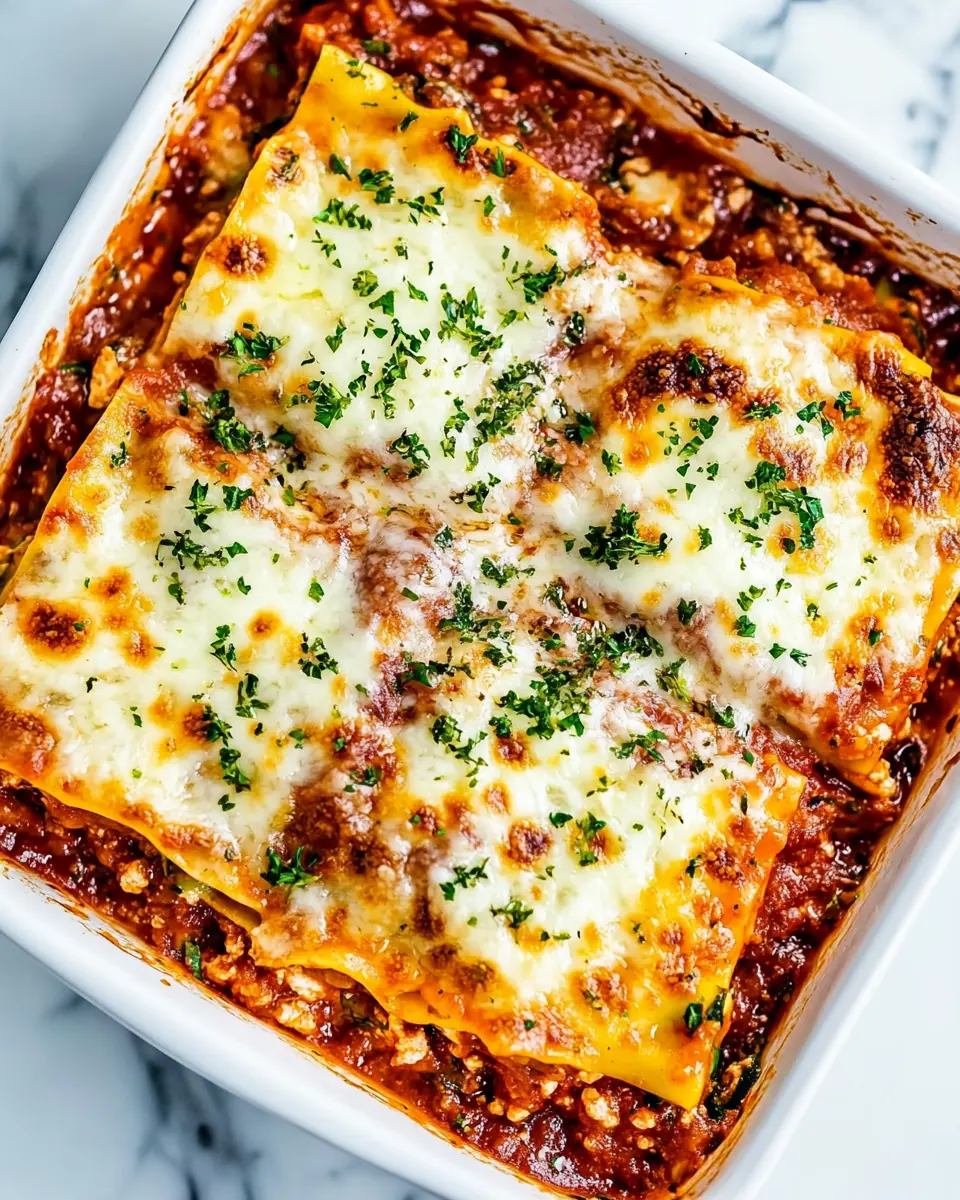
Bake: Transfer the baking dish and bake for about 40 to 50 minutes or until the top is starting to get golden and the cheese is bubbly.: Transfer the baking dish and bake for about 40 to 50 minutes or until the top is starting to get golden and the cheese is bubbly : As the dish bakes you will hear a soft, steady bubble as the sauce and cheeses mingle, and the aroma will intensify into a warm, savory cloud that fills the kitchen. The top should slowly develop a golden hue and the mozzarella cheese will stretch into glossy strings when you peek. This bake time allows the center to heat through and the layers to set, which makes slicing cleaner. Avoid opening the oven door repeatedly, as that drops temperature and can extend cooking time. One common mistake is underbaking, which leaves the center loose; if you suspect this, tent the dish with foil and bake a bit longer while checking for bubbling near the center.
Garnish with parsley. Allow the lasagna to sit and settle for about 10 to 15 minutes before slicing into it and serving.: After removing from the oven the sizzling slows and the aromas mellow, giving you a golden, glossy top to admire. A sprinkle of fresh parsley adds color and a bright herbal note that cuts through the richness. Letting the lasagna rest is crucial because it allows steam to redistribute, the sauce to thicken slightly, and the layers to bind so slices hold their shape. Cutting too soon will cause the lasagna to collapse and make serving messy. If you need to speed cooling, leave it uncovered for a few minutes then tent loosely with foil for the remainder of the resting time.