Arroz Navideno
Arroz Navideno has been a warm thread through my family holidays for as long as I can remember, a bowl that always appears when the table needs a little extra cheer. I grew up watching my aunt scoop steaming rice onto a platter, the tiny raisins dotting the surface like festive confetti, while toasted almonds snapped gently under a fork. There is a particular comfort in the way the aroma of rice and olive oil mingles in the air, and every time I make Arroz Navideno I am pulled back to that kitchen, smiling at the memory of kids racing to steal a handful of almonds before the first serving.
When I began adapting the recipe for my own home, I learned to treat each ingredient as a character in the story. The toasted crunch of the almonds keeps things lively, the sweet pop of the raisins and sultanas offers a bright contrast, and the savory depth of the hot vegetable broth ties everything together. Over time I developed little rituals, like removing the almonds early so they stay crisp, and allowing the rice to rest off the heat so it finishes with perfect texture. Every pot becomes an opportunity to revisit those rituals, and to make new small improvements that honor tradition while fitting my kitchen.
Recipe Snapshot
35 mins
5 mins
30 mins
Easy
220 kcal
Mediterranean
Vegan, Gluten-Free
Side Dishes
Large heavy bottomed pot with lid, Wooden spoon, Serving platter
Why This Arroz Navideno Hits Different
Festive flavor balance
I love how Arroz Navideno brings sweetness and savoriness into perfect alignment. The combination of toasted almonds and plump raisins gives the dish a multi dimensional profile, where every bite alternates between nutty crunch and soft, fruity pockets. I often tell friends that this rice feels celebratory without being overwhelming, because the texture variety keeps it interesting and approachable.
Simple techniques, big payoff
What draws me to this recipe is the economy of method. A few minutes to toast and brown gives a major lift in aroma and texture, and the hands on step of coating the rice in oil helps it develop a slightly translucent, glossy grain that soaks up the hot vegetable broth beautifully. I appreciate recipes where small attentions reward you with deep flavor, and this one does that every time I make it.
Flexible centerpiece or side
I call this a crowd pleaser because it works both as a supporting side and as a star on its own. At holiday gatherings I find people gravitate to the platter, mixing it with other dishes or enjoying it solo. Because the ingredients are straightforward and vegetarian friendly, I often bring it to potlucks knowing it will suit many diets and preferences.
Comfort with a continental twist
The warm, lightly oiled grains remind me of home cooked comfort food, while the addition of dried fruit and nuts gives it a slightly international feel that elevates the meal. I like serving it when I want something that feels rooted and slightly adventurous, an approachable way to introduce a new flavor profile without intimidating anyone at the table.
Reliable and forgiving
This recipe is forgiving when it comes to timing and small variations in heat, which is why I often recommend it to home cooks who are newer to stovetop rice. I find that keeping an eye on texture, rather than the clock alone, helps you hit the right finish. Over the years I have seen it recover from slightly high heat or a touch more liquid, which makes it a dependable choice for busy holiday kitchens.
Ingredients Required for Arroz Navideno
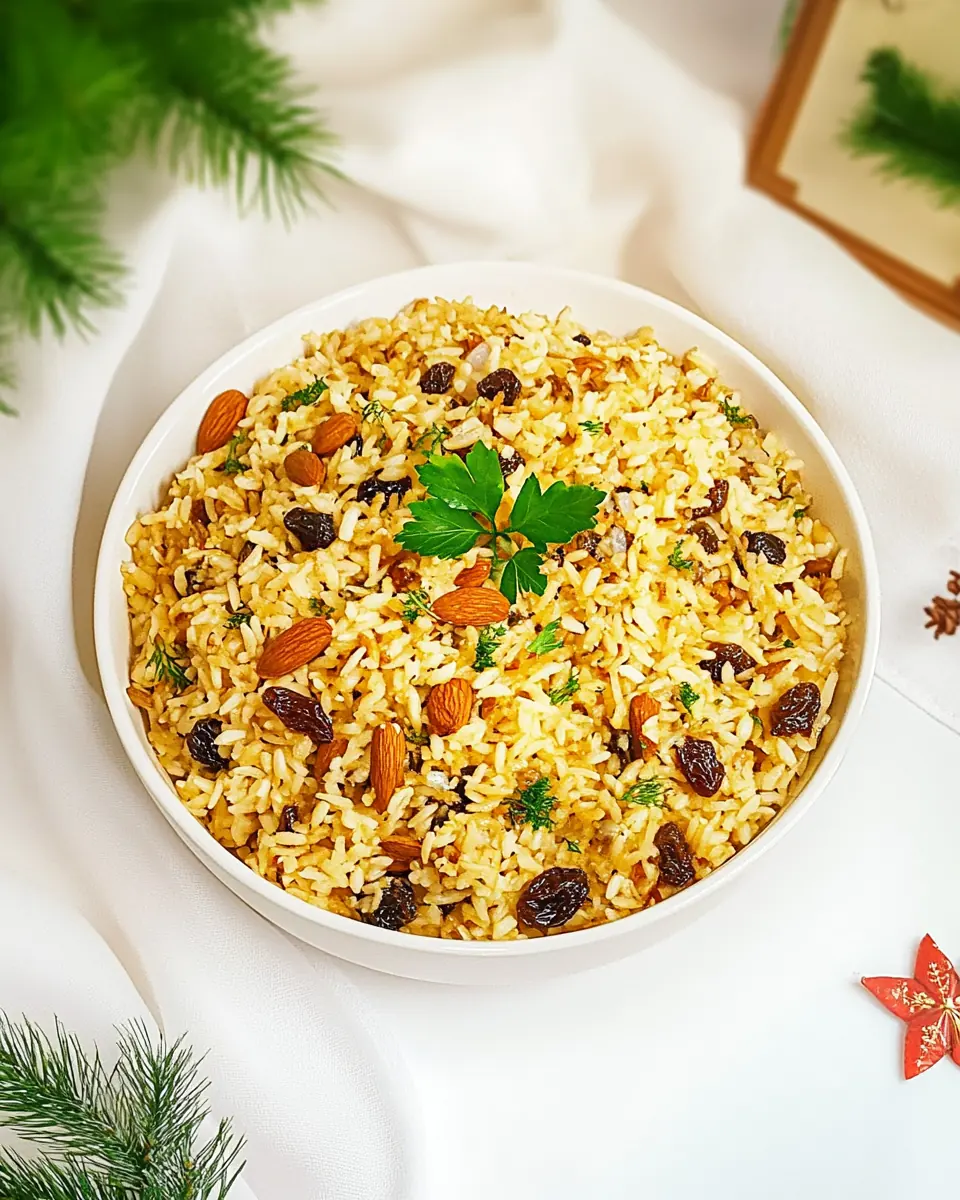
The ingredients here form a simple harmony where texture and flavor each play their part. The toasted nuts bring crunch, the dried fruits bring sweetness, and the rice soaks up savory stock for depth. Think of the key players as collaborators: the rice is the stage, the vegetable broth the supporting score, and the almonds and raisins the dynamic accents that make every serving memorable.
- 3 tablespoons olive oil: Heat gently and provide a flavorful cooking medium that prevents sticking while infusing the rice with savory richness; use at the start to sauté aromatics or toast rice for depth of flavor. Incorporate sparingly to keep the dish balanced and retain a light, Mediterranean character.
- 1 1/2 cups livered almonds: Toast briefly to develop a nutty, slightly bitter counterpoint that adds texture and traditional flavor notes; pulse or chop if whole to distribute throughout the rice. Balance toasted intensity so the nuts complement the sweet and savory elements without overpowering them.
- 3 cups rice: Rinse and absorb flavors as the main bulk of the dish, providing structure and starch that carries the seasonings and mix-ins; choose a medium-grain rice for a moist, slightly sticky result. Add to hot broth and simmer gently until tender to achieve a cohesive pilaf-style Christmas rice.
- 6 cups vegetable broth, or homemade vegetable broth recipe [1.5 liter] boiling hot: Simmer and infuse the rice with liquid, seasoning, and depth; use boiling-hot broth to maintain consistent cooking temperature and ensure even absorption. Prefer homemade or good-quality vegetable broth to enhance savory complexity and support the vegetarian profile of the dish.
- 2 teaspoons salt: Season generously to enhance and balance the overall dish, promoting savory depth and helping to highlight the sweetness of the raisins and sultanas; dissolve into the broth for even distribution. Adjust to taste at the end, keeping in mind broth saltiness and other flavor contributors.
- 1 1/2 cup raisins, and sultanas mixed: Provide bursts of concentrated sweetness and chewiness that contrast the savory rice and toasted nuts; mix raisins and sultanas evenly so sweetness is distributed throughout. Soak briefly if desired to plump them, and add during cooking so they rehydrate and meld into the final texture.
- 3 tablespoons minced parsley: Garnish finely to introduce fresh, bright herbaceous notes that cut through richness and add color to the finished dish; mince to release aromatics and sprinkle just before serving. Use to refresh the palate and provide a visual contrast against the rice and dried fruit.
Putting Together Arroz Navideno
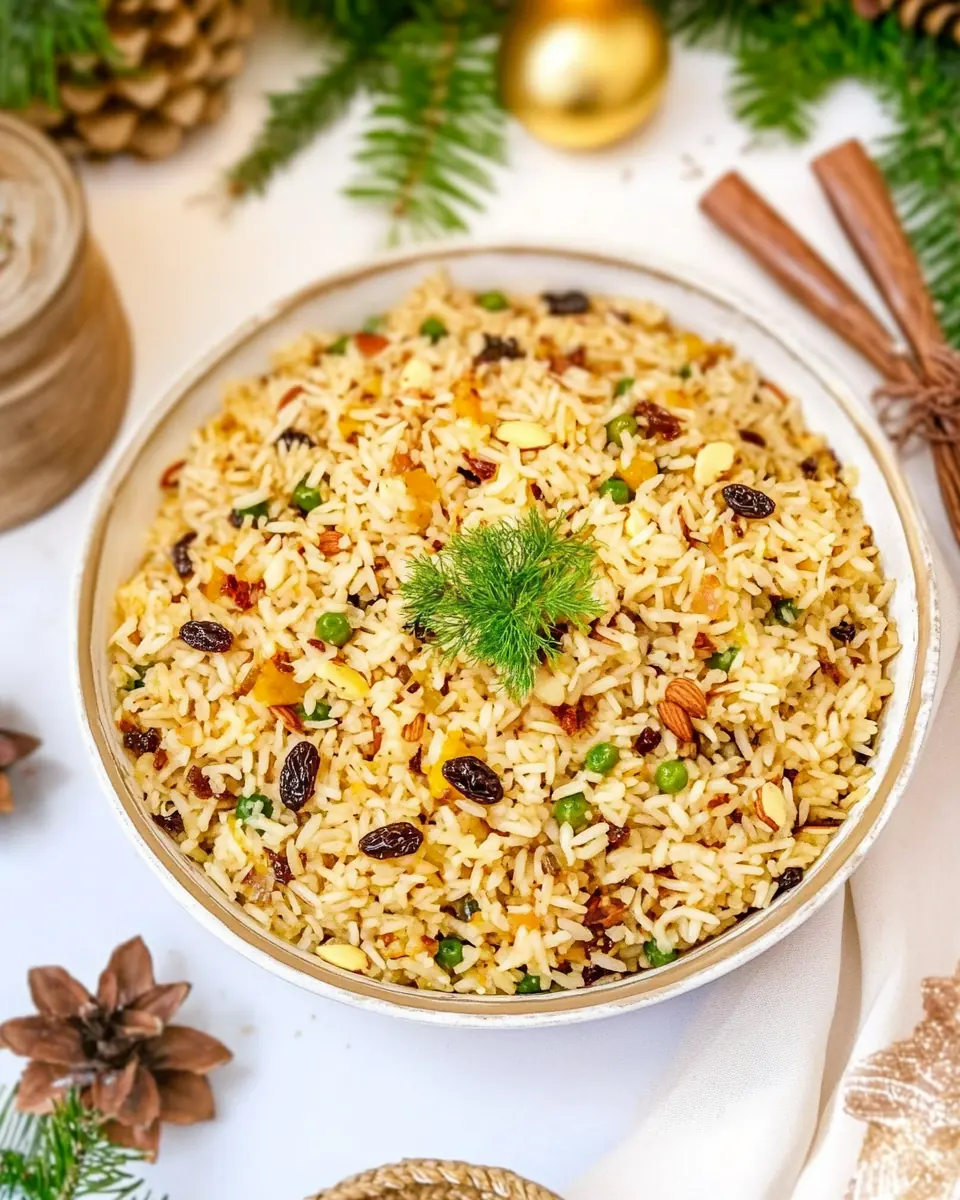
Bringing this dish together is all about timing and attention to sensory cues. Move deliberately between toasting, coating, and simmering, and use your senses to confirm each stage. I find that listening to the pan and watching the color changes are as informative as a timer.
- Heat the oil over medium heat. Stir in the almonds and cook stirring until they turn a light golden color. Remove the almonds from the oil and set them aside.: The pan should give off a faint, warm shimmer and the olive oil will smell slightly fruity when it reaches the right temperature, which signals readiness. You will hear a gentle fluid ripple as the oil moves, and the surface should become uniformly glossy. This gentle heat is important because it allows the almonds to toast evenly without burning. A common mistake is using high heat, which can scorch the oil and create a bitter taste, so lower the flame if you see rapid smoking.
- Add the raw, unrinsed rice to the heated oil, cook stirring until the grains are coated with oil, and turn a slightly yellow color. Pour in the vegetable broth, stir and salt to taste. Boil over medium flame, stirring often, until the liquid has almost all evaporated. Add the raisins and sultanas and stir to combine. Lower the heat, cover with a tight-fitting lid, and simmer for 15 minutes. Stir the rice and simmer covered for another 10 minutes, or until the rice is cooked through. Uncover, fluff with a fork, and mix in the toasted almonds. Remove from the stove.: As you stir the almonds , pay attention to the sound, a faint crackle as they release moisture, and watch for a warm, nutty aroma to build in the pan. The color shift to pale gold is subtle, so keep stirring to ensure even browning and to prevent hot spots. Removing them promptly preserves their snap, while leaving them will continue to cook from residual heat and can produce an over toasted result. If some pieces darken too quickly, this usually means the heat was slightly too high.
- Place the rice in a serving platter and sprinkle with fresh parsley.: When you transfer the almonds to a plate, they should still feel warm and crisp; this indicates they retained their texture. Setting them aside immediately stops carryover browning and keeps them from softening in the pan. I like to line the plate with paper to absorb any excess oil. A mistake at this point is leaving them in the pan, which allows trapped heat to steam them and reduce crunch.
- Add the raw, unrinsed rice to the heated oil: The rice will sizzle softly as it hits the pan and begins to pick up the glossy coating from the oil. Stirring gently helps each grain become enveloped and slightly translucent at the edges, which is the visual cue that they are properly coated. This step helps the grains stay separate and prevents them from clumping later. If you skip coating, the texture can become sticky because the oil acts as a barrier against over absorption.
- Cook stirring until the grains are coated with oil, and turn a slightly yellow color: You'll notice a faint shift in color and a subtle nutty aroma as the rice takes on the oil, a sign of Maillard like reactions that enhance flavor. The grains should glisten rather than look dull, and the sound in the pan will be a low, steady whisper as you stir. Overstirring after the broth is added is a frequent misstep, so keep movements gentle and purposeful here.
- Pour in the vegetable broth, stir and salt to taste: As you add the hot vegetable broth , steam will rise immediately and the kitchen will fill with savory scent, which is reassuring because it means the temperature transfer is right. Stir just enough to distribute the liquid and dissolved salt , then give the pot a minute to begin simmering. Using boiling hot broth ensures the rice starts cooking evenly, while cool broth can cause uneven texture. A common error is over seasoning at this stage, so season lightly and plan to adjust later.
- Boil over medium flame, stirring often, until the liquid has almost all evaporated: You will see vigorous bubbling that calms into a gentler simmer as the liquid reduces; the aroma concentrates and the surface of the pot will show small dimples where the heat meets the liquid. Stirring often prevents the grains from sticking and allows you to judge when the majority of the broth has been absorbed. If you stop stirring for too long the bottom may catch, producing a scorched flavor, so maintain regular movement and reduce heat if the simmer is too aggressive.
- Add the raisins and sultanas and stir to combine: The dried fruit will plump slightly as it meets the warm grains, releasing a light sweetness that perfumes the pot. Mixing them in at this moment ensures they retain chew while soaking up just enough moisture to become juicy. If you add them too early they can break down, losing the pleasant contrast, so timing keeps their texture intact. Watch for a uniform distribution so each serving gets a balanced bite.
- Lower the heat, cover with a tight fitting lid, and simmer for 15 minutes: With the lid on you will notice a softer bubbling and a gentle steam that presses down on the grains, finishing the cooking evenly. The pot will give off a steady, comforting steam that smells rounded and savory. This covered simmer is crucial because it traps heat and allows the rice to absorb residual liquid. A common mistake is peeking too often, which releases steam and lengthens the cooking time, so resist lifting the lid during this period.
- Stir the rice and simmer covered for another 10 minutes, or until the rice is cooked through: After you briefly stir to redistribute moisture, the rice will settle into a final gentle simmer. The aroma should now be fully developed and the grains tender but still separate when tested with a fork. Leaving it to finish covered creates a gentle steam bath that yields even texture. If you uncover too early you might find portions undercooked, so trust the timing and check only at the end to avoid heat loss.
- Uncover, fluff with a fork, and mix in the toasted almonds: Fluffing will separate the grains and release trapped steam, giving the rice an airy texture that showcases the contrast with crunchy almonds . The toasted pieces will snap audibly against the soft grains, and their aroma will feel renewed when combined. Add them and fold gently to preserve the crispness. A common error is stirring too vigorously which can crush the almonds and make the rice pasty.
- Remove from the stove: Taking the pot off the heat halts the cooking process and prevents overdone grains. At this point the scent is warm and inviting, and the surface will look slightly glossy from the retained oil. Leaving it on residual heat can continue to dry out the rice, so transfer to a serving vessel or keep the lid loosely on if you must wait to serve.
- Place the rice in a serving platter and sprinkle with fresh parsley: The final flourish of minced parsley adds a bright herbal contrast visually and aromatically, and scattering it over the warm rice releases a fresh green scent. Presenting the dish on a platter invites sharing and showcases the contrast of colors. Avoid chopping the parsley too far in advance because its vibrancy fades, and serve soon after garnishing to maintain its fragrance.
Making Adjustments
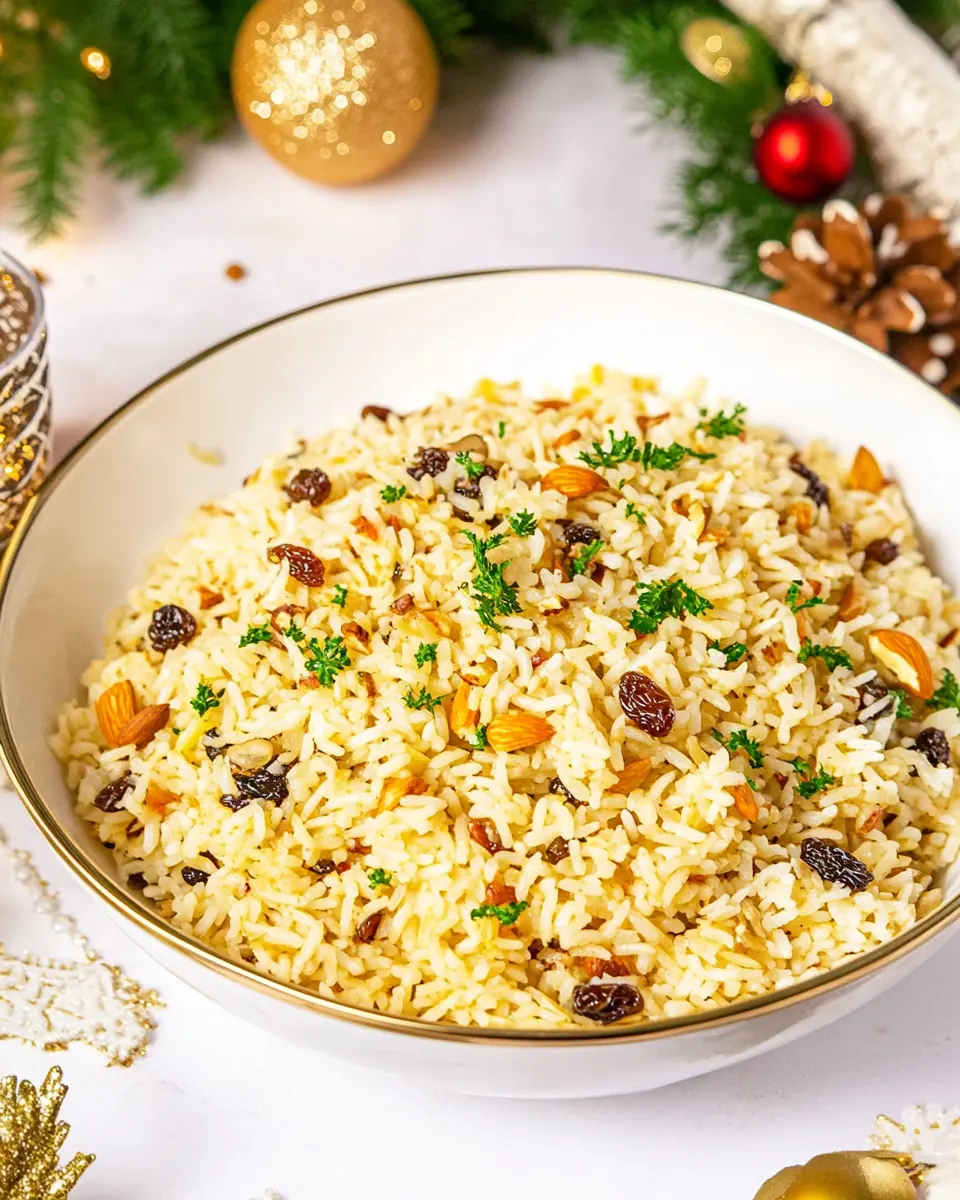
This section helps you tailor Arroz Navideno to your pantry and preferences without losing the heart of the dish. Small adjustments to timing, salt, and how you toast the nuts can make a big difference in the final plate, and these tips walk you through those decisions.
- Adjust salt gradually, start with a little and taste toward the end because the vegetable broth can vary in saltiness, and it is easier to add more than to fix oversalting.
- Keep almonds crisp, remove them as soon as they reach a pale golden color to avoid carryover browning and loss of crunch from residual heat.
- Control the broth temperature, add boiling hot stock so the cooking process is steady and you avoid extended simmering that dries the rice unevenly.
- Timing for dried fruit, fold in the raisins and sultanas late to maintain their chew and prevent them from turning mushy in the pot.
- Use a tight fitting lid, covering during simmering traps steam and finishes the rice evenly, so choose a lid that seals well or weigh it down slightly for consistent results.
- Rest briefly off heat, allow the rice to sit for a few minutes after cooking to let residual steam settle and for flavors to meld before fluffing and serving.
Side Dish Ideas for Arroz Navideno
Arroz Navideno serves beautifully as part of a larger spread or as a highlighted side. Its sweet and nutty profile pairs well with roasted vegetables, bright salads, or simple protein mains. Consider the meal context and season when planning accompaniments, and use texture contrasts to keep the plate balanced.
- Holiday dinner centerpiece, present Arroz Navideno alongside hearty vegetarian mains or roasted vegetables for a festive table that suits holiday occasions like Christmas.
- Weeknight complement, serve it with simply prepared roasted vegetables and a crisp green salad for an easy weeknight dinner that feels special without heavy effort.
- Ramadan iftar, this rice can be a comforting and shareable dish to break fast with family, offering gentle sweetness and sustaining carbs that pair well with lighter soups and fruit plates.
- Potluck friendly, transport the rice to gatherings in a warm casserole dish and top with fresh parsley just before serving for visual appeal.
- Storage tips, refrigerate leftovers in an airtight container for up to three days, and reheat gently with a splash of hot vegetable broth to restore moisture and steam.
- Seasonal pairings, in winter I prefer deeper roasted sides while in spring lighter salads and citrus based sides brighten the plate, choose sides that echo either the nutty or fruity notes of the rice.
FAQ
Conclusion
What makes this recipe special is its elegant balance of textures and flavors, where toasted almonds and sweet dried fruit lift simple rice into something festive and memorable. I hope this encourages you to try Arroz Navideno at your next gathering, because its approachable technique and joyful profile reward a little attention with a lot of satisfaction. Share it, savor it, and make the dish your own with small tweaks that reflect your kitchen style.
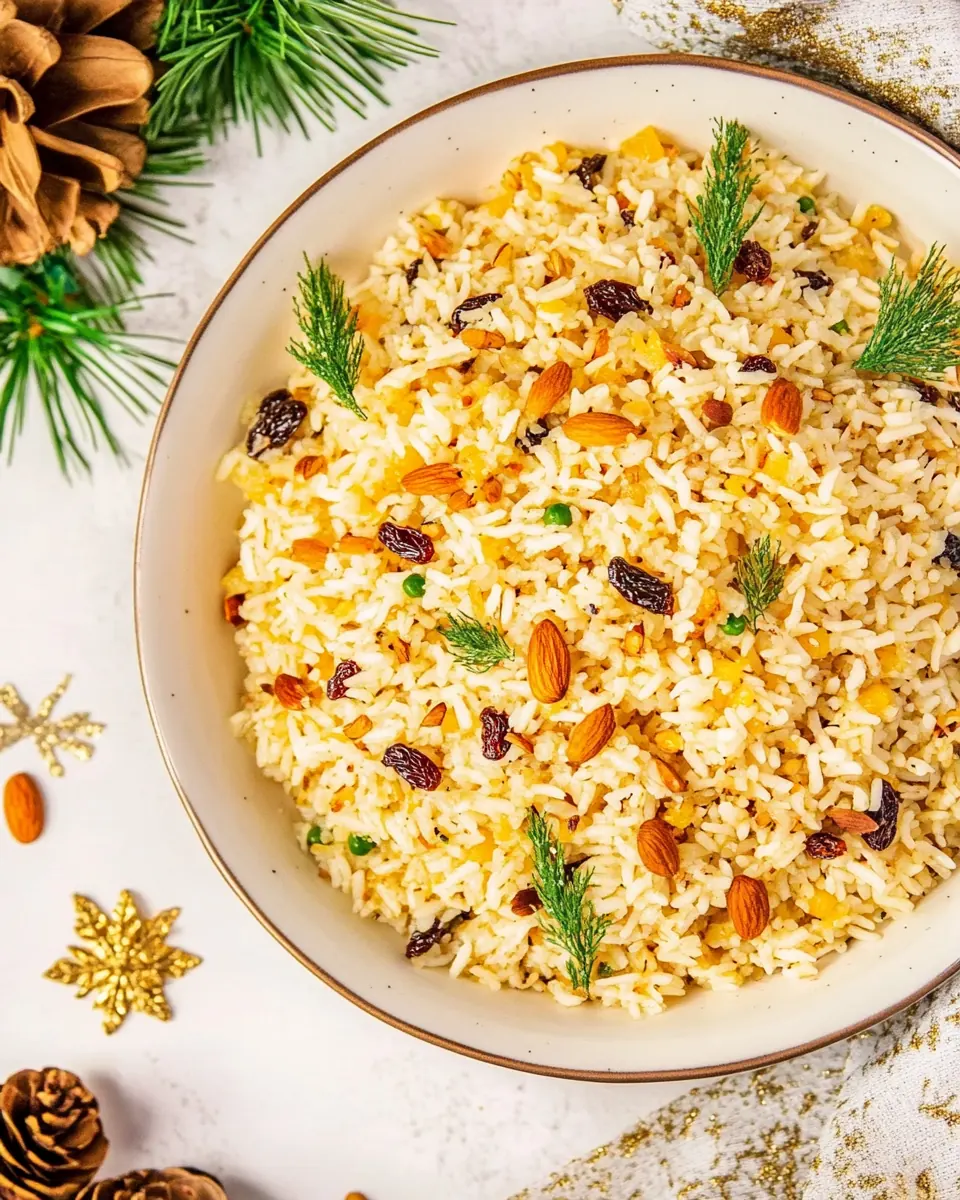
Arroz Navideno
Ingredients
Equipment
Method
- Heat the oil over medium heat. Stir in the almonds and cook stirring until they turn a light golden color. Remove the almonds from the oil and set them aside.: The pan should give off a faint, warm shimmer and the olive oil will smell slightly fruity when it reaches the right temperature, which signals readiness. You will hear a gentle fluid ripple as the oil moves, and the surface should become uniformly glossy. This gentle heat is important because it allows the almonds to toast evenly without burning. A common mistake is using high heat, which can scorch the oil and create a bitter taste, so lower the flame if you see rapid smoking.
- Add the raw, unrinsed rice to the heated oil, cook stirring until the grains are coated with oil, and turn a slightly yellow color. Pour in the vegetable broth, stir and salt to taste. Boil over medium flame, stirring often, until the liquid has almost all evaporated. Add the raisins and sultanas and stir to combine. Lower the heat, cover with a tight-fitting lid, and simmer for 15 minutes. Stir the rice and simmer covered for another 10 minutes, or until the rice is cooked through. Uncover, fluff with a fork, and mix in the toasted almonds. Remove from the stove.: As you stir the almonds , pay attention to the sound, a faint crackle as they release moisture, and watch for a warm, nutty aroma to build in the pan. The color shift to pale gold is subtle, so keep stirring to ensure even browning and to prevent hot spots. Removing them promptly preserves their snap, while leaving them will continue to cook from residual heat and can produce an over toasted result. If some pieces darken too quickly, this usually means the heat was slightly too high.
- Place the rice in a serving platter and sprinkle with fresh parsley.: When you transfer the almonds to a plate, they should still feel warm and crisp; this indicates they retained their texture. Setting them aside immediately stops carryover browning and keeps them from softening in the pan. I like to line the plate with paper to absorb any excess oil. A mistake at this point is leaving them in the pan, which allows trapped heat to steam them and reduce crunch.
- Add the raw, unrinsed rice to the heated oil: The rice will sizzle softly as it hits the pan and begins to pick up the glossy coating from the oil. Stirring gently helps each grain become enveloped and slightly translucent at the edges, which is the visual cue that they are properly coated. This step helps the grains stay separate and prevents them from clumping later. If you skip coating, the texture can become sticky because the oil acts as a barrier against over absorption.
- Cook stirring until the grains are coated with oil, and turn a slightly yellow color: You'll notice a faint shift in color and a subtle nutty aroma as the rice takes on the oil, a sign of Maillard like reactions that enhance flavor. The grains should glisten rather than look dull, and the sound in the pan will be a low, steady whisper as you stir. Overstirring after the broth is added is a frequent misstep, so keep movements gentle and purposeful here.
- Pour in the vegetable broth, stir and salt to taste: As you add the hot vegetable broth , steam will rise immediately and the kitchen will fill with savory scent, which is reassuring because it means the temperature transfer is right. Stir just enough to distribute the liquid and dissolved salt , then give the pot a minute to begin simmering. Using boiling hot broth ensures the rice starts cooking evenly, while cool broth can cause uneven texture. A common error is over seasoning at this stage, so season lightly and plan to adjust later.
- Boil over medium flame, stirring often, until the liquid has almost all evaporated: You will see vigorous bubbling that calms into a gentler simmer as the liquid reduces; the aroma concentrates and the surface of the pot will show small dimples where the heat meets the liquid. Stirring often prevents the grains from sticking and allows you to judge when the majority of the broth has been absorbed. If you stop stirring for too long the bottom may catch, producing a scorched flavor, so maintain regular movement and reduce heat if the simmer is too aggressive.
- Add the raisins and sultanas and stir to combine: The dried fruit will plump slightly as it meets the warm grains, releasing a light sweetness that perfumes the pot. Mixing them in at this moment ensures they retain chew while soaking up just enough moisture to become juicy. If you add them too early they can break down, losing the pleasant contrast, so timing keeps their texture intact. Watch for a uniform distribution so each serving gets a balanced bite.
- Lower the heat, cover with a tight fitting lid, and simmer for 15 minutes: With the lid on you will notice a softer bubbling and a gentle steam that presses down on the grains, finishing the cooking evenly. The pot will give off a steady, comforting steam that smells rounded and savory. This covered simmer is crucial because it traps heat and allows the rice to absorb residual liquid. A common mistake is peeking too often, which releases steam and lengthens the cooking time, so resist lifting the lid during this period.
- Stir the rice and simmer covered for another 10 minutes, or until the rice is cooked through: After you briefly stir to redistribute moisture, the rice will settle into a final gentle simmer. The aroma should now be fully developed and the grains tender but still separate when tested with a fork. Leaving it to finish covered creates a gentle steam bath that yields even texture. If you uncover too early you might find portions undercooked, so trust the timing and check only at the end to avoid heat loss.
- Uncover, fluff with a fork, and mix in the toasted almonds: Fluffing will separate the grains and release trapped steam, giving the rice an airy texture that showcases the contrast with crunchy almonds . The toasted pieces will snap audibly against the soft grains, and their aroma will feel renewed when combined. Add them and fold gently to preserve the crispness. A common error is stirring too vigorously which can crush the almonds and make the rice pasty.
- Remove from the stove: Taking the pot off the heat halts the cooking process and prevents overdone grains. At this point the scent is warm and inviting, and the surface will look slightly glossy from the retained oil. Leaving it on residual heat can continue to dry out the rice, so transfer to a serving vessel or keep the lid loosely on if you must wait to serve.
- Place the rice in a serving platter and sprinkle with fresh parsley: The final flourish of minced parsley adds a bright herbal contrast visually and aromatically, and scattering it over the warm rice releases a fresh green scent. Presenting the dish on a platter invites sharing and showcases the contrast of colors. Avoid chopping the parsley too far in advance because its vibrancy fades, and serve soon after garnishing to maintain its fragrance.
Notes
- Adjust salt gradually, start with a little and taste toward the end because the vegetable broth can vary in saltiness, and it is easier to add more than to fix oversalting.
- Keep almonds crisp, remove them as soon as they reach a pale golden color to avoid carryover browning and loss of crunch from residual heat.
- Control the broth temperature, add boiling hot stock so the cooking process is steady and you avoid extended simmering that dries the rice unevenly.
- Timing for dried fruit, fold in the raisins and sultanas late to maintain their chew and prevent them from turning mushy in the pot.
- Use a tight fitting lid, covering during simmering traps steam and finishes the rice evenly, so choose a lid that seals well or weigh it down slightly for consistent results.
- Rest briefly off heat, allow the rice to sit for a few minutes after cooking to let residual steam settle and for flavors to meld before fluffing and serving.