French Dip
French Dip is one of those sandwiches that feels like a warm hug after a long day, and I have fond memories of sneaking one from a diner counter while traveling between gigs years ago. The first time I tasted a truly great version, the combination of the warm au jus and the gooey cheese made me pause mid bite, and I remember thinking how something so simple could feel so indulgent. Over time I learned little adjustments that turn a decent sandwich into one that keeps people talking at the table.
That afternoon on the road, I found myself studying how the kitchen handled the roast beef and au jus, noting the way the steam carried scent across the room and how each bite soaked the roll just enough without becoming soggy. Since then I like to build my own version with attention to texture, so the bread stays resilient while the slices of roast beef remain tender and warm. I still reach for those same comforting flavors whenever I want a no fuss, satisfying meal.
Recipe Snapshot
25 mins
20 mins
5 mins
Medium
550 kcal
American
Keto, Gluten-Free
Dinner
Saucepan, Sharp knife
Why This French Dip Works
Classic Comfort with Minimal Fuss
I adore French Dip because it delivers deep savory flavor with very little prep. When you warm the au jus, the aroma fills the kitchen and carries that promise of comfort. For busy nights, it is a reliable go to that feels restaurant worthy without elaborate steps.
Textural Contrast That Sings
The play between a slightly crisped roll and the silky, warm roast beef is everything. I like how each bite gives you chew, tender meat, and a moist finish when dipped, creating a satisfying mouthfeel that keeps you reaching for more.
Flexible and Personalizable
I appreciate recipes that let you make them your own, and French Dip is highly adaptable. You can layer on provolone for creaminess, add tangy garnishes like pickles, or keep it bare bones. I often tweak the stack order and condiments depending on who I am cooking for.
Make Ahead Friendly
This sandwich is forgiving when components are prepped ahead, which is a big plus in my kitchen. Keep the au jus and sliced roast beef warmed separately and assemble at the last minute for the freshest bite. That ease of prep makes it ideal for casual entertaining.
Bold Flavor from Few Ingredients
What stands out to me is how a handful of high quality elements create a layered, savory result. When the au jus is hot and the roast beef is sliced thick, you get concentrated beef flavor without complicated sauces. That simplicity is a core reason I keep coming back to this recipe.
What You’ll Need for French Dip
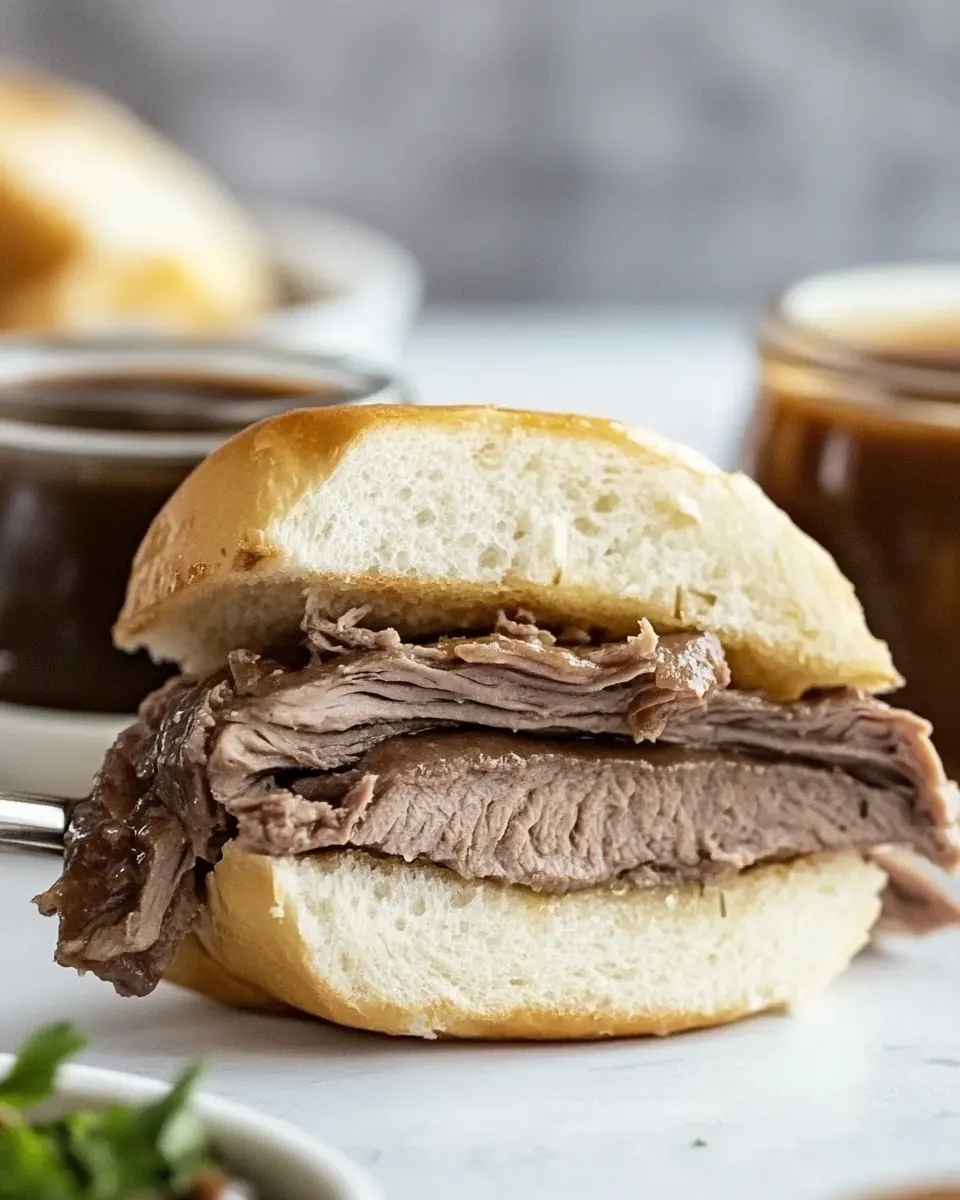
The philosophy here is simple, ingredient forward cooking. Each item plays a clear role: the au jus carries deep beefy flavor and acts as a dipping sauce, the roast beef provides the meaty backbone, the French rolls hold texture and soakability, and the provolone cheese adds a creamy, mellow note. Garnishes bring brightness and a little heat where you want it.
- 4 cups au jus: Provides the savory, beef-flavored dipping liquid that moistens sandwiches and intensifies their meaty taste; simmer gently before serving to concentrate flavors and keep hot. Enhances mouthfeel and complements the roast beef, making each bite rich and satisfying.
- 2 pounds thickly sliced cooked hot roast beef: Supplies the hearty, thinly sliced protein that forms the sandwich filling and delivers tender, beefy texture; use thick slices for substantial chew and satisfying mouthfeel. Adds core savory flavor and pairs with au jus for classic French Dip character.
- 4 French rolls: Offers soft, crusty bread that holds juices and sandwich fillings while providing structure and a surface for melting cheese; warm or lightly toast to improve texture and prevent sogginess. Serves as a convenient handheld base for assembling the roast beef and cheese.
- 4 slices of provolone cheese: Adds a creamy, mellow dairy layer that melts over the warm beef to provide richness and a slight tang; place slices on hot meat to encourage melting. Balances savory notes and helps bind the sandwich components together.
- pickles and hot peppers for garnish: Contributes bright, acidic crunch and piquant heat as optional garnishes that cut through richness and refresh the palate; serve alongside for contrast and textural variety. Enhances overall flavor balance and offers a palate-cleansing bite.
- Spicy mustard for garnish: Delivers a sharp, spicy condiment used sparingly as a garnish to introduce heat and tang that complements savory beef flavors; offer on the side for diners to apply to taste. Provides contrast to the rich au jus and cheese, enlivening each bite.
The Process for Making French Dip
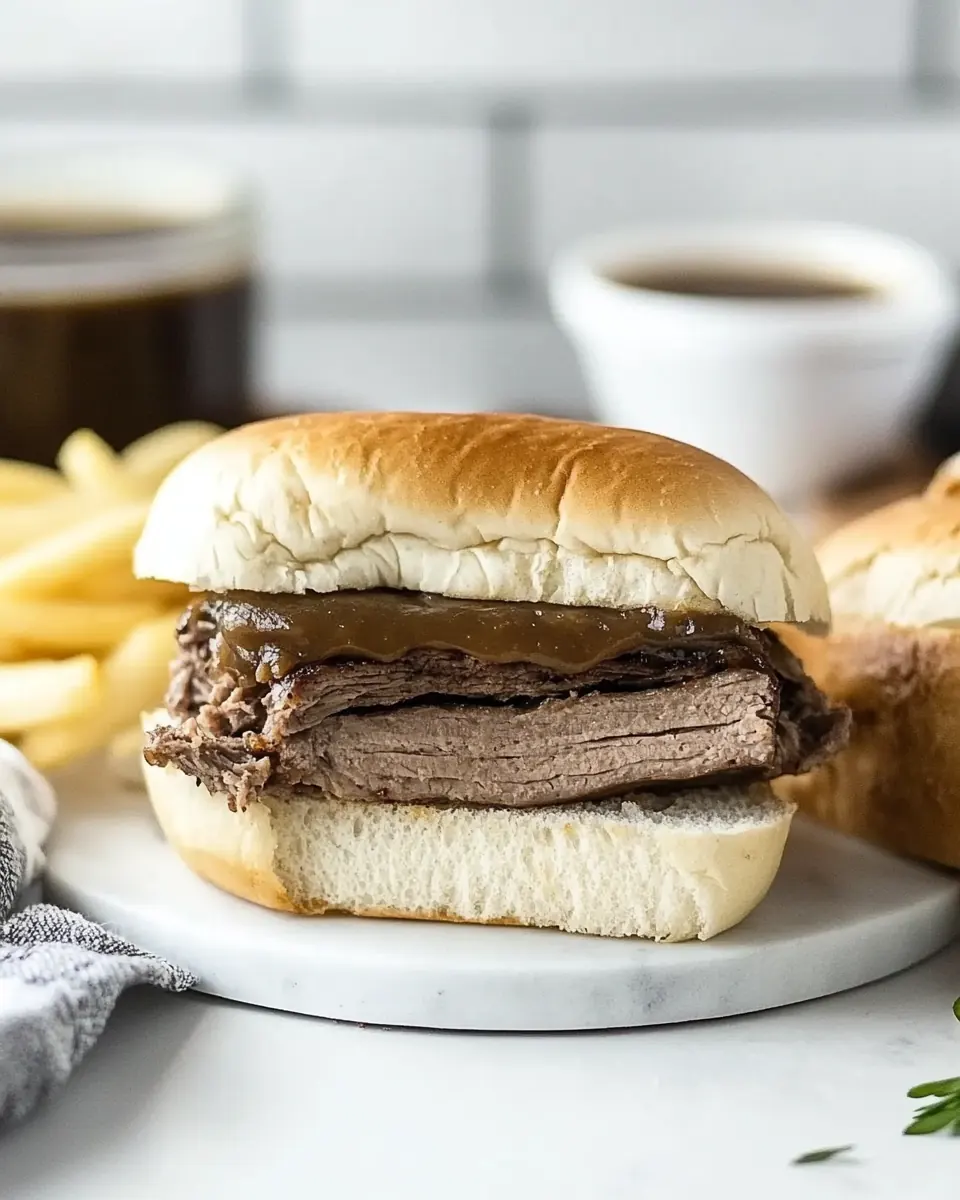
Below I walk you through a comforting, hands on assembly process that focuses on sensory cues and small techniques that make a big difference. Get your components warmed and nearby, and pay attention to the sound, aroma, and texture as you build each sandwich.
- Start by heating the au jus in a saucepan over low to medium heat until hot.: The moment the au jus begins to shimmer and you see wisps of steam rising, the kitchen will smell intensely savory, almost meaty and comforting. You want a gentle movement on the surface, not a rolling boil, so the flavors concentrate without evaporating too quickly. This gentle heat keeps the juices glossy, and when you dip bread they will cling rather than run off in a thin stream. A common mistake is overheating to a boil, which can reduce the depth and become watery, so keep the flame moderate. The reason for this technique is to preserve the body and seasoning of the au jus so every dip yields a concentrated flavor hit, and if bits of fat rise, spoon them off to keep the surface clean.
- If you are slicing the roast beef yourself, you can use a sharp knife, a mandolin, or a meat slicer. I prefer the roast beef to be thickly sliced for this sandwich.: When you slice, there is an audible, clean sound as the blade moves through the meat, and the edges should look smooth rather than ragged. Thick slices offer a meaty bite that holds up to dipping, making the texture more interesting against the soft roll. Always chill the roast beef slightly for cleaner slices if you are using very thin blades, and remember a blunt knife will tear fibres, producing a less pleasant chew. The 'why' here is simple, thicker slices retain juiciness and give the sandwich presence, and a frequent error is slicing too thin which causes the meat to lose its character when warmed.
- The sliced beef should be warm before serving. However, if it is cold, then you will want to add some slices to the hot au jus to heat it up until warm.: The warming step releases meaty aromas and creates a steam that blends with the au jus , signaling readiness. As the slices meet the hot liquid they soften slightly and take on extra flavor, and you will notice a small shimmer on their surface as they reheat. A practical trick is not to leave the meat in the liquid too long, or it will over soften. The purpose is to ensure the meat is inviting and melds with the dipping juices, and the main pitfall is leaving cold slices on the counter which deliver a discordant temperature in the sandwich.
- Dip the bottom part of the French roll into the hot au jus.: As you lower the roll into the au jus , you should see the liquid soak in and darken the interior crumb, and a faint steam will rise from the bread edge. The roll should absorb just enough to be savory without collapsing, so watch for the moment the surface becomes glossy but still holds structure. Pressing too long will make the interior mushy, so a quick dip often does the trick. This rapid dunk is crucial for flavor layering, and many novices either under-dip for lack of taste or over-dip and end up with a soggy, unpleasant texture.
- Next, drop the top sliced part of the French into the au jus.: Dipping the top creates a uniform flavor profile and gives each bite a balanced mix of bread and savory liquid. You will hear a small sigh as the liquid soaks into the soft interior, and the crust darkens slightly. Make sure you are gentle to avoid tearing the roll, and time the dunk so both halves are warm together when stacked. The reason behind this step is harmony, ensuring both sides of the sandwich carry the same depth of flavor, and a common error is warming only one side which yields an uneven taste experience.
- Stack several slices of the hot beef onto the sandwich. At this point, you can also add on your condiments, sauce, or cheeses.: Layering multiple slices creates that luxurious, meaty bite that defines a great French Dip . As you build the stack, the heat from the meat will begin to gently melt the provolone , which should gloss and drape across the edges of the meat. Pay attention to balance so the sandwich does not become top heavy, and consider placing cheese adjacent to the meat rather than directly on the roll to encourage even melting. A frequent mistake is over stuffing, which makes the sandwich hard to manage and can mask the nuanced flavor from the au jus . This step matters because layering creates mouthfeel contrast and lets each element play its role in every bite.
- Slice the sandwich and serve with assorted toppings, cheeses, sauces, and hot au jus.: When you slice, the interior should look steamy and inviting, with melted provolone pulling slightly between layers. Serve quickly while the steam is still rising, and present the warm au jus beside the sandwich for dipping. The cut should be clean and the roll should hold the filling without collapsing, offering a satisfying presentation. A common oversight is letting the sandwich sit too long after assembly, which cools the components and flattens the textural contrasts. The objective is to serve at peak warmth so the flavors and textures are at their most compelling.
Recipe Notes about French Dip
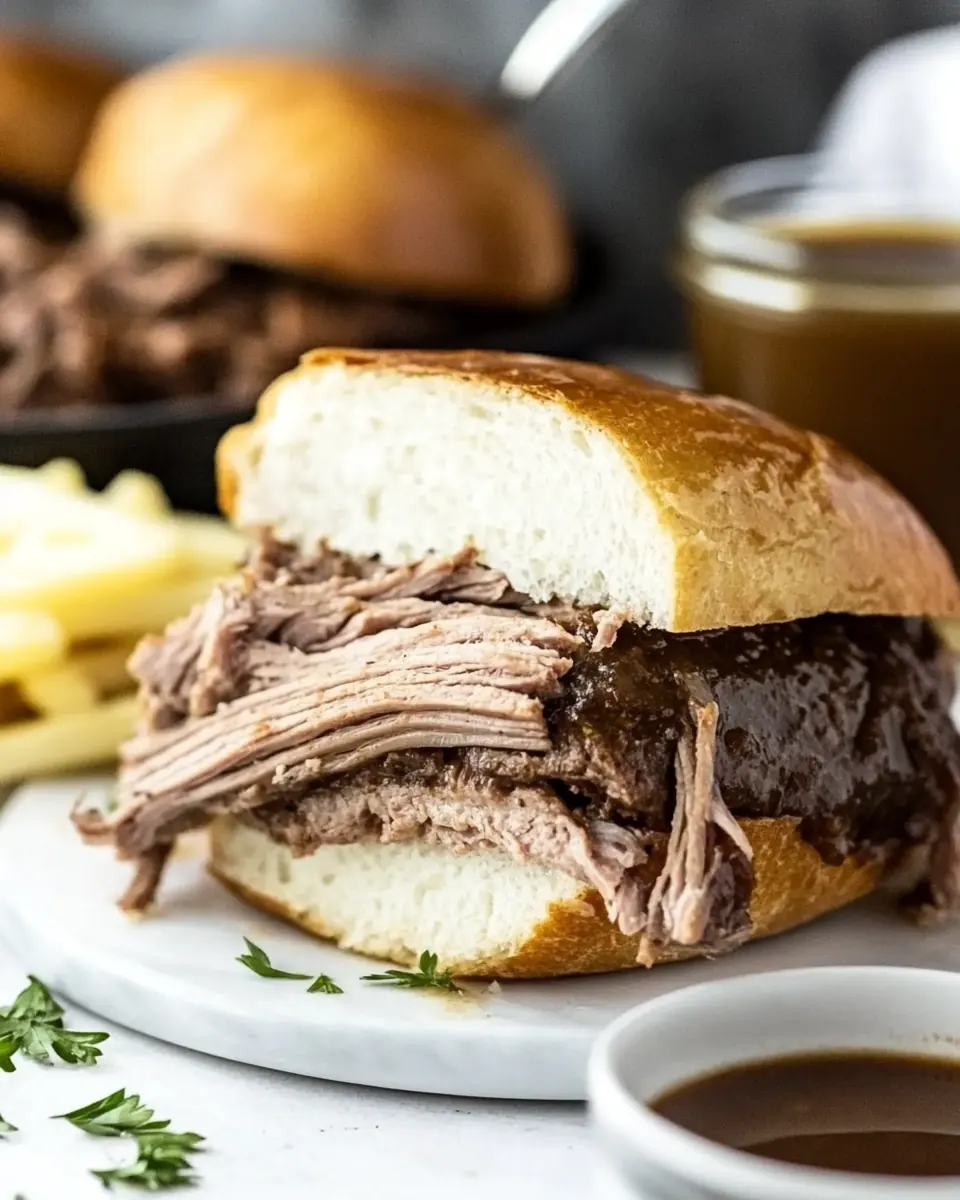
I like to keep a short list of practical pointers at hand when I make French Dip. These notes cover storage tips, rewarming methods, and assembly details to keep the sandwich tasting fresh when you serve it to family or guests.
- Make Ahead Keep components separate, especially bread and toppings, and assemble within three days for best texture retention.
- Storing Bread and Toppings Wrap rolls and toppings separately in plastic and refrigerate up to one week but avoid freezing the rolls since texture will degrade.
- Reheating Roast Beef Gently warm slices in a saucepan with one to two cups of au jus over low to medium heat until steaming, do not boil.
- Preserving Au Jus Store the au jus in the refrigerator in a sealed container up to three days, and skim any excess fat before reheating for serving.
- Assembling for Service Dip both halves of the roll quickly and assemble just before serving to maintain contrast between crispy crust and tender interior.
How to Enjoy French Dip
Serving French Dip is all about timing and contrast. I like to offer simple garnishes and keep the au jus hot so everyone can dip to their liking. This sandwich works well for casual lunches or relaxed dinners, and it pairs nicely with crisp sides for balance.
- Classic Plating Present each sandwich on a sturdy plate with a small bowl of hot au jus for dipping, and tuck pickles on the side for brightness.
- Occasions to Serve Great for a cozy winter dinner or weekend lunch, especially when you want something filling and comforting without a lot of fuss.
- Side Pairings Consider offering crisp fries or a simple green salad to cut through the richness, or roasted vegetables for a heartier meal.
- Storage Tips Keep leftover meat and au jus refrigerated separately, and assemble sandwiches only when ready to eat to avoid sogginess.
- Seasonal Pairings In colder months serve with warm sides and spiced beverages, while in milder weather keep garnishes bright and acidic to lighten the plate.
- Serving Style Offer condiments like spicy mustard and sliced pickles on the side so guests can tailor each bite to their taste.
FAQ
Conclusion
This French Dip shines because it combines a few quality ingredients into a bold, comforting sandwich that feels indulgent without being fussy. I encourage you to try it when you want a satisfying meal that comes together quickly, and to play with simple tweaks like extra cheese or tangy garnishes to suit your taste. Whether you make your own au jus or use a prepared base, the result is reliably cozy and deeply flavorful, perfect for sharing with friends or enjoying solo on a chilly evening.
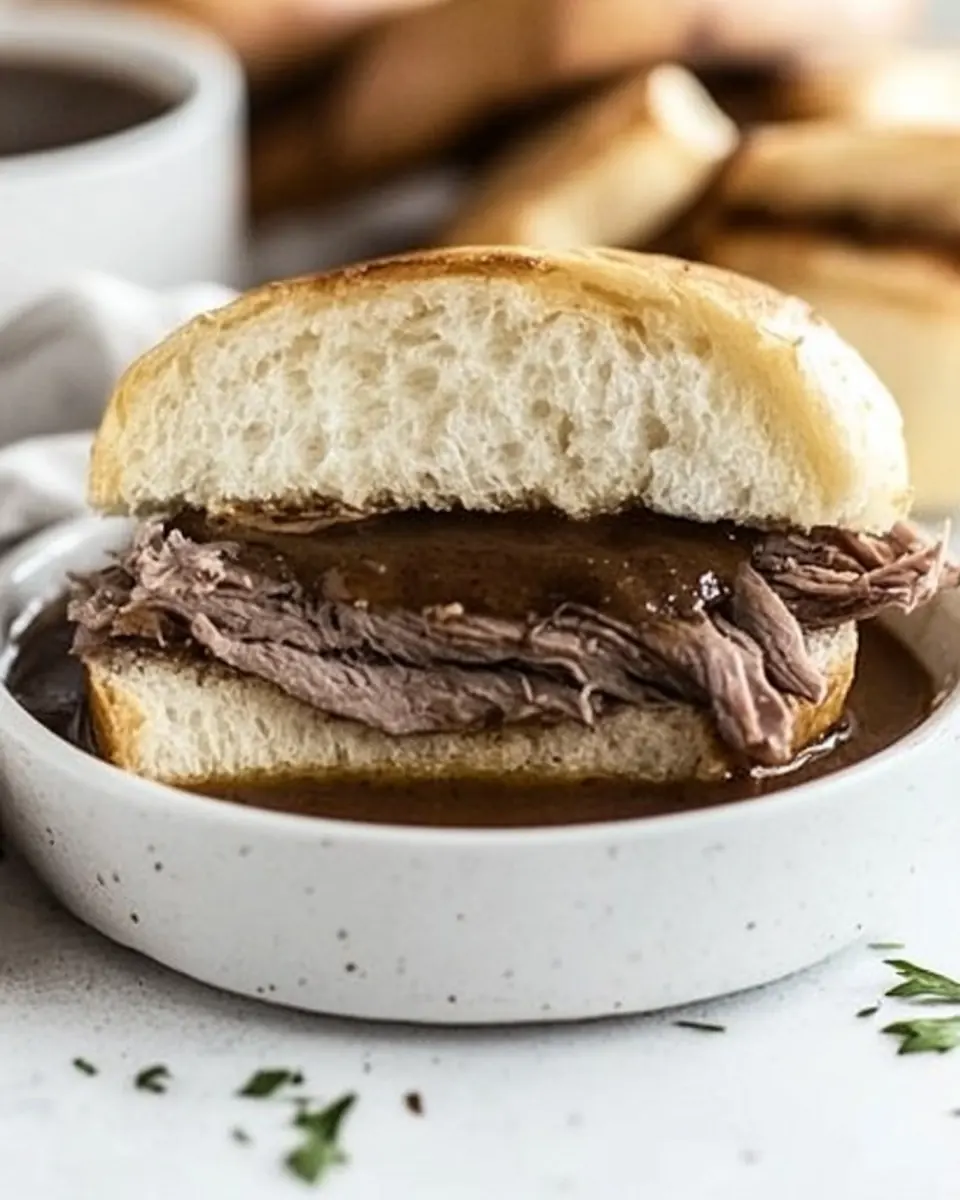
French Dip
Ingredients
Equipment
Method
- Start by heating the au jus in a saucepan over low to medium heat until hot.: The moment the au jus begins to shimmer and you see wisps of steam rising, the kitchen will smell intensely savory, almost meaty and comforting. You want a gentle movement on the surface, not a rolling boil, so the flavors concentrate without evaporating too quickly. This gentle heat keeps the juices glossy, and when you dip bread they will cling rather than run off in a thin stream. A common mistake is overheating to a boil, which can reduce the depth and become watery, so keep the flame moderate. The reason for this technique is to preserve the body and seasoning of the au jus so every dip yields a concentrated flavor hit, and if bits of fat rise, spoon them off to keep the surface clean.
- If you are slicing the roast beef yourself, you can use a sharp knife, a mandolin, or a meat slicer. I prefer the roast beef to be thickly sliced for this sandwich.: When you slice, there is an audible, clean sound as the blade moves through the meat, and the edges should look smooth rather than ragged. Thick slices offer a meaty bite that holds up to dipping, making the texture more interesting against the soft roll. Always chill the roast beef slightly for cleaner slices if you are using very thin blades, and remember a blunt knife will tear fibres, producing a less pleasant chew. The 'why' here is simple, thicker slices retain juiciness and give the sandwich presence, and a frequent error is slicing too thin which causes the meat to lose its character when warmed.
- The sliced beef should be warm before serving. However, if it is cold, then you will want to add some slices to the hot au jus to heat it up until warm.: The warming step releases meaty aromas and creates a steam that blends with the au jus , signaling readiness. As the slices meet the hot liquid they soften slightly and take on extra flavor, and you will notice a small shimmer on their surface as they reheat. A practical trick is not to leave the meat in the liquid too long, or it will over soften. The purpose is to ensure the meat is inviting and melds with the dipping juices, and the main pitfall is leaving cold slices on the counter which deliver a discordant temperature in the sandwich.
- Dip the bottom part of the French roll into the hot au jus.: As you lower the roll into the au jus , you should see the liquid soak in and darken the interior crumb, and a faint steam will rise from the bread edge. The roll should absorb just enough to be savory without collapsing, so watch for the moment the surface becomes glossy but still holds structure. Pressing too long will make the interior mushy, so a quick dip often does the trick. This rapid dunk is crucial for flavor layering, and many novices either under-dip for lack of taste or over-dip and end up with a soggy, unpleasant texture.
- Next, drop the top sliced part of the French into the au jus.: Dipping the top creates a uniform flavor profile and gives each bite a balanced mix of bread and savory liquid. You will hear a small sigh as the liquid soaks into the soft interior, and the crust darkens slightly. Make sure you are gentle to avoid tearing the roll, and time the dunk so both halves are warm together when stacked. The reason behind this step is harmony, ensuring both sides of the sandwich carry the same depth of flavor, and a common error is warming only one side which yields an uneven taste experience.
- Stack several slices of the hot beef onto the sandwich. At this point, you can also add on your condiments, sauce, or cheeses.: Layering multiple slices creates that luxurious, meaty bite that defines a great French Dip . As you build the stack, the heat from the meat will begin to gently melt the provolone , which should gloss and drape across the edges of the meat. Pay attention to balance so the sandwich does not become top heavy, and consider placing cheese adjacent to the meat rather than directly on the roll to encourage even melting. A frequent mistake is over stuffing, which makes the sandwich hard to manage and can mask the nuanced flavor from the au jus . This step matters because layering creates mouthfeel contrast and lets each element play its role in every bite.
- Slice the sandwich and serve with assorted toppings, cheeses, sauces, and hot au jus.: When you slice, the interior should look steamy and inviting, with melted provolone pulling slightly between layers. Serve quickly while the steam is still rising, and present the warm au jus beside the sandwich for dipping. The cut should be clean and the roll should hold the filling without collapsing, offering a satisfying presentation. A common oversight is letting the sandwich sit too long after assembly, which cools the components and flattens the textural contrasts. The objective is to serve at peak warmth so the flavors and textures are at their most compelling.
Notes
- Make Ahead Keep components separate, especially bread and toppings, and assemble within three days for best texture retention.
- Storing Bread and Toppings Wrap rolls and toppings separately in plastic and refrigerate up to one week but avoid freezing the rolls since texture will degrade.
- Reheating Roast Beef Gently warm slices in a saucepan with one to two cups of au jus over low to medium heat until steaming, do not boil.
- Preserving Au Jus Store the au jus in the refrigerator in a sealed container up to three days, and skim any excess fat before reheating for serving.
- Assembling for Service Dip both halves of the roll quickly and assemble just before serving to maintain contrast between crispy crust and tender interior.