Chicken Wild Rice Casserole
Chicken Wild Rice Casserole has always been one of those recipes I turn to when I want something comforting and reliably satisfying. The very first time I made it, I was chasing the memory of a dish my grandmother used to bring to potlucks, and I remember the warm, creamy steam that curled up as I opened the oven, promising something cozy and homey. From that moment, this casserole became my go to when I needed food that feels like a hug.
Over the years I’ve tweaked the balance between creamy sauce, tender chicken, and nutty wild rice to suit different occasions. Sometimes I make a simple version for a quiet weeknight, and sometimes I dress it up with a crunchy topping for company. I love that it travels well too, making it perfect for bringing to friends or for freezing in portions when life gets busy. Each time I stir the bubbling casserole, I remember the small ritual of melting butter and smelling garlic on the stove, and I know I’m making something that will be welcomed at any table.
Recipe Snapshot
60 mins
20 mins
40 mins
Medium
450 kcal
American
Gluten-Free, Low FODMAP
Dinner
Skillet, Casserole dish, Whisk
What We Adore About This Chicken Wild Rice Casserole
Comforting Creamy Texture
I adore how the sauce wraps around every grain of wild rice and shred of chicken. The roux based sauce gives a luscious mouthfeel, and when the casserole comes out of the oven the first spoonful is warm, velvety, and comforting in a way few dishes are. That creamy element makes it an ideal choice for chilly evenings when you want something substantial.
Make Ahead Friendly
One of the best parts about this recipe is its make ahead potential. I often assemble it earlier in the day or the night before, chill it, and then bake when I am ready. This flexibility makes it perfect for hosting because it takes stress out of the timeline and lets me focus on company instead of last minute cooking.
Customizable and Pantry Friendly
I love that the recipe is forgiving. You can add extra veggies or swap cheeses based on what you have on hand. Most of the ingredients are pantry staples, and that means when my fridge is sparse I can still pull together a satisfying meal without a special grocery run.
Textural Contrast
The combination of a creamy interior and a crunchy breadcrumb topping is what sells it for me. When the breadcrumbs and melted butter crisp up, you get that pleasant contrast between soft filling and golden top, which makes each bite more interesting. I always aim for that golden brown finish because it signals the casserole is ready and adds a lovely toasted flavor.
Family Friendly
This casserole tends to be universally liked. The flavors are familiar, and the dish is hearty without being heavy. Whether I serve it for a casual family dinner or a small gathering, people often ask for the recipe. It feeds a crowd easily, and the leftovers reheat beautifully, which keeps busy evenings simple.
Ingredients Required for Chicken Wild Rice Casserole
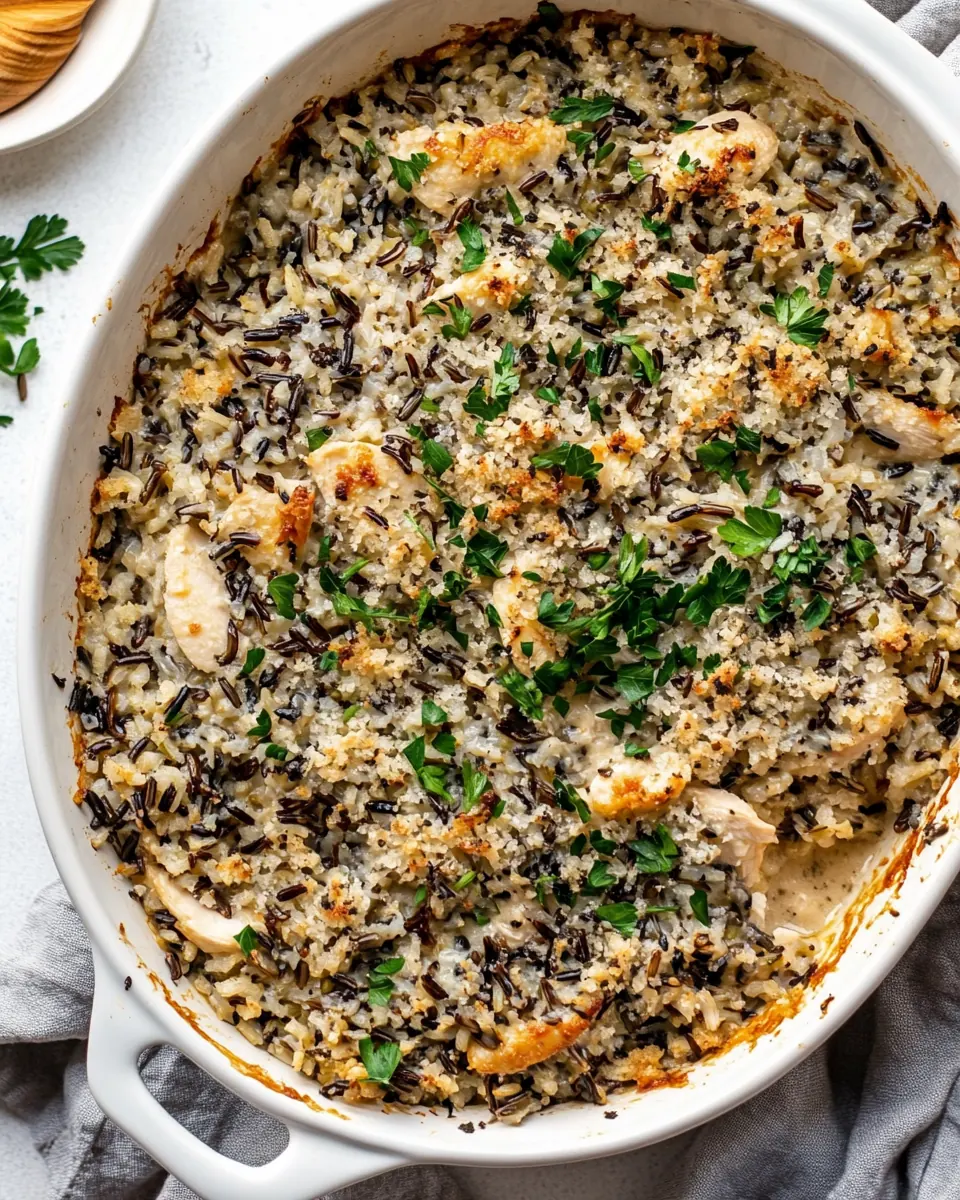
These ingredients are chosen to create a balanced casserole where each part plays a role. The butter and flour form a roux that thickens the sauce, while the chicken broth and milk build a creamy base. Chicken and wild rice are the stars, offering protein and rustic texture, and the breadcrumbs and optional mozzarella cheese give a satisfying crust. Together they create harmony between creaminess, chew, and crisp.
- 6 tablespoons butter (divided): Melted and divided to provide a base for sautéing aromatics and to enrich the casserole; half helps brown onions and garlic while remaining butter is stirred into the sauce for a silky finish. Adds richness and helps bind the breadcrumb topping when tossed together before baking.
- 1/2 onion (chopped): Chopped to release sweet, savory flavors when sautéed; provides aromatic depth and texture contrast throughout the casserole. Softens in the sauce, contributing to mouthfeel and overall savory balance.
- 2 garlic cloves (minced): Minced to disperse sharp, pungent flavor evenly; adds a fragrant boost and subtle heat when cooked with the onions. Integrates into the sauce to enhance savory complexity without overwhelming other flavors.
- 1/3 cup all-purpose flour: Used to create a roux with melted butter that thickens the sauce; ensures a smooth, velvety texture when combined with broth and milk. Coats other ingredients to help the casserole set and hold together after baking.
- 14.5 ounces chicken broth (1 can): Poured into the roux to form the savory base of the sauce; supplies concentrated chicken flavor and necessary liquid for cooking rice and blending with milk. Helps build umami and keeps the casserole moist.
- 1 cup whole milk: Added to the broth to lighten and enrich the sauce; contributes creaminess and a gentle dairy flavor that smooths the roux. Balances the savory notes and helps achieve a cohesive, creamy casserole texture.
- 1/2 teaspoon poultry seasoning () (optional): Sprinkled optionally to introduce a blend of herbs and spices tailored for poultry; elevates the chicken flavor with warm, aromatic notes when mixed into the sauce. Can be omitted if a simpler seasoning profile is preferred.
- 1 teaspoon kosher salt: Measured and added for primary seasoning of the dish; enhances overall flavor and brings out the savory components of the chicken and broth. Should be adjusted to taste, especially if using salted broth or cheese.
- 1/4 teaspoon ground black pepper: Ground and used sparingly to add mild heat and contrast; brightens flavors and prevents the casserole from tasting flat. Balanced against salt and seasonings to avoid overpowering the dish.
- 4 cups cooked chicken breast (chopped*): Cooked and chopped to provide substantial protein and hearty texture in each bite; contributes savory meatiness and complements wild rice. Distributes evenly through the casserole to make it filling and satisfying.
- 4 cups cooked wild rice (**): Cooked and added for earthy, nutty texture and chew; serves as the carbohydrate backbone and pairs well with chicken and creamy sauce. Helps define the casserole’s rustic character and retains structure after baking.
- 1 cup shredded mozzarella cheese ( ***) (optional): Shredded and optional to introduce gooey, melty cheesiness when baked; adds a mild, creamy, stretchy component that binds ingredients and enhances richness. Can be mixed into the filling or sprinkled on top for browning.
- 3/4 cup breadcrumbs: Tossed with melted butter or sprinkled on top to create a crisp, golden topping; contributes crunchy texture and visual appeal after baking. Provides contrast to the creamy interior and helps form a satisfying crust.
Making This Chicken Wild Rice Casserole
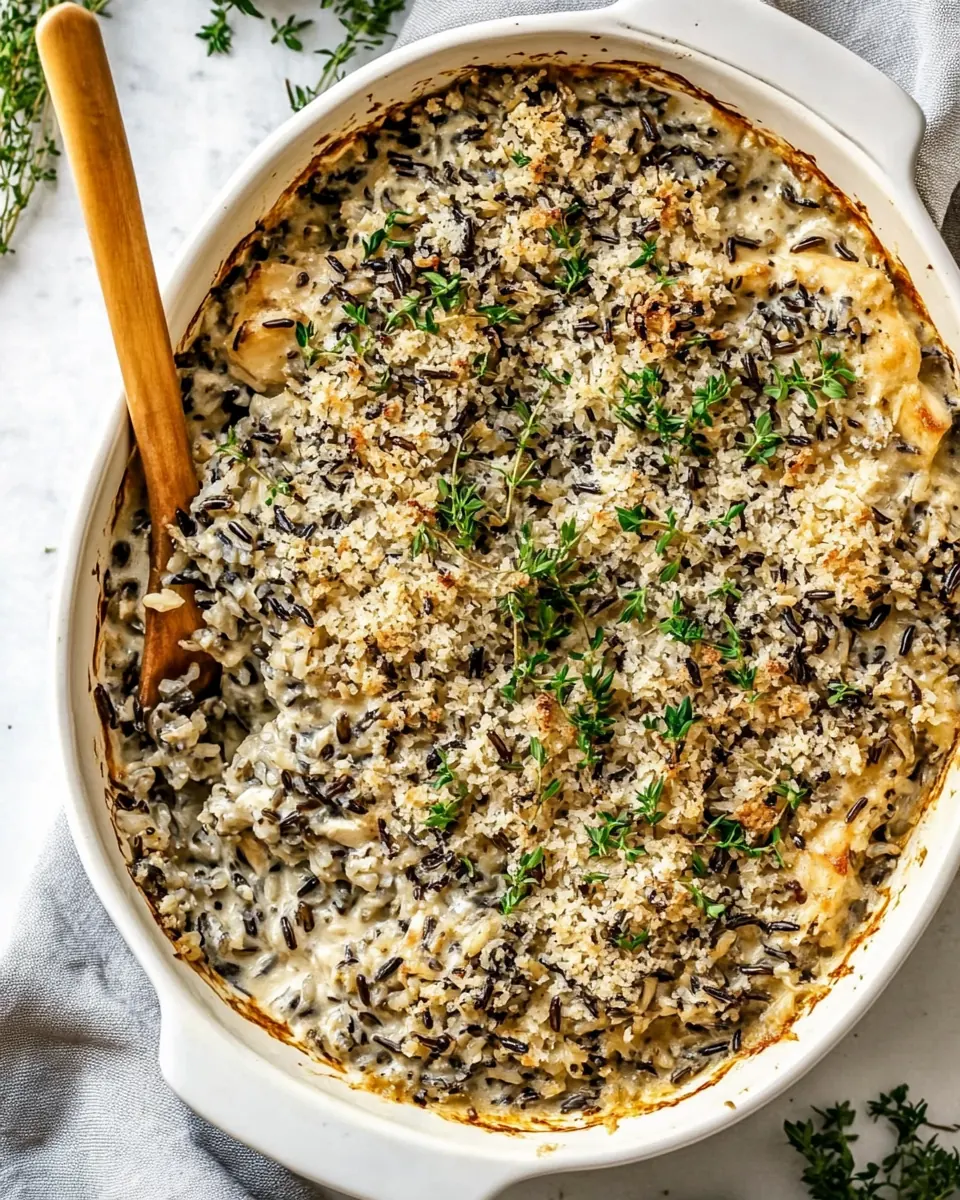
We will move through stovetop assembly into the oven finish, which is how this dish gets its creamy base and golden top. I like to keep my mise en place ready because the sauce comes together quickly once the roux is made. Follow the cleaned directions below in order and use your senses to know when each stage is right.
- Preheat the oven to 375 ℉.: Warmth fills the kitchen as the oven comes to temperature, and preheating ensures the casserole begins baking immediately for even cooking. You might notice a faint dry heat aroma when the oven is ready. A common mistake is skipping preheating which can lead to uneven baking and a soggy top; do not open the oven frequently once it is preheating because that drops the temperature.
- Heat 4 tablespoons butter in a large skillet over medium heat.: As the butter melts you will hear a gentle sizzle and see it turn glossy, signaling the right moment to add aromatics. This step creates the fat base for the roux, and it should be warm but not smoking. If the butter browns quickly, lower the heat to prevent a nutty, rather than smooth, flavor which can overwhelm the sauce.
- Once heated, add in the onion and a pinch of salt, and sauté for a few minutes until softened. Stir in the garlic.: The onion will go translucent and give off a sweet scent, while the garlic will perfume the pan when added. These aromatics build depth, and you should stir frequently to avoid browning which changes the flavor profile. A common error is adding garlic too early and letting it burn, creating bitterness, so add it after the onion softens.
- Whisk in the flour until smooth. Slowly add in the chicken broth and milk while whisking until the mixture is smooth. Stir in the poultry seasoning, salt, and pepper.: You will feel the roux thicken under the whisk before the liquids loosen it into a glossy sauce, and this tactile change is important. The sauce should thicken to coat the back of a spoon; if it is lumpy, keep whisking and lower the heat. Over thinning by adding too much liquid at once is a frequent mistake, so pour gradually and whisk consistently to prevent lumps.
- Stir in the chicken and wild rice. Taste and add more salt and pepper if needed.: The filling will look cohesive as the tender chicken and chewy wild rice absorb the sauce. You should hear a quiet simmer and see gentle bubbling when the mixture is hot enough. Mixing thoroughly ensures even seasoning; leaving large clumps of rice or chicken can produce dry pockets, so fold gently to combine.
- Transfer the mixture to a greased casserole dish or keep in the skillet if the skillet is oven safe.: The filling will settle into a thick layer that will brown evenly in the oven. If you transfer, scrape the skillet well to capture every flavorful bit. A common misstep is using a dish that is too deep which can affect baking time and prevent a crisp top, so choose a shallow, even pan when possible.
- Melt the remaining 2 tablespoons of butter, and mix it with the breadcrumbs. Top the casserole with the cheese (if using) and breadcrumbs.: The melted butter combines with breadcrumbs to form a golden crust that will crisp in the oven, and the cheese underneath will melt and help the crumbs adhere. You will notice an appealing glossy sheen as you spread the topping. Avoid dumping dry crumbs on top because they will not brown evenly; make sure they are well coated in butter.
- Bake for 20-22 minutes until the top is golden brown and the casserole is bubbling.: In the final bake you will hear a low bubbling and see edges bubbling around the dish, while the top becomes a warm golden brown. That visual cue tells you the filling is heated through and the topping is crisp. Opening the oven too early to test doneness can delay browning and let heat escape, so check near the end of the recommended time and rely on the bubbling and golden color as guides.
Tips and Variations
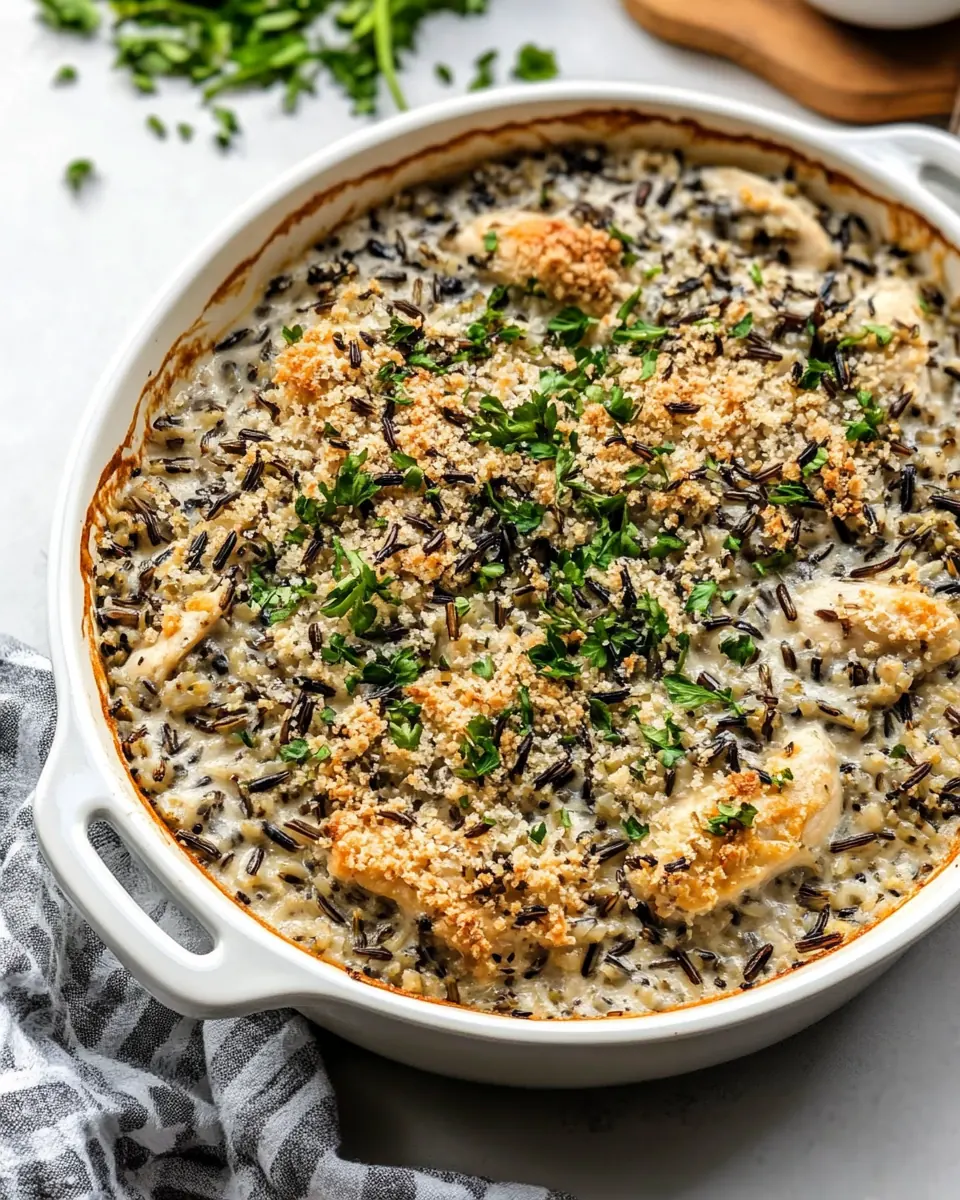
I like to think of tips as small chef secrets that make the recipe feel effortless. These suggestions will help you customize texture, flavor, and timing so your version of Chicken Wild Rice Casserole turns out just the way you like it.
- Use room temperature dairy: Let your milk come to a gentle warmth before adding to the roux, because cold milk can cause the sauce to seize or form small lumps. Warming a bit helps the sauce come together smoothly.
- Toast the breadcrumbs: Give them a quick light toast in a skillet before mixing with melted butter for an extra toasty flavor. This step enhances the crunch and adds nutty notes that contrast the creamy filling.
- Control salt with the broth: Since canned chicken broth varies in sodium, taste the sauce after adding broth and before baking to avoid over salting. Always err on the side of under seasoning because you can adjust after baking.
- Make it ahead: Assemble and refrigerate the casserole up to 24 hours in advance, then bake from chilled, adding a few extra minutes to reach an evenly heated center. This saves time and reduces last minute stress.
- Check rice texture: Confirm your wild rice is tender before mixing with the sauce, because underdone rice will never soften in the oven and will affect the final mouthfeel.
What Complements This Chicken Wild Rice Casserole
This casserole pairs well with bright, crisp sides or simple pickled elements that cut through the creaminess. For gatherings I like to offer a variety of accompaniments so guests can balance richness with acidity or freshness. Below are ideas for sides, occasions, storage, and serving cues to help you plan a complete meal.
- Light green salad: A salad with crisp lettuces and a bright vinaigrette adds freshness that contrasts the casserole’s creaminess, making the meal feel balanced for dinner or lunch.
- Steamed vegetables: Simple steamed vegetables like broccoli or green beans offer color and a healthy component, pairing well for family dinners and seasonal menus.
- Pickled side: A small jar of quick pickles or pickled red onions provides acidity that cuts through richness, and they work nicely for potlucks and buffet style serving.
- Occasions: This is great for weeknight dinners, family gatherings, and winter holiday menus because it is hearty, feeds a crowd, and can be prepared ahead.
- Storage tips: Cool completely before refrigerating in airtight containers for up to four days, or freeze in portions for up to three months; thaw overnight in the fridge before reheating gently in the oven.
- Seasonal pairing: In winter, serve with roasted root vegetables or a warm apple chutney for a cozy plate, while in milder months a green salad and lemony dressing brighten the meal.
FAQ
Conclusion
This Chicken Wild Rice Casserole stands out because it pairs a creamy, savory sauce with tender chicken and nutty wild rice, finished with a golden, crunchy topping. It is a versatile, comforting dish that adapts to make ahead schedules and feeds a crowd with minimal fuss. Give it a try for a cozy weeknight dinner or a simple make ahead meal, and enjoy how the flavors come together into something familiar and deeply satisfying.
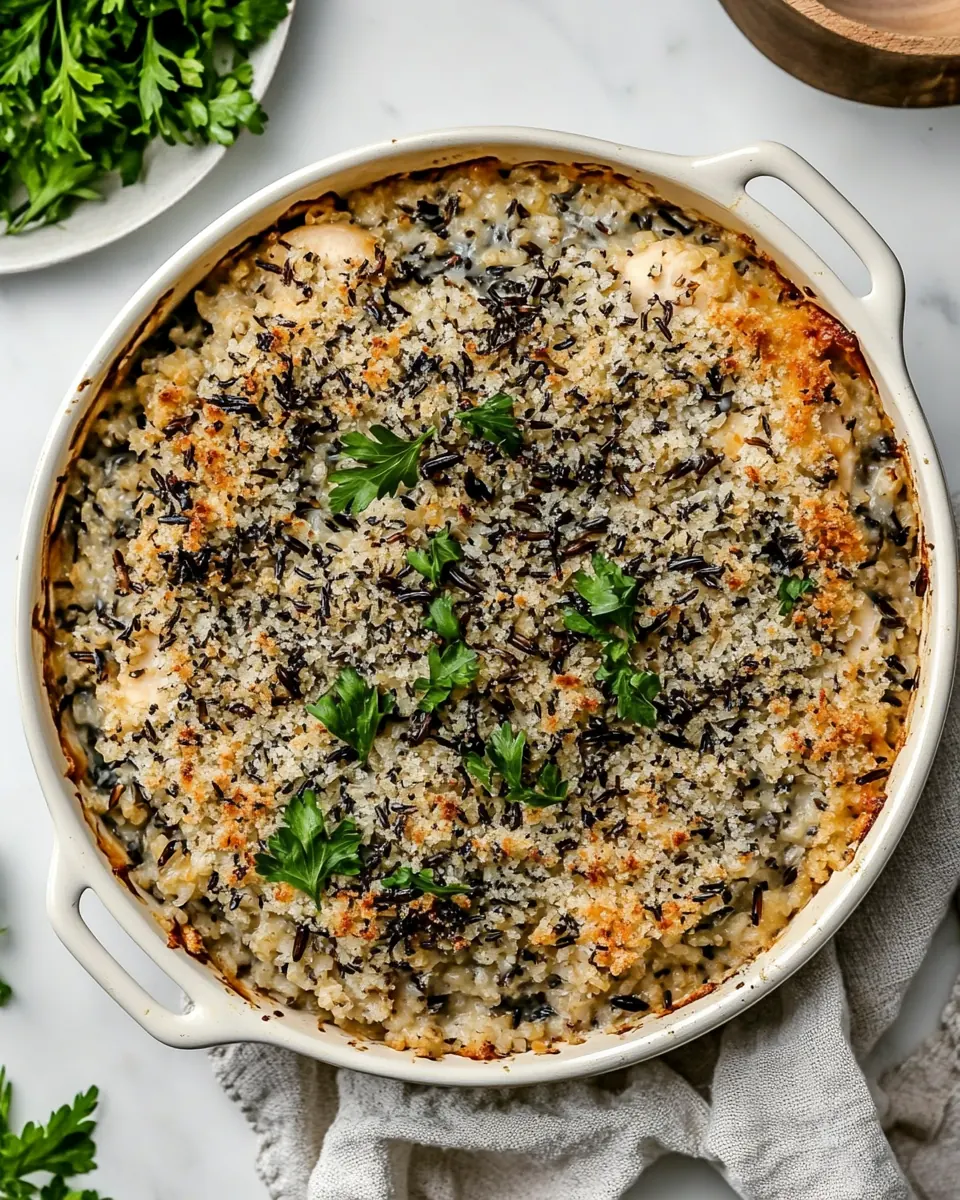
Chicken Wild Rice Casserole
Ingredients
Equipment
Method
- Preheat the oven to 375 ℉.: Warmth fills the kitchen as the oven comes to temperature, and preheating ensures the casserole begins baking immediately for even cooking. You might notice a faint dry heat aroma when the oven is ready. A common mistake is skipping preheating which can lead to uneven baking and a soggy top; do not open the oven frequently once it is preheating because that drops the temperature.
- Heat 4 tablespoons butter in a large skillet over medium heat.: As the butter melts you will hear a gentle sizzle and see it turn glossy, signaling the right moment to add aromatics. This step creates the fat base for the roux, and it should be warm but not smoking. If the butter browns quickly, lower the heat to prevent a nutty, rather than smooth, flavor which can overwhelm the sauce.
- Once heated, add in the onion and a pinch of salt, and sauté for a few minutes until softened. Stir in the garlic.: The onion will go translucent and give off a sweet scent, while the garlic will perfume the pan when added. These aromatics build depth, and you should stir frequently to avoid browning which changes the flavor profile. A common error is adding garlic too early and letting it burn, creating bitterness, so add it after the onion softens.
- Whisk in the flour until smooth. Slowly add in the chicken broth and milk while whisking until the mixture is smooth. Stir in the poultry seasoning, salt, and pepper.: You will feel the roux thicken under the whisk before the liquids loosen it into a glossy sauce, and this tactile change is important. The sauce should thicken to coat the back of a spoon; if it is lumpy, keep whisking and lower the heat. Over thinning by adding too much liquid at once is a frequent mistake, so pour gradually and whisk consistently to prevent lumps.
- Stir in the chicken and wild rice. Taste and add more salt and pepper if needed.: The filling will look cohesive as the tender chicken and chewy wild rice absorb the sauce. You should hear a quiet simmer and see gentle bubbling when the mixture is hot enough. Mixing thoroughly ensures even seasoning; leaving large clumps of rice or chicken can produce dry pockets, so fold gently to combine.
- Transfer the mixture to a greased casserole dish or keep in the skillet if the skillet is oven safe.: The filling will settle into a thick layer that will brown evenly in the oven. If you transfer, scrape the skillet well to capture every flavorful bit. A common misstep is using a dish that is too deep which can affect baking time and prevent a crisp top, so choose a shallow, even pan when possible.
- Melt the remaining 2 tablespoons of butter, and mix it with the breadcrumbs. Top the casserole with the cheese (if using) and breadcrumbs.: The melted butter combines with breadcrumbs to form a golden crust that will crisp in the oven, and the cheese underneath will melt and help the crumbs adhere. You will notice an appealing glossy sheen as you spread the topping. Avoid dumping dry crumbs on top because they will not brown evenly; make sure they are well coated in butter.
- Bake for 20-22 minutes until the top is golden brown and the casserole is bubbling.: In the final bake you will hear a low bubbling and see edges bubbling around the dish, while the top becomes a warm golden brown. That visual cue tells you the filling is heated through and the topping is crisp. Opening the oven too early to test doneness can delay browning and let heat escape, so check near the end of the recommended time and rely on the bubbling and golden color as guides.
Notes
- Use room temperature dairy: Let your milk come to a gentle warmth before adding to the roux, because cold milk can cause the sauce to seize or form small lumps. Warming a bit helps the sauce come together smoothly.
- Toast the breadcrumbs: Give them a quick light toast in a skillet before mixing with melted butter for an extra toasty flavor. This step enhances the crunch and adds nutty notes that contrast the creamy filling.
- Control salt with the broth: Since canned chicken broth varies in sodium, taste the sauce after adding broth and before baking to avoid over salting. Always err on the side of under seasoning because you can adjust after baking.
- Make it ahead: Assemble and refrigerate the casserole up to 24 hours in advance, then bake from chilled, adding a few extra minutes to reach an evenly heated center. This saves time and reduces last minute stress.
- Check rice texture: Confirm your wild rice is tender before mixing with the sauce, because underdone rice will never soften in the oven and will affect the final mouthfeel.