Caribbean Baked Salmon Plantain Noodle Bowls With Coconut Avocado Sauce
Caribbean Baked Salmon Plantain Noodle Bowls With Coconut Avocado Sauce felt like the kind of dinner I needed after a week of too-many-emails and a single bowl of cereal for lunch, and it instantly became my favorite reset button. The very first time I made it I remember standing at the counter with the aroma of toasted cumin seeds filling the kitchen while the salmon sat glossy with pineapple juice, promising a bright, caramelized finish. I was skeptical about plantain noodles, but they crisped up in the pan and brought an exciting chew that paired beautifully with the creamy sauce. The contrast of textures won me over right away.
On a busy evening I love recipes that feel composed but are forgiving, and this bowl does that while still feeling elevated. The combination of roasted cauliflower, sweet crushed pineapple, and flaky sockeye salmon is practically a party in a bowl, with toasted coconut flakes bringing a gentle crunch. Plating it into bowls made it feel casual, but guests always ask for the recipe, which says a lot about how memorable the flavors are. I find myself making a double batch of sauce because I know we will want extra.
There is something comforting about a recipe that travels between weeknight and weekend with ease. I like to serve this when I want something that tastes like a treat but is actually straightforward to pull together. Every time I eat it I remember that first bite, the interplay of sweet and savory that keeps me coming back. It is a meal that teaches you a few tiny tricks, and those tricks pay off beautifully.
Recipe Snapshot
30 mins
20 mins
10 mins
Medium
450 kcal
Caribbean
Gluten-Free, Paleo
Dinner
Broiler or Oven, Small pan, Cutting board, Spice grinder or bottom of a glass, Baking dish, Baking sheet, Large pan, Blender or food processor
Why This Caribbean Baked Salmon Plantain Noodle Bowls With Coconut Avocado Sauce Stands Out
Vibrant Flavor Balance
I love how Caribbean Baked Salmon Plantain Noodle Bowls With Coconut Avocado Sauce balances bright, sweet, and spicy notes. The pineapple adds a natural sweetness that caramelizes on the salmon, while the cayenne pepper and toasted cumin seeds add warmth. This contrast keeps every bite interesting, and I often find myself pausing between forkfuls to savor the layers.
Textures That Delight
These bowls shine because of texture contrasts. The crispy plantain noodles give a toasted chew, the roasted cauliflower has little golden edges, and the salmon flakes apart tenderly. Topping it with toasted coconut flakes adds a pleasant snap. I enjoy how the textures make each mouthful feel purposeful.
Speed and Simplicity
One reason I reach for this recipe is how quickly it comes together. Broiling the salmon and roasting the cauliflower happen at the same time, while the plantain noodles crisp on the stovetop. That efficiency means you get a complex tasting meal without spending hours, which is perfect for a busy evening when you still want something impressive.
Customizable and Forgiving
I appreciate recipes that let you adapt without losing their essence. If you prefer more heat, you can nudge up the cayenne pepper. If you want it milder, reduce it and rely on the pineapple and toasted cumin seeds for flavor. The creamy coconut avocado sauce is forgiving too; a splash more coconut milk smooths it if it gets too thick.
Small Ingredient List, Big Impact
This dish shows how a short list of thoughtful ingredients can create something memorable. Each item plays a clear role: the avocado and coconut milk make the sauce luxuriously creamy, the plantain adds starch and texture, and the salmon provides a rich centerpiece. I love meals that feel elevated but are still achievable on a weeknight, and this one fits that bill perfectly.
Key Ingredients for Caribbean Baked Salmon Plantain Noodle Bowls With Coconut Avocado Sauce
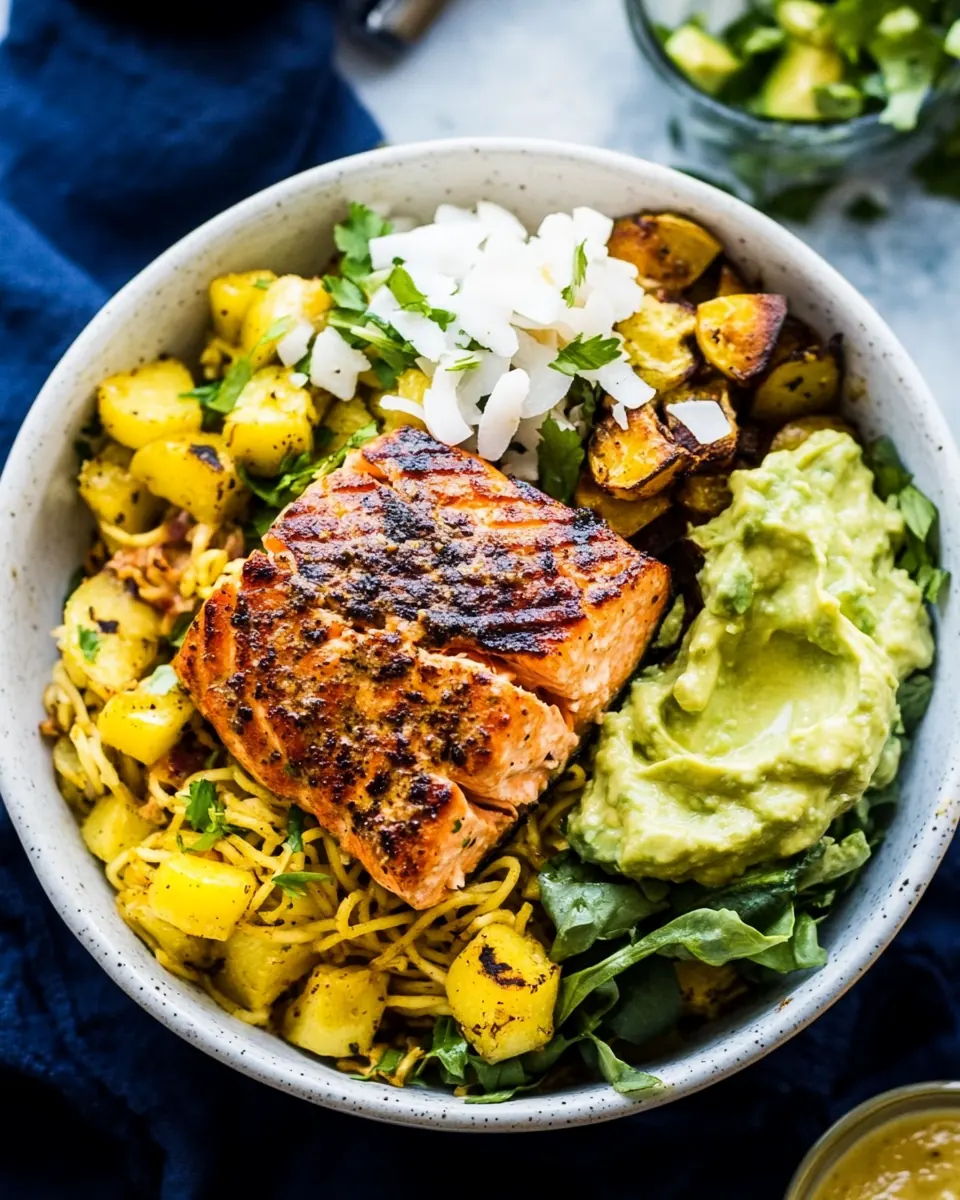
These ingredients are chosen to create a balance of tropical flavor, protein, and satisfying texture. The players are simple and complementary: flaky salmon anchors the bowl, starchy plantain noodles provide body, roasted cauliflower contributes roastiness, and a silky sauce made from avocado and coconut milk ties everything together. Each item enhances another, so the final bowl feels cohesive rather than a collection of separate parts.
- 1 teaspoon cumin seeds: Toast cumin seeds lightly to release their nutty, warm aroma and then grind or crush to evenly spice the dish; incorporate into a rub or dressing to lend earthy, slightly citrusy depth that complements the salmon and plantain noodles.
- 8 ounces sockeye salmon 2 4-ounce fillets: Season and sear sockeye salmon fillets to achieve a crisp exterior while preserving a moist, flaky interior; the rich, oily flesh provides a meaty, savory backbone and pairs well with bright and creamy components in the bowl.
- 1 teaspoon pineapple juice: Add pineapple juice sparingly to a marinade or glaze to introduce a bright, tangy sweetness that helps tenderize the salmon and balance savory, spicy notes in the recipe.
- 2 teaspoons coconut sugar: Dissolve coconut sugar into marinades or sauces to provide a mild caramel-like sweetness and enhance browning; its subtle tropical profile supports the coconut and pineapple flavors without overpowering them.
- salt and pepper: Season with salt and pepper to heighten and balance all flavors, using salt to enhance natural tastes and pepper to add a mild, sharp heat that ties the components together.
- 2 cups cauliflower cut into bite-sized florets: Sauté or roast cauliflower florets until tender with a slight char to contribute a mild, nutty texture and a neutral vegetable base that soaks up the Caribbean spices and sauces in the bowl.
- 1 tablespoon + 1/2 teaspoon coconut oil divided: Heat coconut oil in portions to cook ingredients at different stages—use the larger amount for roasting or searing and the smaller for finishing—to impart a light coconut aroma and prevent sticking.
- 1/2 teaspoon cayenne pepper: Sprinkle cayenne pepper to introduce focused heat and a subtle fruity spice; use sparingly to control spiciness so it enhances rather than overwhelms the coconut and pineapple elements.
- 1 medium green plantain skins removed and spiralized with the 3-millimeter blade.: Prepare green plantain noodles by spiralizing to create firm, slightly starchy strands that mimic pasta; lightly sauté or blanch to soften while maintaining structure as a hearty, gluten-free base.
- 1/4 cup avocado mashed: Mash avocado until smooth to form a creamy, rich component that adds silkiness and healthy fats; use it as the primary element in the coconut avocado sauce for cooling contrast to the spices.
- 1/4 cup light coconut milk: Combine light coconut milk into dressings or the sauce to create a thinner, tropical creaminess that blends with avocado for a luscious, dairy-free emulsion and light coconut flavor.
- 1/2 teaspoon garlic minced: Mince garlic to release pungent, savory aromatics and briefly sauté to mellow sharpness; incorporate into marinades or the sauce for depth and classic savory balance.
- 1/2 teaspoon ginger minced: Mince ginger finely to contribute fresh, zesty warmth and a citrusy bite; sauté briefly to soften its sharpness and add a bright counterpoint to the sweet pineapple and creamy coconut.
- 1/2 cup crushed pineapple excess moisture squeezed out.: Drain excess moisture from crushed pineapple and fold it into salsas or toppings to provide juicy bursts of sweet-tart fruitiness and tropical acidity without watering down the dish.
- 1 tablespoon toasted coconut flakes: Toast coconut flakes to a golden brown to introduce crisp texture and intensified nutty coconut flavor; sprinkle over finished bowls to add crunch and visual contrast.
- cilantro: Chop cilantro and use as a fresh, herbaceous garnish to brighten the entire bowl with citrusy, slightly peppery notes that complement both the fish and the coconut-based sauce.
How to Assemble Caribbean Baked Salmon Plantain Noodle Bowls With Coconut Avocado Sauce
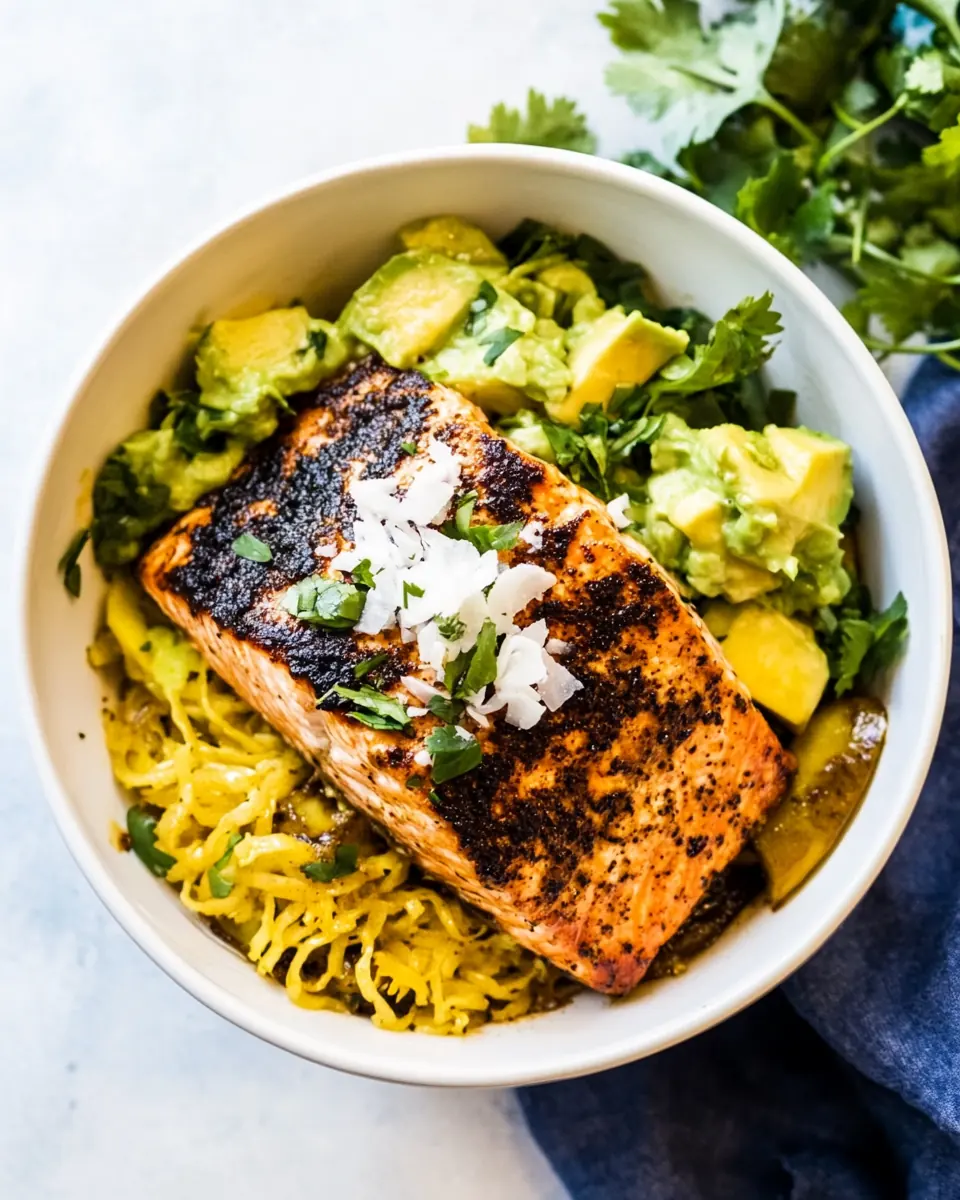
Bringing this bowl together is satisfying because each component cooks quickly and plays off the others. The following steps expand on the original directions so you know what to expect at each stage and how to troubleshoot common issues. Read through once, then work confidently through each step.
- Preheat your broiler to high, and align the oven rack so it's about 3 inches below the broiler. Rub a small baking dish with coconut oil, as well as a small baking sheet.: Hot, focused heat from the broiler creates rapid caramelization on the top of the salmon . When you set the oven rack about 3 inches below the broiler, you ensure intense top heat without burning the fish's interior. The kitchen will begin to smell faintly warm and toasty as the broiler heats, and you may hear a tiny hum from the oven as it reaches temperature. Pre-oiling the baking dish and sheet prevents sticking and helps the edges brown evenly, giving you clean release and attractive roasted surfaces. A typical mistake is leaving the pan cold which can cause the food to start steaming rather than browning. If you are nervous about flare ups, line the sheet with foil for easier cleanup but still oil it lightly so the cauliflower can brown properly.
- While it preheats, place your cumin seeds into a small pan set over medium heat and cook, stirring constantly, until golden brown and they smell toasted, about 1-2 minutes. Place onto a cutting board and crush using the bottom of a glass (or use a spice grinder).: Toasting the whole cumin seeds releases their essential oils, giving a warm, nutty aroma that hits your nose as soon as they begin to darken. Stir constantly so they toast evenly and do not burn, the sound is a soft popping and the scent goes from mild to richly aromatic. Crushing the seeds after toasting creates tiny pieces that sprinkle and cling to the salmon and cauliflower , offering bursts of spice rather than a flat powdery taste. Avoid toasting too long as burnt cumin tastes bitter and will spoil the bowl's balance.
- Rub the salmon with the pineapple juice. Mix half of the crushed cumin seeds with the coconut sugar, and then divide the mixture between each fillet and rub in. Place into the prepared baking dish and season with salt and pepper.: The tangy pineapple juice adds a light acidity that helps the surface caramelize while imparting tropical brightness. When you rub the cumin and coconut sugar mixture into the flesh, you will feel the grains adhering to the fish, and under the broiler they will begin to melt and form a glossy crust. Seasoning with salt and pepper at this stage ensures the fish is flavored throughout. A common misstep is over seasoning early, which can draw moisture; season just enough and adjust after cooking if needed.
- Place the cauliflower into a small bowl and toss with 2 teaspoons of melted coconut oil, the cayenne pepper, and remaining half of the crushed cumin seeds. Spread out evenly onto the prepared baking sheet and season with salt.: Tossing the florets in warm coconut oil helps them develop brown, nutty edges while the cumin seeds and cayenne pepper cling to the surface. Spread them in a single layer so air circulates and each floret browns rather than steams, and when they hit the hot sheet you should hear a soft sizzle. The cauliflower will smell lightly sweet and roasted as it cooks. Crowding the pan leads to soggy pieces, so use a second pan if needed.
- Place both dishes onto a rack set 3 inches from the broiler and cook until the salmon is tender and flaky and the sugar begins to caramelize, about 6-8 minutes. Cook the cauliflower for a few additional minutes if it hasn't turned brown and crispy yet. Mine took about 10 minutes.: The broiler's intense heat will quickly transform the sugar on the salmon into an amber crust while the interior turns opaque and flakes when prodded with a fork. You will see bubbling where the sugar meets the fish and smell a toasty, sweet perfume. For the cauliflower , watch for golden brown tips and tiny browned edges, they should be crisp outside and tender inside. A common issue is leaving both under the broiler too long; check early because broilers vary and you can always return for more color.
- While the fish and cauliflower cook, heat the remaining 1/2 tablespoon of coconut oil in a large pan on medium heat.: Warming the pan and oil prepares the surface so the plantain noodles crisp quickly on contact, producing a faint sizzling sound that signals good caramelization. The oil should shimmer but not smoke, giving a faint coconut scent that complements the bowls. If the pan is too hot the plantain can char before crisping properly, and if it is too cool they will absorb oil and become greasy. Aim for a moderate medium heat so the noodles brown evenly.
- Place the plantain noodles into the pan and toss to coat evenly with the oil. Cover with a tight-fitting lid and cook until the noodles are crispy, about 5-10 minutes. Make sure to stir them frequently so they don't burn. Season with salt.: When the plantain noodles hit the hot oil you will hear a lively sizzle, and as they cook they will darken at the edges and develop a satisfying chew. Covering them helps steam and soften the inner strands briefly, then uncovering and stirring encourages browning. Frequent stirring prevents any one area from burning and ensures even texture. Overcooking will make them hard, so test early and aim for golden edges with tender centers.
- While everything cooks, combine the avocado, coconut milk, garlic, and ginger in a small blender or food processor (mine is 3 cups) and blend until smooth and creamy. Season to taste with salt and pepper.: Blending the avocado with coconut milk creates a lush, velvety sauce that is cool and silky against the warm components. The aroma of fresh ginger and garlic will brighten as you blend, and the texture should pour easily but still coat a spoon. If the sauce seems too thick add a splash more coconut milk , too thin and it will not cling to the plantain noodles. A common error is under seasoning; taste and adjust before serving.
- Divide the salmon, plantain noodles, and cauliflower, and crushed pineapple between two bowls. Divide the toasted coconut on top, followed by the sauce. Garnish with cilantro and enjoy.: As you assemble the bowls you will notice an inviting contrast of colors and aromas, the golden salmon , browned plantain strands, and flecks of green from the cilantro . Spoon the creamy sauce so it slightly pools and clings to the noodles, then sprinkle toasted coconut flakes for crunch and top with crushed pineapple for bursts of sweetness. Serve immediately so the textures remain distinct; letting the components sit too long can soften the crisp plantain noodles. If plating ahead, hold the sauce separately until ready to serve.
Expert Tips about Caribbean Baked Salmon Plantain Noodle Bowls With Coconut Avocado Sauce
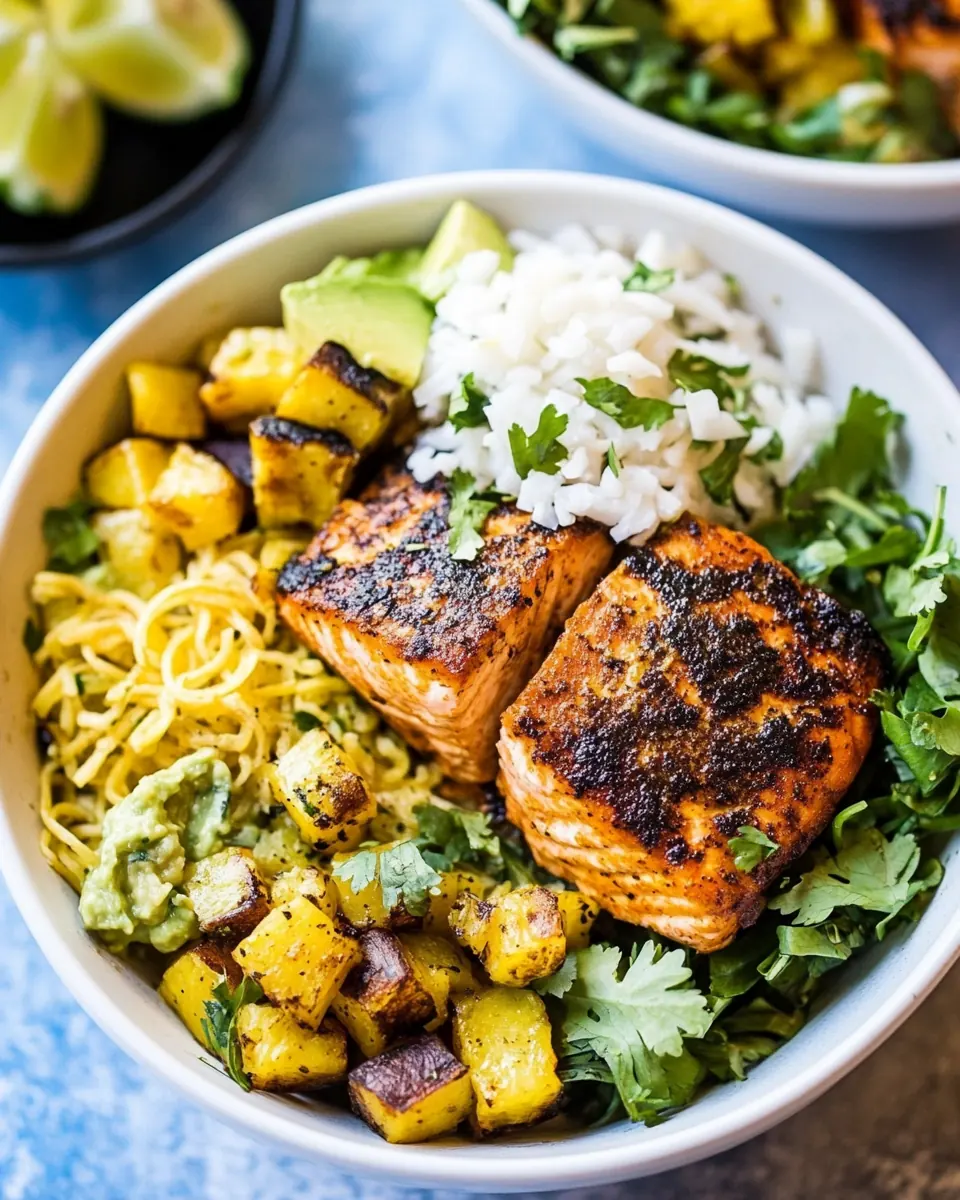
These tips will help you get consistent results and tweak the bowl to your preference. Small adjustments in technique and timing make a big difference in texture and balance.
- Toast spices first Toasting the whole cumin seeds for one to two minutes releases essential oils that deeply improve the aroma and flavor. Use medium heat and shake the pan so they darken evenly, and crush them after cooling for the best texture on the salmon and cauliflower.
- Control broiler distance Positioning the rack about three inches from the broiler ensures quick caramelization on the salmon without overcooking the center. Ovens vary so check at the earliest time to prevent burning.
- Dry pineapple before adding Squeezing excess moisture from the crushed pineapple prevents dilution of flavors and keeps the bowls from becoming watery. Pat it with paper towel and then scatter for bright sweetness.
- Use light coconut milk for sauce Light coconut milk gives the avocado sauce a creamy body without heaviness, making it a perfect coating for the plantain noodles and complement to the salmon.
- Stir plantain noodles frequently Frequent stirring while crisping prevents uneven browning and burning, and it helps you achieve golden edges with tender centers for the best textural contrast.
Pairing Suggestions for Caribbean Baked Salmon Plantain Noodle Bowls With Coconut Avocado Sauce
This dish stands well on its own, but thoughtful pairings elevate the meal for different occasions. Consider sides, drinks, and serving styles to match the mood of your gathering.
- Casual weeknight Serve the bowl alone for an easy weeknight dinner, letting the combination of salmon, plantain noodles, and sauce be the focus. The single bowl format keeps cleanup simple and is perfect for evenings when you want something hearty but not fussy.
- Summer lunch On warm days, serve with a simple green salad tossed in a light citrus vinaigrette to complement the tropical notes. Keep the salad crisp and bright so it contrasts the warm bowl.
- Entertaining Present the components buffet style so guests can build their own bowls, keeping the sauce and toasted coconut on the side. This approach is great for casual gatherings and allows picky eaters to customize portions.
- Ramadan or special occasions For a post fast iftar meal, serve the bowl slightly warm with extra sauce on the side and chopped cilantro as a fresh finish. The nourishing fish and creamy sauce provide comforting richness after a day of fasting.
- Storage Keep components separate in airtight containers in the refrigerator for up to two days, with the sauce stored on its own. Reheat the salmon gently to avoid drying and crisp the plantain noodles briefly in a hot pan to restore texture.
- Seasonal pairing This bowl sings in summer when pineapple is at its peak, but it also works well in late spring. Use the freshest cilantro and avocado you can find for the brightest flavors.
FAQ
Conclusion
This bowl stands out because it combines tropical brightness, creamy richness, and contrasting textures in a way that is both impressive and approachable. Give it a try on a night when you want something that feels special without a lot of fuss; the crisp plantain noodles, caramelized salmon, and luscious coconut avocado sauce make a memorable meal. I hope you enjoy assembling and eating it as much as I do, and that it becomes one of your reliable go to dinners when you want flavor and ease in the same bowl.
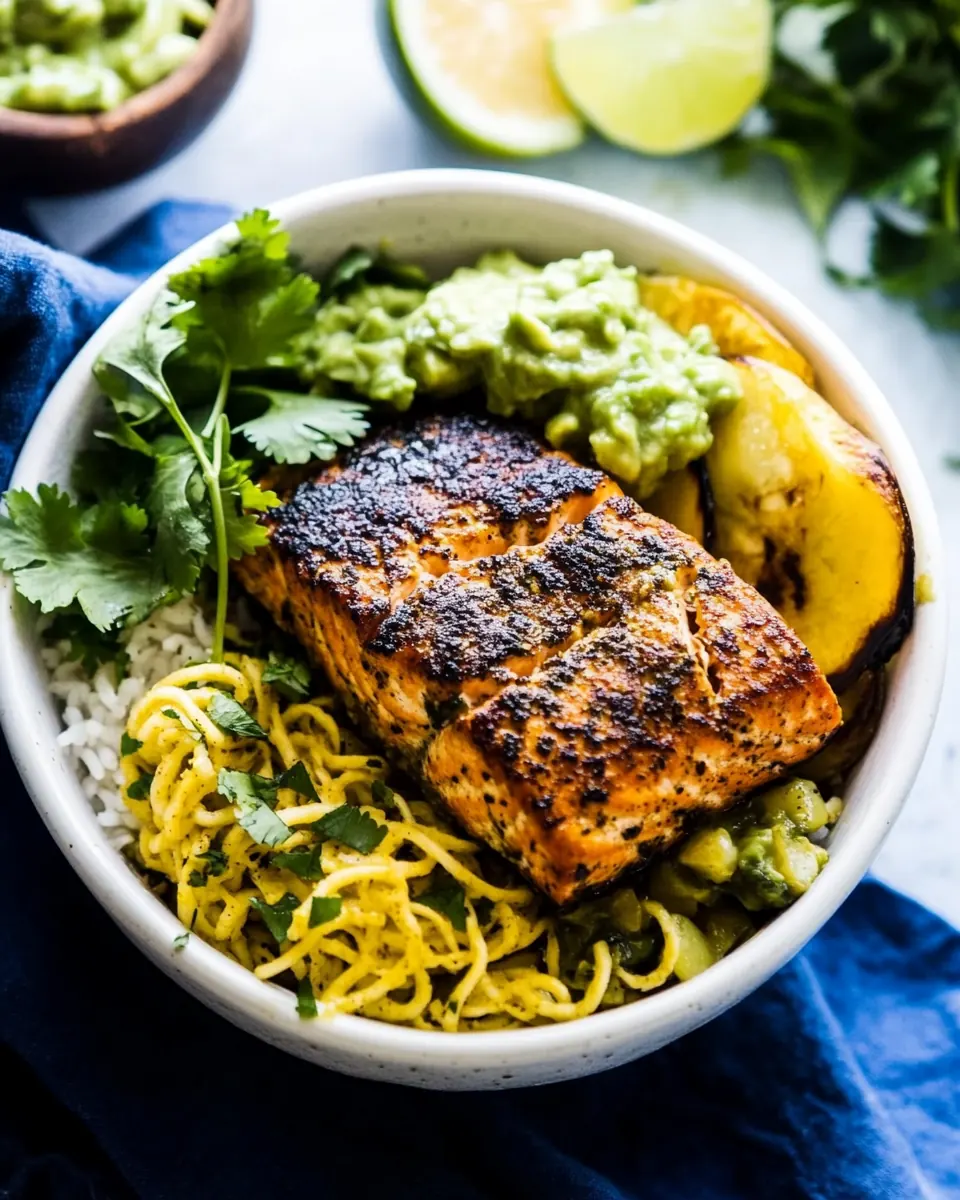
Caribbean Baked Salmon Plantain Noodle Bowls With Coconut Avocado Sauce
Ingredients
Equipment
Method
- Preheat your broiler to high, and align the oven rack so it's about 3 inches below the broiler. Rub a small baking dish with coconut oil, as well as a small baking sheet.: Hot, focused heat from the broiler creates rapid caramelization on the top of the salmon . When you set the oven rack about 3 inches below the broiler, you ensure intense top heat without burning the fish's interior. The kitchen will begin to smell faintly warm and toasty as the broiler heats, and you may hear a tiny hum from the oven as it reaches temperature. Pre-oiling the baking dish and sheet prevents sticking and helps the edges brown evenly, giving you clean release and attractive roasted surfaces. A typical mistake is leaving the pan cold which can cause the food to start steaming rather than browning. If you are nervous about flare ups, line the sheet with foil for easier cleanup but still oil it lightly so the cauliflower can brown properly.
- While it preheats, place your cumin seeds into a small pan set over medium heat and cook, stirring constantly, until golden brown and they smell toasted, about 1-2 minutes. Place onto a cutting board and crush using the bottom of a glass (or use a spice grinder).: Toasting the whole cumin seeds releases their essential oils, giving a warm, nutty aroma that hits your nose as soon as they begin to darken. Stir constantly so they toast evenly and do not burn, the sound is a soft popping and the scent goes from mild to richly aromatic. Crushing the seeds after toasting creates tiny pieces that sprinkle and cling to the salmon and cauliflower , offering bursts of spice rather than a flat powdery taste. Avoid toasting too long as burnt cumin tastes bitter and will spoil the bowl's balance.
- Rub the salmon with the pineapple juice. Mix half of the crushed cumin seeds with the coconut sugar, and then divide the mixture between each fillet and rub in. Place into the prepared baking dish and season with salt and pepper.: The tangy pineapple juice adds a light acidity that helps the surface caramelize while imparting tropical brightness. When you rub the cumin and coconut sugar mixture into the flesh, you will feel the grains adhering to the fish, and under the broiler they will begin to melt and form a glossy crust. Seasoning with salt and pepper at this stage ensures the fish is flavored throughout. A common misstep is over seasoning early, which can draw moisture; season just enough and adjust after cooking if needed.
- Place the cauliflower into a small bowl and toss with 2 teaspoons of melted coconut oil, the cayenne pepper, and remaining half of the crushed cumin seeds. Spread out evenly onto the prepared baking sheet and season with salt.: Tossing the florets in warm coconut oil helps them develop brown, nutty edges while the cumin seeds and cayenne pepper cling to the surface. Spread them in a single layer so air circulates and each floret browns rather than steams, and when they hit the hot sheet you should hear a soft sizzle. The cauliflower will smell lightly sweet and roasted as it cooks. Crowding the pan leads to soggy pieces, so use a second pan if needed.
- Place both dishes onto a rack set 3 inches from the broiler and cook until the salmon is tender and flaky and the sugar begins to caramelize, about 6-8 minutes. Cook the cauliflower for a few additional minutes if it hasn't turned brown and crispy yet. Mine took about 10 minutes.: The broiler's intense heat will quickly transform the sugar on the salmon into an amber crust while the interior turns opaque and flakes when prodded with a fork. You will see bubbling where the sugar meets the fish and smell a toasty, sweet perfume. For the cauliflower , watch for golden brown tips and tiny browned edges, they should be crisp outside and tender inside. A common issue is leaving both under the broiler too long; check early because broilers vary and you can always return for more color.
- While the fish and cauliflower cook, heat the remaining 1/2 tablespoon of coconut oil in a large pan on medium heat.: Warming the pan and oil prepares the surface so the plantain noodles crisp quickly on contact, producing a faint sizzling sound that signals good caramelization. The oil should shimmer but not smoke, giving a faint coconut scent that complements the bowls. If the pan is too hot the plantain can char before crisping properly, and if it is too cool they will absorb oil and become greasy. Aim for a moderate medium heat so the noodles brown evenly.
- Place the plantain noodles into the pan and toss to coat evenly with the oil. Cover with a tight-fitting lid and cook until the noodles are crispy, about 5-10 minutes. Make sure to stir them frequently so they don't burn. Season with salt.: When the plantain noodles hit the hot oil you will hear a lively sizzle, and as they cook they will darken at the edges and develop a satisfying chew. Covering them helps steam and soften the inner strands briefly, then uncovering and stirring encourages browning. Frequent stirring prevents any one area from burning and ensures even texture. Overcooking will make them hard, so test early and aim for golden edges with tender centers.
- While everything cooks, combine the avocado, coconut milk, garlic, and ginger in a small blender or food processor (mine is 3 cups) and blend until smooth and creamy. Season to taste with salt and pepper.: Blending the avocado with coconut milk creates a lush, velvety sauce that is cool and silky against the warm components. The aroma of fresh ginger and garlic will brighten as you blend, and the texture should pour easily but still coat a spoon. If the sauce seems too thick add a splash more coconut milk , too thin and it will not cling to the plantain noodles. A common error is under seasoning; taste and adjust before serving.
- Divide the salmon, plantain noodles, and cauliflower, and crushed pineapple between two bowls. Divide the toasted coconut on top, followed by the sauce. Garnish with cilantro and enjoy.: As you assemble the bowls you will notice an inviting contrast of colors and aromas, the golden salmon , browned plantain strands, and flecks of green from the cilantro . Spoon the creamy sauce so it slightly pools and clings to the noodles, then sprinkle toasted coconut flakes for crunch and top with crushed pineapple for bursts of sweetness. Serve immediately so the textures remain distinct; letting the components sit too long can soften the crisp plantain noodles. If plating ahead, hold the sauce separately until ready to serve.
Notes
- Toast spices first Toasting the whole cumin seeds for one to two minutes releases essential oils that deeply improve the aroma and flavor. Use medium heat and shake the pan so they darken evenly, and crush them after cooling for the best texture on the salmon and cauliflower.
- Control broiler distance Positioning the rack about three inches from the broiler ensures quick caramelization on the salmon without overcooking the center. Ovens vary so check at the earliest time to prevent burning.
- Dry pineapple before adding Squeezing excess moisture from the crushed pineapple prevents dilution of flavors and keeps the bowls from becoming watery. Pat it with paper towel and then scatter for bright sweetness.
- Use light coconut milk for sauce Light coconut milk gives the avocado sauce a creamy body without heaviness, making it a perfect coating for the plantain noodles and complement to the salmon.
- Stir plantain noodles frequently Frequent stirring while crisping prevents uneven browning and burning, and it helps you achieve golden edges with tender centers for the best textural contrast.