Shrimp Boil Skillet
Shrimp Boil Skillet was one of those recipes that taught me how joyful a single skillet can be. The first time I tossed tiny yellow potatoes, spicy smoked sausage, sweet corn, and plump shrimp together, the kitchen filled with a sea bright and savory aroma that made everyone at the table pause. I loved how simple technique and quality ingredients turned an ordinary weeknight into a celebration, and since then I keep this skillet in my regular rotation. It feels casual, familiar, and just festive enough to bring people together without a fuss.
On a hot summer evening I remember carrying this skillet to the picnic table, steam rising and the citrus notes cutting through the buttery richness. Folks dug right in, forks scraping the bottom for crispy pockets of potato and browned bits of sausage. We traded stories, passed bowls of extra parsley, and I realized how the dish invites sharing. It is fast, flexible, and forgiving, which I always appreciate when life is crowded with errands and plans. I hope this recipe gives you the same easy confidence I felt the first time I made it for friends.
Recipe Snapshot
35 mins
15 mins
20 mins
Medium
400 kcal
American
Gluten-Free, Keto
Dinner
Large non stick skillet, Microwave, Cutting board, Knife
What We Adore About This Shrimp Boil Skillet
One Pot Satisfaction
I love that Shrimp Boil Skillet delivers a complete meal in a single pan. You get tender potatoes, savory sausage, sweet corn, and juicy shrimp with minimal cleanup. For busy nights I find this simplicity invaluable, because fewer dishes mean more time to sit and enjoy company.
Bold, Balanced Flavors
There is a rhythm to the seasonings here. The Old Bay seafood seasoning brings briny warmth, while the thyme adds a gentle herbal lift. The butter and olive oil coat everything, creating glossy bites that taste both rich and fresh once a splash of lemon juice brightens the pan.
Speed Without Sacrifice
I’m always juggling time, and this skillet respects that. Par-cooking the potatoes in the microwave shortens the overall process, but finishing them in a hot skillet gives you those golden edges we chase. You don’t need long to get maximum texture and flavor, which is perfect for a quick weeknight victory.
Customizable and Crowd Friendly
This dish is forgiving. I often swap the type of sausage or add a handful of spinach for color and a nutrient boost. It scales easily for company, so you can double it for a get together and still manage it on one very large skillet.
Comfort With a Kick
There is a familiar comfort here, yet the spice from the Old Bay seafood seasoning and the smoked sausage keeps it interesting. It’s the kind of meal that hits a nostalgic note while still feeling lively on the palate.
Essential Ingredients for Shrimp Boil Skillet
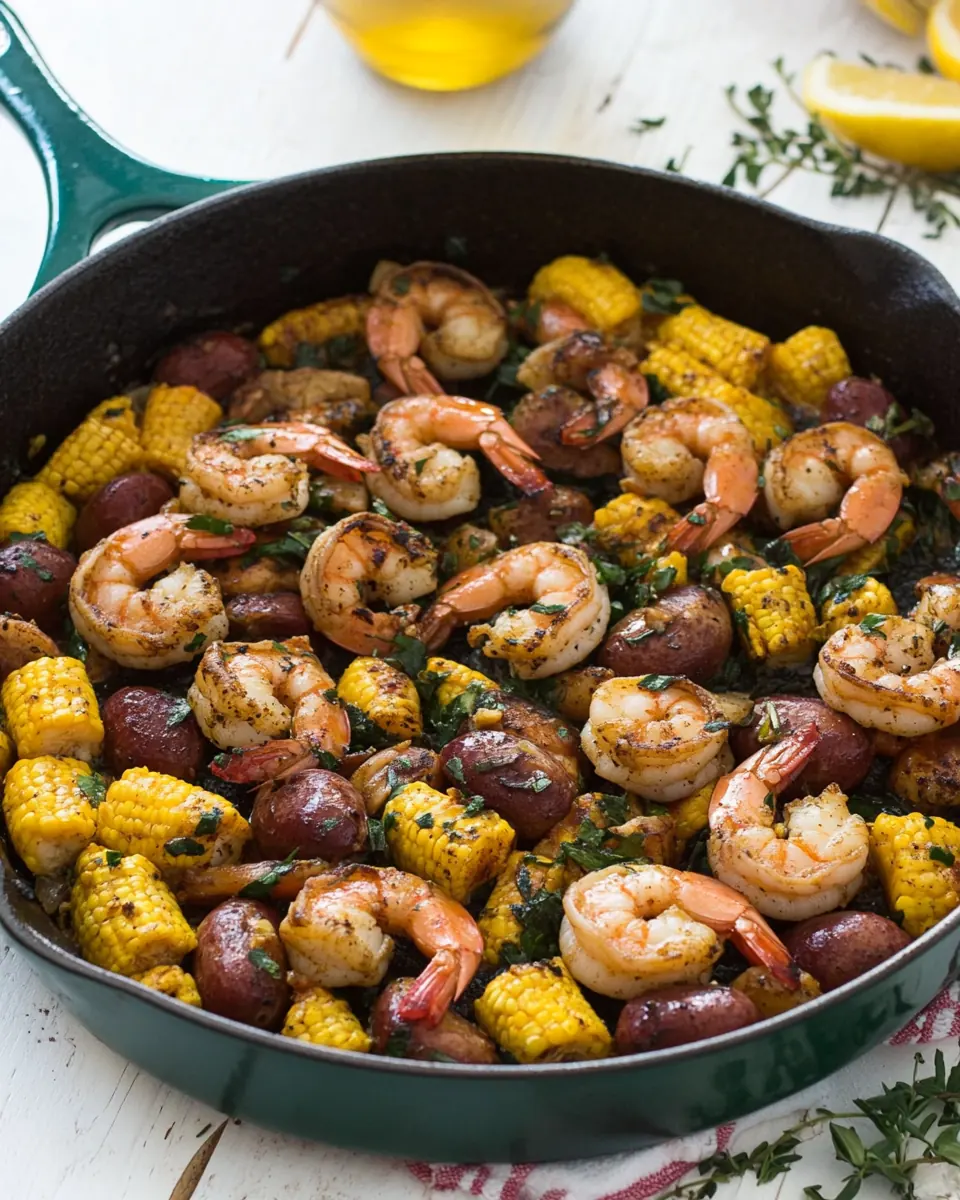
These ingredients form a compact team where every item plays a clear role. The starch base of potatoes gives satisfying heft, while the smoky sausage and briny spices create depth. The sweet corn and bright lemon juice lift the mixture so the dish does not feel heavy. Together they achieve a balanced skillet meal that is both rustic and bright.
- 1 lb baby yellow potatoes: Cook evenly to tender-crisp perfection and provide a hearty, starchy base that soaks up the skillet’s flavors.
- 2 tbsp olive oil: Drizzle for sautéing and browning to help vegetables and sausage cook without sticking while adding a subtle fruity note.
- 1/2 large yellow onion, chopped: Sauté until translucent and fragrant to build savory depth and form the aromatic foundation of the dish.
- Salt and freshly ground black pepper: Season liberally to enhance and balance flavors; adjust to taste to prevent the dish from tasting flat or overly salty.
- 6 oz turkey or chicken smoked sausage (I used Johnsonville Cajun Chicken Sausage), sliced: Brown in the pan to render smoky, savory fat and contribute meaty texture and a spicy profile to the skillet.
- 2 cloves garlic, minced: Cook briefly to release pungent, aromatic oils that lift the overall flavor and complement the sausage and shrimp.
- 2 tbsp butter, diced into small cubes: Melt into the skillet to add richness and a silky mouthfeel that coats potatoes, corn, and shrimp for indulgent flavor.
- 3/4 lb large peeled and deveined shrimp: Sear quickly until opaque and just cooked through to provide sweet, briny protein and the star seafood element of the dish.
- 1 1/4 cups fresh corn or frozen, thawed corn: Add bursts of sweet, crisp kernels and color contrast while contributing subtle texture and complementary sweetness to the mix.
- 2 tsp Old Bay seafood seasoning: Sprinkle to introduce classic coastal seasoning notes—savory, pungent, and slightly spicy—that define the boil flavor profile.
- 1/2 tsp dried thyme: Toss in sparingly to lend a warm, slightly floral and earthy background note that pairs well with seafood and sausage.
- 4 oz baby spinach () (optional): Wilt briefly for bright color and tender leaf texture that increases volume and adds a mild, slightly bitter green note.
- 1 tbsp fresh lemon juice: Squeeze over at the end to brighten and balance richness with fresh acidity, lifting all the other flavors in the skillet.
- 1 tbsp minced fresh parsley () (optional): Garnish chopped to add a fresh herbal finish and light, green flavor while improving visual appeal and aroma.
Making Shrimp Boil Skillet
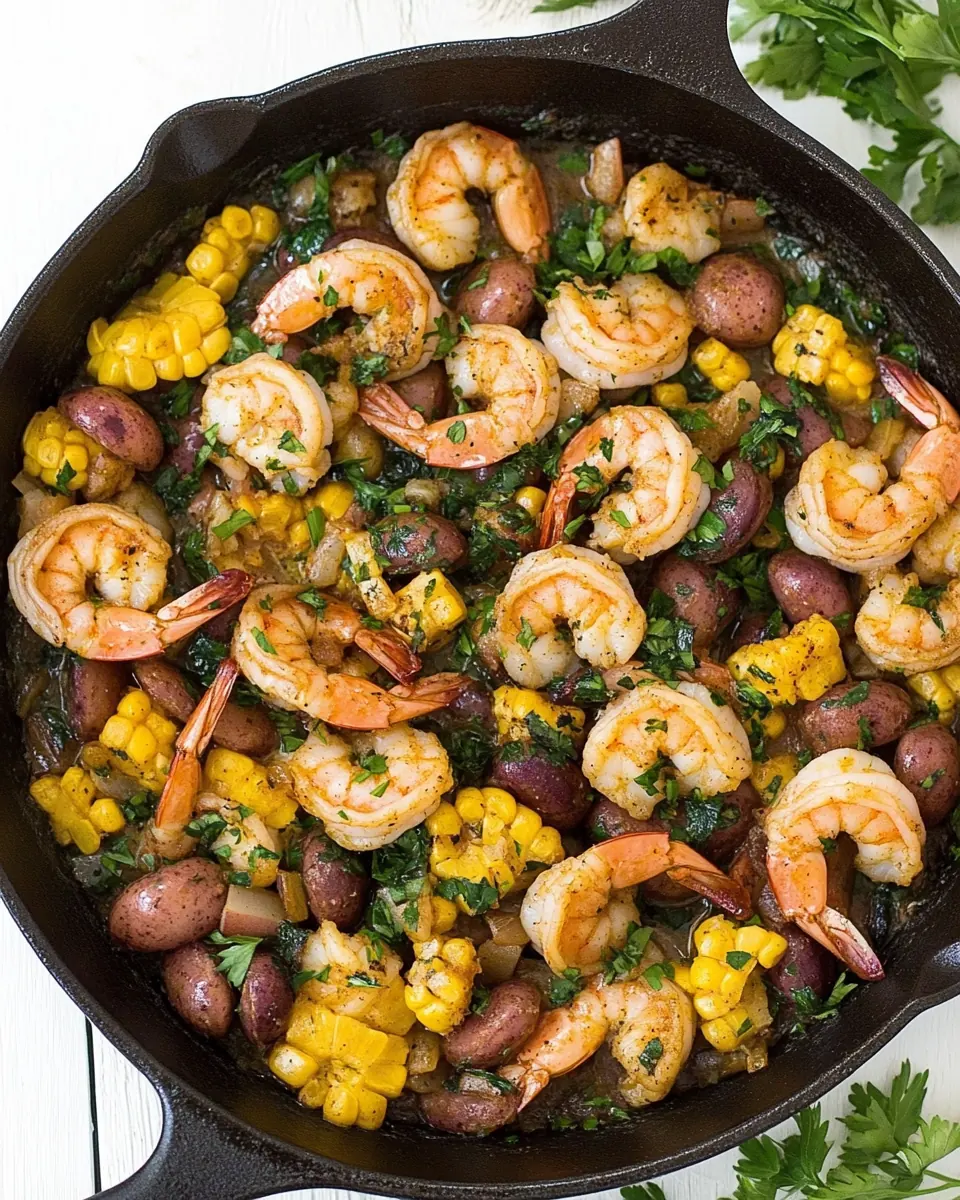
I approach this skillet in a rhythmic way so textures build and flavors deepen. You will start by par cooking the potatoes to save time, then sear and brown components in stages. The result is a pan of mixed textures from crisped edges to tender interiors, with bright finishes of lemon juice and fresh parsley. Follow the sequence to get the best contrasts.
- Place potatoes on a large plate and microwave on high power for 2 minutes.: The kitchen will fill with a faintly earthy steam as the potatoes start to soften, which helps later searing. This step softens the centers so you avoid long stove time. A common mistake is skipping this and ending up with crunchy, undercooked centers when the exterior is already brown.
- Turn potatoes then continue to microwave until just tender, about 2 minutes longer (if they aren't really small they'll take a little longer. Make sure they are tender at this point). Let cool slightly then cut in half.: You should hear the faint pop as steam releases when piercing the potatoes, and they should yield under a fork but not collapse. Let them cool slightly then cut in half to increase surface area for browning. If you overcook them in the microwave they will become too mushy when tossed, so check early if your potatoes are tiny.
- Meanwhile, heat olive oil in a very large non-stick skillet (at least 12-inches and deep) over medium heat.: The oil will shimmer when hot, signaling it is ready to accept aromatics and brownings. Medium heat gives you control to develop color without burning the fat. Too high a flame will scorch the oil and make the pan taste bitter.
- Add onions and saute until tender, about 4 minutes. Push onions over to the far side of pan, add in potatoes.: You will notice the onions turn translucent and soften, releasing sweet, caramel notes that anchor the dish. Stir occasionally to avoid sticking but let them sit enough to brown lightly. Rushing this step leaves the onions sharp and underdeveloped in flavor.
- Season with salt and pepper and cook turning occasionally, until lightly golden brown, about 3 minutes. Push potatoes to opposite side with onions.: As you move the softened onions , the potatoes hit the hot oil and begin to sizzle, producing little popping sounds and brown edges. That Maillard browning adds nutty depth. Crowding the pan can steam the potatoes instead of browning them, so give them space.
- Add sausage to other side of pan and cook, tossing occasionally until sausage is starting to brown slightly, about 3 minutes. Scoot sausage add in garlic and saute 1 minute, or until lightly golden.: You will smell toasted notes as the cut faces of the potatoes pick up color, which tastes richly savory against the soft insides. Turn so multiple sides brown evenly. Overturning constantly prevents any good crust from forming.
- Add butter, shrimp and corn to skillet. Sprinkle in seafood seasoning and thyme and season with salt and pepper to taste (don't overdue it with salt as the sausage is salty).: The sausage will release fragrant fat and a smoky scent as it sears, creating caramelized edges that boost overall flavor. Allow it to sit a bit between tosses so it chars lightly. If you chop or slice too thinly the pieces can dry out rather than caramelize.
- Cook tossing occasionally 2 minutes, then add spinach and cook until spinach has wilted and until the shrimp is cooked through (it should be opaque throughout).: The brief scent of roasted garlic will hit immediately, and those one minute of cooking will mellow raw sharpness into warm, nutty aroma. Garlic burns quickly, so keep it moving and watch for a pale golden color, not dark brown.
- Pour in lemon juice and toss. Serve warm garnished with parsley if desired.: When the cubed butter melts it will sizzle and create a glossy coating that helps the shrimp and corn pick up flavor. The contrast between hot pan and cold shrimp makes the butter foam pleasantly. If you add everything too cold to a low heat, steaming will occur instead of searing.
- Sprinkle in seafood seasoning and thyme and season with salt and pepper to taste: The spices will bloom in the warm fat releasing aromatic lift, and the thyme will lend a subtle herbaceous backdrop. Taste carefully since the sausage already contributes salt; over salting is easy here.
- Cook tossing occasionally 2 minutes then add spinach and cook until spinach has wilted and until the shrimp is cooked through: You should see the shrimp turn uniformly opaque with a slight curl, and the spinach will collapse into dark glossy leaves. The sound changes to a softer simmer as moisture is released. Overcooking makes shrimp rubbery and spinach mushy, so remove from heat promptly when done.
- Pour in lemon juice and toss: The bright hiss of acid hitting the pan wakes up the flavors and cuts through the buttery richness, giving a clean finish to each bite. Tossing evenly distributes the tang so each forkful is balanced. Adding lemon too early will dull its fresh brightness.
- Serve warm garnished with parsley if desired: The garnish adds a fresh, herbaceous aroma and a pop of green that signals freshness. Serve straight from the skillet so you keep the warm textures intact. Letting it sit too long will lose that crisp edge on the potatoes and the shrimp may cool and tighten.
Tips for Success
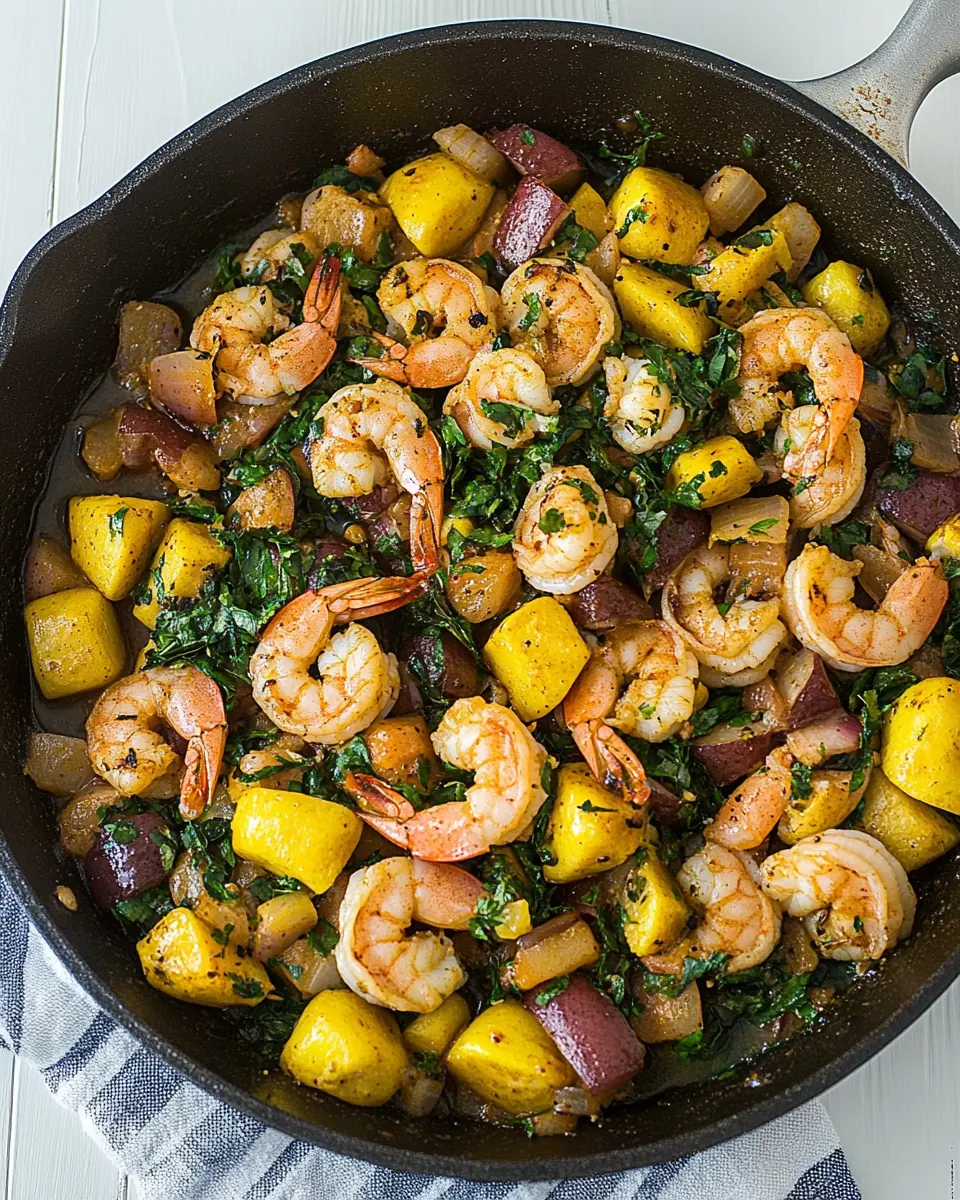
A few mindful techniques will help you get the most from the Shrimp Boil Skillet. I like to prep and stage ingredients so they hit the pan at the right time. Keep a close eye on the shrimp and give the potatoes space to develop color.
- Prep ingredients ahead: Have the potatoes par cooked, the sausage sliced, the corn measured, and the shrimp ready at the start so you can move quickly during the hot cooking stage.
- Use a large skillet: A roomy 12 inch pan prevents overcrowding, helping each component brown rather than steam, which improves texture and flavor.
- Control heat: Maintain medium heat for predictable browning. Too hot and the garlic or butter will burn, too low and you will lose that crisp edge on the potatoes.
- Mind the salt: Taste as you go because the smoked sausage is already salty; under seasoning early is better than oversalting.
- Finish with acid: Add the lemon juice at the end to preserve a bright citrus lift that cuts richness and refreshes the palate.
- Garnish lightly: Sprinkle the minced parsley just before serving for a fresh aroma and an inviting presentation.
What to Serve With Shrimp Boil Skillet
This skillet is versatile and pairs well with simple sides and casual serving styles. It works for weeknight dinners, summer gatherings, or an easy weekend lunch when you want something impressive with little fuss. Think light, crisp accompaniments and easy shareable elements.
- Crusty bread: A warm loaf is perfect for sopping up buttery pan juices and makes the meal feel more communal at the table.
- Simple green salad: A crisp salad with a bright vinaigrette balances the richness of the skillet and adds refreshing contrast.
- Steamed rice or couscous: Serve a scoop on the side to soak up the seasoned butter for heartier appetites and to stretch the meal for more people.
- Cold slaw: A tangy cabbage slaw adds crunch and acidity that complements the smoky sausage and sweet corn well.
- Occasions: This works for casual family dinners, summer patio meals, or informal gatherings where people can help themselves right from the pan.
- Storage tips: Refrigerate leftovers in an airtight container for up to two days; reheat gently to avoid overcooking the shrimp.
- Seasonal pairings: In summer, use fresh corn for the brightest sweetness, and in cooler months thawed frozen corn keeps the flavor balanced.
FAQ
Conclusion
This Shrimp Boil Skillet stands out for its lively combination of textures and seafood friendly spices, delivering a full meal from one pan. Try it when you want something fast yet impressive, because it offers bold smoky notes, bright lemon finish, and minimal cleanup. I hope you enjoy how quickly it comes together and the way it brings people to the table, making even ordinary nights feel a little more special.
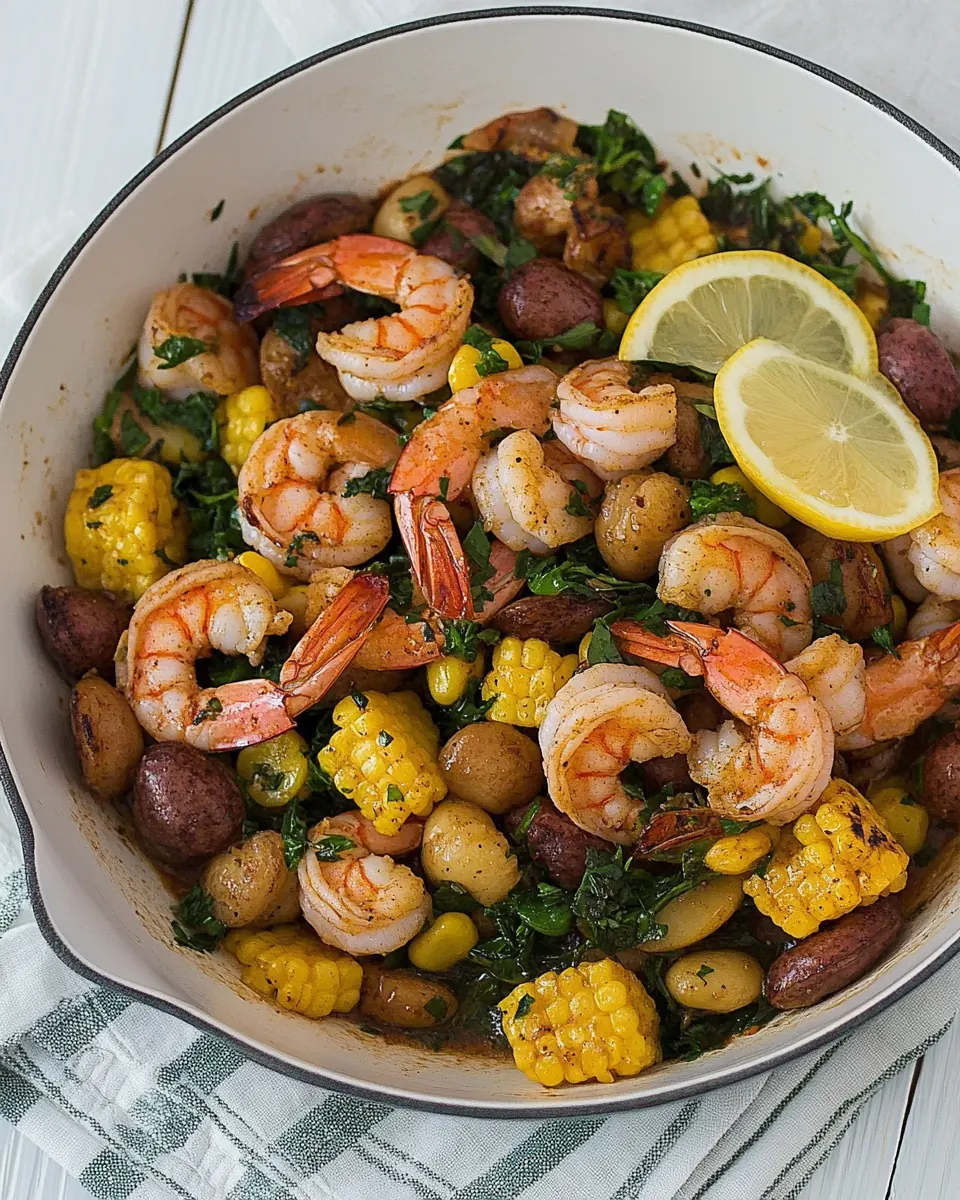
Shrimp Boil Skillet
Ingredients
Equipment
Method
- Place potatoes on a large plate and microwave on high power for 2 minutes.: The kitchen will fill with a faintly earthy steam as the potatoes start to soften, which helps later searing. This step softens the centers so you avoid long stove time. A common mistake is skipping this and ending up with crunchy, undercooked centers when the exterior is already brown.
- Turn potatoes then continue to microwave until just tender, about 2 minutes longer (if they aren't really small they'll take a little longer. Make sure they are tender at this point). Let cool slightly then cut in half.: You should hear the faint pop as steam releases when piercing the potatoes, and they should yield under a fork but not collapse. Let them cool slightly then cut in half to increase surface area for browning. If you overcook them in the microwave they will become too mushy when tossed, so check early if your potatoes are tiny.
- Meanwhile, heat olive oil in a very large non-stick skillet (at least 12-inches and deep) over medium heat.: The oil will shimmer when hot, signaling it is ready to accept aromatics and brownings. Medium heat gives you control to develop color without burning the fat. Too high a flame will scorch the oil and make the pan taste bitter.
- Add onions and saute until tender, about 4 minutes. Push onions over to the far side of pan, add in potatoes.: You will notice the onions turn translucent and soften, releasing sweet, caramel notes that anchor the dish. Stir occasionally to avoid sticking but let them sit enough to brown lightly. Rushing this step leaves the onions sharp and underdeveloped in flavor.
- Season with salt and pepper and cook turning occasionally, until lightly golden brown, about 3 minutes. Push potatoes to opposite side with onions.: As you move the softened onions , the potatoes hit the hot oil and begin to sizzle, producing little popping sounds and brown edges. That Maillard browning adds nutty depth. Crowding the pan can steam the potatoes instead of browning them, so give them space.
- Add sausage to other side of pan and cook, tossing occasionally until sausage is starting to brown slightly, about 3 minutes. Scoot sausage add in garlic and saute 1 minute, or until lightly golden.: You will smell toasted notes as the cut faces of the potatoes pick up color, which tastes richly savory against the soft insides. Turn so multiple sides brown evenly. Overturning constantly prevents any good crust from forming.
- Add butter, shrimp and corn to skillet. Sprinkle in seafood seasoning and thyme and season with salt and pepper to taste (don't overdue it with salt as the sausage is salty).: The sausage will release fragrant fat and a smoky scent as it sears, creating caramelized edges that boost overall flavor. Allow it to sit a bit between tosses so it chars lightly. If you chop or slice too thinly the pieces can dry out rather than caramelize.
- Cook tossing occasionally 2 minutes, then add spinach and cook until spinach has wilted and until the shrimp is cooked through (it should be opaque throughout).: The brief scent of roasted garlic will hit immediately, and those one minute of cooking will mellow raw sharpness into warm, nutty aroma. Garlic burns quickly, so keep it moving and watch for a pale golden color, not dark brown.
- Pour in lemon juice and toss. Serve warm garnished with parsley if desired.: When the cubed butter melts it will sizzle and create a glossy coating that helps the shrimp and corn pick up flavor. The contrast between hot pan and cold shrimp makes the butter foam pleasantly. If you add everything too cold to a low heat, steaming will occur instead of searing.
- Sprinkle in seafood seasoning and thyme and season with salt and pepper to taste: The spices will bloom in the warm fat releasing aromatic lift, and the thyme will lend a subtle herbaceous backdrop. Taste carefully since the sausage already contributes salt; over salting is easy here.
- Cook tossing occasionally 2 minutes then add spinach and cook until spinach has wilted and until the shrimp is cooked through: You should see the shrimp turn uniformly opaque with a slight curl, and the spinach will collapse into dark glossy leaves. The sound changes to a softer simmer as moisture is released. Overcooking makes shrimp rubbery and spinach mushy, so remove from heat promptly when done.
- Pour in lemon juice and toss: The bright hiss of acid hitting the pan wakes up the flavors and cuts through the buttery richness, giving a clean finish to each bite. Tossing evenly distributes the tang so each forkful is balanced. Adding lemon too early will dull its fresh brightness.
- Serve warm garnished with parsley if desired: The garnish adds a fresh, herbaceous aroma and a pop of green that signals freshness. Serve straight from the skillet so you keep the warm textures intact. Letting it sit too long will lose that crisp edge on the potatoes and the shrimp may cool and tighten.
Notes
- Prep ingredients ahead: Have the potatoes par cooked, the sausage sliced, the corn measured, and the shrimp ready at the start so you can move quickly during the hot cooking stage.
- Use a large skillet: A roomy 12 inch pan prevents overcrowding, helping each component brown rather than steam, which improves texture and flavor.
- Control heat: Maintain medium heat for predictable browning. Too hot and the garlic or butter will burn, too low and you will lose that crisp edge on the potatoes.
- Mind the salt: Taste as you go because the smoked sausage is already salty; under seasoning early is better than oversalting.
- Finish with acid: Add the lemon juice at the end to preserve a bright citrus lift that cuts richness and refreshes the palate.
- Garnish lightly: Sprinkle the minced parsley just before serving for a fresh aroma and an inviting presentation.