Spinach Tomato Pasta
Spinach Tomato Pasta is one of those recipes I turn to when I want dinner to feel both bright and comforting without a lot of fuss.
I remember the first time I tossed together Spinach Tomato Pasta on an evening when the garden was overflowing with grape tomatoes, and I wanted something that let those small fruits sing. I used simple pantry staples, and the result felt like a tiny celebration on a plate, fresh and fast. As I stirred the pasta into the skillet, the aroma of garlic mingled with warm olive oil and the sweetness of blistered tomatoes, and I thought, this is exactly the kind of meal that turns a weekday into a small win.
Over the years I’ve adapted this dish for different moods, sometimes making it extra peppery, sometimes ladling on more cheese, and once I even packed it for a picnic, where it was somehow even better at room temperature. I love how Spinach Tomato Pasta balances textures, the soft wilted spinach against the tender penne pasta, and how a little Parmesan cheese pulls it all together. It feels like an approachable little ritual I can rely on when I want something nourishing and unfussy.
Recipe Snapshot
30 mins
10 mins
20 mins
Easy
400 kcal
Italian
Gluten-Free, Paleo
Dinner
Large pot, Colander, Large skillet
The Charm of This Spinach Tomato Pasta
Bright, fast, and flavor forward
I adore this recipe because it delivers big flavor with minimal effort. The combination of grape tomatoes and garlic creates a quick sauce that tastes like it simmered all afternoon, even though it only takes minutes. That immediacy makes it ideal when time is short and you still want something satisfying.
Vegetable forward, yet hearty
The use of a full bowl of spinach means you get a serving of greens without any heavy lifting. At the same time, the penne pasta keeps the dish filling, so it works as a main that leaves you content rather than reaching for something else.
Flexible to your pantry
I love recipes that bend to what you have. If your pantry has olive oil and a head of garlic, you are already most of the way there. You can swap the pasta shape, or use whatever tomatoes you have, and it will still shine. That makes this a go to for weeknight cooking and last minute dinners.
Textural contrast and satisfaction
The quick blistering of grape tomatoes until they burst gives a juicy pop against the slightly al dente penne pasta. The wilted spinach adds a silky note, and the final sprinkle of Parmesan cheese gives a savory finish that rounds everything out. That balance keeps each forkful interesting.
Kid friendly but grown up
I find this dish travels well across different palates. Kids often enjoy the familiar comfort of pasta and the sweet notes from the tomatoes, while adults appreciate the layers of garlic, pepper flakes when used, and cheese. It’s a rare dinner that pleases a table of different tastes without much effort from me.
Ingredients for Spinach Tomato Pasta
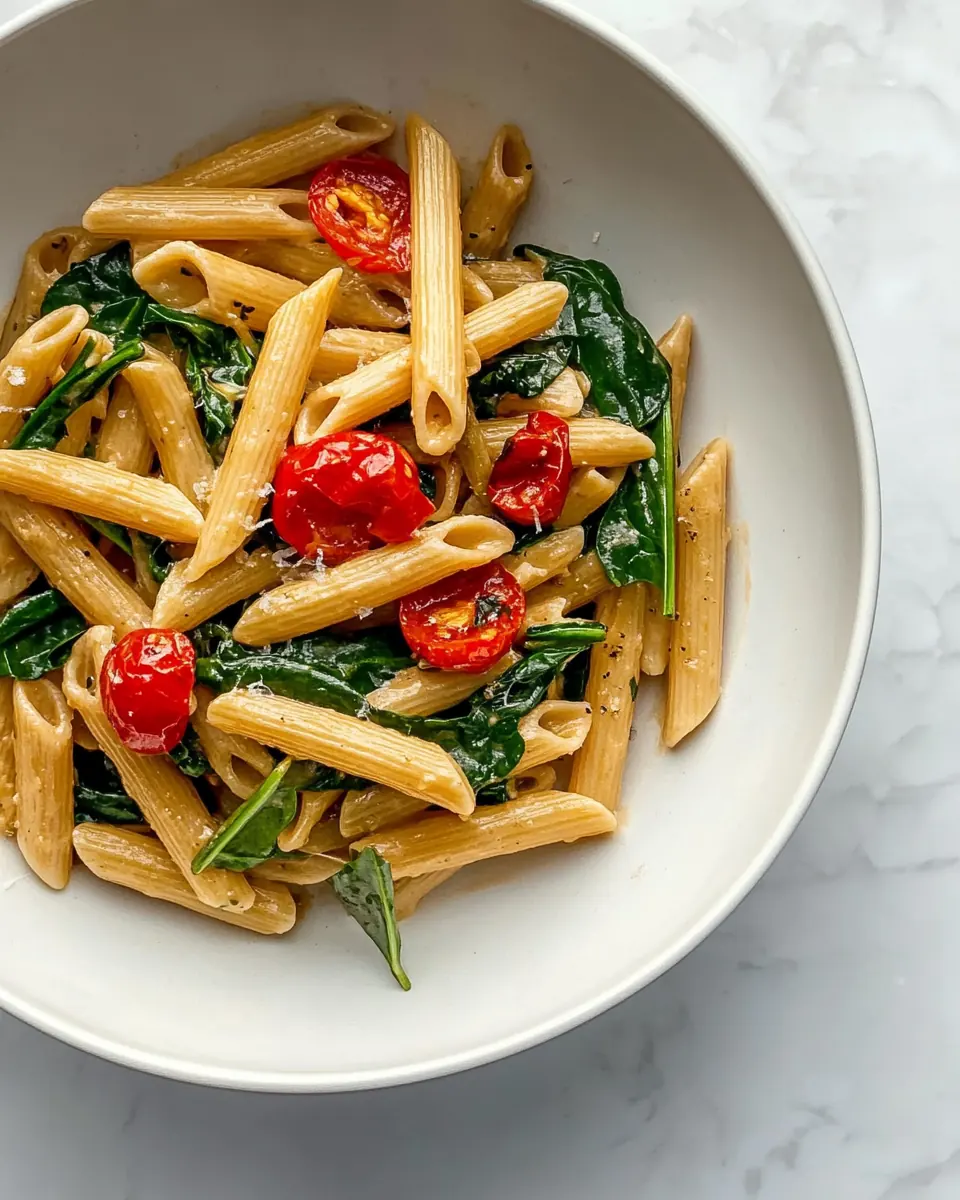
These ingredients are a study in simplicity and harmony. The dish relies on a few high quality components that play distinct roles. The penne pasta provides structure and chew, the grape tomatoes bring bright acidity and juiciness, while the spinach adds a fresh, leafy texture. Garlic and olive oil form the aromatic backbone, and the finishing Parmesan cheese contributes umami and a creamy note.
- 8 ounces penne pasta or your preferred pasta: Cooked to al dente to provide the main body and texture for the dish; holds sauce and mixes well with vegetables. Choose penne or a preferred shape for optimal sauce capture and mouthfeel.
- 1 tablespoon olive oil: Used to gently sauté aromatics and tomatoes, adding a fruity richness and silky texture when heated; contributes healthy fats and helps distribute flavors. Measure for a balanced olive oil presence without greasiness.
- 3 cloves garlic minced: Finely minced to release pungent, savory aromatics that build the flavor foundation; quickly softens and mellows when sautéed. Adjust mince size to control intensity and even flavor distribution.
- 2 cups grape tomatoes halved: Halved to release juicy, sweet-tart flavors and create pockets of concentrated tomato in the pasta; softens with cooking to form a light sauce. Use ripe grape tomatoes for maximum sweetness and burst.
- 1/4 teaspoon crushed red pepper flakes (optional): Added sparingly to introduce a touch of heat and depth without overpowering; crushed flakes can be adjusted to personal spice tolerance. Sprinkle in during sautéing to bloom the chili oils into the sauce.
- 4 cups roughly chopped fresh spinach: Roughly chopped to provide bright color, fresh flavor, and a tender leafy contrast; wilts quickly into the warm pasta creating volume and nutrients. Add towards the end of cooking to preserve some texture and vibrant green hue.
- Salt to taste: Seasoned to taste to enhance and balance the overall flavors, bringing out sweetness, acidity, and umami from other components. Add gradually and taste as you cook for proper seasoning.
- Black pepper to taste: Freshly ground to taste to add sharp, aromatic bite and subtle heat; helps round out flavors and complements the cheese and tomatoes. Grind at the end for a more vibrant pepper presence.
- 1/4 cup grated Parmesan cheese: Grated and sprinkled to lend a salty, nutty umami finish and creamy mouthfeel; melts slightly into the warm pasta for added richness. Use freshly grated for the best melting and flavor impact.
Spinach Tomato Pasta Instructions
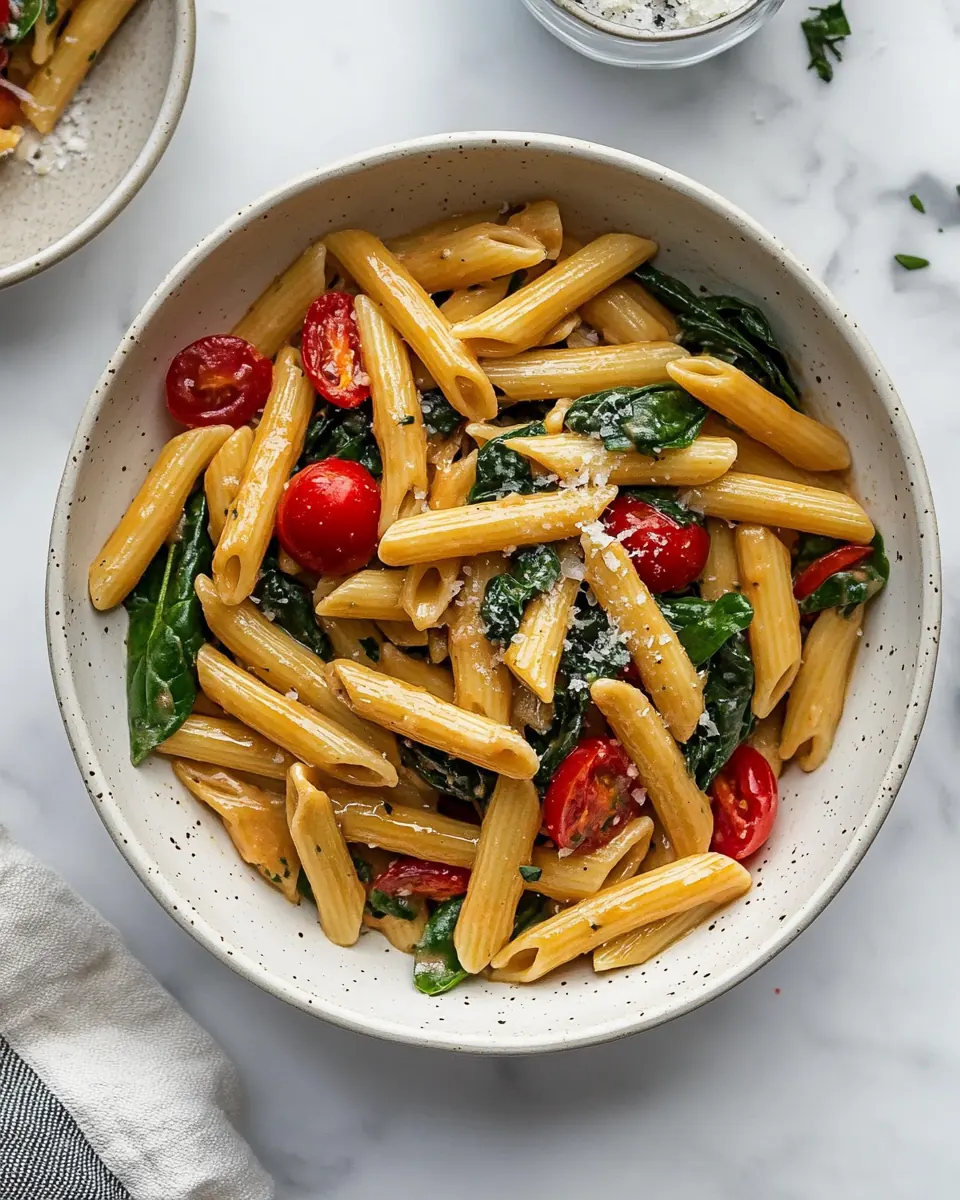
This is a relaxed, hands on process that moves quickly once the water is up to temperature. Keep your ingredients prepped and nearby, because the cooking happens fast and rewards attention. I like to have a colander ready and the skillet warmed so transitions feel seamless.
- Bring a large pot of salted water to a boil. Add the penne pasta and cook until al dente, about 8-10 minutes. Drain and set aside.: As the water heats you will notice steam rising and the surface beginning to ripple, a sign it is nearing boil. Salting the water seasons the penne pasta from the inside, which enhances the final dish, so be generous but not excessive. A common error is under salting the water, which results in bland pasta even after the sauce is added. If your kitchen smells of mineral water, the boil is not yet vigorous enough; wait until rolling bubbles break the surface consistently.
- While the pasta is cooking, heat olive oil in a large skillet over medium heat. Add minced garlic and sauté until fragrant, about 1 minute.: The pasta should be tender with a slight bite at the center, and you will hear it clack softly against the pot as it moves. Stir occasionally to prevent sticking, and taste a piece near the lower end of the time range to check doneness. Overcooking will yield a soft, gluey texture, so aim for that slight chew which pairs best with the juicy tomatoes. If the pasta erupts into foam, lower the heat a touch and stir more frequently.
- Add halved grape tomatoes and crushed red pepper flakes, cooking until tomatoes are soft and bursting, about 6 minutes. Stir in the chopped spinach and cook until wilted, about 2 minutes.: After draining, give the penne pasta a brief shake in the colander to remove excess water, but avoid fully drying it out because a little starchy water helps the sauce cling. You should see tiny droplets on the pasta when you transfer it, which is perfect for marrying with the tomato mixture. A frequent mistake is rinsing the pasta under cold water, which removes starch and prevents the sauce from adhering properly, making the final dish less cohesive.
- Season with salt and black pepper. Add the cooked pasta to the skillet, tossing to combine with the sauce. Sprinkle with grated Parmesan cheese before serving.: The oil should shimmer but not smoke, releasing a faint fruity aroma when it is ready. This step creates the flavor medium for the garlic and tomatoes, so maintaining moderate heat keeps the garlic from burning while allowing the tomatoes to soften. If the oil smokes, reduce the heat immediately, because overheated oil will impart a bitter flavor that can ruin the dish.
- Add minced garlic and sauté until fragrant, about 1 minute: You will hear tiny crackles as the garlic hits the warm oil, and the aroma will quickly become heady and inviting. The goal is a light golden edge on the garlic, not brown, as browning makes it bitter. Stir constantly and keep the action brisk; if you see dark flecks forming, the garlic has moved past the fragrant stage and you should remove the pan from the heat briefly to cool it down.
- Add halved grape tomatoes and crushed red pepper flakes, cooking until tomatoes are soft and bursting, about 6 minutes: As the tomatoes warm, they will begin to soften and pop, releasing a glossy juice that lightly simmers in the skillet. Listen for gentle bubbling and watch for skins splitting, that is the cue they are ready. The red pepper flakes will infuse a background warmth, but add them sparingly because they concentrate quickly. A typical slip is stirring too vigorously early, which can mash the tomatoes into a puree instead of keeping pleasant chunks and texture.
- Stir in the chopped spinach and cook until wilted, about 2 minutes: The volume of spinach will shrink dramatically as it wilts, releasing a fresh vegetal scent and turning from bright to deep green. Fold it gently into the tomato mixture so it softens evenly and retains a tender bite. Overcooking here will make the leaves limp and stringy, so remove the pan from heat as soon as the last leaves have collapsed.
- Season with salt and black pepper: Tasting is everything at this stage, because the seasoning will pull the whole dish together. Add salt in small increments and grind fresh black pepper to brighten the flavors. A common oversight is seasoning only the pasta water and not the sauce; always taste the combined components before assuming the seasoning is correct.
- Add the cooked pasta to the skillet, tossing to combine with the sauce: When you toss the penne pasta into the skillet, you should hear a soft shuffle and see sauce coating each tube, the juices clinging to the ridges. Tossing in the warm pan helps the flavors marry, and any remaining starchy water on the pasta will emulsify into a glossy coating. Avoid simply piling the pasta on top without tossing, because that prevents even distribution of sauce and flavor.
- Sprinkle with grated Parmesan cheese before serving: The final dusting of Parmesan cheese melts slightly into the hot pasta, creating a savory sheen and a hint of nuttiness on the tongue. Scatter it evenly and serve promptly so the cheese softens without turning greasy. A misstep is adding the cheese too early and then reheating aggressively, which can cause separation and an oily finish.
Recipe Tips about Spinach Tomato Pasta
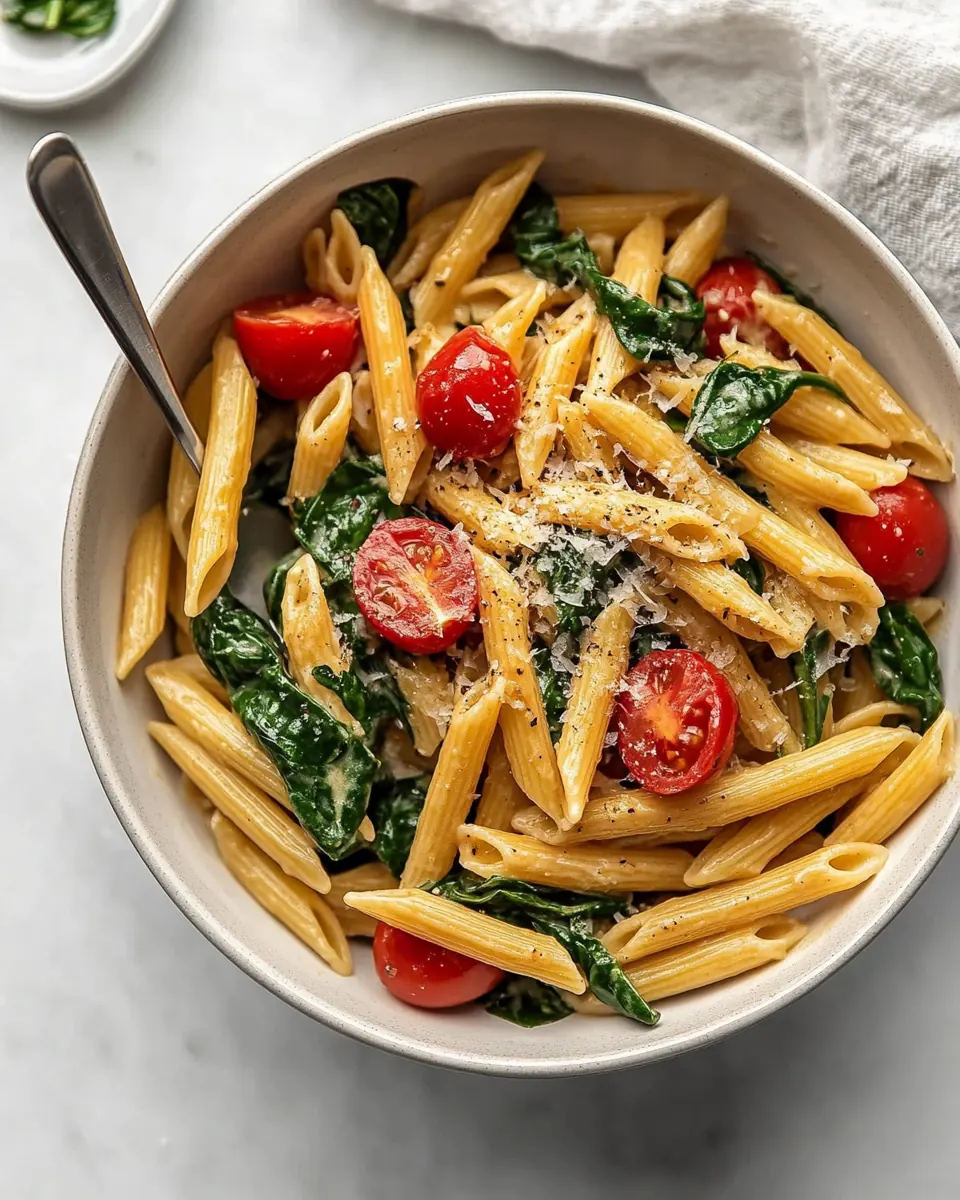
I like to keep a few tricks in my back pocket when I make this kind of pasta so it always turns out lively and well balanced. These tips cover timing, seasoning, and small technique choices that punch up flavor without complicating the process.
- Salt the pasta water well because it seasons the pasta from within and prevents the final dish from tasting flat; use roughly the taste of seawater as your guide, and remember you can always adjust salt later.
- Use fresh garlic instead of powder for depth and aroma; mince it fine and add it to warm oil so it releases fragrance quickly, but watch it constantly to avoid burning which causes bitterness.
- Choose ripe grape tomatoes for the sweetest, juiciest sauce; they should give slightly under pressure and have glossy skins, which ensures they burst nicely in the pan.
- Do not rinse the pasta after draining because the residual starch helps the sauce cling, creating a creamier mouthfeel without adding extra ingredients.
- Grate the Parmesan fresh when possible because pre grated cheese often contains anti clumping agents that hinder melting and reduce flavor, fresh cheese melts and integrates beautifully.
What to Serve Alongside Spinach Tomato Pasta
This pasta is versatile, and I often choose sides based on the occasion. For a relaxed weeknight I keep it simple and light, and for a more festive meal I add a textured salad or warm bread. Think about balance, contrasting textures, and complementary flavors when you plan accompaniments.
- Simple green salad with a lemon vinaigrette pairs well to cut through the richness of the Parmesan cheese, offering a crisp, acidic contrast that brightens the plate.
- Toasted crusty bread is excellent for soaking up any remaining tomato juices, and its crunch adds a pleasing texture against the tender penne pasta.
- Light roasted vegetables such as seasonal roots or squash provide an earthier counterpart that makes the meal heartier for dinner occasions.
- Serve for lunch or dinner, because the dish is flexible; it works for a simple family lunch, a casual dinner with friends, or a filling solo meal when you want comfort without heaviness.
- Storage tips include refrigerating leftovers in an airtight container for up to three days and reheating gently on the stovetop with a splash of water to revive the sauce without drying it out.
- Seasonal pairings favor this recipe in spring when fresh spinach and tomatoes are bright, but it also performs well year round using quality pantry staples.
FAQ
Conclusion
What makes this recipe special is the way a handful of fresh ingredients transform into a satisfying, bright meal. The combination of blistered tomatoes, wilted spinach, and al dente pasta creates a balanced plate that feels both nourishing and easy to pull together. I encourage you to give it a try on a night when you want something quick yet thoughtful; it rewards simple care and delivers consistent comfort. Share it with friends or enjoy it solo, and notice how little adjustments make it your own.
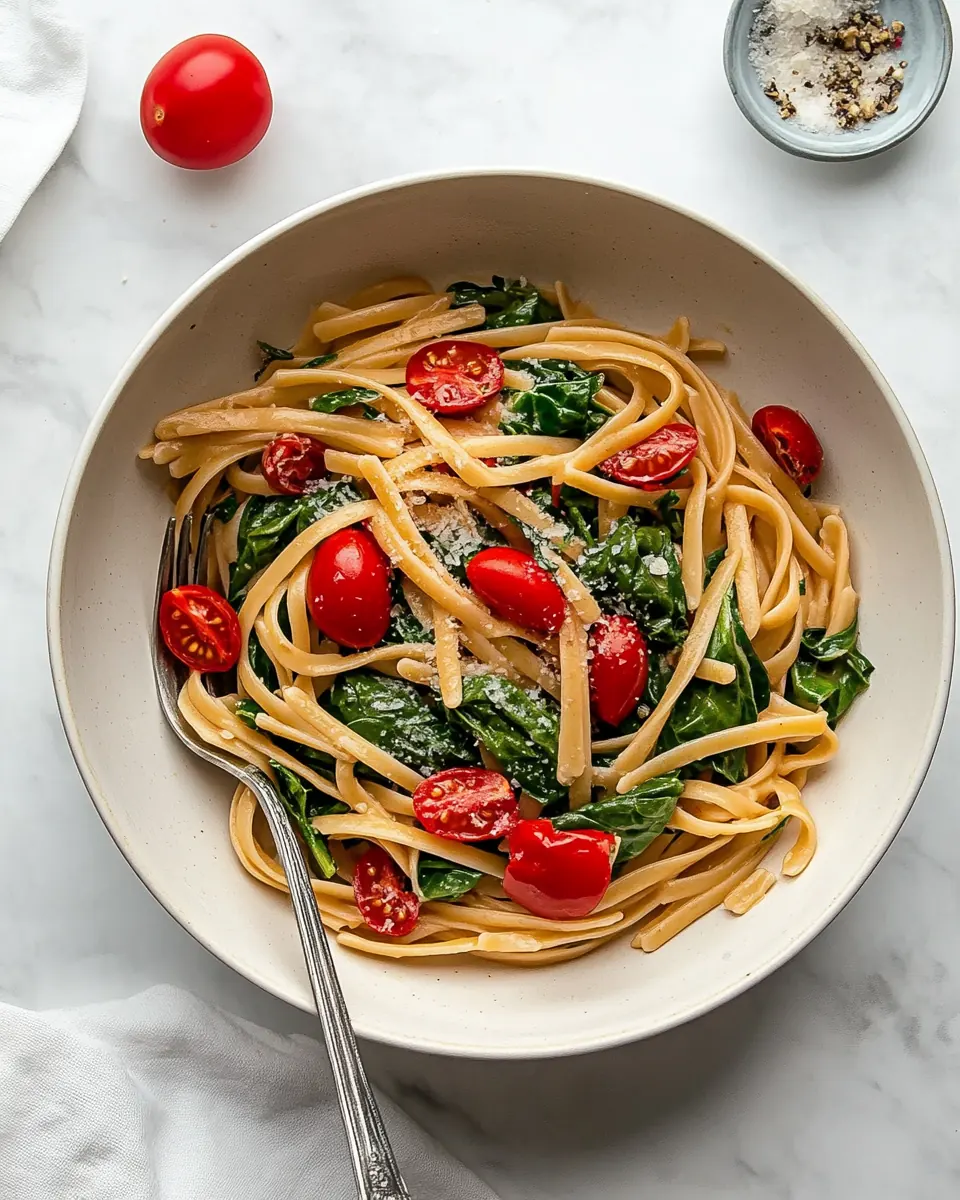
Spinach Tomato Pasta
Ingredients
Equipment
Method
- Bring a large pot of salted water to a boil. Add the penne pasta and cook until al dente, about 8-10 minutes. Drain and set aside.: As the water heats you will notice steam rising and the surface beginning to ripple, a sign it is nearing boil. Salting the water seasons the penne pasta from the inside, which enhances the final dish, so be generous but not excessive. A common error is under salting the water, which results in bland pasta even after the sauce is added. If your kitchen smells of mineral water, the boil is not yet vigorous enough; wait until rolling bubbles break the surface consistently.
- While the pasta is cooking, heat olive oil in a large skillet over medium heat. Add minced garlic and sauté until fragrant, about 1 minute.: The pasta should be tender with a slight bite at the center, and you will hear it clack softly against the pot as it moves. Stir occasionally to prevent sticking, and taste a piece near the lower end of the time range to check doneness. Overcooking will yield a soft, gluey texture, so aim for that slight chew which pairs best with the juicy tomatoes. If the pasta erupts into foam, lower the heat a touch and stir more frequently.
- Add halved grape tomatoes and crushed red pepper flakes, cooking until tomatoes are soft and bursting, about 6 minutes. Stir in the chopped spinach and cook until wilted, about 2 minutes.: After draining, give the penne pasta a brief shake in the colander to remove excess water, but avoid fully drying it out because a little starchy water helps the sauce cling. You should see tiny droplets on the pasta when you transfer it, which is perfect for marrying with the tomato mixture. A frequent mistake is rinsing the pasta under cold water, which removes starch and prevents the sauce from adhering properly, making the final dish less cohesive.
- Season with salt and black pepper. Add the cooked pasta to the skillet, tossing to combine with the sauce. Sprinkle with grated Parmesan cheese before serving.: The oil should shimmer but not smoke, releasing a faint fruity aroma when it is ready. This step creates the flavor medium for the garlic and tomatoes, so maintaining moderate heat keeps the garlic from burning while allowing the tomatoes to soften. If the oil smokes, reduce the heat immediately, because overheated oil will impart a bitter flavor that can ruin the dish.
- Add minced garlic and sauté until fragrant, about 1 minute: You will hear tiny crackles as the garlic hits the warm oil, and the aroma will quickly become heady and inviting. The goal is a light golden edge on the garlic, not brown, as browning makes it bitter. Stir constantly and keep the action brisk; if you see dark flecks forming, the garlic has moved past the fragrant stage and you should remove the pan from the heat briefly to cool it down.
- Add halved grape tomatoes and crushed red pepper flakes, cooking until tomatoes are soft and bursting, about 6 minutes: As the tomatoes warm, they will begin to soften and pop, releasing a glossy juice that lightly simmers in the skillet. Listen for gentle bubbling and watch for skins splitting, that is the cue they are ready. The red pepper flakes will infuse a background warmth, but add them sparingly because they concentrate quickly. A typical slip is stirring too vigorously early, which can mash the tomatoes into a puree instead of keeping pleasant chunks and texture.
- Stir in the chopped spinach and cook until wilted, about 2 minutes: The volume of spinach will shrink dramatically as it wilts, releasing a fresh vegetal scent and turning from bright to deep green. Fold it gently into the tomato mixture so it softens evenly and retains a tender bite. Overcooking here will make the leaves limp and stringy, so remove the pan from heat as soon as the last leaves have collapsed.
- Season with salt and black pepper: Tasting is everything at this stage, because the seasoning will pull the whole dish together. Add salt in small increments and grind fresh black pepper to brighten the flavors. A common oversight is seasoning only the pasta water and not the sauce; always taste the combined components before assuming the seasoning is correct.
- Add the cooked pasta to the skillet, tossing to combine with the sauce: When you toss the penne pasta into the skillet, you should hear a soft shuffle and see sauce coating each tube, the juices clinging to the ridges. Tossing in the warm pan helps the flavors marry, and any remaining starchy water on the pasta will emulsify into a glossy coating. Avoid simply piling the pasta on top without tossing, because that prevents even distribution of sauce and flavor.
- Sprinkle with grated Parmesan cheese before serving: The final dusting of Parmesan cheese melts slightly into the hot pasta, creating a savory sheen and a hint of nuttiness on the tongue. Scatter it evenly and serve promptly so the cheese softens without turning greasy. A misstep is adding the cheese too early and then reheating aggressively, which can cause separation and an oily finish.
Notes
- Salt the pasta water well because it seasons the pasta from within and prevents the final dish from tasting flat; use roughly the taste of seawater as your guide, and remember you can always adjust salt later.
- Use fresh garlic instead of powder for depth and aroma; mince it fine and add it to warm oil so it releases fragrance quickly, but watch it constantly to avoid burning which causes bitterness.
- Choose ripe grape tomatoes for the sweetest, juiciest sauce; they should give slightly under pressure and have glossy skins, which ensures they burst nicely in the pan.
- Do not rinse the pasta after draining because the residual starch helps the sauce cling, creating a creamier mouthfeel without adding extra ingredients.
- Grate the Parmesan fresh when possible because pre grated cheese often contains anti clumping agents that hinder melting and reduce flavor, fresh cheese melts and integrates beautifully.