Pecan Pie Pound Cake
Pecan Pie Pound Cake comes from one of those afternoons when I wanted to merge two beloved traditions into a single slice, and I ended up with a dessert that tastes like a holiday memory and a cozy Sunday at once. I grew up watching my aunt carefully fold toasted pecans into pie filling while my grandmother creamed butter for pound cake, and the first time I combined those ideas I stopped mid bite and laughed out loud at how perfectly they belonged together.
There is something about the texture contrast in Pecan Pie Pound Cake that hooks me every time, the way a dense, buttery crumb meets pockets of sticky, nutty filling. I remember carrying a warm loaf to a neighbor who had just moved in, and watching the whole block gather round for a sliver that turned into three more slices. That day I learned how quickly this recipe builds community.
When I bake this, I think about comforting rituals, the small choices that matter, like toasting chopped pecans until they smell deeply roasted, or using room temperature buttermilk for tang and tenderness. You will notice little moments where the kitchen fills with caramel notes and the oven hum reminds you to check for that golden edge. I like that this cake is celebratory without being fussy, perfect for a holiday table or a relaxed afternoon coffee.
Recipe Snapshot
1 hr 50 mins
20 mins
90 mins
Medium
300 kcal
American
Gluten-Free, Low FODMAP
Desserts
Kitchen Scale (optional), 9×5 inch loaf pan, 10 Cup Bundt Pan, Stand Mixer
The Charm of This Pecan Pie Pound Cake
One dessert, two classics combined
I love Pecan Pie Pound Cake because it takes the best parts of two desserts and marries them. The pound cake base gives structure and sliceability, while the pecan pie elements add sticky sweetness and texture. I find that guests are delighted by the familiarity of each component, yet curious about how they work together.
Texture that keeps you reaching for another bite
The dense crumb of the pound cake provides a creamy, substantial mouthfeel, while the pie filling and pecans add crunch and chew. I always toast the nuts to amplify aroma, and that caramelized note keeps people coming back.
Reliable for celebrations
This recipe scales well for a crowd, and it slices cleanly, so it is ideal for holidays like Thanksgiving. I’ve brought it to potlucks where plating and serving needed to be simple, and the results were always warmly received. It’s one of those recipes I trust to perform every time.
Forgiving and adaptable
I appreciate that the technique is straightforward, so even if you are nervous about layered desserts, you can succeed. The batter is forgiving of slight mixing differences, and the pie filling can be spooned carefully to create pockets of flavor rather than a single dense layer. I’ve learned small adjustments, like making parchment slings for easy removal, that make this feel accessible.
Comfort in every season
While it shines at holiday tables, I bake Pecan Pie Pound Cake year round when I want something with warmth and familiarity. The aroma of toasted pecans and baked butter is comfort food at its best.
Essential Ingredients for Pecan Pie Pound Cake
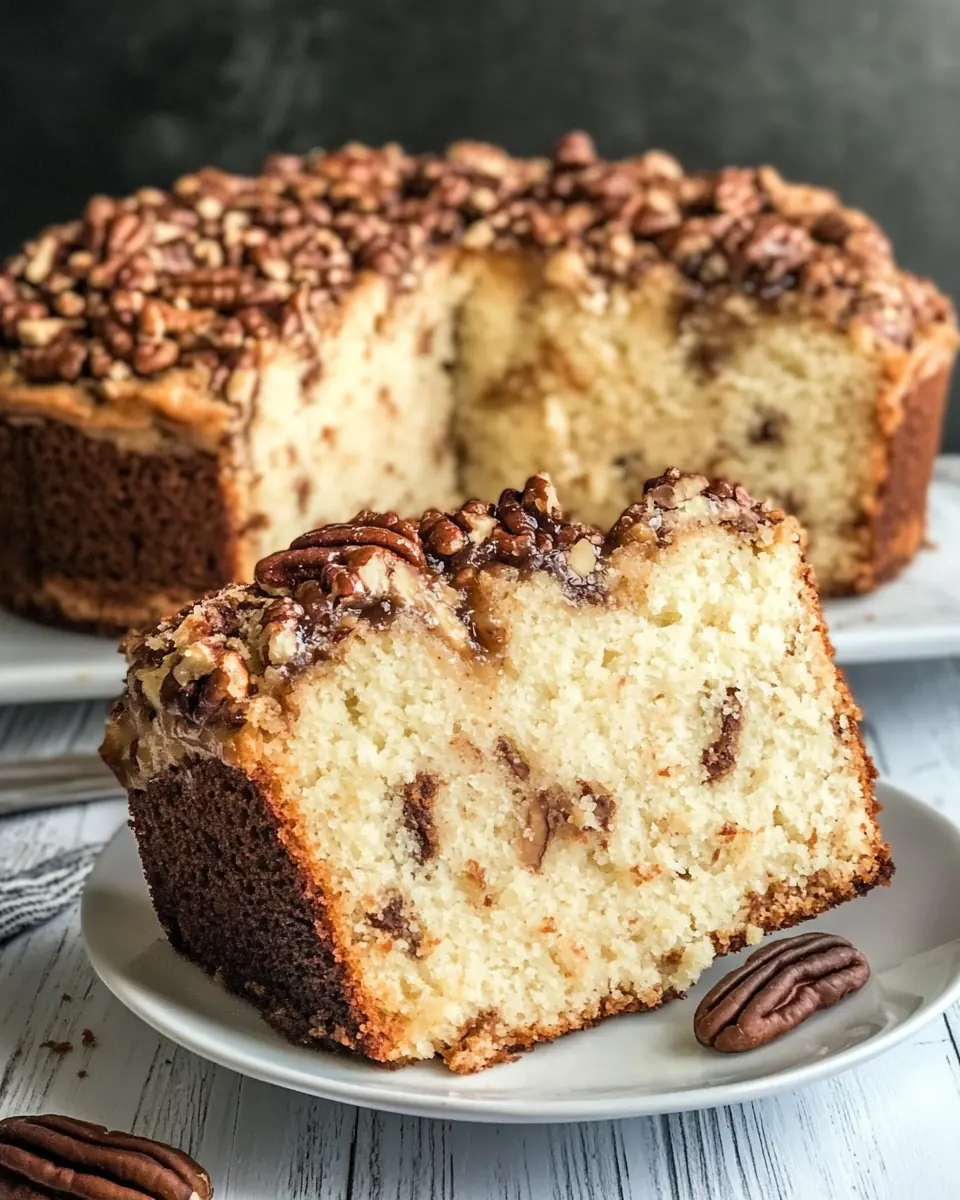
These ingredients are the backbone of a cake that balances richness, structure, and nutty sweetness. The interplay between leavening and fat creates a tender crumb, while the pie style components bring sticky, toasted depth. Think of the key players as the cake team, each with a role to deliver sliceable texture, moistness, and crunchy contrast.
- 3 cups all-purpose flour 360 grams: Provide structure and bulk to the cake by supplying gluten and starch necessary for crumb formation. Sift or whisk before measuring to ensure even distribution and prevent lumps. Combine with leaveners to create a tender but stable loaf.
- 1/2 teaspoon kosher salt: Enhance overall flavor by balancing sweetness and strengthening gluten just enough to improve texture. Dissolve into dry ingredients to ensure even seasoning throughout the batter. Use fine kosher salt for consistent salting.
- 1/2 teaspoon baking powder 2 grams: Act as a leavening agent to help the cake rise and create lightness in the crumb. Measure accurately and mix with the dry ingredients to distribute evenly. Reacts with acids in the batter to produce carbon dioxide for lift.
- 1 cup buttermilk 227 grams, room temperature: Add moisture and a slight tang that reacts with baking powder to improve tenderness and depth of flavor. Bring to room temperature for better emulsion with fats and to prevent batter from curdling. Stir gently before adding to incorporate any separated solids.
- 2 teaspoons pure vanilla extract 8 grams: Contribute sweet floral and warm aromatic notes that enhance the overall cake flavor profile. Add with the wet ingredients to evenly disperse the aroma. Use pure vanilla for consistent, high-quality taste.
- 1 teaspoon almond extract 4 grams: Introduce a delicate nutty, floral aroma that complements pecans without overpowering other flavors. Add sparingly to avoid an overly almond-forward taste. Mix with other extracts to round out the cake's fragrance.
- 1 cup unsalted butter 226 grams, room temperature (2 sticks): Provide richness, moisture, and emulsification that help create a tender, fine crumb and stable structure. Soften at room temperature to blend smoothly with sugar and other fats during creaming. Contributes to golden color and buttery taste.
- 1/2 cup vegetable shortening 92 grams (1/2 stick): Supply additional fat that helps create a moist, tender crumb and contributes to a softer texture at room temperature. Use at room temperature for easy incorporation or cut in when cold for different textures. Balances the butter to improve sliceability.
- 3 cups granulated sugar 600 grams: Sweeten the cake and aid in creaming to incorporate air for lift and lightness. Dissolve into fats to create a smooth, aerated batter that yields a tender crumb. Also contributes to browning and caramelization during baking.
- 5 large eggs 250 grams, room temperature: Provide structure, richness, and additional leavening through trapped air when beaten; eggs also help emulsify the batter. Use at room temperature to achieve uniform mixing and better volume. Add gradually to maintain a smooth emulsion.
- 3 large eggs 150 grams: Build the pecan pie-style filling or topping by supplying additional binding, richness, and structure for the gooey layer. Use at room temperature to blend smoothly with sugars and melted butter. Whisk separately if making a filling to ensure even texture.
- 1/2 cup granulated sugar 100 grams: Contribute sweetness and viscosity to the filling, helping it set into a caramel-like consistency when combined with eggs and butter. Dissolve into the warm butter mixture for a smooth, cohesive filling. Adds concentrated sweetness to balance the nuts.
- 1/4 cup dark brown sugar 53 grams: Add deep, molasses-like richness and a warm caramel note that enhances the pecan flavor. Sprinkle into the filling mixture to dissolve completely for even flavor distribution. Helps create the signature brown–sugar caramel consistency.
- 1/8 teaspoon kosher salt: Accentuate the filling's flavors by adding a subtle savory balance that enhances sweetness and depth. Measure carefully due to its small quantity to avoid over-salting. Blend thoroughly so it disperses evenly throughout the filling.
- 3 tablespoons unsalted butter 42 grams, melted: Provide fat and a glossy mouthfeel to the pie-style filling while helping it set as it cools. Melt before combining so it integrates smoothly with sugars and eggs. Adds a rich buttery flavor that complements the pecans.
- 1/2 lemon juiced: Introduce bright acidity to cut through the sweetness and lift the overall flavor profile of the filling and cake. Juice fresh for best flavor and avoid bitterness from pith. Acid also helps balance the richness of butter and sugars.
- 2 cups toasted rough-chopped pecans 228 grams, divided: Contribute to texture, flavor, and visual appeal by adding toasted, crunchy nut pieces throughout the cake and filling. Toast beforehand to deepen flavor and chop roughly to maintain pleasant bite. Reserve some for garnish and fold the rest evenly into batter.
How to Make Pecan Pie Pound Cake
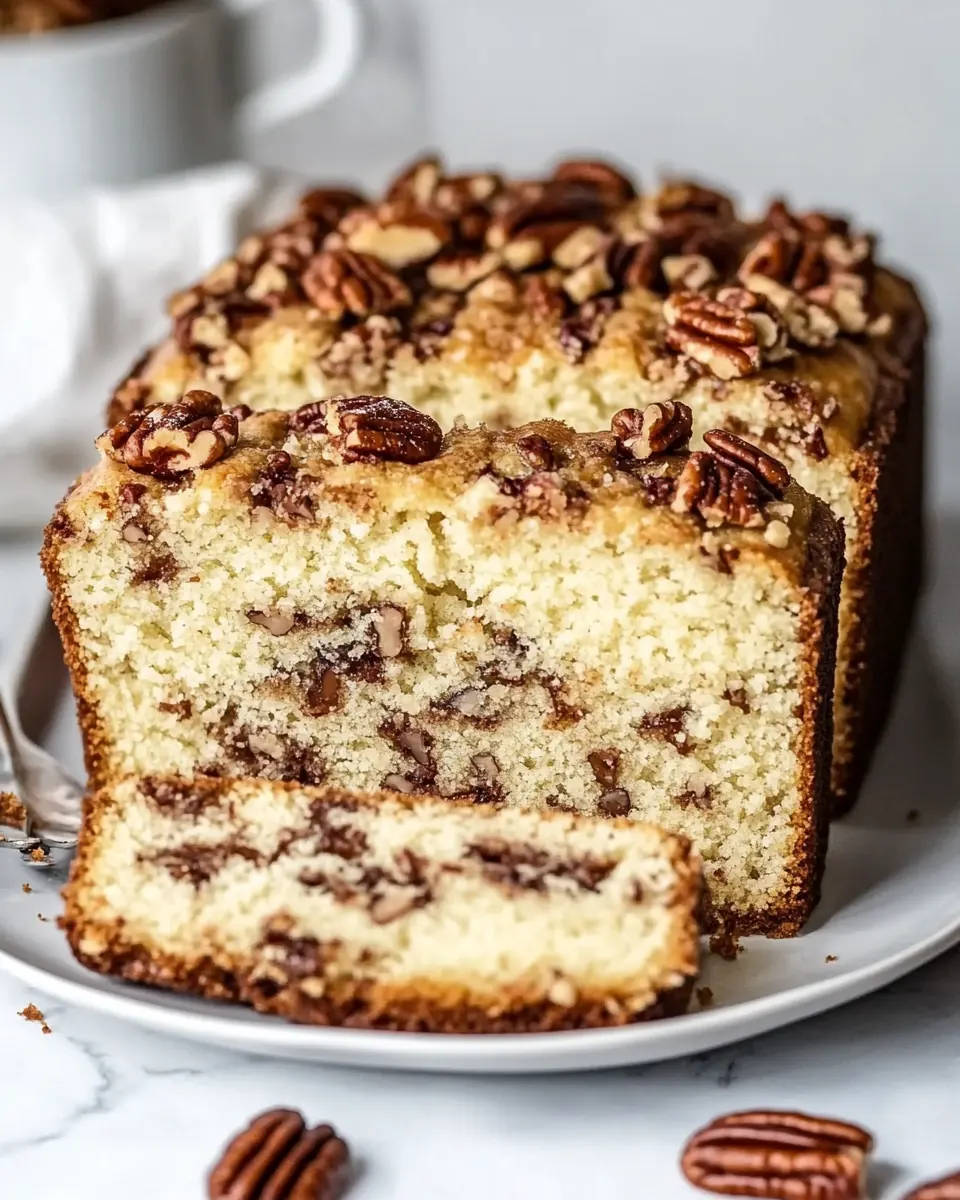
This recipe is a comforting combination of technique and sensory cues. Expect to hear the soft creaming of butter and sugar, smell the warm, toasty aroma of pecans, and see a golden crust form in the oven. I find that moving through the steps with attention to texture makes the difference between good and memorable.
- Heat oven to 350° and adjust the oven rack to middle-low position.: As you preheat, notice how the kitchen warms and that faint oven scent appears, signaling readiness. Setting the rack to the middle low position ensures even rising and prevents the top from browning too quickly. Why this matters, the cake needs steady, even heat for a uniform crumb and to avoid doming excessively. A common mistake is placing the rack too high, which can scorch the top before the center sets, so double check the rack level before you start.
- To make it possible to lift the pound cake from the pans, and if using loaf pans, spray the pans with nonstick spray and make “slings” for the pans. To make parchment paper slings, cut pieces of parchment paper long enough to hang over the edges of the pans by 2-inches and wide enough to fit into the pans (length & width). There should be two crisscross pieces of parchment per loaf pan. Spray the topside of the parchment with nonstick spray.: Begin by cutting parchment long enough to hang over the pan edges so you can lift the loaves out once cooled. The scent of fresh parchment and the tactile simplicity of a sling make unmolding effortless. This technique prevents crumbs and preserves the loaf shape. People often skip slings and then struggle to remove the cake, tearing the crust, so take the extra minute to line and spray carefully.
- Alternately: Spray the pan(s) with baking flour spray or, alternately, butter and flour the pans.: When you press the parchment into the pan, smooth out any wrinkles so the batter fills evenly, and spray the top side to prevent sticking. Visual cues are tidy parchment edges and a smoothly seated sling ready to cradle the batter. This method keeps the loaf edges clean and the bottom intact. A common oversight is cutting uneven strips, which can allow batter to leak or create an uneven rise, so measure roughly by eye for two balanced pieces per pan.
- Whisk together flour, salt and baking powder in a large bowl.: Overlapping pieces create sturdy handles and support the weight of a full loaf when you lift it out. The tactile reassurance of a crisscross means no slipping when you transfer the cake. This is especially useful if you are using a Bundt pan alternative, as the slings make extraction simple. Avoid using a single narrow strip which can tear under the cake weight, instead ensure the pieces cross solidly in the center.
- In a large measuring cup, whisk together buttermilk, vanilla extract and almond extract.: If you prefer not to use parchment, a thorough coating of baking spray or butter and flour will act as a release. Run your finger around the pan to ensure complete coverage so the cake slides free after baking. The visual cue is a thin even dusting of flour with no clumps. A common pitfall is applying too much flour clumping, which can create a patchy crust, so tap out any excess flour.
- In the bowl of a mixer fitted with the paddle attachment, cream together butter and shortening for 2 minutes.: As you whisk, inhale the neutral, dusty aroma of the dry mix, which signals that the leavening is evenly distributed. Even mixing prevents pockets of baking powder that could create uneven holes in the crumb. I sift with a whisk motion to keep aeration light. A typical mistake is rushing this step, leaving clumps that show up as uneven texture in the final cake, so take a minute to ensure homogeneity.
- Add sugar, 1/4 cup at-a-time, and beat for 3 minutes or until butter is pale yellow, creamy and (somewhat) fluffy.: Combine until the liquids look uniform and slightly aromatic; the vanilla brings warmth while the almond whisper complements the nuts. Using room temperature buttermilk helps batter emulsify smoothly. This wet mix aids in alternating with dry ingredients later to achieve a balanced batter. Avoid adding cold liquid straight from the fridge as it can cause the butter to seize, so let components come to room temperature.
- Then add eggs, one-at-a-time, beating until well combined after each addition.: The sound of the mixer will change as the fats soften and become glossy; look for a pale, smooth consistency. Creaming incorporates air which is essential for tenderness, and the shortening stabilizes moisture. If the butter is too cold, the mixture will stay chunky and not aerate, so be sure it is properly softened. One common error is over beating until the mixture becomes oily, which can make the cake dense, so stop at the right pale stage.
- Add the flour mixture to the butter mixture, alternately, with the buttermilk mixture. Start and end with the flour mixture. Mix just until no dry flour can be seen but don’t over-mix.: Gradual sugar addition allows the crystals to help cut and aerate the fats, creating a light, creamy base. Listen for a change in the mixer sound and watch for that pale yellow color; the texture should look pillowy. This stage is crucial for leavening and mouthfeel, so be patient. A frequent slip up is dumping all the sugar in at once which prevents proper creaming and reduces the cake height, so measure and add incrementally.
- Then add eggs one at a time beating until well combined after each addition: Each egg should be fully incorporated before the next goes in, producing a glossy, homogenous batter that indicates proper emulsion. This avoids curdling and ensures even structure. If the batter looks separated, give it a moment on low speed to come together. A common issue is adding eggs straight from the fridge, which can chill the batter and reduce incorporation, so bring eggs to room temperature.
- Add the flour mixture to the butter mixture alternately with the buttermilk mixture Start and end with the flour mixture Mix just until no dry flour can be seen but dont over mix: After the first taste of this raw batter you can already detect the balance of tang from buttermilk and sweetness from sugar. Alternating helps preserve the aeration from creaming and prevents overworking gluten. Look for a uniform batter with no streaks of flour, stirring gently to keep the crumb tender. Over mixing is the usual mistake here, which develops gluten and makes the cake tough, so stop as soon as the last streak disappears.
Expert Tips about Pecan Pie Pound Cake
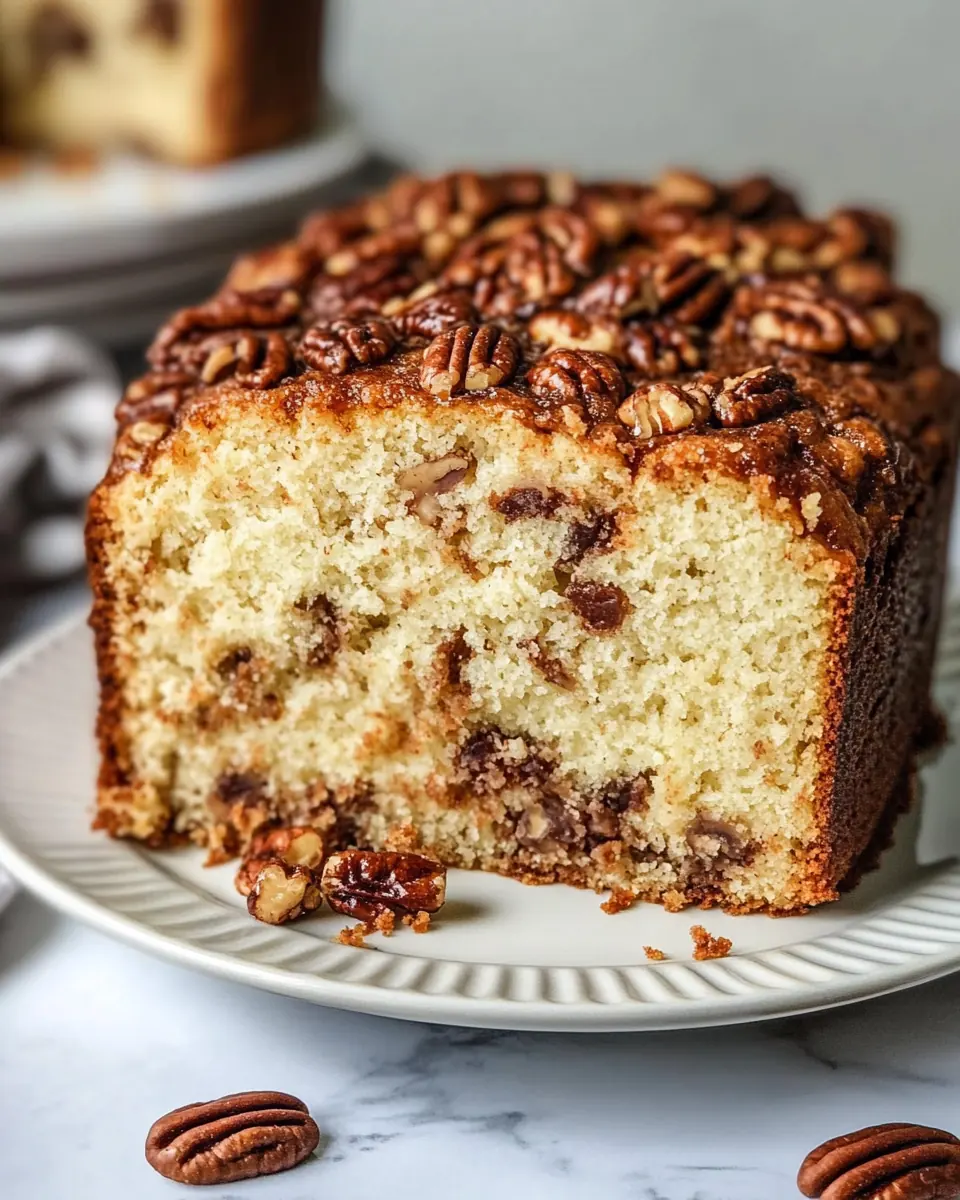
This cake responds well to careful technique, so a few focused tips will help you succeed. Below are expanded, practical notes I use whenever I bake this, each aimed at improving texture, flavor, or ease of handling.
- Room Temperature Ingredients: Ensure the buttermilk, eggs, and butter are at room temperature for smooth incorporation and improved texture. Cold ingredients can cause curdling and a broken batter, leading to uneven crumb.
- Toast the Pecans: Lightly toasting the pecans brings forward their natural oils and aroma, producing a richer, deeper nut flavor in both the batter and the pie filling. Do this in a dry skillet and stir constantly to avoid scorching.
- Careful with Mixing: When combining wet and dry ingredients, mix only until the flour streaks disappear to preserve tenderness. Over mixing develops gluten and yields a tougher loaf, so stop promptly when the batter looks uniform.
- Use Parchment Slings: Lining loaf pans with parchment slings makes unmolding seamless and preserves the cake edges, particularly helpful when you want clean presentation slices. Spray the parchment lightly to prevent sticking.
- Fill Pans Correctly: Do not fill pans to the brim; leave space for rise so the top bakes evenly and does not overflow. This ensures a consistent bake and prevents a heavy center that may stay undercooked.
What to Serve With Pecan Pie Pound Cake
This cake is wonderfully versatile, working for both casual gatherings and holiday spreads. Below are ideas for pairings, occasions, and storage suggestions that enhance the eating experience, presented as practical serving options.
- Coffee or Tea Pairing: Serve slices warm with a cup of strong coffee or black tea for a morning or afternoon treat, the bitterness balancing the cake sweetness.
- Holiday Dessert Table: Place the loaf on a dessert board with small plates for Thanksgiving or fall celebrations, letting guests help themselves to slices that pair well with spiced sides.
- Ice Cream Accompaniment: Offer a scoop of vanilla or caramel ice cream alongside a slice for a decadent dessert, the cold creamy texture offsetting the warm, nutty cake.
- Make Ahead and Storage: Wrap cooled slices tightly and store at room temperature for two days, or refrigerate for up to five days to keep them fresh; bring to room temperature before serving for best flavor.
- Seasonal Touches: For fall gatherings, serve with roasted apples or a small compote to echo autumnal flavors and add a tart contrast to the sweet, nutty cake.
FAQ
Conclusion
This Pecan Pie Pound Cake stands out because it marries the dense, buttery comfort of pound cake with the sticky, nutty charm of pecan pie in every slice. Give it a try when you want a dessert that looks elegant but is genuinely approachable, perfect for holidays or a weekend gathering. Bake it with a bit of patience, serve it with warm coffee or a scoop of ice cream if you like, and watch how quickly it becomes a requested recipe in your rotation.
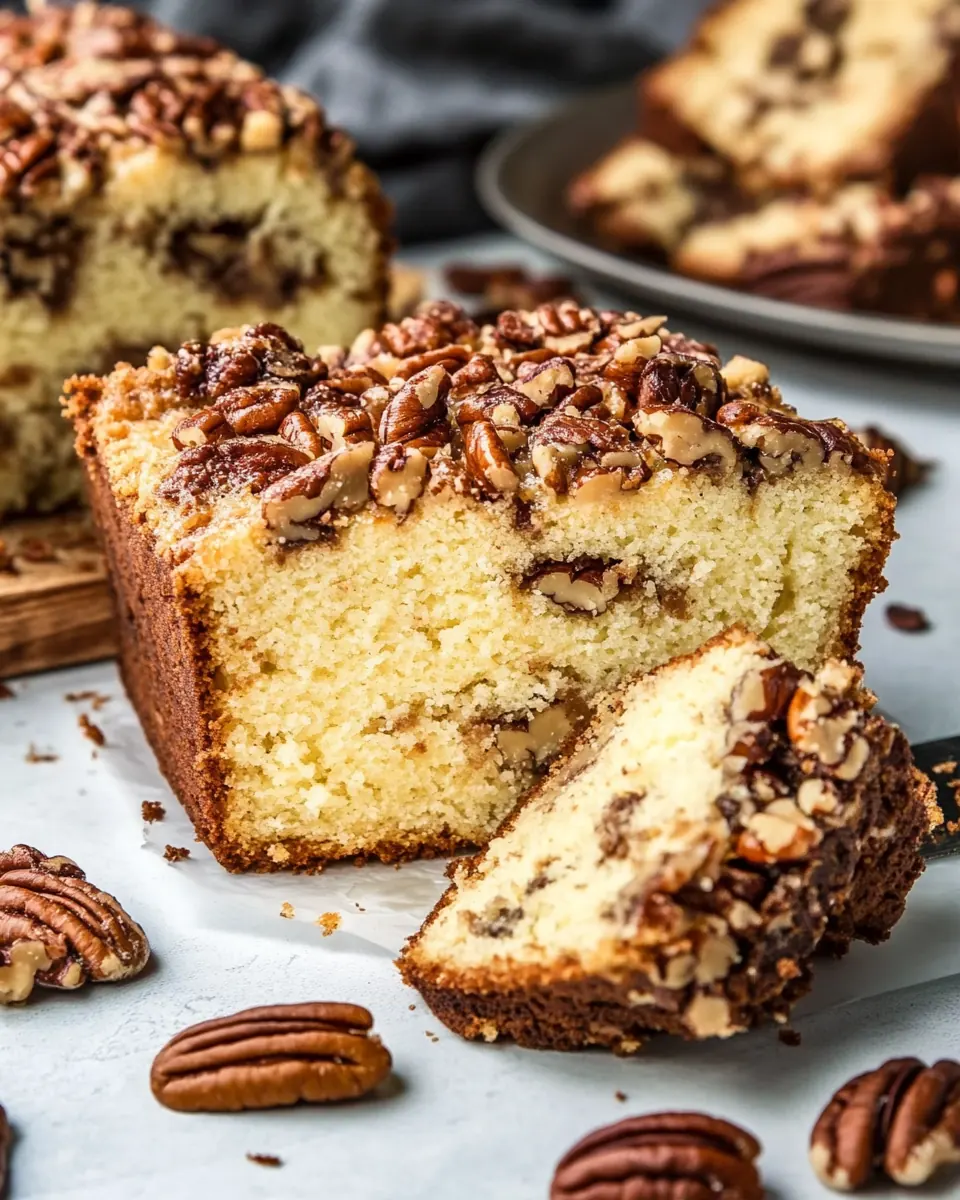
Pecan Pie Pound Cake
Ingredients
Equipment
Method
- Heat oven to 350° and adjust the oven rack to middle-low position.: As you preheat, notice how the kitchen warms and that faint oven scent appears, signaling readiness. Setting the rack to the middle low position ensures even rising and prevents the top from browning too quickly. Why this matters, the cake needs steady, even heat for a uniform crumb and to avoid doming excessively. A common mistake is placing the rack too high, which can scorch the top before the center sets, so double check the rack level before you start.
- To make it possible to lift the pound cake from the pans, and if using loaf pans, spray the pans with nonstick spray and make “slings” for the pans. To make parchment paper slings, cut pieces of parchment paper long enough to hang over the edges of the pans by 2-inches and wide enough to fit into the pans (length & width). There should be two crisscross pieces of parchment per loaf pan. Spray the topside of the parchment with nonstick spray.: Begin by cutting parchment long enough to hang over the pan edges so you can lift the loaves out once cooled. The scent of fresh parchment and the tactile simplicity of a sling make unmolding effortless. This technique prevents crumbs and preserves the loaf shape. People often skip slings and then struggle to remove the cake, tearing the crust, so take the extra minute to line and spray carefully.
- Alternately: Spray the pan(s) with baking flour spray or, alternately, butter and flour the pans.: When you press the parchment into the pan, smooth out any wrinkles so the batter fills evenly, and spray the top side to prevent sticking. Visual cues are tidy parchment edges and a smoothly seated sling ready to cradle the batter. This method keeps the loaf edges clean and the bottom intact. A common oversight is cutting uneven strips, which can allow batter to leak or create an uneven rise, so measure roughly by eye for two balanced pieces per pan.
- Whisk together flour, salt and baking powder in a large bowl.: Overlapping pieces create sturdy handles and support the weight of a full loaf when you lift it out. The tactile reassurance of a crisscross means no slipping when you transfer the cake. This is especially useful if you are using a Bundt pan alternative, as the slings make extraction simple. Avoid using a single narrow strip which can tear under the cake weight, instead ensure the pieces cross solidly in the center.
- In a large measuring cup, whisk together buttermilk, vanilla extract and almond extract.: If you prefer not to use parchment, a thorough coating of baking spray or butter and flour will act as a release. Run your finger around the pan to ensure complete coverage so the cake slides free after baking. The visual cue is a thin even dusting of flour with no clumps. A common pitfall is applying too much flour clumping, which can create a patchy crust, so tap out any excess flour.
- In the bowl of a mixer fitted with the paddle attachment, cream together butter and shortening for 2 minutes.: As you whisk, inhale the neutral, dusty aroma of the dry mix, which signals that the leavening is evenly distributed. Even mixing prevents pockets of baking powder that could create uneven holes in the crumb. I sift with a whisk motion to keep aeration light. A typical mistake is rushing this step, leaving clumps that show up as uneven texture in the final cake, so take a minute to ensure homogeneity.
- Add sugar, 1/4 cup at-a-time, and beat for 3 minutes or until butter is pale yellow, creamy and (somewhat) fluffy.: Combine until the liquids look uniform and slightly aromatic; the vanilla brings warmth while the almond whisper complements the nuts. Using room temperature buttermilk helps batter emulsify smoothly. This wet mix aids in alternating with dry ingredients later to achieve a balanced batter. Avoid adding cold liquid straight from the fridge as it can cause the butter to seize, so let components come to room temperature.
- Then add eggs, one-at-a-time, beating until well combined after each addition.: The sound of the mixer will change as the fats soften and become glossy; look for a pale, smooth consistency. Creaming incorporates air which is essential for tenderness, and the shortening stabilizes moisture. If the butter is too cold, the mixture will stay chunky and not aerate, so be sure it is properly softened. One common error is over beating until the mixture becomes oily, which can make the cake dense, so stop at the right pale stage.
- Add the flour mixture to the butter mixture, alternately, with the buttermilk mixture. Start and end with the flour mixture. Mix just until no dry flour can be seen but don’t over-mix.: Gradual sugar addition allows the crystals to help cut and aerate the fats, creating a light, creamy base. Listen for a change in the mixer sound and watch for that pale yellow color; the texture should look pillowy. This stage is crucial for leavening and mouthfeel, so be patient. A frequent slip up is dumping all the sugar in at once which prevents proper creaming and reduces the cake height, so measure and add incrementally.
- Then add eggs one at a time beating until well combined after each addition: Each egg should be fully incorporated before the next goes in, producing a glossy, homogenous batter that indicates proper emulsion. This avoids curdling and ensures even structure. If the batter looks separated, give it a moment on low speed to come together. A common issue is adding eggs straight from the fridge, which can chill the batter and reduce incorporation, so bring eggs to room temperature.
- Add the flour mixture to the butter mixture alternately with the buttermilk mixture Start and end with the flour mixture Mix just until no dry flour can be seen but dont over mix: After the first taste of this raw batter you can already detect the balance of tang from buttermilk and sweetness from sugar. Alternating helps preserve the aeration from creaming and prevents overworking gluten. Look for a uniform batter with no streaks of flour, stirring gently to keep the crumb tender. Over mixing is the usual mistake here, which develops gluten and makes the cake tough, so stop as soon as the last streak disappears.
Notes
- Room Temperature Ingredients: Ensure the buttermilk, eggs, and butter are at room temperature for smooth incorporation and improved texture. Cold ingredients can cause curdling and a broken batter, leading to uneven crumb.
- Toast the Pecans: Lightly toasting the pecans brings forward their natural oils and aroma, producing a richer, deeper nut flavor in both the batter and the pie filling. Do this in a dry skillet and stir constantly to avoid scorching.
- Careful with Mixing: When combining wet and dry ingredients, mix only until the flour streaks disappear to preserve tenderness. Over mixing develops gluten and yields a tougher loaf, so stop promptly when the batter looks uniform.
- Use Parchment Slings: Lining loaf pans with parchment slings makes unmolding seamless and preserves the cake edges, particularly helpful when you want clean presentation slices. Spray the parchment lightly to prevent sticking.
- Fill Pans Correctly: Do not fill pans to the brim; leave space for rise so the top bakes evenly and does not overflow. This ensures a consistent bake and prevents a heavy center that may stay undercooked.