Thanksgiving Chicken and Stuffing Bake
Thanksgiving Chicken and Stuffing Bake feels like the sort of recipe I reach for when I want one pan to carry the mood of a holiday dinner from oven to table. The first time I made it, I was juggling a handful of sides and a clock that would not cooperate, so I leaned into the simplicity of tucking well seasoned chicken into an herb studded stuffing and letting the oven do the heavy lifting. That evening the house filled with a warm, savory aroma that made neighbors ask what I was baking, and it reminded me how comforting one well made dish can be.
Over the years I have adapted the method to be forgiving, because I want you to feel confident when you slide this pan into the oven. The stuffing soaks up those browned bits and drippings, becoming soft and plush in the center, while the outside crisps where it meets the dish. I like the contrast of juicy chicken skin against that tender, herb bright stuffing, and the easy gravy brings everything together, silky and savory without fuss.
Recipe Snapshot
1 hr 10 mins
20 mins
50 mins
Medium
450 kcal
American
Gluten-Free, Low FODMAP
Dinner
Cast iron skillet, 9 x 13 inch baking dish, Shaker cup, Whisk
The Beauty of This Thanksgiving Chicken and Stuffing Bake
One Pan Comfort
I love that Thanksgiving Chicken and Stuffing Bake needs just a single baking dish for the final finish, which drastically reduces cleanup and helps the flavors meld. When the chicken roasts right on top of the stuffing, its juices soak into the bread cubes, so every bite tastes cohesive and full bodied. I always appreciate an elegant, low stress main that still appears celebratory on the table.
Flavor Built from Simple Steps
The recipe stacks flavors where they matter most, starting with sautéed onions, celery and garlic in butter, then folding in fresh herbs and stock. Those foundational steps create a deeply savory base so you do not need complicated pantry items to taste luxurious. I find that gentle seasoning and browned chicken elevate the whole dish into something special without extra fuss.
Reliable Texture Contrast
What gets me every time is the balance between tender, custardy stuffing and crisp golden chicken skin. The recipe cues are easy to follow, so you can aim for a brown, aromatic crust on the chicken while keeping the interior of the stuffing moist. That contrast is the reason I make this for both casual dinners and holiday gatherings.
Comforting Gravy Without Drama
The gravy in this dish uses the pan drippings and a simple flour slurry, so it tastes like the meal itself, not a separate component. I like how stirring slowly produces a glossy, smooth sauce you can spoon over everything. It is the small ritual of whisking that rewards you with a rich finish.
Flexible and Crowd Friendly
I often double this when we have guests, and it scales well without changing technique. The ingredient list is straightforward, so guests with simple tastes still find it familiar, while those who expect a holiday centerpiece are pleasantly surprised. For me, that combination of ease and heart makes this a keeper.
Ingredients to Make Thanksgiving Chicken and Stuffing Bake
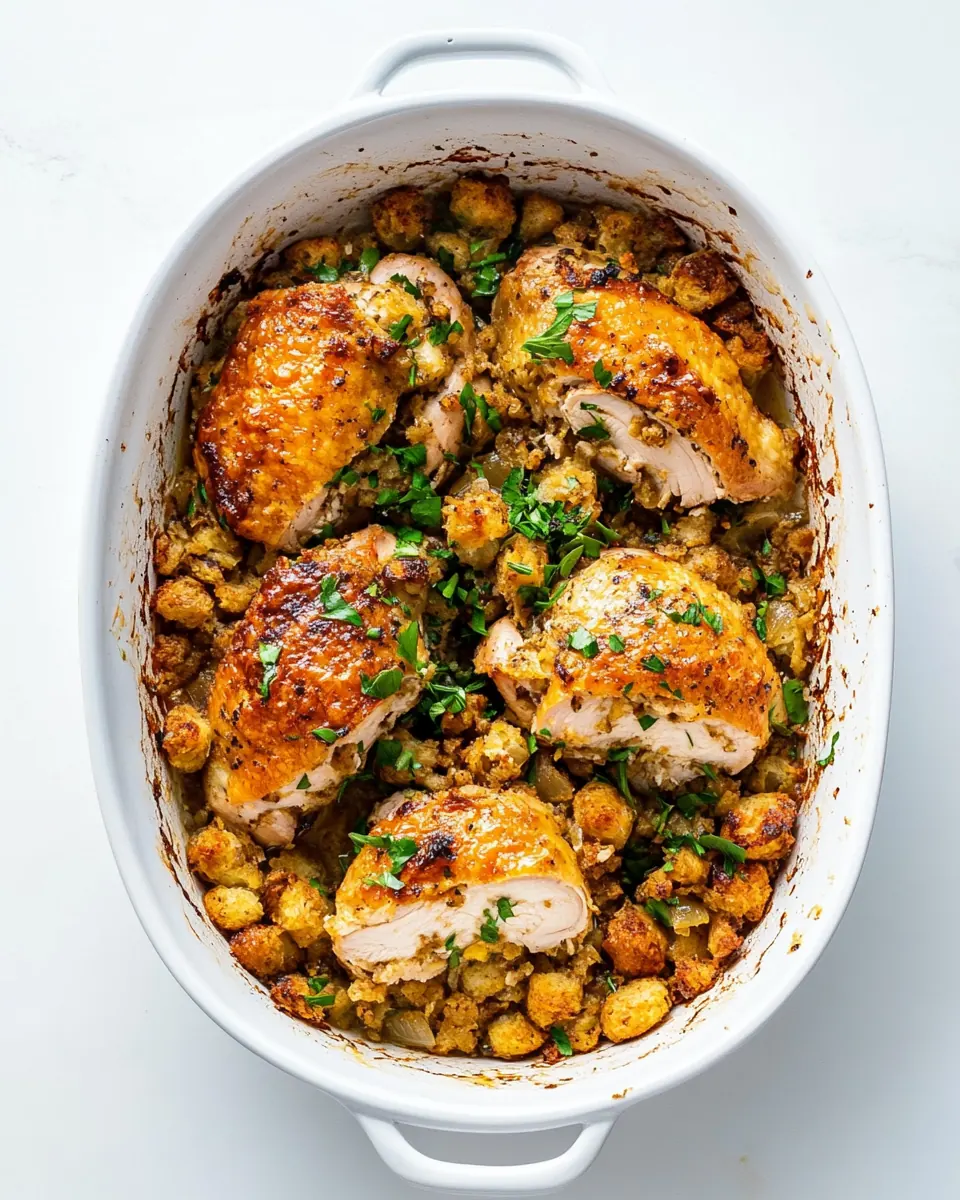
These ingredients are the backbone of a comforting, savory casserole where few elements do a lot of work. The key players are the browned chicken, aromatic vegetables softened in butter, fresh herbs that lift the bready stuffing, and two kinds of chicken stock to keep the final bake moist and flavorful. Each component contributes texture, moisture or seasoning so the finished dish feels composed and satisfying.
- 4 tablespoons butter: Melt and enrich other ingredients by adding creamy fat and flavor; butter helps sauté aromatics and create a rich base for the stuffing. Use at different stages to brown vegetables and finish the stuffing for a silky mouthfeel. Adjust amount slightly for desired richness and to prevent dryness during baking.
- 1 sweet onion: Caramelize slowly to bring out natural sweetness and add depth to the stuffing mixture; a sweet onion provides a mellow, aromatic backbone. Dice or thinly slice to cook evenly with celery and garlic, softening until translucent. Balances savory herbs and absorbs flavorful fats during the sauté stage.
- 1/2 cup diced celery: Soften and add subtle crunch and vegetal flavor when sweated with onions and butter; diced celery gives classic stuffing texture. Cook until tender to release moisture that helps hydrate bread cubes and distribute seasoning. Contributes a fresh, slightly bitter counterpoint to richer components.
- 4 garlic cloves, minced: Infuse aromatic pungency and savory warmth when minced and sautéed; garlic brightens the stuffing and chicken. Add toward the end of sweating aromatics to avoid burning and to preserve its fragrant oils. Enhances overall savory profile and pairs well with herbs and butter.
- kosher salt and pepper: Season to taste and enhance all flavors across stuffing and chicken components; kosher salt and pepper provide essential savory balance. Sprinkle incrementally while cooking and adjust at the end to avoid over-salting. Pepper adds gentle heat while salt amplifies aromatics and herbs.
- 1/4 cup mixed chopped fresh sage, parsley and thyme: Chop and distribute herbal brightness and earthiness throughout the stuffing; mixed sage, parsley, and thyme add complexity and freshness. Fold into moist bread mixture to infuse herbaceous notes and classic Thanksgiving flavors. Use more or less depending on preferred herb intensity.
- 12 ounces bread cubes: Absorb liquids and bind components to create the classic stuffing texture; bread cubes are the stuffing’s structural base. Toast or dry slightly to help them soak up butter, stock, and egg without becoming soggy. Provide chew and contrast to tender vegetables and herbs.
- 1 cup chicken stock: Moisten and season the bread mixture while adding savory depth; chicken stock hydrates the stuffing and contributes savory umami. Warm the stock before adding to help the bread absorb evenly and to meld flavors quickly. Use quantity to control final stuffing moisture level.
- 1 large egg: Bind and enrich the stuffing, providing structure and a slight custardy texture when baked; a large egg holds the mixture together. Beat briefly and incorporate into the wetted bread to ensure even coating. Also contributes mild richness and helps set the stuffing during baking.
- 4 tablespoons butter, melted: Moisten and add rich buttery flavor when mixed into the stuffing or brushed on top; melted butter helps coat bread cubes evenly. Use to create a golden crust and increase tenderness by distributing fat throughout the mixture. Can be combined with herbs or stock for extra flavor.
- 1 to 2 tablespoons olive oil: Sear and lightly flavor chicken or vegetables while providing a healthy cooking fat option; olive oil helps brown skin and prevent sticking. Use 1 to 2 tablespoons depending on pan size to achieve crisp, caramelized surfaces. Adds fruity, slightly peppery notes depending on oil quality.
- 5 bone-in, skin-on chicken thighs: Season, crisp, and render fat while providing savory protein to the dish; bone-in, skin-on chicken thighs offer juiciness and flavor. Brown skin-side down to render fat and develop a deep roasted flavor before finishing in the oven with the stuffing. Bones contribute flavorful drippings for the gravy or sauce.
- 1 teaspoon garlic powder: Enhance savory depth and provide garlicky warmth when seasoning the chicken; garlic powder adds concentrated garlic flavor without moisture. Sprinkle evenly over skin for consistent taste and to complement fresh garlic used in the stuffing. Works well mixed with other dry seasonings for a rub.
- 1/2 teaspoon dried sage: Add warm, aromatic herbal notes reminiscent of fresh sage while seasoning the chicken; dried sage brings earthy, slightly peppery character. Combine with other dried herbs and salt to create a balanced poultry rub. Rehydrates slightly during cooking to release its fragrant oils.
- 1/2 teaspoon dried oregano: Contribute Mediterranean savory-herb complexity to the chicken seasoning; dried oregano adds robust, slightly bitter herbal flavor. Use sparingly to avoid overpowering other herbs, and blend into the spice mix for even distribution. Complements sage and garlic for classic roast poultry seasoning.
- drippings from the chicken thighs 2 tablespoons to 1/4 cup: Enrich sauce or gravy with concentrated savory flavor and fat after roasting; chicken thigh drippings provide intense meaty taste. Measure and deglaze with stock or wine to form a pan sauce, adjusting quantity from 2 tablespoons to 1/4 cup based on yield. Combine with flour to thicken into a silky gravy.
- 16 ounces chicken stock: Create a flavorful braising liquid and gravy base with rich umami and body; chicken stock adds depth to both stuffing and pan sauce. Use 16 ounces for moistening the bake and for deglazing drippings to make a cohesive gravy. Warm before adding to encourage even absorption and melding of flavors.
- 3 heaping tablespoons all-purpose flour: Thicken sauces and bind pan juices into a cohesive gravy; all-purpose flour helps create a roux or slurry when combined with fat and stock. Whisk into melted butter or drippings and cook briefly to remove raw flour taste before adding stock. Use three heaping tablespoons to achieve desired gravy body and coating consistency.
How to Prepare Thanksgiving Chicken and Stuffing Bake
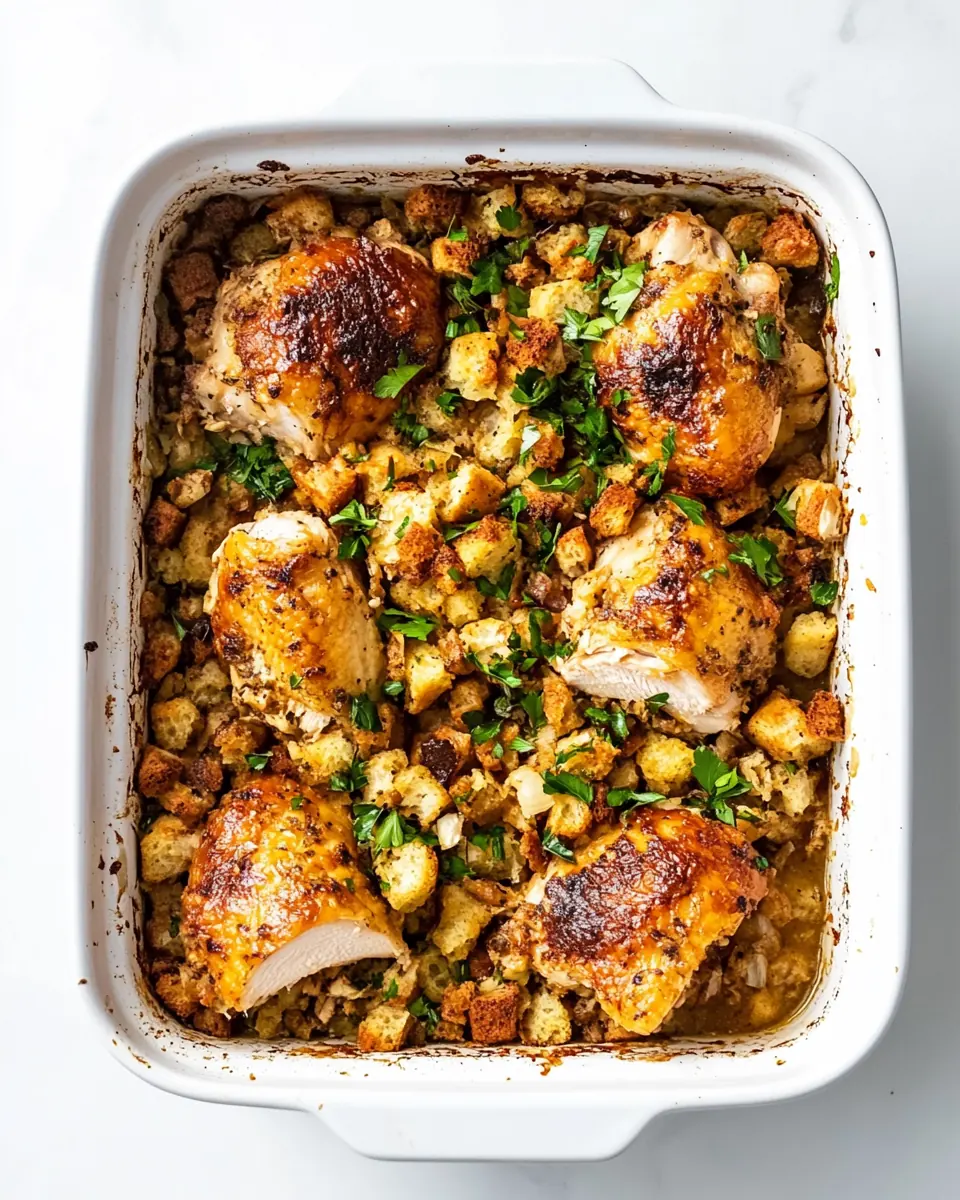
These steps will guide you through building flavor from the stovetop to the oven, finishing with a rich pan gravy. Read each instruction fully before you begin so you can sense the visual and aromatic cues that tell you when to move to the next stage.
- Preheat the oven to 375 degrees F. Spray a 9 x 13 inch baking dish with nonstick spray.: The air in the oven should feel warm and steady when you open the door, and the preheated environment ensures even baking of stuffing and chicken . You want a consistent heat so the stuffing sets while the chicken finishes cooking, avoiding spots that undercook. A common mistake is putting the dish into an oven that is not up to temperature, which can lengthen cooking time and lead to uneven texture.
- In a large cast iron skillet, melt the 4 tablespoons butter. Add in the onions, celery, garlic and a big pinch of salt and pepper. Cook, stirring often, until the veggies soften, about 5 minutes. Stir in the fresh herbs. Cook for 2 to 3 minutes. Turn off the heat.: As the butter foams and then calms, you will smell sweet onion and aromatic herbs blooming, a sign the base flavors are building. Texture will shift from crisp to tender, and stirring keeps the vegetables from sticking and browning too quickly. Avoid rushing the softening step, since undercooked vegetables will leave raw, crunchy bits in the stuffing.
- Place the bread cubes in the sprayed baking dish. Pour the onion celery mixture over top, being sure to scrape the pan so all the flavor gets into the bread cubes. Add another pinch of salt and pepper and toss everything well.: As the warm vegetable mixture hits the bread, it should hiss slightly and steam, which helps the cubes soak up flavor. Tossing ensures even distribution so every cube carries some of the sautéed aromatics. Over saturating the bread can make the stuffing soggy, so aim for even coating rather than puddles of liquid.
- Whisk together the chicken stock and egg. Pour the mixture over the breadcrumbs and toss. Drizzle the remaining 4 tablespoons butter over the stuffing.: Whisking until fully combined makes the liquid silky and stable, which helps the bread set into a tender custard as it bakes. The smell will become richer and the mixture should look evenly moistened. A frequent error is pouring cold stock straight onto dry bread without mixing, which leads to uneven hydration and dry pockets.
- Stick the pan in the oven, uncovered, for 20 to 25 minutes.: The oven sound is a soft, steady hum, and you will see the top of the stuffing start to firm and gain slight color at the edges. This initial bake sets the structure so the chicken can be added without making the whole dish collapse. Do not close the oven frequently to check, since heat loss will extend baking time and affect texture.
- While the stuffing cooks, make the chicken. In the same cast iron skillet, heat the olive oil over medium heat. Stir together the garlic powder, dried sage, oregano and a big pinch of salt and pepper. Sprinkle it all over the chicken.: The oil should shimmer and release a faint, herbaceous scent when the spice blend hits the pan, signaling the aromas are activating. Seasoning in advance ensures the chicken carries flavor to the interior as it browns. A common mistake is underseasoning the skin, which results in bland bites once roasted.
- Brown the chicken in the pan about 3 to 4 minutes per side, until it’s deeply golden in color.: You will hear a steady sizzle and see the skin transform to a deep, inviting brown; that Maillard reaction adds nuttiness and depth. Browning also creates the drippings essential for the gravy. Avoid moving the thighs too often, or they will not develop a proper crust and will stick to the pan.
- When the stuffing is finished, remove the pan. Take each chicken thigh from the skillet and nestle it into the stuffing. Return the pan to the oven and cook for another 20 to 25 minutes, or until the internal temp of the chicken and stuffing both reach 165 degrees F.: As the thighs rest in the stuffing, juices will blend into the bread, and you may see tiny bubbles where the stuffing meets the meat. The kitchen will smell like roasted herbs and warm bread. Use a thermometer to verify doneness, because relying on color alone can be misleading and lead to undercooked poultry.
- While that cooks, make the gravy. In the same pan where you cooked the chicken (don’t clean it out!), heat the remaining drippings over medium heat. In a shaker cup, shake the stock and flour together for at least 30 seconds to make a slurry, until it is fully combined.: Heating the drippings teases out browned flavor notes and releases a savory perfume that signals the sauce is beginning. The slurry should be lump free and pale, which helps it marry smoothly with the hot fat. If you add flour directly to hot drippings without mixing it first, you risk clumps that will be hard to whisk out.
- Pour the slurry into the drippings in the pan, whisking the entire time. Continue to whisk to avoid any lumps and stir until the gravy has thickened, anywhere from 10 to 20 minutes. Make sure you are scraping the bottom of the pan! Stirring is key – I have stood and stirred gravy for 20 to 30 minutes at a time!: As you whisk, the gravy will shift from opaque to glossy and coat the back of a spoon, releasing a rich aroma filled with roasted notes. Scraping the bottom pulls in fond, building complexity; patience here yields a smooth, velvety sauce. A common error is turning the heat too high, which can make the gravy scorch and taste bitter.
- Taste the gravy and season it with salt and pepper to your liking. Salt and pepper make all the difference here. The drippings and stock add flavor, but the salt is what brings the flavor out.: Adjusting seasoning at the end lets you control intensity since reduction concentrates salt. The gravy should taste balanced, not flat or overly salty. Avoid oversalting early, because once reduced you cannot remove excess salt easily.
- When the chicken and stuffing bake is finished, sprinkle it with extra chopped parsley. Serve and drizzle with gravy. Enjoy!: The final presentation should look warm and inviting, with golden chicken skin and scattered green parsley for brightness. Drizzling the gravy adds shine and a finishing savory note. One mistake to avoid is letting the dish sit too long before serving, which can cause the stuffing to settle and lose its pleasing contrast.
Substitutions and Tips
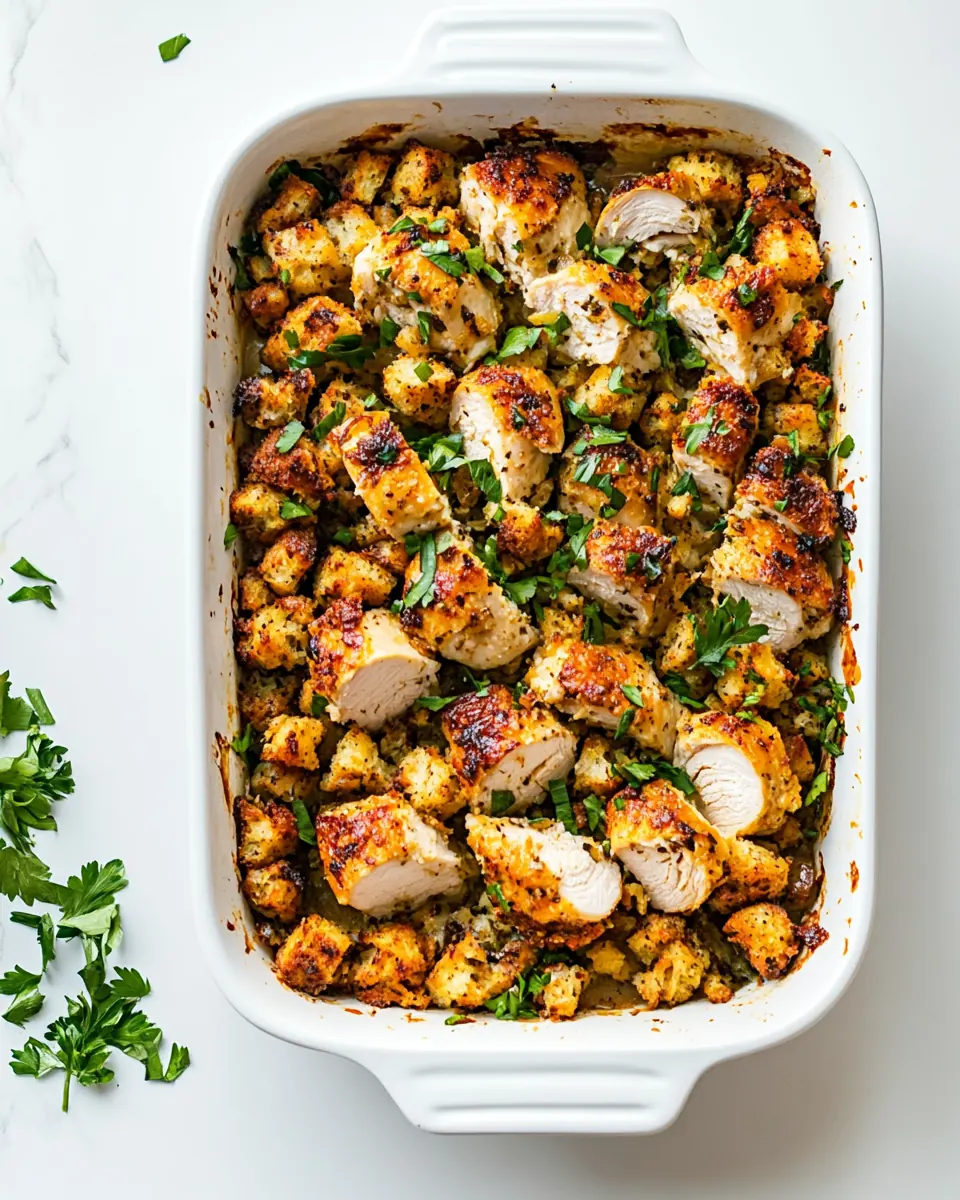
This list focuses on practical, safe variations and techniques that keep the dish true to its comforting roots. Each tip starts with a highlighted action so you can scan for the technique you need.
- Use low sodium stock when you want tighter control of salt levels, especially if your pan drippings are already quite salty; this prevents over seasoning after reduction.
- Pat the chicken dry before seasoning to ensure a properly crisped skin, because excess surface moisture will cause steaming rather than browning.
- Choose day old bread for the best stuffing texture, since slightly stale cubes absorb liquid evenly and produce a tender interior with browned edges.
- Let the gravy simmer slowly while whisking, as a gentle boil helps thicken without creating a pasty texture; high heat risks scorching and lumping.
- Brown the chicken in batches if needed, so each piece has room to sear; crowding reduces surface contact and prevents proper crust formation.
- Keep chopped herbs fresh until the end to maintain bright flavor, stirring them into warm vegetables rather than cooking them down for long periods.
- Use a heavy skillet such as cast iron to develop fond for the gravy; lighter pans will not produce the same depth of browned bits.
What Goes Well With This Thanksgiving Chicken and Stuffing Bake
This section outlines complementary side dishes, serving occasions, and practical storage advice so you can make a full menu around the bake. Consider textures and temperatures when pairing sides to balance the rich stuffing and gravy.
- Roasted vegetables such as carrots or Brussels sprouts offer crisp edges and caramelized flavor that contrast nicely with the soft stuffing.
- Simple green salad dressed lightly with lemon or vinegar provides an acidic counterpoint, cutting through the richness of the gravy.
- Steamed greens like green beans or spinach add a quick, bright vegetable side that pairs well for both lunch and dinner occasions.
- Occasions this recipe suits: it works for holiday gatherings like Thanksgiving, cozy family dinners, or anytime you want a hands off centerpiece with classic flavors.
- Storage tips Refrigerate leftovers in an airtight container within two hours; reheat gently in a 350 degrees F oven until warmed through to retain texture. Avoid microwaving if you want to keep the skin crisp.
- Seasonal pairings In the fall, serve with maple glazed root vegetables or cranberry sauce for seasonal notes that echo the herbs and savory base.
- Serving style For a family style dinner, bring the baking dish straight to the table and let guests spoon gravy over plated portions for a warm, communal presentation.
- Make ahead Assemble the stuffing component and refrigerate separately; add warmed chicken and bake when ready to serve to preserve texture.
- Portioning If serving a crowd, double the recipe and use two baking dishes to ensure even roasting and oven space for sides.
- Presentation Sprinkle fresh chopped parsley right before serving for color and a fresh herbal lift against the golden chicken skin.
FAQ
Conclusion
This recipe stands out because it delivers cozy, holiday worthy flavors with minimal fuss, combining golden roasted chicken, herb forward stuffing, and an easy pan gravy. Give it a try when you want a comforting centerpiece that behaves like a celebration but cooks like a simple weeknight dinner. I hope it becomes one of those dishes you return to whenever you want a warm, satisfying meal that fills the kitchen with nostalgic aroma.
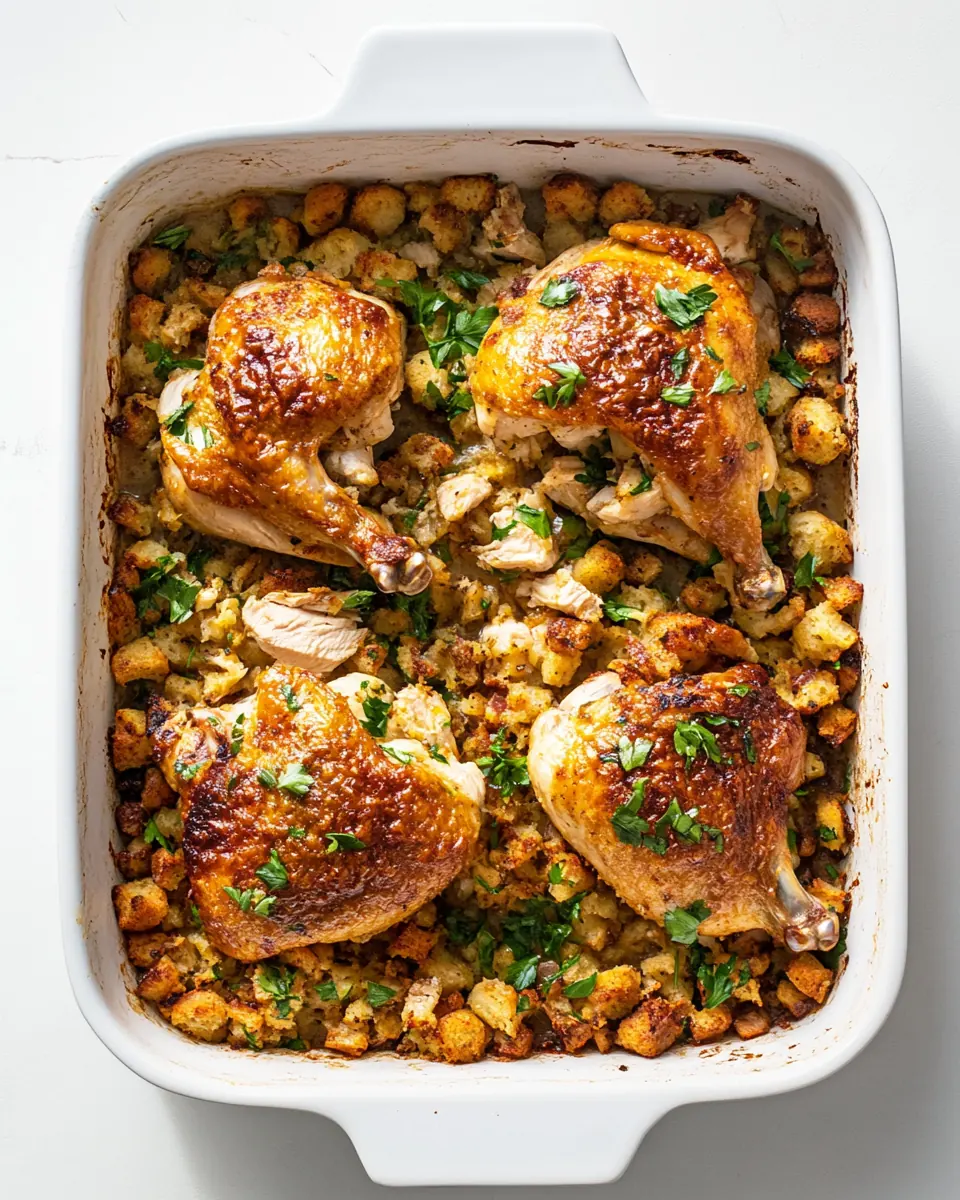
Thanksgiving Chicken and Stuffing Bake
Ingredients
Equipment
Method
- Preheat the oven to 375 degrees F. Spray a 9 x 13 inch baking dish with nonstick spray.: The air in the oven should feel warm and steady when you open the door, and the preheated environment ensures even baking of stuffing and chicken . You want a consistent heat so the stuffing sets while the chicken finishes cooking, avoiding spots that undercook. A common mistake is putting the dish into an oven that is not up to temperature, which can lengthen cooking time and lead to uneven texture.
- In a large cast iron skillet, melt the 4 tablespoons butter. Add in the onions, celery, garlic and a big pinch of salt and pepper. Cook, stirring often, until the veggies soften, about 5 minutes. Stir in the fresh herbs. Cook for 2 to 3 minutes. Turn off the heat.: As the butter foams and then calms, you will smell sweet onion and aromatic herbs blooming, a sign the base flavors are building. Texture will shift from crisp to tender, and stirring keeps the vegetables from sticking and browning too quickly. Avoid rushing the softening step, since undercooked vegetables will leave raw, crunchy bits in the stuffing.
- Place the bread cubes in the sprayed baking dish. Pour the onion celery mixture over top, being sure to scrape the pan so all the flavor gets into the bread cubes. Add another pinch of salt and pepper and toss everything well.: As the warm vegetable mixture hits the bread, it should hiss slightly and steam, which helps the cubes soak up flavor. Tossing ensures even distribution so every cube carries some of the sautéed aromatics. Over saturating the bread can make the stuffing soggy, so aim for even coating rather than puddles of liquid.
- Whisk together the chicken stock and egg. Pour the mixture over the breadcrumbs and toss. Drizzle the remaining 4 tablespoons butter over the stuffing.: Whisking until fully combined makes the liquid silky and stable, which helps the bread set into a tender custard as it bakes. The smell will become richer and the mixture should look evenly moistened. A frequent error is pouring cold stock straight onto dry bread without mixing, which leads to uneven hydration and dry pockets.
- Stick the pan in the oven, uncovered, for 20 to 25 minutes.: The oven sound is a soft, steady hum, and you will see the top of the stuffing start to firm and gain slight color at the edges. This initial bake sets the structure so the chicken can be added without making the whole dish collapse. Do not close the oven frequently to check, since heat loss will extend baking time and affect texture.
- While the stuffing cooks, make the chicken. In the same cast iron skillet, heat the olive oil over medium heat. Stir together the garlic powder, dried sage, oregano and a big pinch of salt and pepper. Sprinkle it all over the chicken.: The oil should shimmer and release a faint, herbaceous scent when the spice blend hits the pan, signaling the aromas are activating. Seasoning in advance ensures the chicken carries flavor to the interior as it browns. A common mistake is underseasoning the skin, which results in bland bites once roasted.
- Brown the chicken in the pan about 3 to 4 minutes per side, until it’s deeply golden in color.: You will hear a steady sizzle and see the skin transform to a deep, inviting brown; that Maillard reaction adds nuttiness and depth. Browning also creates the drippings essential for the gravy. Avoid moving the thighs too often, or they will not develop a proper crust and will stick to the pan.
- When the stuffing is finished, remove the pan. Take each chicken thigh from the skillet and nestle it into the stuffing. Return the pan to the oven and cook for another 20 to 25 minutes, or until the internal temp of the chicken and stuffing both reach 165 degrees F.: As the thighs rest in the stuffing, juices will blend into the bread, and you may see tiny bubbles where the stuffing meets the meat. The kitchen will smell like roasted herbs and warm bread. Use a thermometer to verify doneness, because relying on color alone can be misleading and lead to undercooked poultry.
- While that cooks, make the gravy. In the same pan where you cooked the chicken (don’t clean it out!), heat the remaining drippings over medium heat. In a shaker cup, shake the stock and flour together for at least 30 seconds to make a slurry, until it is fully combined.: Heating the drippings teases out browned flavor notes and releases a savory perfume that signals the sauce is beginning. The slurry should be lump free and pale, which helps it marry smoothly with the hot fat. If you add flour directly to hot drippings without mixing it first, you risk clumps that will be hard to whisk out.
- Pour the slurry into the drippings in the pan, whisking the entire time. Continue to whisk to avoid any lumps and stir until the gravy has thickened, anywhere from 10 to 20 minutes. Make sure you are scraping the bottom of the pan! Stirring is key - I have stood and stirred gravy for 20 to 30 minutes at a time!: As you whisk, the gravy will shift from opaque to glossy and coat the back of a spoon, releasing a rich aroma filled with roasted notes. Scraping the bottom pulls in fond, building complexity; patience here yields a smooth, velvety sauce. A common error is turning the heat too high, which can make the gravy scorch and taste bitter.
- Taste the gravy and season it with salt and pepper to your liking. Salt and pepper make all the difference here. The drippings and stock add flavor, but the salt is what brings the flavor out.: Adjusting seasoning at the end lets you control intensity since reduction concentrates salt. The gravy should taste balanced, not flat or overly salty. Avoid oversalting early, because once reduced you cannot remove excess salt easily.
- When the chicken and stuffing bake is finished, sprinkle it with extra chopped parsley. Serve and drizzle with gravy. Enjoy!: The final presentation should look warm and inviting, with golden chicken skin and scattered green parsley for brightness. Drizzling the gravy adds shine and a finishing savory note. One mistake to avoid is letting the dish sit too long before serving, which can cause the stuffing to settle and lose its pleasing contrast.
Notes
- Use low sodium stock when you want tighter control of salt levels, especially if your pan drippings are already quite salty; this prevents over seasoning after reduction.
- Pat the chicken dry before seasoning to ensure a properly crisped skin, because excess surface moisture will cause steaming rather than browning.
- Choose day old bread for the best stuffing texture, since slightly stale cubes absorb liquid evenly and produce a tender interior with browned edges.
- Let the gravy simmer slowly while whisking, as a gentle boil helps thicken without creating a pasty texture; high heat risks scorching and lumping.
- Brown the chicken in batches if needed, so each piece has room to sear; crowding reduces surface contact and prevents proper crust formation.
- Keep chopped herbs fresh until the end to maintain bright flavor, stirring them into warm vegetables rather than cooking them down for long periods.
- Use a heavy skillet such as cast iron to develop fond for the gravy; lighter pans will not produce the same depth of browned bits.