Tomyum Noodle Soup
Tomyum Noodle Soup has been a warm, fragrant anchor in my kitchen for years, a bowl I reach for when I want comfort that wakes up the senses. The first time I made it I was chasing that perfect balance of sour, spicy, and savory, and I still remember the bright, citrusy perfume of bruised lemongrass filling the air as the broth simmered. It became my go to when friends dropped by after a long shift, the kind of dish that turns chatter into instant coziness.
Over time I’ve learned to trust a handful of simple techniques that make the flavors sing. I love how the snap of quick cooked shrimp meets the slippery bite of the noodles, and how a spoonful of Nam Prik Pao adds smoky depth without any fuss. This soup always reminds me of a rainy evening when the world slowed down and a steaming bowl felt like a tiny celebration.
Recipe Snapshot
15 mins
5 mins
10 mins
Easy
250 kcal
Thai
Keto, Gluten-Free
Soups
Small pot, Serving bowl, Knife
The Best Thing About This Tomyum Noodle Soup
Vibrant, layered flavor
I adore how Tomyum Noodle Soup hits so many notes at once, the bright acidity of lime juice dancing with the savory chili paste. I find that each aroma component, from bruised kaffir lime leaves to sliced galangal, plays a distinct role, so the finished bowl feels complete and thrilling to my palate.
Fast and forgiving
I make this soup when I need something quick yet impressive. With minimal hands on time, you can turn pantry staples into a meal that looks and tastes like you spent hours on it. I love that shrimp cooks fast, so the dish comes together in about ten to fifteen minutes, and it never feels rushed.
Texture contrast
What keeps me coming back is the contrast between soft, slippery noodles and springy, just cooked shrimp, plus the slight chew of mushrooms. Each spoonful gives me a variety of textures, which makes every bite interesting and satisfying.
Customizable heat and depth
I appreciate how easy it is to dial the spice up or down. If I want a smoky backbone, I stir in a bit more Nam Prik Pao. If I need brightness, I add another squeeze of lime juice. That flexibility means the recipe always fits the mood and the crowd.
Comfort with an exotic twist
This soup is comforting but never dull. It’s homey, yet the aromatics like lemongrass and kaffir lime leaves transport me. I love serving it when guests are curious about flavor, because it’s approachable and adventurous at the same time.
Ingredients You’ll Need for Tomyum Noodle Soup
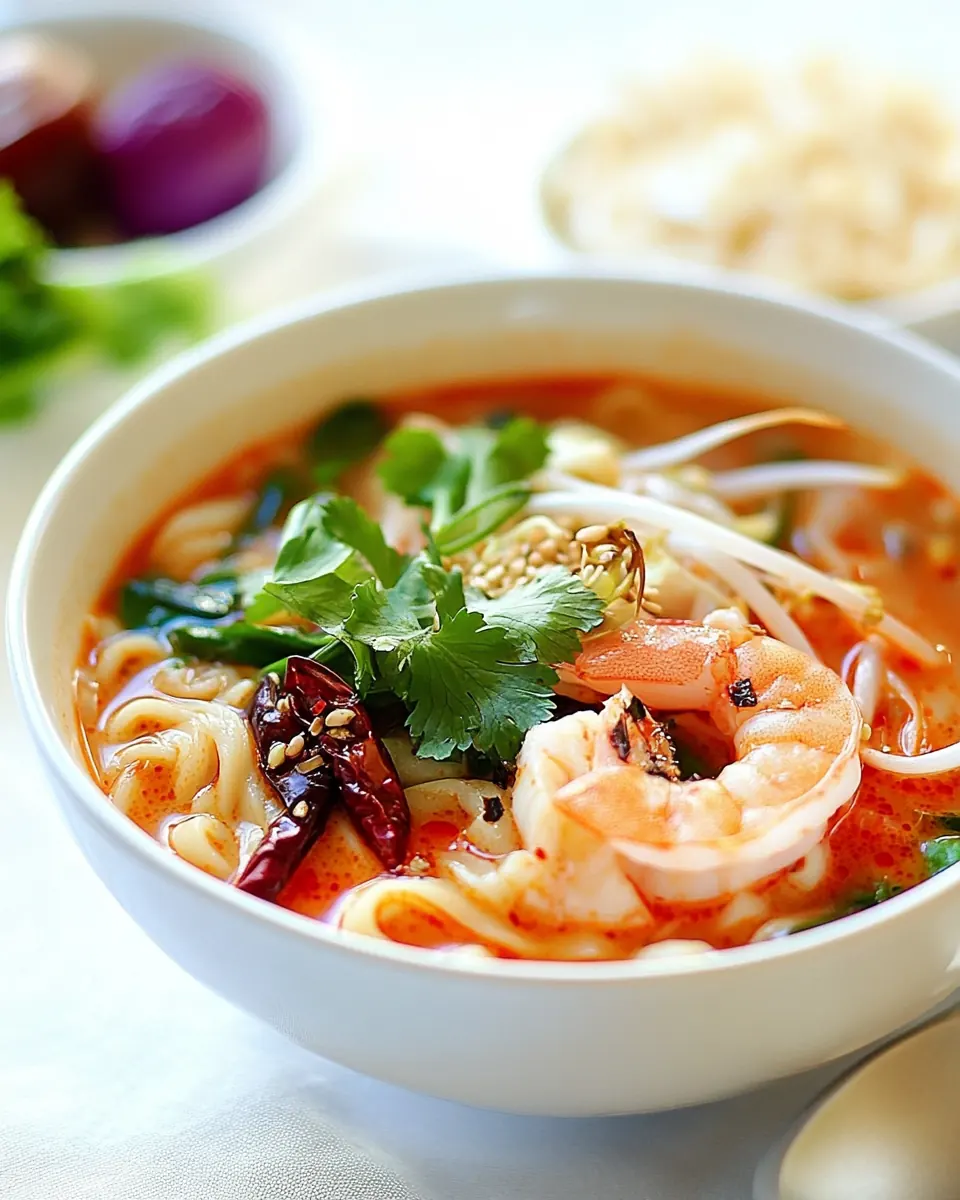
These ingredients work together to build a bright, savory broth with satisfying texture. The aromatics provide fragrant lift, the paste and chili bring depth and heat, and the proteins and noodles deliver substance. I think of the aromatics as the backbone, the Nam Prik Pao as the heart, and the noodles and shrimp as the comforting finish.
- 1 rollsoba noodles, or egg noodles or instant noodles: Boil quickly to cook noodles until tender and slightly chewy, providing the primary carbohydrate and body of the soup; choose roll soba, egg, or instant varieties based on desired texture. Drain and rinse if necessary to prevent overcooking, then add to the hot broth just before serving to preserve firmness.
- 1 1/4 cups water: Simmer gently as the soup base liquid that extracts flavors from aromatics and seasonings, ensuring ingredients infuse evenly; measure to maintain the intended balance of concentration and dilution. Add additional hot water or stock only if necessary to adjust broth intensity without altering seasoning proportions.
- 1 stalk lemongrass, white part only, pounded and bruised: Smash lightly to release fragrant citrus oils and stalk aroma, contributing bright, lemony notes that define the soup’s character; include only the tender white part for optimal flavor. Bruising increases surface area for infusion, so add early in simmering and remove before serving to avoid fibrous bits.
- 5 6 kaffir lime leaves, bruised: Bruise thoroughly to unlock strong, floral-citrus essential oils that add sharp top notes and authentic Thai fragrance to the broth; include whole leaves to infuse flavor without shredding. Remove before serving if desired to keep texture smooth while retaining the lifted aroma.
- 4 5 slices fresh galangal: Slice and simmer to impart warm, peppery, slightly piney heat that complements the lemongrass and lime; use fresh galangal for its sharper, cleaner flavor than ginger. Add early in the simmer to extract aromatics, and strain or remove slices before eating to avoid fibrous mouthfeel.
- 1/2 small tomato, cut into 3 to 4 wedges: Cut into wedges to contribute a touch of acidity and mild sweetness, balancing the soup’s savory and sour elements while adding subtle body. Simmer briefly so the tomato softens and releases juices without turning mushy, enhancing broth color and depth.
- 6 medium-sized shrimp, shelled and deveined: Peel and cook until just opaque to offer sweet, briny seafood flavor and tender protein texture that enriches the broth; devein for cleanliness and ease of eating. Add near the end of cooking to prevent toughness, allowing residual heat to finish cooking evenly.
- 6 straw mushrooms, or fresh oyster mushrooms, cut into halves: Halve and simmer to provide earthy, umami mushroom flavor and pleasant bite that complements the seafood and aromatics; choose straw or oyster mushrooms for tender texture. Add in the final minutes of cooking so mushrooms remain succulent and absorb the broth’s flavors.
- 1 1/2 tablespoons Nam Prik Pao, Thai roasted chili paste: Spoon in to contribute smoky, sweet, and spicy depth from roasted chilies and shallots, forming a central component of traditional tomyum flavor. Dissolve into the hot broth gradually, tasting to reach desired heat and savoriness while preserving its distinctive roasted notes.
- 1/2 tablespoon fish sauce, or to taste: Drizzle to season with savory, salty umami that enhances other flavors and balances sweetness and sourness; adjust quantity to taste. Add gradually and taste as fish sauce can quickly dominate, remembering that it intensifies further as it melds with the hot broth.
- 3 dashes chili powder: Sprinkle sparingly to increase heat and visual spice, allowing for adjustable spiciness without altering liquid balance; use more or less based on tolerance. Add a few dashes at a time and taste, since chili powder varies in intensity and can overwhelm other delicate aromatics.
- 1 1/2 tablespoons lime juice: Squeeze freshly to add bright, sharp acidity that lifts the soup and balances richness, creating the classic hot-and-sour tomyum profile; measure to preserve intended tanginess. Add at the end of cooking to retain fresh citrus brightness rather than cooking it away.
- cilantro leaves, for garnishing: Garnish lightly to provide fresh, herbaceous aroma and a burst of green flavor that rounds out the soup’s complexity and adds visual appeal. Scatter leaves over each bowl just before serving so the cilantro retains its vibrant color and fragrance.
Making This Tomyum Noodle Soup
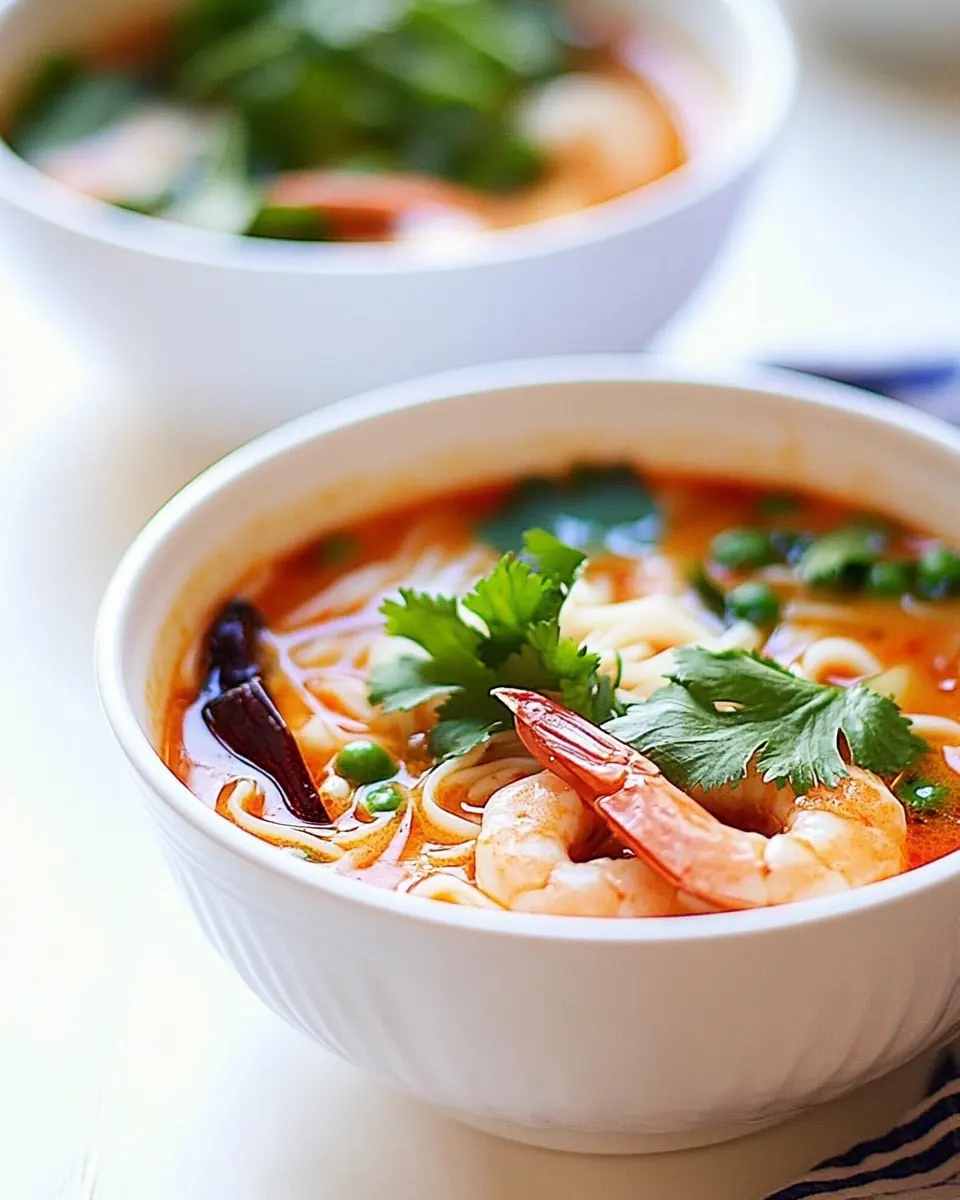
I like to keep the cooking straightforward and a little theatrical, keeping aromatics whole so they infuse cleanly, and finishing with fresh acid off the heat. The steps are simple, but attention to timing and temperature makes a noticeable difference.
- Prepare the soba or egg noodles according to the package instructions, which usually take about 5 minutes to cook. Drain the noodles, rinse with cold water, and set them aside in a serving bowl.: The moment you drain the noodles you'll notice their texture and scent, a starchy warmth that feels comforting in your hands, and rinsing them under cool water stops the cooking process and firms their bite, which is essential so they do not go mushy when the hot broth is poured over them. I always time this so the noodles are ready just as the broth finishes, preventing them from sitting and getting gluey. One common mistake is overcooking the noodles , which results in a limp texture that will soak up too much broth and become heavy.
- At the same time, bring 1 1/4 cups of water to a boil in a small pot. Add all the aromatics, followed by the shrimp, mushrooms, and nam prik pao. Continue boiling until the shrimp is cooked through. Add the fish sauce and chili powder, then turn off the heat and stir in the lime juice to combine.: After rinsing the noodles you should feel them with your fingers, they should be separate and springy rather than sticky, and placing them into warm bowls helps retain heat when the soup is ladled on. Letting them sit in a serving bowl keeps the meal assembly flowing, making it easy to finish quickly. Avoid letting the noodles sit in water, which can dilute their flavor and cool them excessively.
- Pour the Tom Yum soup over the noodles and top with cilantro leaves. Serve immediately.: As the water comes to a rolling boil you will hear a clear, lively sound and see tiny bubbles gather before they burst, which indicates vigorous heat that extracts aromatics efficiently. Using the specified amount concentrates the broth so every spoonful is flavorful. A pitfall here is using too large a pot or too much water, which weakens the aromatic intensity and results in a flat broth.
- Add all the aromatics, followed by the shrimp, mushrooms, and nam prik pao: Once the water is boiling, slipping in the bruised lemongrass , smashed kaffir lime leaves , and sliced galangal releases a heady perfume, and you will notice the steam carries citrus and herbal notes. Dropping in the shrimp and mushrooms shortly after allows them to cook gently in the flavored liquid, and adding the Nam Prik Pao melts a glossy, smoky streak into the surface that deepens the broth. A typical oversight is adding the shrimp too early, which can lead to an overly firm texture.
- Continue boiling until the shrimp is cooked through: You will see the shrimp change from translucent to a firm, opaque pink, and the broth will take on a richer hue as the aromatics and tomato soften, lending body. This visual cue is the most reliable indicator of doneness, and the moment the shrimp looks just cooked, remove the pot from heat to preserve a tender bite. Overcooking is the usual error here, producing rubbery shrimp that detract from the overall experience.
- Add the fish sauce and chili powder, then turn off the heat and stir in the lime juice to combine: When you add the fish sauce , the broth takes on a savory roundness, and the chili powder wakes up the tongue with warmth, while stirring in the lime juice off the heat preserves a fresh, sharp citrus top note that brightens every ingredient. Mixing at this stage allows the flavors to marry without cooking away the acidity. A common slip is adding too much fish sauce at once, so I recommend tasting and adjusting gradually.
- Pour the Tom Yum soup over the noodles and top with cilantro leaves: As you ladle the steaming broth over the noodles , you will see them loosen and glisten, absorbing the aromatic liquid and making each strand lively and fragrant, and scattering the cilantro leaves adds a bright, herbal finish that lifts the bowl visually and aromatically. Serve immediately so the textures remain distinct and the soup is enjoyed at its aromatic peak. Leaving the assembled bowl to sit will make the noodles swell and the herbs wilt excessively, which changes the intended texture.
- Serve immediately: The first spoonful should deliver a balance of heat, sour, and savory, with warm broth, tender shrimp , and springy noodles . Eating right away ensures the components are at their best, and you can adjust seasoning at the table if needed. Waiting too long for serving will diminish the lively citrus aroma and may alter the texture of the shrimp and noodles .
Variations to Try
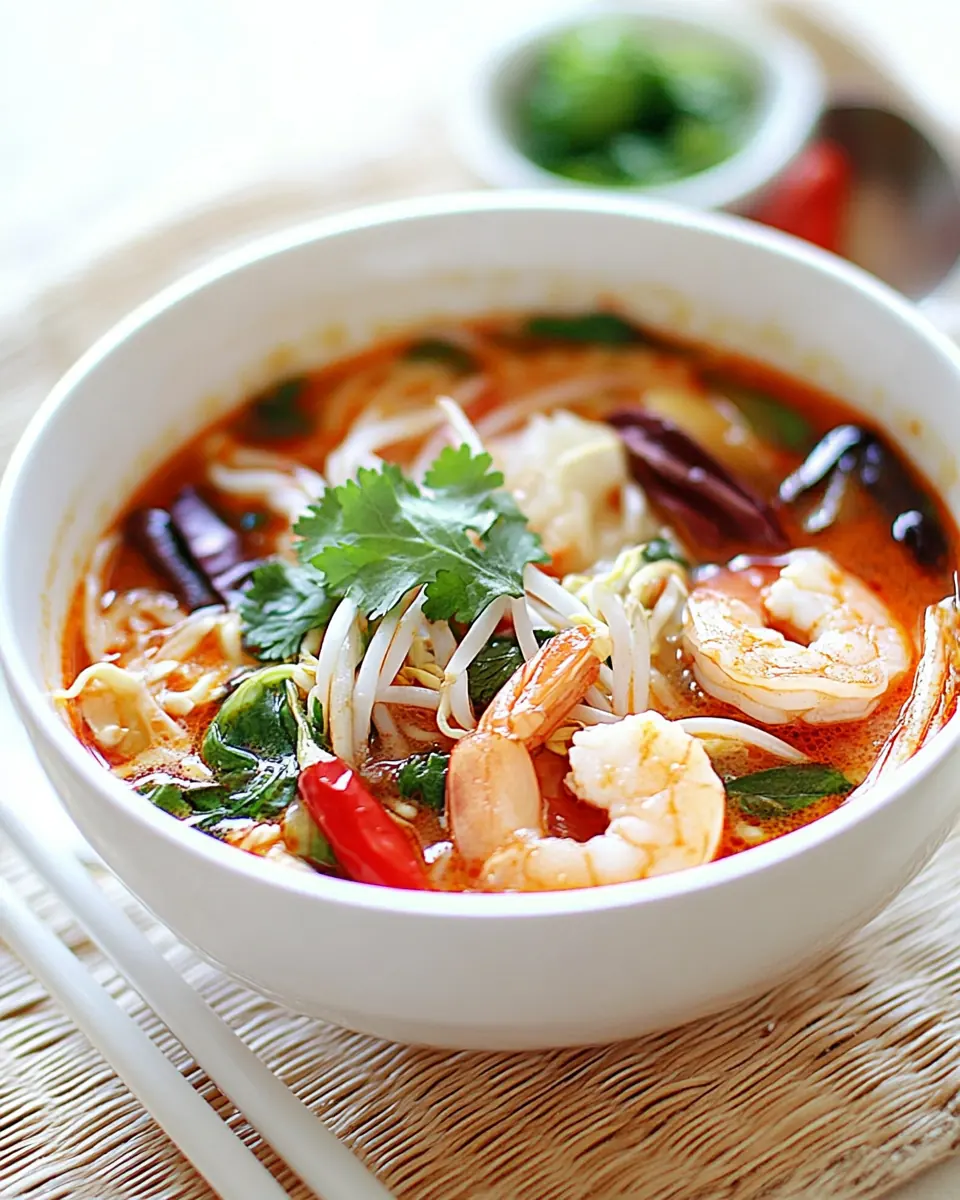
This section explores ways to tweak the recipe while keeping its core character intact. Small changes can highlight different textures, aromas, or levels of comfort, and they allow you to make the bowl your own without losing the signature Tomyum profile.
- Swap the noodles Choose soba for a nutty backdrop or egg noodles for a softer, silkier mouthfeel, each changing how the broth clings to the strands.
- Broth intensity If you prefer a lighter bowl, increase the water slightly and simmer aromatics for less time, tasting frequently to maintain balance.
- Mushroom choice Straw mushrooms offer a delicate texture, while oyster mushrooms give a meatier bite that soaks up the broth wonderfully.
- Heat control Add chili powder gradually and offer extra at the table, so guests can customize their spice level without overpowering the base flavors.
- Extra umami Stir in a touch more Nam Prik Pao for deeper, smoky richness, especially if the broth feels too bright or thin.
What Goes Well With This Tomyum Noodle Soup
This soup is flexible for many occasions, and pairing it thoughtfully can elevate a simple meal into a memorable experience. Consider accompaniments that complement its bright, spicy profile and think about seasonal or occasion based service.
- Light side salad A crisp green salad with a gentle vinaigrette provides a cool counterpoint to the warm, spicy soup, making it a balanced lunch or light dinner option.
- Steamed rice Offer plain steamed rice to temper heat and extend the meal for larger appetites, a practical choice for a casual family dinner.
- Small plates for sharing Serve with simple vegetable sides or marinated cucumbers to add variety, perfect for a relaxed gathering or when you want several small bites.
- Occasions This recipe is ideal for a cozy winter evening or a quick weeknight dinner, and it also works well during Ramadan if served as a nourishing, warm option to break the fast.
- Storage tips Keep broth and solids separate when storing, refrigerate in airtight containers for up to two days, and reheat gently to avoid overcooking the shrimp.
- Seasonal pairing The bright citrus notes make it a lovely choice in colder months like winter, when fragrant, warming bowls feel especially satisfying.
FAQ
Conclusion
Tomyum Noodle Soup stands out because it balances bright citrus, smoky depth, and spicy warmth in a fast, comforting bowl. Give it a try the next time you want something quick that still feels thoughtful, and adjust the heat and aromatics until it matches your flavor memory. I hope this recipe becomes one of your go to bowls for cozy evenings and lively weeknight dinners.
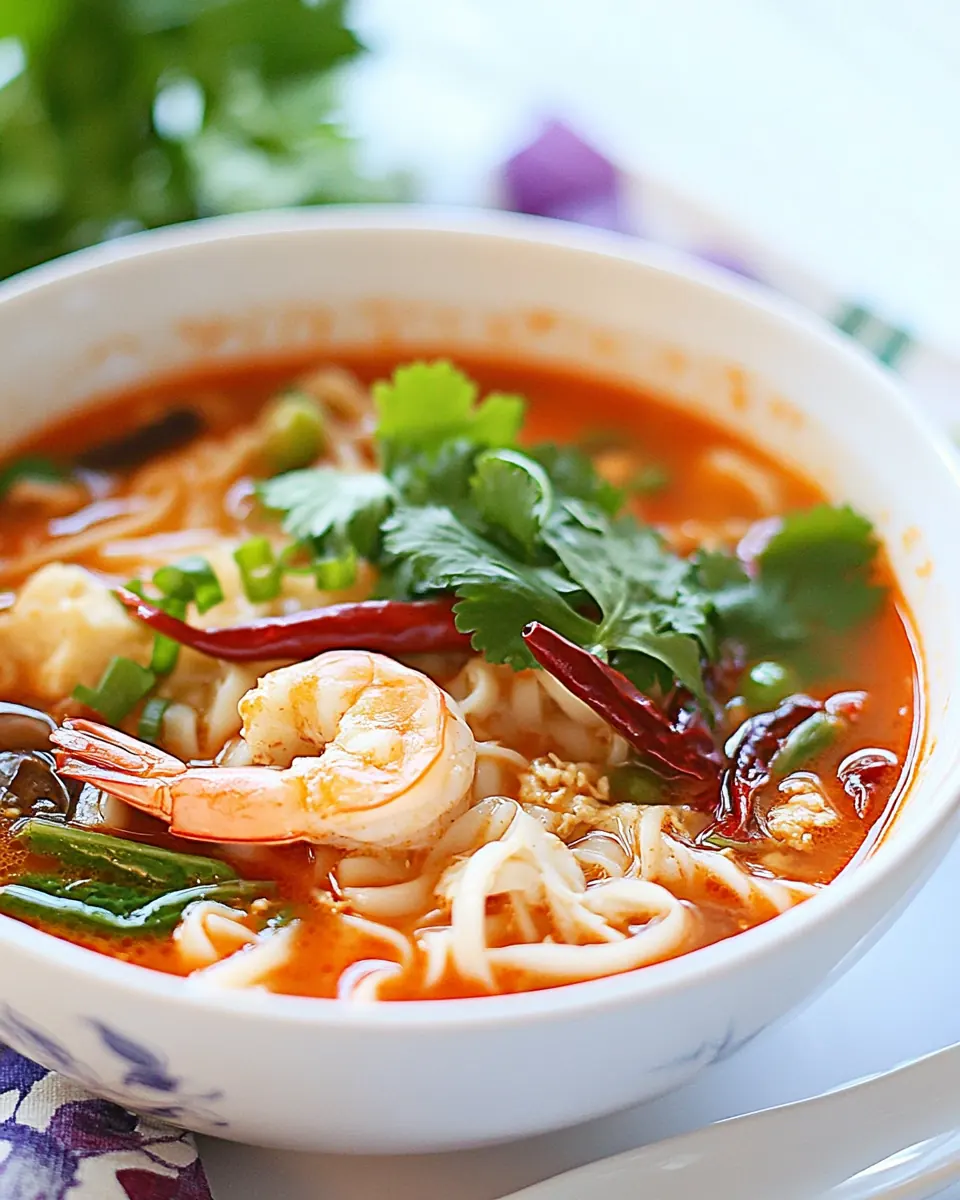
Tomyum Noodle Soup
Ingredients
Equipment
Method
- Prepare the soba or egg noodles according to the package instructions, which usually take about 5 minutes to cook. Drain the noodles, rinse with cold water, and set them aside in a serving bowl.: The moment you drain the noodles you'll notice their texture and scent, a starchy warmth that feels comforting in your hands, and rinsing them under cool water stops the cooking process and firms their bite, which is essential so they do not go mushy when the hot broth is poured over them. I always time this so the noodles are ready just as the broth finishes, preventing them from sitting and getting gluey. One common mistake is overcooking the noodles , which results in a limp texture that will soak up too much broth and become heavy.
- At the same time, bring 1 1/4 cups of water to a boil in a small pot. Add all the aromatics, followed by the shrimp, mushrooms, and nam prik pao. Continue boiling until the shrimp is cooked through. Add the fish sauce and chili powder, then turn off the heat and stir in the lime juice to combine.: After rinsing the noodles you should feel them with your fingers, they should be separate and springy rather than sticky, and placing them into warm bowls helps retain heat when the soup is ladled on. Letting them sit in a serving bowl keeps the meal assembly flowing, making it easy to finish quickly. Avoid letting the noodles sit in water, which can dilute their flavor and cool them excessively.
- Pour the Tom Yum soup over the noodles and top with cilantro leaves. Serve immediately.: As the water comes to a rolling boil you will hear a clear, lively sound and see tiny bubbles gather before they burst, which indicates vigorous heat that extracts aromatics efficiently. Using the specified amount concentrates the broth so every spoonful is flavorful. A pitfall here is using too large a pot or too much water, which weakens the aromatic intensity and results in a flat broth.
- Add all the aromatics, followed by the shrimp, mushrooms, and nam prik pao: Once the water is boiling, slipping in the bruised lemongrass , smashed kaffir lime leaves , and sliced galangal releases a heady perfume, and you will notice the steam carries citrus and herbal notes. Dropping in the shrimp and mushrooms shortly after allows them to cook gently in the flavored liquid, and adding the Nam Prik Pao melts a glossy, smoky streak into the surface that deepens the broth. A typical oversight is adding the shrimp too early, which can lead to an overly firm texture.
- Continue boiling until the shrimp is cooked through: You will see the shrimp change from translucent to a firm, opaque pink, and the broth will take on a richer hue as the aromatics and tomato soften, lending body. This visual cue is the most reliable indicator of doneness, and the moment the shrimp looks just cooked, remove the pot from heat to preserve a tender bite. Overcooking is the usual error here, producing rubbery shrimp that detract from the overall experience.
- Add the fish sauce and chili powder, then turn off the heat and stir in the lime juice to combine: When you add the fish sauce , the broth takes on a savory roundness, and the chili powder wakes up the tongue with warmth, while stirring in the lime juice off the heat preserves a fresh, sharp citrus top note that brightens every ingredient. Mixing at this stage allows the flavors to marry without cooking away the acidity. A common slip is adding too much fish sauce at once, so I recommend tasting and adjusting gradually.
- Pour the Tom Yum soup over the noodles and top with cilantro leaves: As you ladle the steaming broth over the noodles , you will see them loosen and glisten, absorbing the aromatic liquid and making each strand lively and fragrant, and scattering the cilantro leaves adds a bright, herbal finish that lifts the bowl visually and aromatically. Serve immediately so the textures remain distinct and the soup is enjoyed at its aromatic peak. Leaving the assembled bowl to sit will make the noodles swell and the herbs wilt excessively, which changes the intended texture.
- Serve immediately: The first spoonful should deliver a balance of heat, sour, and savory, with warm broth, tender shrimp , and springy noodles . Eating right away ensures the components are at their best, and you can adjust seasoning at the table if needed. Waiting too long for serving will diminish the lively citrus aroma and may alter the texture of the shrimp and noodles .
Notes
- Swap the noodles Choose soba for a nutty backdrop or egg noodles for a softer, silkier mouthfeel, each changing how the broth clings to the strands.
- Broth intensity If you prefer a lighter bowl, increase the water slightly and simmer aromatics for less time, tasting frequently to maintain balance.
- Mushroom choice Straw mushrooms offer a delicate texture, while oyster mushrooms give a meatier bite that soaks up the broth wonderfully.
- Heat control Add chili powder gradually and offer extra at the table, so guests can customize their spice level without overpowering the base flavors.
- Extra umami Stir in a touch more Nam Prik Pao for deeper, smoky richness, especially if the broth feels too bright or thin.