Glazed Mixed Berry Scones
Glazed Mixed Berry Scones arrived in my life on a rainy spring morning when I needed something warm, simple, and a little bit cheery. I remember stirring a messy bowl of dough with one hand while the kettle hissed on the stove, thinking about how a humble bake can brighten the whole day. This recipe felt like a small celebration, a mix of sweet berries and buttery, flaky texture that made the kitchen smell like comfort.
I baked these scones for friends who came by unexpectedly, and we passed them around with steaming mugs while the rain tapped at the window. Each bite had a tender crumb and bursts of tart berry that contrasted beautifully with the sweet, glossy glaze. I love how forgiving the recipe is, how the dough lets you be a little rustic, and how the glaze ties everything together into a neat, irresistible package.
Over time I tweaked little things, like keeping the fruit cold and not overworking the dough, and those small choices made a big difference. When I make Glazed Mixed Berry Scones now, the process is both ritual and relaxation. I’ll tell you about the ingredients I always rely on, and share tips so your batch comes out like the best ones I’ve had with friends. Cozy, not fussy, and truly worth the few thoughtful steps it asks of you.
Recipe Snapshot
33 mins
15 mins
18 mins
Hard
250 kcal
American
Gluten-Free, Low FODMAP
Breakfast
Mixing bowl, Whisk, Pastry cutter or forks, Baking sheet, Parchment or Silpat, Spatula, Knife, Cooling rack, Small bowl
Why This Glazed Mixed Berry Scones Hits Different
Bright berry flavor that sings
I love how the mixed berries bring a lively, fruity note that keeps each scone from feeling too rich. The jammy pockets from frozen or fresh fruit give texture and a natural sweetness that pairs perfectly with the glaze. I prefer this balance because it feels fresh rather than cloying.
Buttery, tender crumb
The cold butter and gentle handling create pockets of flaky tenderness. I find that working quickly and leaving some pea sized butter bits gives the scones a light lift and a pleasing mouthfeel. That small technique is a game changer every time I bake them for guests.
Simple glaze for polish
The quick confectioners’ sugar and cream or citrus drizzle dresses the scones up without overwhelming them. I like that it makes the scones look bakery worthy, and you can play with consistency to make a heavier coat or a sheer sheen, depending on your mood.
Flexible and forgiving
I appreciate how this recipe tolerates little variations, like using lite sour cream or switching citrus juice for cream to alter the glaze. Keeping the berries frozen until mixing reduces bleeding, and the dough still bakes up beautifully whether you’re making a small batch for two or a plateful for company.
Comfort food that travels
These scones hold up well for a picnic, brunch, or a cozy weekend morning. I often make them ahead and warm them slightly before serving, because they retain the texture and flavor that made me fall for them in the first place.
Essential Ingredients for Glazed Mixed Berry Scones
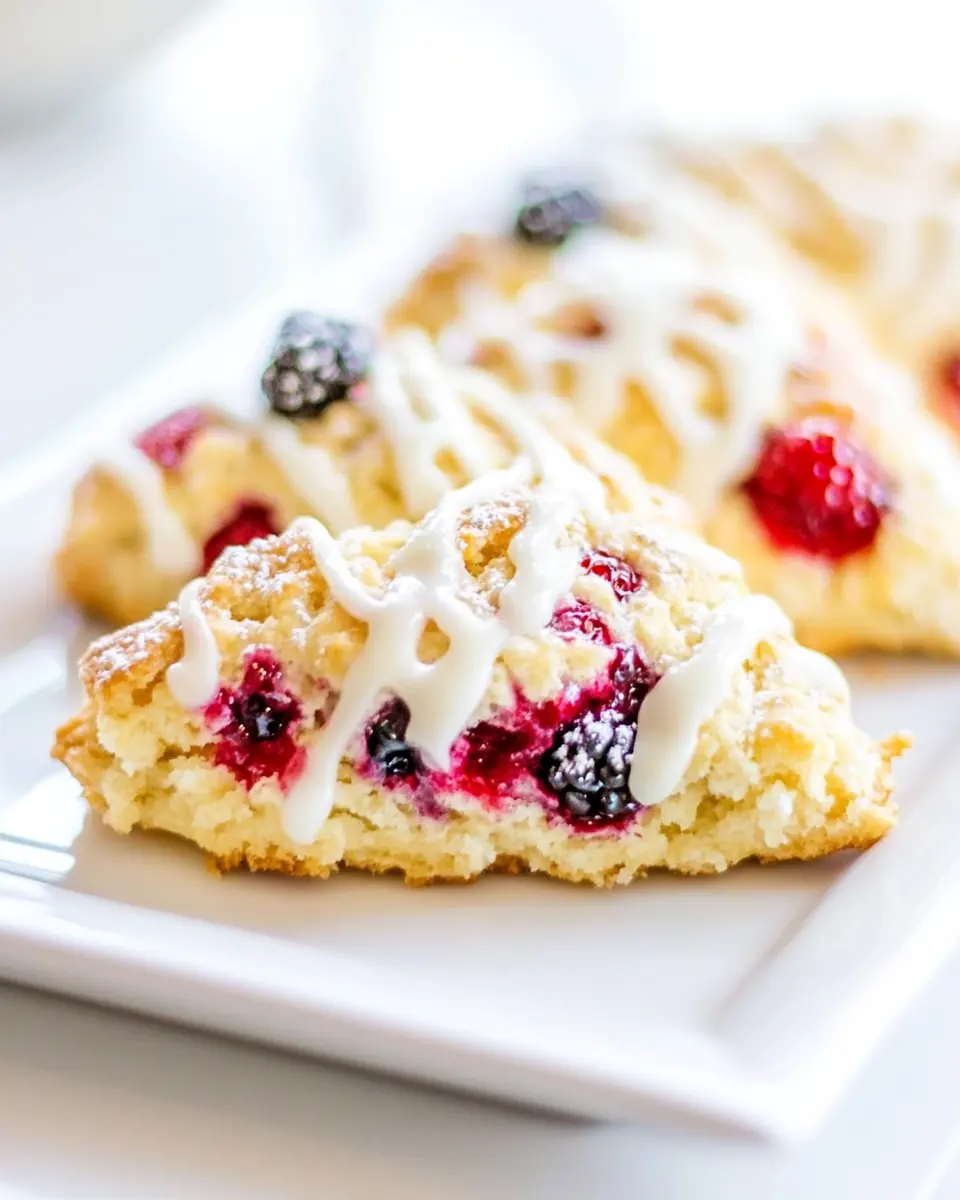
These components work together to create the classic scone texture and bright berry interest. The dry ingredients build structure, the cold butter flakes give lift and tenderness, while the wet elements bind and enrich the dough. The berries add pockets of juicy sweetness, and the glaze finishes with a glossy, sweet note that makes each bite feel special.
- 2 cups all-purpose flour + about 2 to 4 tablespoons for work surface and hands: Provide structure and bulk to the scones while developing gluten for a tender crumb; measure precisely and avoid overworking the dough for flaky results.
- 1/2 cup granulated sugar: Add sweetness and help tenderize the dough; adjust amount slightly to taste and dissolve into dry ingredients for even distribution.
- 1 tablespoon baking powder: Leaven the scones by producing lift and lightness; sift or mix evenly into the flour to ensure consistent rising throughout the dough.
- pinch salt, and to taste (optional): Enhance and balance flavors by rounding out sweetness and brightening other ingredients; add sparingly according to preference for best results.
- 1/2 cup unsalted butter, cold (1 stick): Contribute rich, flaky layers and moistness when kept cold and cut into the flour; grate or cube cold butter and work quickly to maintain small pea-sized bits.
- 1 large egg: Bind the dough together and add richness for a tender interior; beat lightly before incorporating to avoid overmixing the batter.
- 1/2 cups sour cream, lite is okay: Provide moisture and a slight tang that tenderizes the crumb; use lite sour cream to keep calories lower while maintaining creamy texture.
- 1 teaspoon vanilla extract: Impart a warm, aromatic note that complements berries and citrus; stir into wet ingredients to distribute flavor evenly throughout the dough.
- 1 heaping cup mixed berries, I used TJ’s frozen mixed berry blend which includes strawberries, raspberries, blueberries, blackberries; if using frozen, keep frozen so berries bleed/run less: Introduce bursts of fruity flavor and moisture while adding visual appeal; use frozen berries kept frozen if specified to minimize bleeding into the dough.
- 1 tablespoon lemon or orange zest, (I didn’t include any in scones shown) (optional): Brighten flavor with citrus oils and add aromatic lift when included; finely grate zest and fold gently to distribute without overworking the dough.
- turbinado, raw, or coarse sugar, for sprinkling (granulated sugar may be substituted) (optional): Add a crunchy, sparkling topping that enhances presentation and texture; sprinkle before baking to preserve crystals or use granulated sugar as a substitute.
- 1 cup confectioners’ sugar: Create a sweet, smooth glaze that binds and brightens the scone topping; whisk to a lump-free consistency and adjust thickness with liquid as needed.
- about 1 tablespoon cream or milk, or substitute with orange or lemon juice: Thin the glaze to desired consistency and add richness or acidity if using juice; start with about a tablespoon and add more sparingly to reach pourable texture.
How to Assemble Glazed Mixed Berry Scones

Making these scones is a rhythmic and sensory process, and keeping things cold and light is key. I walk you through each stage so you can watch for texture and aroma cues that tell you you are on track. With care, you will come away with bakery worthy scones and a glossy glaze to finish.
- Preheat oven to 400 F. Line a baking sheet with a Silpat or parchment; set aside.: The oven heat gives the scones a rapid lift and a golden exterior, so preheating to 400 F ensures immediate steam formation from the cold butter . You should feel a warm wave in the kitchen when you open the oven door and see the steady glow of the racks, which reassures you the oven is ready. If the oven is cooler than intended, the scones will spread instead of rising, producing a denser interior. A tip is to place the baking sheet inside while preheating so it is hot, but be careful handling it with mitts.
- In a large bowl, add 2 cups flour, granulated sugar, baking powder, optional salt, and whisk to combine.: Lining the sheet prevents sticking and encourages even browning. You will notice a faint oil sheen if using Silpat, and parchment offers a matte surface that helps the bottoms not overbrown. Avoid using an unlined sheet because fruit juices can burn and make cleanup difficult. If you skip this step, expect some sticking and harder cleanup.
- Add the butter, and with a pastry cutter or two forks, cut the butter in. You can use a food processor, but I find not having to wash it is a big time-saver. I smoosh the butter with forks and when it’s the size of large marbles, I use my hands and knead it in. It will feel like semi-wet, cool sand. Some larger pea-sized butter clumps are okay; set bowl aside.: When you whisk the dry ingredients you should see a pale, sandy mixture and a faint, sweet scent from the sugar . Combining them first distributes the baking powder evenly so the scones rise uniformly. Vigorous mixing is not needed, and over-whisking can incorporate too much air and alter texture; light, thorough blending is enough.
- In a small bowl, add the egg, sour cream, vanilla, and whisk to combine until smooth.: As you cut in the cold butter , the mix will take on a crumbly, coarse sand texture with some visible butter bits. The goal is pea to marble sized pieces, which when baked create flakiness and pockets. The mixture should feel cool to the touch. If the butter warms too much and becomes sticky, chill the bowl briefly before continuing. A common mistake is overworking the butter so it melts completely, which removes those flaky layers.
- Pour wet mixture over dry, and fold until just combined with a soft-tipped spatula; don’t overmix or scones will be tough. Dough will be wet and shaggy.: The wet mixture will become glossy and slightly thick, with a pale color and a faint vanilla aroma. Whisking until smooth ensures even distribution, which helps the dough come together reliably. If the wet mix is lumpy, you risk uneven hydration of the dough. Keep the mixture cool and do not add it hot or very warm.
- Fold in the berries and optional zest.: At this point, the batter will look shaggy and moist, with streaks of flour becoming incorporated. Folding gently prevents gluten overdevelopment, which would toughen the scones. You should hear a soft scraping sound and see the dough come away from the bowl sides. A common misstep is vigorous stirring, which yields dense scones rather than tender, flaky ones.
- Sprinkle about 2 tablespoons flour over a Silpat or clean work surface and lightly coat hands.: The sound will be delicate as the berries slip into the dough and the color flecks spread throughout. Using frozen berries straight from the freezer keeps juices contained and reduces bleeding, so you will notice less pink swirl in the batter. If you use fresh berries, fold very gently to avoid crushing. Overmixing here will also break berries and create a soggy dough.
- Turn dough out onto surface and knead it into a 8-inch round, approximately. Dough is very moist, wet, sticky, and tacky, but if it’s being too stubborn or too wet to come together, sprinkle with flour 1 tablespoon at a time until you get it to come together and into a round.: The thin flour dusting gives you a surface to shape without sticking, while keeping the dough from absorbing too much extra flour. You will feel the dough move more freely under your palms. Resist the urge to add large amounts of flour, because that will toughen the scones. If the dough still sticks, add flour a tablespoon at a time rather than a large handful.
- With a large knife, slice round into 8 equal-sized wedges.: The dough will be tacky but should come together into a cohesive round; your hands will feel cool and slightly damp from the fruit and dairy. Knead very gently, pressing and folding no more than necessary, to keep the texture tender. If the dough is too wet to manage, dust with small amounts of flour until cooperative. Over-kneading will produce a tighter crumb and a tougher result.
- Using a flat spatula or pie turner, transfer wedges to prepared baking sheet spaced at least 2 inches apart. Do not crowd because scones puff and spread while baking. Tip – try to make sure there are no exposed berries touching the baking sheet because they’ll be prone to burning.: As you slice, you will see a cross section of berry pockets and little butter flecks. Symmetry helps even baking, so try to make wedges similar in size. Use a sharp knife for clean cuts, rather than sawing motions that can drag the dough. If wedges vary greatly, smaller pieces will bake faster and may dry out while larger ones finish.
- Optionally, sprinkle each wedge with a generous pinch of turbinado sugar, about 1 teaspoon each.: When you set them on the sheet, you will notice puffing room around each wedge, which is important because they will expand. Place them cut side up so any juices are contained. Avoid crowding because touching scones will steam rather than bake, and the sides will be soft instead of golden.
- Bake for about 18 minutes, or until scones are very lightly golden and cooked through. 18 minutes in my oven with frozen fruit is perfect, but if using fresh fruit, baking time will likely be reduced. A toothpick inserted in the center should come out clean or with a few moist crumbs, but no batter. Because they’re baking in quite a hot oven, watch them closely starting after about 15 minutes to ensure the bottoms aren’t getting too browned.: The coarse sugar will glint and add a crunchy bite after baking, and you will see it melt slightly into the crust creating a pretty finish. This is visual and textural flourish, not required for structure. Too much sugar on top can burn in the hot oven, so keep it modest.
- Allow scones to cool on baking tray for about 5 minutes before removing and transferring to a rack to finish cooling. While the scones cool, make the glaze.: During baking you will smell warm butter and sweet fruit, and the edges will take on a light golden hue. A toothpick should come out clean or with a few moist crumbs, but no raw batter. Ovens vary, so start watching at 15 minutes to avoid overbrowning, especially if using fresh berries which may shorten time. If bottoms brown too quickly, lower the rack or tent with foil.
- In a small bowl, combine the confectioners’ sugar and cream (or citrus juice).: The scones will firm up slightly as they rest, making them easier to move without breaking. You will feel warmth radiating from the tray and slight steam from berry pockets. If you try to move them immediately while piping hot they may crumble; patience here improves presentation.
- Whisk together until smooth. Depending on desired consistency, you may need to play with the cream and sugar ratios slightly.: The confectioners’ sugar will look like soft snow before liquid is added. Whisking will turn it into a glossy, opaque glaze that smells sweet or citrusy if using juice. Start with a small amount of liquid and add more until the glaze achieves a pourable thickness. Adding too much liquid will make the glaze runny and may soak into the scone tops.
- Evenly drizzle the glaze over the scones before serving.: A smooth glaze will drip slowly off a spoon in a thick ribbon, and it should coat the back of the spoon evenly. Adjust consistency by adding tiny amounts of sugar or liquid. If there are lumps, press the glaze through a fine mesh or whisk vigorously to avoid grainy texture on the finished scones.
- Evenly drizzle the glaze over the scones before serving: The glaze will create a shiny, sweet layer that catches light and enhances each bite. Use a spoon or piping motion to decorate, and allow it to set for a minute before stacking. If you glaze too early while the scones are very hot, the glaze may become thin and run off, so let them cool slightly for the best cling.
Helpful Hints
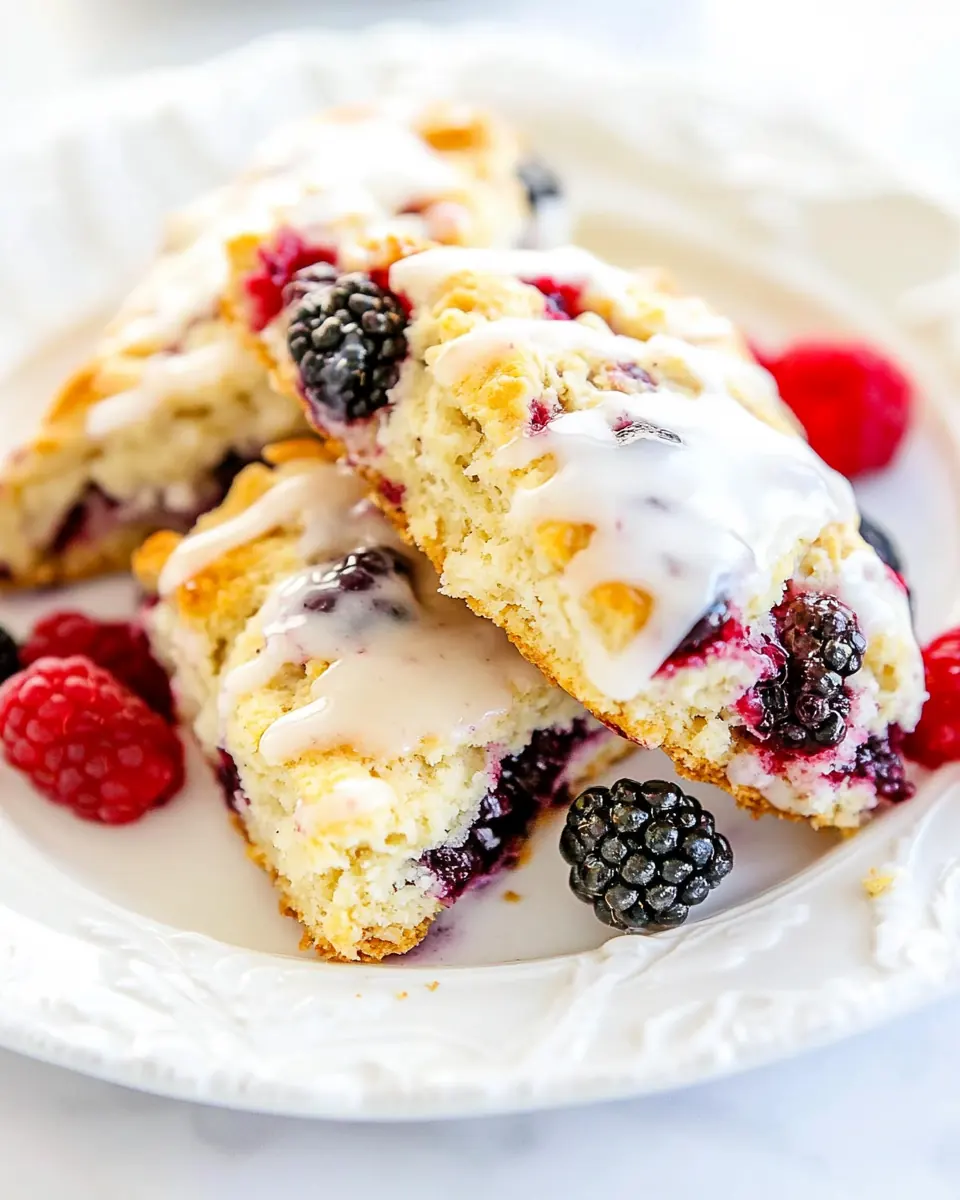
These hints expand on the recipe wisdom I rely on each time I make Glazed Mixed Berry Scones. They cover technique, timing, and small adjustments that lead to consistently pleasing results. Read them and keep this list handy when you bake.
- Chill the butter: Cut the butter into cold cubes and keep it in the fridge until the moment you cut it into the flour, because the small cold pieces create steam pockets while baking, which gives the scones lift and flaky texture.
- Handle the dough minimally: Touch the dough as little as possible after adding the wet ingredients, folding gently with a spatula and shaping with light presses to avoid developing too much gluten that will make the scones tough.
- Use a sharp tool to cut wedges: A very sharp knife yields clean wedges with minimal drag, preserving the crumb structure and keeping the fruit pockets intact for prettier, evenly baked scones.
- Freeze berries briefly if they are very soft: If you only have soft or overly ripe berries, a short flash freeze for fifteen to twenty minutes firms them up and reduces juice leakage during mixing and baking.
- Sift confectioners’ sugar for the glaze: Sifting removes lumps so your glaze is silky and smooth without grainy pockets, which is especially helpful if you are using juice rather than cream for thinner, brighter glaze.
- Test oven hot spots: Rotate the baking sheet halfway through if your oven has uneven heating, ensuring even browning of scones and preventing one side from overbrowning.
Pairing Suggestions for Glazed Mixed Berry Scones
These scones pair wonderfully with simple beverages and light sides, and you can adapt them to many occasions from weekday brunch to spring gatherings. I list serving ideas and storage tips so you know how to present them best.
- Morning coffee or tea: Serve warm with a mug of strong coffee or an aromatic tea, which complements the fruity sweetness and balances the buttery crumb.
- Brunch spread: Add a bowl of fresh fruit and a simple cheese plate to turn the scones into a celebratory brunch that feels casual but complete.
- Picnic friendly: Pack scones in a shallow container lined with parchment for a picnic; they travel well and stay tender at room temperature for a day.
- Special occasion platter: Arrange on a tiered stand for a baby shower or spring gathering, garnish with a few fresh berries and a light dusting of confectioners’ sugar for visual appeal.
- Storage at room temperature: Keep in an airtight container for up to four days; if glazed, consume sooner for best texture, or glaze only what you will eat immediately.
- Reheating: Warm gently in a low oven for a few minutes to refresh the crust and soften the interior before serving.
- Seasonal pairings: These scones are ideal for spring and summer when berries are at their peak, but they also brighten fall tables when paired with warm spiced drinks.
FAQ
Conclusion
Glazed Mixed Berry Scones combine flaky, buttery texture with bright jewel like berries and a shiny, sweet glaze, making them a standout treat for mornings and gatherings. Give this recipe a try because it balances simplicity with bakery style results that impress without fuss. I hope you enjoy the small rituals of mixing, shaping, and glazing as much as I do, and that these scones become a comforting favorite in your rotation.
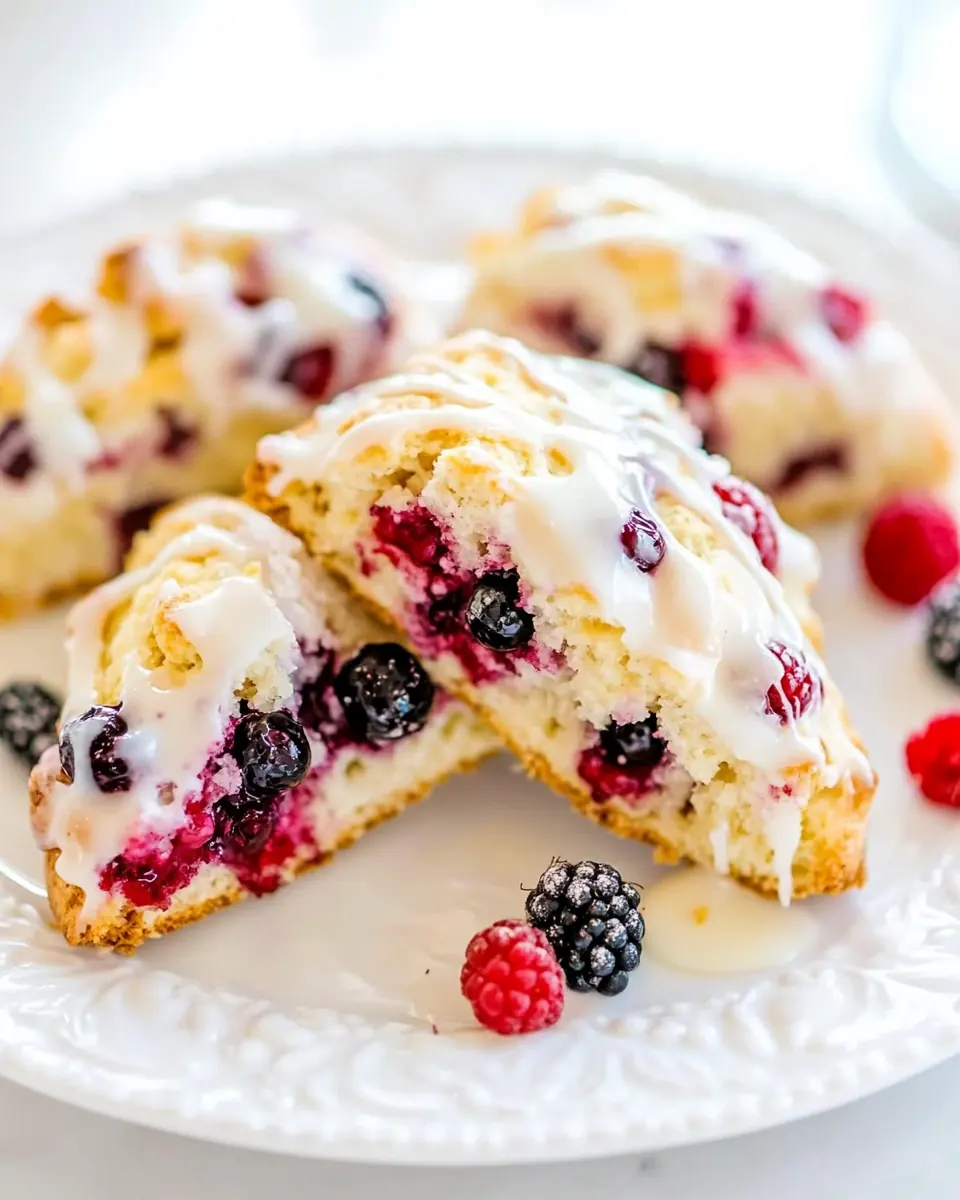
Glazed Mixed Berry Scones
Ingredients
Equipment
Method
- Preheat oven to 400 F. Line a baking sheet with a Silpat or parchment; set aside.: The oven heat gives the scones a rapid lift and a golden exterior, so preheating to 400 F ensures immediate steam formation from the cold butter . You should feel a warm wave in the kitchen when you open the oven door and see the steady glow of the racks, which reassures you the oven is ready. If the oven is cooler than intended, the scones will spread instead of rising, producing a denser interior. A tip is to place the baking sheet inside while preheating so it is hot, but be careful handling it with mitts.
- In a large bowl, add 2 cups flour, granulated sugar, baking powder, optional salt, and whisk to combine.: Lining the sheet prevents sticking and encourages even browning. You will notice a faint oil sheen if using Silpat, and parchment offers a matte surface that helps the bottoms not overbrown. Avoid using an unlined sheet because fruit juices can burn and make cleanup difficult. If you skip this step, expect some sticking and harder cleanup.
- Add the butter, and with a pastry cutter or two forks, cut the butter in. You can use a food processor, but I find not having to wash it is a big time-saver. I smoosh the butter with forks and when it’s the size of large marbles, I use my hands and knead it in. It will feel like semi-wet, cool sand. Some larger pea-sized butter clumps are okay; set bowl aside.: When you whisk the dry ingredients you should see a pale, sandy mixture and a faint, sweet scent from the sugar . Combining them first distributes the baking powder evenly so the scones rise uniformly. Vigorous mixing is not needed, and over-whisking can incorporate too much air and alter texture; light, thorough blending is enough.
- In a small bowl, add the egg, sour cream, vanilla, and whisk to combine until smooth.: As you cut in the cold butter , the mix will take on a crumbly, coarse sand texture with some visible butter bits. The goal is pea to marble sized pieces, which when baked create flakiness and pockets. The mixture should feel cool to the touch. If the butter warms too much and becomes sticky, chill the bowl briefly before continuing. A common mistake is overworking the butter so it melts completely, which removes those flaky layers.
- Pour wet mixture over dry, and fold until just combined with a soft-tipped spatula; don’t overmix or scones will be tough. Dough will be wet and shaggy.: The wet mixture will become glossy and slightly thick, with a pale color and a faint vanilla aroma. Whisking until smooth ensures even distribution, which helps the dough come together reliably. If the wet mix is lumpy, you risk uneven hydration of the dough. Keep the mixture cool and do not add it hot or very warm.
- Fold in the berries and optional zest.: At this point, the batter will look shaggy and moist, with streaks of flour becoming incorporated. Folding gently prevents gluten overdevelopment, which would toughen the scones. You should hear a soft scraping sound and see the dough come away from the bowl sides. A common misstep is vigorous stirring, which yields dense scones rather than tender, flaky ones.
- Sprinkle about 2 tablespoons flour over a Silpat or clean work surface and lightly coat hands.: The sound will be delicate as the berries slip into the dough and the color flecks spread throughout. Using frozen berries straight from the freezer keeps juices contained and reduces bleeding, so you will notice less pink swirl in the batter. If you use fresh berries, fold very gently to avoid crushing. Overmixing here will also break berries and create a soggy dough.
- Turn dough out onto surface and knead it into a 8-inch round, approximately. Dough is very moist, wet, sticky, and tacky, but if it’s being too stubborn or too wet to come together, sprinkle with flour 1 tablespoon at a time until you get it to come together and into a round.: The thin flour dusting gives you a surface to shape without sticking, while keeping the dough from absorbing too much extra flour. You will feel the dough move more freely under your palms. Resist the urge to add large amounts of flour, because that will toughen the scones. If the dough still sticks, add flour a tablespoon at a time rather than a large handful.
- With a large knife, slice round into 8 equal-sized wedges.: The dough will be tacky but should come together into a cohesive round; your hands will feel cool and slightly damp from the fruit and dairy. Knead very gently, pressing and folding no more than necessary, to keep the texture tender. If the dough is too wet to manage, dust with small amounts of flour until cooperative. Over-kneading will produce a tighter crumb and a tougher result.
- Using a flat spatula or pie turner, transfer wedges to prepared baking sheet spaced at least 2 inches apart. Do not crowd because scones puff and spread while baking. Tip – try to make sure there are no exposed berries touching the baking sheet because they’ll be prone to burning.: As you slice, you will see a cross section of berry pockets and little butter flecks. Symmetry helps even baking, so try to make wedges similar in size. Use a sharp knife for clean cuts, rather than sawing motions that can drag the dough. If wedges vary greatly, smaller pieces will bake faster and may dry out while larger ones finish.
- Optionally, sprinkle each wedge with a generous pinch of turbinado sugar, about 1 teaspoon each.: When you set them on the sheet, you will notice puffing room around each wedge, which is important because they will expand. Place them cut side up so any juices are contained. Avoid crowding because touching scones will steam rather than bake, and the sides will be soft instead of golden.
- Bake for about 18 minutes, or until scones are very lightly golden and cooked through. 18 minutes in my oven with frozen fruit is perfect, but if using fresh fruit, baking time will likely be reduced. A toothpick inserted in the center should come out clean or with a few moist crumbs, but no batter. Because they’re baking in quite a hot oven, watch them closely starting after about 15 minutes to ensure the bottoms aren’t getting too browned.: The coarse sugar will glint and add a crunchy bite after baking, and you will see it melt slightly into the crust creating a pretty finish. This is visual and textural flourish, not required for structure. Too much sugar on top can burn in the hot oven, so keep it modest.
- Allow scones to cool on baking tray for about 5 minutes before removing and transferring to a rack to finish cooling. While the scones cool, make the glaze.: During baking you will smell warm butter and sweet fruit, and the edges will take on a light golden hue. A toothpick should come out clean or with a few moist crumbs, but no raw batter. Ovens vary, so start watching at 15 minutes to avoid overbrowning, especially if using fresh berries which may shorten time. If bottoms brown too quickly, lower the rack or tent with foil.
- In a small bowl, combine the confectioners’ sugar and cream (or citrus juice).: The scones will firm up slightly as they rest, making them easier to move without breaking. You will feel warmth radiating from the tray and slight steam from berry pockets. If you try to move them immediately while piping hot they may crumble; patience here improves presentation.
- Whisk together until smooth. Depending on desired consistency, you may need to play with the cream and sugar ratios slightly.: The confectioners’ sugar will look like soft snow before liquid is added. Whisking will turn it into a glossy, opaque glaze that smells sweet or citrusy if using juice. Start with a small amount of liquid and add more until the glaze achieves a pourable thickness. Adding too much liquid will make the glaze runny and may soak into the scone tops.
- Evenly drizzle the glaze over the scones before serving.: A smooth glaze will drip slowly off a spoon in a thick ribbon, and it should coat the back of the spoon evenly. Adjust consistency by adding tiny amounts of sugar or liquid. If there are lumps, press the glaze through a fine mesh or whisk vigorously to avoid grainy texture on the finished scones.
- Evenly drizzle the glaze over the scones before serving: The glaze will create a shiny, sweet layer that catches light and enhances each bite. Use a spoon or piping motion to decorate, and allow it to set for a minute before stacking. If you glaze too early while the scones are very hot, the glaze may become thin and run off, so let them cool slightly for the best cling.
Notes
- Chill the butter: Cut the butter into cold cubes and keep it in the fridge until the moment you cut it into the flour, because the small cold pieces create steam pockets while baking, which gives the scones lift and flaky texture.
- Handle the dough minimally: Touch the dough as little as possible after adding the wet ingredients, folding gently with a spatula and shaping with light presses to avoid developing too much gluten that will make the scones tough.
- Use a sharp tool to cut wedges: A very sharp knife yields clean wedges with minimal drag, preserving the crumb structure and keeping the fruit pockets intact for prettier, evenly baked scones.
- Freeze berries briefly if they are very soft: If you only have soft or overly ripe berries, a short flash freeze for fifteen to twenty minutes firms them up and reduces juice leakage during mixing and baking.
- Sift confectioners’ sugar for the glaze: Sifting removes lumps so your glaze is silky and smooth without grainy pockets, which is especially helpful if you are using juice rather than cream for thinner, brighter glaze.
- Test oven hot spots: Rotate the baking sheet halfway through if your oven has uneven heating, ensuring even browning of scones and preventing one side from overbrowning.