Rhubarb Slab Pie
Rhubarb Slab Pie has been one of those recipes that shows up in my kitchen when the first tart stalks of spring arrive at the farmer s market, and I always feel a little giddy hauling home a crate of pink and green rhubarb. I remember the first time I made this slab version for a neighborhood potluck, arriving with a pan so large people asked if I had baked two pies, and then watching it disappear in minutes. It taught me that rustic, sliceable dessert comfort is a guaranteed crowd pleaser, and that a big, generous slab pie has a way of making any casual gathering feel special.
Over the years I ve played with the assembly and fillings, and pairing the sharpness of rhubarb with sweet, mellow pear became my favorite compromise. The balance of flavors, plus the satisfying task of rolling out a generous sheet of flaky all-purpose flour crust, makes the process both meditative and rewarding. There s also something about serving a pie that is portioned by the pan rather than individual pies that invites everyone to linger, share stories, and go back for seconds.
When I make Rhubarb Slab Pie now I plan ahead so the crust has time to chill, and I lean into textures by sprinkling turbinado sugar on top for a sparkly, crunchy finish. I ve learned little habits that help, like freezing the pie briefly if my hands get warm while weaving the top crust, and always waiting until the filling cools before slicing so each square keeps its shape. These small moves turn a weekend baking session into something I actually look forward to.
Recipe Snapshot
1 hr 35 mins
65 mins
30 mins
Medium
350 kcal
American
Gluten-Free, Low FODMAP
Desserts
Box grater, Large mixing bowl, Medium mixing bowl, Rolling pin, 9×13 inch quarter baking sheet
The Best Thing About This Rhubarb Slab Pie
Large format comfort
I love how Rhubarb Slab Pie feeds a crowd without fuss. One 9 by 13 inch pan yields generous slices, so it s perfect for family dinners, potlucks, and spring gatherings. Serving from a slab means less fiddly trimming and more time for conversation, and I always appreciate pastries that scale up without scaling my stress level.
Bright, complementary flavors
The tart bite of rhubarb paired with tender pear creates a lively contrast. The fruit combination sings with a touch of brown sugar and a hit of lemon zest, so the filling tastes lively without being cloying. I find that the interplay of citrusy brightness and caramel notes is what keeps people coming back for another forkful.
Buttery, flaky crust
The crust is the backbone of this pie, made with generous amounts of cold unsalted butter grated into the flour so you get pockets of flake. I often grate the butter with a box grater for quick, consistent pieces, and chilling the dough discs overnight helps relax the gluten so the crust bakes up tender and not tough. I ve seen plenty of soggy bottoms in my time, and this method reliably avoids that pitfall.
Versatile presentation
You can keep the top simple with wide strips or go elaborate with braids and lattices, which makes this recipe fun to personalize. I enjoy weaving thin braids across thicker strips, it s a fiddly but satisfying ritual that yields a bakery worthy look. For busy days I still get great results with a straightforward strip lattice, so the recipe flexes to your time and temperament.
Make ahead friendly
This pie rewards planning. I often make the dough a day ahead, which improves texture and saves time on the baking day. The whole pie can also be chilled before baking, and leftovers keep well when wrapped tightly, meaning you can bake now and enjoy later without losing any of the flaky charm.
Shopping List for Rhubarb Slab Pie
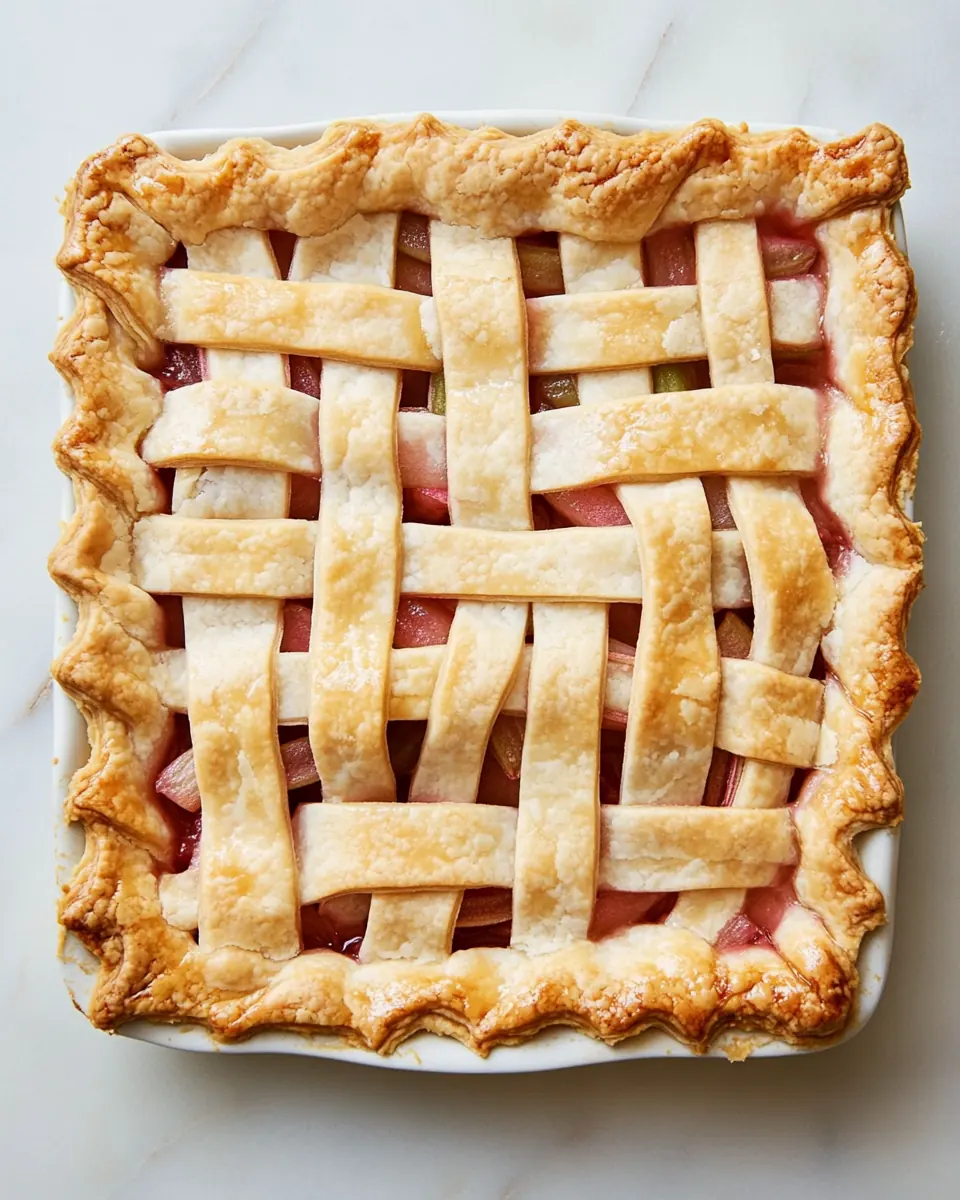
These ingredients form a simple, classic lineup built for texture and balance. The star is rhubarb, whose tartness needs the sweetness of light brown sugar and the tender juiciness of pear to feel harmonious. The crust relies on cold unsalted butter and a sturdy measure of all-purpose flour to create flaky layers, while a touch of corn starch helps thicken the filling so it sets neatly when cooled. Together, these parts produce a slab pie that slices cleanly and delivers a pleasing mix of crisp crust and jammy filling.
- 4 cup s 500 g all-purpose flour: Provide structure and bulk to the dough, creating a tender crumb when combined with cold fat and minimal handling; measure by weight for consistent results and sift or whisk briefly to ensure even distribution before mixing.
- 2 tablespoons 30 g white granulated sugar: Add subtle sweetness to the crust, balancing savory notes and enhancing browning; dissolve into cold water or sprinkle over flour when cutting in butter for even incorporation.
- 2 teaspoons fine-grain sea salt: Season the crust and filling to amplify flavors and balance sweetness; use fine–grain sea salt so it integrates smoothly into the dough and fruit mixture without grainy texture.
- 1 1/2 cup 339 g unsalted butter: Create flaky layers and rich flavor in the pastry when kept cold and cut into small pieces; work quickly to maintain coldness so butter steams during baking and produces lift.
- 1 cup very cold water, divided: Provide hydration to form the dough and help bind ingredients together; keep water very cold and add gradually to achieve a cohesive but not sticky texture.
- 1 pound rhubarb, cut into 1/4-inch pieces: Contribute bright tartness and juicy texture to the filling when cut into uniform pieces; toss with sugar and starch to draw out juices while preserving some shape during baking.
- 2 pears, cored and cut into 1/4-inch slices: Offer sweetness, floral notes, and tender texture to the filling; slice evenly to match rhubarb pieces so fruit cooks uniformly and balances tartness.
- 2/3 cup light brown sugar: Sweeten and caramelize with the fruit, providing depth and a molasses-like note; mix thoroughly with the fruit to ensure even sweetness throughout the slab pie.
- 2 tablespoons corn starch: Thicken the fruit juices released during baking to prevent a runny filling; dissolve into the sugar first to avoid clumping and distribute evenly among the fruit.
- Zest from 1 lemon or Meyer lemon: Brighten the filling with citrus oils and fragrance, cutting through sweetness; zest finely to release essential oils without adding pith bitterness.
- 2 teaspoons vanilla extract: Impart warm, rounded flavor to the filling and complement the fruit; add at the end of mixing to preserve aromatic intensity.
- Pinch of salt: Enhance overall seasoning and balance the filling's sweetness; include a small pinch to bring out fruit flavors without making the mixture salty.
- 1 large egg + 2 tablespoons milk, whisked together in a small bowl for egg wash: Create a glossy, golden finish on the baked crust and help turbinado sugar adhere; whisk egg with milk until homogeneous and brush evenly before sprinkling sugar.
- 1 tablespoon turbinado sugar or demarrara: Add a crunchy, sparkly topping that contrasts with the tender crust; sprinkle over the egg wash to achieve caramelized bits and visual appeal.
- Ice cream or whipped cream, for serving: Serve as a classic accompaniment that adds creaminess and temperature contrast; spoon alongside warm slices to complement the tart-sweet fruit filling.
Making Rhubarb Slab Pie
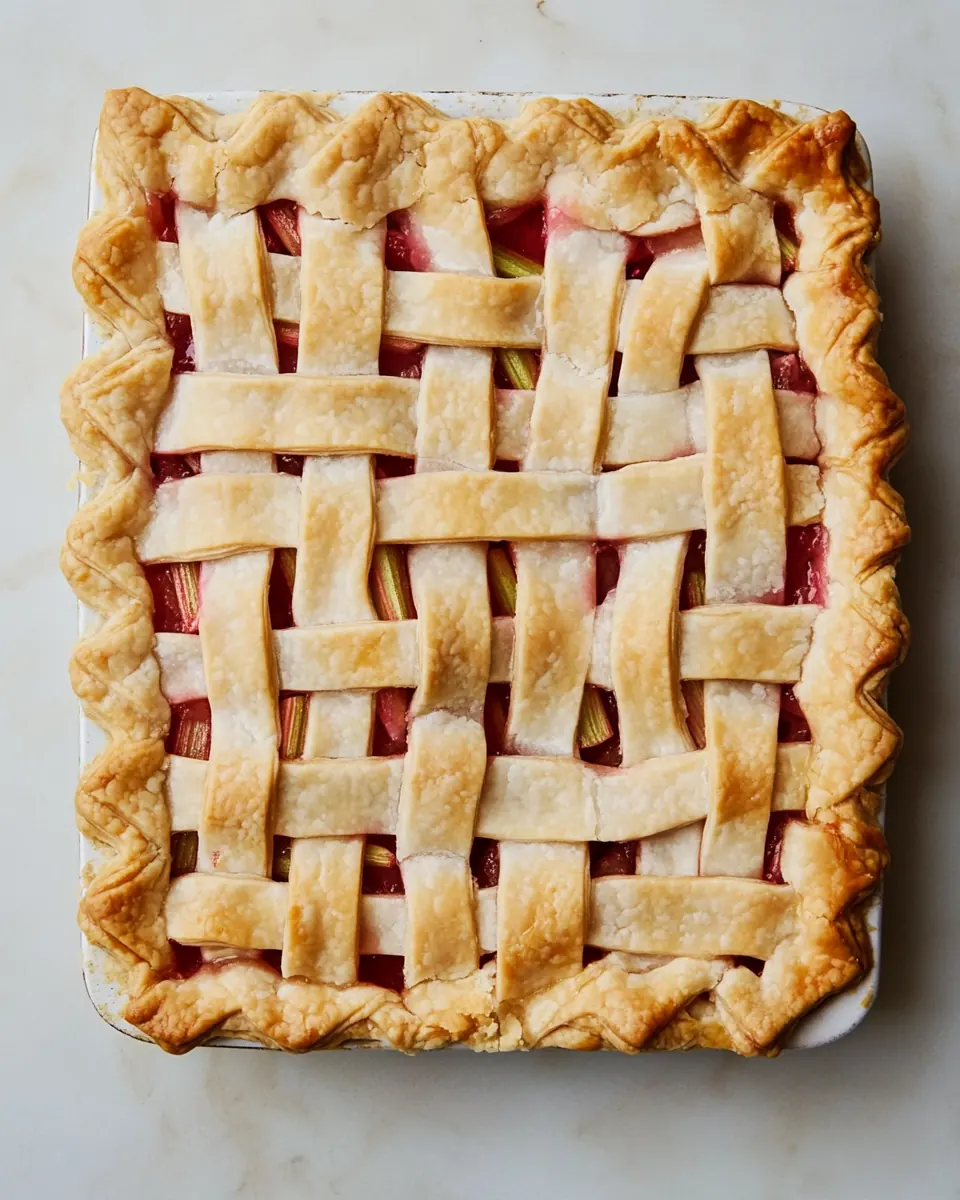
Rolling, assembling, and baking a slab pie feels like choreography, and I find a calm rhythm when I prepare the crust and filling in stages. Keep your workspace floured and your butter cold, and remember that chilling at key moments makes everything easier. Below are the steps from the original directions, expanded with sensory cues, reasoning, and common fixes so you know exactly how to get the best result.
- In a large bowl, mix together the flour, sugar and salt. Using a box grater, grate the cold butter atop the flour mixture. Working quickly, and using your hands, break the butter bits into the flour until they’re evenly distributed and resemble the size of small peas.: The first sensations here are tactile, flour dust puffing slightly as you grate the cold unsalted butter , and a faint coolness on your fingers. You want small pea sized butter bits because they create distinct layers as they melt in the oven, producing flakiness. The why is straightforward, those butter pockets steam during baking and separate the dough into tender layers. A common mistake is letting the butter soften too much, which yields a greasy, dense crust; keep the butter chilled and work quickly, returning the bowl to the fridge if your hands get warm.
- Add 3/4 cup of water and mix. The mixture will be shaggy at this point. From here, add 1 tablespoon of water at a time until the dough comes together (I usually need to add 3 to 4 tablespoons). Flour your counter and dump the dough onto it. Knead a few times more until it comes together. Divide the dough by setting aside 1/3 of the dough (eye ball this measurement; this will act as the bottom of the pie, you want more for the top). Forming two discs, one smaller than the other. Wrap the discs in plastic wrap and transfer to the refrigerator to chill for at least 1 hour, ideally overnight.: You ll notice the dough transition from dry crumbs to a shaggy mass as the very cold water is incorporated. The trick is to stop adding liquid once the dough holds, because overworking or overhydrating creates gluten, making the crust tough. Kneading is minimal, just enough to bring it together, then divide into one larger and one smaller disc for bottom and top. Chilling firms the butter and relaxes gluten, which is why overnight is ideal. A frequent error is skipping the chill step, which can lead to shrinkage and a tougher crust; plan ahead and rest the dough in the fridge.
- Remove the first disc of dough from the refrigerator and allow to come to room temperature for 10 minutes. Liberally flour your work surface and rolling pin. Begin to roll the dough, being sure to rotate it every so often to avoid sticking, to a 13 x 10 inch rectangle. Use your quarter baking sheet as a guide. Wrap the dough around the rolling pin and unroll it over the baking sheet. Gently fit the dough into the bottom and up the sides. Trim the dough around the pie tin, leaving a 1-inch overhang. Add your filling and transfer the pie to freezer while you roll out the second disc of dough.: As you roll, you ll feel the dough relax and the surface smooth. The flour prevents sticking but use it sparingly to avoid drying the dough out. The rectangle shape should match your 9 by 13 inch quarter baking sheet, and wrapping the dough around the rolling pin makes transferring far easier than trying to lift it. When fitting it into the pan, press gently so the crust adheres to the corners without tearing. Leaving a 1 inch overhang creates enough pastry for crimping later. Pop the assembled bottom into the freezer briefly to firm up before adding the top, which reduces distortion when you handle the pie. One common pitfall is overstretching the dough into the pan which causes shrinkage during baking; if it resists, let it rest a few minutes to relax.
- Remove the second disc of dough from the refrigerator and repeat the rolling process as you did with the first disc. You have a couple of options, I chose to do an intricate thick lattice meets braided situation. For this, I rolled about a quarter of the dough into 7 x 9 inch rectangle. I sliced that into thick strips and placed them atop the pie. I transferred it to the fridge while I worked on the braids.: Working with the second disc is where creativity or simplicity comes into play. Rolling it to a similar thickness keeps baking times even, and experimenting with strip widths changes the look and crispness. Cooling strips on a sheet in the fridge prevents them from sagging when you lay them over the filling. The why is mostly aesthetic, but a chilled top also helps the crust bake evenly. A common misstep is handling warm dough which becomes sticky and loses shape, so chill strips if your kitchen is warm.
- I rolled the dough into a big rectangle and sliced thin strips with a sharp knife. I took three of the strips and braided away. I continued this process until I was stressed and got through the dough. I then latticed the big strips with the thin braids. My biggest advice is that the freezer is your friend. If the dough ever gets too soft, transfer it to the fridge on a cutting board. Tuck the edges under or over and then crimp the edge all the way around the slab pie. Put it in the freezer to chill for 30 minutes. Preheat the oven (see below for more instructions) and brush the entire thing with egg wash and sprinkle with turbinado sugar.: The sensation of braiding gives a satisfying tactile rhythm, and the contrast between thick wide strips and delicate braids creates a bakery style finish. Tucking the edges under strengthens the rim and makes a neat crimp possible. Chilling the fully assembled pie for 30 minutes firms everything so it holds its shape in the oven, and brushing with the egg wash produces a glossy, golden crust while the coarse turbinado sugar adds crunch. Avoid skipping the chill, which can cause the top to slump or separate during baking.
- In a medium bowl, mix together the rhubarb, pear, brown sugar, corn starch, lemon zest, vanilla extract and salt. Allow to stand, about 10 to 15 minutes, while you assemble the pie crust.: As the fruit and light brown sugar mingle, juices begin to draw out and the corn starch starts to swell slightly. This resting time lets flavors meld and the starch start to absorb liquid, creating a thickened slurry that will become the filling. You ll see glossy fruit coated in sugar, with the lemon zest releasing fragrant oils. A common mistake is adding too much starch which can make the filling pasty, so stick to the recipe s measure and allow the natural juices to do the work.
- Pour the filling into the slab pie crust (see above for assembling instructions). Roll the second half of dough and make any sort of design that you like. I chose a few wide strips of pie dough, weaved with a few strands of braided pie dough. Get as fancy as simple as you like. Tuck the edges under and crimp around the entire slab pie. Transfer to the freezer to chill for 30 minutes. Meanwhile, preheat the oven to 400 degrees F. Brush the top of the pie with a generous amount of egg wash and sprinkle with about a teaspoon of turbinado sugar.: Pouring the filling should feel slightly heavy as the fruit settles. As you arrange the top, notice how chilled dough lays neatly over the filling and how the egg wash gives the surface a wet sheen before baking. The 30 minute freeze firms the structure and prevents shrinkage, while the oven preheat to 400 degrees F sets the crust quickly. If you skip chilling, the top can slump and leak juice; patience at this stage pays off.
- Place the slab pie on a half baking sheet and transfer to the oven to bake for about 20 minutes, until the crust is lightly golden brown. Turn the oven’s heat down to 350 degrees F and bake for an additional 20 to 30 minutes, until the crust is golden brown and the filling is bubbling. Transfer to a cooling rack and allow to cool to room temperature, about 3 hours. If you cut into it before cooling it down, the filling will spill out, but is that the worst thing in the world? Nah. Serve with ice cream or whipped cream.: The initial blast at 400 degrees F helps set the crust and starts browning, which you can see as edges go from pale to a warm honey color. Reducing the oven to 350 degrees F lets the filling cook through without burning the top. Look for bubbling in the center and a rich golden tone on the pastry. Transferring to a cooling rack lets air circulate so the filling firms; waiting about 3 hours gives neat slices, though warm spoonfuls with ice cream are irresistible. A common blunder is slicing too soon and ending up with a runny, under set pie; patience prevents puddles.
Tips for Success
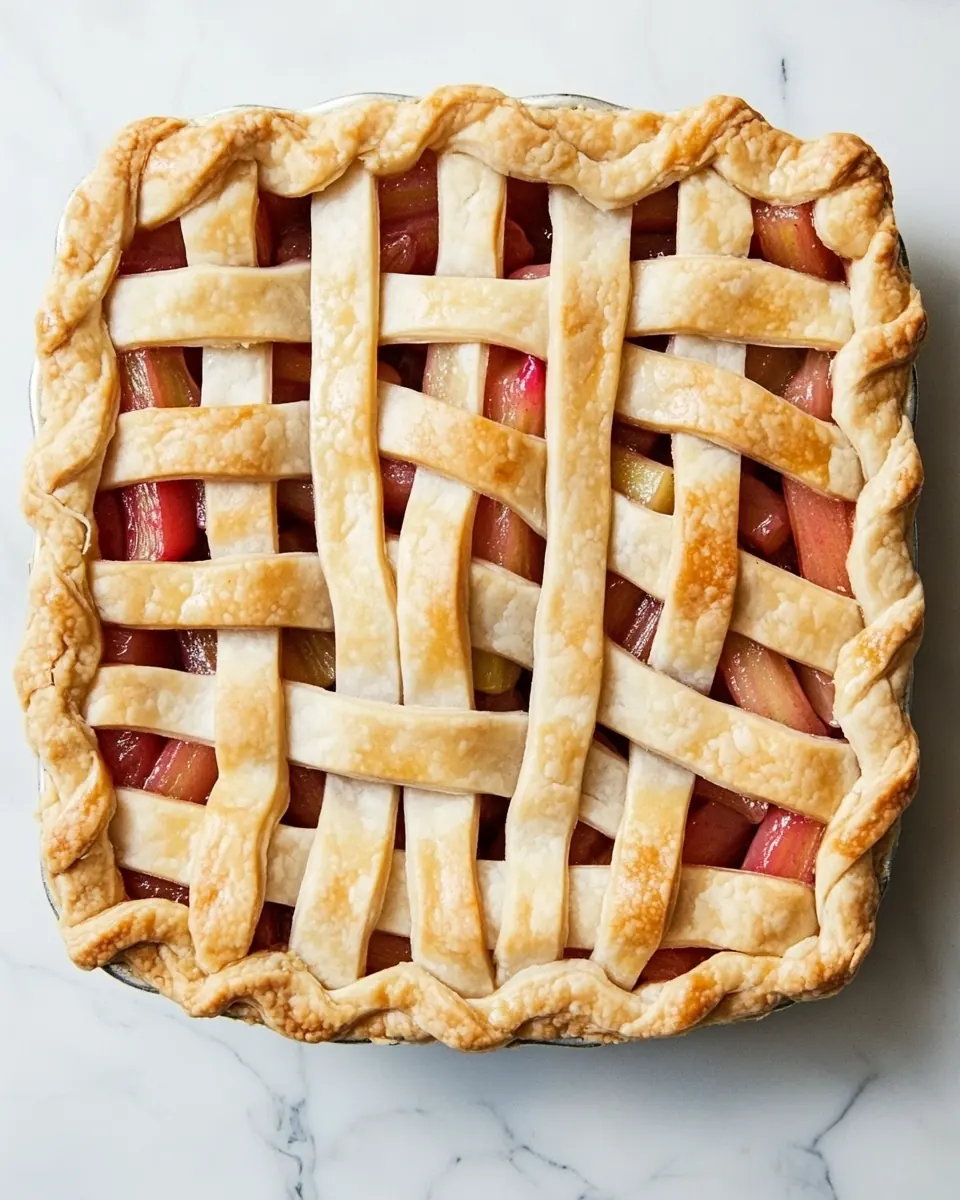
These tips reflect lessons I ve learned from many slab pies. A few deliberate small moves make a big difference to texture, assembly, and final presentation. Read through them before you begin so you can plan chilling and staging effectively.
- Chill aggressively: If the dough or assembled pie warms while you work, pop it into the freezer for 20 to 30 minutes to firm up before continuing.
- Measure flour by weight: Using the 500 gram measure for all-purpose flour gives more consistent pastry texture than scooping by volume.
- Grate the butter: Grating very cold unsalted butter into the flour is a fast way to get even pea sized pieces for flakiness.
- Use a half sheet pan: Baking the slab on a half baking sheet catches any spills, making cleanup easier and preventing oven messes.
- Let it cool: Allowing the pie to rest at room temperature for about three hours helps the filling thicken, so you ll get clean slices.
- Freeze for stability: A 30 minute chill of the fully assembled pie before baking reduces shrinkage and helps the top hold its design.
What to Serve Alongside Rhubarb Slab Pie
This pie is flexible across occasions from casual brunches to celebratory family dinners. Serve it slightly warm with cold, creamy accompaniments for contrast, and choose gentle sides that won t compete with the pie s bright fruit flavors. Below are ideas for plating, seasonal pairings, and storage so you can get the most from each pan.
- Classic scoop: Serve a warm slice with a scoop of vanilla ice cream for a silky, cooling contrast that complements the tart filling.
- Light topping: Offer softly whipped cream on the side for guests who prefer a lighter topping than ice cream.
- Casual brunch: Pair squares with strong coffee or tea and a simple fruit salad for an easy spring brunch spread.
- Potluck friendly: Transport the slab on the baking sheet it was baked on, and provide a pie server for easy slicing at gatherings.
- Seasonal pairing: This recipe shines in spring when rhubarb is at its best, and it also works well for late spring celebrations and casual holiday menus.
- Storage tip: Wrap leftovers tightly and refrigerate; most slabs keep well for three to four days, and you can rewarm slices briefly in a low oven for freshness.
- Make ahead: Prepare the dough or fully assemble the pie a day ahead, keeping it chilled until you re ready to bake to save time on serving day.
FAQ
Conclusion
This Rhubarb Slab Pie stands out for its vibrant fruit balance and reliably flaky crust, making it an ideal dessert for spring gatherings and casual celebrations. I encourage you to give it a try because the process is as rewarding as the result, and a single 9 by 13 inch pan serves a crowd with minimal fuss. Take the time to chill the dough, be patient as it cools after baking, and enjoy the joyful contrast of tart rhubarb with buttery pastry and a scoop of cold accompaniment.
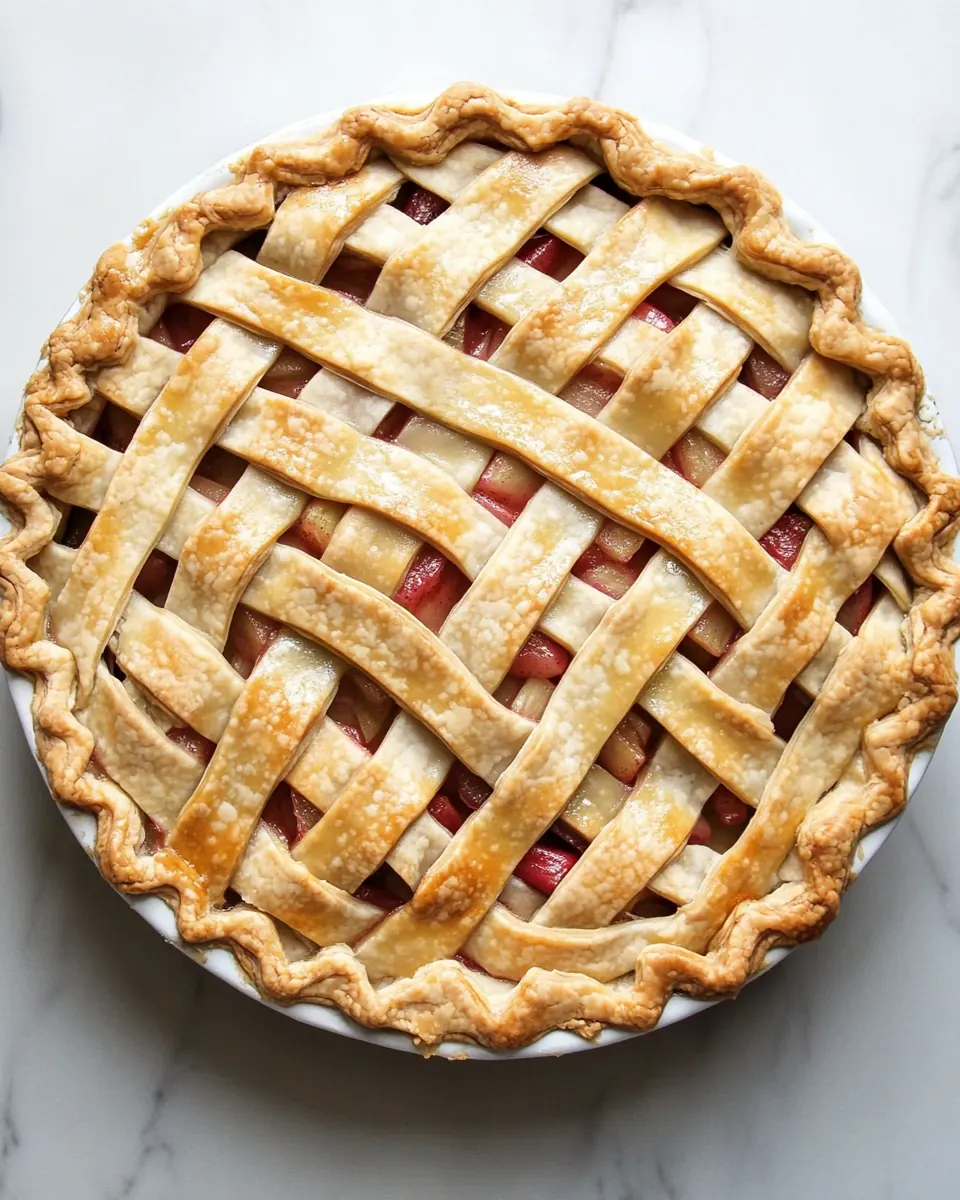
Rhubarb Slab Pie
Ingredients
Equipment
Method
- In a large bowl, mix together the flour, sugar and salt. Using a box grater, grate the cold butter atop the flour mixture. Working quickly, and using your hands, break the butter bits into the flour until they’re evenly distributed and resemble the size of small peas.: The first sensations here are tactile, flour dust puffing slightly as you grate the cold unsalted butter , and a faint coolness on your fingers. You want small pea sized butter bits because they create distinct layers as they melt in the oven, producing flakiness. The why is straightforward, those butter pockets steam during baking and separate the dough into tender layers. A common mistake is letting the butter soften too much, which yields a greasy, dense crust; keep the butter chilled and work quickly, returning the bowl to the fridge if your hands get warm.
- Add 3/4 cup of water and mix. The mixture will be shaggy at this point. From here, add 1 tablespoon of water at a time until the dough comes together (I usually need to add 3 to 4 tablespoons). Flour your counter and dump the dough onto it. Knead a few times more until it comes together. Divide the dough by setting aside 1/3 of the dough (eye ball this measurement; this will act as the bottom of the pie, you want more for the top). Forming two discs, one smaller than the other. Wrap the discs in plastic wrap and transfer to the refrigerator to chill for at least 1 hour, ideally overnight.: You ll notice the dough transition from dry crumbs to a shaggy mass as the very cold water is incorporated. The trick is to stop adding liquid once the dough holds, because overworking or overhydrating creates gluten, making the crust tough. Kneading is minimal, just enough to bring it together, then divide into one larger and one smaller disc for bottom and top. Chilling firms the butter and relaxes gluten, which is why overnight is ideal. A frequent error is skipping the chill step, which can lead to shrinkage and a tougher crust; plan ahead and rest the dough in the fridge.
- Remove the first disc of dough from the refrigerator and allow to come to room temperature for 10 minutes. Liberally flour your work surface and rolling pin. Begin to roll the dough, being sure to rotate it every so often to avoid sticking, to a 13 x 10 inch rectangle. Use your quarter baking sheet as a guide. Wrap the dough around the rolling pin and unroll it over the baking sheet. Gently fit the dough into the bottom and up the sides. Trim the dough around the pie tin, leaving a 1-inch overhang. Add your filling and transfer the pie to freezer while you roll out the second disc of dough.: As you roll, you ll feel the dough relax and the surface smooth. The flour prevents sticking but use it sparingly to avoid drying the dough out. The rectangle shape should match your 9 by 13 inch quarter baking sheet, and wrapping the dough around the rolling pin makes transferring far easier than trying to lift it. When fitting it into the pan, press gently so the crust adheres to the corners without tearing. Leaving a 1 inch overhang creates enough pastry for crimping later. Pop the assembled bottom into the freezer briefly to firm up before adding the top, which reduces distortion when you handle the pie. One common pitfall is overstretching the dough into the pan which causes shrinkage during baking; if it resists, let it rest a few minutes to relax.
- Remove the second disc of dough from the refrigerator and repeat the rolling process as you did with the first disc. You have a couple of options, I chose to do an intricate thick lattice meets braided situation. For this, I rolled about a quarter of the dough into 7 x 9 inch rectangle. I sliced that into thick strips and placed them atop the pie. I transferred it to the fridge while I worked on the braids.: Working with the second disc is where creativity or simplicity comes into play. Rolling it to a similar thickness keeps baking times even, and experimenting with strip widths changes the look and crispness. Cooling strips on a sheet in the fridge prevents them from sagging when you lay them over the filling. The why is mostly aesthetic, but a chilled top also helps the crust bake evenly. A common misstep is handling warm dough which becomes sticky and loses shape, so chill strips if your kitchen is warm.
- I rolled the dough into a big rectangle and sliced thin strips with a sharp knife. I took three of the strips and braided away. I continued this process until I was stressed and got through the dough. I then latticed the big strips with the thin braids. My biggest advice is that the freezer is your friend. If the dough ever gets too soft, transfer it to the fridge on a cutting board. Tuck the edges under or over and then crimp the edge all the way around the slab pie. Put it in the freezer to chill for 30 minutes. Preheat the oven (see below for more instructions) and brush the entire thing with egg wash and sprinkle with turbinado sugar.: The sensation of braiding gives a satisfying tactile rhythm, and the contrast between thick wide strips and delicate braids creates a bakery style finish. Tucking the edges under strengthens the rim and makes a neat crimp possible. Chilling the fully assembled pie for 30 minutes firms everything so it holds its shape in the oven, and brushing with the egg wash produces a glossy, golden crust while the coarse turbinado sugar adds crunch. Avoid skipping the chill, which can cause the top to slump or separate during baking.
- In a medium bowl, mix together the rhubarb, pear, brown sugar, corn starch, lemon zest, vanilla extract and salt. Allow to stand, about 10 to 15 minutes, while you assemble the pie crust.: As the fruit and light brown sugar mingle, juices begin to draw out and the corn starch starts to swell slightly. This resting time lets flavors meld and the starch start to absorb liquid, creating a thickened slurry that will become the filling. You ll see glossy fruit coated in sugar, with the lemon zest releasing fragrant oils. A common mistake is adding too much starch which can make the filling pasty, so stick to the recipe s measure and allow the natural juices to do the work.
- Pour the filling into the slab pie crust (see above for assembling instructions). Roll the second half of dough and make any sort of design that you like. I chose a few wide strips of pie dough, weaved with a few strands of braided pie dough. Get as fancy as simple as you like. Tuck the edges under and crimp around the entire slab pie. Transfer to the freezer to chill for 30 minutes. Meanwhile, preheat the oven to 400 degrees F. Brush the top of the pie with a generous amount of egg wash and sprinkle with about a teaspoon of turbinado sugar.: Pouring the filling should feel slightly heavy as the fruit settles. As you arrange the top, notice how chilled dough lays neatly over the filling and how the egg wash gives the surface a wet sheen before baking. The 30 minute freeze firms the structure and prevents shrinkage, while the oven preheat to 400 degrees F sets the crust quickly. If you skip chilling, the top can slump and leak juice; patience at this stage pays off.
- Place the slab pie on a half baking sheet and transfer to the oven to bake for about 20 minutes, until the crust is lightly golden brown. Turn the oven’s heat down to 350 degrees F and bake for an additional 20 to 30 minutes, until the crust is golden brown and the filling is bubbling. Transfer to a cooling rack and allow to cool to room temperature, about 3 hours. If you cut into it before cooling it down, the filling will spill out, but is that the worst thing in the world? Nah. Serve with ice cream or whipped cream.: The initial blast at 400 degrees F helps set the crust and starts browning, which you can see as edges go from pale to a warm honey color. Reducing the oven to 350 degrees F lets the filling cook through without burning the top. Look for bubbling in the center and a rich golden tone on the pastry. Transferring to a cooling rack lets air circulate so the filling firms; waiting about 3 hours gives neat slices, though warm spoonfuls with ice cream are irresistible. A common blunder is slicing too soon and ending up with a runny, under set pie; patience prevents puddles.
Notes
- Chill aggressively: If the dough or assembled pie warms while you work, pop it into the freezer for 20 to 30 minutes to firm up before continuing.
- Measure flour by weight: Using the 500 gram measure for all-purpose flour gives more consistent pastry texture than scooping by volume.
- Grate the butter: Grating very cold unsalted butter into the flour is a fast way to get even pea sized pieces for flakiness.
- Use a half sheet pan: Baking the slab on a half baking sheet catches any spills, making cleanup easier and preventing oven messes.
- Let it cool: Allowing the pie to rest at room temperature for about three hours helps the filling thicken, so you ll get clean slices.
- Freeze for stability: A 30 minute chill of the fully assembled pie before baking reduces shrinkage and helps the top hold its design.