Vegan Mediterranean Bowl
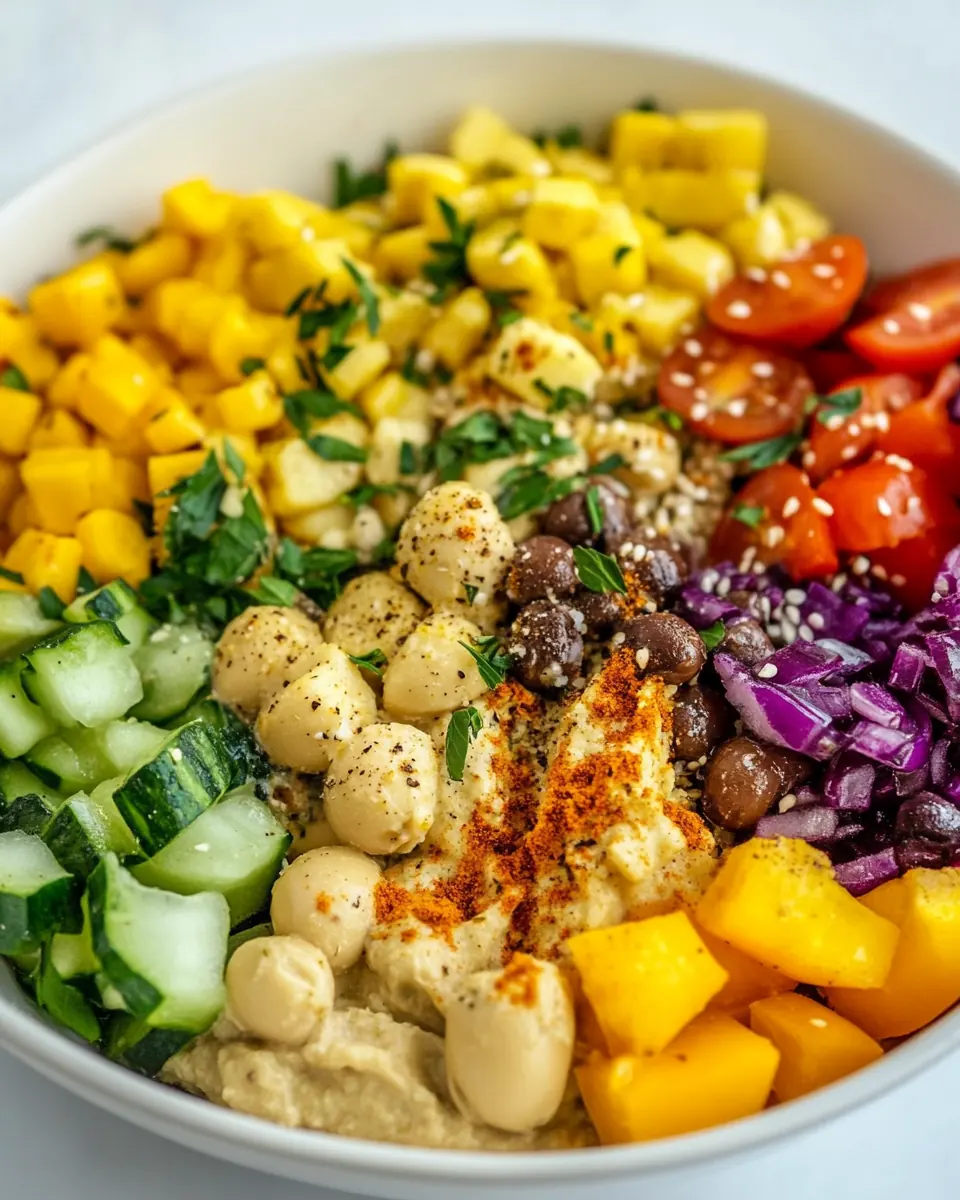
Vegan Mediterranean Bowl is the kind of meal I come back to when I want something bright, crunchy, and deeply satisfying without turning on the stove for hours. The first time I layered warm roasted chickpeas with fluffy quinoa, crisp lettuce, juicy grape tomatoes, refreshing cucumbers, and creamy hummus, I felt like I had discovered a whole new weeknight staple that still feels a little celebratory.
I remember making this bowl on a long, hot afternoon in summer, with sunlight pooling on the kitchen counter and a radio playing soft songs nearby. I loved the way the roast on the chickpeas added a toasty note, while the Kalamata olives gave each bite a salty pop. Building the bowl felt like arranging a tiny, edible garden, and that hands on assembly is one of my favorite parts.
Every time I serve this dish, friends remark on how complete it feels, even though it is plant based and simple to pull together. There is a rhythm to prepping the elements, and I enjoy the small rituals like rinsing the quinoa until the water runs clear and rubbing the skins from the chickpeas for extra crispness. It is honest, wholesome food that still has personality.
Recipe Snapshot
40 mins
10 mins
30 mins
Easy
350 kcal
Mediterranean
Vegan, Gluten-Free
Dinner
Baking sheet
The Charm of This Vegan Mediterranean Bowl
Balanced textures
I love how the Vegan Mediterranean Bowl balances textures. The roasted chickpeas become crisp on the outside and stay tender within, while the quinoa gives a gentle chew. Fresh cucumbers and lettuce bring that satisfying crunch, and the hummus adds a silky counterpoint, so every forkful feels complete.
Bold, simple flavors
I find the seasoning approach here refreshingly straightforward. A touch of olive oil, a pinch of dried basil, and a whisper of garlic powder let the natural flavors shine. The Kalamata olives contribute a briny edge, while the grape tomatoes bring bright acidity, so you get complexity without fuss.
Speed and approachability
I often reach for this bowl when time is tight. With a short roasting window for the chickpeas and quick cooking for the quinoa, it becomes an easy weeknight dinner that still feels special. You can prep components simultaneously, and that efficiency is a big reason I love this recipe.
Highly customizable
I enjoy the freedom to tweak proportions and swap textures. If I want more protein, I pile on extra roasted chickpeas. If I want a creamier mouthfeel, I dollop additional hummus. The bowl adapts to what I have on hand, which keeps it feeling fresh every time I make it.
Great for sharing
I like serving this at casual gatherings because the presentation is vibrant and inviting. Arrange the elements in sections and let everyone dig in. It presents beautifully and satisfies varied tastes, so it is a reliable, crowd friendly option.
What to Gather for Vegan Mediterranean Bowl
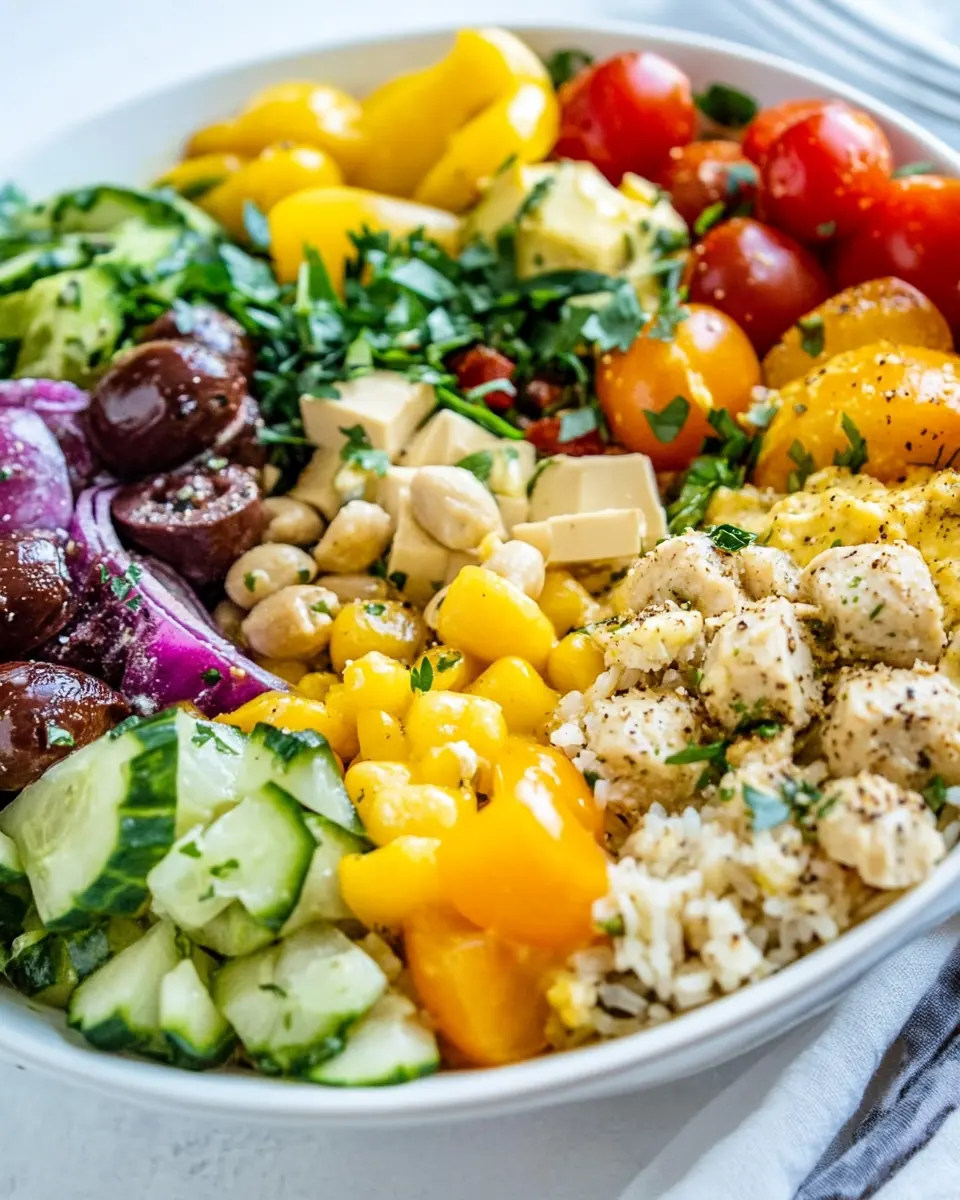
These ingredients create a classic Mediterranean harmony. The roasted chickpeas supply texture and protein, quinoa adds a nutty, tender base, and the fresh vegetables give brightness and crunch. The hummus ties everything together with creaminess and depth. Together they form a meal that is balanced, colorful, and satisfying.
- 1 teaspoon olive oil: Lightly drizzle to provide a gentle cooking fat and subtle fruity flavor; helps crisp chickpeas when pan-roasted and binds seasonings for even coating. Use sparingly to keep the bowl vegan and healthy while enhancing mouthfeel and aroma.
- 1 can chickpeas drained, rinsed, and dried, skins discarded (see note 1): Rinse and drain thoroughly to remove canning liquid, then pat dry and discard loose skins for a creamier texture and better crisping during roasting. Offer a sturdy plant-based protein and fiber base that soaks up seasonings and pairs well with Mediterranean flavors.
- 1/4 teaspoon dried basil: Add as a fragrant dried herb to contribute earthy, slightly sweet basil notes that complement tomatoes and peppers; sprinkle evenly for balanced flavor. Rehydrate gently when mixed with warm quinoa or oil to release aroma without overpowering other ingredients.
- 1/4 teaspoon garlic powder: Dust over chickpeas or quinoa to impart a mellow, savory garlic presence without fresh garlic's sharpness; blends well with dried basil and olive oil. Use sparingly to avoid overpowering delicate salad components while enhancing overall umami and depth.
- Salt and freshly ground black pepper: Season to taste with balanced salt and freshly ground black pepper to elevate and unify all components; adjust incrementally while assembling the bowl. Provide essential flavor contrast and deepen the brightness of vegetables, grains, and hummus.
- 1/2 cup uncooked quinoa rinsed: Rinse thoroughly to remove any bitterness and cook evenly as the grain base; yields fluffy, slightly nutty quinoa that soaks up dressing and juices. Serve as a protein-rich, gluten-free foundation that balances the crisp vegetables and creamy hummus.
- 1 cup water: Simmer with rinsed quinoa to fully cook and hydrate the grain, ensuring a tender texture and absorption of flavors; maintain a gentle boil then simmer until liquid is absorbed. Use clean water to let quinoa's natural nuttiness shine as the bowl's neutral backbone.
- 2 cups lettuce torn or chopped into bite-sized pieces: Tear or chop into bite–sized pieces to provide a crisp, refreshing green base that adds volume and lightness to the bowl. Offer a mild, slightly bitter counterpoint to richer components and a crunchy contrast to cooked quinoa and hummus.
- 1 cup grape tomatoes halved: Halve to release sweet, juicy interiors that add bright acidity and color; distribute evenly for bursts of freshness in each bite. Complement the basil and olive flavors while helping balance the creaminess of hummus and roasted chickpeas.
- 2 cucumbers peeled, halved lengthwise and chopped: Peel, halve lengthwise, and chop to contribute a cool, crisp texture and mild sweetness that pairs well with tomatoes and peppers. Add hydrating crunch and a refreshing contrast that lightens the overall mouthfeel of the bowl.
- 1 yellow bell pepper stemmed, seeded, and chopped: Stem, seed, and chop to deliver sweet, crisp crunch and vivid color; adds vitamin-rich, slightly grassy flavor that complements olives and hummus. Provide a crunchy, juicy element that increases visual appeal and textural variety.
- 1/2 cup pitted Kalamata olives: Pit to offer briny, fruity bursts of intense olive flavor that anchor the Mediterranean profile; chop or leave whole as desired for distribution. Enhance savoriness and balance the sweetness of peppers and tomatoes while adding a salty counterpoint.
- 1/2 cup hummus (see note 2): Spoon a creamy layer to add rich, velvety texture and concentrated chickpea flavor that ties the bowl together; use as a dip or dollop. Supply plant-based creaminess and gentle tang that complements roasted chickpeas, quinoa, and fresh vegetables.
Cooking Method for Vegan Mediterranean Bowl
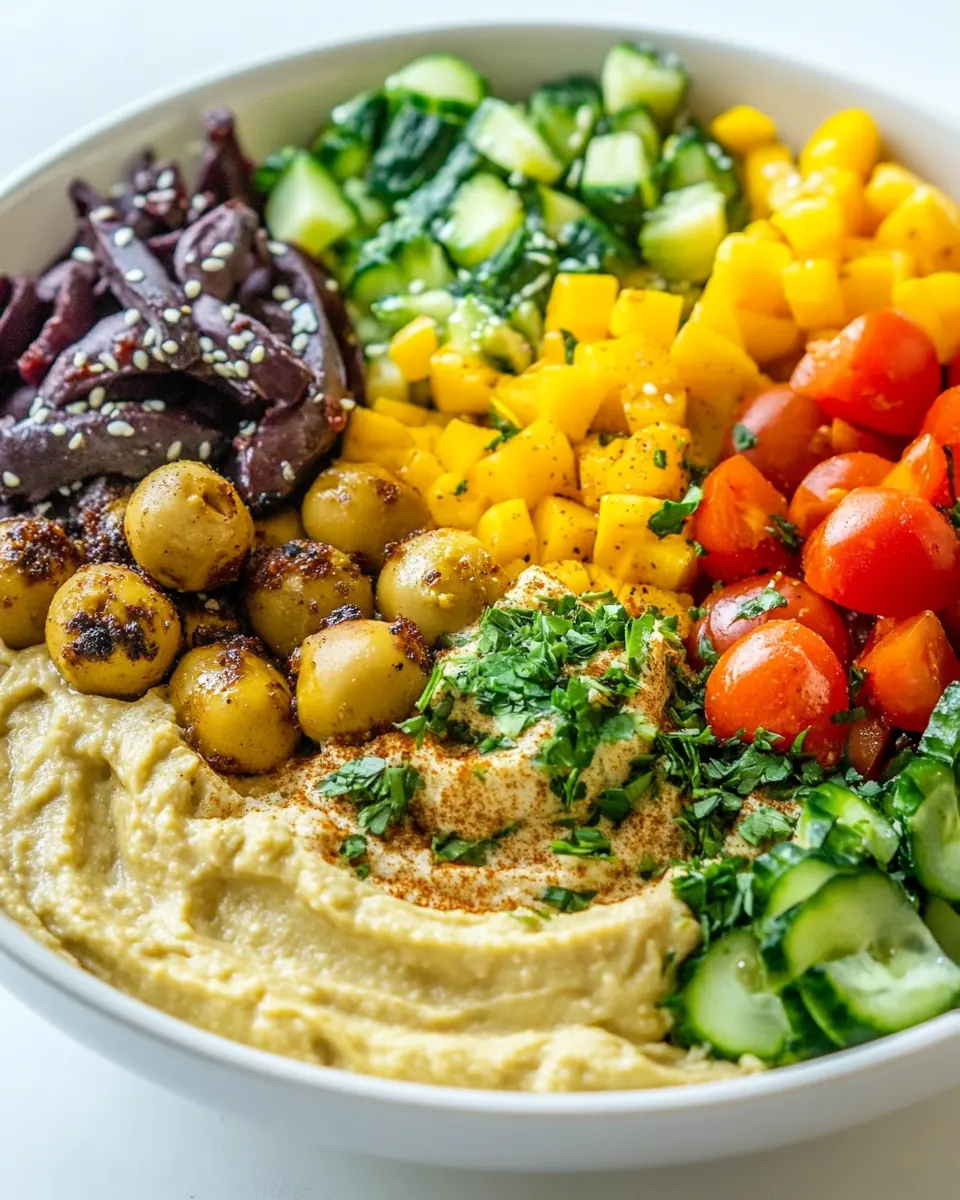
I like to think of the cooking as an assembly of staged tasks, so nothing feels rushed. While the chickpeas roast, you can cook the quinoa and prep the vegetables, and then the final arrangement becomes a satisfying, hands on step that looks impressive.
- Move an oven rack to the middle position and preheat oven to 400 degrees. Line a baking sheet with foil or parchment paper for easy cleanup.: You will notice the kitchen warming as the oven comes to temperature, and a steady, even heat is essential for reliable roasting. The middle position promotes balanced browning on the chickpeas so they crisp on all sides rather than burning at the bottom. If your oven runs hot or cool, use an oven thermometer to verify the actual temperature. A common mistake is overcrowding the pan which causes steaming instead of roasting, so leave space between the chickpeas for air circulation and expect a toasty aroma to fill the oven as they begin to brown.
- In a small bowl, combine chickpeas with olive oil, basil, garlic powder, 1/4 teaspoon salt, and 1/8 teaspoon pepper. Spread in a single layer on the prepared baking sheet.: The substrate you choose will influence cleanup and browning. Parchment helps prevent sticking while foil is durable and makes tossing the roasted chickpeas effortless after cooking. You will hear a faint crackle as oil and seasonings make contact with the hot metal, and that sound means caramelization is beginning. Avoid using nonstick spray on parchment because it can cause uneven browning; instead, use just the measured olive oil to coat the chickpeas .
- Bake for 30 minutes, stirring the chickpeas and rotating the baking sheet halfway through. Remove from the oven and cool slightly.: Mixing by hand lets you feel the texture and ensures even coating so each chickpea gets a touch of seasoning. The oil will glisten on the surface as the herbs and spices cling, creating a fragrant, herbaceous scent. If you skip drying the chickpeas thoroughly, they may steam rather than crisp, which is a common pitfall to avoid. Take a moment to taste a tiny roasted sample after baking to check salt levels and adjust for future batches.
- Meanwhile, combine quinoa and water in a small microwave-safe bowl. Cover; microwave for 4 minutes on high. Remove from microwave, stir, and heat again for 2 minutes longer. Stir and let stand 1 minute in the microwave.: Arranging the chickpeas in a single layer guarantees direct contact with the hot sheet, which produces that desirable crisp exterior. You should be able to see space between individual pieces; crowded pans lead to uneven texture. Listen for a subtle sizzling when the tray goes into the oven, and expect small flavor carrying aromas as sugars in the chickpeas begin to toast. A typical error is piling them too closely, so ensure they sit apart for optimal crunch.
- Layer greens in the bottom of a bowl or on a platter. Arrange the grape tomato halves, cucumbers, bell pepper, olives, chickpeas, and quinoa in sections around the bowl. Spoon the hummus in the middle of the bowl and serve.: As they roast, the chickpeas will darken and develop a toasty, nutty scent that signals progress. Stirring and rotating encourages uniform browning and prevents hot spots from burning some while leaving others pale. If you notice rapid darkening, reduce temperature slightly or check earlier, because burnt chickpeas become bitter. The correct cue is a golden to deep golden color and a firm exterior that still yields a tender interior when bitten.
- Remove from the oven and cool slightly: Cooling lets the exterior set so the crispness becomes stable rather than collapsing under steam. The moment you take the tray out, you will feel a wave of roasted aroma and see tiny, concentrated oil jewels on the surface. If you try to handle them too soon, they may feel soft, so give them a few minutes to firm up. A typical misstep is storing them warm in a covered container which traps moisture and softens their texture; cool them on the tray for best results.
- Meanwhile, combine quinoa and water in a small microwave-safe bowl: The quinoa will absorb the water and swell, releasing a nutty fragrance. Using a microwave safe bowl with a loose cover prevents boil overs while allowing steam to escape. Rinsed quinoa will smell clean and slightly earthy; skipped rinsing can impart a bitter edge. Choose a bowl large enough to let the grains expand so you avoid messy spills.
- Cover; microwave for 4 minutes on high: The initial burst of microwave heat begins hydrating the quinoa , and you may hear a gentle bubbling sound as it simmers. That steam softens the germ and makes the grain tender. If your microwave varies in power, the timing can change slightly, so this stage sets the base for a second short burst to finish cooking. A common error is using too little water which produces undercooked, chewy grains; ensure you use the specified amount.
- Remove from microwave, stir, and heat again for 2 minutes longer: Stirring redistributes moisture and prevents hot pockets, producing evenly cooked grains that flake apart nicely. The texture should move from slightly opaque to translucent, and when you stir you will notice a pleasant, gentle steam. If it still feels underdone after the second interval, add a splash more water and return for short bursts. Overcooking here leads to a gluey texture, so check often.
- Stir and let stand 1 minute in the microwave: Resting allows residual steam to finish the cook, yielding fluffy, separated kernels rather than a porridge like consistency. This pause also cools the quinoa slightly so it integrates well into the bowl without wilting the fresh vegetables. Avoid skipping the rest period because immediate handling can make the grains compact and sticky.
- Layer greens in the bottom of a bowl or on a platter: The cool, crisp base of lettuce offers a contrast to the warm roasted pieces and provides a fresh bed that soaks up little juices. Tear the leaves to bite sized pieces so every forkful gets greens. If you pile ingredients too tightly, the presentation becomes muddled, so arrange them thoughtfully for visual appeal and ease of eating.
- Arrange the grape tomato halves, cucumbers, bell pepper, olives, chickpeas, and quinoa in sections around the bowl: Visually separating the elements makes the bowl inviting and allows guests to combine flavors as they prefer. The colorful sections create a pleasing mosaic, and you will notice the mix of textures and aromas when you lean in. A common mistake is mixing everything together immediately which hides the layered effect; keep components distinct until serving for the best experience.
- Spoon the hummus in the middle of the bowl and serve: Placing a generous dollop of hummus in the center gives you a creamy focal point to scoop from. The contrast between the velvety hummus and crunchy roasted chickpeas is delightful. Serve promptly so the warm and cool elements contrast nicely; if you wait too long, the chickpeas will soften and lose their crisp edge.
Recipe Variations about Vegan Mediterranean Bowl
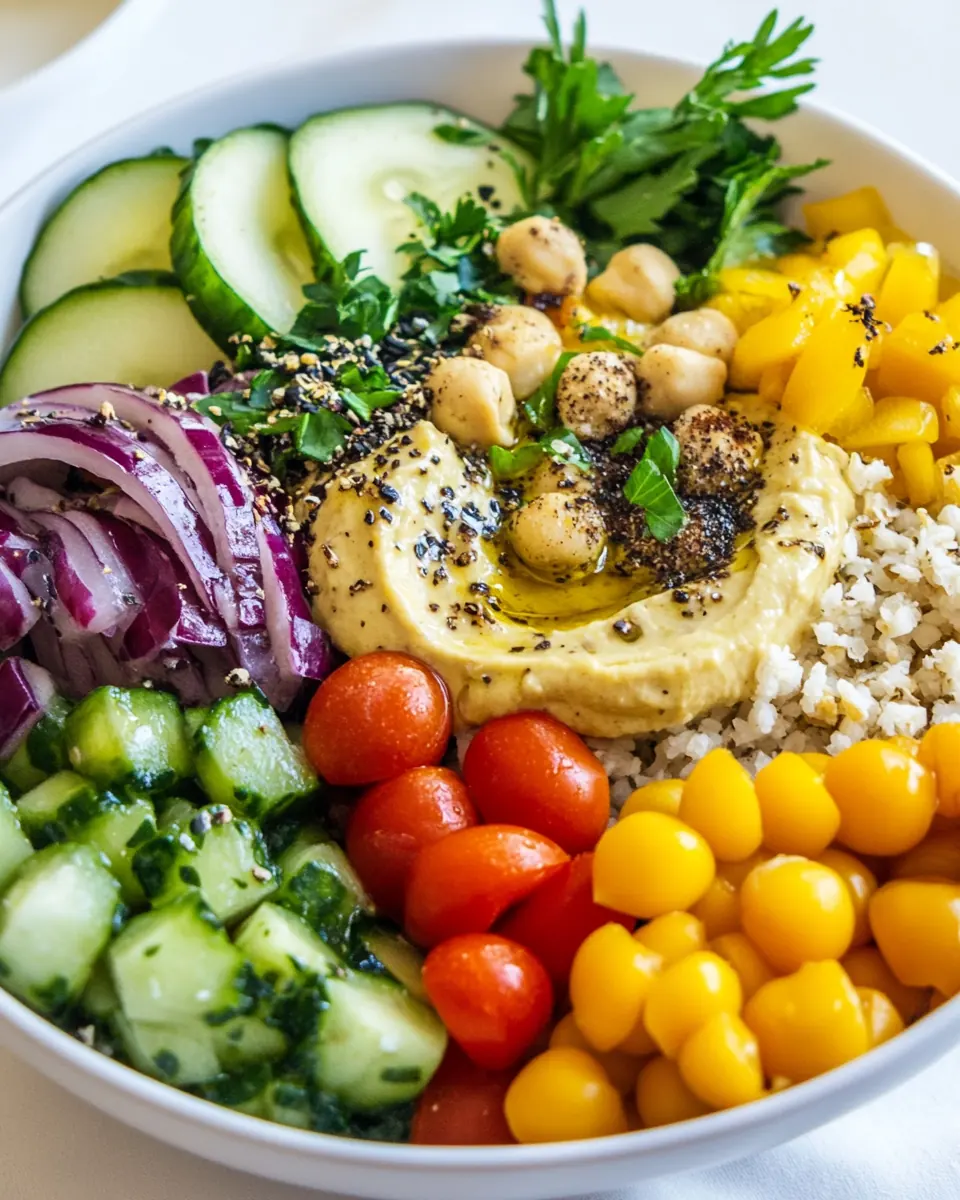
This bowl adapts well to minor adjustments while keeping its Mediterranean soul. Below are several meaningful ideas to customize texture, temperature, and flavor profile without changing the core structure of the recipe.
- Extra crunch Add a small handful of toasted seeds or nuts at the end to introduce a new texture contrast and a nutty aroma that pairs wonderfully with the roasted chickpeas.
- Warm base Serve the quinoa hot and the vegetables cool to accentuate temperature contrast, which makes each bite more interesting and satisfying.
- More herb Stir a spoonful of finely chopped fresh herbs into the hummus or sprinkle them over the bowl for an immediate lift in brightness and aroma.
- Salt balance Taste before serving and add a tiny pinch of salt to the quinoa or roasted chickpeas if the overall bowl needs more savory depth.
- Single bowl meal Increase the portion of roasted chickpeas to make the bowl more protein forward and heartier for a main dish serving.
- Meal prep Roast a larger batch of chickpeas and store them separately to assemble bowls quickly throughout the week while maintaining texture.
Perfect Pairings for Vegan Mediterranean Bowl
This bowl is flexible when it comes to pairing, whether you are serving it for a relaxed lunch or a light dinner. Below are serving suggestions, storage tips, and occasion ideas to help you plan around the bowl.
- Serve with warm pita Offering warm pita or flatbread makes the bowl more communal and satisfying, providing a vehicle for scooping the hummus and crisp toppings.
- Side salads A simple lemon dressed green salad or tabbouleh style salad complements the bowl for larger gatherings and adds more herbaceous notes.
- Occasions This is perfect for casual lunches, light dinners, or summer gatherings where guests appreciate fresh, chilled vegetables alongside warm roasted components.
- Storage tips Store components separately when possible: keep the roasted chickpeas on the counter to preserve crunch and refrigerate the quinoa and vegetables. Combine within four days for best quality.
- Seasonal pairings In summer, emphasize ripe tomatoes and fresh cucumbers; in cooler months, add more roasted vegetables to keep the bowl hearty while staying true to the recipe.
- Serving style Arrange components in sections for a pretty presentation, or layer everything for a quicker, tossed bowl; both approaches work well for different contexts.
FAQ
Conclusion
This Vegan Mediterranean Bowl stands out because it balances crisp roasted chickpeas, fluffy quinoa, and fresh vegetables for a complete plant based meal that never feels boring. Give it a try and you will likely find it becomes a dependable favorite for lunches and light dinners, especially during warmer months. The minimal ingredients combine into a dish that is nourishing, visually appealing, and adaptable, making it a simple but special option to add to your weekly rotation.
Vegan Mediterranean Bowl
Ingredients
Equipment
Method
- Move an oven rack to the middle position and preheat oven to 400 degrees. Line a baking sheet with foil or parchment paper for easy cleanup.: You will notice the kitchen warming as the oven comes to temperature, and a steady, even heat is essential for reliable roasting. The middle position promotes balanced browning on the chickpeas so they crisp on all sides rather than burning at the bottom. If your oven runs hot or cool, use an oven thermometer to verify the actual temperature. A common mistake is overcrowding the pan which causes steaming instead of roasting, so leave space between the chickpeas for air circulation and expect a toasty aroma to fill the oven as they begin to brown.
- In a small bowl, combine chickpeas with olive oil, basil, garlic powder, 1/4 teaspoon salt, and 1/8 teaspoon pepper. Spread in a single layer on the prepared baking sheet.: The substrate you choose will influence cleanup and browning. Parchment helps prevent sticking while foil is durable and makes tossing the roasted chickpeas effortless after cooking. You will hear a faint crackle as oil and seasonings make contact with the hot metal, and that sound means caramelization is beginning. Avoid using nonstick spray on parchment because it can cause uneven browning; instead, use just the measured olive oil to coat the chickpeas .
- Bake for 30 minutes, stirring the chickpeas and rotating the baking sheet halfway through. Remove from the oven and cool slightly.: Mixing by hand lets you feel the texture and ensures even coating so each chickpea gets a touch of seasoning. The oil will glisten on the surface as the herbs and spices cling, creating a fragrant, herbaceous scent. If you skip drying the chickpeas thoroughly, they may steam rather than crisp, which is a common pitfall to avoid. Take a moment to taste a tiny roasted sample after baking to check salt levels and adjust for future batches.
- Meanwhile, combine quinoa and water in a small microwave-safe bowl. Cover; microwave for 4 minutes on high. Remove from microwave, stir, and heat again for 2 minutes longer. Stir and let stand 1 minute in the microwave.: Arranging the chickpeas in a single layer guarantees direct contact with the hot sheet, which produces that desirable crisp exterior. You should be able to see space between individual pieces; crowded pans lead to uneven texture. Listen for a subtle sizzling when the tray goes into the oven, and expect small flavor carrying aromas as sugars in the chickpeas begin to toast. A typical error is piling them too closely, so ensure they sit apart for optimal crunch.
- Layer greens in the bottom of a bowl or on a platter. Arrange the grape tomato halves, cucumbers, bell pepper, olives, chickpeas, and quinoa in sections around the bowl. Spoon the hummus in the middle of the bowl and serve.: As they roast, the chickpeas will darken and develop a toasty, nutty scent that signals progress. Stirring and rotating encourages uniform browning and prevents hot spots from burning some while leaving others pale. If you notice rapid darkening, reduce temperature slightly or check earlier, because burnt chickpeas become bitter. The correct cue is a golden to deep golden color and a firm exterior that still yields a tender interior when bitten.
- Remove from the oven and cool slightly: Cooling lets the exterior set so the crispness becomes stable rather than collapsing under steam. The moment you take the tray out, you will feel a wave of roasted aroma and see tiny, concentrated oil jewels on the surface. If you try to handle them too soon, they may feel soft, so give them a few minutes to firm up. A typical misstep is storing them warm in a covered container which traps moisture and softens their texture; cool them on the tray for best results.
- Meanwhile, combine quinoa and water in a small microwave-safe bowl: The quinoa will absorb the water and swell, releasing a nutty fragrance. Using a microwave safe bowl with a loose cover prevents boil overs while allowing steam to escape. Rinsed quinoa will smell clean and slightly earthy; skipped rinsing can impart a bitter edge. Choose a bowl large enough to let the grains expand so you avoid messy spills.
- Cover; microwave for 4 minutes on high: The initial burst of microwave heat begins hydrating the quinoa , and you may hear a gentle bubbling sound as it simmers. That steam softens the germ and makes the grain tender. If your microwave varies in power, the timing can change slightly, so this stage sets the base for a second short burst to finish cooking. A common error is using too little water which produces undercooked, chewy grains; ensure you use the specified amount.
- Remove from microwave, stir, and heat again for 2 minutes longer: Stirring redistributes moisture and prevents hot pockets, producing evenly cooked grains that flake apart nicely. The texture should move from slightly opaque to translucent, and when you stir you will notice a pleasant, gentle steam. If it still feels underdone after the second interval, add a splash more water and return for short bursts. Overcooking here leads to a gluey texture, so check often.
- Stir and let stand 1 minute in the microwave: Resting allows residual steam to finish the cook, yielding fluffy, separated kernels rather than a porridge like consistency. This pause also cools the quinoa slightly so it integrates well into the bowl without wilting the fresh vegetables. Avoid skipping the rest period because immediate handling can make the grains compact and sticky.
- Layer greens in the bottom of a bowl or on a platter: The cool, crisp base of lettuce offers a contrast to the warm roasted pieces and provides a fresh bed that soaks up little juices. Tear the leaves to bite sized pieces so every forkful gets greens. If you pile ingredients too tightly, the presentation becomes muddled, so arrange them thoughtfully for visual appeal and ease of eating.
- Arrange the grape tomato halves, cucumbers, bell pepper, olives, chickpeas, and quinoa in sections around the bowl: Visually separating the elements makes the bowl inviting and allows guests to combine flavors as they prefer. The colorful sections create a pleasing mosaic, and you will notice the mix of textures and aromas when you lean in. A common mistake is mixing everything together immediately which hides the layered effect; keep components distinct until serving for the best experience.
- Spoon the hummus in the middle of the bowl and serve: Placing a generous dollop of hummus in the center gives you a creamy focal point to scoop from. The contrast between the velvety hummus and crunchy roasted chickpeas is delightful. Serve promptly so the warm and cool elements contrast nicely; if you wait too long, the chickpeas will soften and lose their crisp edge.
Notes
- Extra crunch Add a small handful of toasted seeds or nuts at the end to introduce a new texture contrast and a nutty aroma that pairs wonderfully with the roasted chickpeas.
- Warm base Serve the quinoa hot and the vegetables cool to accentuate temperature contrast, which makes each bite more interesting and satisfying.
- More herb Stir a spoonful of finely chopped fresh herbs into the hummus or sprinkle them over the bowl for an immediate lift in brightness and aroma.
- Salt balance Taste before serving and add a tiny pinch of salt to the quinoa or roasted chickpeas if the overall bowl needs more savory depth.
- Single bowl meal Increase the portion of roasted chickpeas to make the bowl more protein forward and heartier for a main dish serving.
- Meal prep Roast a larger batch of chickpeas and store them separately to assemble bowls quickly throughout the week while maintaining texture.