Macro Friendly Creamy Chicken Gnocchi Soup
Macro Friendly Creamy Chicken Gnocchi Soup is one of those bowls I reach for when I want comfort without derailing a plan. I first made this on a cold winter evening after a long day, and the combination of pillowy gnocchi, tender shredded chicken, and a silky broth felt like a warm, practical hug. That first ladle convinced me this is an easy way to serve something that tastes indulgent, yet still fits a macro conscious lifestyle.
I remember standing by the stove, the kitchen smelling of sautéed onion and garlicky warmth, and thinking how the simple swap of evaporated milk and a touch of heavy cream kept richness without heaviness. It became an instant weeknight favorite in my house, the kind of recipe I make when friends stop by unexpectedly because it stretches easily yet stays impressive. I like that it feels special but is straightforward to pull together.
Recipe Snapshot
35 mins
10 mins
25 mins
Easy
300 kcal
American
Gluten-Free, Keto
Soups
Large pot, Whisk, Spoon
Why You’ll Love This Macro Friendly Creamy Chicken Gnocchi Soup
Comfort that still feels smart
I love how Macro Friendly Creamy Chicken Gnocchi Soup delivers cozy textures without overindulgence. The creamy broth gives you that satisfying mouthfeel, while the lean chicken and measured dairy keep the nutrition sensible. I find it great for evenings when you want full flavors and controlled macros.
Speed without sacrificing depth
I often need dinners that come together quickly. This recipe moves from stovetop to bowl in under an hour, yet the simmering broth and aromatic tarragon build a layered taste that feels like it took longer. That balance of quick prep and deep flavor is why I come back to it.
Ingredient synergy
The way the evaporated milk blends with a little flour to thicken the soup is brilliant. It creates a velvety base that coats each piece of gnocchi without being gluey. Adding spinach at the end brightens the bowl, giving color and a fresh note that keeps the soup from tasting heavy.
Flexible portions and smart macros
This recipe scales easily and serves eight, which makes it perfect for batch cooking. I appreciate that it’s macro friendly so you can portion it with confidence, and the texture holds up well reheated for lunches the next day.
Approachable technique
There is nothing finicky here, just straightforward stovetop cooking. Even if you are not a seasoned cook, the sensory cues I describe in the instructions make it easy to get right. I like recipes that teach you as you go, and this one does.
Key Ingredients for Macro Friendly Creamy Chicken Gnocchi Soup
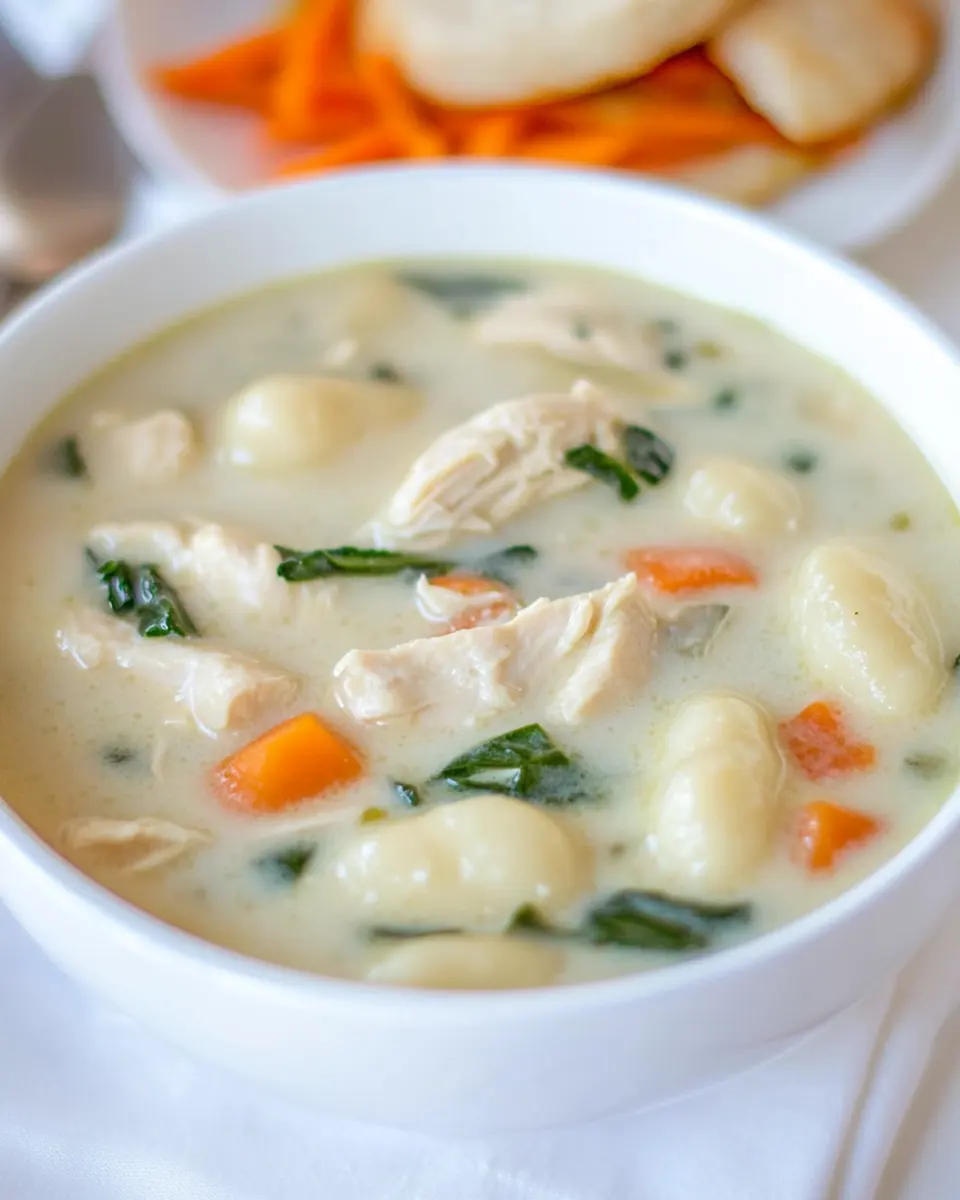
These ingredients play together to create a soup that is creamy, nourishing, and balanced. The foundation is a savory chicken broth and aromatic onion and garlic, while the dairy and flour provide body. The gnocchi delivers the comforting carb element, and finishing with spinach and a touch of heavy cream adds brightness and silkiness.
- 1 medium yellow onion diced: Sauté gently to soften and build a sweet aromatic base that enhances the soup’s overall flavor profile. Dicing ensures even cooking and distribution throughout the broth, contributing texture and savory depth. Caramelization at medium heat adds subtle sweetness that balances creamy and herbal notes.
- 1 cup carrot julienned (I buy these from the store all ready to go): Add crisp texture and mild sweetness when julienned, contributing color and a pleasant bite to each spoonful. Pre-prepared store-bought carrot sticks streamline prep while maintaining consistent size for even cooking. Lightly sautéing preserves some firmness and bright flavor before simmering in the broth.
- 2 cloves garlic: Mince finely to release pungent, aromatic oils that provide sharp savory undertones and depth. Garlic enhances umami and balances creamy elements when added early to bloom in oil or butter. Brief cooking prevents bitterness while maximizing its fragrant contribution to the soup.
- 8 cups chicken broth I used better than bouillon chicken flavor mixed with water: Simmer extensively as the primary liquid component that carries and concentrates flavors from aromatics, herbs, and proteins. Using a flavorful chicken broth base delivers savory richness and helps cook gnocchi and chicken evenly. Adjusting the quantity controls final soup consistency before adding dairy.
- salt & pepper to taste: Season sparingly at first and adjust during cooking to enhance all other flavors without overpowering them. Salt boosts savory notes and helps proteins and vegetables release their natural juices, while pepper adds mild heat and complexity. Taste periodically to achieve balanced seasoning.
- 1 teaspoon tarragon: Infuse a subtle anise-like, slightly sweet herbal note that complements chicken and creamy elements in the soup. Measuring precisely prevents the herb from overpowering; tarragon’s bright flavor lifts the overall profile when added during simmering. Use to create a nuanced, restaurant-style finish.
- 2 bay leaves: Simmer whole to impart a gentle, rounded herbal aroma and depth while being easy to remove before serving. Bay leaves release earthy, slightly floral notes that meld with broth and dairy, enriching the background flavor without altering texture. Discarding before serving prevents textural surprises.
- 1 pound boneless, skinless chicken breasts: Cook thoroughly to provide lean protein and hearty texture, shredding or cubing after poaching to integrate into the soup. Boneless, skinless chicken breasts absorb surrounding flavors and help create a satisfying, protein-rich bowl. Poaching in the broth keeps meat moist and imparts savory juices to the liquid.
- 12 oz fat free evaporated milk I used Kroger: Enrich and thicken the soup while contributing a creamy, slightly sweet dairy backbone without added fat solids. Fat-free evaporated milk offers creaminess with fewer calories, blending smoothly into the broth for a lighter richness. Heating gently prevents curdling and preserves a velvety mouthfeel.
- 3/4 cup all purpose flour: Whisk in gradually to create a roux-style thickener that provides body and a silky texture to the soup. All-purpose flour binds with fat and liquid to prevent separation, ensuring the soup coats the back of a spoon. Cooking the flour briefly removes raw taste and develops a smooth consistency.
- 16 oz gnocchi I used Delallo: Add tender, pillowy dumplings that absorb broth and contribute a comforting, starchy element to the soup. Gnocchi cooks quickly and soaks up surrounding flavors, providing bite-sized bursts of soft texture. Stir carefully to prevent sticking and maintain their shape during simmering.
- 1 cup baby spinach chopped: Fold in near the end to add a pop of color, fresh flavor, and mild leafy texture that brightens the creamy soup. Chopping helps the spinach wilt evenly and disperse throughout the bowl for balanced vegetable presence. Quick wilting preserves nutrients and a tender mouthfeel.
- 1/4 cup heavy cream: Finish with a small amount to boost richness and glossy mouthfeel, enhancing the soup’s indulgent character. Heavy cream adds decadent silkiness and smooths any remaining graininess from flour, tying together savory and herbal components. Stir in at low heat to prevent separation.
Cooking Instructions for Macro Friendly Creamy Chicken Gnocchi Soup
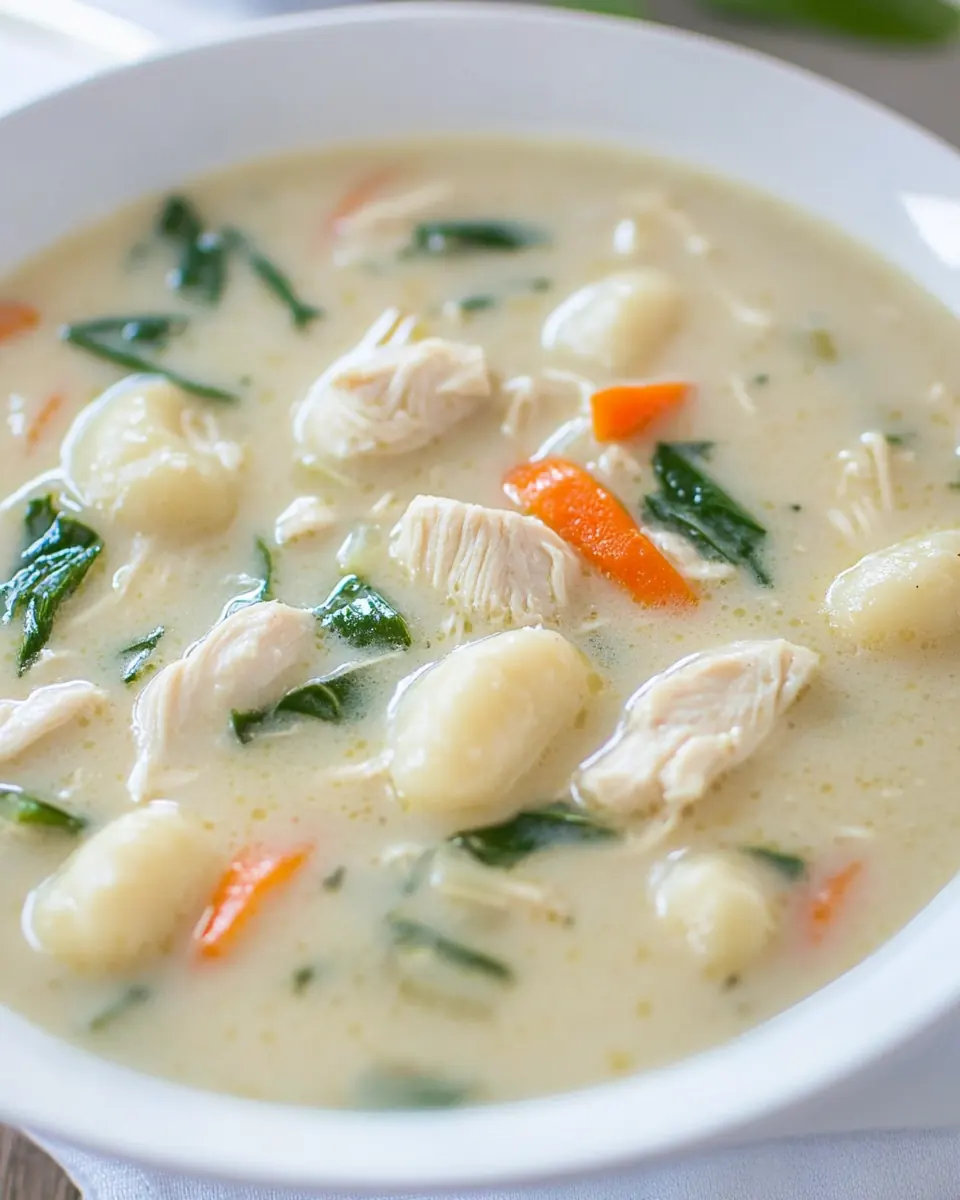
I like to keep the cooking straightforward and sensory driven so you can follow along even if you are multitasking. The steps below expand the original directions into vivid, practical guidance so you can hear and see when things are right.
- Spray large pot over medium heat and spray with nonstick cooking spray. Saute onions and carrots with salt and pepper until onions are mostly translucent. Stir in garlic and cook another minute until fragrant.: You should smell the sweet, savory aroma of softened onion and the warm perfume of garlic as they cook in a lightly oiled pot. The sound is a gentle sizzle, and visually the onion will go from opaque to mostly translucent, with the carrot softening but still holding shape. This step builds the flavor foundation, so take your time over medium heat rather than rushing to high heat which can brown the aromatics and create bitterness. A common mistake is overheating the pan; if the edges begin to brown too quickly, lower the heat and stir more frequently to keep everything evenly soft and glossy.
- Add in chicken broth, salt, pepper, tarragon, bay leaves and chicken breasts whole. Cover and bring to boil, then crack the lid and reduce to simmer until chicken breasts are thoroughly cooked. (Depending how thick your chicken breasts are, this can take anywhere between 15-30 minutes.): As the chicken broth comes up to a boil you will see gentle rolling bubbles; cracking the lid slightly prevents an aggressive boil that can toughen the chicken . The aromatics and herbs will perfume the liquid, and the surface will show faint flecks of seasoning. Simmering gently lets the meat cook evenly and stay moist, which makes shredding easy. Watch for a steady simmer rather than a hard boil, and avoid leaving it unattended, since overcooked chicken becomes dry and stringy.
- While chicken is cooking, whisk evaporated milk with flour until smooth.: When you whisk the cold evaporated milk and flour together, you should end up with a silky, lump free batter. The mixture should be completely smooth and slightly thickened, resembling a thin paste. This pre blending prevents lumps when it hits the hot broth. If you add flour directly to hot liquid you risk clumps forming, so take the extra minute to combine them thoroughly. A common pitfall is not whisking long enough, leaving grainy bits that will remain in the soup.
- Once chicken is finished cooking, remove from pot and shred. Replace back into pot. Add gnocchi and evaporated milk-flour mixture and bring to a simmer. Stir constantly while it is thickening and then reduce heat to low once it has thickened completely-this process should take 5 minutes. The soup should have thickened and the gnocchi should be floating and finished cooking. Taste and add more salt and pepper if necessary. (I made this three times and always added more salt and pepper since the evaporated milk has no seasonings.) Remove bay leaves. Stir in spinach and heavy cream right before serving.: After removing the cooked chicken , shred it so the strands are bite sized and return them to the pot; this helps them soak up the broth. When you add the pre mixed milk and flour , the sound changes to a soft simmer and you will see the liquid slowly become glossy and thicker, clinging to a spoon. Stir constantly during thickening to prevent the bottom from catching and to ensure even cooking. Watch for the gnocchi to float and look plump, which signals doneness. Taste and adjust salt and pepper because the dairy base can be bland; a frequent misstep is under seasoning at this stage. Finally, removing the bay leaves and stirring in the chopped spinach and heavy cream off heat retains the bright green color and silky finish, avoiding any overcooking of the greens.
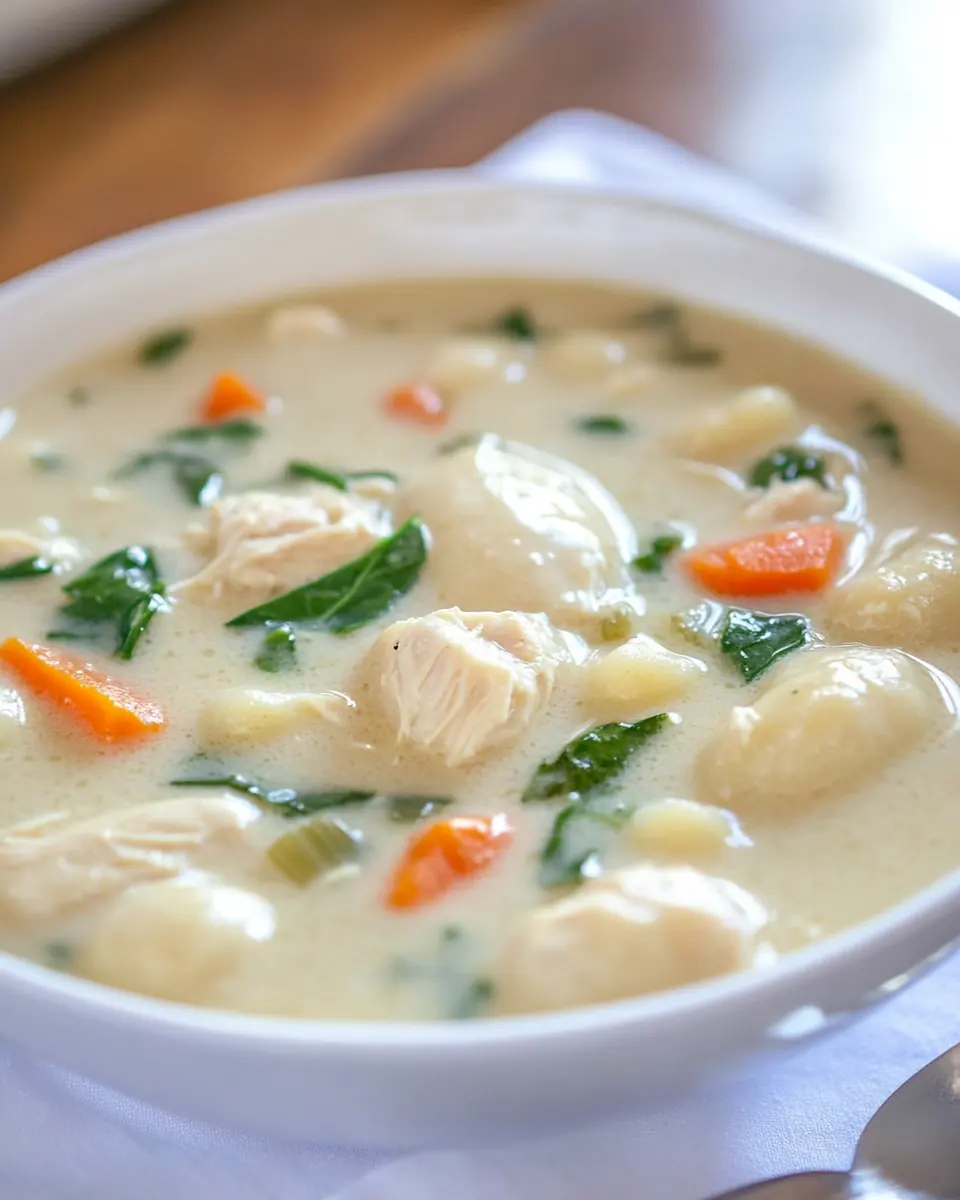
- Divide equally between 8 bowls and serve hot.: The final pour should reveal a glossy, thickened broth dotted with shredded chicken and pillowy gnocchi . Serve immediately while the soup is steaming and aromatic, and the textures are at their peak. If you wait too long, the gnocchi will continue to absorb liquid and soften further, so plan to portion and enjoy promptly. A common oversight is letting the soup sit in the pot too long before serving, which dulls the brightness of the spinach and softens the gnocchi excessively.
Substitutions and Tips
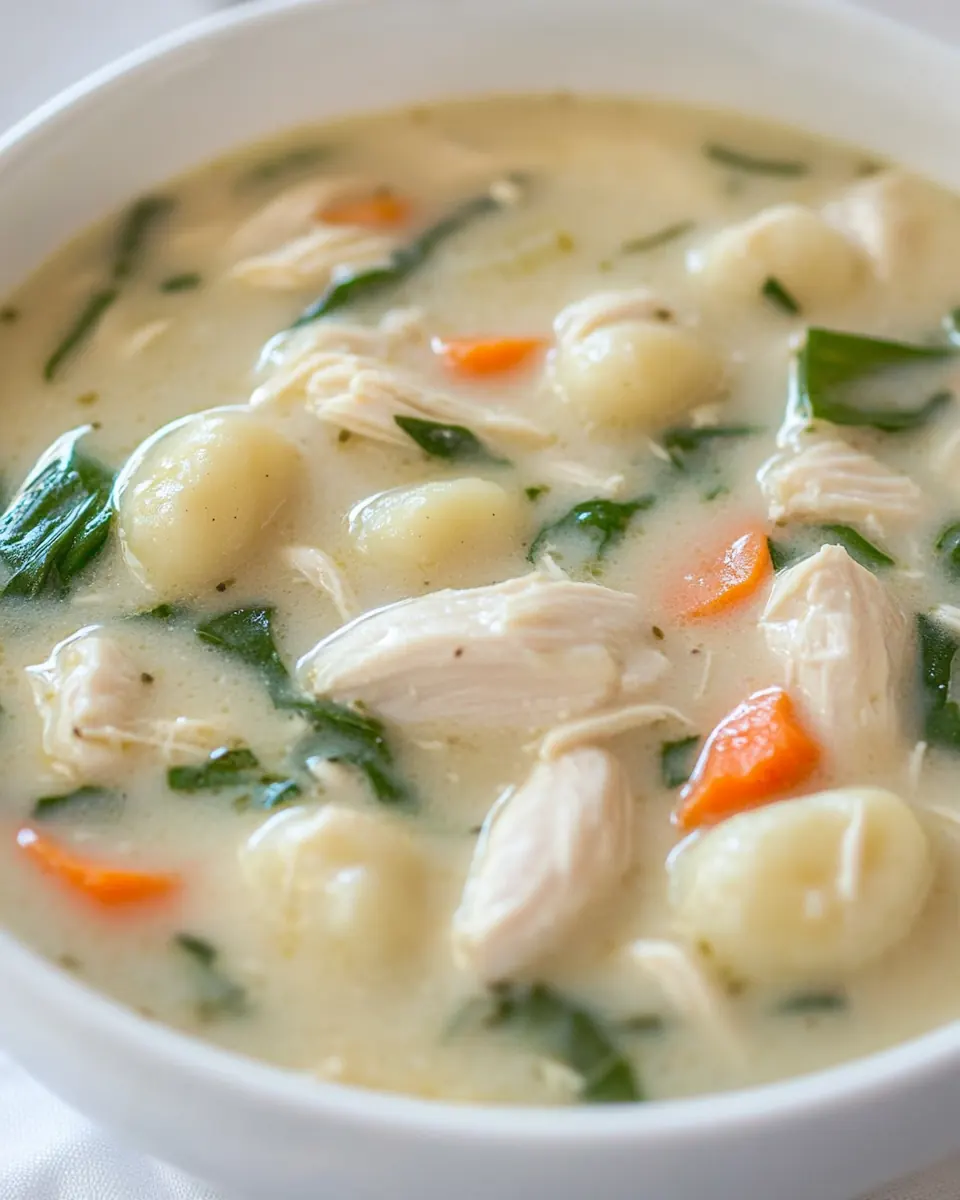
I like to give practical tips that keep the recipe accessible and reliable. Below are focused suggestions and notes I use when making this soup to preserve texture, flavor, and macro friendliness.
- Prep your aromatics first — Having the diced onion and julienned carrot ready prevents overcooking one ingredient while you chop another, leading to even softening and better flavor development.
- Temper the milk mixture — If you are worried about lumps, ladle a small amount of hot broth into the milk mixture while whisking, then pour that back into the pot; this equalizes temperatures and prevents clumps.
- Check chicken doneness — Use a thermometer aiming for 165 F at the thickest part, or ensure juices run clear; undercooked chicken is unsafe, and overcooked meat will be dry.
- Gnocchi timing — Add the gnocchi after shredding the chicken and watch for them to float and plump, which indicates they are done. Avoid overcooking which causes them to disintegrate.
- Season in stages — Because the evaporated milk is neutral, season the soup during sauté, after simmer, and at the end, tasting each time so you don’t over or under salt.
Perfect Pairings for Macro Friendly Creamy Chicken Gnocchi Soup
This soup is versatile enough for casual weeknights and cozy winter dinners. Below are pairing ideas, serving styles, and storage notes to help you present and preserve the dish.
- Simple side salad — A crisp green salad with a light vinaigrette complements the creamy soup, adding textural contrast and freshness if you want a lighter accompaniment.
- Crusty bread for dipping — For those who enjoy soaking up the broth, a small slice of crusty bread on the side works well; keep portions modest to maintain the macro balance.
- Occasion ideas — Serve this bowl for a casual family dinner, a post workout meal, or a winter lunch; its balanced macros make it suitable for meal prep and shared gatherings.
- Storage tips — Cool the soup quickly, then refrigerate in an airtight container for up to three days. Reheat gently on low, adding a splash of broth if it thickened too much overnight because the gnocchi will absorb liquid over time.
- Freezing guidance — While possible, freezing changes the gnocchi texture; if you plan to freeze, consider cooking gnocchi separately and adding it when reheating for best results.
- Presentation — Ladle into warmed bowls so the soup stays hot longer, and finish with a small drizzle of the heavy cream for an inviting sheen and extra silkiness.
FAQ
Conclusion
This recipe stands out for delivering creamy, comforting richness while staying macro conscious and approachable. Give it a try on a chilly evening or when you want a dependable, nourishing meal that reheats well. I hope it becomes one of your go to soups for weekday dinners and batch cooking, offering both comfort and sensible nutrition in every bowl.
Macro Friendly Creamy Chicken Gnocchi Soup
Ingredients
Equipment
Method
- Spray large pot over medium heat and spray with nonstick cooking spray. Saute onions and carrots with salt and pepper until onions are mostly translucent. Stir in garlic and cook another minute until fragrant.: You should smell the sweet, savory aroma of softened onion and the warm perfume of garlic as they cook in a lightly oiled pot. The sound is a gentle sizzle, and visually the onion will go from opaque to mostly translucent, with the carrot softening but still holding shape. This step builds the flavor foundation, so take your time over medium heat rather than rushing to high heat which can brown the aromatics and create bitterness. A common mistake is overheating the pan; if the edges begin to brown too quickly, lower the heat and stir more frequently to keep everything evenly soft and glossy.
- Add in chicken broth, salt, pepper, tarragon, bay leaves and chicken breasts whole. Cover and bring to boil, then crack the lid and reduce to simmer until chicken breasts are thoroughly cooked. (Depending how thick your chicken breasts are, this can take anywhere between 15-30 minutes.): As the chicken broth comes up to a boil you will see gentle rolling bubbles; cracking the lid slightly prevents an aggressive boil that can toughen the chicken . The aromatics and herbs will perfume the liquid, and the surface will show faint flecks of seasoning. Simmering gently lets the meat cook evenly and stay moist, which makes shredding easy. Watch for a steady simmer rather than a hard boil, and avoid leaving it unattended, since overcooked chicken becomes dry and stringy.
- While chicken is cooking, whisk evaporated milk with flour until smooth.: When you whisk the cold evaporated milk and flour together, you should end up with a silky, lump free batter. The mixture should be completely smooth and slightly thickened, resembling a thin paste. This pre blending prevents lumps when it hits the hot broth. If you add flour directly to hot liquid you risk clumps forming, so take the extra minute to combine them thoroughly. A common pitfall is not whisking long enough, leaving grainy bits that will remain in the soup.
- Once chicken is finished cooking, remove from pot and shred. Replace back into pot. Add gnocchi and evaporated milk-flour mixture and bring to a simmer. Stir constantly while it is thickening and then reduce heat to low once it has thickened completely-this process should take 5 minutes. The soup should have thickened and the gnocchi should be floating and finished cooking. Taste and add more salt and pepper if necessary. (I made this three times and always added more salt and pepper since the evaporated milk has no seasonings.) Remove bay leaves. Stir in spinach and heavy cream right before serving.: After removing the cooked chicken , shred it so the strands are bite sized and return them to the pot; this helps them soak up the broth. When you add the pre mixed milk and flour , the sound changes to a soft simmer and you will see the liquid slowly become glossy and thicker, clinging to a spoon. Stir constantly during thickening to prevent the bottom from catching and to ensure even cooking. Watch for the gnocchi to float and look plump, which signals doneness. Taste and adjust salt and pepper because the dairy base can be bland; a frequent misstep is under seasoning at this stage. Finally, removing the bay leaves and stirring in the chopped spinach and heavy cream off heat retains the bright green color and silky finish, avoiding any overcooking of the greens.
- Divide equally between 8 bowls and serve hot.: The final pour should reveal a glossy, thickened broth dotted with shredded chicken and pillowy gnocchi . Serve immediately while the soup is steaming and aromatic, and the textures are at their peak. If you wait too long, the gnocchi will continue to absorb liquid and soften further, so plan to portion and enjoy promptly. A common oversight is letting the soup sit in the pot too long before serving, which dulls the brightness of the spinach and softens the gnocchi excessively.
Notes
- Prep your aromatics first — Having the diced onion and julienned carrot ready prevents overcooking one ingredient while you chop another, leading to even softening and better flavor development.
- Temper the milk mixture — If you are worried about lumps, ladle a small amount of hot broth into the milk mixture while whisking, then pour that back into the pot; this equalizes temperatures and prevents clumps.
- Check chicken doneness — Use a thermometer aiming for 165 F at the thickest part, or ensure juices run clear; undercooked chicken is unsafe, and overcooked meat will be dry.
- Gnocchi timing — Add the gnocchi after shredding the chicken and watch for them to float and plump, which indicates they are done. Avoid overcooking which causes them to disintegrate.
- Season in stages — Because the evaporated milk is neutral, season the soup during sauté, after simmer, and at the end, tasting each time so you don’t over or under salt.