Chicken with 40 Cloves of Garlic
Chicken with 40 Cloves of Garlic is one of those recipes I reach for when I want something that tastes like an old family secret, even if the only heirloom is my skillet.
Years ago I discovered this dish on a rain-soaked afternoon, when I had a pantry full of garlic and a craving for something comforting yet adventurous. I remember the way the kitchen filled with a soft, sweet garlic aroma as the cloves softened and turned golden, while the chicken skin crisped and popped. I kept thinking that serving a mountain of mellowed garlic with a rustic, browned chicken would either be a delightful success or a hilarious disaster, and luckily it was the former.
Since then I make Chicken with 40 Cloves of Garlic whenever I want company over but don’t want to fuss, or when I want dinner that doubles as a conversation starter. The recipe feels indulgent without being complicated, and the garlic transforms from sharp to nutty, lending a deeply savory, almost buttery note to the sauce. I love how a handful of simple pantry staples become something special, and how each bite alternates between crunchy skin, juicy chicken, and those soft, caramelized cloves that melt on the tongue.
When friends come over they always ask if it took all day, and I get to tell them it didn’t. It’s one of those dishes that looks impressive on the table but rewards straightforward technique. Over the years I’ve learned small timing and seasoning touches that keep the meat juicy and the sauce velvety, and I’ll share those as we go. You’ll find the method forgiving, and the results reliably crowd pleasing.
Recipe Snapshot
35 mins
5 mins
30 mins
Medium
500 kcal
American
Gluten-Free, Keto
Dinner
Large skillet, Whisk, Small bowl
Why You Need This Chicken with 40 Cloves of Garlic
1. Garlic as the star
I’ve always loved how the quantity of garlic here transforms its role from sharp to sweet. By slowly cooking the cloves they lose bite and gain a nutty richness that flavors the entire pan, so every spoonful of sauce tastes rounded and lush.
2. Comfort without fuss
This recipe delivers a restaurant worthy result with humble techniques. I appreciate dishes that let me focus on timing and texture rather than complicated mise en place, and this one rewards a simple skillet and good heat control.
3. Crispy skin, juicy meat
The contrast between crunchy browned skin and tender interior is why I keep coming back to this recipe. Searing the chicken first locks in juices and creates those welcome Maillard notes that deepen the sauce when the pan juices are deglazed.
4. A versatile centerpiece
Whether you feed a small crowd or want leftovers that taste even better the next day, this dish adapts. The sauce doubles as a dip and a spoonable condiment, making the meal feel communal and generous.
5. Minimal ingredients, maximum flavor
I adore recipes that prove high flavor does not require dozens of components. With basic staples like stock, butter, and a little flour for thickening, the garlic and chicken sing together, creating a satisfying, layered taste profile.
Shopping List for Chicken with 40 Cloves of Garlic
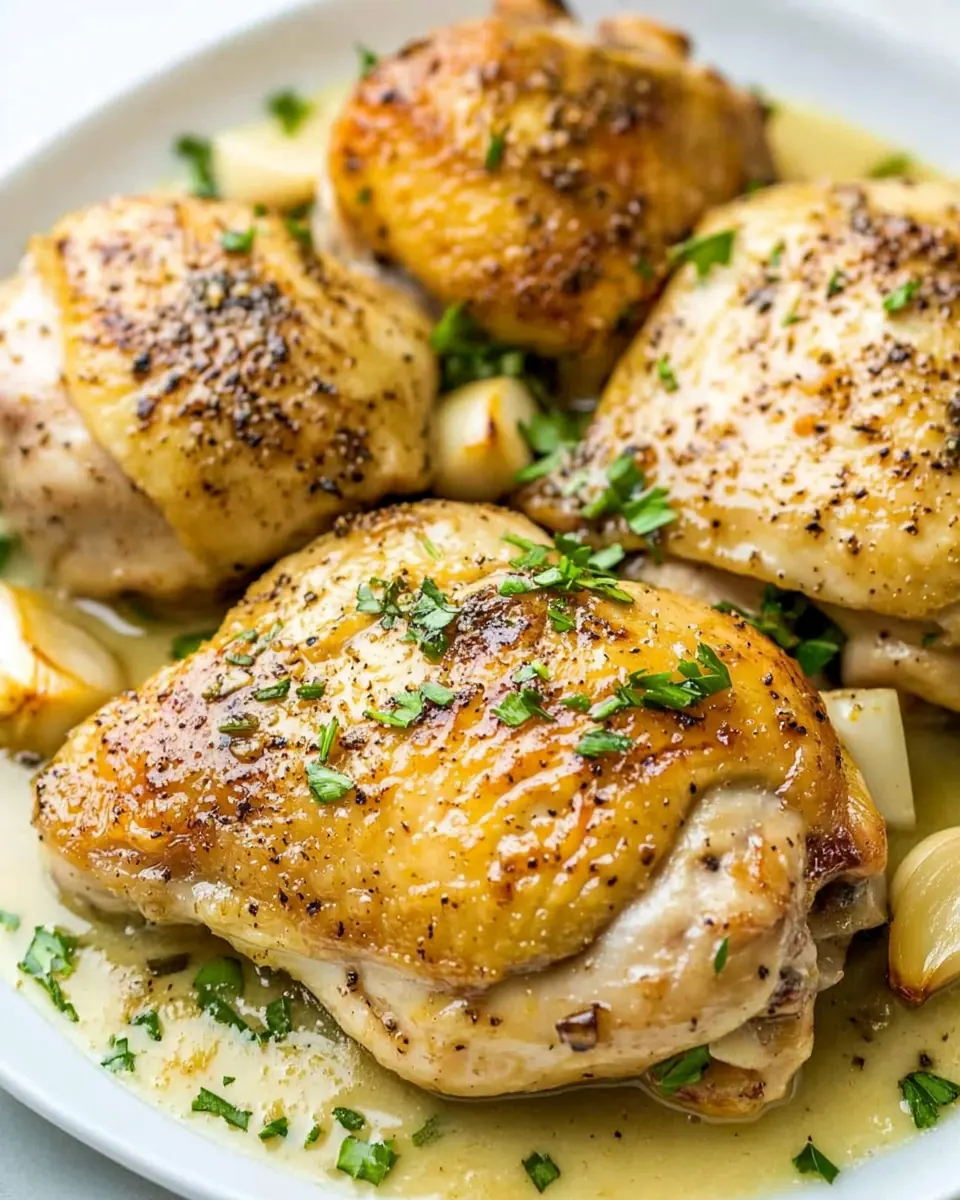
These ingredients are purposefully simple, built around bold, foundational flavors. The cast of characters is short: rich chicken thighs, a large quantity of garlic that transforms as it cooks, and a few pantry players to round the sauce. Each item has a clear role, whether it is for texture, savory depth, or for building a silky finish.
- 8 chicken thighs bone in and skin on: Season generously to enhance overall flavor and help create a well-browned, savory crust on the chicken; use salt to intensify natural tastes and pepper to add a subtle heat that balances richness. Apply before searing and again to taste after cooking to ensure layers of seasoning throughout.
- salt and pepper: Provide richness and a silky mouthfeel when melted and used for browning; butter contributes to the pan sauce and helps meld flavors together. Divide between searing and finishing to prevent burning and to create a glossy, flavorful sauce for the finished dish.
- 2 tablespoons butter divided: Lubricate the pan and aid in achieving a crisp, golden skin while resisting the higher smoke point; olive oil supports even browning and carries aromatics through the cooking process. Use at the start of searing to help render fat from the chicken and prevent sticking.
- 1 tablespoon olive oil: Offer a pronounced roasted, mellow garlic flavor when cooked slowly with the chicken; the large quantity softens and sweetens, becoming a spreadable, savory component. Peel and cook gently with the thighs so cloves become creamy and infuse the cooking liquid.
- 40 cloves garlic peeled: Provide savory liquid to deglaze the pan and form the base of a concentrated sauce; chicken stock adds depth and body while absorbing garlic and chicken flavors. Add after browning to release browned bits and reduce slightly for a cohesive sauce.
- 1 1/2 cups chicken stock: Thicken sauces by creating a roux or slurry that gives the pan juices a smooth, clingy texture; flour binds with fat and stock to produce a velvety finish. Sprinkle into melted fat and cook briefly before whisking in stock to avoid a raw flour taste.
- 2 tablespoons all purpose flour: Lightly thin and enrich the sauce to achieve a creamy consistency without curdling; milk adds moisture and softens the sauce while contributing a subtle dairy note. Stir in toward the end of cooking and heat gently to integrate with the thickened sauce.
- 2 tablespoons milk: Garnish freshly to add color, brightness, and a hint of herbal freshness that cuts through the dish's richness; parsley provides a clean counterpoint to the intense roasted garlic and fatty chicken. Chop finely and sprinkle over the plated dish just before serving if desired.
- parsley for serving if desired: Use as the primary protein component, delivering rich flavor, succulence, and crispy skin when properly seasoned and seared; bone-in, skin-on thighs stay moist during the long cook and lend depth to the sauce. Brown skin-side down to render fat, then finish braising with garlic and stock until tender.
Cooking Instructions for Chicken with 40 Cloves of Garlic
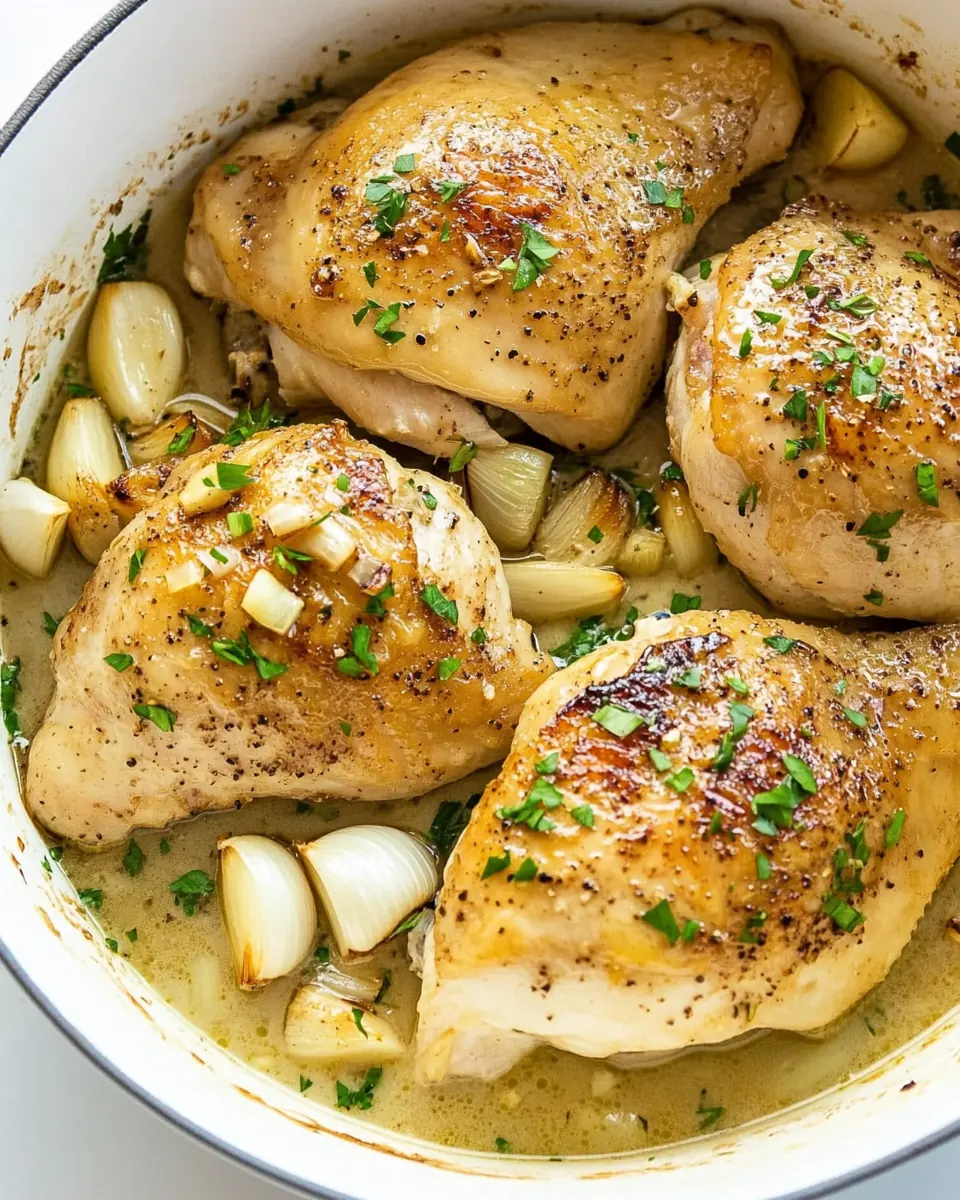
These directions are straightforward but detailed attention to heat and timing makes the difference between good and spectacular. Follow the sequence and sensory cues, and you will end up with crisp skin, tender chicken, and a silky garlic laden sauce.
- Season chicken thighs with salt and pepper.: As you prepare, smell the pepper and feel the texture of the seasoning rubbing into the skin, it should cling without being clumped. This step flavors the meat from the outside in, helping to form a tasty crust during searing. A key sign you did this well is even, uniform coverage on each piece. Common error, skimping on seasoning will leave the final dish flat.
- Heat 1 tablespoon of butter and 1 tablespoon of oil in a large skillet.: You will hear gentle sizzling as the fat heats, and the surface should shimmer without smoking. This blend raises the browning threshold while keeping buttery flavor. The reason this matters is to achieve golden skin without burning the butter. If the fat smokes quickly, lower the heat to avoid bitter notes.
- Add half of the chicken thighs to the hot pan skin side down.: As the pieces hit the pan you should hear a steady, satisfying sizzle and see the edges begin to color. Placing them skin side down first ensures the fat renders and the skin crisps, which leads to that delectable texture contrast. A common slip is moving the pieces too soon, which prevents proper crust formation.
- Sear both sides until golden brown, about 2-3 minutes per side, set aside.: Watch for a deep golden tone and slightly crisp skin, that is your cue to flip. The sound will quiet a little when the crust has formed. This sear locks juices inside the chicken , crucial for moist meat after braising. Avoid overcooking here, as you will finish the thighs in the braise and want them underdone rather than dry.
- Add the remaining tablespoon of butter and add the remaining chicken thighs and repeat, set aside.: Repeat the same sensory signs, golden color and steady sizzle, so every piece gets an even crust. Using the remaining butter refreshes the pan flavor and helps sear the next batch. Mistake to avoid, crowding the pan causes steaming and pale skin.
- Add garlic to the skillet and cook until golden brown, stirring frequently, about 3-4 minutes.: The aroma will transform, shifting from raw sharpness to a warm, sweet scent as the cloves take on color. The sound is quieter now, mostly gentle oil movement, and the visual cue is uniform light golden edges on the cloves. This step builds the sauce base; watch closely because garlic can quickly jump from golden to bitter if left unattended.
- Stir in chicken broth and bring to a boil.: When the stock hits the pan it will lift the browned bits and deglaze the pan, releasing deep savory flavors. You should see small bubbles and a gentle rolling boil, and the smell will deepen into a roasted, meaty note. This liquid turns those caramelized bits into the backbone of the sauce. Avoid adding cold stock straight from the fridge without bringing the pan back up to heat, which can stall cooking.
- Add chicken back to the pan and cover.: Nestle the browned pieces into the fragrant broth so they sit partially submerged, then cover to trap steam. You will notice the aroma intensify, and a few gentle bubbles should form around the edges, indicating a steady simmer. Covering helps cook the chicken evenly and allows the garlic flavors to infuse. A common misstep is sealing too tightly on a high flame, which can over tenderize the skin.
- Simmer until the chicken is cooked through about 25-30 minutes.: During the simmer you will hear a soft bubbling and smell the garlic deepen into a mellow, roasted perfume. The internal temperature should reach a safe mark and the meat will be tender to the touch. This slow finish ensures juicy meat and melded flavors. Pitfall to avoid, raising the heat will toughen the meat and reduce sauce development.
- When the chicken is cooked remove from the pan. (Leave the juices in the skillet): As you lift each piece out, notice the glossy sheen of the braising liquid clinging to the skin; this is a sign of a well developed sauce. Set the pieces aside to rest briefly so juices redistribute. Leaving the chicken in the pan while reducing the sauce can overcook it, so removing it is the safer route.
- In a small bowl combine the flour and milk and add to the juices in the skillet.: The mixture should be smooth and lump free before you add it. When it hits the hot liquid you will hear quiet bubbling as it begins to thicken, and the sauce will change texture to a silkier body. This step rounds the sauce and helps it coat the chicken later. Common mistake, adding flour dry will create lumps that are difficult to break up.
- Whisk until thickened, about 1-2 minutes.: Whisking brings the sauce to a velvety consistency, and you will see it cling to the whisk as it becomes glossy. Taste a small spoonful to check seasoning and thickness; the sauce should coat the back of a spoon. This quick finish is essential for a balanced mouthfeel. Over reducing can make the sauce gluey, so stop when it feels rich yet pourable.
- Season with salt and pepper to taste and serve immediately with the sauce.: The final seasoning should brighten the flavors and balance the sauce richness. Serve while warm, and note how the roasted garlic cloves will be soft and almost spreadable against the juicy chicken . Avoid sitting too long before serving, as the sauce will thicken and the skin can lose crispness.
Ways to Customize
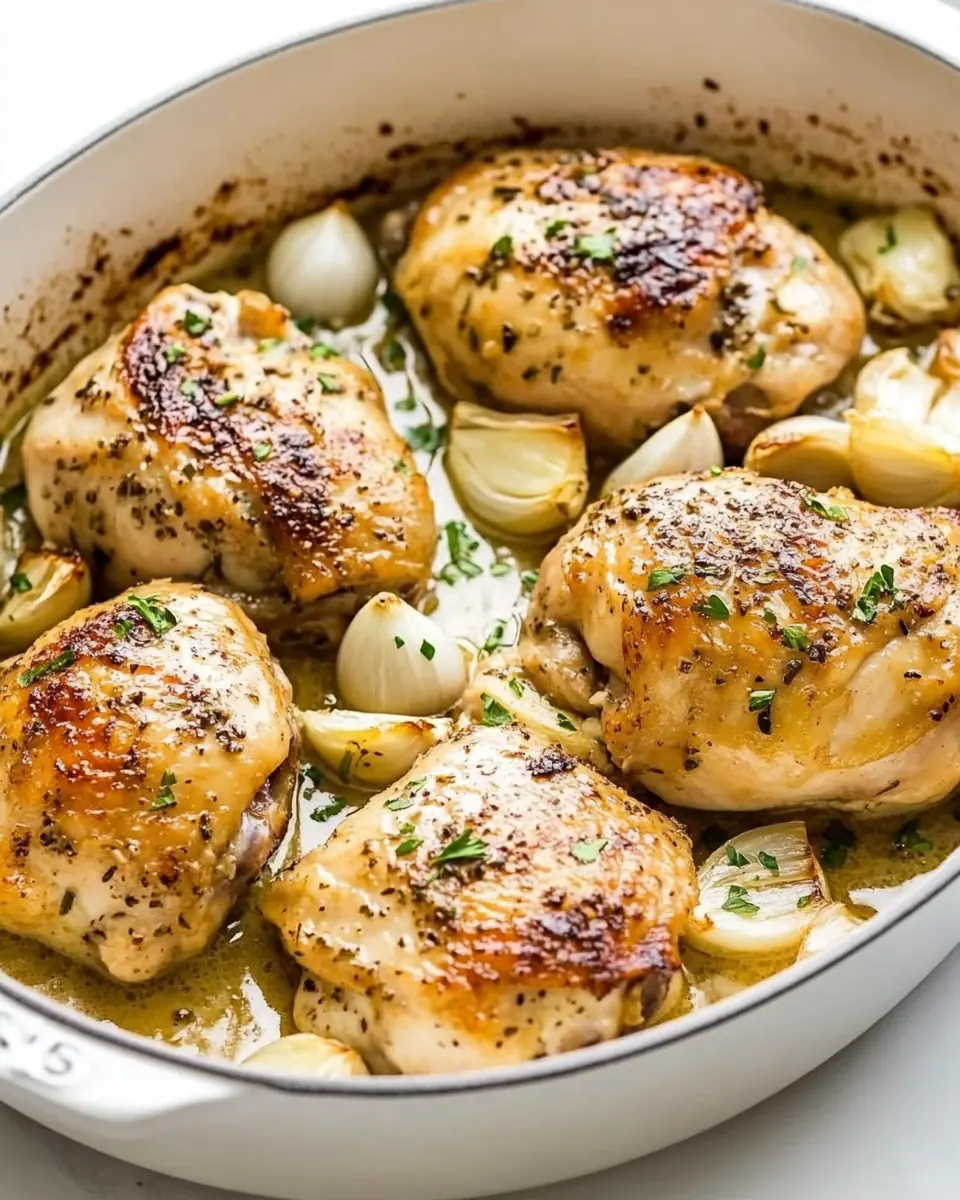
You can nudge this recipe toward different styles without changing the heart of it. Below are practical, flavor forward ideas that keep the core intact while letting you tailor the meal to your pantry and audience.
- Swap the cut For a slightly different texture, you can use bone in chicken legs instead of thighs, which will still benefit from long gentle simmering while keeping the cooking method identical.
- Adjust garlic intensity If forty cloves sounds like too much, reduce to twenty five to thirty and you will still get a mellowed garlic presence with slightly less sweetness in the sauce.
- Finish with herbs Stir in fresh parsley at the end for a bright contrast, adding it right before serving preserves its color and fresh aroma.
- Make it saucier If you prefer more sauce, increase the chicken stock by a half cup and reduce slightly before adding the flour milk slurry to concentrate flavor without thinning texture.
- Boost richness For an even silkier finish, stir in an extra tablespoon of butter at the end off heat to gloss the sauce and round the flavors.
What to Serve With Chicken with 40 Cloves of Garlic
This dish pairs beautifully with simple, complementary sides that let the garlicky sauce shine. Below are serving ideas, occasion notes, and storage tips to help you present it best for family dinners or special meals.
- Starchy sides Serve with mashed potatoes or creamy polenta to soak up the sauce, the starch acts as a sponge for the flavorful juices and provides comforting balance.
- Vegetable companions Lightly sautéed greens or roasted root vegetables add color and texture contrast, offering a verdant or caramelized counterpoint to the rich chicken.
- Casual gatherings For a relaxed dinner with friends, present the skillet at the table with crusty bread nearby for tearing and dipping into the sauce, creating a communal, hands on experience.
- Special occasions The dish scales well for holiday or winter dinners, where its warm, garlicky aroma feels fitting for richer seasonal menus.
- Leftovers and storage Store cooled leftovers in an airtight container in the refrigerator for up to three days; rewarm gently over low heat to prevent drying and stir in a splash of stock if the sauce tightens.
- Serving temperature Serve hot so the sauce is glossy and the clove texture is soft, refrigerating and reheating can mellow the garlic further but may firm the skin.
FAQ
Conclusion
What makes this recipe special is its dramatic transformation of simple ingredients into a deeply flavored, comforting meal. The combination of crisp skinned chicken, a velvety garlic studded sauce, and straightforward technique yields something both impressive and approachable. Give it a try when you want an easy, memorable dinner that tastes like you spent hours on it but really did not. Invite friends or tuck into a cozy family meal, and enjoy how ordinary pantry staples can produce extraordinary results.
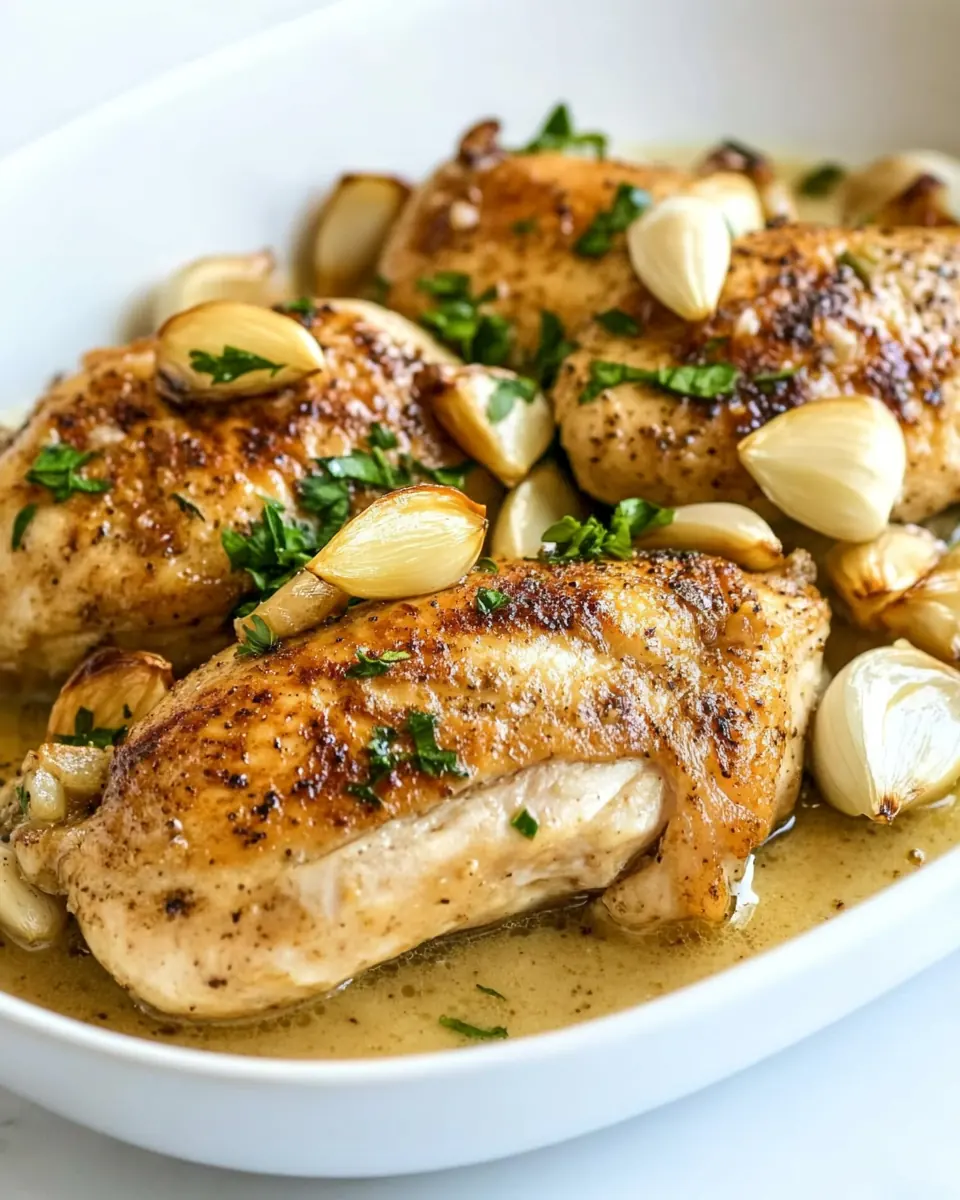
Chicken with 40 Cloves of Garlic
Ingredients
Equipment
Method
- Season chicken thighs with salt and pepper.: As you prepare, smell the pepper and feel the texture of the seasoning rubbing into the skin, it should cling without being clumped. This step flavors the meat from the outside in, helping to form a tasty crust during searing. A key sign you did this well is even, uniform coverage on each piece. Common error, skimping on seasoning will leave the final dish flat.
- Heat 1 tablespoon of butter and 1 tablespoon of oil in a large skillet.: You will hear gentle sizzling as the fat heats, and the surface should shimmer without smoking. This blend raises the browning threshold while keeping buttery flavor. The reason this matters is to achieve golden skin without burning the butter. If the fat smokes quickly, lower the heat to avoid bitter notes.
- Add half of the chicken thighs to the hot pan skin side down.: As the pieces hit the pan you should hear a steady, satisfying sizzle and see the edges begin to color. Placing them skin side down first ensures the fat renders and the skin crisps, which leads to that delectable texture contrast. A common slip is moving the pieces too soon, which prevents proper crust formation.
- Sear both sides until golden brown, about 2-3 minutes per side, set aside.: Watch for a deep golden tone and slightly crisp skin, that is your cue to flip. The sound will quiet a little when the crust has formed. This sear locks juices inside the chicken , crucial for moist meat after braising. Avoid overcooking here, as you will finish the thighs in the braise and want them underdone rather than dry.
- Add the remaining tablespoon of butter and add the remaining chicken thighs and repeat, set aside.: Repeat the same sensory signs, golden color and steady sizzle, so every piece gets an even crust. Using the remaining butter refreshes the pan flavor and helps sear the next batch. Mistake to avoid, crowding the pan causes steaming and pale skin.
- Add garlic to the skillet and cook until golden brown, stirring frequently, about 3-4 minutes.: The aroma will transform, shifting from raw sharpness to a warm, sweet scent as the cloves take on color. The sound is quieter now, mostly gentle oil movement, and the visual cue is uniform light golden edges on the cloves. This step builds the sauce base; watch closely because garlic can quickly jump from golden to bitter if left unattended.
- Stir in chicken broth and bring to a boil.: When the stock hits the pan it will lift the browned bits and deglaze the pan, releasing deep savory flavors. You should see small bubbles and a gentle rolling boil, and the smell will deepen into a roasted, meaty note. This liquid turns those caramelized bits into the backbone of the sauce. Avoid adding cold stock straight from the fridge without bringing the pan back up to heat, which can stall cooking.
- Add chicken back to the pan and cover.: Nestle the browned pieces into the fragrant broth so they sit partially submerged, then cover to trap steam. You will notice the aroma intensify, and a few gentle bubbles should form around the edges, indicating a steady simmer. Covering helps cook the chicken evenly and allows the garlic flavors to infuse. A common misstep is sealing too tightly on a high flame, which can over tenderize the skin.
- Simmer until the chicken is cooked through about 25-30 minutes.: During the simmer you will hear a soft bubbling and smell the garlic deepen into a mellow, roasted perfume. The internal temperature should reach a safe mark and the meat will be tender to the touch. This slow finish ensures juicy meat and melded flavors. Pitfall to avoid, raising the heat will toughen the meat and reduce sauce development.
- When the chicken is cooked remove from the pan. (Leave the juices in the skillet): As you lift each piece out, notice the glossy sheen of the braising liquid clinging to the skin; this is a sign of a well developed sauce. Set the pieces aside to rest briefly so juices redistribute. Leaving the chicken in the pan while reducing the sauce can overcook it, so removing it is the safer route.
- In a small bowl combine the flour and milk and add to the juices in the skillet.: The mixture should be smooth and lump free before you add it. When it hits the hot liquid you will hear quiet bubbling as it begins to thicken, and the sauce will change texture to a silkier body. This step rounds the sauce and helps it coat the chicken later. Common mistake, adding flour dry will create lumps that are difficult to break up.
- Whisk until thickened, about 1-2 minutes.: Whisking brings the sauce to a velvety consistency, and you will see it cling to the whisk as it becomes glossy. Taste a small spoonful to check seasoning and thickness; the sauce should coat the back of a spoon. This quick finish is essential for a balanced mouthfeel. Over reducing can make the sauce gluey, so stop when it feels rich yet pourable.
- Season with salt and pepper to taste and serve immediately with the sauce.: The final seasoning should brighten the flavors and balance the sauce richness. Serve while warm, and note how the roasted garlic cloves will be soft and almost spreadable against the juicy chicken . Avoid sitting too long before serving, as the sauce will thicken and the skin can lose crispness.
Notes
- Swap the cut For a slightly different texture, you can use bone in chicken legs instead of thighs, which will still benefit from long gentle simmering while keeping the cooking method identical.
- Adjust garlic intensity If forty cloves sounds like too much, reduce to twenty five to thirty and you will still get a mellowed garlic presence with slightly less sweetness in the sauce.
- Finish with herbs Stir in fresh parsley at the end for a bright contrast, adding it right before serving preserves its color and fresh aroma.
- Make it saucier If you prefer more sauce, increase the chicken stock by a half cup and reduce slightly before adding the flour milk slurry to concentrate flavor without thinning texture.
- Boost richness For an even silkier finish, stir in an extra tablespoon of butter at the end off heat to gloss the sauce and round the flavors.