Chocolate Cherry Sandwich Cookies
Chocolate Cherry Sandwich Cookies are one of those treats I reach for whenever celebrations, cozy afternoons, or a simple craving hit at once. The first time I made these I was chasing a memory of a bakery cookie that tasted indulgent but not fussy, and the combination of glossy chocolate, bright cherry buttercream, and tender cookie layers delivered exactly that contrast I love. From the moment the batter came together the kitchen smelled like a warm, slightly toasted cocoa hug, and I knew I had something special.
Over the years I’ve adjusted the balance between chocolate and cherry, learning small tricks that make these cookies reliably soft yet sturdy enough to hold a generous swirl of buttercream. I enjoy making a double batch when friends stop by, because they vanish fast, and I always find one or two ways to personalize the filling depending on the mood or occasion. When I bring a tin of these to a gathering people ask for the recipe, and I happily share the tips that transformed my first attempt into a family favorite.
Recipe Snapshot
39 mins
30 mins
9 mins
Medium
150 kcal
American
Gluten-Free, Low FODMAP
Desserts
Stand mixer or electric mixer, Paddle attachment, Mixing bowls, Baking sheets, Parchment paper, Wire racks, Cookie scoop, Rubber spatula
Why This Chocolate Cherry Sandwich Cookies Is So Good
1. Flavor Contrast That Sings
I adore how the deep cocoa and semisweet chips play against the bright, slightly tangy cherry buttercream. That contrast keeps each bite interesting, so it never feels cloying. I often tell friends that this cookie tastes like a refined childhood treat, because the texture is familiar but the flavors are layered.
2. Texture That Balances Soft and Stable
The cookie dough yields a tender cake like crumb, but it still holds its shape when sandwiched. I learned to watch for visual cues when baking so the cookies stay soft rather than turning dry. A slightly domed top that springs back a little is the sweet spot.
3. Built For Sharing and Gifting
These Chocolate Cherry Sandwich Cookies transport beautifully, and they look special without elaborate decoration. I like to arrange them in a simple tin with parchment; they feel thoughtful, and they keep well at room temperature for a day.
4. Flexible Buttercream For Personality
The cherry buttercream can be adjusted in sweetness and intensity. I sometimes concentrate the cherry juice slightly or fold more chopped cherries for a rustic texture. That flexibility makes the recipe approachable for bakers who want a subtle finish or a bold, fruity punch.
5. Practical and Approachable
Despite the bakery vibe, the ingredients and steps are straightforward. I appreciate recipes that respect time without sacrificing flavor, and this one hits that balance. Once you understand the simple signals for doneness and texture, you’ll find these cookies easy to reproduce again and again.
Key Ingredients for Chocolate Cherry Sandwich Cookies
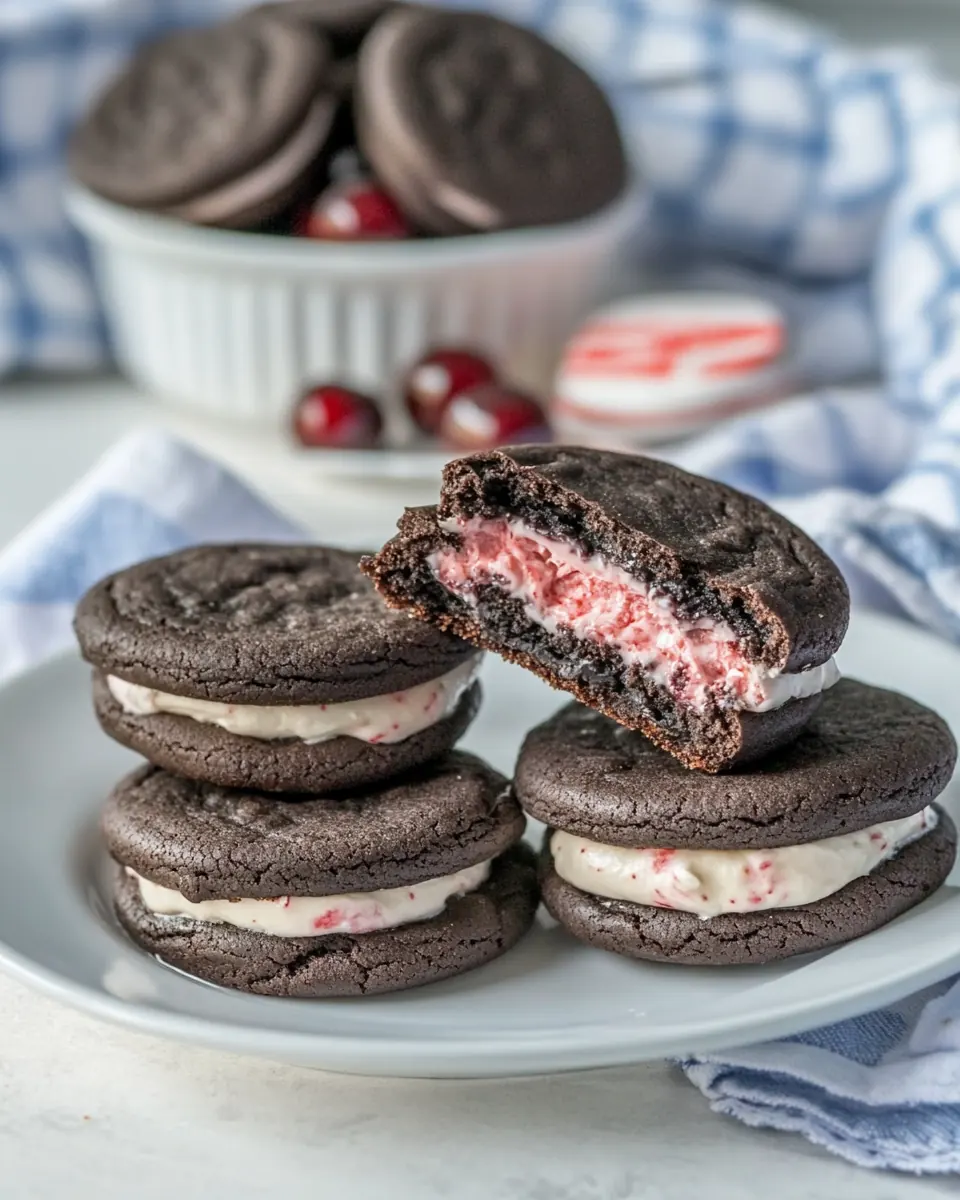
These ingredients are about harmony. The cookie itself relies on a balance of fats, sugars, and cocoa to create a tender yet stable base, while the buttercream uses butter and powdered sugar to build a silky, airy filling. The cherries and cherry juice cut through the sweetness and brighten each bite. Together, the components form a classic sandwich cookie where each part supports the others.
- 1/2 cup Crisco® All-Vegetable Shortening Sticks: Provide a tender, flaky texture and help incorporate air when creamed; use at room temperature for easier blending with sugar and egg to create a light cookie base.
- 1 cup granulated sugar: Sweeten and aid in creaming to trap air within the shortening, promoting browning and structure; dissolve partially in the wet ingredients for an even crumb.
- 1 egg: Bind and enrich the dough, contributing moisture, structure, and a tender crumb; whisk lightly before adding to ensure even distribution throughout the batter.
- 1 teaspoon vanilla extract: Enhance and deepen overall flavor with warm, aromatic notes; add to the wet mixture to lift and complement chocolate and cherry components.
- 1/2 cup buttermilk: Add mild tang and acidity that reacts with baking soda to produce lift; incorporate into the dough for moisture and a slightly tender crumb.
- 1/2 cup warm water: Hydrate dry ingredients and help dissolve cocoa and sugar while adjusting dough consistency; warm temperature promotes better mixing and can slightly bloom cocoa.
- 2 cups all-purpose flour: Provide bulk and structure through gluten formation when mixed; measure accurately to maintain the correct dough consistency and chew in the final cookie.
- 1 teaspoon baking soda: React with acidic buttermilk to create carbon dioxide for leavening; mix in with the dry ingredients to ensure even rise and a light texture.
- 1/2 cup unsweetened cocoa powder: Contribute rich chocolate flavor and deep color while absorbing some fat and liquid; sift into dry ingredients to prevent lumps and ensure even distribution.
- 1/2 teaspoon salt: Balance sweetness and enhance flavors while strengthening dough proteins slightly; distribute evenly in the dry mix to control overall seasoning.
- 2/3 cup semisweet chocolate chips: Add pockets of melted chocolate for bursts of sweetness and texture variation; stir in near the end of mixing to prevent over-melting into the batter.
- 1 cup unsalted butter, room temperature: Create a rich, creamy filling base with a smooth mouthfeel when creamed with powdered sugar; use at room temperature for optimal aeration and spreadability.
- 1 pound powdered sugar, sifted: Sweeten and stabilize the filling while providing a silky, smooth texture once sifted and creamed with butter; helps create the cookie sandwich filling.
- 3 tablespoons maraschino cherry juice: Impart bright cherry flavor and a touch of acidity to the filling while thinning it slightly; stir in sparingly to control color and moisture level.
- 1 1/2 teaspoons pure vanilla extract: Boost and round out the filling’s flavor profile with warm, floral vanilla notes; include with other liquids to ensure even flavor distribution.
- 1/4 cup maraschino cherries, finely chopped: Provide bursts of concentrated cherry flavor and small bits of fruit for texture; fold into the filling to distribute fruit evenly between cookie layers.
- 1 2 tablespoons of milk if needed: Adjust filling consistency if too thick, adding small amounts to achieve a spreadable, pipeable texture; add gradually to avoid thinning the filling too much.
The Method for Chocolate Cherry Sandwich Cookies
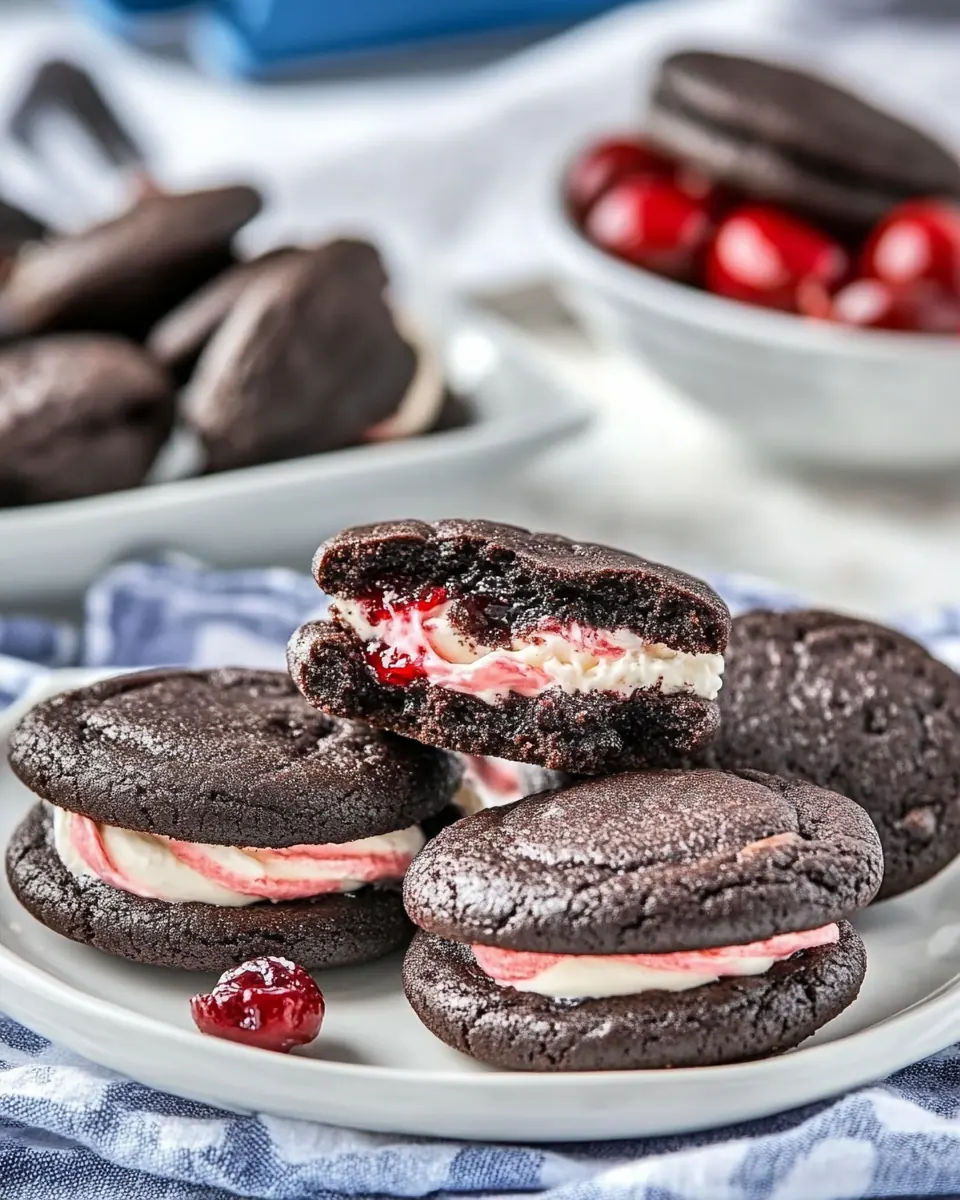
I find the process rewarding because each stage offers tactile feedback and reassuring sensory clues. From creaming the shortening and sugar to folding in the chips, you’ll notice changes in texture and aroma that signal progress. Take your time with the buttercream so it becomes silky and stable for sandwiching. Below I expand the directions into rich, descriptive steps so you can follow with confidence.
- Preheat the oven to 400°F. Line baking sheets with parchment paper.: The moment you slide the first tray in you'll smell a warm, slightly toasty note of chocolate once the dough starts to bake, signaling the Maillard reactions taking off. Proper preheating ensures even rise and predictable bake time, so heat the oven fully before baking. A common mistake is placing cold dough into an oven that is still warming, resulting in over spread or uneven texture. Make sure parchment lies flat on the sheet so cookies bake on a consistent surface, and if your oven runs hot or cool, rotate the pans halfway through to maintain an even color.
- In the bowl of a stand mixer fitted with the paddle attachment, or in a large bowl with an electric mixer, cream together the shortening and sugar until light and fluffy.: You will notice the color lighten and the texture become airy as sugar cuts through the shortening, creating tiny pockets that help the cookie feel light. I listen for a slight change in the mixer’s hum when the mixture is aerated enough. Creaming properly matters because it traps air that helps the cookie rise subtly and keeps the crumb tender. Avoid creaming at too high speed, which can heat the fat and lead to greasy batter, and stop once the mixture is visibly lighter and soft to the touch.
- Add in the egg, vanilla, buttermilk, and water and mix until the ingredients are fully incorporated.: After adding these liquids, the batter will loosen and take on a glossy sheen, signifying good emulsification. The buttermilk adds a touch of tang while water adjusts the batter’s texture for the right drop consistency. If the mixture looks curdled, this usually means the butter or shortening was too cold; let the bowl sit briefly or mix a bit slower until it smooths out. Overmixing here can incorporate too much air or activate gluten later, so mix just until smooth.
- In a medium bowl, whisk together the flour, baking soda, cocoa, and salt. Slowly add the dry ingredients to the shortening mixture and mix until just combined. Use a rubber spatula to gently fold the chocolate chips into the batter.: As you add the dry mix, the batter will thicken and become matte in appearance, and you should stop mixing as soon as streaks of flour disappear. Folding in the semisweet chocolate chips keeps pockets of melted chocolate rather than breaking them down and creating streaks. This technique preserves texture and creates delightful bites of melted chocolate. A frequent error is overmixing, which produces a dense cookie, so fold gently until evenly distributed.
- Use a medium cookie scoop (1.5 tablespoons) to drop batter onto prepared cookie sheets about 2 inches apart.: Scooping ensures uniform cookies so they bake evenly; each mound should have a slightly domed top. Giving them space prevents them from joining as they spread, and if the dough seems too soft to hold shape, chilling the scooped dough briefly tightens the outside and helps it bake into tidy rounds. Avoid scooping with a spoon because sizes will vary and lead to inconsistent bake times.
- Bake for 8-9 minutes in the preheated oven.: You'll see the edges set and the centers remain soft, with the tops appearing matte rather than glossy when they are ready to come out. The aroma of cocoa and baked sugar becomes prominent right at the end of this window. Pulling cookies out too early leaves them underbaked and collapse prone, while overbaking dries them; aim for that slight springiness when you touch a top gently with a fingertip. If your oven's temperature is uncertain, check at the lower time and adjust for future batches.
- Allow cakes to cool on baking sheets for 5 minutes before removing to wire racks to cool completely.: During this resting time the cookies finish setting, and removing them too soon can cause them to tear or deform. Cooling on a rack ensures air circulates underneath so bottoms do not become soggy. If you skip the rest on the sheet, the cookies may fall apart when transferring; use a thin spatula and patience to lift them without breaking.
- In the bowl of a stand mixer fitted with the paddle attachment, beat the butter on medium-high speed for 3-4 minutes.: The butter should become pale and airy, with a light, whipped aroma. This aeration builds the structure for a silky buttercream that pipes and spreads well. If the butter is too cold it will not whip properly, and if too warm it will be greasy; aim for room temperature and beat until visibly lighter in color and texture.
- Turn the mixer down to low speed and gradually add in the powdered sugar until thoroughly combined. Turn the mixer back up to medium-high speed and mix for 5 minutes.: Adding powdered sugar slowly prevents a dusty cloud and helps the sugar integrate smoothly for a velvety texture. After the full mixing, the buttercream should be light and fluffy, with a sweet, creamy scent. If the frosting feels grainy, you may need to sift the powdered sugar or beat longer. Too much speed at first can fling sugar everywhere, so keep it controlled until the powdered sugar is mostly incorporated.
- Add in the cherry juice and vanilla and beat an additional 2 minutes.: The cherry juice brightens the flavor and colors the buttercream slightly, while the vanilla rounds it out. The mixture will take on a fresh, fruity aroma and become softer. If the buttercream thins too much, pause and let it firm in the fridge briefly; if it is too thick, add milk sparingly. A common misstep is adding too much liquid at once; always add one teaspoon at a time and check consistency.
- Use a rubber spatula to fold the chopped cherries into the buttercream.: Folding preserves chunks of maraschino cherries so you get bursts of texture and flavor rather than uniformly smooth frosting. The buttercream should show ribbons of fruit, adding visual interest and tiny chewy bits. If the cherries are too wet, pat them dry before folding to avoid thinning the frosting.
- Note: If the buttercream is too thick, you can add a little milk in 1 teaspoon at a time until the desired consistency is reached.: If the buttercream is too thick, you can add a little milk in 1 teaspoon at a time until the desired consistency is reached. : When you add a touch of milk , the buttercream transforms, becoming more pipeable and glossy. Add the milk slowly and test frequently to avoid overshooting the consistency. If you add too much, chill the frosting briefly and rewhip to recover some structure.
- Spoon or pipe the buttercream onto the flat sides of half the cookies and top with remaining cookies.: The finished assembly should look tidy, with a visible ring of buttercream at the edges if you pipe a generous swirl. Press gently when sandwiching to spread the frosting evenly without squeezing it out. A typical mistake is overfilling which causes the filling to ooze; measure or pipe consistently so each sandwich is uniform.
Recipe Variations about Chocolate Cherry Sandwich Cookies
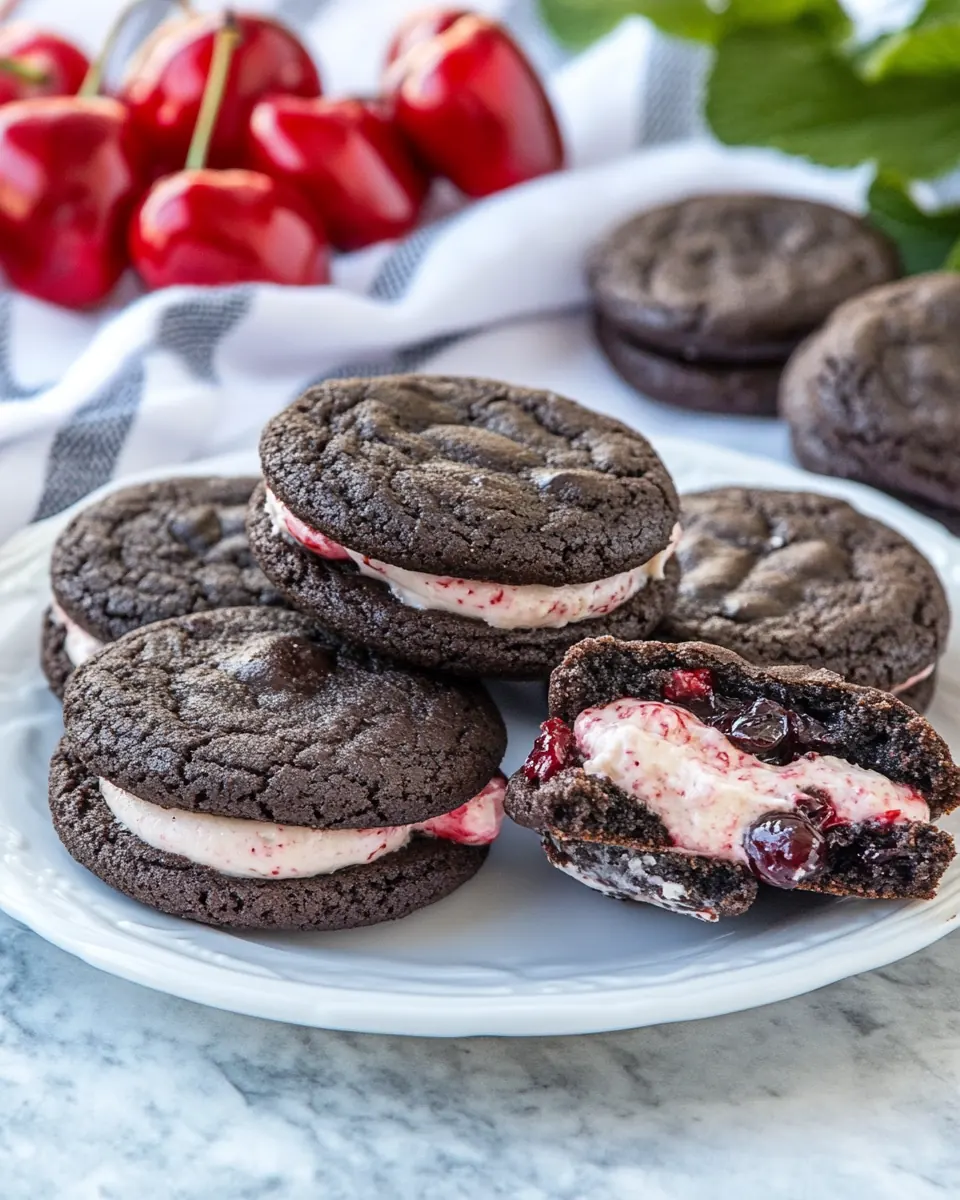
These variations let you adapt the recipe for different tastes or occasions while keeping the core structure intact. Below I expand on each idea so you can pick a direction and feel confident about the result.
- Swap chocolate intensity by using dark chocolate chips instead of semisweet to deepen the chocolate notes and add slight bitterness for a sophisticated profile.
- Amplify cherry flavor by reducing the cherry juice into a syrup to concentrate the flavor before adding to the buttercream, which gives a more pronounced fruit presence.
- Add texture to the filling by folding in chopped toasted nuts or coconut for contrast, ensuring you adjust quantities so the buttercream still spreads smoothly.
- Make mini sandwich cookies by using a smaller scoop and reducing baking time by a minute or two, creating dainty bites perfect for parties or cookie platters.
- Decorate the edges by rolling the filled cookies in finely chopped cherries or sprinkles for a festive presentation that also adds a hint of texture.
Best Served With
These cookies can be enjoyed in many settings, from afternoon tea to holiday dessert tables. Below I describe serving ideas, pairings, and storage tips so you can present them beautifully and keep them fresh.
- Afternoon tea pairing: Serve with a cup of black tea or a mild coffee to balance the sweetness, placing the cookies on a small platter with napkins for casual gatherings.
- Party platter: Arrange the cookies on a tiered tray with other small sweets for a dessert buffet, keeping them at room temperature and covered until serving.
- Gift presentation: Pack in a decorative tin layered with parchment; include a note about allergens and keep at room temperature for 1 to 2 days, or refrigerate for longer storage.
- Seasonal occasions: These work well for holiday cookie swaps or springtime celebrations where the cherry note feels celebratory and bright.
- Storage tips: Store in an airtight container in a single layer or with parchment between layers. For longer keeping, refrigerate for up to 5 days and bring to room temperature before serving for the best texture.
FAQ
Conclusion
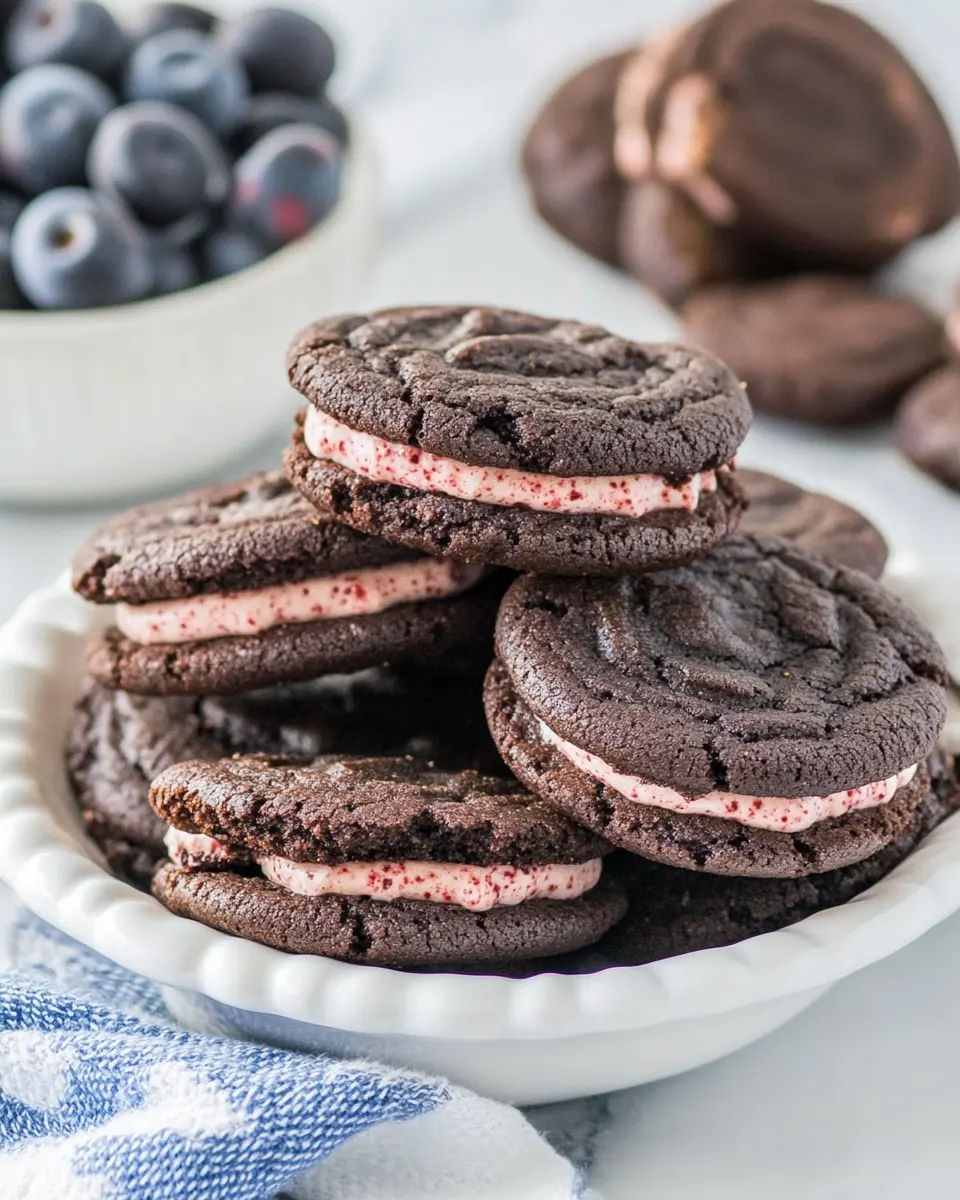
These Chocolate Cherry Sandwich Cookies stand out because they marry rich chocolate with bright cherry buttercream in a way that feels both nostalgic and elegant. Give them a try when you want a dessert that is impressive but approachable, whether for a special occasion or a cozy afternoon treat. Once you taste the tender cookie paired with the fruity buttercream, you may find yourself reaching for this recipe whenever you want to share something that feels homemade and a little bit indulgent.
Chocolate Cherry Sandwich Cookies
Ingredients
Equipment
Method
- Preheat the oven to 400°F. Line baking sheets with parchment paper.: The moment you slide the first tray in you'll smell a warm, slightly toasty note of chocolate once the dough starts to bake, signaling the Maillard reactions taking off. Proper preheating ensures even rise and predictable bake time, so heat the oven fully before baking. A common mistake is placing cold dough into an oven that is still warming, resulting in over spread or uneven texture. Make sure parchment lies flat on the sheet so cookies bake on a consistent surface, and if your oven runs hot or cool, rotate the pans halfway through to maintain an even color.
- In the bowl of a stand mixer fitted with the paddle attachment, or in a large bowl with an electric mixer, cream together the shortening and sugar until light and fluffy.: You will notice the color lighten and the texture become airy as sugar cuts through the shortening, creating tiny pockets that help the cookie feel light. I listen for a slight change in the mixer’s hum when the mixture is aerated enough. Creaming properly matters because it traps air that helps the cookie rise subtly and keeps the crumb tender. Avoid creaming at too high speed, which can heat the fat and lead to greasy batter, and stop once the mixture is visibly lighter and soft to the touch.
- Add in the egg, vanilla, buttermilk, and water and mix until the ingredients are fully incorporated.: After adding these liquids, the batter will loosen and take on a glossy sheen, signifying good emulsification. The buttermilk adds a touch of tang while water adjusts the batter’s texture for the right drop consistency. If the mixture looks curdled, this usually means the butter or shortening was too cold; let the bowl sit briefly or mix a bit slower until it smooths out. Overmixing here can incorporate too much air or activate gluten later, so mix just until smooth.
- In a medium bowl, whisk together the flour, baking soda, cocoa, and salt. Slowly add the dry ingredients to the shortening mixture and mix until just combined. Use a rubber spatula to gently fold the chocolate chips into the batter.: As you add the dry mix, the batter will thicken and become matte in appearance, and you should stop mixing as soon as streaks of flour disappear. Folding in the semisweet chocolate chips keeps pockets of melted chocolate rather than breaking them down and creating streaks. This technique preserves texture and creates delightful bites of melted chocolate. A frequent error is overmixing, which produces a dense cookie, so fold gently until evenly distributed.
- Use a medium cookie scoop (1.5 tablespoons) to drop batter onto prepared cookie sheets about 2 inches apart.: Scooping ensures uniform cookies so they bake evenly; each mound should have a slightly domed top. Giving them space prevents them from joining as they spread, and if the dough seems too soft to hold shape, chilling the scooped dough briefly tightens the outside and helps it bake into tidy rounds. Avoid scooping with a spoon because sizes will vary and lead to inconsistent bake times.
- Bake for 8-9 minutes in the preheated oven.: You'll see the edges set and the centers remain soft, with the tops appearing matte rather than glossy when they are ready to come out. The aroma of cocoa and baked sugar becomes prominent right at the end of this window. Pulling cookies out too early leaves them underbaked and collapse prone, while overbaking dries them; aim for that slight springiness when you touch a top gently with a fingertip. If your oven's temperature is uncertain, check at the lower time and adjust for future batches.
- Allow cakes to cool on baking sheets for 5 minutes before removing to wire racks to cool completely.: During this resting time the cookies finish setting, and removing them too soon can cause them to tear or deform. Cooling on a rack ensures air circulates underneath so bottoms do not become soggy. If you skip the rest on the sheet, the cookies may fall apart when transferring; use a thin spatula and patience to lift them without breaking.
- In the bowl of a stand mixer fitted with the paddle attachment, beat the butter on medium-high speed for 3-4 minutes.: The butter should become pale and airy, with a light, whipped aroma. This aeration builds the structure for a silky buttercream that pipes and spreads well. If the butter is too cold it will not whip properly, and if too warm it will be greasy; aim for room temperature and beat until visibly lighter in color and texture.
- Turn the mixer down to low speed and gradually add in the powdered sugar until thoroughly combined. Turn the mixer back up to medium-high speed and mix for 5 minutes.: Adding powdered sugar slowly prevents a dusty cloud and helps the sugar integrate smoothly for a velvety texture. After the full mixing, the buttercream should be light and fluffy, with a sweet, creamy scent. If the frosting feels grainy, you may need to sift the powdered sugar or beat longer. Too much speed at first can fling sugar everywhere, so keep it controlled until the powdered sugar is mostly incorporated.
- Add in the cherry juice and vanilla and beat an additional 2 minutes.: The cherry juice brightens the flavor and colors the buttercream slightly, while the vanilla rounds it out. The mixture will take on a fresh, fruity aroma and become softer. If the buttercream thins too much, pause and let it firm in the fridge briefly; if it is too thick, add milk sparingly. A common misstep is adding too much liquid at once; always add one teaspoon at a time and check consistency.
- Use a rubber spatula to fold the chopped cherries into the buttercream.: Folding preserves chunks of maraschino cherries so you get bursts of texture and flavor rather than uniformly smooth frosting. The buttercream should show ribbons of fruit, adding visual interest and tiny chewy bits. If the cherries are too wet, pat them dry before folding to avoid thinning the frosting.
- Note: If the buttercream is too thick, you can add a little milk in 1 teaspoon at a time until the desired consistency is reached.: If the buttercream is too thick, you can add a little milk in 1 teaspoon at a time until the desired consistency is reached. : When you add a touch of milk , the buttercream transforms, becoming more pipeable and glossy. Add the milk slowly and test frequently to avoid overshooting the consistency. If you add too much, chill the frosting briefly and rewhip to recover some structure.
- Spoon or pipe the buttercream onto the flat sides of half the cookies and top with remaining cookies.: The finished assembly should look tidy, with a visible ring of buttercream at the edges if you pipe a generous swirl. Press gently when sandwiching to spread the frosting evenly without squeezing it out. A typical mistake is overfilling which causes the filling to ooze; measure or pipe consistently so each sandwich is uniform.
Notes
- Swap chocolate intensity by using dark chocolate chips instead of semisweet to deepen the chocolate notes and add slight bitterness for a sophisticated profile.
- Amplify cherry flavor by reducing the cherry juice into a syrup to concentrate the flavor before adding to the buttercream, which gives a more pronounced fruit presence.
- Add texture to the filling by folding in chopped toasted nuts or coconut for contrast, ensuring you adjust quantities so the buttercream still spreads smoothly.
- Make mini sandwich cookies by using a smaller scoop and reducing baking time by a minute or two, creating dainty bites perfect for parties or cookie platters.
- Decorate the edges by rolling the filled cookies in finely chopped cherries or sprinkles for a festive presentation that also adds a hint of texture.