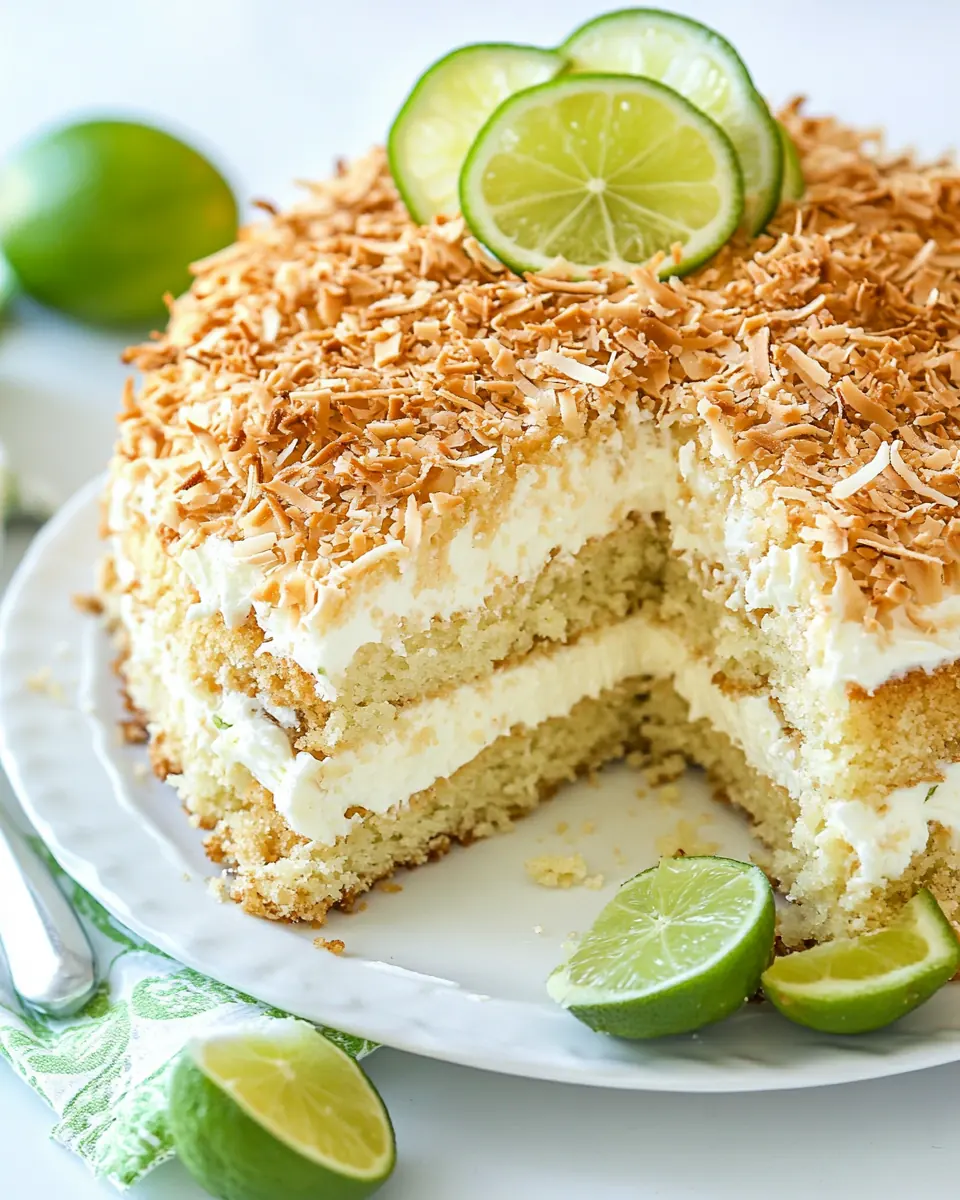
Key Lime Coconut Cake
Key Lime Coconut Cake has been one of those desserts that always takes me back to sunlit kitchens and easy weekend baking sessions.
I first made Key Lime Coconut Cake for a neighbor who was celebrating a promotion, and I remember scraping the bowl clean while the toasted coconut cooled on the counter, the air filling with a warm, toasty aroma. The first bite was bright with lime, creamy from the filling, and pleasantly crisp from the coconut, and that contrast is exactly what made me fall for this recipe. Over time I adjusted small details, like brushing the layers with a lime syrup so each slice stays moist, and chilling the frosting to let the flavors meld. Those tiny tweaks turned it from good to memorable for holiday tables and casual coffee dates alike.
When I serve Key Lime Coconut Cake, I like to watch people hesitate before they try it, then lean in after the first forkful, smiling at the balance of tart and sweet. It travels well, keeps its structure when sliced, and actually benefits from a little chill time before cutting, which makes it a reliable pick for potlucks. Baking it has taught me patience, because letting the frosting set and the coconut adhere properly makes all the difference. If you are drawn to bright citrus desserts with texture and personality, this cake will likely become one of your favorites too.
Recipe Snapshot
1 hr 38 mins
60 mins
38 mins
Medium
350 kcal
American
Gluten-Free, Low FODMAP
Desserts
Oven, Mixer, Whisk attachment, Serrated knife, Measuring cup, Small baking pan
Why This Key Lime Coconut Cake Is So Good
Bright Citrus Punch
I love how Key Lime Coconut Cake delivers a sharpened lime flavor that cuts through the richness. The lime juice and zest wake up the palate, giving the cake a refreshing lift that feels lighter than many cream filled cakes. I find that using freshly squeezed lime juice makes a noticeable difference, giving a lively aroma you can smell before you even take a bite.
Creamy Yet Light Frosting
The frosting, built from whipped cream cheese and chilled sour cream, yields a silky texture that clings to the cake without being overly sweet. When chilled briefly, it firms enough to slice cleanly, while still melting on the tongue, and that creamy mouthfeel complements the citrus without competing with it.
Toasted Coconut Adds Texture
Toasted shredded coconut brings a toasty, almost caramelized note and a crisp contrast to the soft cake and creamy filling. I always toast the coconut until it is golden and dry because that crunchy layer gives the cake character and a delightful little crunch in every bite.
Layered Construction for Moisture
Brushing the layers with a simple lime syrup infuses moisture and deepens the lime flavor throughout. I like how this step prevents the cake from feeling dry, especially with a sponge style layer, and it helps the layers meld into a cohesive whole when the cake rests in the refrigerator.
Make Ahead Friendly
This cake is forgiving when it comes to timing. I often assemble it a day ahead and refrigerate, which lets the flavors marry and makes serving less stressful. The texture improves slightly after resting, and you avoid last minute rushes when guests arrive, which is one reason I keep this recipe in my entertaining rotation.
Ingredients Required for Key Lime Coconut Cake
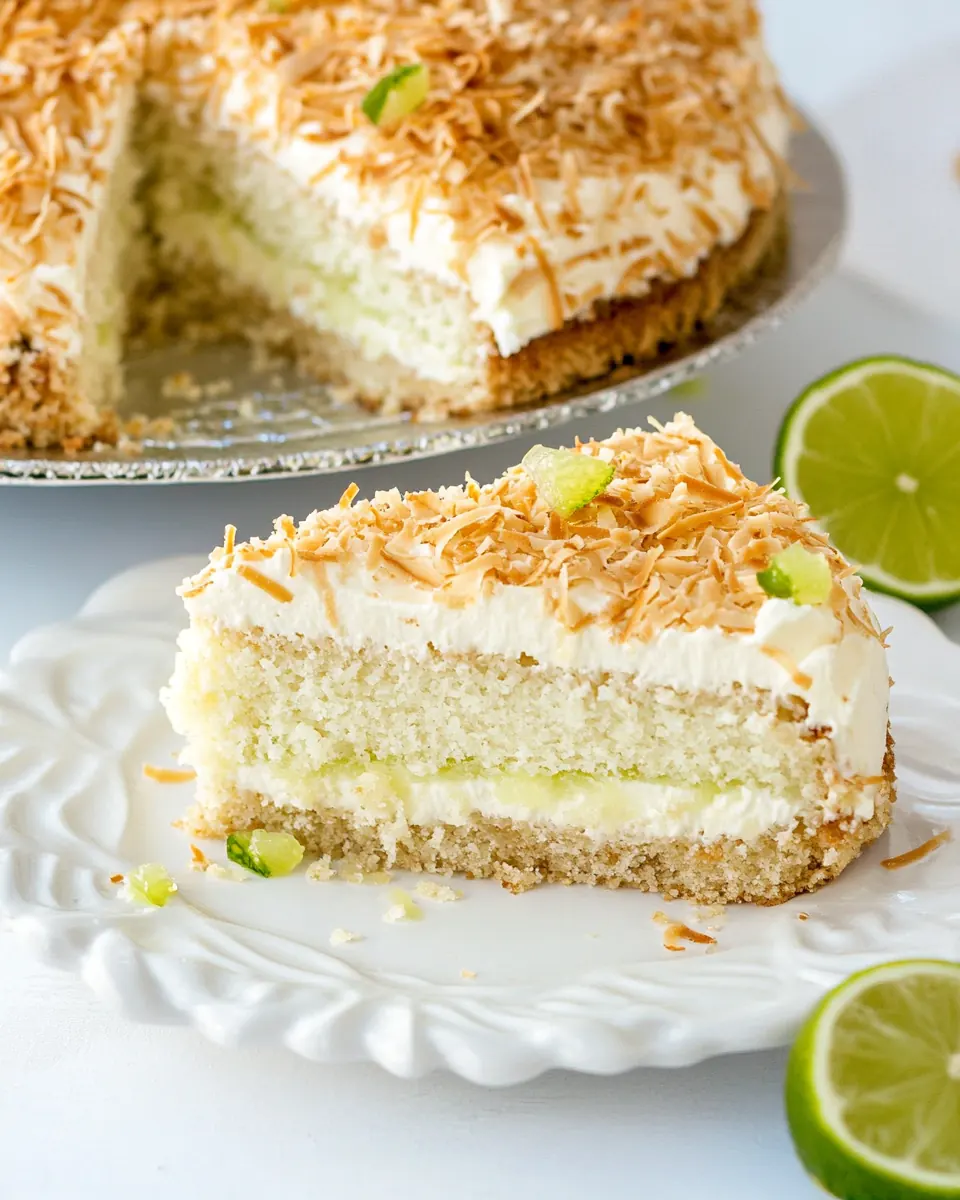
These ingredients are chosen to create balance between citrus brightness, creamy tang, and toasty crunch. The cake layers provide a tender base, while the lime elements bring acidity that brightens the whole dessert. The creamy components smooth the texture, and the shredded coconut finishes the cake with crisped sweetness. Together they form a triad of texture and flavor that is both refreshing and indulgent.
- 6 large eggs, room temperature: Whisk vigorously to incorporate air and provide structure; eggs act as the primary leavening and binding agents in the cake. Use room temperature eggs to ensure even mixing and a tender crumb, and separate or beat fully as the recipe directs for optimal volume.
- 1 cup granulated sugar: Sweeten evenly to balance tart lime flavors and contribute to browning; granulated sugar also helps tenderize the crumb by interfering with gluten formation. Measure carefully to maintain sweetness level and dissolve properly during mixing for smooth texture.
- 1 cup all-purpose flour: Provide bulk and gluten that creates the cake's framework; all-purpose flour yields a tender yet sturdy crumb suitable for this layered dessert. Sift or gently spoon into the cup for accurate measurement to avoid a dense result.
- 1/2 tsp baking powder: Leaven lightly to help the cake rise and counterbalance the dense components; baking powder releases gas when heated for lift. Measure precisely, as too much can create coarse texture and off flavors.
- 1/4 cup freshly squeezed lime juice, from 3 medium limes: Brighten with fresh acidity to impart authentic key lime flavor and tenderize the cake through acidic interaction with other ingredients. Use freshly squeezed lime juice for the best aromatic profile and avoid bottled juice for optimal brightness.
- 3 tbsp granulated sugar: Enhance sweetness specifically for the lime layer or syrup and help balance acidity; a small addition of sugar can smooth sharp citrus notes. Dissolve fully when incorporated so it doesn't grainy-texture the final component.
- 3/4 cup warm water: Hydrate batter and dissolve sugar, providing moisture necessary for a soft crumb; warm water can help dissolve sugars and activate leavening evenly. Ensure water is not too hot to avoid curdling dairy ingredients when combined.
- 8 oz cream cheese, softened: Soften thoroughly to create a smooth, creamy filling and add richness; cream cheese contributes tang, body, and stability to the creamy layer. Beat until silky to prevent lumps and to ensure even incorporation with other dairy components.
- 1 cup granulated sugar: Sweeten the cream cheese layer and balance tart elements; granulated sugar also helps achieve a scoopable, stable texture when whipped into creams. Add gradually and taste-adjust to maintain desired sweetness without overpowering lime tang.
- 16 oz cold sour cream, full fat: Thicken and add tang to the filling while contributing a silky mouthfeel; full-fat sour cream lends moisture and prevents the layer from tasting chalky. Keep cold until mixing to preserve structure and avoid excessive thinning of the filling.
- 3 tbsp lime juice, freshly squeezed (from 2 medium limes): Brighten the filling with concentrated citrus acidity to amplify lime character and balance richness; freshly squeezed lime juice provides the purest flavor. Add gradually and taste as you go to maintain the desired tartness without curdling dairy.
- 1 tbsp lime zest, from 2 medium limes: Infuse vibrant citrus aroma and an intense lime essence; lime zest contains essential oils that elevate fragrance and flavor complexity. Zest only the colored outer peel to avoid bitterness from the white pith.
- 2 cup 7 oz sweetened shredded coconut: Add chewy texture and tropical sweetness throughout the cake; sweetened shredded coconut supports the coconut theme while contributing visual interest. Toast lightly if desired to deepen flavor, and measure shredded coconut in its specified weight for consistency.
Recipe Steps for Key Lime Coconut Cake
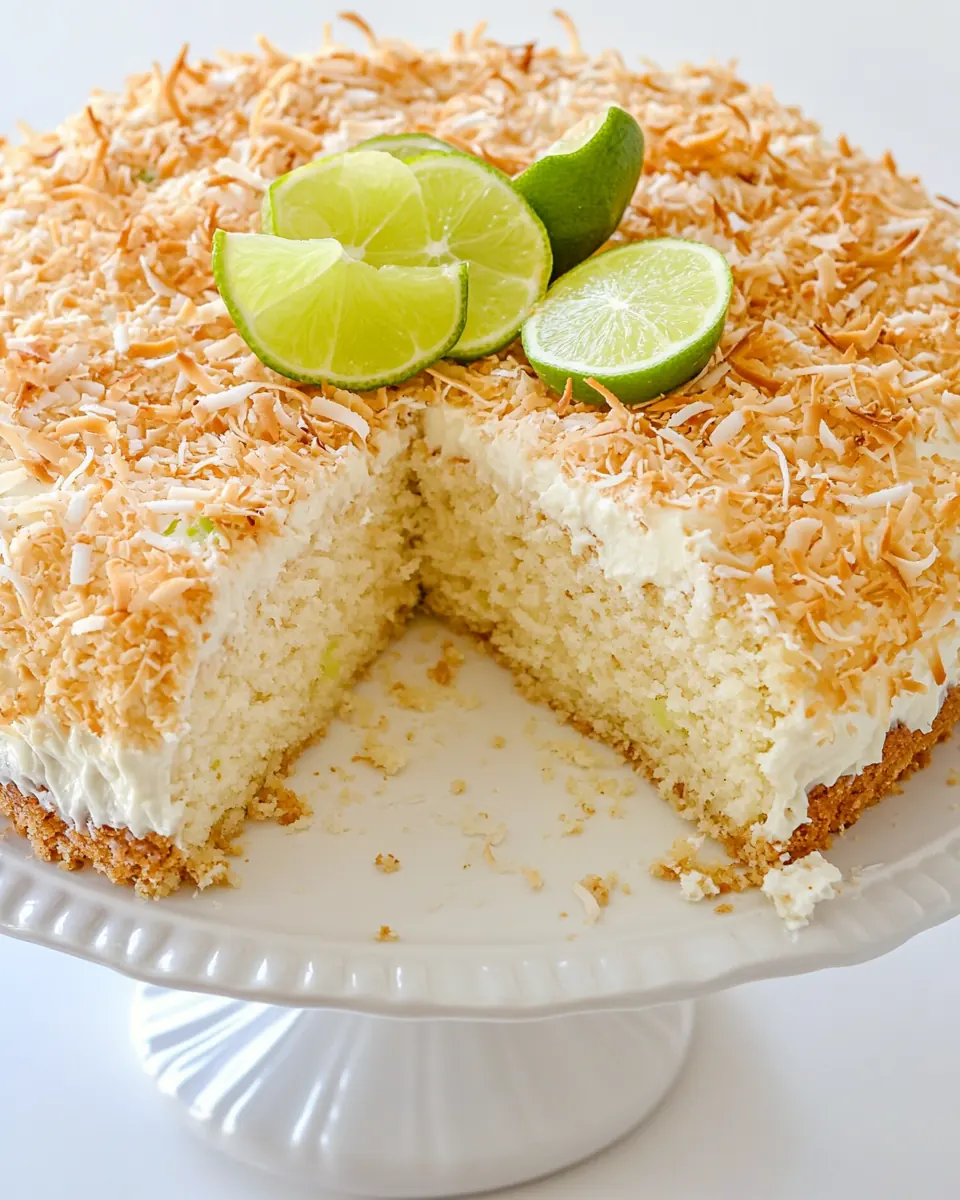
These instructions expand the original directions into intimate, sensory steps so you can bake with confidence. I walk through textures, smells, and common pitfalls, so you get consistent results each time.
- Toast coconut at 350˚F in a small baking pan in oven, stirring a few times, especially towards the end, until golden and dry, 7 to 10 minutes. Set aside to cool.: Warm, nutty aromas will fill your kitchen as the shredded coconut shifts from pale to golden brown, and you will hear a faint crackle as moisture escapes. The even color is your cue that the coconut is toasted without burning; stir several times to prevent hot spots and toasting faster at the edges. Cooling is crucial, because hot coconut will steam against the frosting and become limp; let it cool on a sheet so it crisps up. A common mistake is leaving it in the oven too long, which yields bitter, overcooked flakes, so pull it out at the first sign of even golden color.
- Make 4-Ingredient Sponge Cake and set aside to cool. Get the recipe on natashaskitchen. com and be sure to watch the tutorial.: As you mix the sponge, you should notice the batter lighten and develop a smooth sheen, with small airy bubbles forming when properly aerated. The cake bakes into a tender, flexible crumb that slices easily, and cooling on a rack prevents sogginess from trapped steam. This step matters because the sponge provides the soft foundation that soaks up the lime syrup without collapsing. If you rush the cooling, the layers can steam and become gummy, so allow them to cool fully before slicing.
- In the bowl of your mixer fitted with whisk attachment, beat together cream cheese and 1 cup sugar on high speed 3 minutes until whipped, scraping down the bowl as needed.: The mixture should transform from dense and pocked to light and airy, with a pale color and silky texture, emitting a subtle tangy scent from the cream cheese . Scrape the bowl periodically to avoid unmixed pockets, and stop once it appears smooth and whipped to avoid overwhipping which can cause a grainy texture. If the cream cheese was not fully softened, you may see lumps, so ensure it reaches room temperature first.
- Beat in 16 oz cold sour cream until smooth (1 min on high). Add lime zest and juice and beat to combine (1 minute on high). Refrigerate frosting if not using right away.: Once the chilled sour cream is incorporated, the frosting will become silkier and slightly looser, with a cool, tangy scent. Adding the lime zest and lime juice brightens the aroma immediately; you will smell citrus oils that make the frosting sing. Refrigerating helps it firm so it spreads cleanly, and keeps the texture stable. Avoid adding the sour cream warm or letting the frosting sit out too long, which can make it slump and harder to frost the cake neatly.
- In a measuring cup, combine 1/4 cup fresh lime juice, 3/4 cup warm water and 3 tbsp sugar. Stir to dissolve the sugar and set aside.: The sugar should dissolve into the warm water, producing a clear, glossy lime syrup that smells fresh and zesty. This syrup is your moisture agent, so the temperature being warm helps it penetrate the cake layers more evenly. If the sugar feels grainy, continue stirring until fully dissolved, because undissolved sugar will create little crunchy pockets when brushed onto the cake. Use a gentle stream when you brush the syrup so the layers absorb rather than pool on the surface.
- Slice cake layers in half with a serrated knife. Place the first layer, cut-side-up on a cake platter. Brush with 1/4 of the lime syrup. Top with a generous amount of cream. Repeat with remaining cake layers then cover the entire cake with remaining cream.: When you slice the layers, the clean serrated motion should leave even, soft edges; if you hear tearing, slow down and saw gently. Brushing the cut side with the lime syrup will produce a faint sheen and you may see the layer darken slightly as it soaks in; this is normal and desirable because it adds both flavor and moisture. Apply the frosting with a spatula in smooth strokes, aiming for even coverage to help the coconut adhere later. A frequent error is using too much syrup at once, which can oversaturate and weaken the layer, so divide the syrup and brush gradually.
- Cover the entire cake generously with toasted and cooled coconut flakes, using your hands to scoop coconut onto the sides, pressing gently to adhere. The coconut flakes are crispiest if served right away but it is easier to slice the cake once it's had a chance to set in the refrigerator for about 2 hours.: The tactile act of pressing the cooled toasted coconut onto the frosting is satisfying, and you will feel the flakes stick and settle into the cream. The final look should be uniformly coated with no large bare patches, and you will notice the contrast between the creamy white frosting and the golden coconut. Press lightly so you do not compact the frosting or smear it, and work in small sections to keep control. If you add the coconut while the frosting is too warm, it will slide off, so ensure the frosting is chilled enough to hold the flakes in place. The coconut is at its crispiest when served soon after applying, but chilling for about two hours makes slicing neater and is often preferable for serving.
Make It Your Own
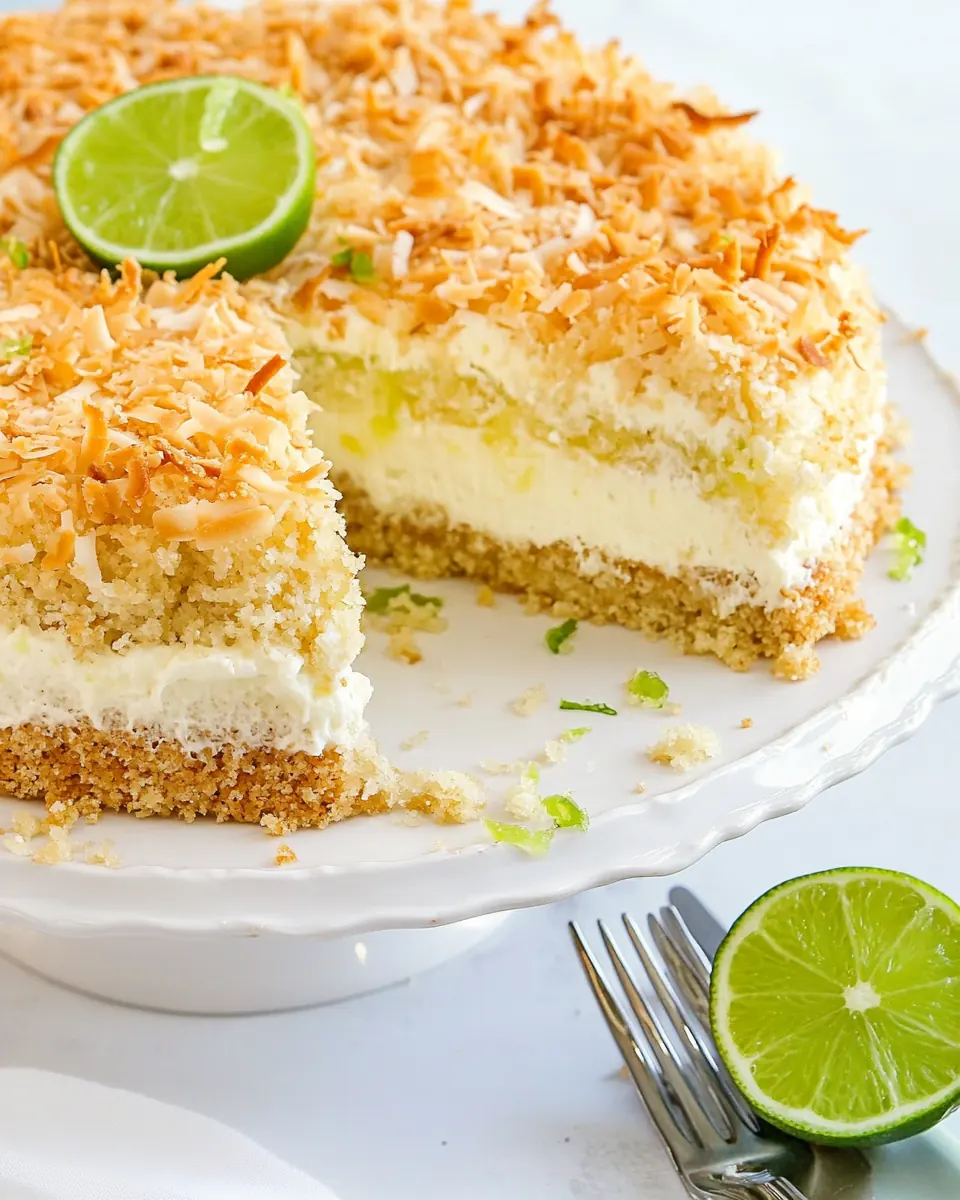
This section expands on practical ways to adapt and personalize the cake while preserving its core traits. Small swaps or presentation choices can tailor the dessert to the occasion without losing the bright lime character.
- Chill before serving: Refrigerate the assembled cake for about two hours to let the frosting set and the syrup soak in, which makes slicing cleaner and allows flavors to harmonize.
- Freeze portions: Cut individual slices, wrap tightly, and freeze for longer storage, then thaw in the refrigerator before serving to maintain texture.
- Adjust sweetness: If you prefer a less sweet frosting, reduce the frosting sugar slightly and increase the lime zest to retain bright flavor without adding sugar.
- Serve crisp coconut: Toast the coconut until golden and cool completely so it stays crisp on the cake, adding a pleasant textural contrast to the creamy frosting.
- Make syrup evenly: Warm the water enough to dissolve sugar fully so the lime syrup penetrates the cake layers uniformly and avoids gritty spots.
Serving Suggestions
This cake lends itself to casual gatherings and special events, offering a balance of bright citrus and rich creaminess that works well across seasons. Present it chilled for neat slices or slightly less cold if you prefer a softer mouthfeel. Consider the texture contrasts when planning accompaniments.
- For summer parties: Serve chilled slices alongside fresh fruit to echo the citrus notes and provide a light, refreshing contrast to the cake’s richness.
- For holiday tables: Place the cake on a decorative platter and garnish with extra lime zest for a festive pop of color that reads bright against winter spreads.
- Casual coffee service: Offer the cake slightly less cold so the frosting is softer, pairing it with black coffee or mint tea to complement the lime tang.
- Storage tips: Keep the cake covered in the refrigerator for up to a week, and freeze individual slices wrapped tightly for longer storage; thaw in the refrigerator for best texture.
- Occasions: This cake fits family gatherings, weekend baking sessions, or celebratory events where a crowd pleaser with personality is welcome.
- Presentation: For a polished look, press the toasted coconut on with a flat spatula for even coverage and wipe the platter clean of stray flakes before serving.
FAQ
Conclusion
This cake stands out for its lively lime flavor, creamy tang, and crisp toasted coconut, giving each slice textural contrast and bright flavor. I hope you’ll try it for a special occasion or a weekend baking project, because the recipe rewards a little patience with a dessert that is both festive and approachable. Share it chilled for clean slices and watch how quickly guests go back for seconds, savoring the citrus and coconut interplay that makes this cake memorable.
Key Lime Coconut Cake
Ingredients
Equipment
Method
- Toast coconut at 350˚F in a small baking pan in oven, stirring a few times, especially towards the end, until golden and dry, 7 to 10 minutes. Set aside to cool.: Warm, nutty aromas will fill your kitchen as the shredded coconut shifts from pale to golden brown, and you will hear a faint crackle as moisture escapes. The even color is your cue that the coconut is toasted without burning; stir several times to prevent hot spots and toasting faster at the edges. Cooling is crucial, because hot coconut will steam against the frosting and become limp; let it cool on a sheet so it crisps up. A common mistake is leaving it in the oven too long, which yields bitter, overcooked flakes, so pull it out at the first sign of even golden color.
- Make 4-Ingredient Sponge Cake and set aside to cool. Get the recipe on natashaskitchen. com and be sure to watch the tutorial.: As you mix the sponge, you should notice the batter lighten and develop a smooth sheen, with small airy bubbles forming when properly aerated. The cake bakes into a tender, flexible crumb that slices easily, and cooling on a rack prevents sogginess from trapped steam. This step matters because the sponge provides the soft foundation that soaks up the lime syrup without collapsing. If you rush the cooling, the layers can steam and become gummy, so allow them to cool fully before slicing.
- In the bowl of your mixer fitted with whisk attachment, beat together cream cheese and 1 cup sugar on high speed 3 minutes until whipped, scraping down the bowl as needed.: The mixture should transform from dense and pocked to light and airy, with a pale color and silky texture, emitting a subtle tangy scent from the cream cheese . Scrape the bowl periodically to avoid unmixed pockets, and stop once it appears smooth and whipped to avoid overwhipping which can cause a grainy texture. If the cream cheese was not fully softened, you may see lumps, so ensure it reaches room temperature first.
- Beat in 16 oz cold sour cream until smooth (1 min on high). Add lime zest and juice and beat to combine (1 minute on high). Refrigerate frosting if not using right away.: Once the chilled sour cream is incorporated, the frosting will become silkier and slightly looser, with a cool, tangy scent. Adding the lime zest and lime juice brightens the aroma immediately; you will smell citrus oils that make the frosting sing. Refrigerating helps it firm so it spreads cleanly, and keeps the texture stable. Avoid adding the sour cream warm or letting the frosting sit out too long, which can make it slump and harder to frost the cake neatly.
- In a measuring cup, combine 1/4 cup fresh lime juice, 3/4 cup warm water and 3 tbsp sugar. Stir to dissolve the sugar and set aside.: The sugar should dissolve into the warm water, producing a clear, glossy lime syrup that smells fresh and zesty. This syrup is your moisture agent, so the temperature being warm helps it penetrate the cake layers more evenly. If the sugar feels grainy, continue stirring until fully dissolved, because undissolved sugar will create little crunchy pockets when brushed onto the cake. Use a gentle stream when you brush the syrup so the layers absorb rather than pool on the surface.
- Slice cake layers in half with a serrated knife. Place the first layer, cut-side-up on a cake platter. Brush with 1/4 of the lime syrup. Top with a generous amount of cream. Repeat with remaining cake layers then cover the entire cake with remaining cream.: When you slice the layers, the clean serrated motion should leave even, soft edges; if you hear tearing, slow down and saw gently. Brushing the cut side with the lime syrup will produce a faint sheen and you may see the layer darken slightly as it soaks in; this is normal and desirable because it adds both flavor and moisture. Apply the frosting with a spatula in smooth strokes, aiming for even coverage to help the coconut adhere later. A frequent error is using too much syrup at once, which can oversaturate and weaken the layer, so divide the syrup and brush gradually.
- Cover the entire cake generously with toasted and cooled coconut flakes, using your hands to scoop coconut onto the sides, pressing gently to adhere. The coconut flakes are crispiest if served right away but it is easier to slice the cake once it's had a chance to set in the refrigerator for about 2 hours.: The tactile act of pressing the cooled toasted coconut onto the frosting is satisfying, and you will feel the flakes stick and settle into the cream. The final look should be uniformly coated with no large bare patches, and you will notice the contrast between the creamy white frosting and the golden coconut. Press lightly so you do not compact the frosting or smear it, and work in small sections to keep control. If you add the coconut while the frosting is too warm, it will slide off, so ensure the frosting is chilled enough to hold the flakes in place. The coconut is at its crispiest when served soon after applying, but chilling for about two hours makes slicing neater and is often preferable for serving.
Notes
- Chill before serving: Refrigerate the assembled cake for about two hours to let the frosting set and the syrup soak in, which makes slicing cleaner and allows flavors to harmonize.
- Freeze portions: Cut individual slices, wrap tightly, and freeze for longer storage, then thaw in the refrigerator before serving to maintain texture.
- Adjust sweetness: If you prefer a less sweet frosting, reduce the frosting sugar slightly and increase the lime zest to retain bright flavor without adding sugar.
- Serve crisp coconut: Toast the coconut until golden and cool completely so it stays crisp on the cake, adding a pleasant textural contrast to the creamy frosting.
- Make syrup evenly: Warm the water enough to dissolve sugar fully so the lime syrup penetrates the cake layers uniformly and avoids gritty spots.