Pumpkin Roll
Pumpkin Roll has been a staple in my autumn baking rotation for years, a recipe I reach for when I want something that feels festive without being fussy.
I remember the first time I made Pumpkin Roll, juggling a sticky towel and a warm, fragrant cake as the kitchen filled with the scent of pumpkin and pumpkin pie spice. That first slice, the contrast between the tender spiced cake and the tangy cream cheese filling, convinced me this was worth mastering. Over the seasons I refined small details, like how much powdered sugar to dust on the towel, and the gentle way to roll so the cake does not crack. Each attempt taught me something about timing and feel.
There is a comfort to making Pumpkin Roll that goes beyond the ingredients. The ritual of whisking eggs until thick, folding in the dry mix, and the sudden puff of the batter in the oven give a kind of culinary reassurance. I enjoy serving it when friends drop by for coffee, because it travels well and always seems to disappear quickly. Baking this taught me to be patient, and to trust visual cues, like when the top springs back to the touch. It is also a rewarding recipe to make ahead, keeping well in the fridge and slicing neatly when chilled.
Recipe Snapshot
30 mins
15 mins
15 mins
Medium
250 kcal
American
Gluten-Free, Low FODMAP
Desserts
Jelly-roll pan, Parchment paper, Electric mixer, Wire rack, Offset spatula
The Charm of This Pumpkin Roll
Comforting, seasonal flavor
I love Pumpkin Roll because the pumpkin and warm spices capture fall in a bite, without relying on complicated techniques. The spiced cake feels cozy and familiar, and the filling adds a bright, creamy balance.
Elegant yet approachable
This dessert looks impressive when sliced, but it is approachable to make. I often bring it to gatherings because it slices into neat spirals that make a simple presentation feel special.
Make ahead friendly
One reason I keep going back to this recipe is the make ahead flexibility. After chilling, the roll firms up and slices cleanly, making it a reliable choice when you want dessert ready before guests arrive.
Textural contrast
The delicate, slightly springy cake paired with the smooth cream cheese filling creates a lovely textural contrast, and that is a big part of why I crave this.
Simple ingredients, big payoff
With pantry staples like all purpose flour, sugar, and basic leaveners, this recipe delivers a seasonal, bakery worthy result with minimal fuss. I appreciate recipes that reward careful technique rather than exotic ingredients.
What Goes Into Pumpkin Roll
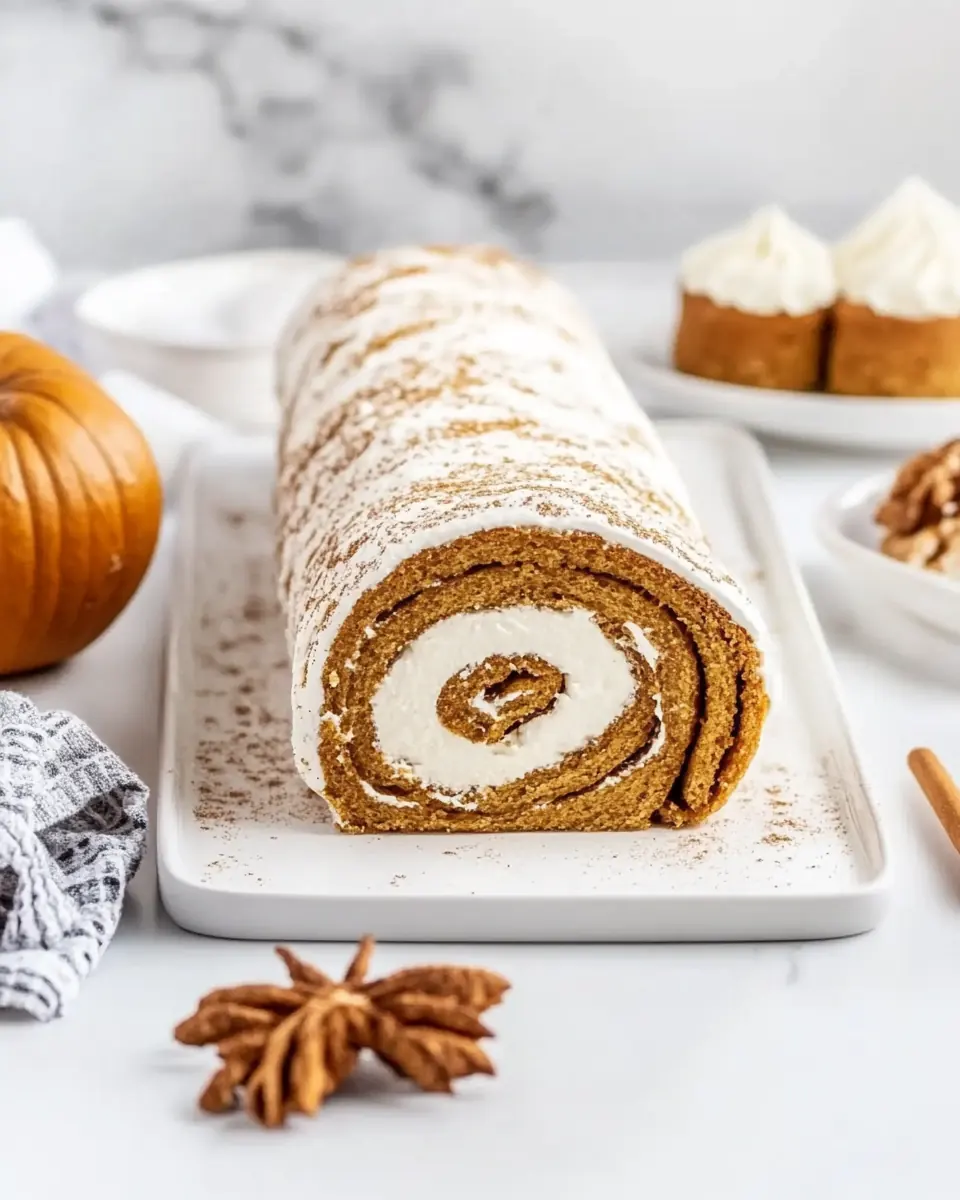
The ingredients in Pumpkin Roll are straightforward and purpose driven. You have a tender spiced cake base, made from flour and leaveners, a generous measure of pumpkin and sweetener for moisture and flavor, and a classic cream cheese filling to cut through the sweetness. Each component supports the others, from structure to creaminess and spice.
- 1/4 cup powdered sugar to sprinkle on towel: Lightly dust and provide a nonstick surface for rolling by sprinkling powdered sugar on the towel; helps prevent the cake from sticking while the roll cools and sets. Adds a touch of sweetness to the exterior and aids in achieving a smooth release. Use measured amount to avoid overly sweet outer layer.
- 3/4 cup all-purpose flour: Provide the structural base and gluten framework for the cake batter by adding all-purpose flour; contributes to the cake's texture and stability during baking. Works with the leavening agents to create a tender crumb that can be rolled without cracking. Sift or measure properly to maintain consistent cake density.
- 1/2 teaspoon baking powder: React with acidic ingredients to produce carbon dioxide and impart lift by adding baking powder; helps the sponge rise evenly in the oven. Balance with baking soda to achieve the desired rise without off flavors. Measure accurately to avoid an overly airy or collapsed cake.
- 1/2 teaspoon baking soda: Neutralize acidity and produce immediate leavening with baking soda; pairs with the pumpkin and other acidic components to create lift and tenderness. Also helps with browning and texture development of the sponge. Use the correct amount to prevent metallic or soapy tastes.
- 1 tablespoon pumpkin pie spice: Provide warm aromatic flavor and seasonal spice complexity using pumpkin pie spice; enhances pumpkin notes and gives the roll its characteristic taste profile. Imparts cinnamon, nutmeg, and other warm spices that complement the sweetness. Add as specified to avoid overpowering the batter.
- 1/4 teaspoons salt: Enhance overall flavor balance and control sweetness by contributing a small amount of salt; brings out other flavors and rounds the taste. Helps strengthen gluten slightly and improves the perception of sweetness. Use sparingly to prevent a salty impression.
- 3 large eggs: Incorporate air, structure, and richness by beating in large eggs; they act as emulsifiers and binders that create the cake's sponge texture. Provide moisture and help the batter set when baked, crucial for a flexible roll. Beat properly to achieve lightness without deflating the mixture.
- 1 teaspoon pure vanilla extract: Introduce aromatic depth and enhance sweetness perception with pure vanilla extract; complements pumpkin and spice flavors in the cake. Acts as a flavor bridge between the batter and the filling for a cohesive taste. Use pure extract for a cleaner, more pronounced vanilla profile.
- 1 cup granulated sugar: Sweeten and contribute to the cake's tenderness and browning with granulated sugar; helps stabilize whipped eggs and adds structure through caramelization during baking. Balances spices and pumpkin to create an appealing sweetness level. Properly dissolved sugar ensures even texture.
- 2/3 cup pure pumpkin puree: Provide moisture, dense flavor, and seasonal character with pure pumpkin puree; contributes both liquid and fiber to the batter for a tender, moist sponge. Works with spices to define the pumpkin-roll profile and affects the cake's pliability when rolling. Use plain puree, not pumpkin pie filling, for best results.
- 8 ounces cream cheese softened: Create creamy tang and richness in the filling by using softened cream cheese; provides smoothness and slight acidity that balances the sweet powdered sugar. Helps the filling hold its shape while remaining spreadable for assembly. Ensure proper softening to avoid lumps when mixing.
- 1 cup powdered sugar sifted: Sweeten and stabilize the cream cheese filling by incorporating sifted powdered sugar; contributes a silky texture and consistent sweetness without graininess. Sifting prevents lumps and helps achieve a smooth, pipeable filling. Adjust amount for desired sweetness and spreadability.
- 6 tablespoons butter softened: Add richness, structure, and spreadability to the filling using softened butter; helps create a stable emulsion with the cream cheese and powdered sugar. Contributes to mouthfeel and helps the filling set slightly when chilled. Ensure butter is softened to room temperature for smooth mixing.
- 1 teaspoon pure vanilla extract: Enhance and round the filling's flavor with pure vanilla extract; elevates the cream cheese sweetness and ties together the filling's flavors. Provides aromatic complexity and a familiar profile that complements pumpkin and spices. Use measured amount to avoid overpowering the filling.
How to Prepare Pumpkin Roll
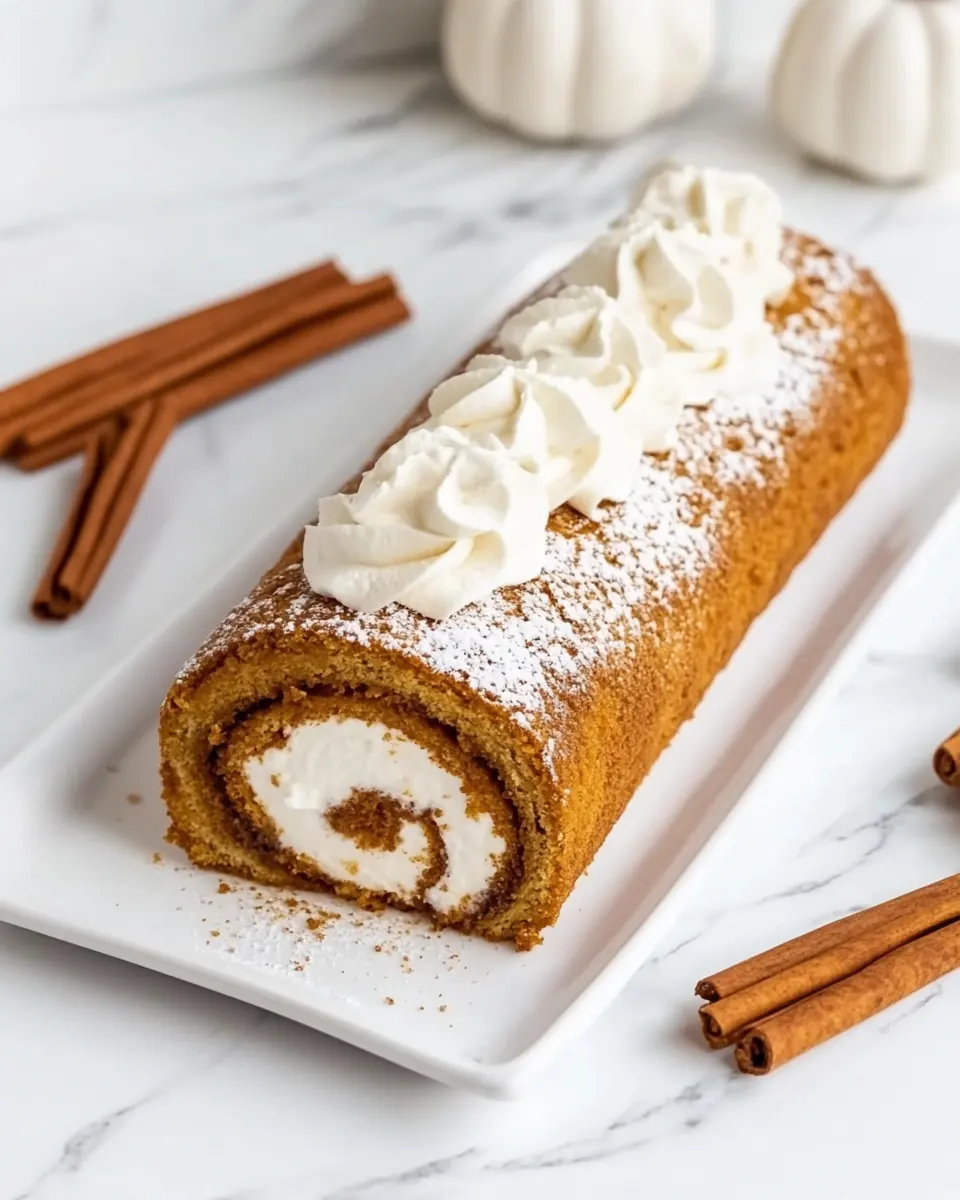
These steps will walk you through baking and assembling a reliable Pumpkin Roll. I write this with the assumption you will follow each cue for the best texture and appearance. Take your time with the rolling and the filling, as gentle handling is key.
- Preheat oven to 375°F. Line a 15 x 10-inch jelly-roll pan with parchment paper and spray with non-stick cooking spray. Sprinkle a clean tea towel with powdered sugar. Set pan and towel aside.: As the kitchen warms, you should notice the air becoming faintly warm and anticipatory, a good sign that the oven is coming to temperature. The aroma in the oven is subtle at first, but setting the correct heat ensures even rise and that the cake sets quickly so it remains pliable. Lining the pan with parchment and spraying it prevents sticking, while the dusting of powdered sugar on the towel becomes a barrier so the cake can release cleanly when turned out. Common mistake to avoid here is skipping the towel dusting, which often leads to the cake adhering and tearing when you try to roll.
- In a medium bowl, combine flour, baking powder, baking soda, pumpkin pie spice and salt.: Once you whisk these dry elements, you should see a uniform pale brown mix scented with warm spice. Sifting or whisking aerates the all purpose flour and evenly distributes the baking powder , baking soda and pumpkin pie spice , which is critical for consistent structure and flavor throughout the batter. A coarse mix will cause pockets of leavening or spice, so take the extra thirty seconds to break up any clumps. Avoid overmixing at this stage if you later fold in wet ingredients aggressively, as that can lead to a tough cake.
- In a large bowl with an electric mixer, beat eggs, vanilla and sugar until thick.: As you beat the eggs with the granulated sugar and vanilla extract , the mixture will turn pale and volumized, thick enough that it leaves ribbon like trails when the beaters lift. This aeration is the foundation for a light, springy cake that will bend rather than crack. The sound transitions from brisk to a softer hum as the batter gains body, and you will notice a glossy sheen. Beware of under beating, which yields a dense cake, or over beating, which can break down the foam.
- Add in pumpkin and mix to combine.: When the pumpkin folds into the aerated egg mixture, the batter will take on a richer color and a slightly thicker texture. The pumpkin adds moisture and gives depth to the flavor, but adding too much or stirring too vigorously can deflate the foam you created, so fold gently. The scent becomes more pronounced here, with those pumpkin pie spice notes becoming rounded and warm. A common error is dumping and whipping, which leads to loss of volume.
- Stir in flour mixture.: At this point, incorporate the dry mix carefully so the batter stays airy, folding until streaks disappear. Visually, you want an even orange brown hue and a smooth consistency that will spread easily. The flour provides the sponge like structure; if you overwork it you risk a denser cake. If you see pockets of dry flour, continue folding with a spatula until fully combined, but stop as soon as it is homogenous.
- Spread batter evenly into prepared pan.: Use an offset spatula or the back of a spoon to create an even layer across the 15 x 10 inch pan. The surface should be smooth and level, which helps the cake bake uniformly and roll without thin weak spots. As you spread, the batter will settle into the corners and the top will lose some of its sheen. A common step mistake is leaving thick edges and a thin center, which bakes inconsistently and increases the chance of cracking when rolled.
- Bake for 13 to 15 minutes or until top of cake springs back when touched.: While baking, the kitchen fills with a toasty, spice forward aroma and the cake edges will pull slightly away from the pan. Visual cues matter here more than the clock, so lightly press the center; if it springs back, the cake is ready. Overbaking dries the cake and makes it likely to crack when rolled, while underbaking leaves it gummy and prone to tearing.
- Immediately loosen and turn cake onto prepared towel. Carefully peel off paper. Roll up cake and towel together, starting with narrow end. Cool on wire rack.: Right out of the oven the cake is still pliable and warm, which is the perfect window to transfer it. Loosening the edges and flipping it onto the sugared towel requires confidence, you should hear a faint separation sound as the parchment lifts. Peel the parchment off gently, then roll the cake up with the towel to set the spiral. Cooling while rolled prevents cracks and trains the cake to hold its shape. A frequent error is waiting too long to flip, which makes the cake cool too much and increases cracking risk.
- In a medium bowl, beat cream cheese, powdered sugar, butter and vanilla extract until smooth.: As you whip these filling ingredients, they should become glossy and pillowy, with the cream cheese and softened butter blending into a silky texture. The sifted powdered sugar dissolves to avoid grittiness, and the vanilla extract lifts the flavor. Properly softened components make the difference between a lumpy filling and a spreadable mousse like finish. If your cream cheese is too cold, it will remain chunky, so allow it to come to room temperature before beating.
- Carefully unroll cake; remove towel.: Unrolling the cooled rolled cake reveals the spiral, and if you rolled it tightly with the towel, it should unroll with minimal resistance. The tactile feel here is important, the cake should bend with some resilience and not crack. Removing the towel exposes the interior crumb which should be moist and evenly baked. If you notice tearing, the cake may not have been rolled warm enough or was overbaked, and the filling will help conceal minor imperfections.
- Spread cream cheese mixture over cake. Reroll cake.: Begin by dolloping the filling and using an offset spatula to spread an even, thin layer, leaving a small margin at the edge to prevent overflow. The contrast between the creamy white filling and the warm orange crumb is striking, and rolling gently but firmly will recreate the spiral. The filling should feel cool to the touch and smooth under the spatula. An overfilled cake is harder to reroll and may squish out the sides, so aim for balance.
- Wrap in plastic wrap and refrigerate at least one hour.: Chilling firms the filling and allows the roll to slice cleanly. As you wrap the cake tightly, you will notice the filling settle and become slightly more cohesive. Refrigeration also deepens flavors and makes the cake less fragile when slicing. A typical error is slicing immediately, which can cause the filling to smear and the slices to collapse; patience here pays off with neater presentation.
Customization Ideas
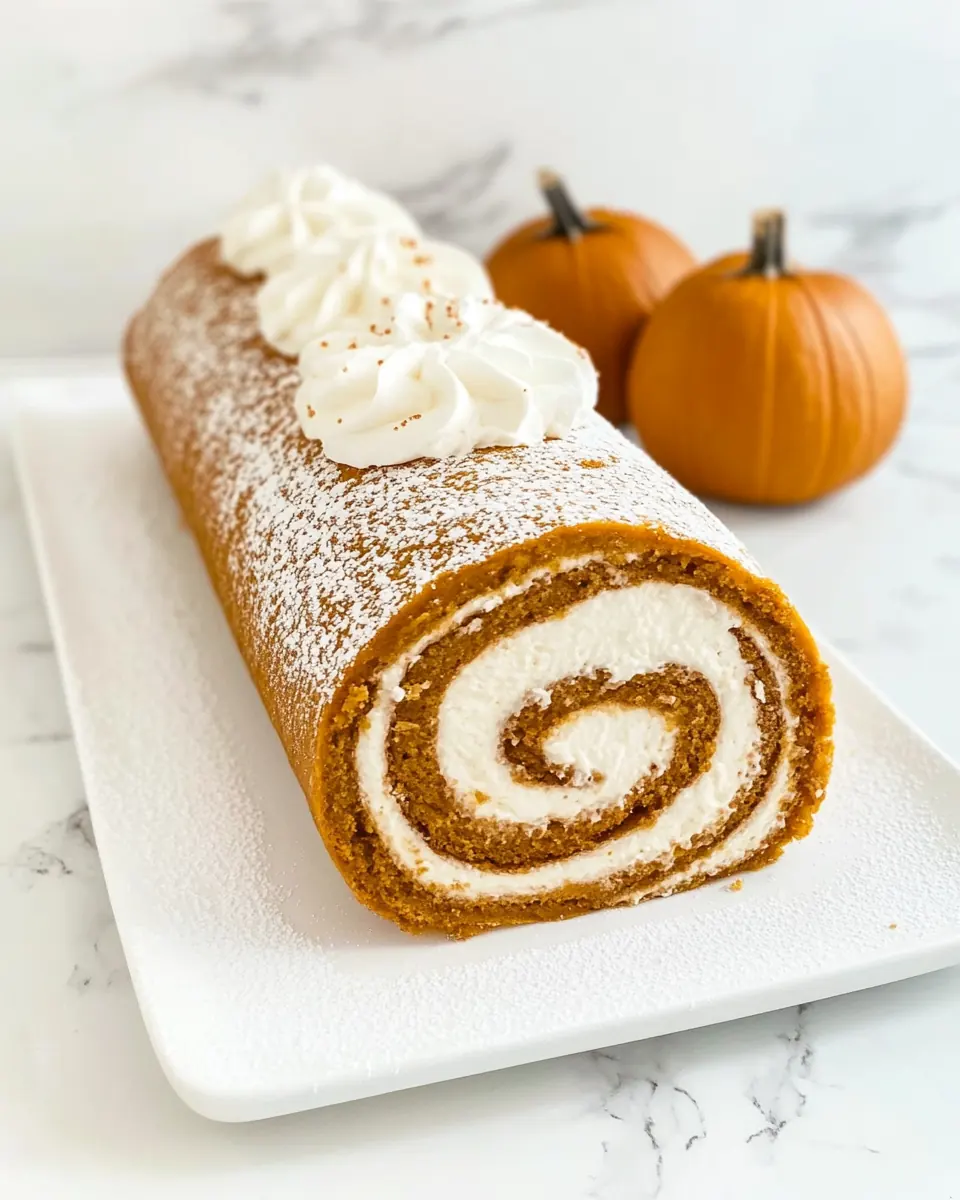
You can adapt Pumpkin Roll in small ways to suit taste or occasion, while keeping the core technique intact. Below are ideas that tweak texture, sweetness or presentation without altering the recipe mechanics.
- Swap spices: Try adjusting the pumpkin pie spice ratio to emphasize cinnamon or nutmeg more, which changes the aromatic profile while keeping the cake structure identical.
- Filling variation: Lighten the filling by folding in a small amount of whipped cream for a softer, mousse like texture, making slices less dense and slightly airier.
- Make ahead: Prepare and wrap the roll up to two days in advance for easy entertaining, the flavors meld and the slice quality actually improves after resting.
- Freeze for storage: Wrap tightly in plastic and foil then freeze; thaw at room temperature for about one hour before serving for neat slices.
- Presentation: Dust with sifted powdered sugar or pipe a thin border of extra filling on top before serving to make the slice look bakery ready.
What to Pair With Pumpkin Roll
Pumpkin Roll pairs beautifully with warm beverages and lighter accompaniments that let the spiced cake shine. Consider coffee, tea, or a gently spiced latte, and think about how you will slice and present the roll for guests.
- Warm beverages: A cup of coffee or spiced tea complements the aromatic profile and balances the sweetness.
- Whipped cream: A dollop of lightly sweetened whipped cream softens the richness of the cream cheese filling and adds an airy element.
- Fruit accents: Serve with simple sliced apples or pears to introduce a fresh, crisp contrast to the tender cake.
- Occasions: Ideal for fall gatherings, brunches, and holiday dessert tables where a make ahead dessert is valued.
- Storage tips: Keep wrapped in the refrigerator for up to five days, or freeze for longer storage, then thaw before serving for best texture.
- Seasonal pairing: This works well at Halloween or Thanksgiving meals as a lighter alternative to pies while staying firmly in the seasonal flavor family.
FAQ
Conclusion
Pumpkin Roll stands out for its balance of tender spiced cake and creamy filling, delivering a seasonal dessert that looks elegant yet is refreshingly simple to make. Give it a try when you want a make ahead dessert that slices beautifully and brings classic fall flavors to the table. As you practice, you will gain the confidence to perfect the roll and tailor spices to your taste, making it a repeat favorite.
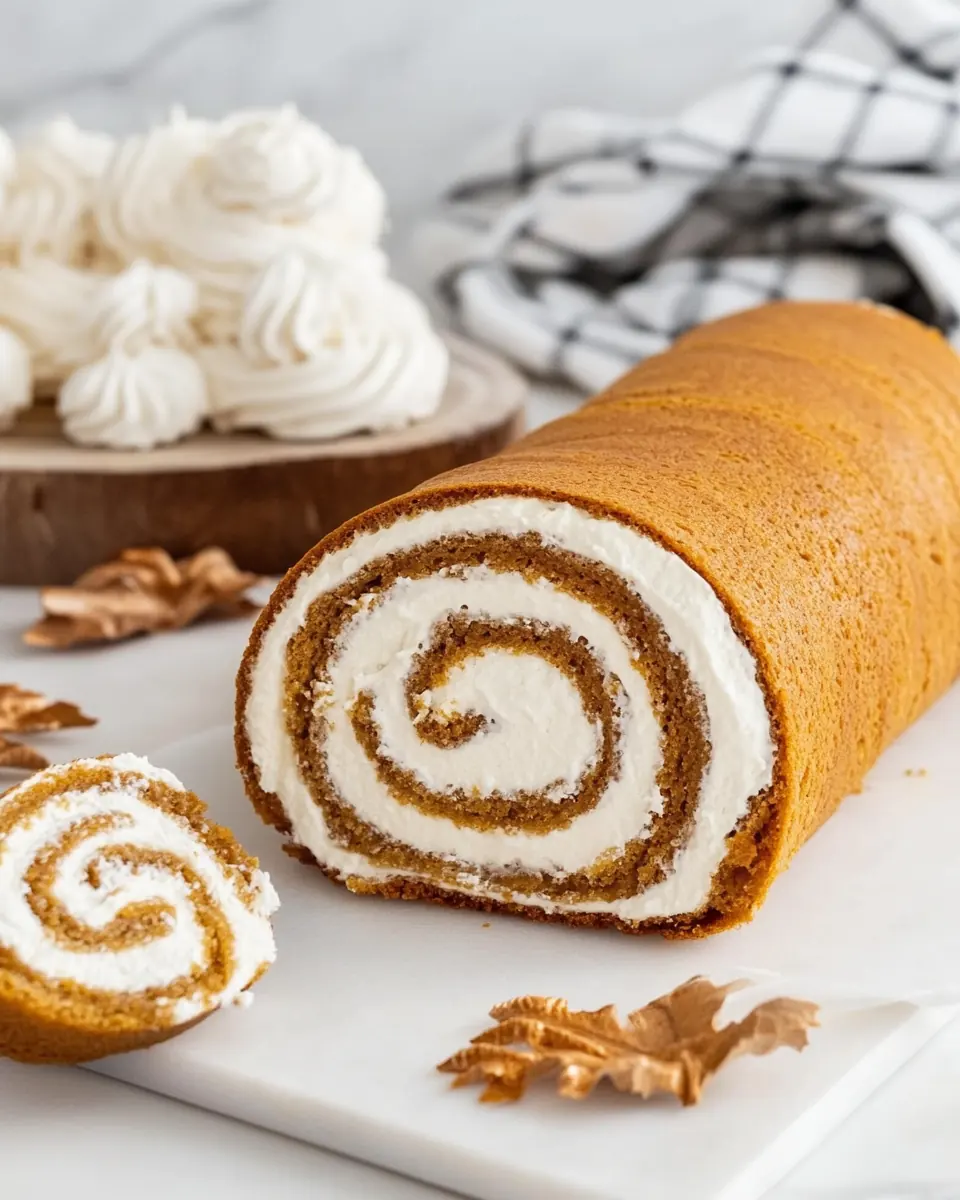
Pumpkin Roll
Ingredients
Equipment
Method
- Preheat oven to 375°F. Line a 15 x 10-inch jelly-roll pan with parchment paper and spray with non-stick cooking spray. Sprinkle a clean tea towel with powdered sugar. Set pan and towel aside.: As the kitchen warms, you should notice the air becoming faintly warm and anticipatory, a good sign that the oven is coming to temperature. The aroma in the oven is subtle at first, but setting the correct heat ensures even rise and that the cake sets quickly so it remains pliable. Lining the pan with parchment and spraying it prevents sticking, while the dusting of powdered sugar on the towel becomes a barrier so the cake can release cleanly when turned out. Common mistake to avoid here is skipping the towel dusting, which often leads to the cake adhering and tearing when you try to roll.
- In a medium bowl, combine flour, baking powder, baking soda, pumpkin pie spice and salt.: Once you whisk these dry elements, you should see a uniform pale brown mix scented with warm spice. Sifting or whisking aerates the all purpose flour and evenly distributes the baking powder , baking soda and pumpkin pie spice , which is critical for consistent structure and flavor throughout the batter. A coarse mix will cause pockets of leavening or spice, so take the extra thirty seconds to break up any clumps. Avoid overmixing at this stage if you later fold in wet ingredients aggressively, as that can lead to a tough cake.
- In a large bowl with an electric mixer, beat eggs, vanilla and sugar until thick.: As you beat the eggs with the granulated sugar and vanilla extract , the mixture will turn pale and volumized, thick enough that it leaves ribbon like trails when the beaters lift. This aeration is the foundation for a light, springy cake that will bend rather than crack. The sound transitions from brisk to a softer hum as the batter gains body, and you will notice a glossy sheen. Beware of under beating, which yields a dense cake, or over beating, which can break down the foam.
- Add in pumpkin and mix to combine.: When the pumpkin folds into the aerated egg mixture, the batter will take on a richer color and a slightly thicker texture. The pumpkin adds moisture and gives depth to the flavor, but adding too much or stirring too vigorously can deflate the foam you created, so fold gently. The scent becomes more pronounced here, with those pumpkin pie spice notes becoming rounded and warm. A common error is dumping and whipping, which leads to loss of volume.
- Stir in flour mixture.: At this point, incorporate the dry mix carefully so the batter stays airy, folding until streaks disappear. Visually, you want an even orange brown hue and a smooth consistency that will spread easily. The flour provides the sponge like structure; if you overwork it you risk a denser cake. If you see pockets of dry flour, continue folding with a spatula until fully combined, but stop as soon as it is homogenous.
- Spread batter evenly into prepared pan.: Use an offset spatula or the back of a spoon to create an even layer across the 15 x 10 inch pan. The surface should be smooth and level, which helps the cake bake uniformly and roll without thin weak spots. As you spread, the batter will settle into the corners and the top will lose some of its sheen. A common step mistake is leaving thick edges and a thin center, which bakes inconsistently and increases the chance of cracking when rolled.
- Bake for 13 to 15 minutes or until top of cake springs back when touched.: While baking, the kitchen fills with a toasty, spice forward aroma and the cake edges will pull slightly away from the pan. Visual cues matter here more than the clock, so lightly press the center; if it springs back, the cake is ready. Overbaking dries the cake and makes it likely to crack when rolled, while underbaking leaves it gummy and prone to tearing.
- Immediately loosen and turn cake onto prepared towel. Carefully peel off paper. Roll up cake and towel together, starting with narrow end. Cool on wire rack.: Right out of the oven the cake is still pliable and warm, which is the perfect window to transfer it. Loosening the edges and flipping it onto the sugared towel requires confidence, you should hear a faint separation sound as the parchment lifts. Peel the parchment off gently, then roll the cake up with the towel to set the spiral. Cooling while rolled prevents cracks and trains the cake to hold its shape. A frequent error is waiting too long to flip, which makes the cake cool too much and increases cracking risk.
- In a medium bowl, beat cream cheese, powdered sugar, butter and vanilla extract until smooth.: As you whip these filling ingredients, they should become glossy and pillowy, with the cream cheese and softened butter blending into a silky texture. The sifted powdered sugar dissolves to avoid grittiness, and the vanilla extract lifts the flavor. Properly softened components make the difference between a lumpy filling and a spreadable mousse like finish. If your cream cheese is too cold, it will remain chunky, so allow it to come to room temperature before beating.
- Carefully unroll cake; remove towel.: Unrolling the cooled rolled cake reveals the spiral, and if you rolled it tightly with the towel, it should unroll with minimal resistance. The tactile feel here is important, the cake should bend with some resilience and not crack. Removing the towel exposes the interior crumb which should be moist and evenly baked. If you notice tearing, the cake may not have been rolled warm enough or was overbaked, and the filling will help conceal minor imperfections.
- Spread cream cheese mixture over cake. Reroll cake.: Begin by dolloping the filling and using an offset spatula to spread an even, thin layer, leaving a small margin at the edge to prevent overflow. The contrast between the creamy white filling and the warm orange crumb is striking, and rolling gently but firmly will recreate the spiral. The filling should feel cool to the touch and smooth under the spatula. An overfilled cake is harder to reroll and may squish out the sides, so aim for balance.
- Wrap in plastic wrap and refrigerate at least one hour.: Chilling firms the filling and allows the roll to slice cleanly. As you wrap the cake tightly, you will notice the filling settle and become slightly more cohesive. Refrigeration also deepens flavors and makes the cake less fragile when slicing. A typical error is slicing immediately, which can cause the filling to smear and the slices to collapse; patience here pays off with neater presentation.
Notes
- Swap spices: Try adjusting the pumpkin pie spice ratio to emphasize cinnamon or nutmeg more, which changes the aromatic profile while keeping the cake structure identical.
- Filling variation: Lighten the filling by folding in a small amount of whipped cream for a softer, mousse like texture, making slices less dense and slightly airier.
- Make ahead: Prepare and wrap the roll up to two days in advance for easy entertaining, the flavors meld and the slice quality actually improves after resting.
- Freeze for storage: Wrap tightly in plastic and foil then freeze; thaw at room temperature for about one hour before serving for neat slices.
- Presentation: Dust with sifted powdered sugar or pipe a thin border of extra filling on top before serving to make the slice look bakery ready.