Sweet Egg Tarts
Sweet Egg Tarts have been a comfort in my kitchen for years, a small pastry that always manages to feel like a celebration. The first time I made them, I was trying to recreate a memory from a tiny bakery I visited while traveling, and the warm, custardy filling with a tender buttery shell instantly transported me back. I still remember the quiet hum of the oven and the sticky sweet steam that curled up as I opened the door.
Over time I’ve adjusted the technique, learned which little details matter, and made these Sweet Egg Tarts something I serve when friends stop by unexpectedly or when I want a tiny treat after a long day. I love how the crust responds to gentle handling, how the filling trembles slightly when it is just right, and how the tops can blister to a faint golden sheen. Each tart feels like a small, perfect achievement.
When I teach people to make Sweet Egg Tarts, I focus on rhythm and patience, not speed. It is a recipe that rewards gentle hands and careful attention to texture. The memories tied to them make each batch feel personal, and I find myself smiling when the first one is cut open and the steam rises, carrying the aroma of cooked eggs, caramelized sugar, and milk. These tarts are humble and refined at once, and I hope my version gives you that same quiet joy.
Recipe Snapshot
50 mins
30 mins
20 mins
Medium
190 kcal
American
Gluten-Free, Low FODMAP
Desserts
Stand mixer, Paddle attachment, Fluted round tart pans, Rimmed baking sheet, Fine-mesh sieve, Small saucepan, Liquid measuring cup
The Best Thing About This Sweet Egg Tarts
Comfort in small packages
I adore how Sweet Egg Tarts deliver comfort in a tiny, handheld format. When a bite melts on your tongue with a velvety custard, you get an immediate sense of satisfaction. I often reach for them when I want something sweet that is not overwhelming, and they always hit that perfect middle ground between pastry and dessert.
Elegant but approachable
These tarts look bakery-fresh but are not fussy. I like telling friends that making them is easier than it appears. The dough comes together quickly, and the filling is whisked in minutes. For gatherings, they offer an elegant presentation without requiring elaborate plating, which I find invaluable when hosting last minute.
Textural contrast that sings
The interplay between a tender, buttery crust and a silky, lightly set custard is the main reason I keep making this recipe. That crisp edge around the tart provides a contrasting bite to the smooth center, and that contrast is what makes each mouthful interesting. I pay attention to the bake times to preserve that interplay, because overbaking kills the creaminess.
Trustworthy flavor balance
I love how the recipe balances butter, sugar, and a whisper of vanilla. The custard is gently sweet, never cloying, and the tiny amount of salt in the crust lifts the flavors. When I serve these, people comment on how restrained and balanced they taste, which always makes me proud.
Flexible and forgiving
Finally, Sweet Egg Tarts are forgiving for home bakers. The technique rewards attention but does not demand perfection. If the crust cracks a little, the tart still tastes wonderful. If the filling puffs and settles, it only adds character. I find that encouraging for anyone building confidence in pastry.
What You’ll Need for Sweet Egg Tarts
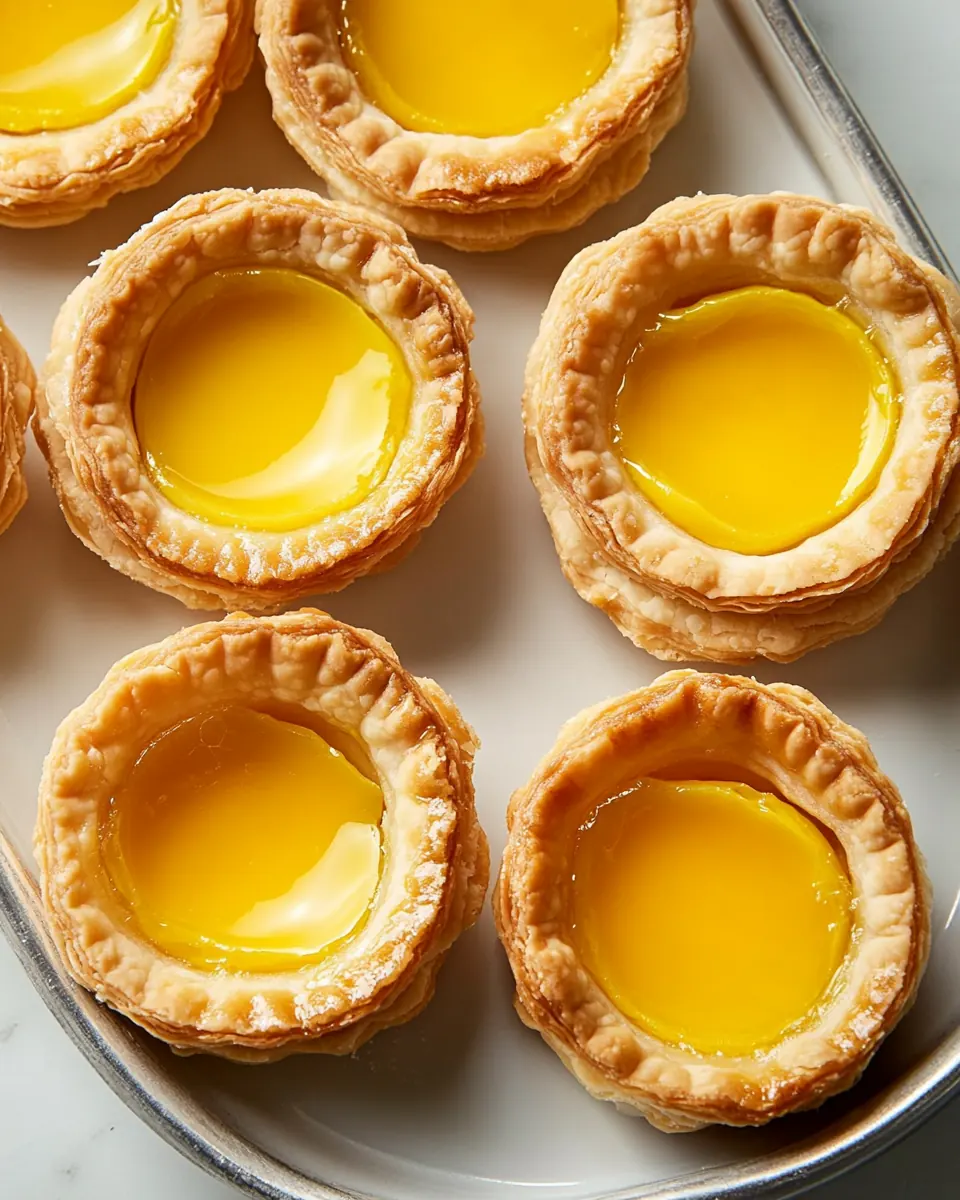
These ingredients work together to create a classic balance of tender pastry and creamy filling. The star players are the butter for a flaky, flavorful crust, the flours for structure and tenderness, and the egg yolks and milk for that silky custard. Each component has a clear role, and the small quantities keep the focus on texture and flavor rather than bells and whistles.
- 1 cup (76 grams) unsalted butter, softened: Creamed to provide richness and structure to the tart dough; contributes tender texture and a buttery flavor that helps bind dry ingredients. Softening allows easier incorporation with sugar and eggs, creating a smooth, spreadable base for the pastry.
- 1/4 cup (30 grams) confectioners’ sugar: Sifted and beaten with butter to add a delicate sweetness and fine texture; helps aerate the dough slightly for lightness. Small amount prevents grittiness and balances richer components in the crust.
- 1/2 teaspoon kosher salt, divided: Measured and divided to season the dough and filling appropriately; enhances overall flavor by balancing sweetness and rounding butteriness. Using kosher salt ensures consistent seasoning without overpowering the delicate custard.
- 4 large egg yolks (75 grams), room temperature and divided: Separated with yolks reserved and tempered to provide a rich, silky custard for the filling; yolks add color, thickness, and emulsification. Room temperature helps them blend smoothly into the custard and improves texture.
- 3/4 teaspoon (3 grams) vanilla extract, divided: Added in split portions to infuse subtle aromatic sweetness into both crust and filling; vanilla enhances and rounds other flavors without dominating. Dividing extract ensures consistent flavor throughout the tart components.
- 1 cup (125 grams) all-purpose flour: Whisked into the dough to form the main structure and provide gluten for strength and chew; contributes neutral flavor and bulk. Measuring by weight improves accuracy for a consistent pastry texture.
- 1/4 cup (31 grams) unbleached cake flour: Blended with all-purpose flour to lighten the pastry and yield a more tender, delicate crumb; cake flour reduces protein content and softens the dough. Incorporating a small amount refines the crust’s texture without weakening it.
- 1/4 cup (60 grams) water: Heated and combined with sugar and evaporated milk to create the liquid base of the custard; helps dissolve sugar and enables smooth mixing with eggs. Warm water aids in tempering eggs and achieving a silky filling.
- 2 1/2 tablespoons (30 grams) granulated sugar: Dissolved into the custard liquid to sweeten the filling to a balanced level; granulated sugar also helps stabilize and thicken the custard during baking. Proper dissolution ensures an even sweetness and smooth texture.
- 2 1/2 tablespoons (37.5 grams) evaporated milk: Mixed with water and sugar to contribute creaminess and richness to the custard; evaporated milk intensifies dairy flavor while adding a slightly concentrated mouthfeel. Using evaporated milk helps create a stable, creamy custard without excess water.
Instructions for Sweet Egg Tarts
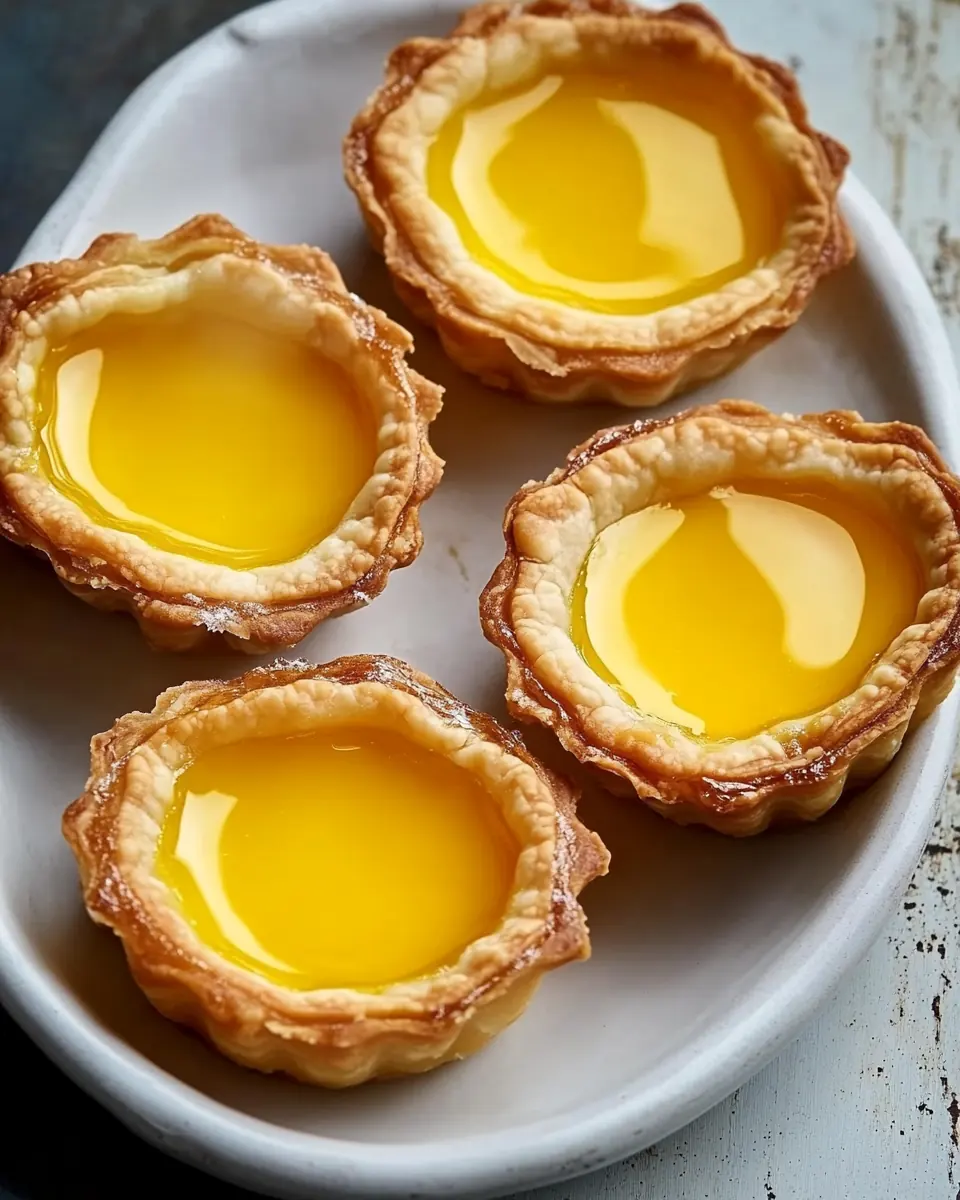
I like to keep the process relaxed and methodical, working in short bursts so the dough stays cool and the custard remains silky. Read each step through once, then work deliberately. Have your pans ready and your sieve in place before you finish the custard, because once combined everything moves quickly.
- In the bowl of a stand mixer fitted with the paddle attachment, beat butter, confectioners’ sugar, and 1/4 teaspoon salt at medium speed until creamy, 1 to 2 minutes, stopping to scrape sides of bowl. Add 1 egg yolk (19 grams); beat until well combined. Beat in 1/4 teaspoon (1 gram) vanilla.: The moment you start beating, smell the gentle scent of butter softening into sugar, a comforting aroma that tells you the base is forming. Visually you will see the mixture lighten in color and become glossy, and the sound shifts from clattery to a smooth hum as the paddle moves through the mixture. This creaming step aerates the dough a little, giving a tender lift to the crust, and is crucial because it helps the confectioners’ sugar dissolve and integrate. If you rush at too-high speed you risk warming the butter , which makes the dough greasy and harder to handle. Scrape the bowl well so every bit of butter is incorporated, and stop when the texture is creamy rather than fluffy.
- In a medium bowl, whisk together flours. With mixer on low speed, gradually add flour mixture to butter mixture, beating just until a dough forms.: When the egg yolk hits the mixture you will notice a slight darkening and the batter becoming silkier. The yolk adds richness and extra binding so the dough holds together when pressed into pans. As you beat, listen for the mixer returning to a uniform hum and check texture often; it should be smooth and cohesive. A common mistake is adding cold yolk, which can cause tiny flecks or curdling; always use room temperature yolks for a seamless emulsion. If curdling happens, stop mixing and let the bowl sit briefly until the temperature equalizes.
- Spray 8 (2 1/2×3/4-inch) fluted round tart pans with baking spray with flour; place on a rimmed baking sheet.: The addition of vanilla releases a delicate, fragrant note that you will immediately notice in the bowl. Vanilla helps round the flavor of the crust and pairs with the butter to create depth. Stir just until the scent is evenly distributed, because overmixing at this point can start developing gluten later when the flours are added. If the vanilla seems too strong, check your measuring; a tiny excess will make the pastry taste perfumed rather than warm.
- Divide dough into 8 portions (about 35 grams each), and shape into balls. Press 1 dough ball into bottom and up sides of 1 prepared tart pan; trim any excess dough. Repeat with remaining dough and tart pans.: As you whisk the all-purpose flour and cake flour, you will see them become evenly blended and lighter in color. This step ensures the cake flour is distributed so that the dough gets both structure and tenderness. Dry whisking also removes any lumps and helps you measure accurately. Avoid sifting directly into the wet mixture to keep the dusting to a minimum and preserve the delicate flour texture. If you skip this, you might end up with pockets of one flour that change the bite.
- In a medium bowl, whisk together remaining 3 egg yolks (56 grams).: When you add the flours gradually on low, you will see the mixture thicken and begin to pull away from the bowl in a cohesive mass. This gradual addition prevents overdevelopment of gluten and gives you a tender crust. The sound will shift to a heavier drag as the dough forms. A common pitfall is adding all the flour at once or speeding up the mixer, which yields a tough crust. Stop mixing the moment the dough comes together, because continued mixing can make the shell chewy rather than delicate.
- In a small saucepan, combine 1/4 cup (60 grams) water, granulated sugar, evaporated milk, remaining 1/2 teaspoon (2 grams) vanilla, and remaining 1/4 teaspoon salt. Cook over medium heat until mixture is steaming and sugar is dissolved. Gradually whisk sugar mixture into egg yolks until well combined.: Coating the pans ensures clean releases and makes the tarts easy to unmold. You will notice the pans glint slightly where the spray creates a thin film, which helps the dough slide out after baking. Placing them on a rimmed baking sheet provides stability when moving in and out of the oven and helps catch any little spills. If you skip this step, you risk the crust sticking to the pan and tearing on removal, so prepare the pans carefully before shaping the dough.
- Position oven rack in lower third of oven. Preheat oven to 400°F (200°C).: Handling the dough gently is key, because warmth from your hands can soften the butter and change the texture. As you roll each portion into a ball, feel for even density and uniform weight, which ensures even baking. A scale helps for precision, and the balls should feel cool and slightly tacky, not greasy. If the dough becomes too soft, chill it for a short time; this prevents the crust from slumping during baking. Avoid pressing too hard when shaping, which compresses the layers and reduces flakiness.
- Place a fine-mesh sieve over a large liquid-measuring cup or wide-mouthed pitcher. Strain egg yolk mixture through prepared sieve; discard any solids. Divide strained mixture among prepared crusts (about 18 grams each).: When pressing the dough, use the pads of your fingers and a light touch to create an even thickness across the bottom and sides. You want a smooth surface without thin spots; visually inspect each shell for uniformity. Trimming excess gives clean edges and a neat presentation, and if you find gaps press another small piece to mend them gently. Overstretching the dough causes shrinkage during baking, so avoid pulling it too thin. If the sides sag, return the shells to the fridge to firm up before filling.
- Bake until crust is lightly browned, 10 to 12 minutes, rotating pans halfway through baking. Reduce oven temperature to 350°F (180°C). Bake just until edges of filling start to puff, about 5 minutes more. Open oven door about 2 inches; bake until filling is set, a wooden pick inserted in center stands up straight, and an instant-read thermometer inserted in center registers at least 175°F (79°C), 5 to 7 minutes more. Let cool in pans for 15 minutes. Serve warm or at room temperature.: Completing each shell in the same way maintains consistency across the batch, so take a moment to compare thickness and shape. As the finished shells rest, they should feel slightly firmer to the touch. Working at a steady pace and monitoring dough temperature keeps results uniform. If one shell looks noticeably thicker or thinner, adjust the others to match so that baking time is consistent and no tart overcooks or undercooks.
- In a medium bowl, whisk together remaining 3 egg yolks (56 grams): The whisking motion incorporates air and creates a silky starting point for the custard. You will see the yolks become glossy and cohesive, a sign they are ready to accept the warmed liquid. The texture should be smooth and slightly viscous. If the yolks are lumpy or cold, they may seize when heated; ensure room temperature and whisk thoroughly until uniform.
- In a small saucepan, combine 1/4 cup (60 grams) water, granulated sugar, evaporated milk, remaining 1/2 teaspoon (2 grams) vanilla, and remaining 1/4 teaspoon salt: As you heat this mixture over medium, steam will rise and the sugar will dissolve, carrying a scent of sweet milk and vanilla. The evaporated milk gives a concentrated creaminess that deepens as it warms. Stirring gently helps the sugar dissolve completely and prevents hotspots. If the mixture boils too vigorously it can become frothy and change the texture, so maintain a gentle steaming stage rather than a rolling boil.
- Cook over medium heat until mixture is steaming and sugar is dissolved: You will see small bubbles forming at the edge and feel steam rising, signaling the sugar has melted. The aroma will become more pronounced, and the liquid will become slightly thicker. Dissolved sugar ensures the custard is smooth rather than grainy. If you skip ensuring full dissolution, the finished custard may have a gritty texture. Keep the heat moderate and stir occasionally to avoid scorching.
- Gradually whisk sugar mixture into egg yolks until well combined: When you begin tempering, the hot liquid is added slowly so the egg yolks warm without scrambling. As you whisk, the mixture will thicken and turn silkier, taking on a glossy sheen. This step builds the custard's body, so take your time and pour in a steady stream while whisking continuously. A common error is adding too much at once, which results in cooked curds; if that happens, strain and continue, but try to temper carefully the first time.
- Position oven rack in lower third of oven: The rack placement helps the crust brown while the filling sets more gently, producing the desired contrast between a golden shell and a tender interior. Positioning lower in the oven exposes the base of the tarts to more direct heat, which encourages a crisp bottom. If the rack is too high, the tops may brown before the filling sets. Adjust now to avoid stopping mid-bake to change rack position.
- Preheat oven to 400°F (200°C): Bringing the oven to full heat gives the pastry an initial blast that helps set the crust and create a slight lift. The loudness of the oven settling down changes as it reaches temperature, and you may notice a warm scent as the air heats. Preheating is essential because cold ovens result in soggy bases. Use an oven thermometer if you suspect your oven runs hot or cold for best results.
- Place a fine-mesh sieve over a large liquid-measuring cup or wide-mouthed pitcher: Straining the custard removes any tiny solids and ensures a silky texture. As you pour through the sieve, you might see minute bits of coagulated egg that did not make it through; discarding these keeps the filling smooth. The action of passing through the sieve also aerates slightly, which helps even distribution into the shells. Skipping this step can leave you with an uneven surface or little bits in the filling.
- Strain egg yolk mixture through prepared sieve; discard any solids: The custard will stream clear and glossy through the sieve, and the solids left behind will be small pale flecks. This final polishing step is why the finished filling has such a refined mouthfeel. If the strained liquid seems too hot, let it rest briefly to avoid shocking the shells when filled. Always discard the solids to maintain the smooth texture.
- Divide strained mixture among prepared crusts (about 18 grams each): Pouring evenly ensures each tart bakes uniformly and you end up with the same custard-to-crust ratio. Visually aim for the same level in each shell, and if one seems fuller, redistribute carefully with a small spoon. The weight target helps if you have a scale, but even pouring by eye works if you pay attention. Overfilling leads to spillage and uneven baking, so leave a small rim from the top.
- Bake until crust is lightly browned, 10 to 12 minutes, rotating pans halfway through baking: During this stage you will notice the crust edges gaining color and the filling beginning to set slightly. Rotating halfway promotes even browning because most ovens have hot spots. The sound is quiet, but visually you will see a slight firming. A typical mistake is leaving them without rotation, which can cause patchy browning. Keep a close eye toward the end of this window.
- Reduce oven temperature to 350°F (180°C): Lowering the temperature helps the filling finish setting without overbrowning the crust. You will feel the difference in the oven environment, and this more moderate heat encourages a gentle, even finish for the custard. If you forget to reduce the temperature, the filling may puff and then overcook, losing its delicate texture, so be mindful at this transition.
- Bake just until edges of filling start to puff, about 5 minutes more: At this point the filling will show a subtle rise around the edges, a sign that proteins are setting. The tops will still be slightly glossy, and the centers should wobble gently when nudged. This puffing is normal and expected; it will settle as the tarts cool. A common error is waiting until the center is completely firm, which can lead to an overcooked custard that is dry rather than creamy.
- Open oven door about 2 inches; bake until filling is set, a wooden pick inserted in center stands up straight, and an instant-read thermometer inserted in center registers at least 175°F (79°C), 5 to 7 minutes more: Cracking the oven door moderates heat and prevents the filling from rising too aggressively, helping it settle evenly. Use a wooden pick to check: if it comes out mostly clean and the center resists gently, you have achieved the right set. The thermometer gives an objective measure, and 175°F (79°C) is the sweet spot for a custard that is set but still tender. Avoid overshooting temperature, because that yields a rubbery texture.
- Let cool in pans for 15 minutes: As they rest, the filling will relax and the pastry will firm slightly, making removal easier. You will notice steam subside and the aroma mellow. Cooling also prevents the custard from jiggling too much when unmolded. Attempting to unmold while very hot can cause the custard to tear or the shell to break, so be patient during this brief interval.
- Serve warm or at room temperature: These tarts are lovely when slightly warm, with the custard still soft, or at room temperature when the texture is a touch firmer. The aroma will vary slightly with temperature, more fragrant when warm. Serve on a cool plate to avoid additional residual heat if you prefer them at room temperature. Leftovers can be stored carefully, but know that refrigeration will firm the custard more.
Ways to Customize
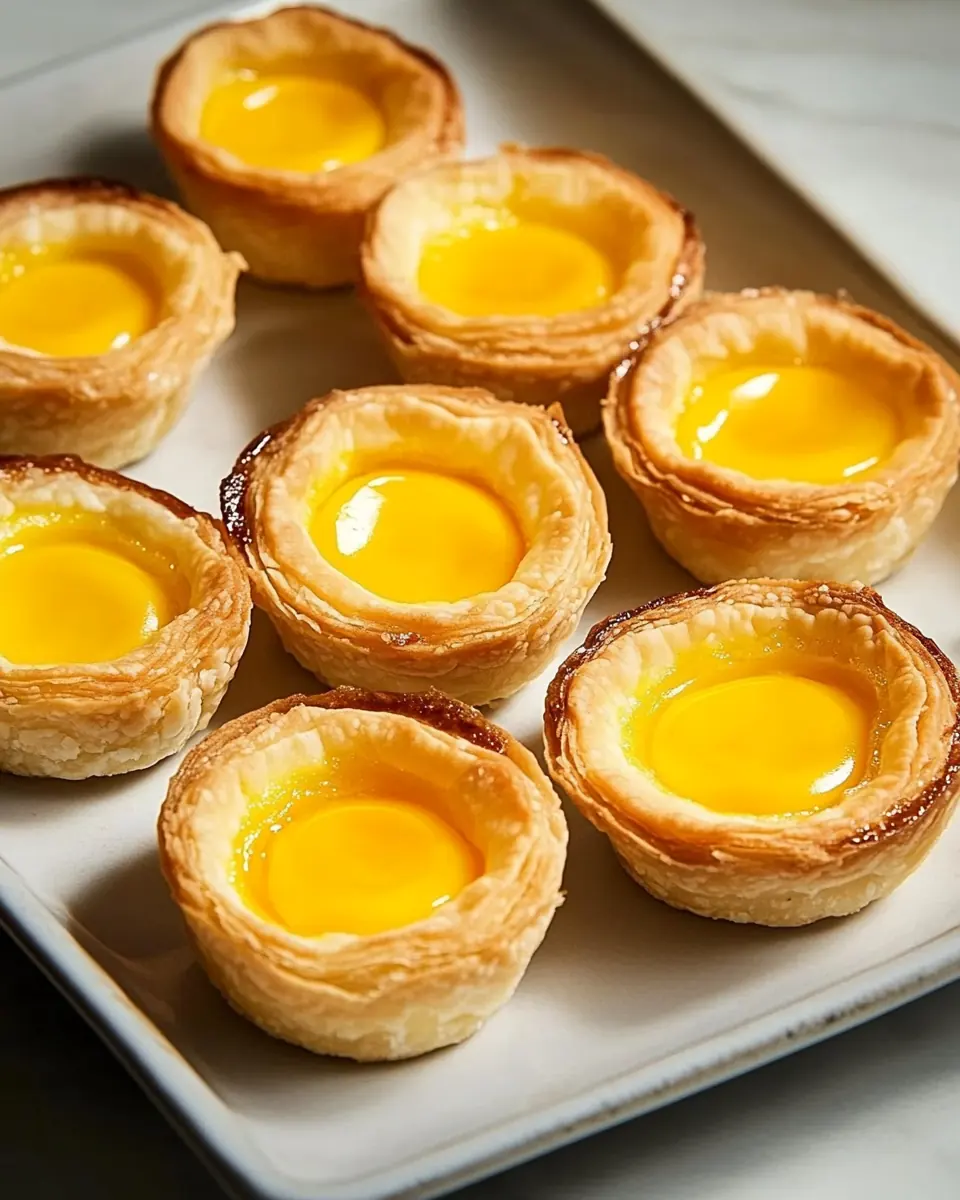
These suggestions help you adapt Sweet Egg Tarts while keeping the core technique intact. I like offering a few purposeful changes depending on mood or occasion, but the heart of the recipe remains the balance of a tender crust and a silky custard.
- Use different pans If you do not have fluted tart pans, a muffin tin will work for mini tarts, though bake times may shift; watch for crust color and custard set.
- Adjust sweetness If you prefer a less sweet custard, reduce the granulated sugar slightly and taste the warmed mixture before combining with yolks to confirm balance.
- Chill shells before filling For an extra-crisp base, chill the pressed shells for 15 minutes before filling so they hold shape better in the oven.
- Even filling distribution Weighing each filled tart ensures uniform portions; about 18 grams of filling per tart keeps bake times consistent.
- Restore texture after refrigeration If stored in the fridge the custard firms, bring tarts to room temperature briefly before serving to recover silkiness.
Serving Ideas for Sweet Egg Tarts
These tarts are versatile and adapt well to many settings, from a casual afternoon tea to a celebratory table. I like to plan the plating based on the occasion, and small touches make them feel special. Below are serving suggestions and practical storage ideas to help you present and preserve them.
- Afternoon tea Serve Sweet Egg Tarts on a small dessert plate alongside a cup of hot tea or coffee. The delicate custard balances well with a slightly astringent beverage, and the small size of each tart encourages sampling.
- Brunch spread Position them with fruit, yogurt, and small sandwiches for a brunch where guests can pick and choose. The tarts provide a sweet counterpoint to savory items, and their easy portioning makes them ideal for sharing.
- Celebratory dessert For a dinner party, present warm or room temperature tarts on a platter, and consider adding a light dusting of confectioners’ sugar just before serving for an elegant finish.
- Occasions and seasons These are suitable year round, especially during gatherings where small, individual desserts are preferred. They are great for Ramadan if served at iftar, or as a simple sweet at holiday tables.
- Storage tips Store leftover tarts in an airtight container in the refrigerator for up to three days. To restore a softer texture after chilling, allow tarts to sit at room temperature for 20 to 30 minutes before serving.
- Make ahead You can prepare the shells ahead of time and keep them covered in the fridge for a day, then fill and bake when needed for fresher texture and an easy final step.
FAQ
Conclusion
What makes these tarts special is the balance between a tender, buttery shell and a silky, lightly sweet custard that feels both elegant and homey. I encourage you to give Sweet Egg Tarts a try, even if you think pastry is intimidating, because the technique rewards patience more than precision. Enjoy the ritual of shaping the shells and the small triumph of a perfectly set filling; serve them warm for maximum comfort or at room temperature for a slightly firmer bite. Baking these tarts is a lovely way to slow down and savor small pleasures.
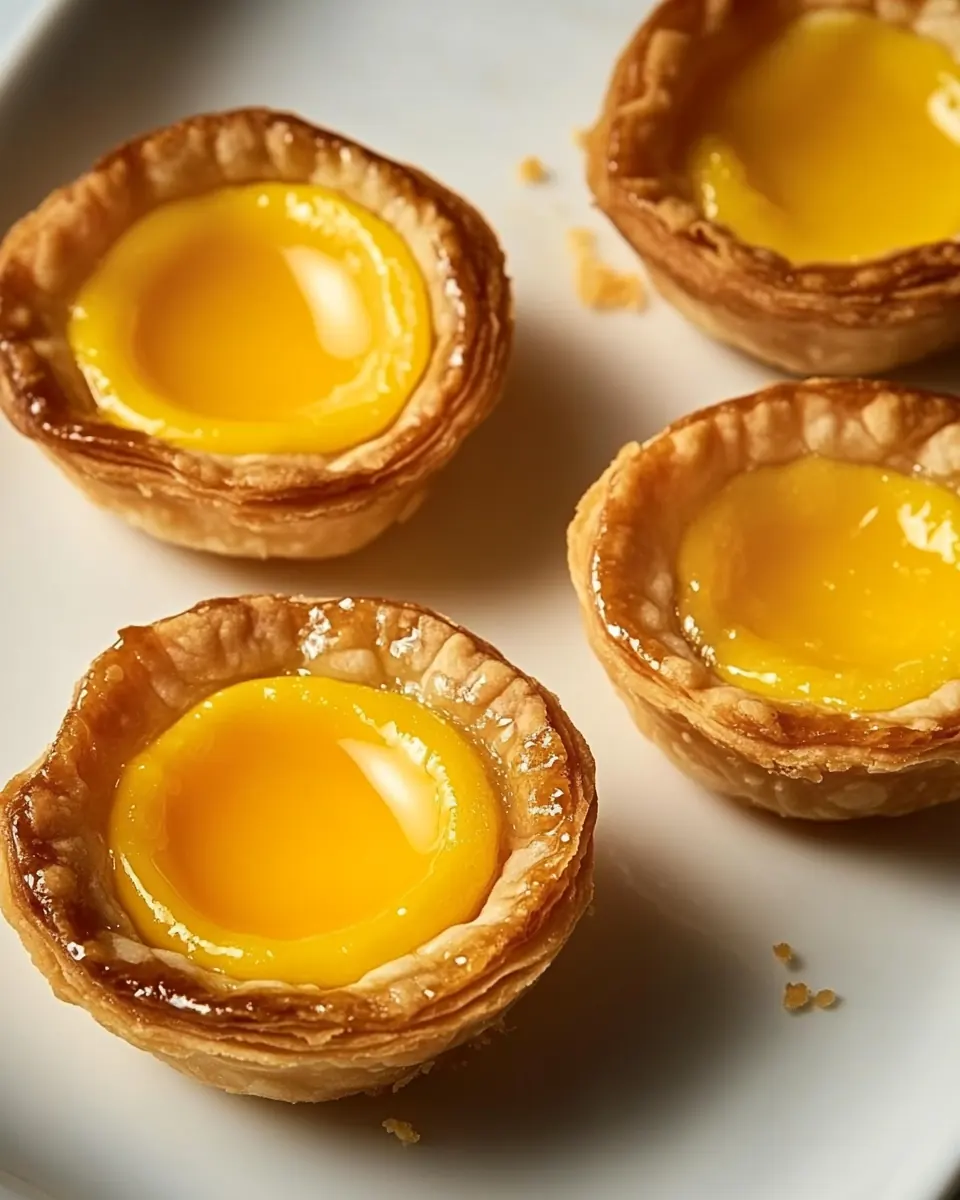
Sweet Egg Tarts
Ingredients
Equipment
Method
- In the bowl of a stand mixer fitted with the paddle attachment, beat butter, confectioners’ sugar, and 1/4 teaspoon salt at medium speed until creamy, 1 to 2 minutes, stopping to scrape sides of bowl. Add 1 egg yolk (19 grams); beat until well combined. Beat in 1/4 teaspoon (1 gram) vanilla.: The moment you start beating, smell the gentle scent of butter softening into sugar, a comforting aroma that tells you the base is forming. Visually you will see the mixture lighten in color and become glossy, and the sound shifts from clattery to a smooth hum as the paddle moves through the mixture. This creaming step aerates the dough a little, giving a tender lift to the crust, and is crucial because it helps the confectioners’ sugar dissolve and integrate. If you rush at too-high speed you risk warming the butter , which makes the dough greasy and harder to handle. Scrape the bowl well so every bit of butter is incorporated, and stop when the texture is creamy rather than fluffy.
- In a medium bowl, whisk together flours. With mixer on low speed, gradually add flour mixture to butter mixture, beating just until a dough forms.: When the egg yolk hits the mixture you will notice a slight darkening and the batter becoming silkier. The yolk adds richness and extra binding so the dough holds together when pressed into pans. As you beat, listen for the mixer returning to a uniform hum and check texture often; it should be smooth and cohesive. A common mistake is adding cold yolk, which can cause tiny flecks or curdling; always use room temperature yolks for a seamless emulsion. If curdling happens, stop mixing and let the bowl sit briefly until the temperature equalizes.
- Spray 8 (2 1/2×3/4-inch) fluted round tart pans with baking spray with flour; place on a rimmed baking sheet.: The addition of vanilla releases a delicate, fragrant note that you will immediately notice in the bowl. Vanilla helps round the flavor of the crust and pairs with the butter to create depth. Stir just until the scent is evenly distributed, because overmixing at this point can start developing gluten later when the flours are added. If the vanilla seems too strong, check your measuring; a tiny excess will make the pastry taste perfumed rather than warm.
- Divide dough into 8 portions (about 35 grams each), and shape into balls. Press 1 dough ball into bottom and up sides of 1 prepared tart pan; trim any excess dough. Repeat with remaining dough and tart pans.: As you whisk the all-purpose flour and cake flour, you will see them become evenly blended and lighter in color. This step ensures the cake flour is distributed so that the dough gets both structure and tenderness. Dry whisking also removes any lumps and helps you measure accurately. Avoid sifting directly into the wet mixture to keep the dusting to a minimum and preserve the delicate flour texture. If you skip this, you might end up with pockets of one flour that change the bite.
- In a medium bowl, whisk together remaining 3 egg yolks (56 grams).: When you add the flours gradually on low, you will see the mixture thicken and begin to pull away from the bowl in a cohesive mass. This gradual addition prevents overdevelopment of gluten and gives you a tender crust. The sound will shift to a heavier drag as the dough forms. A common pitfall is adding all the flour at once or speeding up the mixer, which yields a tough crust. Stop mixing the moment the dough comes together, because continued mixing can make the shell chewy rather than delicate.
- In a small saucepan, combine 1/4 cup (60 grams) water, granulated sugar, evaporated milk, remaining 1/2 teaspoon (2 grams) vanilla, and remaining 1/4 teaspoon salt. Cook over medium heat until mixture is steaming and sugar is dissolved. Gradually whisk sugar mixture into egg yolks until well combined.: Coating the pans ensures clean releases and makes the tarts easy to unmold. You will notice the pans glint slightly where the spray creates a thin film, which helps the dough slide out after baking. Placing them on a rimmed baking sheet provides stability when moving in and out of the oven and helps catch any little spills. If you skip this step, you risk the crust sticking to the pan and tearing on removal, so prepare the pans carefully before shaping the dough.
- Position oven rack in lower third of oven. Preheat oven to 400°F (200°C).: Handling the dough gently is key, because warmth from your hands can soften the butter and change the texture. As you roll each portion into a ball, feel for even density and uniform weight, which ensures even baking. A scale helps for precision, and the balls should feel cool and slightly tacky, not greasy. If the dough becomes too soft, chill it for a short time; this prevents the crust from slumping during baking. Avoid pressing too hard when shaping, which compresses the layers and reduces flakiness.
- Place a fine-mesh sieve over a large liquid-measuring cup or wide-mouthed pitcher. Strain egg yolk mixture through prepared sieve; discard any solids. Divide strained mixture among prepared crusts (about 18 grams each).: When pressing the dough, use the pads of your fingers and a light touch to create an even thickness across the bottom and sides. You want a smooth surface without thin spots; visually inspect each shell for uniformity. Trimming excess gives clean edges and a neat presentation, and if you find gaps press another small piece to mend them gently. Overstretching the dough causes shrinkage during baking, so avoid pulling it too thin. If the sides sag, return the shells to the fridge to firm up before filling.
- Bake until crust is lightly browned, 10 to 12 minutes, rotating pans halfway through baking. Reduce oven temperature to 350°F (180°C). Bake just until edges of filling start to puff, about 5 minutes more. Open oven door about 2 inches; bake until filling is set, a wooden pick inserted in center stands up straight, and an instant-read thermometer inserted in center registers at least 175°F (79°C), 5 to 7 minutes more. Let cool in pans for 15 minutes. Serve warm or at room temperature.: Completing each shell in the same way maintains consistency across the batch, so take a moment to compare thickness and shape. As the finished shells rest, they should feel slightly firmer to the touch. Working at a steady pace and monitoring dough temperature keeps results uniform. If one shell looks noticeably thicker or thinner, adjust the others to match so that baking time is consistent and no tart overcooks or undercooks.
- In a medium bowl, whisk together remaining 3 egg yolks (56 grams): The whisking motion incorporates air and creates a silky starting point for the custard. You will see the yolks become glossy and cohesive, a sign they are ready to accept the warmed liquid. The texture should be smooth and slightly viscous. If the yolks are lumpy or cold, they may seize when heated; ensure room temperature and whisk thoroughly until uniform.
- In a small saucepan, combine 1/4 cup (60 grams) water, granulated sugar, evaporated milk, remaining 1/2 teaspoon (2 grams) vanilla, and remaining 1/4 teaspoon salt: As you heat this mixture over medium, steam will rise and the sugar will dissolve, carrying a scent of sweet milk and vanilla. The evaporated milk gives a concentrated creaminess that deepens as it warms. Stirring gently helps the sugar dissolve completely and prevents hotspots. If the mixture boils too vigorously it can become frothy and change the texture, so maintain a gentle steaming stage rather than a rolling boil.
- Cook over medium heat until mixture is steaming and sugar is dissolved: You will see small bubbles forming at the edge and feel steam rising, signaling the sugar has melted. The aroma will become more pronounced, and the liquid will become slightly thicker. Dissolved sugar ensures the custard is smooth rather than grainy. If you skip ensuring full dissolution, the finished custard may have a gritty texture. Keep the heat moderate and stir occasionally to avoid scorching.
- Gradually whisk sugar mixture into egg yolks until well combined: When you begin tempering, the hot liquid is added slowly so the egg yolks warm without scrambling. As you whisk, the mixture will thicken and turn silkier, taking on a glossy sheen. This step builds the custard's body, so take your time and pour in a steady stream while whisking continuously. A common error is adding too much at once, which results in cooked curds; if that happens, strain and continue, but try to temper carefully the first time.
- Position oven rack in lower third of oven: The rack placement helps the crust brown while the filling sets more gently, producing the desired contrast between a golden shell and a tender interior. Positioning lower in the oven exposes the base of the tarts to more direct heat, which encourages a crisp bottom. If the rack is too high, the tops may brown before the filling sets. Adjust now to avoid stopping mid-bake to change rack position.
- Preheat oven to 400°F (200°C): Bringing the oven to full heat gives the pastry an initial blast that helps set the crust and create a slight lift. The loudness of the oven settling down changes as it reaches temperature, and you may notice a warm scent as the air heats. Preheating is essential because cold ovens result in soggy bases. Use an oven thermometer if you suspect your oven runs hot or cold for best results.
- Place a fine-mesh sieve over a large liquid-measuring cup or wide-mouthed pitcher: Straining the custard removes any tiny solids and ensures a silky texture. As you pour through the sieve, you might see minute bits of coagulated egg that did not make it through; discarding these keeps the filling smooth. The action of passing through the sieve also aerates slightly, which helps even distribution into the shells. Skipping this step can leave you with an uneven surface or little bits in the filling.
- Strain egg yolk mixture through prepared sieve; discard any solids: The custard will stream clear and glossy through the sieve, and the solids left behind will be small pale flecks. This final polishing step is why the finished filling has such a refined mouthfeel. If the strained liquid seems too hot, let it rest briefly to avoid shocking the shells when filled. Always discard the solids to maintain the smooth texture.
- Divide strained mixture among prepared crusts (about 18 grams each): Pouring evenly ensures each tart bakes uniformly and you end up with the same custard-to-crust ratio. Visually aim for the same level in each shell, and if one seems fuller, redistribute carefully with a small spoon. The weight target helps if you have a scale, but even pouring by eye works if you pay attention. Overfilling leads to spillage and uneven baking, so leave a small rim from the top.
- Bake until crust is lightly browned, 10 to 12 minutes, rotating pans halfway through baking: During this stage you will notice the crust edges gaining color and the filling beginning to set slightly. Rotating halfway promotes even browning because most ovens have hot spots. The sound is quiet, but visually you will see a slight firming. A typical mistake is leaving them without rotation, which can cause patchy browning. Keep a close eye toward the end of this window.
- Reduce oven temperature to 350°F (180°C): Lowering the temperature helps the filling finish setting without overbrowning the crust. You will feel the difference in the oven environment, and this more moderate heat encourages a gentle, even finish for the custard. If you forget to reduce the temperature, the filling may puff and then overcook, losing its delicate texture, so be mindful at this transition.
- Bake just until edges of filling start to puff, about 5 minutes more: At this point the filling will show a subtle rise around the edges, a sign that proteins are setting. The tops will still be slightly glossy, and the centers should wobble gently when nudged. This puffing is normal and expected; it will settle as the tarts cool. A common error is waiting until the center is completely firm, which can lead to an overcooked custard that is dry rather than creamy.
- Open oven door about 2 inches; bake until filling is set, a wooden pick inserted in center stands up straight, and an instant-read thermometer inserted in center registers at least 175°F (79°C), 5 to 7 minutes more: Cracking the oven door moderates heat and prevents the filling from rising too aggressively, helping it settle evenly. Use a wooden pick to check: if it comes out mostly clean and the center resists gently, you have achieved the right set. The thermometer gives an objective measure, and 175°F (79°C) is the sweet spot for a custard that is set but still tender. Avoid overshooting temperature, because that yields a rubbery texture.
- Let cool in pans for 15 minutes: As they rest, the filling will relax and the pastry will firm slightly, making removal easier. You will notice steam subside and the aroma mellow. Cooling also prevents the custard from jiggling too much when unmolded. Attempting to unmold while very hot can cause the custard to tear or the shell to break, so be patient during this brief interval.
- Serve warm or at room temperature: These tarts are lovely when slightly warm, with the custard still soft, or at room temperature when the texture is a touch firmer. The aroma will vary slightly with temperature, more fragrant when warm. Serve on a cool plate to avoid additional residual heat if you prefer them at room temperature. Leftovers can be stored carefully, but know that refrigeration will firm the custard more.
Notes
- Use different pans If you do not have fluted tart pans, a muffin tin will work for mini tarts, though bake times may shift; watch for crust color and custard set.
- Adjust sweetness If you prefer a less sweet custard, reduce the granulated sugar slightly and taste the warmed mixture before combining with yolks to confirm balance.
- Chill shells before filling For an extra-crisp base, chill the pressed shells for 15 minutes before filling so they hold shape better in the oven.
- Even filling distribution Weighing each filled tart ensures uniform portions; about 18 grams of filling per tart keeps bake times consistent.
- Restore texture after refrigeration If stored in the fridge the custard firms, bring tarts to room temperature briefly before serving to recover silkiness.