Crispy Black Pepper Turmeric Cauliflower and Garlic Noodles
Crispy Black Pepper Turmeric Cauliflower and Garlic Noodles became my go to for nights when I wanted something exciting but not fussy.
One evening I had a head of cauliflower staring at me and a drawer full of pantry staples. I wanted bright spices, crunchy texture, and a sauce that would coat every strand of noodle without feeling heavy. The first bite of this combination, where the roasted cauliflower crackles against the tender, silky noodles, hooked me instantly. I remember stirring the coconut milk into sizzling butter and garlic, and how the aroma folded warm spice into something almost comforting and unexpected.
Over several batches I tuned the pepper and turmeric so that each element sings without competing. I started swapping shallots for red onion on occasion, and tossing in toasted cashews at the end for a satisfying crunch. Friends who claimed they were indifferent to vegetables started asking for seconds, which felt like a small personal victory. This dish lives in my weeknight rotation because it is bold, flexible, and surprisingly quick to pull together when you plan ahead a little bit.
Recipe Snapshot
40 mins
20 mins
20 mins
Easy
400 kcal
American
Vegan, Gluten-Free
Dinner
Baking sheet, Medium skillet, Pot for noodles, Tongs
Why You’ll Love This Crispy Black Pepper Turmeric Cauliflower and Garlic Noodles
1. Vibrant, layered flavors
I love how turmeric, black pepper, and a hint of paprika build an aromatic base that is earthy and bright at once. Each spice contributes a distinct note so the final bite feels complex without being fussy. The roasted vegetables develop a toasty sweetness that balances the warm spice, and the coconut milk sauce adds a silky counterpoint that makes each forkful comforting.
2. Textural contrast that keeps you interested
The contrast between tender, slightly charred cauliflower florets and smooth rice noodles is what sold this recipe to me. Adding cashews after a quick roast gives a crunchy surprise on top, while the shallots soften into sweet ribbons. Texture is a simple trick that lifts the entire plate from good to memorable.
3. Simple pantry forward cooking
I appreciate how much of this can be made from staples: sesame oil, soy sauce, honey, and a can of coconut milk transform plain ingredients into a rounded dish. That pantry-first approach makes this dish perfect for last minute dinners when you do not want to run to the store.
4. Flexible and crowd friendly
Whether I am cooking for myself or a small group, the recipe scales nicely. You can roast an extra head of cauliflower or double the sauce if you know you will have hungry friends. It markets well to vegetarians and those seeking bold flavors without complication.
5. Balanced and satisfying
Between the creamy sauce, roasted vegetables, and nutty finish, this recipe delivers a satisfying meal that does not feel heavy. I appreciate how the lime brightens everything at the end, cutting through richness and tying the components together.
Ingredients Required for Crispy Black Pepper Turmeric Cauliflower and Garlic Noodles
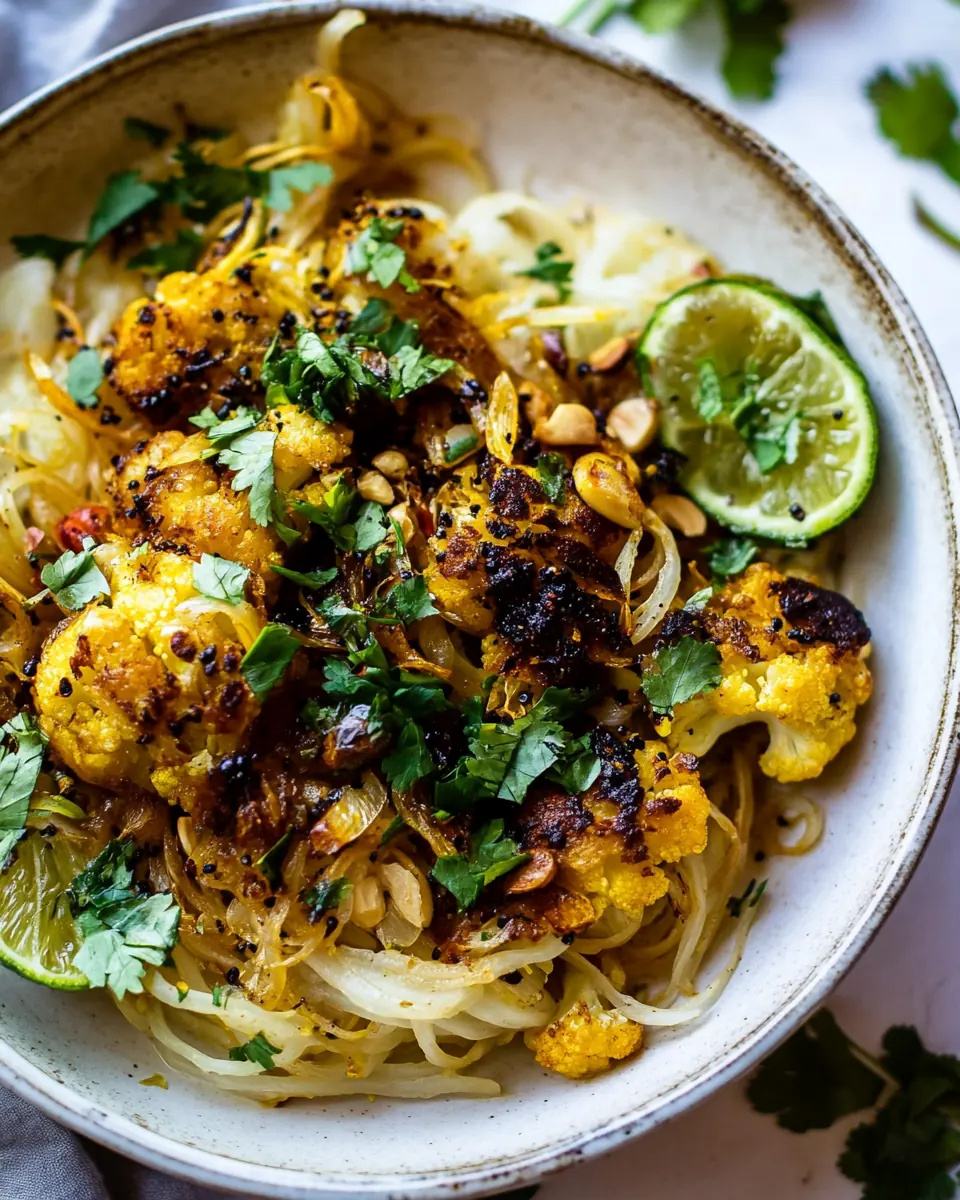
These ingredients are chosen to play complementary roles: the roasted cauliflower brings texture and caramelized depth, while the aromatic spices and a coconut milk based sauce lend richness and balance. The noodles act as a gentle canvas, picking up the sauce and carrying little pops of herb and citrus at the end.
- 1 large head of cauliflower, cut into florets: Roasted to develop a nutty, caramelized texture and provide the dish's hearty base, cauliflower florets become crispy on the edges while tender inside when cooked at high heat.
- 3 tablespoons sesame oil or extra virgin olive oil: Used to sauté and crisp ingredients while imparting a rich, aromatic backbone, sesame oil or extra virgin olive oil helps transfer heat and bind spices to the cauliflower and noodles.
- 1 teaspoon ground turmeric: Sprinkled for warm color and subtle earthiness, ground turmeric brightens the cauliflower and contributes anti-inflammatory flavor and visual appeal.
- 1 teaspoon ground ginger: Added to introduce a bright, slightly pungent warmth, ground ginger complements turmeric and enhances the overall aromatic profile of the dish.
- 1 2 teaspoons black pepper: Ground to create a bold, pungent heat, black pepper adds sharpness and balances the sweetness from honey and coconut milk; quantity can be adjusted for desired spice level.
- 1/2 teaspoon paprika: Layered in for mild smokiness and color contrast, paprika deepens the savory notes without overpowering other spices.
- 1/2 teaspoon crushed red pepper flakes: Tossed in sparingly to elevate heat with a smoky bite, crushed red pepper flakes bring an adjustable kick that enlivens the sauce and roasted cauliflower.
- 2 medium shallots, sliced or chopped: Sweated to release sweet, savory depth, sliced or chopped shallots add a mellow onion flavor that forms part of the dish's aromatic base.
- 1/2 cup raw cashews: Toasted briefly to add crunch and buttery richness, raw cashews contribute texture contrast and a creamy element when mixed into the sauce.
- 1 tablespoon low sodium soy sauce: Combined to introduce savory umami and salt balance, low sodium soy sauce seasons the coconut–lime sauce while keeping sodium in check.
- 1 tablespoon honey: Stirred in for a touch of sweetness and to balance heat and acidity, honey rounds out flavors and helps glaze the roasted cauliflower.
- 8 ounces rice noodles: Prepared according to package instructions to provide a neutral, chewy base, rice noodles soak up the coconut–lime sauce and carry other flavors.
- 3 tablespoons salted butter or ghee: Melted to enrich the sauce and coat the noodles with a silky mouthfeel, salted butter or ghee contributes depth and a smooth finish.
- 3 4 cloves garlic, finely chopped or grated: Sautéed briefly to unleash pungent, aromatic garlic oils, finely chopped or grated garlic offers a sharp, savory lift that permeates the dish.
- 1 cup canned coconut milk: Mixed in to provide a creamy, tropical body, canned coconut milk adds richness and a subtle sweetness that balances spices and acidity.
- zest and juice of 1 lime: Zested and juiced to inject bright citrus acidity and fragrant oil, lime adds freshness that cuts through the richness and ties flavors together.
- 1/2 cup fresh Thai basil or cilantro, roughly chopped: Chopped and sprinkled at the end to deliver herbaceous freshness and a palate-cleansing finish, fresh Thai basil or cilantro complements the dish's spicy, savory layers.
How to Make Crispy Black Pepper Turmeric Cauliflower and Garlic Noodles
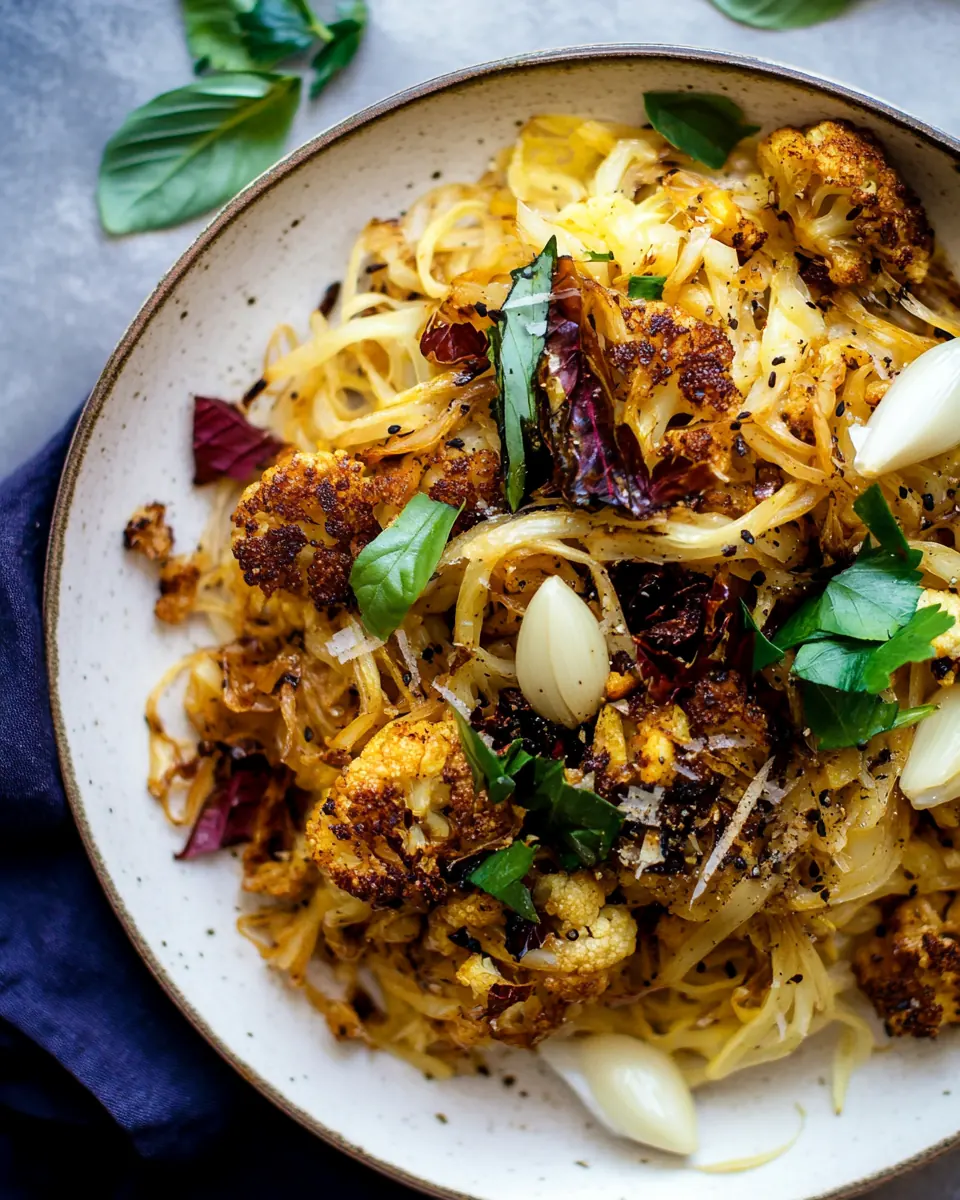
This recipe is a two part dance between roasting and stovetop finishing. The steps below guide you through roasting the cauliflower to golden edges, building a fragrant coconut garlic sauce, and combining everything so each bite has balance and texture.
- Preheat oven to 425° F. On a baking sheet, combine the cauliflower, the olive oil, turmeric, ginger, black pepper, paprika, and a pinch of chili flakes and salt. Toss well to evenly coat. Transfer to the oven and roast for 20 minutes, or until tender. Remove the cauliflower from oven, add the shallots and cashews. Drizzle over the soy sauce and honey, toss to combine and evenly coat everything. Roast another 10 minutes, until charred. Meanwhile, cook rice noodles according to packaged directions. Heat a medium skillet over medium heat. Add the butter, garlic, and a pinch of red pepper flakes, if desired. Cook until the garlic begins to caramelize and turn light golden brown, 1 to 2 minutes. Stir in the coconut milk, cooking 3-5 minutes, until warmed through. Remove from the heat and toss the noodles with the sauce. To serve, divide the noodles among bowls and top with roasted cauliflower. Finish with a squeeze of lime juice and top with basil or cilantro. Enjoy!: The room quickly warms and the oven elements begin to glow, promising the caramelization we want on the cauliflower . A fully preheated oven ensures even browning and a crisp exterior. If you skip preheating you risk uneven roast and limp texture.
- On a baking sheet, combine the cauliflower, the olive oil, turmeric, ginger, black pepper, paprika, and a pinch of chili flakes and salt: As you toss the florets, you should see the spices cling and the oil lightly sheen the surfaces. This step flavors every edge so they char beautifully. A common mistake is undercoating the cauliflower , which leads to pale spots rather than golden browning.
- Toss well to evenly coat: When the florets glisten with seasoning the aromatics will bloom in the heat, and the visual cue of an even coating predicts consistent roast. If some pieces remain dry, they will cook faster and may burn, so be attentive to even distribution.
- Transfer to the oven and roast for 20 minutes, or until tender: The oven fills the kitchen with toasty, nutty aroma as edges darken and internal flesh yields to a fork. You want tender centers and golden tips. Overroasting can dry them out, so check for a tender but not mushy texture.
- Remove the cauliflower from oven, add the shallots and cashews: Returning the pan to the oven with these additions lets the shallots soften and the cashews toast, creating layers of sweetness and crunch. The contrast between preroasted florets and fresh shallot ribbons is important for complexity. Avoid adding too many extras which can steam instead of roast.
- Drizzle over the soy sauce and honey, toss to combine and evenly coat everything: You will see a glossy sheen as the sauce melds with oil and spice, and the pan aroma shifts toward sweet umami. This glaze helps the shallots and cashews caramelize further. Using too much soy can make the mix overly salty, so go light and taste.
- Roast another 10 minutes, until charred: This short second roast deepens color and introduces small charred bits that carry smoky notes. Look for darker edges and sniff for toasted cashew fragrance. Watch carefully because char can turn to bitter ashes very fast.
- Meanwhile, cook rice noodles according to packaged directions: As soon as hot water hits the noodles they soften and release a faint rice aroma, becoming tender and supple. Drain and rinse briefly if needed to prevent sticking. Overcooking will create gummy noodles that will not separate under sauce.
- Heat a medium skillet over medium heat: A properly heated pan will make the butter sizzle upon contact and encourage quick aromatics. You want steady bubbling rather than violent smoking. If the pan is too hot the garlic will burn and taste bitter.
- Add the butter, garlic, and a pinch of red pepper flakes, if desired: The garlic should release a fragrant, toasty scent as it turns pale gold, and you will hear gentle sizzling as the butter foams. This is the aromatic backbone of the sauce. Be ready to move quickly because garlic goes from golden to burnt in seconds.
- Cook until the garlic begins to caramelize and turn light golden brown, 1 to 2 minutes: The kitchen will smell warm and nutty, and you will see tiny brown flecks in the butter. This brief caramelization mellows raw garlic sharpness and creates complexity. Avoid leaving it unattended to prevent bitterness.
- Stir in the coconut milk, cooking 3 to 5 minutes, until warmed through: The sauce will shimmer and thicken slightly as it heats, releasing a coconut sweetness that balances the spices. Gentle simmering integrates flavors and slightly reduces water content for better coating of the noodles. Boiling vigorously can separate the fats and create a broken sauce.
- Remove from the heat and toss the noodles with the sauce: Off the heat the sauce clings to the rice noodles , their silky texture absorbing the coconut perfume. Tossing ensures even coverage and lets residual heat finish melding flavors. If the sauce seems thin, let it rest a minute to thicken; if too thick, add a splash of warm water.
- To serve, divide the noodles among bowls and top with roasted cauliflower: Layering the crunchy, charred cauliflower over sauced noodles creates pleasing contrast and visual appeal. The bowl should feel balanced with sauce, vegetables, and crunch. Serving everything mixed too early may cause the crunchy bits to soften.
- Finish with a squeeze of lime juice and top with basil or cilantro: The citrus brightens and the herb releases a fresh aroma as you fold it in, elevating the final bite. This pop of acidity cleanses the palate and lifts the dish. Skipping this finishing acid will leave the plate tasting heavier and flatter.
- Enjoy: Savor the interplay of textures and flavors immediately while the contrast between warm sauce and crisp roasted edges is at its peak. Leftovers will be tasty but textures shift, so consume within a day for best experience.
Expert Tips about Crispy Black Pepper Turmeric Cauliflower and Garlic Noodles
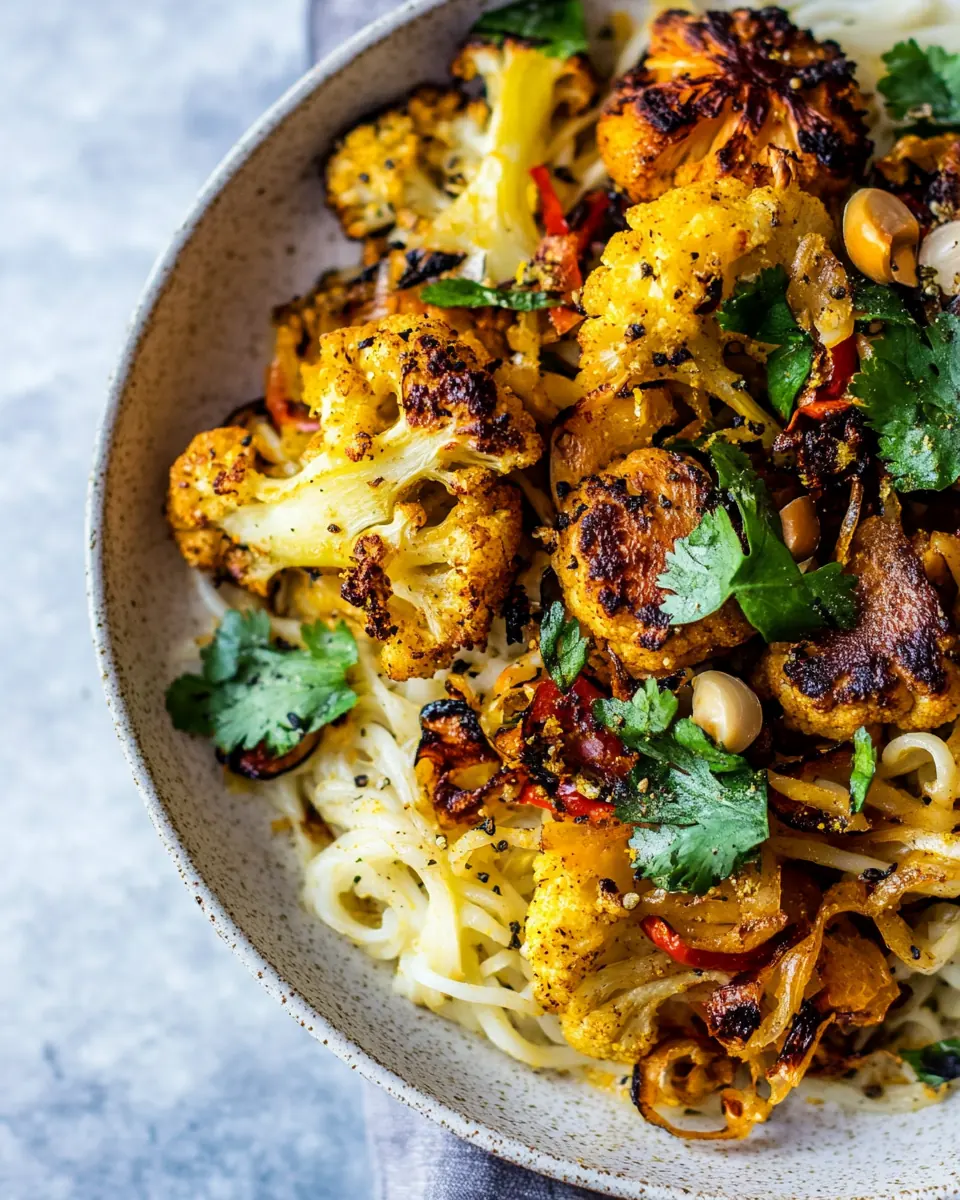
This dish benefits from small technique choices that make a big difference. Below are targeted tips to help you get the most out of the roast, sauce, and final assembly. Read them and pick the ones that fit your kitchen rhythm.
- Preheat fully before roasting so the cauliflower begins browning on contact, which promotes crisp edges instead of steaming.
- Use freshly ground black pepper for the best aromatic bite; preground pepper loses its punch over time.
- Toast cashews on the pan with shallots to enhance nuttiness and prevent them from turning soggy on the final plate.
- Control garlic heat by lowering the pan if it browns too quickly, which prevents bitter notes in the sauce.
- Finish with lime just before serving to preserve bright citrus flavor and keep herbs vibrant.
What to Serve Alongside Crispy Black Pepper Turmeric Cauliflower and Garlic Noodles
These pairing suggestions and service ideas will help you present the dish for different occasions, from casual weeknights to small gatherings. Think about balance, texture, and how the meal will be eaten.
- Light green salad for contrast: A crisp salad with a bright vinaigrette cuts through the richness of the coconut milk sauce and refreshes the palate during a longer meal.
- Extra herbs and lime wedges on the side: Offering additional Thai basil or cilantro and lime lets guests customize brightness and herbal notes to their preference.
- Warm flatbreads or steamed greens for sharing: If you want something to scoop up saucy noodles, soft breads or lightly steamed greens complement the textures and soak up sauce.
- Occasions suited for this dish: It is perfect for an easy weeknight dinner, a vegetarian friendly lunch, or when you need a flavorful plant forward centerpiece during gatherings like Ramadan if you are serving a larger iftar spread.
- Storage tips for leftovers: Store noodles and roasted cauliflower separately if possible, refrigerate in sealed containers, and consume within two days to preserve textures.
- Seasonal pairings consider adding seasonal herbs in spring or mild roasted root vegetables in cooler months to adapt the dish across the year.
FAQ
Conclusion
This recipe stands out because it balances crisp roasted cauliflower, warm spices, and a creamy garlic coconut sauce in a single satisfying bowl. Try it to experience how contrasting textures and bright finishing lime work together to create a memorable meal. I hope you give it a go, and that it becomes a reliable, flavorful option for your weeknight or when you want to impress without a long list of steps.
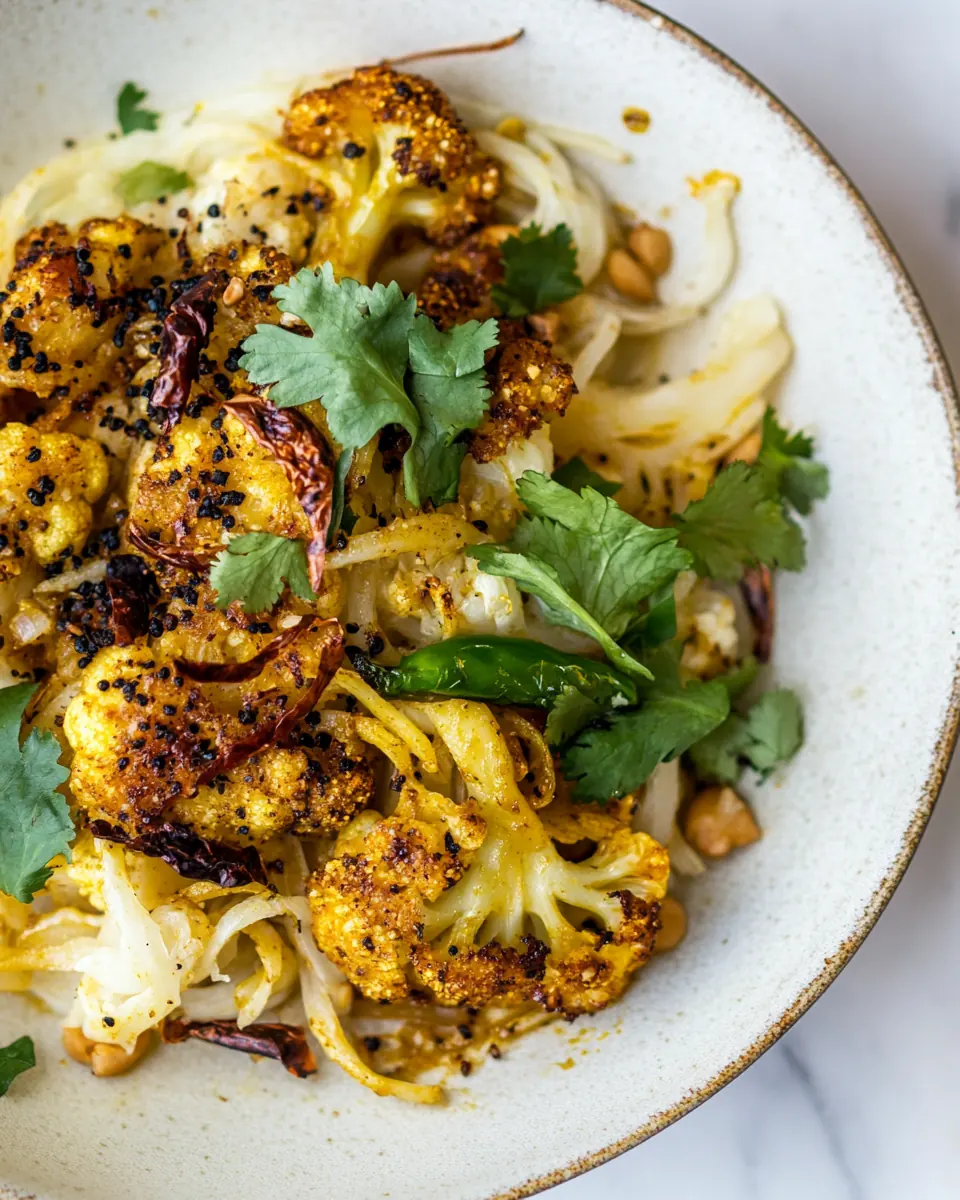
Crispy Black Pepper Turmeric Cauliflower and Garlic Noodles
Ingredients
Equipment
Method
- Preheat oven to 425° F. On a baking sheet, combine the cauliflower, the olive oil, turmeric, ginger, black pepper, paprika, and a pinch of chili flakes and salt. Toss well to evenly coat. Transfer to the oven and roast for 20 minutes, or until tender. Remove the cauliflower from oven, add the shallots and cashews. Drizzle over the soy sauce and honey, toss to combine and evenly coat everything. Roast another 10 minutes, until charred. Meanwhile, cook rice noodles according to packaged directions. Heat a medium skillet over medium heat. Add the butter, garlic, and a pinch of red pepper flakes, if desired. Cook until the garlic begins to caramelize and turn light golden brown, 1 to 2 minutes. Stir in the coconut milk, cooking 3-5 minutes, until warmed through. Remove from the heat and toss the noodles with the sauce. To serve, divide the noodles among bowls and top with roasted cauliflower. Finish with a squeeze of lime juice and top with basil or cilantro. Enjoy!: The room quickly warms and the oven elements begin to glow, promising the caramelization we want on the cauliflower . A fully preheated oven ensures even browning and a crisp exterior. If you skip preheating you risk uneven roast and limp texture.
- On a baking sheet, combine the cauliflower, the olive oil, turmeric, ginger, black pepper, paprika, and a pinch of chili flakes and salt: As you toss the florets, you should see the spices cling and the oil lightly sheen the surfaces. This step flavors every edge so they char beautifully. A common mistake is undercoating the cauliflower , which leads to pale spots rather than golden browning.
- Toss well to evenly coat: When the florets glisten with seasoning the aromatics will bloom in the heat, and the visual cue of an even coating predicts consistent roast. If some pieces remain dry, they will cook faster and may burn, so be attentive to even distribution.
- Transfer to the oven and roast for 20 minutes, or until tender: The oven fills the kitchen with toasty, nutty aroma as edges darken and internal flesh yields to a fork. You want tender centers and golden tips. Overroasting can dry them out, so check for a tender but not mushy texture.
- Remove the cauliflower from oven, add the shallots and cashews: Returning the pan to the oven with these additions lets the shallots soften and the cashews toast, creating layers of sweetness and crunch. The contrast between preroasted florets and fresh shallot ribbons is important for complexity. Avoid adding too many extras which can steam instead of roast.
- Drizzle over the soy sauce and honey, toss to combine and evenly coat everything: You will see a glossy sheen as the sauce melds with oil and spice, and the pan aroma shifts toward sweet umami. This glaze helps the shallots and cashews caramelize further. Using too much soy can make the mix overly salty, so go light and taste.
- Roast another 10 minutes, until charred: This short second roast deepens color and introduces small charred bits that carry smoky notes. Look for darker edges and sniff for toasted cashew fragrance. Watch carefully because char can turn to bitter ashes very fast.
- Meanwhile, cook rice noodles according to packaged directions: As soon as hot water hits the noodles they soften and release a faint rice aroma, becoming tender and supple. Drain and rinse briefly if needed to prevent sticking. Overcooking will create gummy noodles that will not separate under sauce.
- Heat a medium skillet over medium heat: A properly heated pan will make the butter sizzle upon contact and encourage quick aromatics. You want steady bubbling rather than violent smoking. If the pan is too hot the garlic will burn and taste bitter.
- Add the butter, garlic, and a pinch of red pepper flakes, if desired: The garlic should release a fragrant, toasty scent as it turns pale gold, and you will hear gentle sizzling as the butter foams. This is the aromatic backbone of the sauce. Be ready to move quickly because garlic goes from golden to burnt in seconds.
- Cook until the garlic begins to caramelize and turn light golden brown, 1 to 2 minutes: The kitchen will smell warm and nutty, and you will see tiny brown flecks in the butter. This brief caramelization mellows raw garlic sharpness and creates complexity. Avoid leaving it unattended to prevent bitterness.
- Stir in the coconut milk, cooking 3 to 5 minutes, until warmed through: The sauce will shimmer and thicken slightly as it heats, releasing a coconut sweetness that balances the spices. Gentle simmering integrates flavors and slightly reduces water content for better coating of the noodles. Boiling vigorously can separate the fats and create a broken sauce.
- Remove from the heat and toss the noodles with the sauce: Off the heat the sauce clings to the rice noodles , their silky texture absorbing the coconut perfume. Tossing ensures even coverage and lets residual heat finish melding flavors. If the sauce seems thin, let it rest a minute to thicken; if too thick, add a splash of warm water.
- To serve, divide the noodles among bowls and top with roasted cauliflower: Layering the crunchy, charred cauliflower over sauced noodles creates pleasing contrast and visual appeal. The bowl should feel balanced with sauce, vegetables, and crunch. Serving everything mixed too early may cause the crunchy bits to soften.
- Finish with a squeeze of lime juice and top with basil or cilantro: The citrus brightens and the herb releases a fresh aroma as you fold it in, elevating the final bite. This pop of acidity cleanses the palate and lifts the dish. Skipping this finishing acid will leave the plate tasting heavier and flatter.
- Enjoy: Savor the interplay of textures and flavors immediately while the contrast between warm sauce and crisp roasted edges is at its peak. Leftovers will be tasty but textures shift, so consume within a day for best experience.
Notes
- Preheat fully before roasting so the cauliflower begins browning on contact, which promotes crisp edges instead of steaming.
- Use freshly ground black pepper for the best aromatic bite; preground pepper loses its punch over time.
- Toast cashews on the pan with shallots to enhance nuttiness and prevent them from turning soggy on the final plate.
- Control garlic heat by lowering the pan if it browns too quickly, which prevents bitter notes in the sauce.
- Finish with lime just before serving to preserve bright citrus flavor and keep herbs vibrant.