Asparagus Chickpea Quinoa Salad
Asparagus Chickpea Quinoa Salad came into my weeknight rotation the moment I needed something bright, filling, and oddly comforting after a long day in the kitchen. I remember the first time I tossed these ingredients together, standing at my counter with a steaming bowl of fluffy quinoa steaming, a lemony dressing waiting in a jar, and the quick sizzle of asparagus in the skillet. The combination felt like a small, sunlit celebration on a plate, something I could bring to a potluck or eat straight from a bowl while I caught up on messages.
There is a particular kind of happiness that comes from combining pantry staples with a handful of fresh produce; in this case the hearty bite of chickpeas, the pop of green from tender asparagus, and the creamy tang of crumbled feta cheese make each forkful interesting. I often make a double batch, because leftovers taste even better as the dressing settles into every grain. I like how it travels well, too, whether I pack it for work or bring it to a casual gathering with friends who appreciate something wholesome.
Recipe Snapshot
30 mins
10 mins
20 mins
Easy
220 kcal
Mediterranean
Gluten-Free, Vegan
Salads
Medium saucepan, Large skillet, Mixing bowl, Whisk or jar with lid, Fork
Why You’ll Love This Asparagus Chickpea Quinoa Salad
Bright, balanced flavors
I really love how the lemony dressing wakes up the entire salad. The acidity cuts through the nuttiness of quinoa and the creamy tang of feta cheese, so every bite feels lively rather than flat.
Textural contrast
There is a satisfying chew from the chickpeas, a tender snap from the sautéed asparagus, and a light, fluffy base from the quinoa. That variety in texture keeps the salad interesting spoon after spoon, and I find it never gets boring.
Versatility for meals
I make this for lunch, as a side at dinner, and as a potluck contribution. It stands up well at room temperature and does not wilt quickly, which makes it practical. You can serve it as a main or a side depending on how much chickpeas and feta cheese you add.
Simple pantry friendly
Most of the ingredients are shelf stable or easy to find. I keep a can of chickpeas and a bag of quinoa in the pantry at all times, so throwing this together after work is fast and satisfying. The dressing is made with minimal fuss and brightens everything up.
Great for leftovers
I particularly appreciate that the salad improves after a few hours as the dressing soaks in. If I make it the night before, the flavors harmonize and the texture remains pleasant, which makes meal prep feel like a real time saver.
What Goes Into Asparagus Chickpea Quinoa Salad
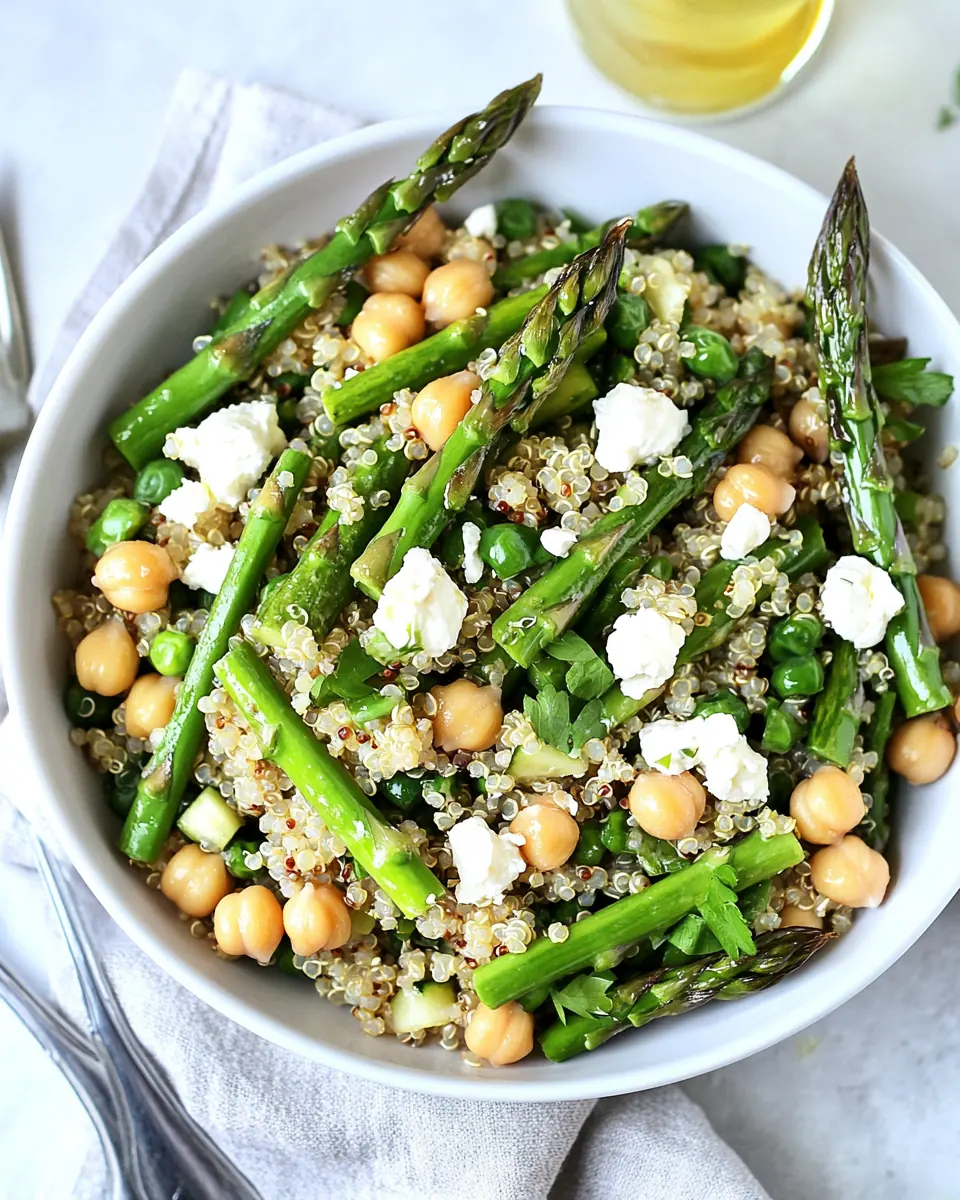
The philosophy here is simple: combine whole grains, legumes, and vibrant vegetables with a bright dressing to create a balanced bowl. The quinoa is the canvas, the chickpeas bring protein and chew, and the asparagus delivers fresh vegetal notes. A small amount of feta cheese adds creamy saltiness while the lemon and olive oil tie everything together.
- 1/4 cup freshly squeezed lemon juice: Provide bright acidity and a citrusy backbone that balances richer flavors; use in dressing to brighten the salad and enhance other ingredients. Squeeze fresh for best aroma and avoid bottled juice to prevent added preservatives. Adjust quantity to taste to control overall tartness.
- 1/4 cup extra virgin olive oil: Offer a fruity, peppery fat that carries and melds flavors in the dressing; emulsify with lemon juice and mustard for a smooth vinaigrette. Use high-quality extra virgin olive oil for best flavor impact. Add gradually while whisking to achieve a cohesive dressing.
- 2 teaspoons Dijon mustard: Emulsify and add sharp, tangy depth to the vinaigrette while helping stabilize the lemon–olive oil mixture. Whisk into the dressing with mustard to ensure even distribution of flavor. Adjust a little at a time to avoid overpowering other components.
- 1 clove garlic, minced: Introduce a pungent, savory note that enhances overall savory complexity when minced and mixed into the dressing. Rub or mince finely to release oils for maximum flavor integration. Add according to tolerance for raw garlic intensity.
- Kosher salt and black pepper, to taste: Season and balance overall taste by enhancing other flavors and controlling seasoning levels throughout preparation. Use Kosher salt for clean salting and freshly cracked black pepper for bright spice. Taste and adjust at multiple stages for proper seasoning.
- 2 cups water: Cook quinoa by providing the necessary liquid; simmer until grains are tender and water is absorbed. Measure accurately to ensure proper texture without sogginess. Bring to a boil then simmer gently for best results.
- 1 cup quinoa: Form the base grain component that provides a nutty, slightly chewy texture and protein; rinse before cooking to remove bitterness. Combine with water and a pinch of salt, then simmer until fluffy. Cool before tossing into the salad to preserve texture.
- 1/2 teaspoons salt: Season the cooking water to infuse the quinoa with subtle savory flavor and help bring out its natural nuttiness. Measure carefully to avoid oversalting the grain component. Add at the start of the cooking process for even distribution.
- 2 teaspoons olive oil: Sauté or toss asparagus with oil to promote gentle browning and prevent sticking while adding a mild olive oil flavor. Use for quick cooking or roasting to develop texture and flavor before combining in the salad. Apply sparingly to avoid greasiness.
- 1 small bunch asparagus, about 15 spears, cut into 1-inch pieces: Provide tender-crisp vegetable texture and a fresh, grassy flavor when cut into uniform 1-inch pieces for even cooking. Steam, blanch, or roast briefly to retain color and crunch before combining with quinoa. Trim woody ends to ensure pleasant bite.
- 1 tablespoon fresh lemon juice: Add a concentrated citrus boost to brighten the dressing or finish the salad with a fresh lemon note, layering acidity beyond the primary lemon juice. Use freshly squeezed for vibrant aroma and immediate brightness. Adjust to taste for final balance.
- 1 1/2 cups chickpeas, rinsed and drained, 15 oz can: Contribute creamy, earthy protein and a slightly nutty flavor while adding bulk and heartiness to the salad; drain and rinse to remove canning liquids. Fold in toward the end to preserve shape and texture. Chickpeas also absorb dressing flavors well.
- 3 green onions, sliced: Provide a mild, onion-like bite and fresh green color while adding subtle crunch when thinly sliced. Scatter on top for freshness and mild sharpness that complements richer elements. Use both white and green parts for varied texture.
- 1/3 cup crumbled feta cheese: Introduce a salty, tangy, creamy element that adds richness and balances acidity while contributing a Mediterranean character. Crumble over the finished salad to provide pockets of savory flavor. Use sparingly to control overall saltiness.
- Salt and freshly ground black pepper, to taste: Finish by seasoning and rounding out flavors with additional salt and freshly ground pepper; use to taste for final balance. Re-taste after combining all components to ensure harmony. Grind pepper fresh for maximum aromatic impact.
How to Cook Asparagus Chickpea Quinoa Salad
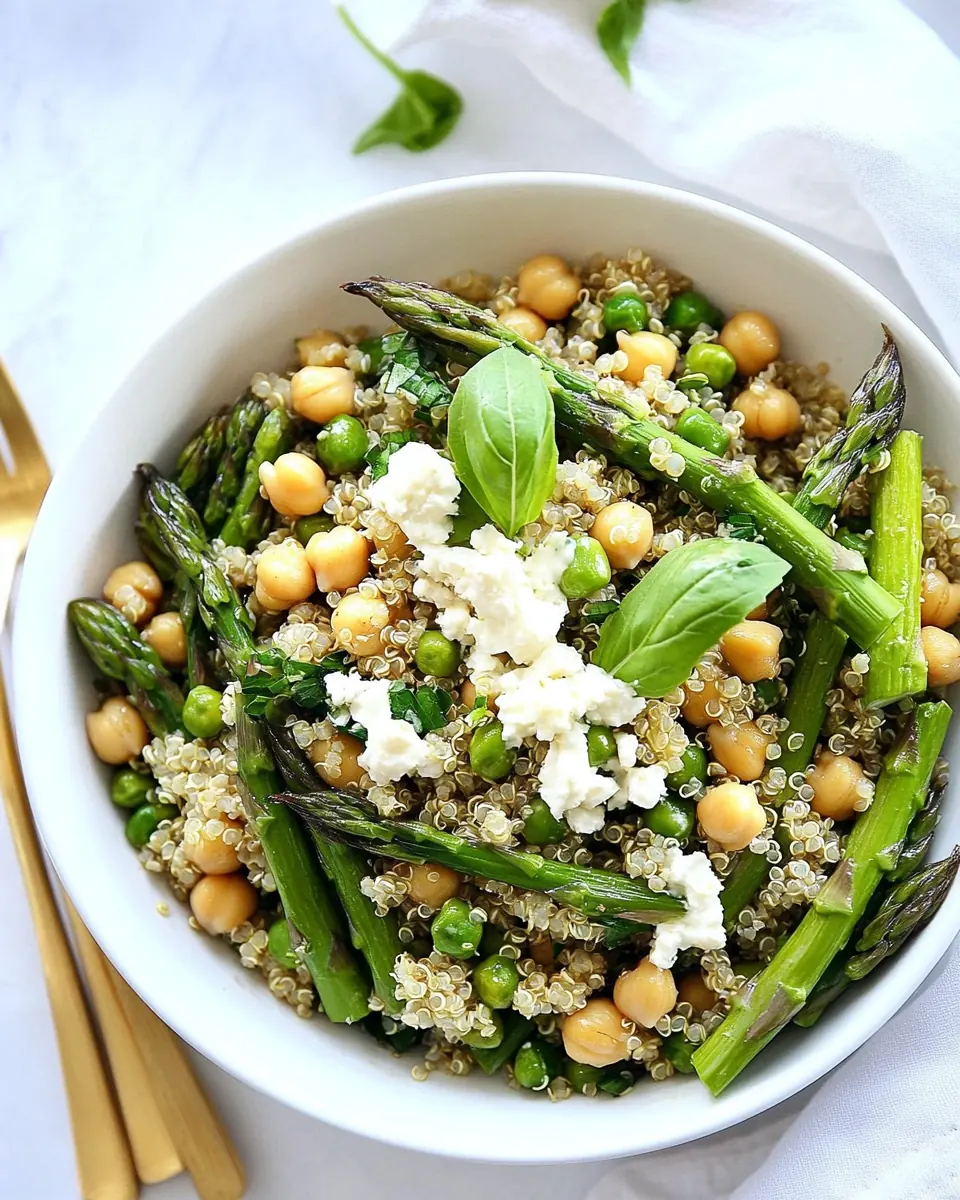
Cooking this salad is straightforward, but paying attention to timing and sensory cues will make it shine. Below I walk you through each step with what to expect, how it should feel and smell, and common missteps I see readers make.
- In a small bowl or medium jar, combine the lemon juice, olive oil, mustard, and garlic. Whisk to combine or shake with the jar lid on tight. Season with salt and pepper, to taste, and set aside.: You will smell the bright lemon and sharp mustard immediately, which signals the dressing is lively. Emulsifying until it slightly thickens helps it cling to the quinoa and vegetables. If the dressing separates later, a quick whisk before tossing will bring it back together. Avoid adding too much salt at this point, because the feta cheese will add saltiness later.
- Add water, quinoa, and salt to a medium saucepan and bring to a boil over medium heat. Boil for 5 minutes. Turn the heat to low and simmer for about 15 minutes, or until water is absorbed. Remove from heat and fluff with a fork.: As the pot comes to a boil you will hear a steady simmer and see the tiny grains shimmer; this is when they begin to absorb water. After simmering, the surface should show small holes where steam escapes, and the liquid should be mostly absorbed. Letting it sit off heat for a few minutes helps steam finish the job. A common mistake is lifting the lid too often, which releases steam and can make the quinoa unevenly cooked. Fluffing with a fork keeps the grains separate and prevents clumping.
- While the quinoa is cooking, cook the asparagus. In a large skillet, heat the olive oil over medium heat. Add the asparagus and fresh lemon juice. Cook until tender, about 5 minutes.: You want to see the asparagus turn a brighter green and hear a gentle sizzle when it hits the pan. As it cooks, the aroma of lemon will lift and the edges may show slight browning, which adds a touch of caramelized flavor. The tips should be tender but still have a bite. Overcooking results in limp, olive colored stalks, so keep an eye on texture by piercing with a fork.
- In a large bowl, combine quinoa, asparagus, chickpeas, green onion, and feta cheese. Pour the dressing over the salad and stir until well coated. Season with salt and pepper, to taste. Serve.: When you toss everything together you should see the dressing sheen across the quinoa and vegetables, and the scent of lemon and garlic will be front and center. Stirring gently helps keep the feta cheese crumbles intact while ensuring even distribution. Taste and adjust seasoning, bearing in mind that canned chickpeas and feta cheese carry salt, so start light. A common issue is overdressing, which can make the salad soggy; start with less and add more if needed.
Recipe Notes about Asparagus Chickpea Quinoa Salad
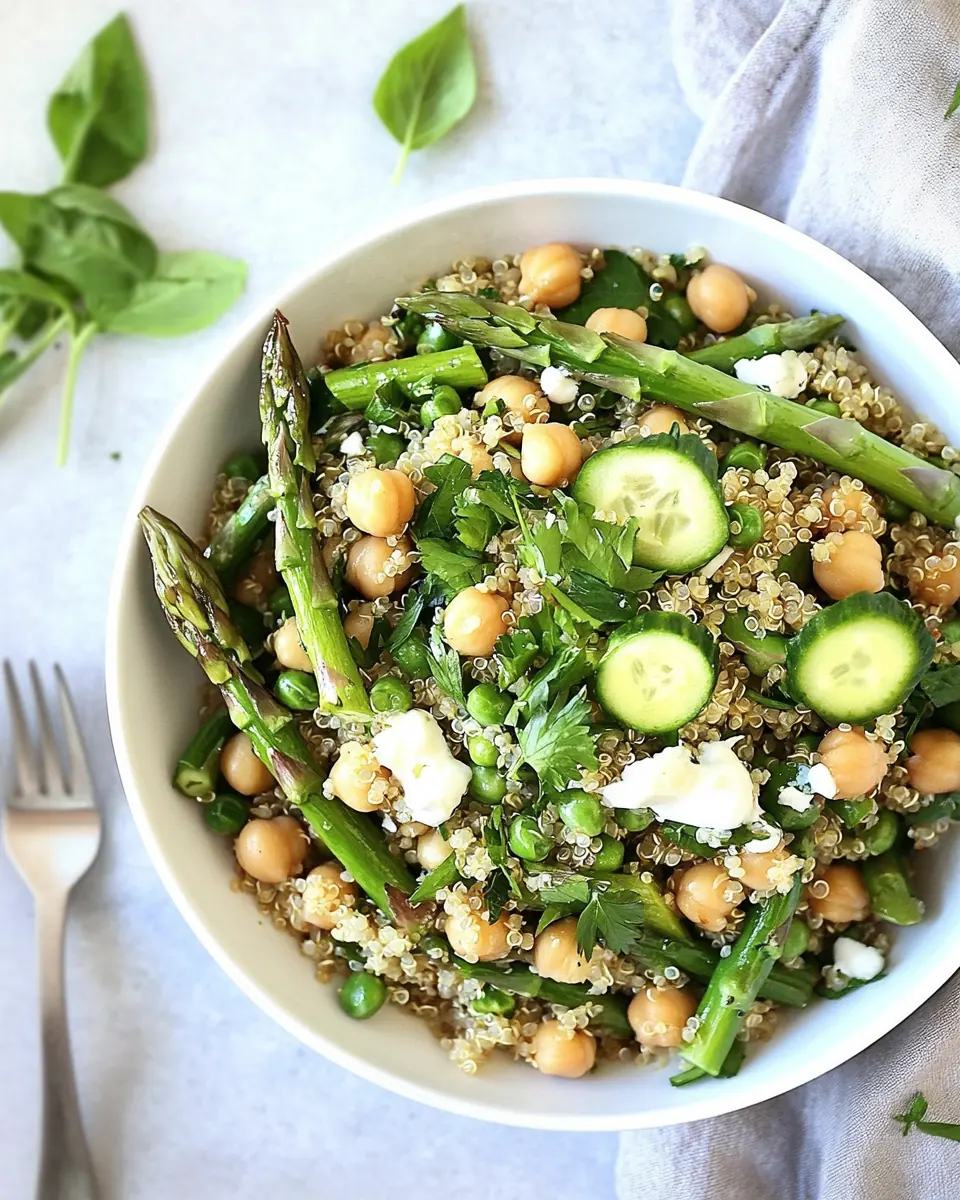
I like to store tips and small adjustments in my head so I can adapt the salad to what I have on hand. Below are practical notes I use every time, from timing tweaks to ingredient swaps that keep the dish reliable and bright.
- Make ahead advantage: Prepare the quinoa and dressing the day before. Chilling them overnight lets the dressing mellow and the grains firm up, which helps the salad hold together when tossed.
- Adjust salt carefully: Since the salad contains canned chickpeas and crumbled feta cheese, season conservatively before tasting the combined salad, then add more if needed.
- Asparagus doneness: Aim for a tender crisp texture for the asparagus. Overcooked stalks become limp and less visually appealing, so check by piercing a piece with a fork.
- Warm vs cold: You can toss the salad warm or fully chilled. If serving warm, add the feta cheese at the end so it keeps its texture instead of melting into the grains.
- Vegan option: Omit the feta cheese and consider sprinkling nutritional yeast for a savory boost while keeping the salad plant based.
Serving Options for Asparagus Chickpea Quinoa Salad
This salad is flexible when it comes to serving occasions, and I often rotate pairings based on the season and what I have on hand. It works wonderfully as a main for a light lunch or as a composed side at dinner gatherings. Here are ways I like to present it and integrate it into meals.
- Lunch bowl: Serve a generous portion in a wide bowl with extra dressing on the side for those who like it more vibrant.
- Potluck side: Bring it to gatherings at room temperature. It travels well and looks appealing in a large serving dish garnished with a few extra crumbles of feta cheese.
- Weeknight dinner: Offer it alongside roasted vegetables or a simple grain to make a heartier plate; the protein from the chickpeas makes it satisfyingly filling.
- Seasonal pairing: In spring, pair with fresh peas or young greens; in summer, add cherry tomatoes for color. The salad complements seasonal produce harmoniously.
- Storage advice: Store in an airtight container for up to three days. Keep extra dressing separately if you prefer a firmer texture on leftovers.
- Occasion flexibility: Suitable for casual family dinners, Ramadan iftar plates, or picnic spreads where you want something nourishing and bright.
FAQ
Conclusion
This Asparagus Chickpea Quinoa Salad shines because it balances bright citrus, hearty legumes, and tender vegetables in a single bowl. Give it a try when you want a make ahead lunch or a vibrant side that travels well. I hope this becomes one of your go to recipes for easy meals and enjoyable leftovers; it has a way of becoming a reliable favorite.
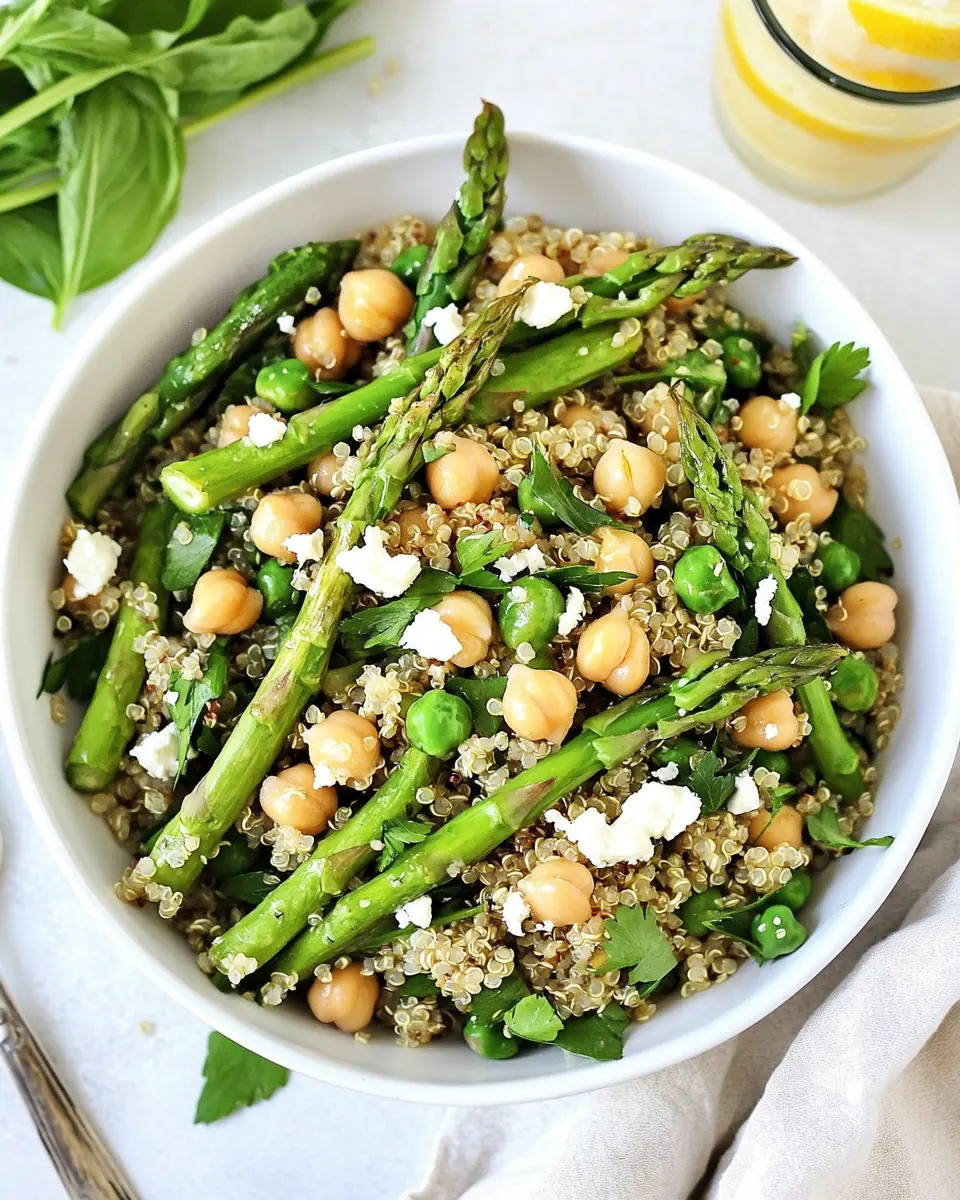
Asparagus Chickpea Quinoa Salad
Ingredients
Equipment
Method
- In a small bowl or medium jar, combine the lemon juice, olive oil, mustard, and garlic. Whisk to combine or shake with the jar lid on tight. Season with salt and pepper, to taste, and set aside.: You will smell the bright lemon and sharp mustard immediately, which signals the dressing is lively. Emulsifying until it slightly thickens helps it cling to the quinoa and vegetables. If the dressing separates later, a quick whisk before tossing will bring it back together. Avoid adding too much salt at this point, because the feta cheese will add saltiness later.
- Add water, quinoa, and salt to a medium saucepan and bring to a boil over medium heat. Boil for 5 minutes. Turn the heat to low and simmer for about 15 minutes, or until water is absorbed. Remove from heat and fluff with a fork.: As the pot comes to a boil you will hear a steady simmer and see the tiny grains shimmer; this is when they begin to absorb water. After simmering, the surface should show small holes where steam escapes, and the liquid should be mostly absorbed. Letting it sit off heat for a few minutes helps steam finish the job. A common mistake is lifting the lid too often, which releases steam and can make the quinoa unevenly cooked. Fluffing with a fork keeps the grains separate and prevents clumping.
- While the quinoa is cooking, cook the asparagus. In a large skillet, heat the olive oil over medium heat. Add the asparagus and fresh lemon juice. Cook until tender, about 5 minutes.: You want to see the asparagus turn a brighter green and hear a gentle sizzle when it hits the pan. As it cooks, the aroma of lemon will lift and the edges may show slight browning, which adds a touch of caramelized flavor. The tips should be tender but still have a bite. Overcooking results in limp, olive colored stalks, so keep an eye on texture by piercing with a fork.
- In a large bowl, combine quinoa, asparagus, chickpeas, green onion, and feta cheese. Pour the dressing over the salad and stir until well coated. Season with salt and pepper, to taste. Serve.: When you toss everything together you should see the dressing sheen across the quinoa and vegetables, and the scent of lemon and garlic will be front and center. Stirring gently helps keep the feta cheese crumbles intact while ensuring even distribution. Taste and adjust seasoning, bearing in mind that canned chickpeas and feta cheese carry salt, so start light. A common issue is overdressing, which can make the salad soggy; start with less and add more if needed.
Notes
- Make ahead advantage: Prepare the quinoa and dressing the day before. Chilling them overnight lets the dressing mellow and the grains firm up, which helps the salad hold together when tossed.
- Adjust salt carefully: Since the salad contains canned chickpeas and crumbled feta cheese, season conservatively before tasting the combined salad, then add more if needed.
- Asparagus doneness: Aim for a tender crisp texture for the asparagus. Overcooked stalks become limp and less visually appealing, so check by piercing a piece with a fork.
- Warm vs cold: You can toss the salad warm or fully chilled. If serving warm, add the feta cheese at the end so it keeps its texture instead of melting into the grains.
- Vegan option: Omit the feta cheese and consider sprinkling nutritional yeast for a savory boost while keeping the salad plant based.