Creamy Salmon Asparagus Pasta
Creamy Salmon Asparagus Pasta is one of those recipes I reach for when I want something that feels indulgent yet comes together without drama. The first time I made this, I was racing the clock after a long day, and what saved me was the way the bright asparagus snapped against the tender bow tie pasta, while the rich cream wrapped around flaky salmon in a way that felt like a cozy restaurant dish served at my own table.
I remember standing at the stove, a citrusy perfume from the lemon zest lifting the heavy cream, and thinking how a few simple techniques turned a handful of pantry items into something memorable. I mixed in fresh dill because it brings a light, herbal lift that cuts through the richness, and the grated Parmesan cheese adds a savory glue that makes every forkful cohesive. This recipe has become my weekday showstopper when friends drop by, and it’s the one I make when I want comfort without fuss.
Recipe Snapshot
22 mins
10 mins
12 mins
Easy
600 kcal
Italian
Gluten-Free, Low FODMAP
Dinner
Large pot, Colander, 12 inch skillet, Slotted spoon
Why Try This Creamy Salmon Asparagus Pasta
Velvety yet light sauce
The cream reduction creates a sauce that is creamy but not cloying. I love that you reduce the cream until it lightly coats the back of a spoon, which concentrates flavor and keeps the texture silky. That technique makes the dish feel luxurious, while the lemon zest brightens every bite so it never feels heavy.
Fresh spring produce that sings
I adore how the asparagus adds a fresh, vegetal pop. Cooked briefly, the spears keep a satisfying snap and a vivid color. That contrast between tender pasta and crisp vegetable makes each mouthful interesting and seasonal, which is why this works so well for spring gatherings.
Salmon for texture and protein
The salmon brings flakey texture and a rich, savory depth that pairs beautifully with dairy and citrus. Using pre cooked salmon keeps the process fast, and when warmed gently in the sauce it stays moist. The fish adds substance so this dish stands as a full meal, not just a side.
Simple ingredients, big payoff
What I appreciate most is how pantry friendly this recipe is. You do not need fussy elements, just good pasta, bright lemon, a handful of fresh dill, and quality Parmesan cheese. Those key players work in harmony to deliver layers of flavor without complicated steps.
Quick and impressive
If you want an easy weeknight dinner that still impresses guests, this is it. The timing is tight enough to make on busy nights, yet the end result feels special. I always feel proud serving it when I want to show care without spending hours in the kitchen.
Everything You Need for Creamy Salmon Asparagus Pasta
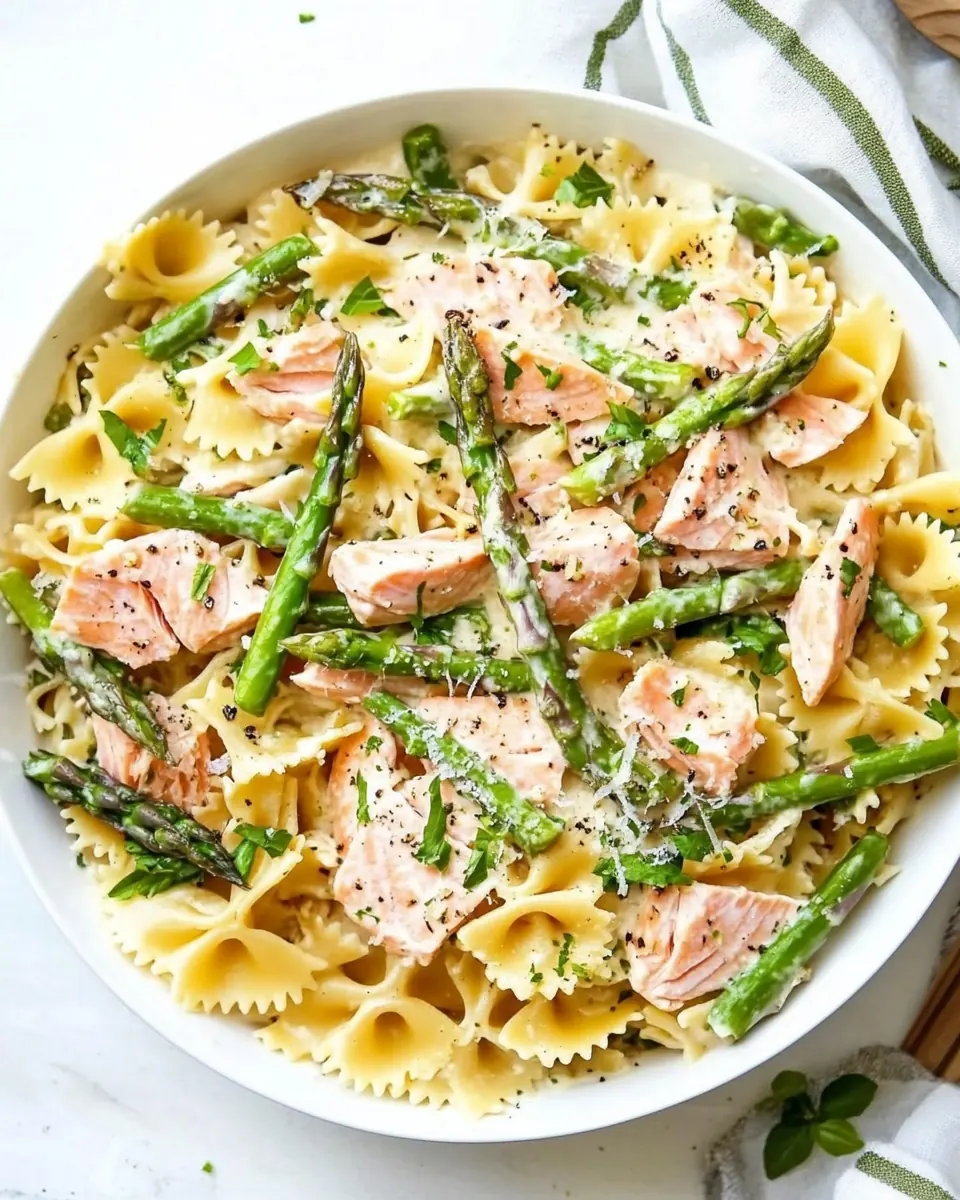
These ingredients are chosen to build contrast and harmony. The star trio of pasta, cream, and salmon creates body and richness, while the asparagus and lemon add lift. Parmesan cheese ties the sauce together with savory umami, and dill brings a fresh herbal note that complements the fish. Together they create a balanced, spring friendly plate.
- 1 pound bow tie pasta (or farfalle): Cook until al dente to provide the pasta's toothsome base that soaks up sauce and anchors the dish for balanced texture and flavor.
- 2 cups chopped asparagus spears, cut into 1-inch pieces: Trim and cut into 1-inch pieces then blanch or sauté briefly to add a bright, tender-crisp green element that contrasts the creamy sauce and complements the salmon.
- 2 cups heavy cream: Simmer gently to form the rich, silky sauce that envelops the pasta and binds flavors while adding luscious mouthfeel and richness to each bite.
- 2 Meyer lemons, zested (use 2-3 regular lemons if you can't find Meyer lemons): Zest finely to release fragrant citrus oils that lighten and brighten the rich cream, adding a subtle tang and aromatic lift to the overall dish.
- 1/2 cup freshly grated Parmesan cheese: Grate freshly to stir into the sauce for a nutty, salty umami depth that helps thicken and finish the cream with savory complexity.
- cup fresh dill, chopped, plus more for serving: Chop finely to fold into the pasta for a fresh, herbaceous note that adds delicate, aromatic brightness and visual color contrast on serving.
- 2 cups flaked, cooked salmon: Flake gently and fold in near the end to distribute tender pockets of savory seafood that provide protein and a delicate, flaky texture.
- kosher salt and freshly ground pepper: Season to taste with salt and freshly ground pepper to enhance and balance all flavors, bringing cohesion and the right level of savory contrast.
How to Cook Creamy Salmon Asparagus Pasta
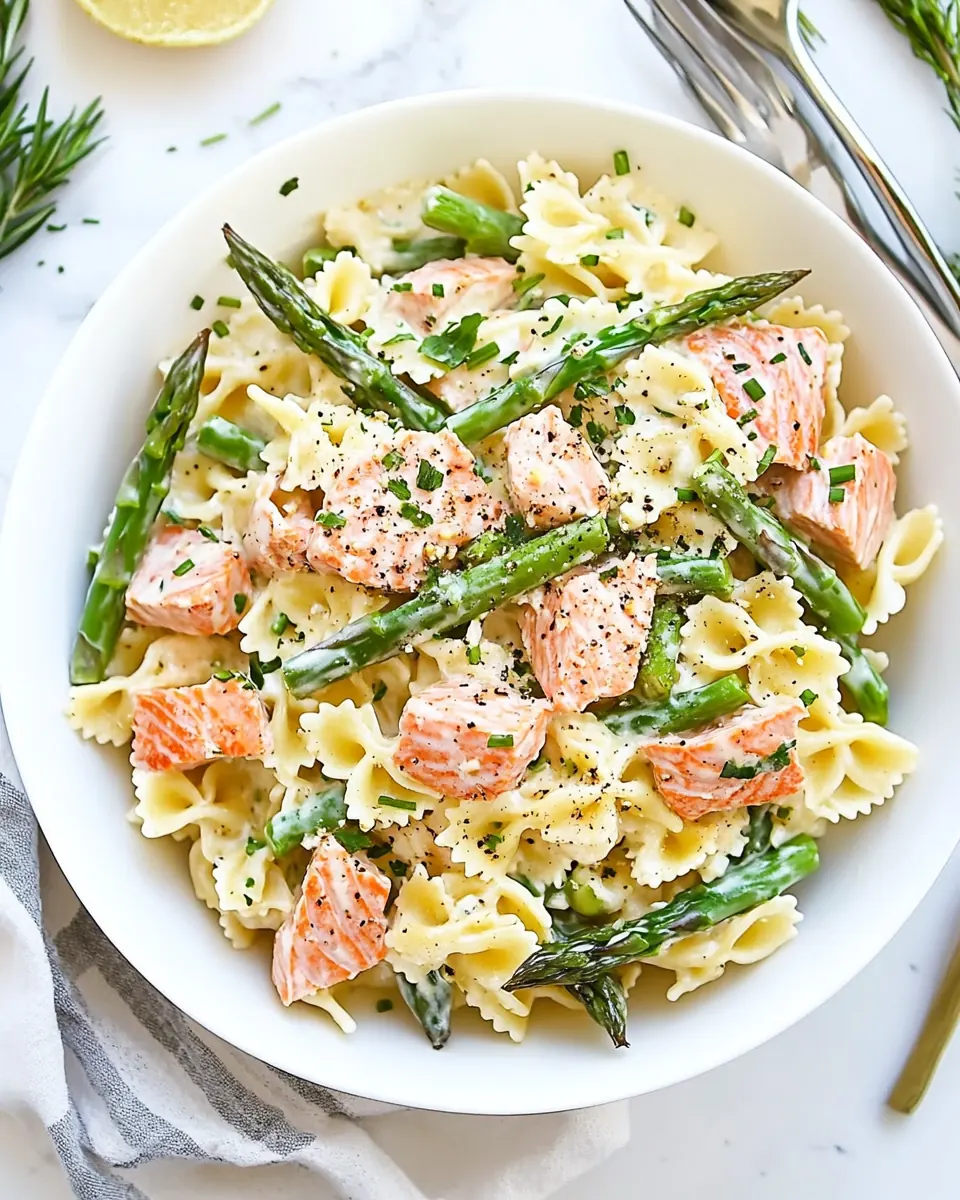
Cooking this recipe is straightforward, but attention to timing makes all the difference. The goal is a silky sauce, crisp tender asparagus, and warm, flaky salmon combined with perfectly cooked pasta. Work with the sequence so nothing overcooks and the flavors stay bright.
- Bring a large pot of water to boil and cook the bow tie pasta according to package directions until al denté.: The moment you smell the starchy steam and see tiny bubbles rising steadily, the water is ready, and adding a generous pinch of kosher salt will season the pasta from the inside out. Listen for a gentle rolling boil before adding the pasta , and stir briefly to prevent sticking. Cook until the pasta is firm to the bite, since it will finish with the sauce. A common mistake is overcooking the pasta, which results in a mushy mouthfeel and a sauce that cannot cling properly.
- When noodles are done cooking, use a slotted spoon to transfer the pasta to a colander, reserving the pasta cooking water in the pot. Reheat the pot of water over medium heat and add the chopped asparagus spears, cooking until they turn bright green, about 1-2 minutes, then transfer to the same colander as the pasta. You want the asparagus to still have a snap to but not taste raw.: You will notice the steam full of starch as you drain, and that starchy water is gold for adjusting sauce texture later. Reheating the reserved water lets you quickly blanch the asparagus in the same pot, which saves time and infuses the vegetable with a touch of seasoning. Avoid rinsing the pasta , because the surface starch helps the sauce adhere.
- While the pasta and asparagus are cooking, pour the cream into a 12-inch skillet and bring to a boil, then reduce to simmer and cook until reduced by half and the cream easily coats the back of a spoon.: As the asparagus hits the warm water you will hear a gentle hiss and see the color intensify quickly, the visual cue that they are nearly perfect. The goal is a crisp tender texture with a slight snap, so work fast and taste one piece. Overcooking here makes the vegetable limp and dull in flavor, so transfer promptly to the colander.
- Add the lemon zest, Parmesan cheese, fresh dill and cooked salmon to the cream and stir until the Parmesan is melted into the cream and the salmon is warmed through. Season with kosher salt and freshly ground pepper.: You will smell the cream becoming more concentrated as it reduces, a warm dairy perfume that signals the sauce is thickening. Keeping the heat moderate prevents scorching, and watching the cream cling to a spoon lets you know it is ready. If the heat is too high the cream can separate or catch on the pan, so gentle simmering is key. Stir periodically to prevent a skin from forming and to encourage even reduction.
- Add the cooked bow tie pasta to the skillet and toss to coat. Add more salt and pepper if desired, and top with more Parmesan cheese and dill if desired. Serve immediately.: Immediately you will notice the bright citrus aroma from the lemon zest lifting the rich cream , and the melted Parmesan cheese adds savory complexity. Gently fold in the flaked salmon so it warms without falling apart; the gentle heat ensures the fish stays moist. A frequent error is overheating the fish which causes it to dry and flake excessively rather than remain tender.
- Season with kosher salt and freshly ground pepper: After adding the cheese and salmon you should taste the sauce and adjust seasoning. The Parmesan cheese contributes salt, so add small increments of kosher salt and grind fresh pepper to brighten the flavors. Over salting is easy, so season gradually and taste at each step to reach the best balance.
- Add the cooked bow tie pasta to the skillet and toss to coat: When you toss, you'll feel the warm sauce clinging to the pasta , coating each piece in a glossy sheen. Use tongs or a spatula to fold the pasta through the sauce, adding a splash of the reserved pasta water if the sauce needs loosening; that starchy water will help bind the sauce and create a silky finish. A typical mistake is adding too much water at once, which dilutes flavor, so add gradually until the texture is ideal.
- Add more salt and pepper if desired, and top with more Parmesan cheese and dill if desired: The visual pop of fresh chopped dill and a final sprinkle of grated Parmesan cheese make the dish sing on the plate. Taste a final bite for balance, and finish with more cracked pepper if you want a peppery lift. Resist the urge to overload with salt at this point; layers of flavor should remain harmonious.
- Serve immediately: Bring the skillet straight to the table or portion onto warmed plates so the sauce remains luxuriously warm and the textures stay fresh. The steam will carry the citrus and dairy aromas, inviting everyone to dig in. Letting it sit too long causes the sauce to thicken and the pasta to absorb more liquid, which can dry the dish out, so serve promptly.
Recipe Tips about Creamy Salmon Asparagus Pasta
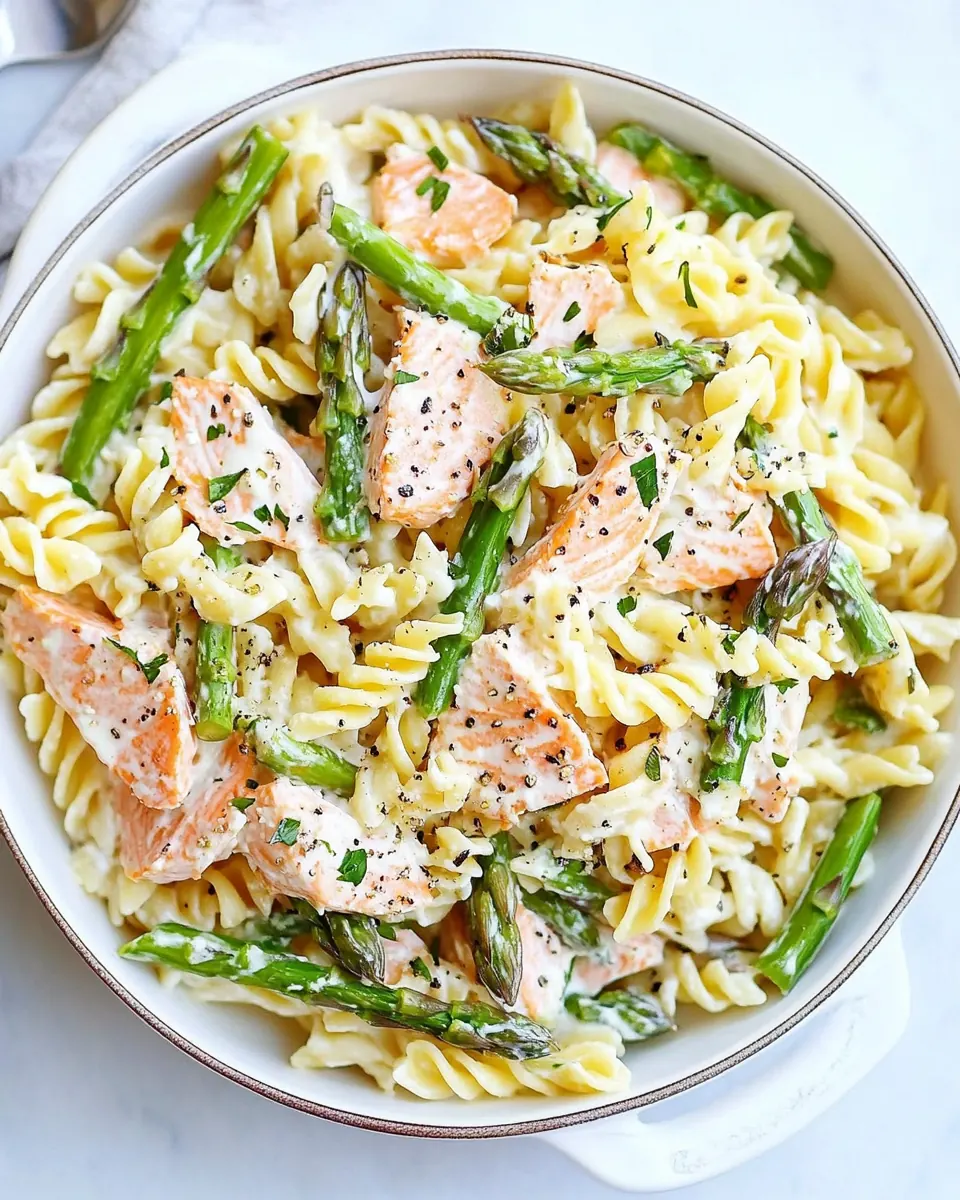
This recipe rewards small attentions to timing and ingredient quality. Below are practical tips I use every time to make it come together perfectly, explained so you can adjust confidently while cooking.
- Salt your pasta water well so the pasta is seasoned from within and the final dish tastes balanced without needing excess salt at the end.
- Use freshly grated Parmesan because it melts smoothly and contributes better umami than pre grated varieties, improving the sauce texture.
- Don’t overcook the asparagus blanch it until bright green and slightly tender to keep a pleasing snap that contrasts the creamy sauce.
- Reduce the cream slowly over moderate heat, stirring occasionally, to avoid scorching and to reach a velvety consistency that clings to the pasta.
- Warm the salmon gently in the sauce instead of boiling or frying it, preserving moisture and delicate flakiness for a superior mouthfeel.
Serving Options for Creamy Salmon Asparagus Pasta
This dish is versatile for casual dinners and special occasions alike. It works beautifully for spring meals, light dinner parties, or a cozy family supper. Below I outline pairing ideas and serving strategies to suit different settings.
- Weeknight family dinner serve bowls of the pasta with extra Parmesan cheese on the side so everyone can adjust to taste. Keep portions moderate and pair with a light salad.
- Spring lunch or brunch present the pasta alongside simple roasted vegetables and lemon wedges for extra brightness, highlighting the seasonal asparagus.
- Casual dinner party bring the skillet to the table for a rustic presentation and garnish with extra chopped dill and freshly cracked pepper to make it feel elevated yet approachable.
- Storage tips cool leftovers quickly and store in an airtight container in the refrigerator for up to two days; reheat gently with a splash of cream or water to restore silkiness.
- Special occasions pair the dish with simple roasted fingerling potatoes and steamed greens to round out the plate without overpowering the delicate fish flavors.
FAQ
Conclusion
This recipe stands out because it balances rich, creamy sauce with bright citrus and fresh asparagus for an elegant yet approachable meal. You get tender bow tie pasta coated in a velvety cream reduction, flaky salmon warmed through, and pops of herbaceous dill that make every bite sing. I encourage you to try this on a busy weeknight or when friends are coming over, because it feels special without demanding hours of fuss. Serve it right away so the textures remain distinct and the flavors stay bright, and enjoy how a few quality ingredients can create something truly memorable.
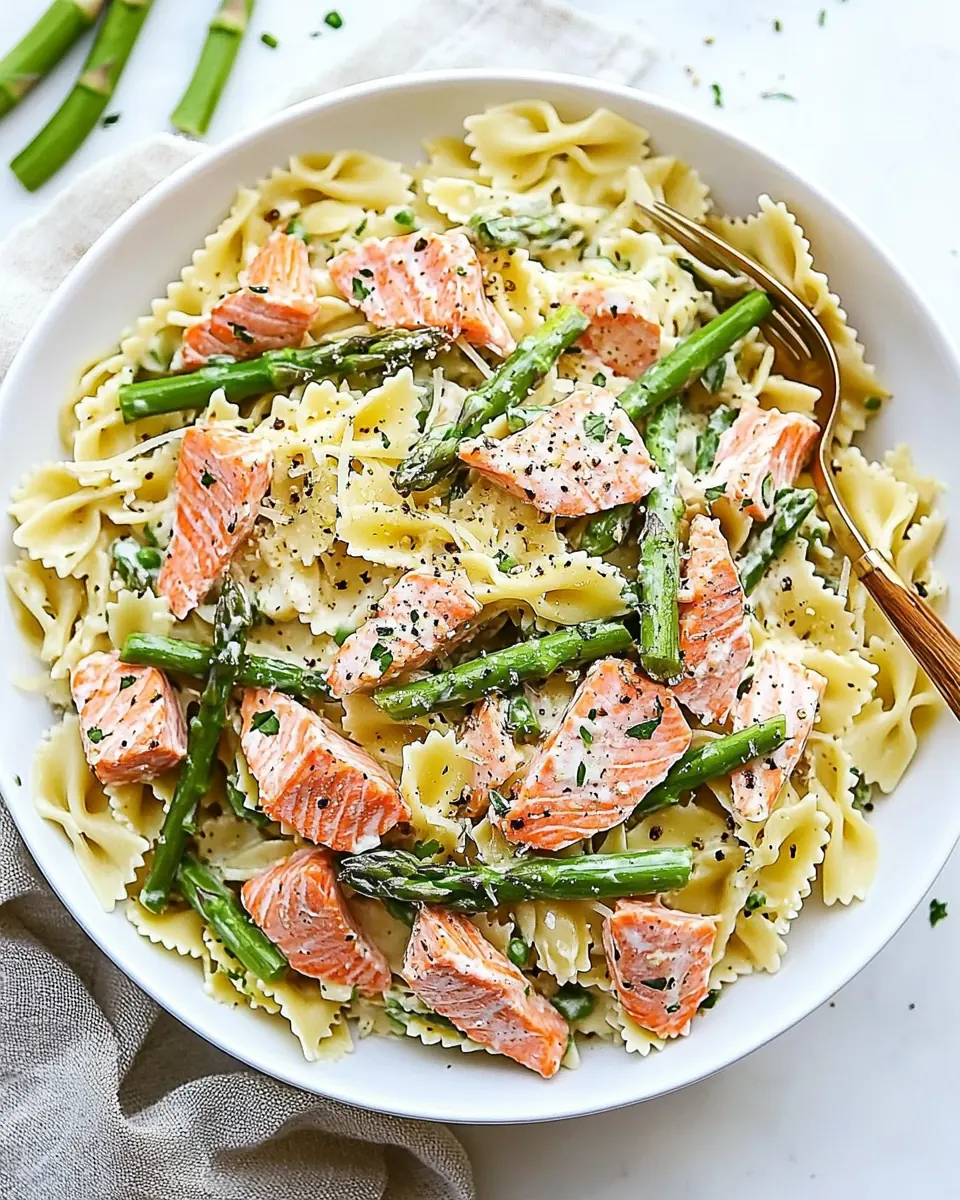
Creamy Salmon Asparagus Pasta
Ingredients
Equipment
Method
- Bring a large pot of water to boil and cook the bow tie pasta according to package directions until al denté.: The moment you smell the starchy steam and see tiny bubbles rising steadily, the water is ready, and adding a generous pinch of kosher salt will season the pasta from the inside out. Listen for a gentle rolling boil before adding the pasta , and stir briefly to prevent sticking. Cook until the pasta is firm to the bite, since it will finish with the sauce. A common mistake is overcooking the pasta, which results in a mushy mouthfeel and a sauce that cannot cling properly.
- When noodles are done cooking, use a slotted spoon to transfer the pasta to a colander, reserving the pasta cooking water in the pot. Reheat the pot of water over medium heat and add the chopped asparagus spears, cooking until they turn bright green, about 1-2 minutes, then transfer to the same colander as the pasta. You want the asparagus to still have a snap to but not taste raw.: You will notice the steam full of starch as you drain, and that starchy water is gold for adjusting sauce texture later. Reheating the reserved water lets you quickly blanch the asparagus in the same pot, which saves time and infuses the vegetable with a touch of seasoning. Avoid rinsing the pasta , because the surface starch helps the sauce adhere.
- While the pasta and asparagus are cooking, pour the cream into a 12-inch skillet and bring to a boil, then reduce to simmer and cook until reduced by half and the cream easily coats the back of a spoon.: As the asparagus hits the warm water you will hear a gentle hiss and see the color intensify quickly, the visual cue that they are nearly perfect. The goal is a crisp tender texture with a slight snap, so work fast and taste one piece. Overcooking here makes the vegetable limp and dull in flavor, so transfer promptly to the colander.
- Add the lemon zest, Parmesan cheese, fresh dill and cooked salmon to the cream and stir until the Parmesan is melted into the cream and the salmon is warmed through. Season with kosher salt and freshly ground pepper.: You will smell the cream becoming more concentrated as it reduces, a warm dairy perfume that signals the sauce is thickening. Keeping the heat moderate prevents scorching, and watching the cream cling to a spoon lets you know it is ready. If the heat is too high the cream can separate or catch on the pan, so gentle simmering is key. Stir periodically to prevent a skin from forming and to encourage even reduction.
- Add the cooked bow tie pasta to the skillet and toss to coat. Add more salt and pepper if desired, and top with more Parmesan cheese and dill if desired. Serve immediately.: Immediately you will notice the bright citrus aroma from the lemon zest lifting the rich cream , and the melted Parmesan cheese adds savory complexity. Gently fold in the flaked salmon so it warms without falling apart; the gentle heat ensures the fish stays moist. A frequent error is overheating the fish which causes it to dry and flake excessively rather than remain tender.
- Season with kosher salt and freshly ground pepper: After adding the cheese and salmon you should taste the sauce and adjust seasoning. The Parmesan cheese contributes salt, so add small increments of kosher salt and grind fresh pepper to brighten the flavors. Over salting is easy, so season gradually and taste at each step to reach the best balance.
- Add the cooked bow tie pasta to the skillet and toss to coat: When you toss, you'll feel the warm sauce clinging to the pasta , coating each piece in a glossy sheen. Use tongs or a spatula to fold the pasta through the sauce, adding a splash of the reserved pasta water if the sauce needs loosening; that starchy water will help bind the sauce and create a silky finish. A typical mistake is adding too much water at once, which dilutes flavor, so add gradually until the texture is ideal.
- Add more salt and pepper if desired, and top with more Parmesan cheese and dill if desired: The visual pop of fresh chopped dill and a final sprinkle of grated Parmesan cheese make the dish sing on the plate. Taste a final bite for balance, and finish with more cracked pepper if you want a peppery lift. Resist the urge to overload with salt at this point; layers of flavor should remain harmonious.
- Serve immediately: Bring the skillet straight to the table or portion onto warmed plates so the sauce remains luxuriously warm and the textures stay fresh. The steam will carry the citrus and dairy aromas, inviting everyone to dig in. Letting it sit too long causes the sauce to thicken and the pasta to absorb more liquid, which can dry the dish out, so serve promptly.
Notes
- Salt your pasta water well so the pasta is seasoned from within and the final dish tastes balanced without needing excess salt at the end.
- Use freshly grated Parmesan because it melts smoothly and contributes better umami than pre grated varieties, improving the sauce texture.
- Don’t overcook the asparagus blanch it until bright green and slightly tender to keep a pleasing snap that contrasts the creamy sauce.
- Reduce the cream slowly over moderate heat, stirring occasionally, to avoid scorching and to reach a velvety consistency that clings to the pasta.
- Warm the salmon gently in the sauce instead of boiling or frying it, preserving moisture and delicate flakiness for a superior mouthfeel.