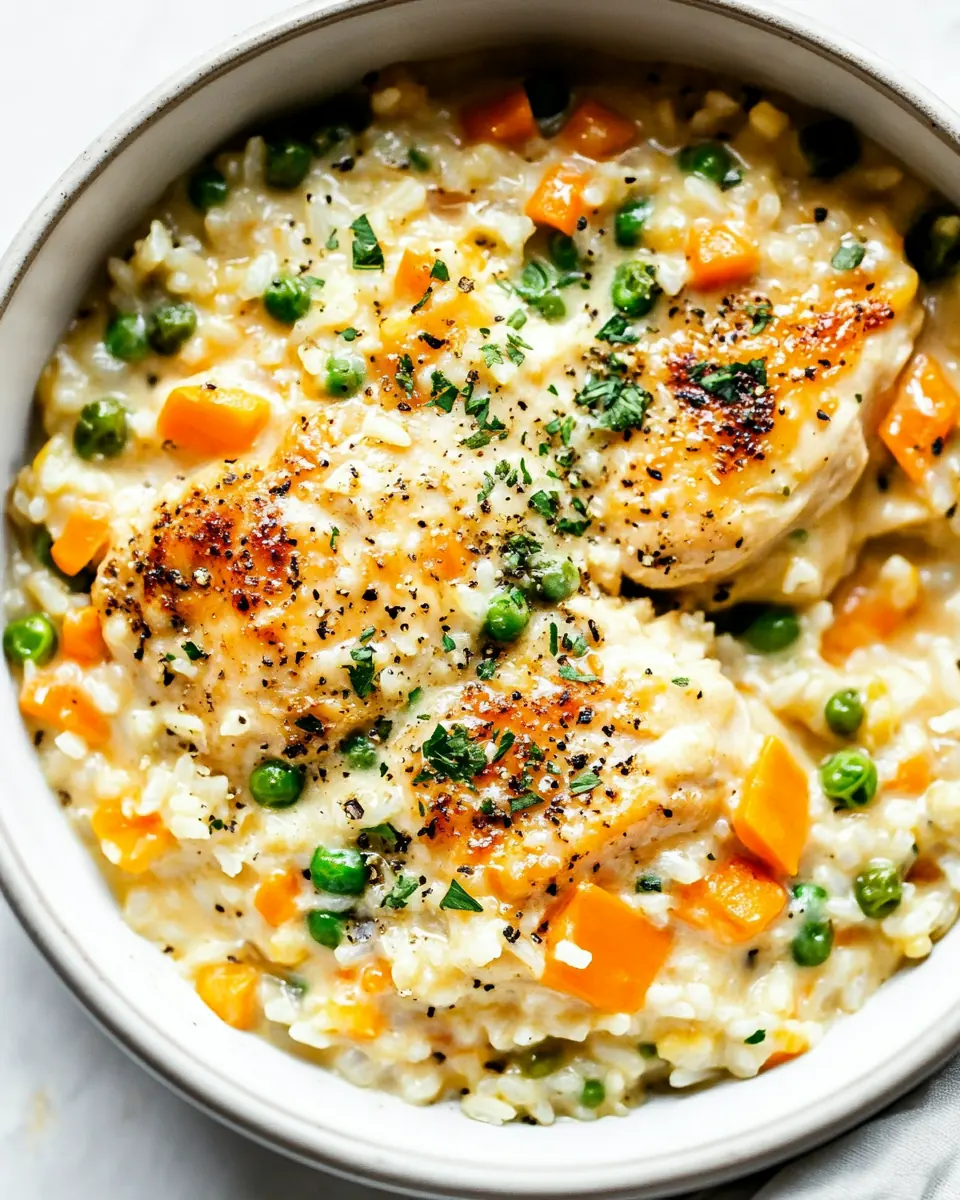
One Pot Creamy Chicken and Rice
One Pot Creamy Chicken and Rice is one of those cozy, stick-to-your-ribs meals I turn to when the week has been long and I want dinner to feel like a hug. The first time I made it I was juggling grocery bags and a work call, and the fact that everything cooks together in one pot felt like a small miracle. I remember stirring fragrant onion and garlic until the kitchen smelled warm and familiar, while the bubbling pot promised comfort without a ton of fuss.
Over time I’ve tweaked small things, like using evaporated milk for a luxe, creamy texture and stirring in a handful of cheddar cheese at the end so each spoonful finishes with just enough richness. It’s become my go to when friends drop by unexpectedly, and I love how forgiving the recipe is when life gets messy. The combination of tender chicken, fluffy rice, and bright pops of peas always wins, and it feels rooted in home cooking more than complicated technique.
When winter nights close in, this dish is my quick escape to something warming and satisfying. I like that it’s flexible for busy evenings, and that leftovers reheat beautifully the next day. Making One Pot Creamy Chicken and Rice is a little ritual: a simmer, a stir, a moment to breathe while the pot does the heavy lifting. It’s simple, but it lands like a carefully wrapped blanket on the table.
Recipe Snapshot
30 mins
5 mins
25 mins
Easy
450 kcal
American
Gluten-Free, Low FODMAP
Dinner
Large skillet or dutch oven, Lid, Wooden spoon
The Beauty of This One Pot Creamy Chicken and Rice
Comfort in a Single Pot
I love that One Pot Creamy Chicken and Rice produces an entire meal with minimal cleanup. When I want something nourishing after a long day, having everything cook together means less fuss and more time to relax. The way the rice absorbs the seasoned broth creates a creamy texture that feels indulgent without being complicated.
Balanced, Familiar Flavors
The flavor profile is warm and familiar, which is why I reach for it on repeat. The blend of sautéed onion and garlic with dried thyme builds a savory base, while the cheddar cheese at the end adds that satisfying savory finish. I often tell friends this dish hits all the right notes of comfort food without masking the natural taste of the chicken.
Speed and Practicality
This recipe fits into busy schedules. From stovetop to table in under an hour, it works for weeknight dinners, last minute guests, or any time you want a dependable, quick meal. I appreciate recipes that reward a little attention with great payoff, and this one absolutely does.
Texture and Contrast
The contrast of tender chicken, creamy rice, and bright peas makes the dish feel complete. A carrot adds gentle sweetness and texture, and the occasional crispness from a slightly toasted edge of rice keeps every bite interesting. That interplay is why I keep this recipe in heavy rotation.
Approachable for Home Cooks
I often recommend One Pot Creamy Chicken and Rice to people who are just starting to cook because it’s forgiving. It’s a great teaching recipe for learning to gauge doneness, manage heat, and season to taste. The reliable steps make it a confidence booster, and I love seeing people’s faces when they realize how simple delicious food can be.
What You Need for One Pot Creamy Chicken and Rice
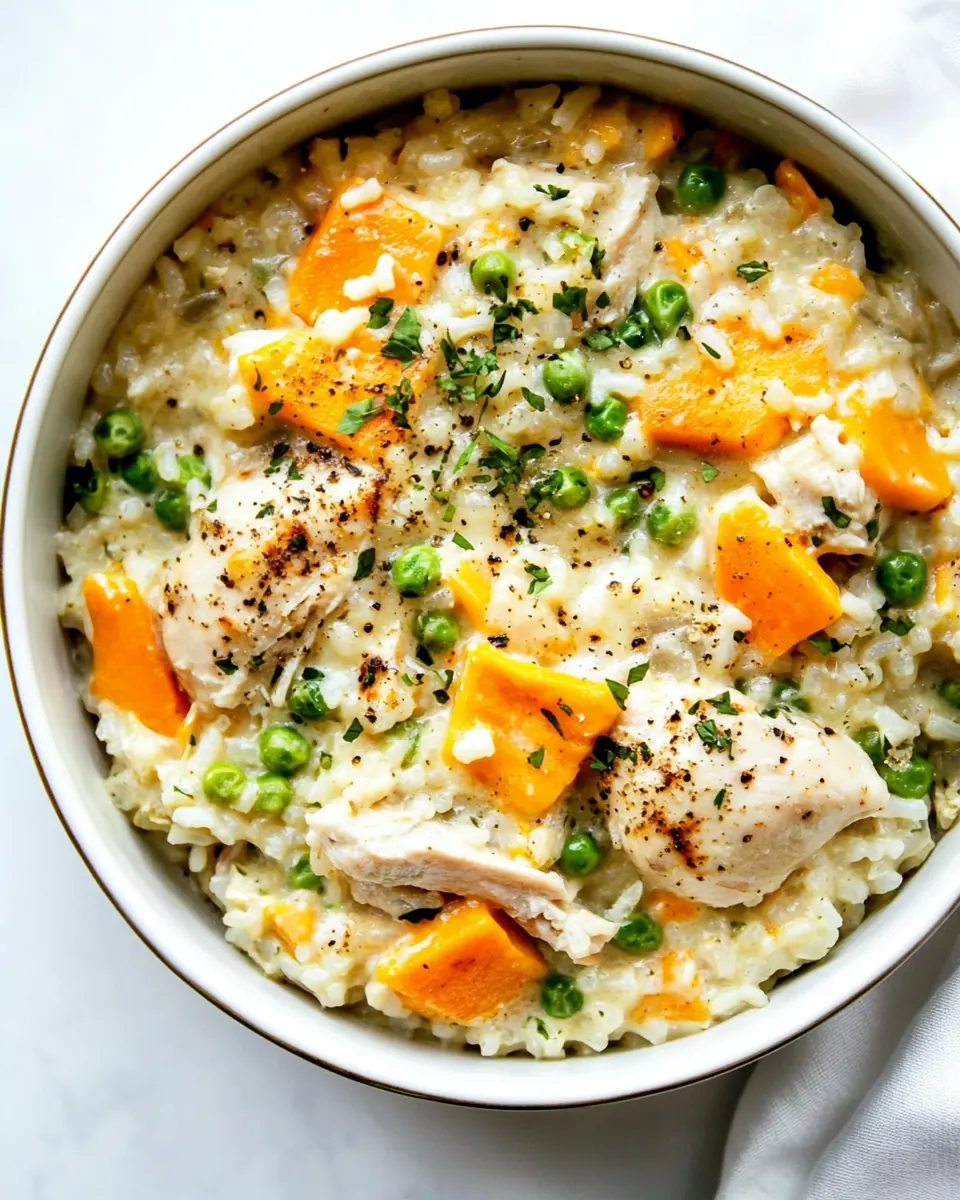
These ingredients come together to make a creamy, satisfying bowl with minimal effort. The players here are straightforward: a fat for sautéing, aromatics for depth, starch to give body, and dairy for creaminess. Each item supports the other so that the final texture is rich but never heavy, and the seasoning lets the chicken shine.
- 3 tablespoons Simple Truth butter: Melted to create a rich cooking base and add creamy flavor; helps sauté aromatics and prevents sticking while contributing a smooth mouthfeel to the finished dish.
- 1 medium onion, chopped: Chopped to provide savory depth and sweetness when softened; builds the aromatic foundation and enhances overall flavor complexity in the one-pot preparation.
- 2 cloves garlic, minced or pressed: Minced to release pungent, aromatic oils that brighten and deepen flavor; disperses quickly through the rice for an evenly seasoned profile.
- 2 teaspoons kosher salt: Added to season and enhance all other flavors; balances sweetness and richness while helping to season both rice and chicken throughout cooking.
- 1 teaspoon Private Selection dried thyme: Sprinkled for subtle herbal notes and warm, slightly floral flavor; complements the chicken and cheese while adding aromatic complexity.
- 1 1/2 cups long grain white rice: Measured to provide the starch base that absorbs liquid and becomes tender; delivers body and texture that turns the pot into a creamy, cohesive meal.
- 1 carrot, diced: Diced to add sweetness, texture, and color; softens during simmering and contributes natural sweetness and bite to contrast creamy rice.
- 3 cups Simple Truth chicken broth: Poured as the primary cooking liquid to hydrate rice and cook chicken; supplies savory depth and forms the flavorful broth that becomes part of the creamy sauce.
- 12 ounce can evaporated milk: Stirred in to intensify creaminess and body without adding excess fat; enriches the cooking liquid for a velvety texture and slightly caramelized flavor.
- 1 pound skinless, boneless chicken, (about 2 breasts or 4 cups): Cut or shredded to supply protein and savory substance; cooks in the same pot so it absorbs flavors and remains tender while integrating with the rice.
- 1/2 teaspoon freshly ground black pepper: Ground to brighten and balance richness with gentle heat; used to season both chicken and rice and round out the overall flavor profile.
- 10 ounce bag frozen peas, or 1 15-ounce can of peas, drained: Folded in for pops of sweetness and color; adds mild flavor and a fresh contrast to the creamy rice while contributing vegetable nutrients.
- 1 cup shredded cheddar cheese: Sprinkled on top or stirred through to add sharp, melty richness; creates a gooey, savory finish that ties together the creamy elements and adds depth.
Recipe Directions for One Pot Creamy Chicken and Rice
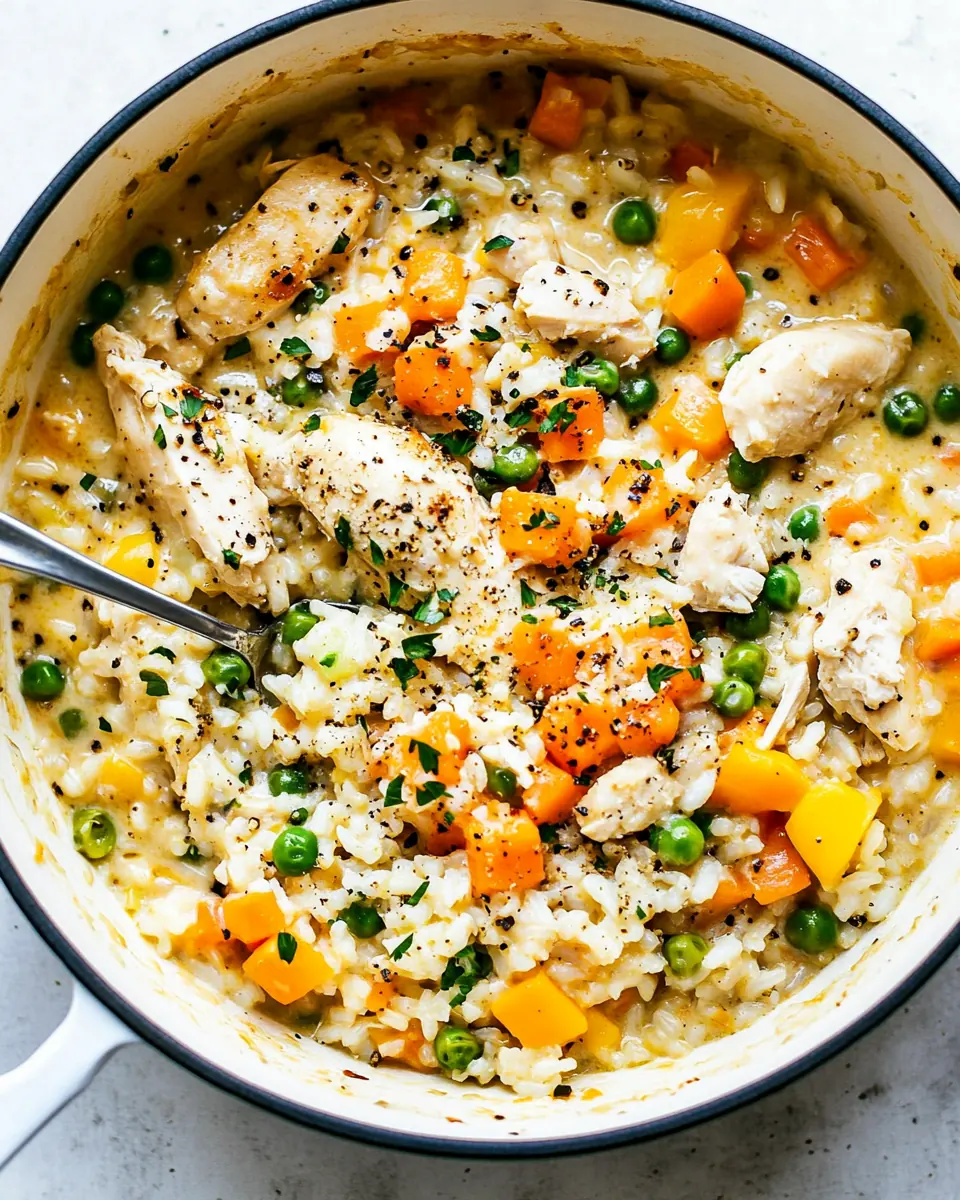
This is a relaxed, hands on method that rewards attention to aroma and texture. You will sauté, simmer, and finish with cheese so the timing matters, but it is straightforward and forgiving. Keep a close eye the first time to learn your pot’s heat behavior; afterward it becomes second nature.
- Melt the butter in a large skillet or dutch oven over medium to medium-high heat. Add the onion, garlic, 1 teaspoon of the salt and the thyme. Cook until the onion softens, about 5-7 minutes, stirring occasionally. Add the rice and carrot and cook for 2-3 minutes.: The kitchen will smell rich and buttery as the butter liquefies, creating a glossy surface that helps the onion cook evenly, and you want a gentle sizzle rather than a roar. As the fat warms, you can tilt the pan and see it shimmer, which tells you the heat is right. This step is important because the melted butter acts as the flavor carrier for the aromatics, drawing out sweet compounds from the onion and mellowing the edge of the garlic . A common mistake is overheating so the butter browns or burns, which will impart a bitter taste, so keep the heat moderate and stir occasionally.
- Add the chicken broth and evaporated milk and stir in the chicken, the remaining salt and the black pepper. Bring to a boil then reduce to a simmer. Stir, cover with a lid and cook for about 15 minutes, stirring so the rice doesn’t stick to the pot.: When you add the chopped onion and minced garlic , you should hear a soft, steady sizzle and soon notice a fragrant, savory aroma building in the pan. The onion will begin translucent at the edges and soften into a jam like texture over several minutes, which is what you want so the flavors meld into the base. The salt helps draw moisture from the onion , accelerating the softening process, and the dried thyme releases its herbal notes when warmed. If the garlic begins to brown too quickly, reduce the heat, because burnt garlic tastes acrid and will overpower the dish.
- Stir in the peas and add more chicken broth or water if the mixture is too thick. Sprinkle with the cheese and cover with the lid to melt the cheese, and serve.: As the onion softens, you will see its edges turn glossy and pale, signaling the right texture. The occasional stir prevents sticking and yields even color distribution, and you will notice the pan smell deepen to a toasty, savory scent. This gentle cooking builds flavor without caramelizing heavily, which keeps the final pot balanced. Overcooking here can lead to loss of that fresh onion taste, so watch for soft, translucent onion rather than deep browning.
- Add the rice and carrot and cook for 2 to 3 minutes: When you stir in the rice and diced carrot , the kernels will take on a slightly toasted sheen and release a warm, nutty aroma, while the carrots begin to soften around the edges. This brief toasting step helps the rice hold its shape and enhances its flavor as it later absorbs liquid. You should stir constantly so the tiny grains don't cling to the pan bottom, and avoid skipping this step because un-toasted rice can become overly mushy in a one pot approach.
- Add the chicken broth and evaporated milk and stir in the chicken, the remaining salt and the black pepper: Pouring in the chicken broth and evaporated milk creates a creamy, pale liquid that instantly changes the pan from sauté to simmer mode, and the kitchen will fill with a warm, comforting steam. As you nestle the pieces of chicken into the liquid, they begin to poach and absorb the flavored broth, keeping the protein tender and moist. The remaining salt seasons throughout, while freshly ground black pepper adds aromatic lift. A common error is to drop in cold chicken straight from the fridge in very large pieces, which can extend cooking time unevenly, so try to use uniform pieces so they cook at the same rate.
- Bring to a boil then reduce to a simmer: Watch for small, rolling bubbles to signify a boil, then lower the heat until bubbles slow to a gentle, steady simmer that barely breaks the surface. The transition from boil to simmer controls how violently the rice cooks and keeps the pot from foaming over. A vigorous boil can make the rice cook too fast on the outside and remain underdone inside, so this gentle simmer ensures even moisture absorption. If you see the liquid evaporating too quickly, slightly lower the heat and stir occasionally to keep things even.
- Stir, cover with a lid and cook for about 15 minutes, stirring so the rice doesn’t stick to the pot: During this covered simmer, you will notice the liquid slowly reduce and the pot give off a rich, savory steam. Stirring occasionally prevents the rice from clinging to the bottom and promotes uniform cooking, while the lid traps heat so the grains steam through evenly. The aroma will become concentrated and comforting, and the chicken should become opaque and tender at the center. If you find the rice is sticking, reduce heat and add a splash of broth, because sticking can lead to burnt bits and an uneven texture.
- Stir in the peas and add more chicken broth or water if the mixture is too thick: When you fold in the peas , they will quickly warm and release a bright vegetal scent, adding a lively color contrast to the creamy pot. If the mixture looks dense or clumpy, a small splash of extra chicken broth or water will loosen it and help the grains finish tenderly, while preserving a creamy consistency. This is the moment to adjust seasoning gently, tasting for salt and pepper balance. Over thinning will make the dish soupy rather than creamy, so add liquid conservatively.
- Sprinkle with the cheese and cover with the lid to melt the cheese, and serve: The final act of sprinkling shredded cheddar cheese transforms the surface as it melts into pockets of gooey richness, and by covering the pot you create a warm, steamy environment that melts the cheese evenly. The aroma will be cheesy and inviting, and the texture becomes luxuriously silky as the cheese integrates into the sauce. Serve while hot so the cheese is melty and the rice retains its creamy texture. A common misstep is letting the pot sit too long after adding cheese, which can cool the dish and cause the texture to firm up, so plan to serve right away.
Making Adjustments
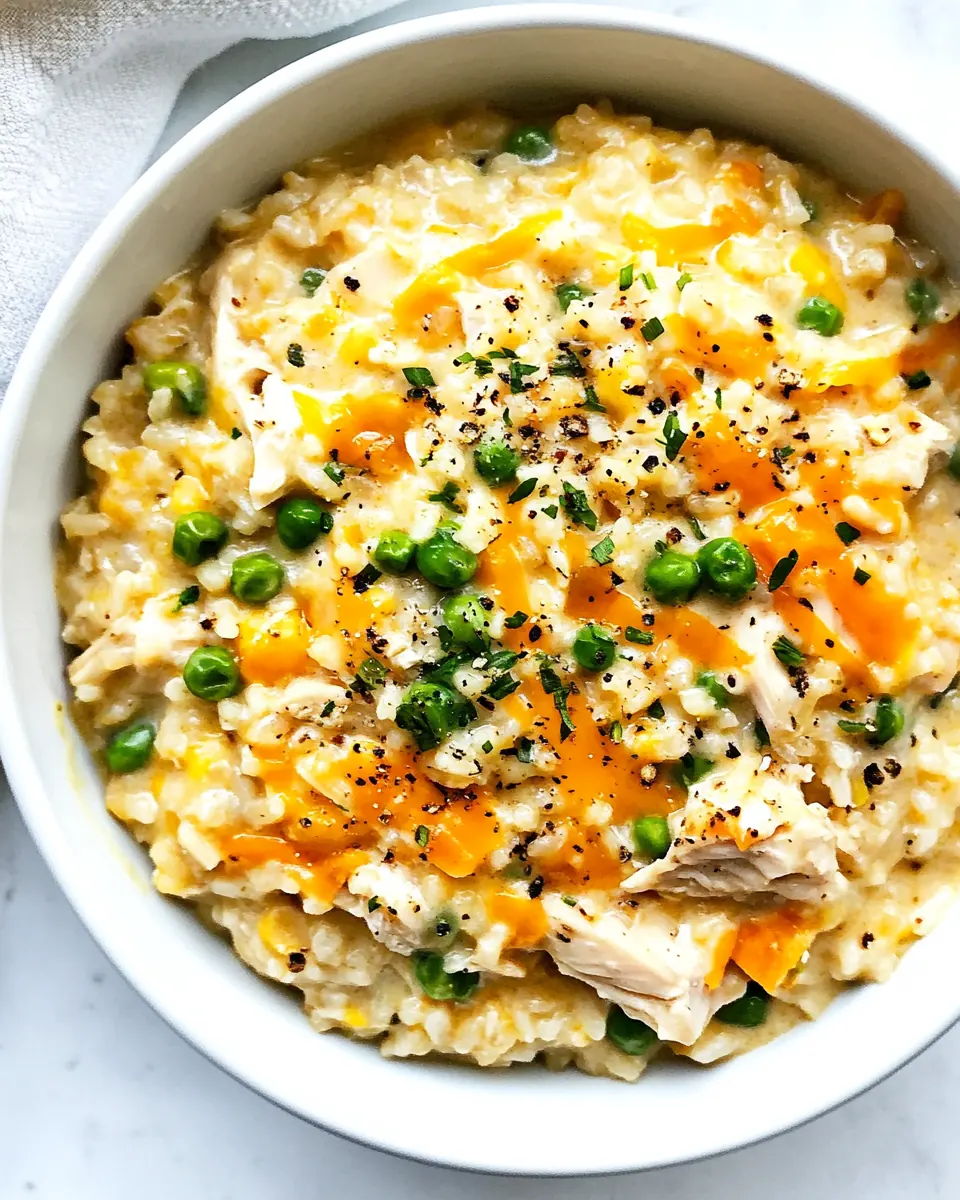
This section walks through flexible swaps and small technique notes so you can adapt the dish to what you have on hand. Each tip starts with a bolded prompt and expands into practical guidance that keeps the final texture and flavor balanced.
- Substituting dairy: If you want a slightly lighter finish, you can reduce the evaporated milk by a small amount and replace with an equal part of additional chicken broth, though this will thin the sauce a bit, so add the broth gradually and stop when you reach your preferred creaminess.
- Using canned peas: Canned peas are convenient; drain them well and fold in at the end just to heat through, since they are already cooked, otherwise they can become mushy and lose their bright flavor.
- Adjusting salt: Because different broths vary in saltiness, taste the pot before adding the final portion of salt and remember that the cheddar cheese will also contribute salt, so err on the lighter side initially.
- Chicken portioning: Cut the chicken into uniform pieces to ensure even poaching; if pieces are too large they may need extra time and could dry out, so aim for consistent sizing.
- Managing thickness: If the finished pot is too thick, add warm chicken broth by the tablespoon until the texture becomes creamy but not soupy, stirring gently to integrate.
Great Combinations for One Pot Creamy Chicken and Rice
This dish is hearty enough to stand on its own, yet there are several ways to complement it depending on the occasion. Below are serving ideas, storage notes, and pairing suggestions to help you plan meals around this comforting plate.
- Simple green salad: A crisp salad with a bright vinaigrette cuts through the richness, offering refreshing contrast when serving this dish for dinner.
- Roasted vegetables: Oven roasted carrot or broccoli provide a caramelized, slightly charred texture that pairs well with the creamy rice and tender chicken.
- Family weeknight meal: This is ideal for busy weeknights because it comes together quickly and feeds a crowd, making it practical for evening family dinners.
- Meal prep and leftovers: Store cooled portions in airtight containers in the refrigerator for up to three days. Reheat gently with a splash of broth to restore creaminess.
- Occasion suggestions: Serve this as a comforting main for casual dinners, small gatherings, or anytime you want an easy, warming meal during colder months.
- Seasonal pairing: In winter, pair with a citrusy side or sharp pickled vegetable to brighten the palate and balance the dish.
FAQ
Conclusion
One Pot Creamy Chicken and Rice stands out for its comforting creaminess, minimal cleanup, and reliable weeknight performance. It balances tender chicken, fluffy rice, and melty cheddar cheese into a single satisfying dish that feels like home. Give it a try when you want a straightforward, nourishing meal that comes together quickly and leaves the kitchen smelling wonderful. I hope this becomes one of your trusted go to recipes for busy evenings and cozy nights in.
One Pot Creamy Chicken and Rice
Ingredients
Equipment
Method
- Melt the butter in a large skillet or dutch oven over medium to medium-high heat. Add the onion, garlic, 1 teaspoon of the salt and the thyme. Cook until the onion softens, about 5-7 minutes, stirring occasionally. Add the rice and carrot and cook for 2-3 minutes.: The kitchen will smell rich and buttery as the butter liquefies, creating a glossy surface that helps the onion cook evenly, and you want a gentle sizzle rather than a roar. As the fat warms, you can tilt the pan and see it shimmer, which tells you the heat is right. This step is important because the melted butter acts as the flavor carrier for the aromatics, drawing out sweet compounds from the onion and mellowing the edge of the garlic . A common mistake is overheating so the butter browns or burns, which will impart a bitter taste, so keep the heat moderate and stir occasionally.
- Add the chicken broth and evaporated milk and stir in the chicken, the remaining salt and the black pepper. Bring to a boil then reduce to a simmer. Stir, cover with a lid and cook for about 15 minutes, stirring so the rice doesn’t stick to the pot.: When you add the chopped onion and minced garlic , you should hear a soft, steady sizzle and soon notice a fragrant, savory aroma building in the pan. The onion will begin translucent at the edges and soften into a jam like texture over several minutes, which is what you want so the flavors meld into the base. The salt helps draw moisture from the onion , accelerating the softening process, and the dried thyme releases its herbal notes when warmed. If the garlic begins to brown too quickly, reduce the heat, because burnt garlic tastes acrid and will overpower the dish.
- Stir in the peas and add more chicken broth or water if the mixture is too thick. Sprinkle with the cheese and cover with the lid to melt the cheese, and serve.: As the onion softens, you will see its edges turn glossy and pale, signaling the right texture. The occasional stir prevents sticking and yields even color distribution, and you will notice the pan smell deepen to a toasty, savory scent. This gentle cooking builds flavor without caramelizing heavily, which keeps the final pot balanced. Overcooking here can lead to loss of that fresh onion taste, so watch for soft, translucent onion rather than deep browning.
- Add the rice and carrot and cook for 2 to 3 minutes: When you stir in the rice and diced carrot , the kernels will take on a slightly toasted sheen and release a warm, nutty aroma, while the carrots begin to soften around the edges. This brief toasting step helps the rice hold its shape and enhances its flavor as it later absorbs liquid. You should stir constantly so the tiny grains don't cling to the pan bottom, and avoid skipping this step because un-toasted rice can become overly mushy in a one pot approach.
- Add the chicken broth and evaporated milk and stir in the chicken, the remaining salt and the black pepper: Pouring in the chicken broth and evaporated milk creates a creamy, pale liquid that instantly changes the pan from sauté to simmer mode, and the kitchen will fill with a warm, comforting steam. As you nestle the pieces of chicken into the liquid, they begin to poach and absorb the flavored broth, keeping the protein tender and moist. The remaining salt seasons throughout, while freshly ground black pepper adds aromatic lift. A common error is to drop in cold chicken straight from the fridge in very large pieces, which can extend cooking time unevenly, so try to use uniform pieces so they cook at the same rate.
- Bring to a boil then reduce to a simmer: Watch for small, rolling bubbles to signify a boil, then lower the heat until bubbles slow to a gentle, steady simmer that barely breaks the surface. The transition from boil to simmer controls how violently the rice cooks and keeps the pot from foaming over. A vigorous boil can make the rice cook too fast on the outside and remain underdone inside, so this gentle simmer ensures even moisture absorption. If you see the liquid evaporating too quickly, slightly lower the heat and stir occasionally to keep things even.
- Stir, cover with a lid and cook for about 15 minutes, stirring so the rice doesn’t stick to the pot: During this covered simmer, you will notice the liquid slowly reduce and the pot give off a rich, savory steam. Stirring occasionally prevents the rice from clinging to the bottom and promotes uniform cooking, while the lid traps heat so the grains steam through evenly. The aroma will become concentrated and comforting, and the chicken should become opaque and tender at the center. If you find the rice is sticking, reduce heat and add a splash of broth, because sticking can lead to burnt bits and an uneven texture.
- Stir in the peas and add more chicken broth or water if the mixture is too thick: When you fold in the peas , they will quickly warm and release a bright vegetal scent, adding a lively color contrast to the creamy pot. If the mixture looks dense or clumpy, a small splash of extra chicken broth or water will loosen it and help the grains finish tenderly, while preserving a creamy consistency. This is the moment to adjust seasoning gently, tasting for salt and pepper balance. Over thinning will make the dish soupy rather than creamy, so add liquid conservatively.
- Sprinkle with the cheese and cover with the lid to melt the cheese, and serve: The final act of sprinkling shredded cheddar cheese transforms the surface as it melts into pockets of gooey richness, and by covering the pot you create a warm, steamy environment that melts the cheese evenly. The aroma will be cheesy and inviting, and the texture becomes luxuriously silky as the cheese integrates into the sauce. Serve while hot so the cheese is melty and the rice retains its creamy texture. A common misstep is letting the pot sit too long after adding cheese, which can cool the dish and cause the texture to firm up, so plan to serve right away.
Notes
- Substituting dairy: If you want a slightly lighter finish, you can reduce the evaporated milk by a small amount and replace with an equal part of additional chicken broth, though this will thin the sauce a bit, so add the broth gradually and stop when you reach your preferred creaminess.
- Using canned peas: Canned peas are convenient; drain them well and fold in at the end just to heat through, since they are already cooked, otherwise they can become mushy and lose their bright flavor.
- Adjusting salt: Because different broths vary in saltiness, taste the pot before adding the final portion of salt and remember that the cheddar cheese will also contribute salt, so err on the lighter side initially.
- Chicken portioning: Cut the chicken into uniform pieces to ensure even poaching; if pieces are too large they may need extra time and could dry out, so aim for consistent sizing.
- Managing thickness: If the finished pot is too thick, add warm chicken broth by the tablespoon until the texture becomes creamy but not soupy, stirring gently to integrate.