Roasted Potatoes and Asparagus
Roasted Potatoes and Asparagus started showing up on my table the moment spring offered its first tender asparagus at the farmers market. I remember carrying a bunch home in my tote, its tips so bright they practically smiled at me, and thinking about the simplest ways to honor that flavor. Potatoes felt like a natural companion, their earthy, comforting presence balancing the crisp, green brightness of the stalks. Over time I developed a little ritual around this dish, tossing vegetables with a modest amount of olive oil and a hit of minced garlic, then letting the oven concentrate everything into caramelized bliss.
One afternoon I invited a friend over for a casual lunch and plated this alongside a green salad. She kept saying how the potatoes were perfectly crisp on the edges yet tender inside, while the asparagus still had a gentle snap. We ate with our hands, scraping up every last fleck of shredded Parmesan cheese, and agreed this simple duo felt both homey and a little bit special. It’s the sort of recipe I turn to when I want something effortless that still feels made with intention.
I love that this recipe is flexible. Sometimes I roast the potatoes a touch longer to deepen their color, sometimes I arrange the asparagus on the sheet so the tips stay out of the most intense heat, and sometimes I double the garlic because I am greedy for that warm, roasted aroma. Each time the dish comes out slightly different, yet always satisfying. Serve it warm, and you’ll notice how the scent of roasting red potatoes and asparagus fills the kitchen, calling everyone to the table.
Recipe Snapshot
25 mins
5 mins
20 mins
Easy
250 kcal
American
Gluten-Free, Vegan
Side Dishes
mixing bowl, baking sheet, parchment paper
What You’ll Enjoy About This Roasted Potatoes and Asparagus
Simple ingredients, big payoff
I love how Roasted Potatoes and Asparagus uses just a few pantry-friendly items to create something memorable. With olive oil and a little minced garlic, the vegetables transform in the oven into textures and flavors that feel far more elevated than the sum of their parts. The potato skins crisp and develop sweet, toasted notes, while the asparagus keeps a bright vegetal edge.
Speed and ease
We can have this on the table in under half an hour, which is why I reach for it on busy weeknights. The steps are straightforward, and the hands on time is minimal. You do not have to babysit the pan, but a quick check near the end ensures everything is perfectly done.
Versatile serving options
This recipe doubles as a main for lighter meals or as a side for larger spreads. I’ve served it at casual lunches, family dinners, and as part of a brunch board. The mild flavors let you pair it with a variety of mains and salads, and the addition of shredded Parmesan cheese at the end brings a salty finish that many guests adore.
Textural contrast
What keeps me coming back to Roasted Potatoes and Asparagus is the contrast in textures. The potatoes can be golden and slightly crunchy at the edges while the asparagus tips remain tender but with a pleasant bite. That interplay is what makes each forkful interesting and satisfying.
Adaptable for different seasons
Although I often make this in spring when asparagus is at its peak, the method works year round with frozen or blanched stalks too. The approach is forgiving, so you can tweak roast time or oil ratios for drier or more humid days. That flexibility is why this dish has become a reliable favorite in my kitchen.
Roasted Potatoes and Asparagus Ingredients
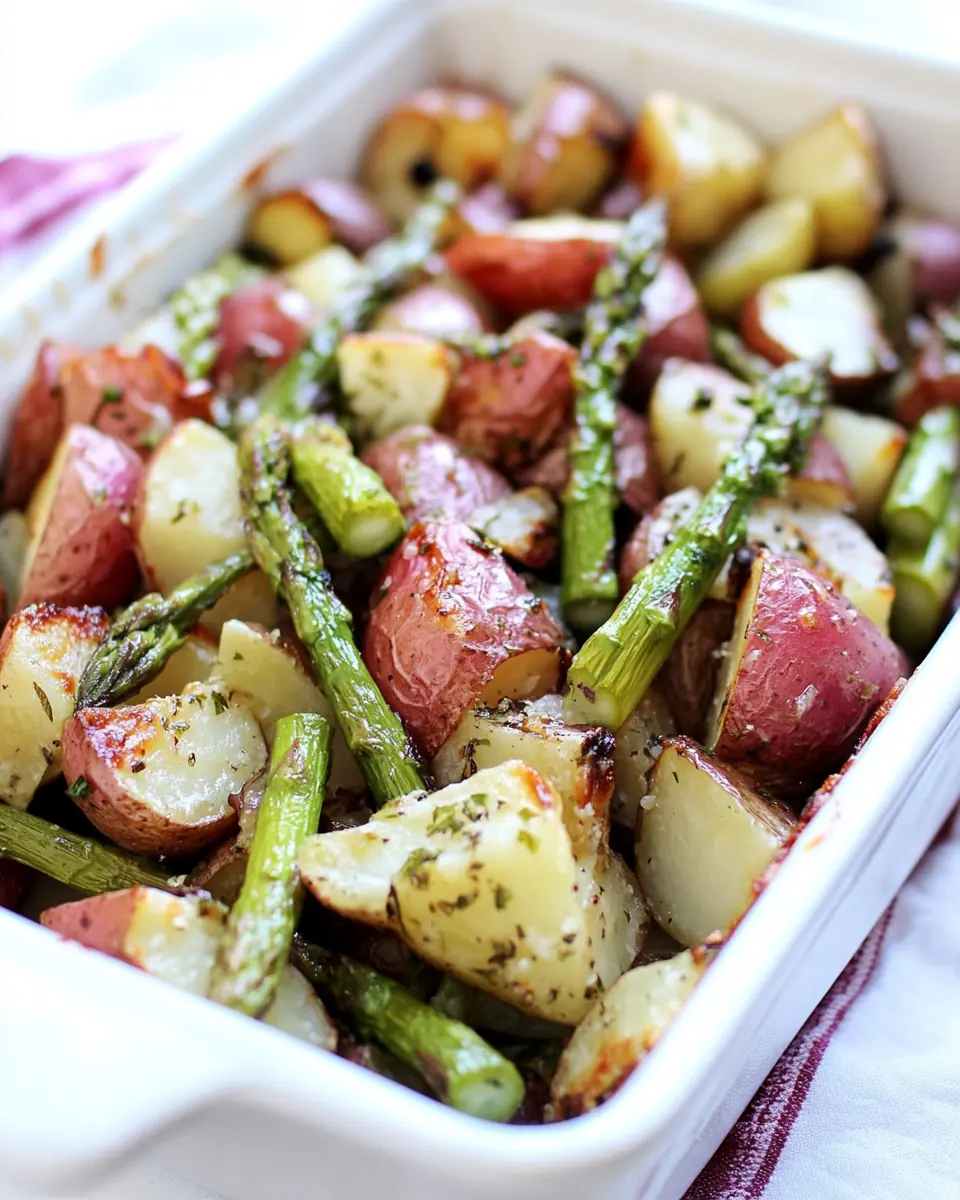
These ingredients are intentionally straightforward. The philosophy is to let freshness shine, while a little olive oil and minced garlic act as catalysts, coaxing out caramelized, savory notes. The potatoes provide body and comfort, the asparagus brings brightness, and the shredded Parmesan cheese ties everything together with a savory finish.
- 1 bunch fresh asparagus: Trim and snap woody ends before roasting to ensure tender, crisp asparagus spears; toss with oil and seasonings to promote even browning and maintain a pleasant bite. Serve quickly after cooking to preserve color and texture for an attractive plate.
- 4 5 red potatoes cut into 1" pieces: Cut into 1-inch pieces to create evenly sized chunks that roast uniformly and develop golden, crispy edges while staying creamy inside. Par-cook larger pieces if needed to match asparagus cook time and ensure both components finish together.
- 4 tablespoons olive oil divided: Divide between vegetables and use as the primary fat to coat pieces for browning, prevent sticking, and carry flavors during roasting. Reserve part to drizzle after cooking for added sheen and to refresh the dish’s mouthfeel.
- 1 teaspoon minced garlic: Mince finely so small pieces distribute flavor evenly and lightly infuse the oil without burning; add early for a gentle roasted garlic note or later for a fresher bite. Adjust amount to balance with salt and cheese for a savory finish.
- salt and pepper: Season generously to enhance natural flavors; use salt to draw out moisture for better browning and pepper to add mild heat and complexity. Taste and adjust after cooking to avoid over-salting delicate asparagus and potatoes.
- Shredded Parmesan cheese: Grate lightly over hot vegetables just before serving to add a nutty, salty finish that melts slightly and binds flavors; use sparingly to complement rather than overpower. Offer extra at the table for diners who prefer more savory topping.
Instructions for Roasted Potatoes and Asparagus
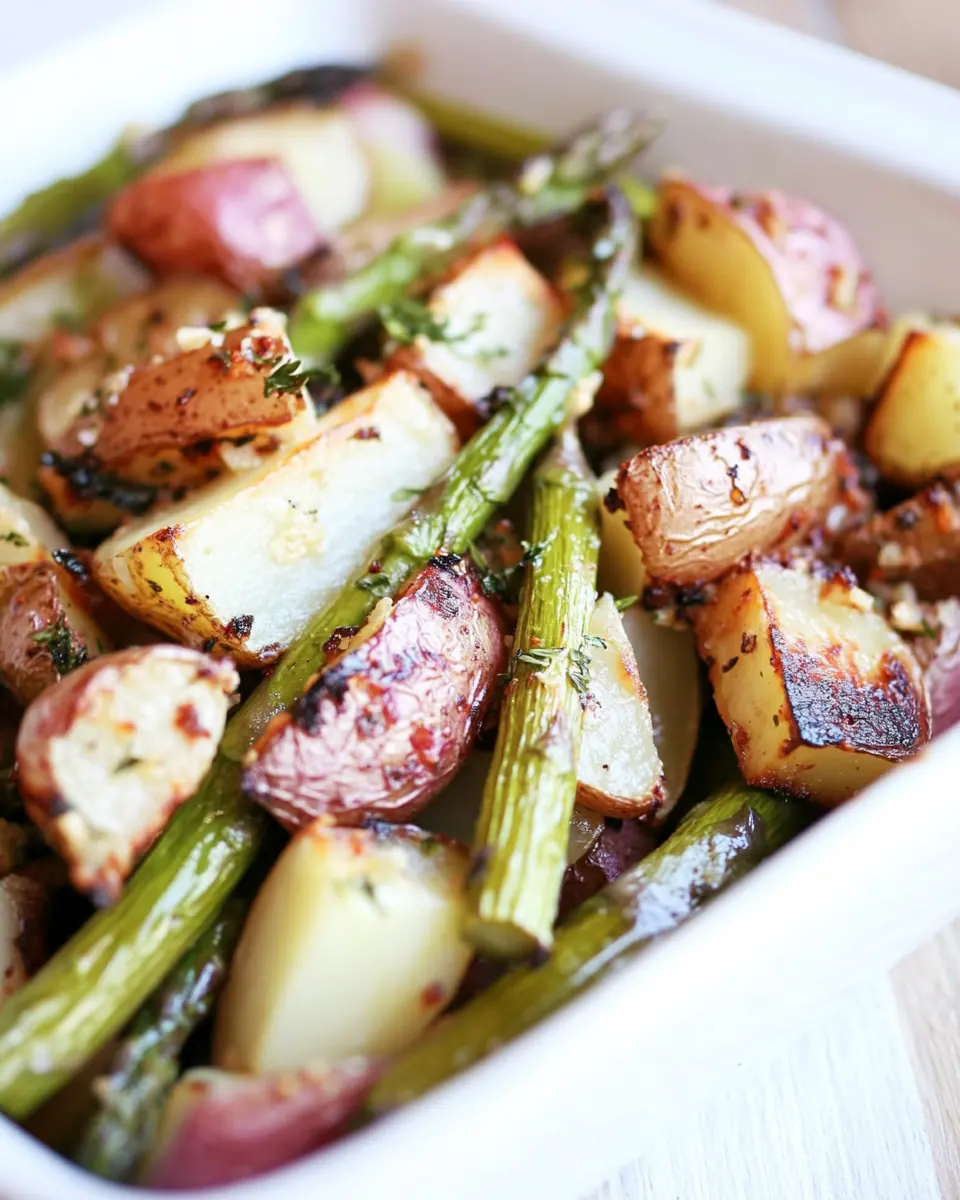
This recipe moves quickly from prep to roast, so I like to have everything ready before the oven goes on. The steps below are drawn from the original directions, expanded with sensory cues and common troubleshooting tips so you’ll know exactly when each component is done.
- Preheat oven to 400 and line a baking sheet with parchment paper.: As the oven comes up to 400 degrees, you will feel a gradual warmth in the kitchen and may notice the faint metallic scent of a hot oven. Lining your baking sheet with parchment prevents sticking and makes cleanup effortless, and it also ensures the potatoes brown evenly without clinging to the pan. The surface should be dry before you place vegetables on it, because excess moisture will steam the vegetables rather than roast them, causing limp textures. A common mistake is rushing this step, so wait until the oven fully reaches temperature for the best caramelization.
- Place potatoes in a mixing bowl with garlic and 2 tablespoons olive oil. Mix well to evenly coat.: When you toss the cut red potatoes with minced garlic and 2 tablespoons of olive oil , you should feel the oil lubricate each piece and see the garlic threads cling to the surfaces. The potatoes will glisten, which helps them brown in the oven and lets the garlic slowly roast and sweeten with the starches. If pieces are crowded, they will steam instead of roast, so keep them in a single layer on the sheet later. Avoid using too little oil, because then the potatoes will dry out and not develop the golden edges you want.
- Break the ends off of the fresh asparagus and discard. Place asparagus on baking sheet and drizzle with remaining 2 tablespoons olive oil. Use your hands to mix the asparagus and coat evenly. Spread asparagus in a single layer on the baking sheet. Add potatoes to baking sheet, keeping in a single layer.: Snap the woody ends off each asparagus spear where it naturally breaks, and you will notice the fibrous section separate easily. Laying the asparagus on the sheet and drizzling the remaining oil allows the stalks to roast without becoming greasy. Using your hands to coat creates an even film of oil, so heat transfers uniformly and the tips brown lightly. Arrange both vegetables in single layers so air circulates freely; otherwise, they steam and lose crispness. One trap is putting the thinner asparagus under a mound of potatoes, which overcooks the stalks; keep them side by side for best results.
- Sprinkle with salt and pepper.: As you season with salt and pepper , the aroma sharpens and the surfaces begin to glisten. Salt draws moisture to the surface, aiding in browning, and pepper adds a subtle warmth. Season evenly so every bite has flavor. Over-salting at this stage is easy to do, so start with a modest pinch and adjust after roasting if necessary. If you skip seasoning now, the vegetables can taste flat even after roasting.
- Roast vegetables for 20 minutes. Check the doneness of the potatoes and if necessary continue to roast for 2-5 minutes or until tender. Remove from oven and serve with shredded cheese.: As the vegetables roast for about 20 minutes, listen for a soft sizzle and watch the potatoes develop golden brown, slightly crisp edges while the asparagus tips darken and take on a glossy sheen. The kitchen will fill with a warm, savory scent; the garlic scent will deepen and smell almost nutty. Test a potato piece with a fork to ensure tenderness and, if needed, roast an additional 2 to 5 minutes to reach your preferred level of browning. Once out of the oven, the residual heat will soften the asparagus a touch and melt the shredded Parmesan cheese into the crevices. A classic mistake is removing the tray too early, leaving potatoes underdone, so trust the fork test and visual cues. Serve promptly so textures remain at their peak.
Helpful Notes about Roasted Potatoes and Asparagus
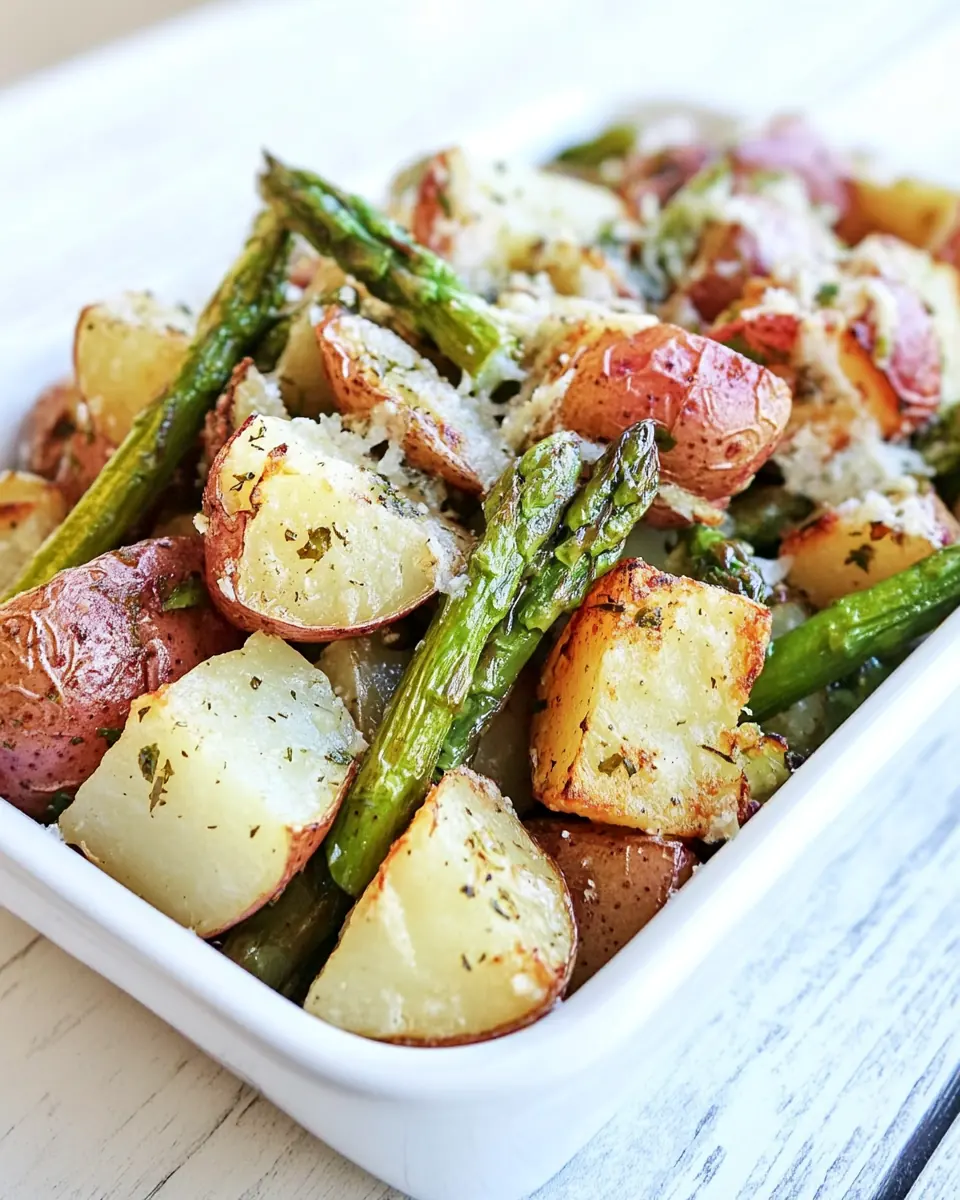
I like to keep a short list of tricks handy when I make this dish, because small adjustments can make a big difference in texture and flavor. Below are practical notes that I use every time I roast vegetables.
- Use room temperature vegetables so they roast evenly, avoiding the thermal shock that can happen when frozen or very cold items hit a hot pan.
- Dry your asparagus well after rinsing to prevent steaming on the sheet, which keeps the stalks crisp rather than limp.
- Space your pieces on the baking sheet; crowded vegetables will steam and will not develop the desirable golden edges.
- Reserve a little oil to toss with the asparagus separately so the thinner stalks do not get overwhelmed while the potatoes brown.
- Add cheese at the end so the Parmesan cheese melts slightly without losing its texture or burning under high heat.
Perfect Matches for Roasted Potatoes and Asparagus
This dish pairs well with many meals and occasions. I often plan it as a side for weeknight dinners, or as a light main for lunch when I want something satisfying without heaviness. Below are serving ideas, storage tips, and seasonal pairings to help you present the dish beautifully.
- Weeknight dinners Serve alongside a simply seasoned protein or a grain bowl to round out a quick, balanced meal.
- Brunch or lunch Plate with a green salad and a soft cheese on the side for a relaxed midday meal with bright flavors.
- Spring occasions Feature this on a spring menu when asparagus is at its peak, complemented by fresh herbs like parsley or chives for extra brightness.
- Storage tips Refrigerate leftover roasted vegetables in an airtight container for up to three days; reheat in a hot oven to recover crisp edges rather than microwaving.
- Serving style Serve warm on a platter with a final sprinkle of shredded Parmesan cheese and a grind of fresh pepper for contrast and visual appeal.
FAQ
Conclusion
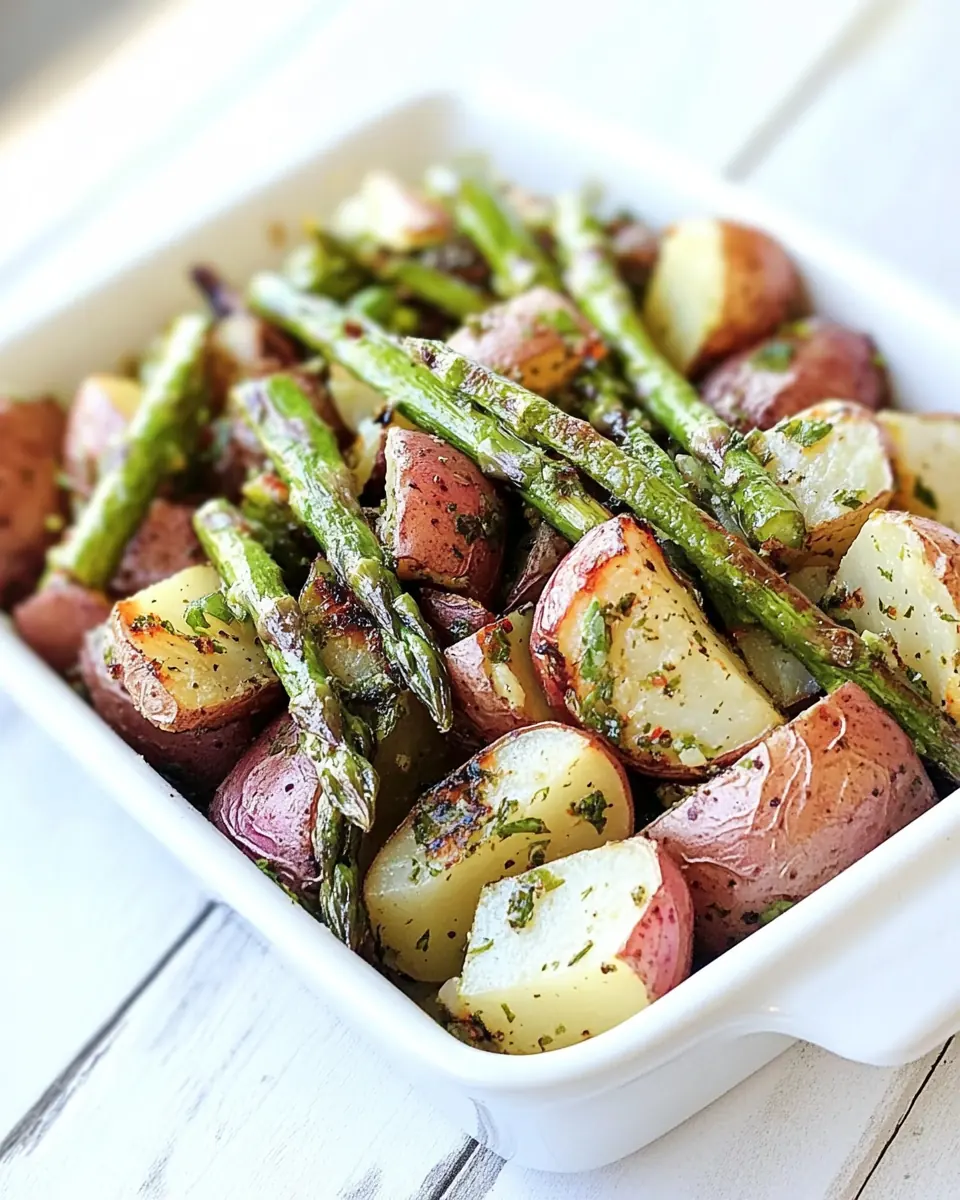
Roasted Potatoes and Asparagus is special because it balances comforting, crispy potatoes with bright, tender asparagus in a way that feels both effortless and thoughtful. Give it a try when you want a quick side that still tastes like you put in the work, or as a light main for a casual meal. The method highlights seasonal produce, and once you master the timing, it becomes one of those recipes you make on repeat. I hope this inspires you to enjoy the simple pleasures of roasting vegetables and to share the results with people you care about.
Roasted Potatoes and Asparagus
Ingredients
Equipment
Method
- Preheat oven to 400 and line a baking sheet with parchment paper.: As the oven comes up to 400 degrees, you will feel a gradual warmth in the kitchen and may notice the faint metallic scent of a hot oven. Lining your baking sheet with parchment prevents sticking and makes cleanup effortless, and it also ensures the potatoes brown evenly without clinging to the pan. The surface should be dry before you place vegetables on it, because excess moisture will steam the vegetables rather than roast them, causing limp textures. A common mistake is rushing this step, so wait until the oven fully reaches temperature for the best caramelization.
- Place potatoes in a mixing bowl with garlic and 2 tablespoons olive oil. Mix well to evenly coat.: When you toss the cut red potatoes with minced garlic and 2 tablespoons of olive oil , you should feel the oil lubricate each piece and see the garlic threads cling to the surfaces. The potatoes will glisten, which helps them brown in the oven and lets the garlic slowly roast and sweeten with the starches. If pieces are crowded, they will steam instead of roast, so keep them in a single layer on the sheet later. Avoid using too little oil, because then the potatoes will dry out and not develop the golden edges you want.
- Break the ends off of the fresh asparagus and discard. Place asparagus on baking sheet and drizzle with remaining 2 tablespoons olive oil. Use your hands to mix the asparagus and coat evenly. Spread asparagus in a single layer on the baking sheet. Add potatoes to baking sheet, keeping in a single layer.: Snap the woody ends off each asparagus spear where it naturally breaks, and you will notice the fibrous section separate easily. Laying the asparagus on the sheet and drizzling the remaining oil allows the stalks to roast without becoming greasy. Using your hands to coat creates an even film of oil, so heat transfers uniformly and the tips brown lightly. Arrange both vegetables in single layers so air circulates freely; otherwise, they steam and lose crispness. One trap is putting the thinner asparagus under a mound of potatoes, which overcooks the stalks; keep them side by side for best results.
- Sprinkle with salt and pepper.: As you season with salt and pepper , the aroma sharpens and the surfaces begin to glisten. Salt draws moisture to the surface, aiding in browning, and pepper adds a subtle warmth. Season evenly so every bite has flavor. Over-salting at this stage is easy to do, so start with a modest pinch and adjust after roasting if necessary. If you skip seasoning now, the vegetables can taste flat even after roasting.
- Roast vegetables for 20 minutes. Check the doneness of the potatoes and if necessary continue to roast for 2-5 minutes or until tender. Remove from oven and serve with shredded cheese.: As the vegetables roast for about 20 minutes, listen for a soft sizzle and watch the potatoes develop golden brown, slightly crisp edges while the asparagus tips darken and take on a glossy sheen. The kitchen will fill with a warm, savory scent; the garlic scent will deepen and smell almost nutty. Test a potato piece with a fork to ensure tenderness and, if needed, roast an additional 2 to 5 minutes to reach your preferred level of browning. Once out of the oven, the residual heat will soften the asparagus a touch and melt the shredded Parmesan cheese into the crevices. A classic mistake is removing the tray too early, leaving potatoes underdone, so trust the fork test and visual cues. Serve promptly so textures remain at their peak.
Notes
- Use room temperature vegetables so they roast evenly, avoiding the thermal shock that can happen when frozen or very cold items hit a hot pan.
- Dry your asparagus well after rinsing to prevent steaming on the sheet, which keeps the stalks crisp rather than limp.
- Space your pieces on the baking sheet; crowded vegetables will steam and will not develop the desirable golden edges.
- Reserve a little oil to toss with the asparagus separately so the thinner stalks do not get overwhelmed while the potatoes brown.
- Add cheese at the end so the Parmesan cheese melts slightly without losing its texture or burning under high heat.