Roasted Broccoli with Caper Pesto
Roasted Broccoli with Caper Pesto is one of those recipes I keep coming back to when I want a vegetable dish that feels lively and satisfying. The first time I roasted a tray of broccoli until the edges caramelized and paired it with a punchy caper pesto, I was surprised how a few simple pantry items and fresh herbs could transform humble broccoli into something restaurant worthy. I remember bringing a pan to a friends gathering and everyone went back for seconds.
Over the years I have tweaked the balance of herbs and seeds so the pesto sings without overwhelming the roasted vegetables. I like to mix textures, so the slightly chewy charred florets against the chunky, zesty pesto gives each bite contrast. When guests ask how I made it, I always smile and say it is mostly about confidence with heat, and a willingness to let the broccoli get some color.
Whether I am cooking for a weeknight supper or pulling together a shareable side for a casual dinner, this version travels well, and it holds up at room temperature. I love the way the lemon zest wakes up the herbs, and how the sunflower seeds add an earthy nuttiness without masking the bright caper notes. Every time I make Roasted Broccoli with Caper Pesto, it reminds me that simple ingredients, treated thoughtfully, can create memorable meals.
Recipe Snapshot
30 mins
5 mins
25 mins
Easy
150 kcal
Mediterranean
Vegan, Gluten-Free
Side Dishes
Baking sheet, Parchment paper, Food processor
Why You’ll Love This Roasted Broccoli with Caper Pesto
Bold flavor from minimal work
I love that Roasted Broccoli with Caper Pesto delivers intense flavor while staying approachable. The roasting step concentrates the sweetness in the broccoli and cabbage, creating caramelized edges that pair brilliantly with the briny pop of the capers. You get layers of flavor without a long ingredient list, which makes this a go to when I want big taste and small effort.
Textural contrast that keeps you coming back
The contrast between tender, charred florets and the slightly gritty, chunky pesto is something I treasure. The sunflower seeds provide a pleasant chew and light crunch, while the herbs stay bright. That contrast is what turns a simple vegetable into a memorable side.
Adaptable and forgiving
I often adjust the herb ratio depending on what I have on hand, and the recipe tolerates tweaks well. If I have more parsley than mint, it still sings. If I want to make it a bit nuttier, I increase the sunflower seeds. This forgiving nature makes it a reliable choice for casual cookery.
Great for gatherings and weeknights
This dish is friendly to both busy weeknights and relaxed dinner parties. You can roast the vegetables ahead and blitz the pesto right before serving, or assemble everything and leave it at room temperature. I like that it travels, so it often appears at potlucks or picnic style meals.
Bright, herb forward, and fresh
The citrus zest and juice lift the whole dish, giving a bright counterpoint to the roasted notes. The herbs keep the palate fresh, and the capers inject that savory spark. I find myself reaching for this whenever I want vegetables that feel celebratory rather than obligatory.
What to Gather for Roasted Broccoli with Caper Pesto
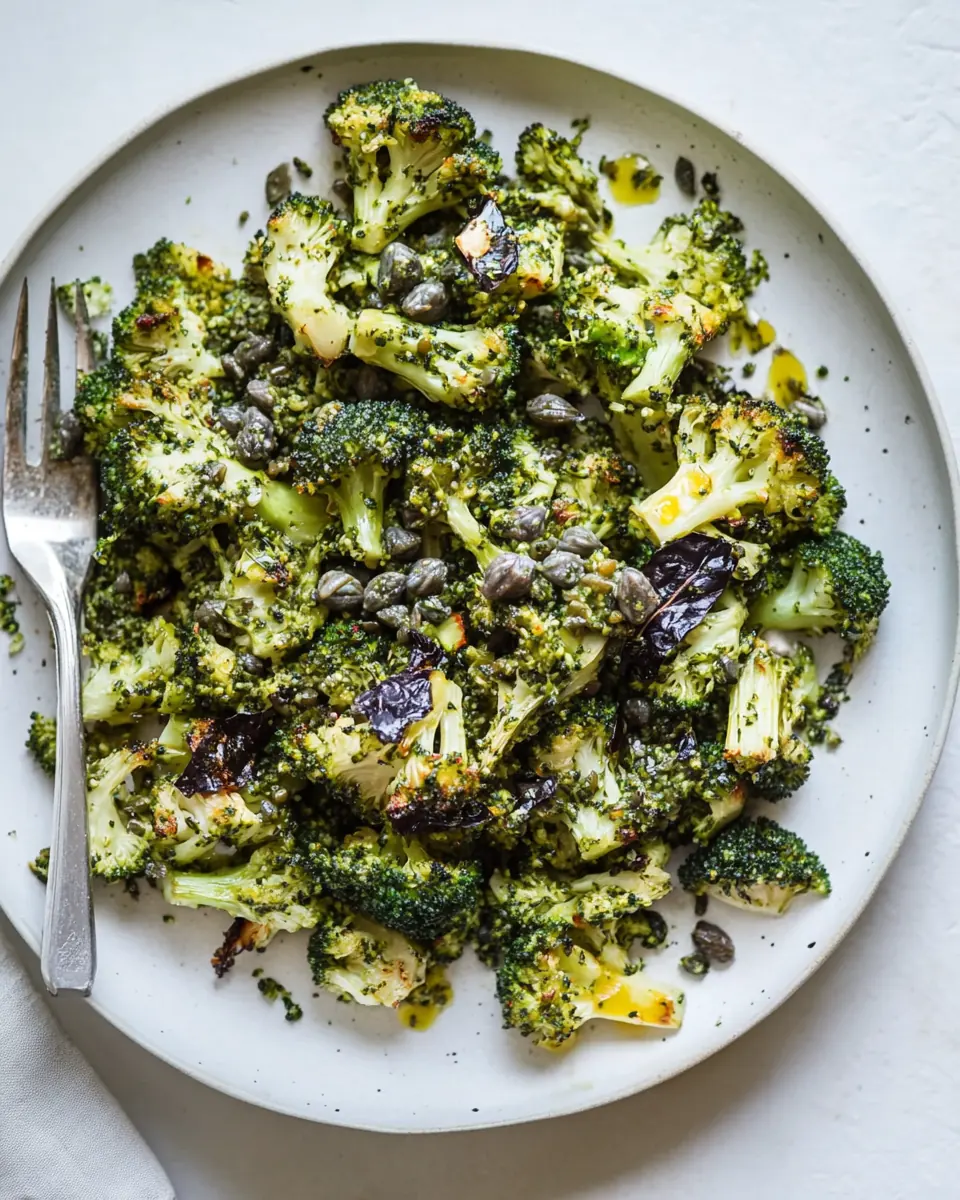
These ingredients are selected to create a balance of roasted depth, herbaceous brightness, and nutty body. The vegetables are the canvas, while the pesto plays the starring role, adding acidity and texture. Key players are the broccoli for charred sweetness, the cabbage for extra caramelized layers, and the herb seed mixture that becomes the pesto. Together they make a dish that is both rustic and elevated.
- 1 pound broccoli thick stems removed and cut into small florets (see note): Trimmed and cut into small florets, provides a hearty, caramelized base when roasted and delivers texture and earthy flavor to the dish; thick stems removed ensure even cooking and tenderness throughout the broccoli pieces.
- 4 cups thinly sliced cabbage about half of a 1 1/2 pound head: Thinly sliced into delicate ribbons, adds a tender, slightly sweet crunch that contrasts roasted broccoli and helps bulk the salad while softening when tossed with warm oil and lemon.
- Olive oil: Used as the cooking fat and finishing drizzle, lends richness, helps achieve crisp edges during roasting, and carries the herb and caper flavors throughout the dish.
- Sea salt: Sprinkled to taste to enhance and balance flavors, brings out natural sweetness and reduces bitterness; used during roasting and in the pesto to season components evenly.
- 1 lemon: Zested and juiced to contribute bright acidity and aromatic citrus notes, cuts through oiliness, brightens the overall flavor profile, and balances the salt from capers and sea salt.
- 1/4 cups sunflower seeds: Toasted or lightly warmed and stirred into the pesto or sprinkled on top, offers a nutty crunch and helps thicken the pesto while providing a complementary savory backbone.
- 1 bunch chives or 4 green scallions roughly chopped: Chopped finely and incorporated into the pesto or tossed with the vegetables, provides a mild oniony, fresh note that enhances herbaceousness without overpowering other flavors.
- 1 cup roughly chopped parsley leaves and stems: Roughly chopped and blended into the caper pesto, supplies a vibrant herbal foundation, fresh green flavor, and helps give the pesto body and bright color.
- 1/2 cup loosely packed mint leaves: Loosely packed and coarsely chopped, brings cool, slightly sweet menthol freshness to the pesto, balancing saltier and richer elements while adding aromatic complexity.
- 2 tablespoons capers no need to drain them: Added directly to the pesto without draining to impart briny, tangy, and savory punch; capers supply salinity, depth, and a distinctive piquant flavor that defines the sauce.
The Method for Roasted Broccoli with Caper Pesto
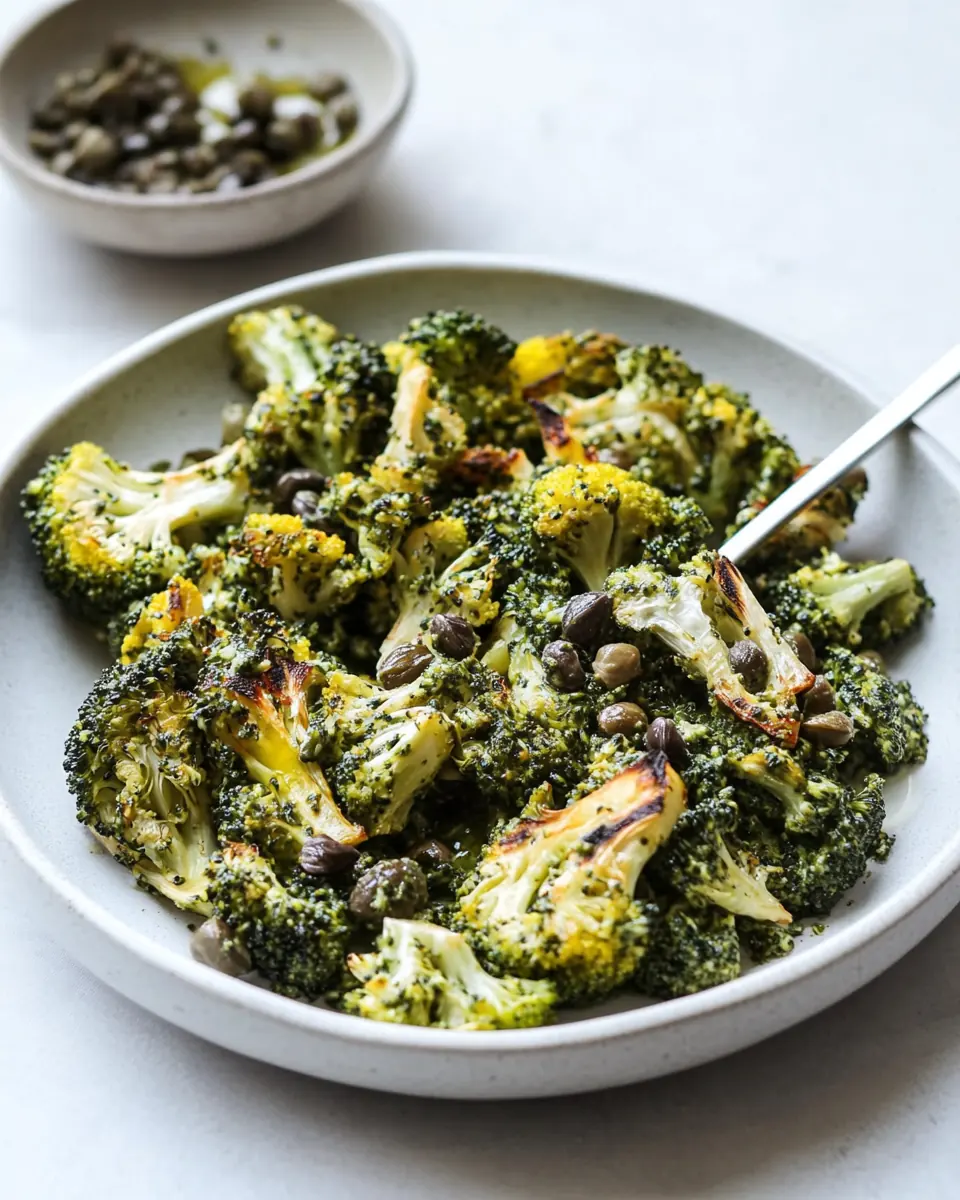
This is an honest, hands on method that moves from roasting to quick processing. I like to prepare the pesto while the vegetables roast, but timing can be adjusted. Read through the steps so you know the visual cues and sensory signs of doneness, then follow along in order.
- Preheat the oven to 425 degrees F.: Warm air and high heat are what create the satisfying charring and caramelization on the broccoli and cabbage . You should feel the oven heat build and hear the faint hum of the fan if you have convection, which helps with even browning. The smell of heating metal and a faint toasty scent when the oven reaches temperature is normal. This temperature matters because lower heat will steam the vegetables, giving a softer, less flavorful result, so avoid reducing it. A common mistake is not preheating long enough, which leads to uneven color.
- On a parchment-lined baking sheet, toss the broccoli and cabbage with 1/4 cup olive oil and 1 teaspoon salt. Arrange in an even layer and bake until charred and caramelized, tossing once halfway through, about 25 minutes.: The tactile step of massaging the oil into the vegetables ensures every surface is coated, which encourages crisp edges. You should see a glossy sheen on each piece and feel slight tackiness from the oil. The salt will start drawing moisture out, which helps with browning. If pieces are clumped, they will steam rather than roast, so spread into a single layer. Avoid using too much oil, as puddles prevent crisping.
- Meanwhile, make the gremolata: zest the lemon and set aside.: When the vegetables hit the hot sheet, they will hiss slightly, and after 10 to 15 minutes you will notice browning at the edges and a sweet, toasty aroma. Tossing halfway promotes even color and exposes hidden sides to the heat. The visual cue is deep golden to dark brown on tips and edges, with tender centers. If you see only pale color after 20 minutes, the oven may not be hot enough or the pan is overcrowded; correcting that early avoids soggy results.
- In a small food processor, combine the sunflower seeds, chives, parsley, mint and capers. Pulse until coarsely ground. Add the juice of half the lemon (about 2 tablespoons), 1/4 teaspoon salt and 1/4 cup olive oil. Pulse a few more times until the texture of a chunky pesto. Taste for seasoning and add more salt as needed.: zest the lemon and set aside. : The bright citrus oil released by zesting is aromatic and immediately lifts the remaining prep. You should smell the citrus oils as they are worked from the peel, a fresh, floral note that complements herbs. Zesting first ensures you have the garnish ready when the dish is assembled. Avoid removing the bitter white pith while zesting, as that will add an unpleasant flavor.
- To serve, pile the broccoli on a serving plate and dot with the herby caper pesto. Garnish with the lemon zest and serve warm or at room temperature.: As you pulse these ingredients, the scent will shift from raw herbs to an herbaceous, nutty mixture. The seeds will break down into tiny fragments, adding body, while the herbs release green, peppery aromas. Pulse in short bursts to keep some texture, aiming for coarse bits rather than a smooth paste. Overprocessing will yield a too soft pesto and lose textural contrast, so pause to check consistency often.
- Pulse until coarsely ground.: Watch as the mixture changes texture, from whole leaves to a rough, slightly granular mass. The sound of the processor will change as the motor finds resistance from smaller pieces. Coarse grinding helps the pesto cling to the roasted pieces without becoming slick. If you over-pulse, the mixture will become paste like and less interesting, so stop when you still see small bits.
- Add the juice of half the lemon about 2 tablespoons, 1/4 teaspoon salt and 1/4 cup olive oil.: When you add the lemon juice and oil, the aromas open up and the texture becomes looser, but still chunky. The acid brightens the herb flavors and the oil emulsifies components so the pesto is spreadable. Start with the smaller amounts and taste before adding more, because acidity and salt are easier to increase than to remove. A common misstep is adding too much liquid at once, which thins the pesto excessively.
- Pulse a few more times until the texture of a chunky pesto.: The final pulses marry the flavors and achieve the desired rustic texture. You should be able to see flecks of herb, seed, and caper throughout, and the mixture should hold together when scooped. The smell should be vibrant, with lemon, herb, and brine notes. If the pesto looks too wet, let it rest briefly so the seeds absorb some liquid, or add a few more seeds to thicken it. Overblending here will remove textural interest.
- Taste for seasoning and add more salt as needed.: A careful taste will reveal if the pesto needs balance. If it tastes flat, a pinch more sea salt or a touch more lemon juice will brighten it. Adjust slowly, trying to maintain the harmony between the herbaceous, nutty, and briny elements. Remember that the roasted vegetables will pick up salt from the pesto, so avoid over salting at this stage. Too much salt is the easiest error to make and the hardest to correct.
- To serve, pile the broccoli on a serving plate and dot with the herby caper pesto.: The final assembly is where textures meet; the warm roasted broccoli and cabbage should still be steaming slightly, and the pesto will look glossy against the charred pieces. Spoon the pesto in small dollops so every bite can combine roasted and herby elements. The scent of warm vegetables and bright herbs should be inviting. If you put the pesto under the vegetables too early, it will lose vibrancy, so spoon it on at serving time.
- Garnish with the lemon zest and serve warm or at room temperature.: The finishing zest adds a perfumed citrus top note and a visual pop of color. Serving warm emphasizes the roasted aroma, while room temperature highlights the herb flavors in the pesto. Both are valid choices depending on the meal. A frequent mistake is skipping the zest, which robs the dish of its last bright element, so always finish with it.
Recipe Tips about Roasted Broccoli with Caper Pesto
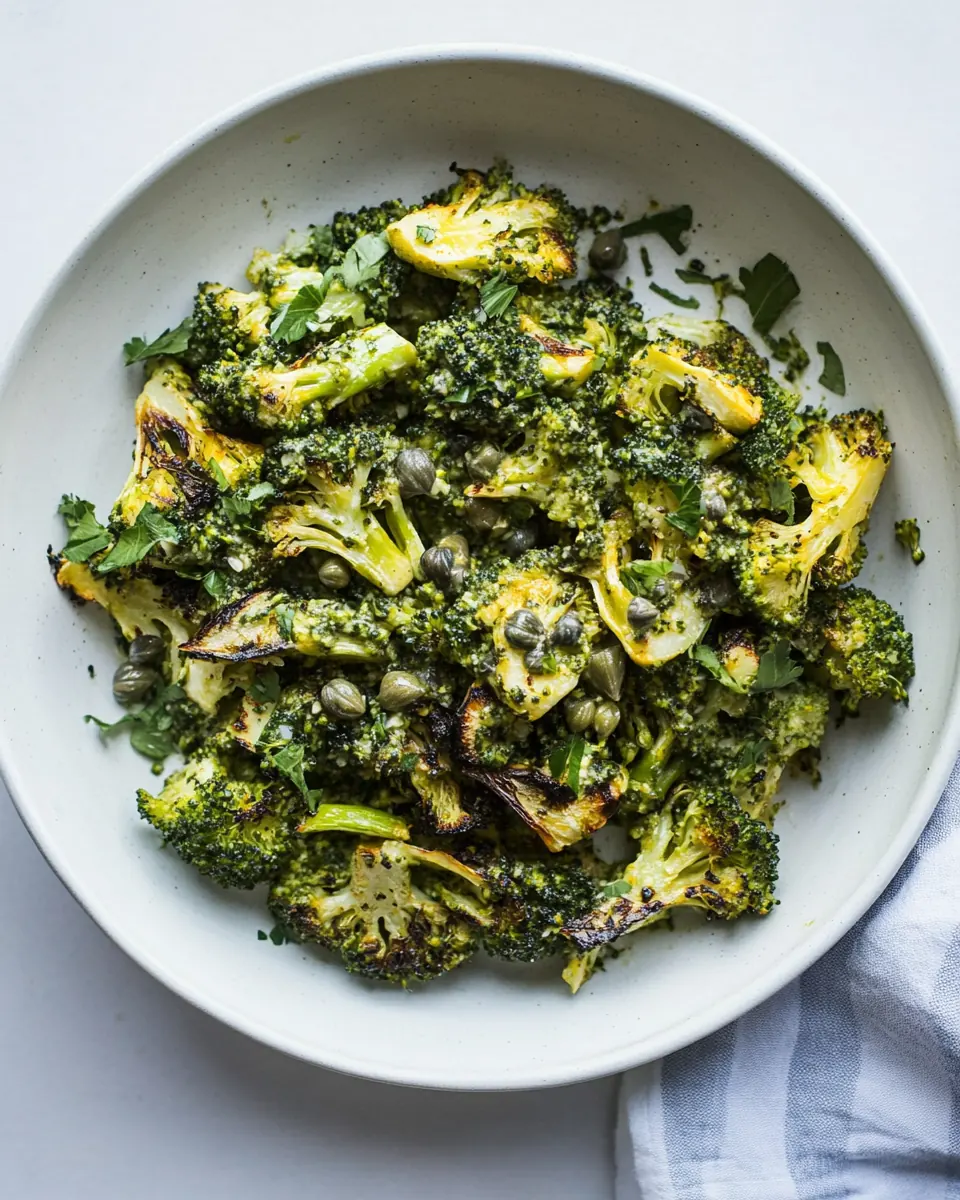
This dish rewards attention to texture and seasoning. Here are extended tips to help you get the best results, step by step, from roasting to finishing. Follow them to preserve brightness, build contrast, and avoid common pitfalls.
- Give the vegetables space: Arrange the broccoli and cabbage in a single layer so hot air can circulate and promote even browning. Crowded pans trap steam and lead to limp, pale pieces rather than charred, caramelized morsels. You should see the edges darken and smell a toasty, sweet aroma as they roast. If your baking sheet is small, roast in batches rather than crowding everything at once.
- Use parchment for an easier cleanup: Parchment prevents sticking and protects the pan, while still allowing the vegetables to brown. The paper helps collect any sticky, caramelized bits without burning them directly onto the pan. If you prefer crispier bottoms, you can skip the parchment and rotate the sheet midway, but then expect more cleanup work.
- Keep pesto chunky for texture: Pulse the herb and seed mixture until you have a coarse, slightly grainy texture. This allows the pesto to cling in little clusters to the roasted pieces and delivers a satisfying mouthfeel. Overprocessing yields a uniform paste that lacks contrast, so stop when you still notice herb flecks and seed fragments.
- Toast seeds lightly for more depth: If you have time, toast the sunflower seeds in a dry skillet until fragrant and slightly golden. This adds a warm, nutty layer to the pesto that complements roasted vegetables. Watch them carefully, as seeds can go from fragrant to burnt quickly, spoiling the flavor.
- Reserve zest for finishing: Zest the lemon before juicing and scatter it over the plated dish right before serving. The volatile citrus oils in the zest are aromatic and provide a bright top note that disappears if mixed into the pesto too early. Finishing with zest adds both scent and visual pop.
- Taste at multiple stages: Sample the vegetables after roasting and the pesto after blending so you can adjust salt and acid incrementally. This layered tasting approach ensures the final plate is balanced, because flavors concentrate during roasting and mellow when combined.
How to Enjoy Roasted Broccoli with Caper Pesto
This dish is flexible for many meals, from casual weeknights to festive gatherings. Serve warm for a cozy feel, or at room temperature for potlucks. Below are ideas for pairings, occasions, storage, and seasonal uses to make the most of the flavors and textures.
- Weeknight side: Serve alongside grilled fish or roasted chicken for an easy weeknight meal; the bright pesto complements simply seasoned proteins and makes the plate feel composed.
- Potluck contribution: Bring this at room temperature to gatherings where people will graze; it travels well and stays flavorful without last minute heating, making it an ideal shareable dish.
- Vegetarian main for a light meal: Pile the broccoli and cabbage over warm grains like quinoa or farro and spoon extra pesto on top for a satisfying vegetarian bowl, adding texture and herb brightness.
- Seasonal pairing: This shines in spring when herbs are tender; the fresh mint and parsley highlight early produce and feel lively at the table.
- Storage tip: Store roasted vegetables and pesto separately in airtight containers in the refrigerator for up to three days; reheat gently or serve chilled depending on preference to preserve texture and flavor.
- Serving style: Serve buffet style with lemon wedges and extra pesto on the side so guests can customize each bite, keeping the dish interactive and fresh.
FAQ
Conclusion
This Roasted Broccoli with Caper Pesto stands out for its contrast of smoky roasted vegetables and bright, herbaceous pesto. It is easy to prepare yet delivers layered flavors that feel thoughtful and satisfying. Try it as a weeknight side or bring it to a gathering, and you will likely find it is requested again. I hope you enjoy the balance of char and freshness this recipe offers, and that it becomes one of your dependable dishes to share.
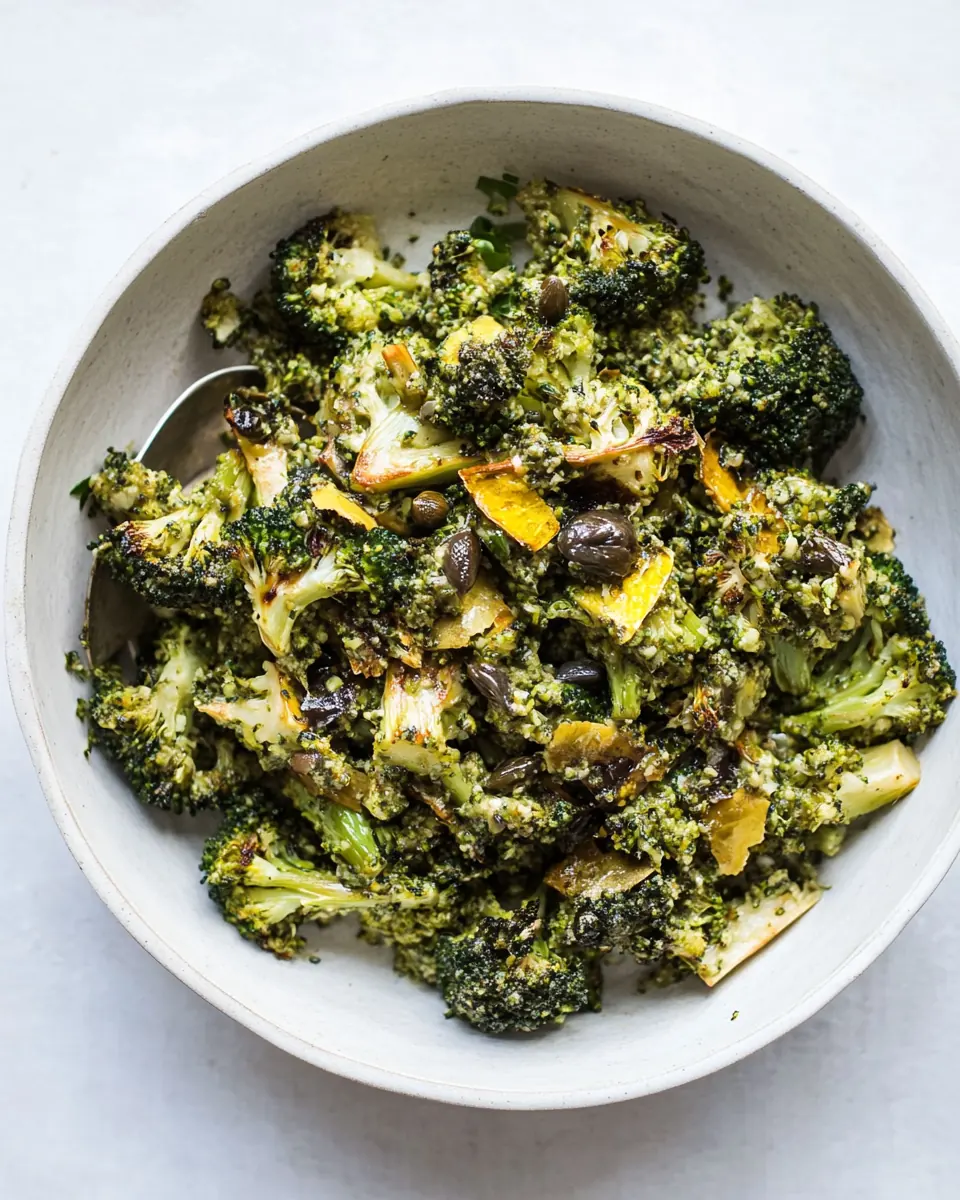
Roasted Broccoli with Caper Pesto
Ingredients
Equipment
Method
- Preheat the oven to 425 degrees F.: Warm air and high heat are what create the satisfying charring and caramelization on the broccoli and cabbage . You should feel the oven heat build and hear the faint hum of the fan if you have convection, which helps with even browning. The smell of heating metal and a faint toasty scent when the oven reaches temperature is normal. This temperature matters because lower heat will steam the vegetables, giving a softer, less flavorful result, so avoid reducing it. A common mistake is not preheating long enough, which leads to uneven color.
- On a parchment-lined baking sheet, toss the broccoli and cabbage with 1/4 cup olive oil and 1 teaspoon salt. Arrange in an even layer and bake until charred and caramelized, tossing once halfway through, about 25 minutes.: The tactile step of massaging the oil into the vegetables ensures every surface is coated, which encourages crisp edges. You should see a glossy sheen on each piece and feel slight tackiness from the oil. The salt will start drawing moisture out, which helps with browning. If pieces are clumped, they will steam rather than roast, so spread into a single layer. Avoid using too much oil, as puddles prevent crisping.
- Meanwhile, make the gremolata: zest the lemon and set aside.: When the vegetables hit the hot sheet, they will hiss slightly, and after 10 to 15 minutes you will notice browning at the edges and a sweet, toasty aroma. Tossing halfway promotes even color and exposes hidden sides to the heat. The visual cue is deep golden to dark brown on tips and edges, with tender centers. If you see only pale color after 20 minutes, the oven may not be hot enough or the pan is overcrowded; correcting that early avoids soggy results.
- In a small food processor, combine the sunflower seeds, chives, parsley, mint and capers. Pulse until coarsely ground. Add the juice of half the lemon (about 2 tablespoons), 1/4 teaspoon salt and 1/4 cup olive oil. Pulse a few more times until the texture of a chunky pesto. Taste for seasoning and add more salt as needed.: zest the lemon and set aside. : The bright citrus oil released by zesting is aromatic and immediately lifts the remaining prep. You should smell the citrus oils as they are worked from the peel, a fresh, floral note that complements herbs. Zesting first ensures you have the garnish ready when the dish is assembled. Avoid removing the bitter white pith while zesting, as that will add an unpleasant flavor.
- To serve, pile the broccoli on a serving plate and dot with the herby caper pesto. Garnish with the lemon zest and serve warm or at room temperature.: As you pulse these ingredients, the scent will shift from raw herbs to an herbaceous, nutty mixture. The seeds will break down into tiny fragments, adding body, while the herbs release green, peppery aromas. Pulse in short bursts to keep some texture, aiming for coarse bits rather than a smooth paste. Overprocessing will yield a too soft pesto and lose textural contrast, so pause to check consistency often.
- Pulse until coarsely ground.: Watch as the mixture changes texture, from whole leaves to a rough, slightly granular mass. The sound of the processor will change as the motor finds resistance from smaller pieces. Coarse grinding helps the pesto cling to the roasted pieces without becoming slick. If you over-pulse, the mixture will become paste like and less interesting, so stop when you still see small bits.
- Add the juice of half the lemon about 2 tablespoons, 1/4 teaspoon salt and 1/4 cup olive oil.: When you add the lemon juice and oil, the aromas open up and the texture becomes looser, but still chunky. The acid brightens the herb flavors and the oil emulsifies components so the pesto is spreadable. Start with the smaller amounts and taste before adding more, because acidity and salt are easier to increase than to remove. A common misstep is adding too much liquid at once, which thins the pesto excessively.
- Pulse a few more times until the texture of a chunky pesto.: The final pulses marry the flavors and achieve the desired rustic texture. You should be able to see flecks of herb, seed, and caper throughout, and the mixture should hold together when scooped. The smell should be vibrant, with lemon, herb, and brine notes. If the pesto looks too wet, let it rest briefly so the seeds absorb some liquid, or add a few more seeds to thicken it. Overblending here will remove textural interest.
- Taste for seasoning and add more salt as needed.: A careful taste will reveal if the pesto needs balance. If it tastes flat, a pinch more sea salt or a touch more lemon juice will brighten it. Adjust slowly, trying to maintain the harmony between the herbaceous, nutty, and briny elements. Remember that the roasted vegetables will pick up salt from the pesto, so avoid over salting at this stage. Too much salt is the easiest error to make and the hardest to correct.
- To serve, pile the broccoli on a serving plate and dot with the herby caper pesto.: The final assembly is where textures meet; the warm roasted broccoli and cabbage should still be steaming slightly, and the pesto will look glossy against the charred pieces. Spoon the pesto in small dollops so every bite can combine roasted and herby elements. The scent of warm vegetables and bright herbs should be inviting. If you put the pesto under the vegetables too early, it will lose vibrancy, so spoon it on at serving time.
- Garnish with the lemon zest and serve warm or at room temperature.: The finishing zest adds a perfumed citrus top note and a visual pop of color. Serving warm emphasizes the roasted aroma, while room temperature highlights the herb flavors in the pesto. Both are valid choices depending on the meal. A frequent mistake is skipping the zest, which robs the dish of its last bright element, so always finish with it.
Notes
- Give the vegetables space: Arrange the broccoli and cabbage in a single layer so hot air can circulate and promote even browning. Crowded pans trap steam and lead to limp, pale pieces rather than charred, caramelized morsels. You should see the edges darken and smell a toasty, sweet aroma as they roast. If your baking sheet is small, roast in batches rather than crowding everything at once.
- Use parchment for an easier cleanup: Parchment prevents sticking and protects the pan, while still allowing the vegetables to brown. The paper helps collect any sticky, caramelized bits without burning them directly onto the pan. If you prefer crispier bottoms, you can skip the parchment and rotate the sheet midway, but then expect more cleanup work.
- Keep pesto chunky for texture: Pulse the herb and seed mixture until you have a coarse, slightly grainy texture. This allows the pesto to cling in little clusters to the roasted pieces and delivers a satisfying mouthfeel. Overprocessing yields a uniform paste that lacks contrast, so stop when you still notice herb flecks and seed fragments.
- Toast seeds lightly for more depth: If you have time, toast the sunflower seeds in a dry skillet until fragrant and slightly golden. This adds a warm, nutty layer to the pesto that complements roasted vegetables. Watch them carefully, as seeds can go from fragrant to burnt quickly, spoiling the flavor.
- Reserve zest for finishing: Zest the lemon before juicing and scatter it over the plated dish right before serving. The volatile citrus oils in the zest are aromatic and provide a bright top note that disappears if mixed into the pesto too early. Finishing with zest adds both scent and visual pop.
- Taste at multiple stages: Sample the vegetables after roasting and the pesto after blending so you can adjust salt and acid incrementally. This layered tasting approach ensures the final plate is balanced, because flavors concentrate during roasting and mellow when combined.