Easy Chicken Pot Pie
Easy Chicken Pot Pie has always been the kind of recipe I turn to when I want comfort without fuss. The first time I made it for a cramped weeknight dinner, I remember the kitchen filling with the welcoming scent of butter and garlic, and how everyone leaned in as I lifted the golden crust to reveal a creamy, steaming filling. That night I learned why simple ingredients handled with care can feel like a warm hug.
Over the years I’ve adapted this dish into a speedy favorite, one that tolerates shortcuts and still rewards you with great texture and flavor. I love that you can use leftover chicken or a rotisserie bird from the store, and the filling comes together in one bowl. The contrast between the flaky crust and the velvety center always wins over picky eaters, and I enjoy the little ritual of brushing the top with melted butter and garlic, which gives the crust that irresistible sheen.
When friends ask for a recipe that feels homemade but is realistic on a busy night, I hand them this one. It’s forgiving, approachable, and predictable in the best way: you follow a few solid steps, and the result is reliably cozy. I often make it for casual gatherings because it serves a crowd and travels well. Each time I tuck the edges of the dough into the casserole dish I remember the first time my family fought over the last piece, and that memory makes me smile every time I bake it.
Recipe Snapshot
40 mins
10 mins
30 mins
Medium
380 kcal
American
Gluten-Free, Low FODMAP
Dinner
9×13 casserole dish, mixing bowl, fork, basting brush, oven
What You’ll Enjoy About This Easy Chicken Pot Pie
Comfort that comes together
I love how Easy Chicken Pot Pie turns simple pantry items into a dish that tastes like you spent hours in the kitchen, even when you did not. Using canned soups and frozen vegetables keeps the process quick, while the combination of textures gives the dish real depth. You get a creamy, well seasoned center and a crisp, buttery surface, which makes it perfect for busy weeknights when you still want something hearty.
Versatility and convenience
I’ve made this recipe with leftover chicken, rotisserie chicken, and sometimes shredded baked chicken. Each option yields the same satisfying result, and that flexibility means fewer last minute grocery trips. The way the filling mixes with the thaws of frozen vegetables and the canned soups creates a reliably smooth texture, so you can scale it up for guests without losing quality.
Kid friendly and crowd pleasing
Families tend to love this version because the flavors are familiar and comforting. The tender pieces of chicken and the mild creams of soup give a gentle savory profile that most palates enjoy. I often bring this to potlucks because it holds up well under transport, and it reheats beautifully without separating or getting watery.
Speed without sacrifice
What excites me is how quickly you can get a wholesome meal on the table. With a few smart shortcuts, you still achieve a homemade feel. Brushing melted butter mixed with garlic powder on the dough before baking adds a professional finish, and a brief bake time delivers a golden top and bubbling edges that signal readiness.
Reliable for meal prep
If you like prepping meals for the week, this dish is a winner. The flavors often improve after a day in the fridge as the seasonings meld, and reheating yields a comforting, nearly identical experience to fresh out of the oven. For me, that dependability makes it a recipe I return to time and again.
Essential Ingredients for Easy Chicken Pot Pie
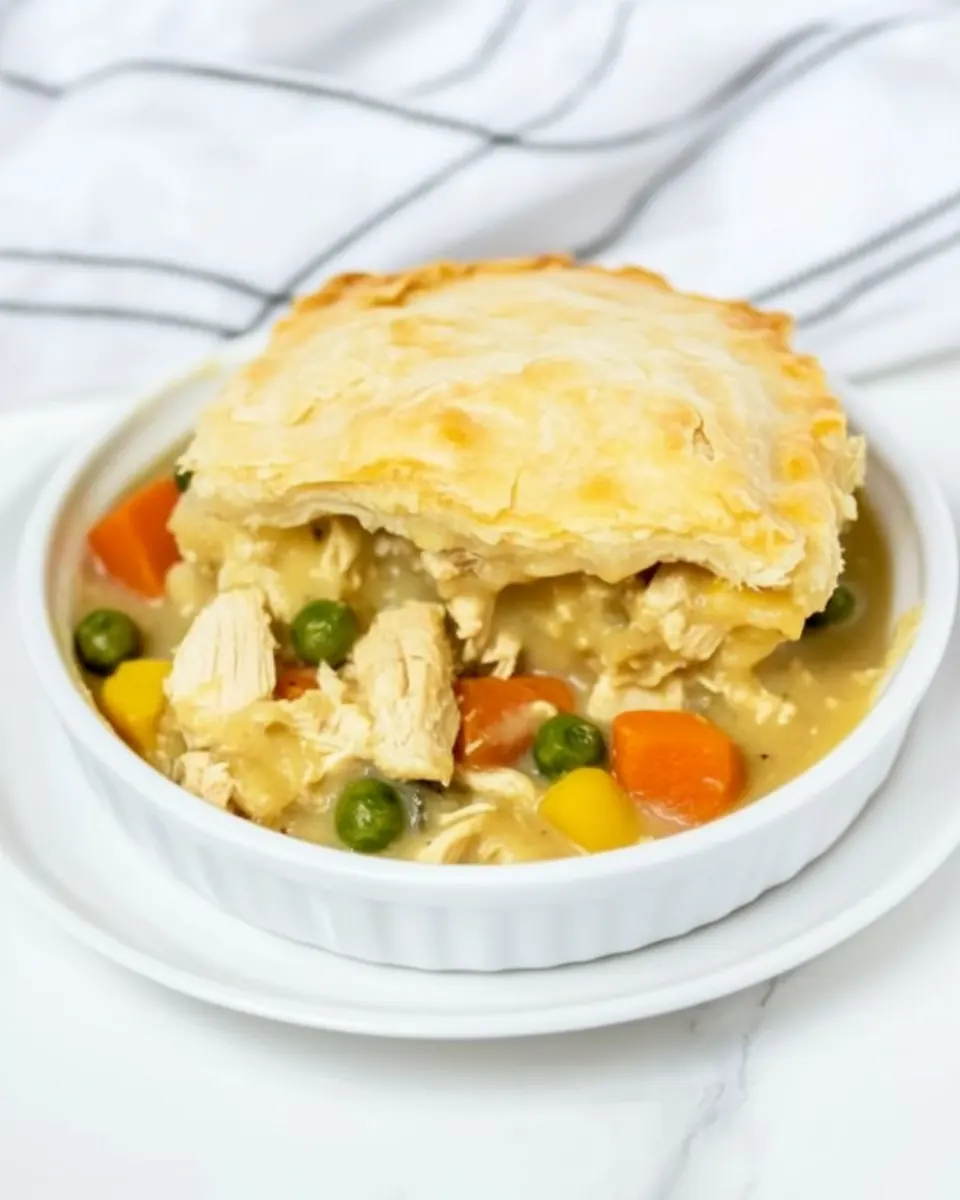
These ingredients are selected to work in harmony: creamy canned soups provide body and seasoning, while the frozen vegetables add texture and bright pops of color. The shredded chicken is the star protein, and the pizza dough acts as a quick, flaky top that crisps in the oven. Together they create a balanced, comforting casserole where convenience meets satisfying mouthfeel.
- 4 cups shredded chicken (cooked): Shredded and cooked to provide tender, ready-to-use protein throughout the filling, adding savory body and extra moisture that complements the creamy sauce. Ensure pieces are bite-sized so they distribute evenly and heat through without drying out.
- 8.25 ounces sliced carrots: Sliced and gently sweetened to contribute tender vegetable texture and color contrast, offering subtle sweetness and a slightly firm bite after baking. Use drained or thawed slices to prevent excess liquid from diluting the sauce consistency.
- 15 ounces sweet peas: Sweet and delicate peas that add pop-in-your-mouth bursts of sweetness and bright color, balancing the richness of the creamy base. Stir in evenly to maintain their texture and avoid overcooking them during the final bake.
- 15 ounces sweet corn: Sweet kernels that lend natural sweetness and a pleasant chew, contributing both color and textural variety to the pot pie filling. Drain canned corn well or thaw frozen corn to avoid adding unwanted liquid to the mixture.
- 2 cups frozen hashbrown potatoes (thawed): Thawed hashbrown potatoes that introduce hearty, starchy body and a rustic bite, helping to thicken the filling and make the dish more substantial. Mix them thoroughly so they absorb some sauce and cook through uniformly in the oven.
- 21 ounces cream of chicken soup: Creamy condensed soup used as a primary base to create rich, savory sauce and to bind the filling ingredients together while supplying concentrated chicken flavor. Stir well to ensure smoothness and even coating of all components before baking.
- 10.5 ounces cream of celery soup: Velvety condensed soup that adds depth and mild aromatic celery notes to the sauce, complementing the cream of chicken for a balanced savory profile. Whisk into the other soups and liquids to achieve a cohesive, creamy texture.
- 1 tablespoon minced garlic: Minced garlic that provides pungent, aromatic flavor and a savory backbone to the filling, elevating the overall taste with subtle warmth. Sauté briefly if desired to mellow its sharpness before incorporating into the mix.
- 1 teaspoon onion powder: Powdered onion seasoning that contributes concentrated onion flavor without adding texture, enhancing overall savory depth and complexity in the filling. Sprinkle in measured amounts and taste-adjust to avoid overpowering other seasonings.
- 1 tablespoon Italian seasoning: A fragrant herb blend that imparts Italian-style herbal notes—oregano, basil, and thyme-like flavors—that harmonize the creamy filling and chicken. Add early so the herbs can infuse the sauce as ingredients meld during baking.
- 1 teaspoon ground black pepper: Ground black pepper that brings mild heat and a peppery finish, balancing the richness of the creamy sauces and highlighting the chicken and vegetables. Grind fresh if possible and distribute evenly for consistent seasoning.
- 1/4 cup heavy cream: Heavy cream that enriches the sauce with silkiness and mouthfeel, smoothing out condensed soups and creating a luxuriously creamy filling. Add gradually and stir until fully incorporated to control thickness and richness.
- 13.8 ounces pizza dough: Pizza dough used as the savory crust to encase the filling, offering a soft, chewy exterior that browns and crisps when brushed and baked. Stretch or roll to fit the dish and seal edges to prevent filling leakage.
- 1 1/2 teaspoons garlic powder: Garlic powder that provides a mellow, shelf-stable garlic flavor to complement minced garlic, deepening savory notes without altering texture. Use sparingly to layer garlic taste and avoid an overly powdered finish.
- 2 tablespoons butter (melted): Melted butter that adds richness and promotes golden browning on the crust while contributing a subtle buttery flavor to the top layer. Brush over the dough before baking to achieve an appealing color and glossy finish.
Instructions for Easy Chicken Pot Pie
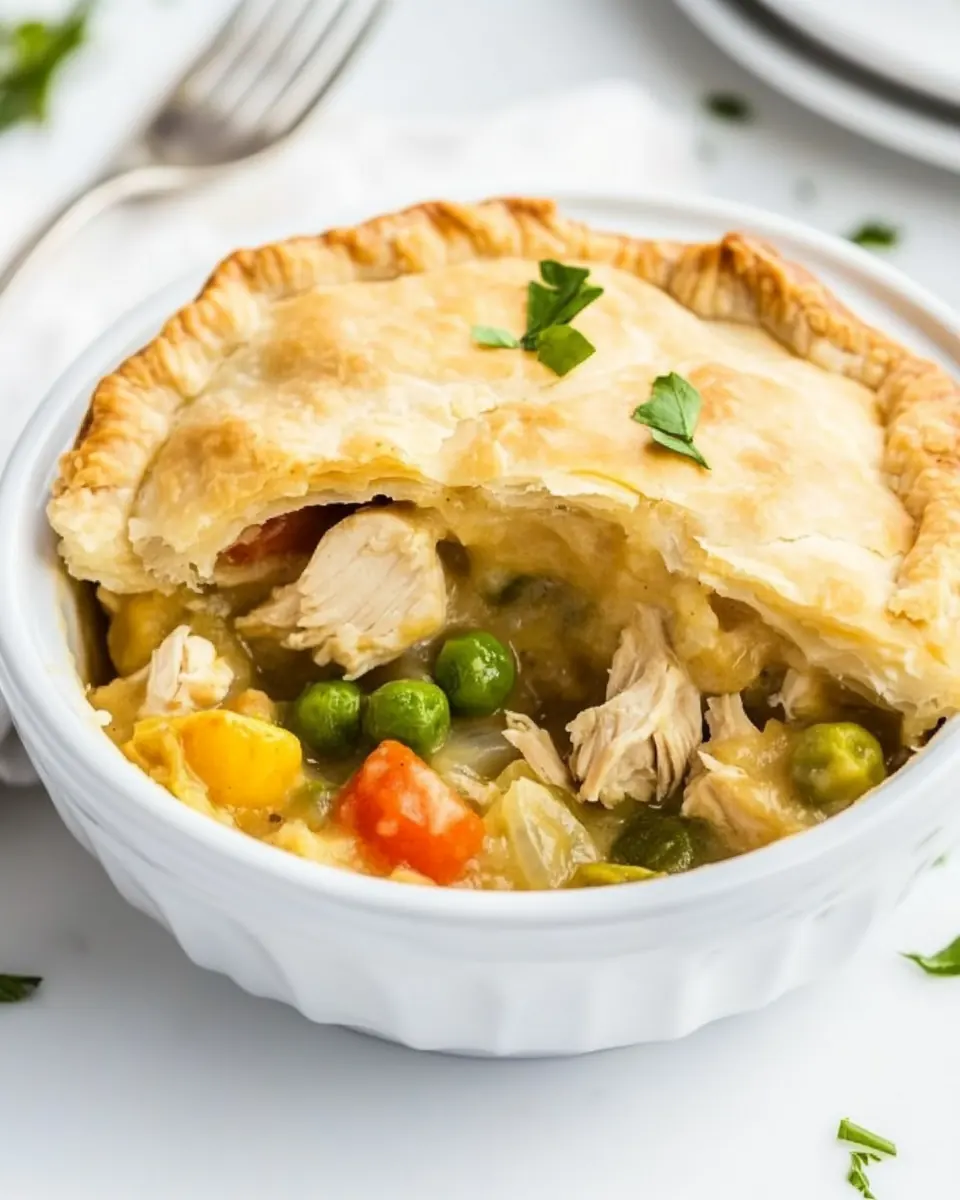
This recipe is straightforward to assemble and bake. Follow the steps in order, and you will be rewarded with a golden topped casserole and a creamy, well seasoned filling. Read each step carefully so you can watch for the sensory cues I describe below, and avoid common mistakes like adding ingredients that are still frozen.
- Preheat your oven to 375°F and prepare a 9×13 casserole dish with non-stick cooking spray.: The kitchen should smell neutral at this point while the oven warms, and you will likely hear a faint hum as the elements heat. Preheating ensures the crust begins baking immediately on insertion, which promotes even browning and prevents sogginess from a slow heat start. Greasing the dish prevents sticking and makes serving neater. A common misstep is skipping preheat, which leads to a longer bake time and a less crisp crust, so wait until the oven reads the right temperature before proceeding.
- In a large bowl, combine the shredded chicken, carrots, peas, corn, and potatoes.: As you fold these ingredients together, you should notice the contrast of textures and colors, with white chicken against orange carrots and bright green peas . Mixing them first helps ensure an even distribution of fillings so each portion has balance. The tactile feel should be slightly cool to the touch if ingredients are room temperature. Avoid overmixing which can break down the thawed hashbrown potatoes into a paste, losing the pleasing bite they provide.
- Stir in the cream of chicken, cream of celery, minced garlic, onion powder, Italian seasoning, black pepper, and heavy cream until well combined.: When you add the canned creams and heavy cream , the mixture transforms visually into a glossy, cohesive sauce that clings to the vegetables and chicken . The aromas of garlic and herbs will begin to come forward, signaling the flavors are marrying. Stirring thoroughly prevents pockets of dry seasoning or condensed soup. A common error is not fully incorporating the soups, which can leave unevenly seasoned bites, so scrape the bowl sides and fold until smooth.
- Spread the mixture evenly along the bottom of your casserole dish and place your pizza crust over the mixture. You may need to gently stretch your pizza dough slightly to cover the pot pie mixture completely.: As you press the filling into the pan, notice how the weight settles and the surface becomes level, which helps the crust bake uniformly. Gently drape the pizza dough over the filling, aiming for coverage without tearing. The dough should rest comfortably on top with slight slack for edges. If the filling is heaped too high, the crust may not brown evenly and could crack, so smooth the surface before topping.
- Using a fork, tuck the sides of the pizza dough down along the sides of the casserole dish.: When you stretch the dough, feel for elasticity and resist pulling too aggressively, since that can create thin spots that brown too fast. The dough should give with mild tension, and you will hear a faint creak as gluten stretches. If it snaps back, let it rest a few minutes and try again. Overstretching leads to tears and leaks, so proceed with gentle patience.
- In a small bowl or cup, combine the garlic powder with the melted butter and lightly brush it over the pizza dough, making sure not to miss any spots.: Tucking creates a seal that helps the crust adhere and brown evenly at the edges, producing a tidy rim that holds the filling. You may hear a soft press as the dough conforms to the pan. This step also gives the finished dish a rustic edge that is pleasant to serve. Failing to tuck can result in dough puffing up unevenly or slipping into the filling during baking.
- Bake the casserole uncovered for 30 minutes or until the top is golden brown and the filling is heated throughout.: Brushing the crust with this buttery garlic wash creates a glossy surface and encourages that inviting golden brown color. The aroma of melted butter and roasted garlic will be noticeable as the pie bakes, signaling readiness. Apply thin, even coats to avoid pooling, which can cause overly dark spots. If the butter is too hot it can melt the dough surface, so let it cool slightly before brushing.
- Serve warm.: During baking you will notice the crust change color to a deep gold and the edges bubbling gently, while the kitchen becomes infused with a rich, savory scent. This visual bubbling is a key cue that the filling is hot through and the starches have set. To test, a skewer inserted into the center should feel hot and the filling should be bubbling lightly. A typical mistake is pulling the casserole out too early, which leaves a cool center and under set filling, so ensure you see steady bubbling at the edges.
- Serve warm: Serving while the dish is warm preserves the contrast between the crisp crust and creamy filling, and the aroma will be at its peak. Use a wide spatula to lift portions, taking care not to break the golden top more than necessary. Letting it rest for a few minutes makes spooning neater and helps the filling settle, but serving too cold flattens the textures and mutes the flavors, so aim for warm not piping hot to avoid burns.
Tips for Success
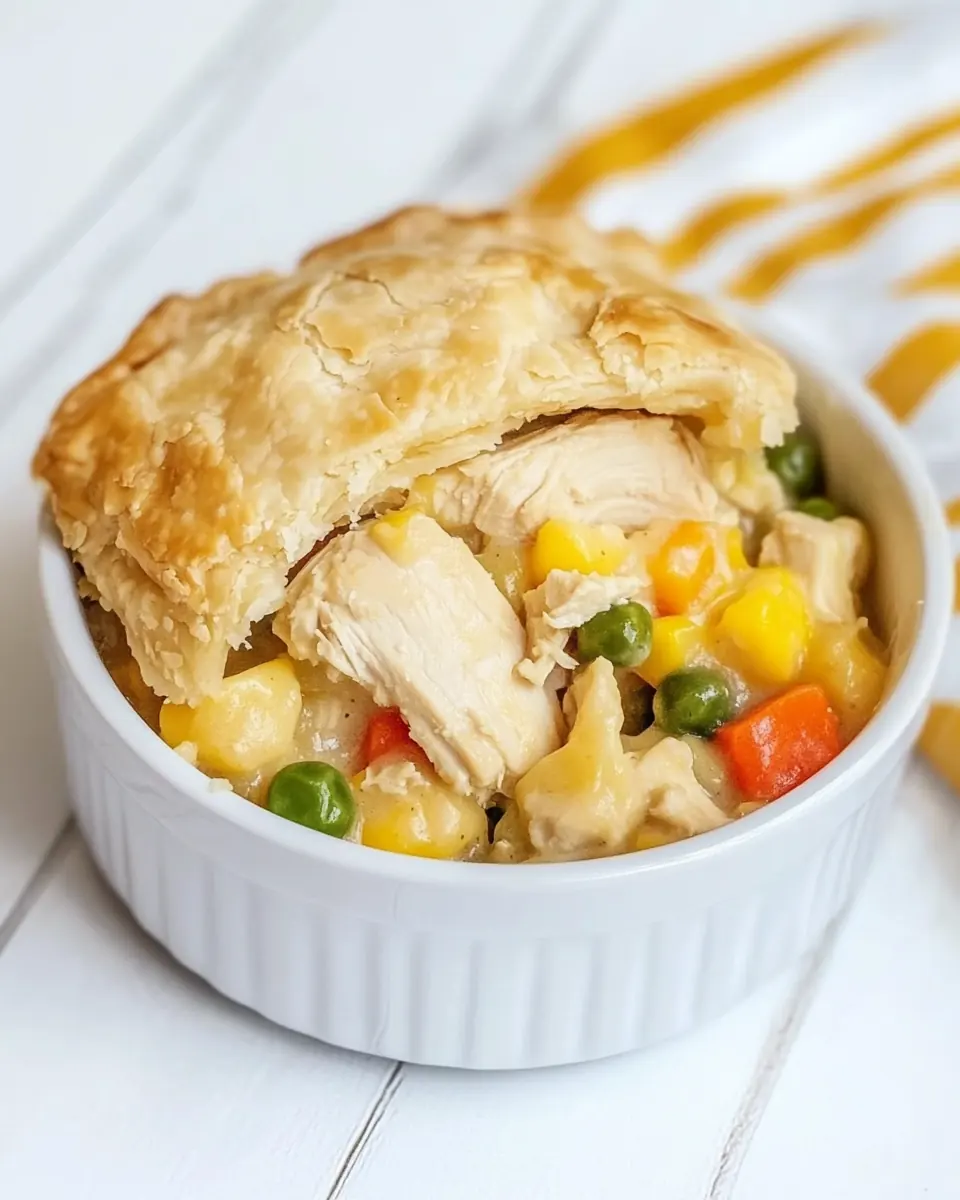
I always take a few small steps that make a big difference in the final dish. These tips reflect things I learned the hard way, like watching for excess moisture and how to avoid a soggy crust. Read them and keep them in mind while you assemble and bake.
- Use warm or room temperature ingredients when possible because it helps the filling come together smoothly and reduces bake time needed to heat the center.
- Drain thawed vegetables well since excess water from frozen items can thin the sauce and make the crust soggy, gently pressing them with a towel if needed.
- Check oven calibration as oven temperatures vary, and an oven that runs hot will brown the crust before the filling is warmed through, so use an oven thermometer if you suspect issues.
- Stretch dough gently to avoid thin spots, and let it rest if it springs back, which prevents tears and ensures even coverage.
- Brush evenly with butter and garlic powder to get a uniform golden crust and delightful roasted garlic aroma without burnt patches.
- Let the casserole rest briefly before serving so the filling firms slightly, making portions cleaner and avoiding the filling running out when cut.
Serving Ideas for Easy Chicken Pot Pie
This casserole works well for family dinners, casual potlucks, or anytime you want a cozy centerpiece that feeds a group. Below are a variety of serving ideas, pairing suggestions, and storage notes to help you plan the meal and extend leftovers confidently.
- Casual family dinner Serve warm with a simple green salad dressed lightly in lemon and olive oil to add brightness and a fresh contrast to the rich filling.
- Potluck friendly Bring the casserole in its dish and cover with foil to keep warm; provide a ladle for easy serving and pair with crusty bread for extra comfort.
- Lunch option Cut into squares and serve alongside fresh raw vegetables, which add crunch and a cooling element to each bite.
- Holiday side While hearty enough to be the main, this also pairs nicely with roasted root vegetables for a winter menu that feels homey and satisfying.
- Storage and reheating Refrigerate leftovers in an airtight container for up to four days; reheat in a 350°F oven until warmed through to restore crispness to the crust.
- Seasonal pairings In winter, serve with a warm bowl of clear soup or a tart cranberry compote to cut through the creaminess for a festive balance.
FAQ
Conclusion
This Easy Chicken Pot Pie is special because it delivers comforting, homey flavors with minimal fuss. It balances creamy, savory filling and a golden crust in a recipe that is forgiving and crowd friendly. I hope you give it a try the next time you want an uncomplicated dinner that still feels thoughtful. Once you make it, you may find it becomes one of your go to meals for family nights and casual gatherings.
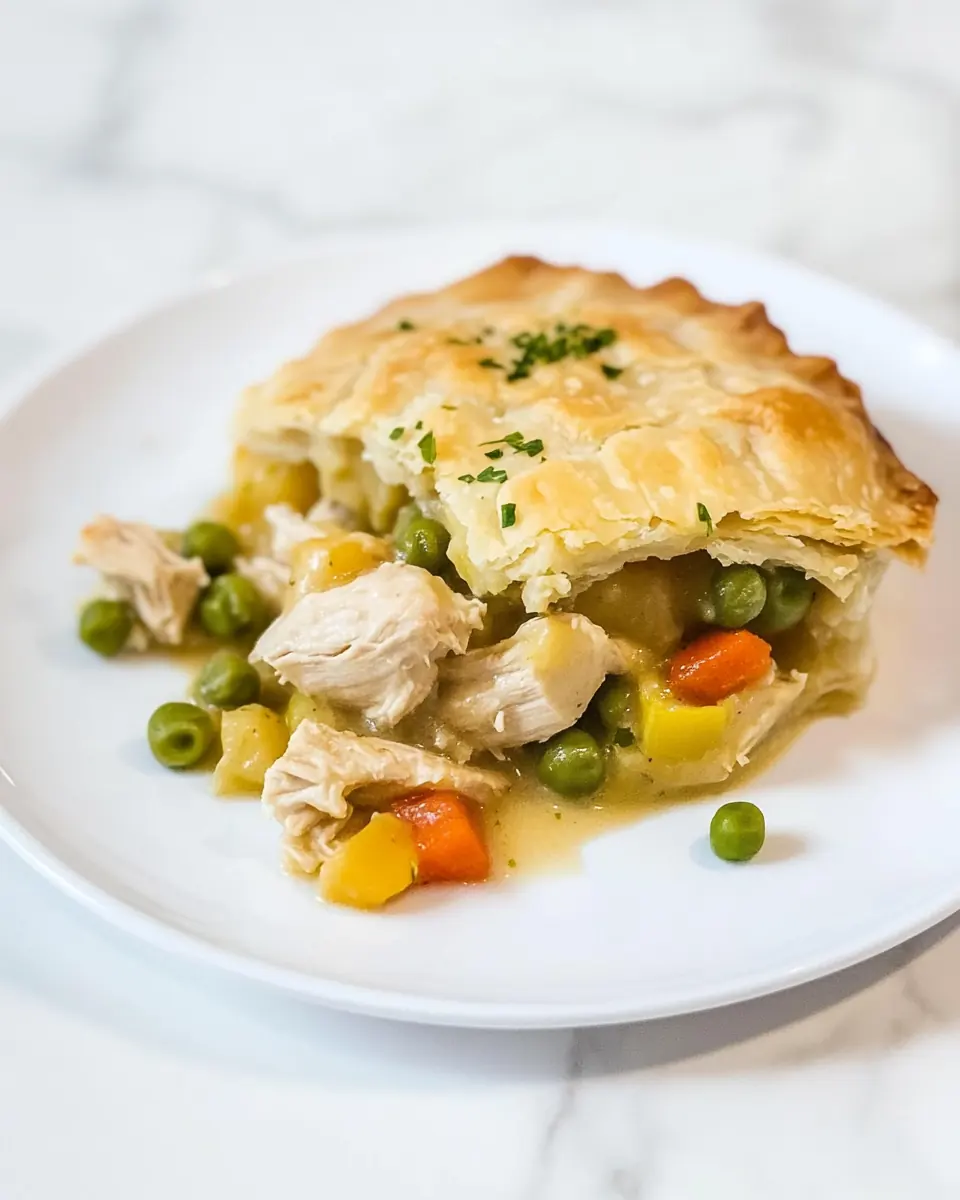
Easy Chicken Pot Pie
Ingredients
Equipment
Method
- Preheat your oven to 375°F and prepare a 9×13 casserole dish with non-stick cooking spray.: The kitchen should smell neutral at this point while the oven warms, and you will likely hear a faint hum as the elements heat. Preheating ensures the crust begins baking immediately on insertion, which promotes even browning and prevents sogginess from a slow heat start. Greasing the dish prevents sticking and makes serving neater. A common misstep is skipping preheat, which leads to a longer bake time and a less crisp crust, so wait until the oven reads the right temperature before proceeding.
- In a large bowl, combine the shredded chicken, carrots, peas, corn, and potatoes.: As you fold these ingredients together, you should notice the contrast of textures and colors, with white chicken against orange carrots and bright green peas . Mixing them first helps ensure an even distribution of fillings so each portion has balance. The tactile feel should be slightly cool to the touch if ingredients are room temperature. Avoid overmixing which can break down the thawed hashbrown potatoes into a paste, losing the pleasing bite they provide.
- Stir in the cream of chicken, cream of celery, minced garlic, onion powder, Italian seasoning, black pepper, and heavy cream until well combined.: When you add the canned creams and heavy cream , the mixture transforms visually into a glossy, cohesive sauce that clings to the vegetables and chicken . The aromas of garlic and herbs will begin to come forward, signaling the flavors are marrying. Stirring thoroughly prevents pockets of dry seasoning or condensed soup. A common error is not fully incorporating the soups, which can leave unevenly seasoned bites, so scrape the bowl sides and fold until smooth.
- Spread the mixture evenly along the bottom of your casserole dish and place your pizza crust over the mixture. You may need to gently stretch your pizza dough slightly to cover the pot pie mixture completely.: As you press the filling into the pan, notice how the weight settles and the surface becomes level, which helps the crust bake uniformly. Gently drape the pizza dough over the filling, aiming for coverage without tearing. The dough should rest comfortably on top with slight slack for edges. If the filling is heaped too high, the crust may not brown evenly and could crack, so smooth the surface before topping.
- Using a fork, tuck the sides of the pizza dough down along the sides of the casserole dish.: When you stretch the dough, feel for elasticity and resist pulling too aggressively, since that can create thin spots that brown too fast. The dough should give with mild tension, and you will hear a faint creak as gluten stretches. If it snaps back, let it rest a few minutes and try again. Overstretching leads to tears and leaks, so proceed with gentle patience.
- In a small bowl or cup, combine the garlic powder with the melted butter and lightly brush it over the pizza dough, making sure not to miss any spots.: Tucking creates a seal that helps the crust adhere and brown evenly at the edges, producing a tidy rim that holds the filling. You may hear a soft press as the dough conforms to the pan. This step also gives the finished dish a rustic edge that is pleasant to serve. Failing to tuck can result in dough puffing up unevenly or slipping into the filling during baking.
- Bake the casserole uncovered for 30 minutes or until the top is golden brown and the filling is heated throughout.: Brushing the crust with this buttery garlic wash creates a glossy surface and encourages that inviting golden brown color. The aroma of melted butter and roasted garlic will be noticeable as the pie bakes, signaling readiness. Apply thin, even coats to avoid pooling, which can cause overly dark spots. If the butter is too hot it can melt the dough surface, so let it cool slightly before brushing.
- Serve warm.: During baking you will notice the crust change color to a deep gold and the edges bubbling gently, while the kitchen becomes infused with a rich, savory scent. This visual bubbling is a key cue that the filling is hot through and the starches have set. To test, a skewer inserted into the center should feel hot and the filling should be bubbling lightly. A typical mistake is pulling the casserole out too early, which leaves a cool center and under set filling, so ensure you see steady bubbling at the edges.
- Serve warm: Serving while the dish is warm preserves the contrast between the crisp crust and creamy filling, and the aroma will be at its peak. Use a wide spatula to lift portions, taking care not to break the golden top more than necessary. Letting it rest for a few minutes makes spooning neater and helps the filling settle, but serving too cold flattens the textures and mutes the flavors, so aim for warm not piping hot to avoid burns.
Notes
- Use warm or room temperature ingredients when possible because it helps the filling come together smoothly and reduces bake time needed to heat the center.
- Drain thawed vegetables well since excess water from frozen items can thin the sauce and make the crust soggy, gently pressing them with a towel if needed.
- Check oven calibration as oven temperatures vary, and an oven that runs hot will brown the crust before the filling is warmed through, so use an oven thermometer if you suspect issues.
- Stretch dough gently to avoid thin spots, and let it rest if it springs back, which prevents tears and ensures even coverage.
- Brush evenly with butter and garlic powder to get a uniform golden crust and delightful roasted garlic aroma without burnt patches.
- Let the casserole rest briefly before serving so the filling firms slightly, making portions cleaner and avoiding the filling running out when cut.