Vegan Stuffing
Vegan Stuffing has been one of those recipes I reach for whenever I want comfort with a little surprise in every bite.
Years ago I brought a version of this to a family gathering and watched skeptics take tentative forks, then come back for seconds without asking what was in it. I like that this dish honors tradition while flipping expectations, celebrating hearty textures from ciabatta and earthy depth from mushrooms. The balance of bright balsamic vinegar and fragrant sage makes it sing, and the little pops of sweet dried cranberries keep each forkful lively. I often make it the day before to let flavors mingle, and sometimes I toast the bread a bit more for extra crunch.
On busy holidays I rely on recipes that travel well and reheat cleanly, and this Vegan Stuffing checks those boxes. It can be a centerpiece side or the star of a vegetarian spread. When I serve it I pay attention to small details, like tossing the kale just until it softens so it stays vibrant, and using good quality extra virgin olive oil because it lifts the entire dish. You will notice how the aroma of sautéed cipollini onions and garlic fills the kitchen, and how the top crisps during baking.
Recipe Snapshot
55 mins
15 mins
40 mins
Medium
210 kcal
American
Vegan, Paleo
Side Dishes
Skillet, Casserole Dish
Why Try This Vegan Stuffing
Flavor Complexity Without Fuss
I adore how Vegan Stuffing layers simple ingredients into a complex flavor profile. The combination of mushrooms and balsamic vinegar creates a savory backbone that tastes far more luxurious than the ingredient list suggests. I appreciate recipes that let humble pantry items shine, and this one does just that.
Texture Play
What keeps me coming back is the contrast between crisp top and tender interior. The cubed ciabatta and nine grain pieces soak up broth yet hold just enough structure to give you pleasant chew. I usually aim for a scattering of golden edges when baking, because texture makes every bite interesting.
Holiday Friendly and Make Ahead
I love that this Vegan Stuffing travels well from counter to casserole dish. You can assemble ahead and bake the day of, which saves time and stress. For big gatherings I prepare most of it the night before and finish it in the oven, freeing me to focus on the other courses. It also reheats beautifully with a splash of vegetable broth.
Naturally Vegan, Broad Appeal
I enjoy how this dish satisfies both plant based eaters and omnivores. The umami from the sautéed mushrooms and aromatic herbs gives it a meaty satisfaction without meat. Guests often comment that they could eat it as a main, which is the highest compliment for a side dish in my book.
Simple Ingredients, Big Impact
Everything here is easy to source and assemble. The recipe relies on a few bright accents like dried cranberries and fresh sage to lift the whole thing. I find that these small choices make a huge difference, turning a basic starch into something memorable.
Recipe Ingredients for Vegan Stuffing
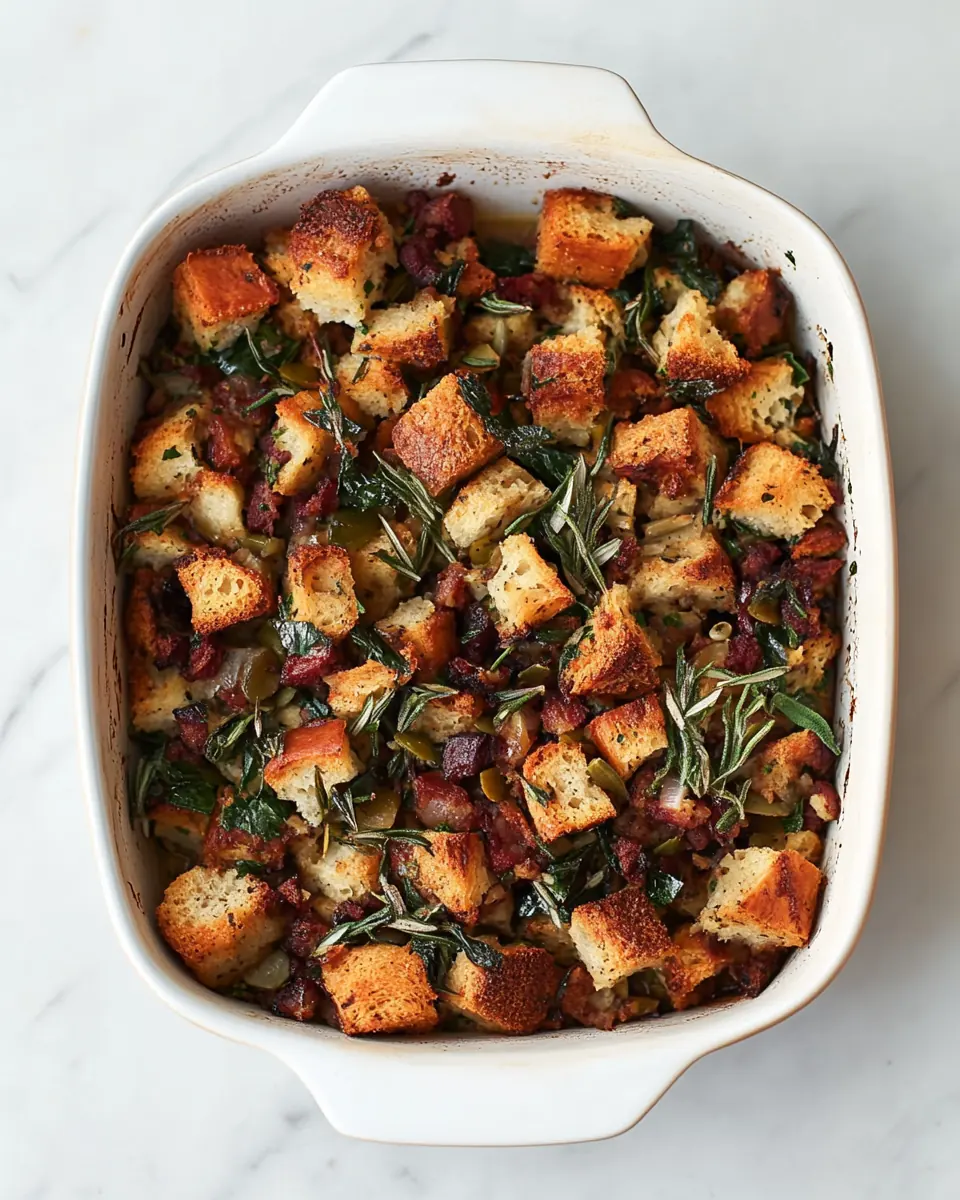
These ingredients are chosen to build layers of savoriness, herbaceousness, and a touch of sweet contrast. The star players are the bread and mushrooms, which provide structure and umami. Fresh herbs and olive oil round out the dish, while vegetable broth binds everything together. Each item pulls double duty, contributing flavor and texture to a cohesive whole.
- 6 tablespoons extra-virgin olive oil, divided: Enhance richness and aid sautéing with a fruity, peppery oil; reserve portions for browning vegetables and finishing the dish for added sheen and flavor. Use divided amounts to control cooking stages and prevent ingredients from drying out while adding moisture to the stuffing. Choose extra–virgin olive oil for its robust aroma that complements herbs and mushrooms.
- 1 cup coarsely chopped cipollini onions: Provide a sweet, mellow onion flavor with a tender bite when coarsely chopped; caramelize gently to develop natural sugars that balance savory components. Cipollini onions bring a glossy texture and subtle sweetness that lifts the overall stuffing profile across multiple layers. Chop coarsely to retain structure and pockets of flavor throughout the dish.
- 3 cups chopped & stemmed mushrooms, mix of shiitakes & creminis: Offer an earthy, umami-packed foundation using a mix of shiitakes and creminis for depth and textural contrast when chopped and stemmed. Sauté to concentrate flavors and release savory juices that coat bread cubes, boosting overall savory impact. Use a combination to achieve both meaty density and woodsy aromatics.
- 3 garlic cloves, minced: Deliver pungent, aromatic heat when minced to infuse the stuffing base during cooking; add toward the end of sautéing to avoid bitterness. Garlic creates savory complexity and enhances other herbs while melding with oils and mushrooms. Mince finely for even distribution and aroma release.
- 2 stalks celery, diced: Add crisp, aromatic backbone with diced celery that introduces freshness and a light vegetal crunch; sweat gently to soften without losing texture. Celery balances richer ingredients and provides necessary layering of savory notes and mouthfeel. Dice uniformly to ensure even cooking throughout the mixture.
- 1/4 cup chopped sage, plus 8 leaves for garnish: Introduce warm, slightly peppery herbal notes when chopped; incorporate into the stuffing to impart a classic, savory-sweet sage character. Use the measured amount for pronounced flavor and aromatic lift, folding into the mixture so leaves release oils without overpowering. Reserve extra leaves for garnish to reinforce the herb’s presence.
- 2 tablespoons minced rosemary: Bring a piney, resinous herbal intensity when minced; distribute evenly to complement sage and provide savory complexity. Rosemary stands up well to long cooking and deepens the aromatic profile of the stuffing. Mince finely to avoid woody bits and ensure the herb permeates the dish.
- 2 tablespoons balsamic vinegar: Contribute bright acidity and sweet-tart depth with tangy balsamic vinegar; splash in to balance richness and amplify savory-sweet contrasts. Use sparingly to avoid overpowering while tying together mushrooms, herbs, and bread. Add at deglazing stage to capture browned bits from the pan.
- 5 cups cubed crusty ciabatta + nine-grain bread: Supply bulk and absorbent texture with a mix of crusty ciabatta and nine–grain bread cubed to soak up flavors and hold moisture; use day-old bread for best results. Provide a chewy, slightly nutty bite that contrasts with tender vegetables and herbs. Cube uniformly to ensure even toasting and moisture distribution.
- 3 lacinato kale leaves, coarsely chopped or torn: Introduce sturdy leafy greens with a mild, slightly bitter note when coarsely chopped or torn; incorporate to add color, nutrients, and structural contrast. Lacinato kale holds up during baking and mingles with bread for a hearty mouthfeel. Remove tough ribs if needed and chop to bite-sized pieces for even distribution.
- 2 cups vegetable broth, plus more for reheating: Provide savory liquid and seasoning flexibility with vegetable broth; use as measured to moisten bread and create cohesive stuffing while adding umami. Keep additional broth on hand for reheating to restore moisture without altering texture. Select a low-sodium version to better control overall saltiness.
- 1/4 cup dried cranberries: Add concentrated bursts of sweet-tart flavor and chewy texture with dried cranberries; scatter through the mixture to create pleasant contrast against savory elements. Use sparingly for balanced sweetness that complements balsamic and herbs. Ensure even distribution so each bite has occasional bright fruitiness.
- Sea salt and freshly ground black pepper: Season and balance the dish with mineral salinity and warm heat from freshly ground black pepper; adjust to taste during and after cooking. Use sea salt to enhance natural flavors of vegetables and bread, taking care not to oversalt if using salted broth. Grind pepper fresh for maximum aroma and flavor lift.
How to Make Vegan Stuffing
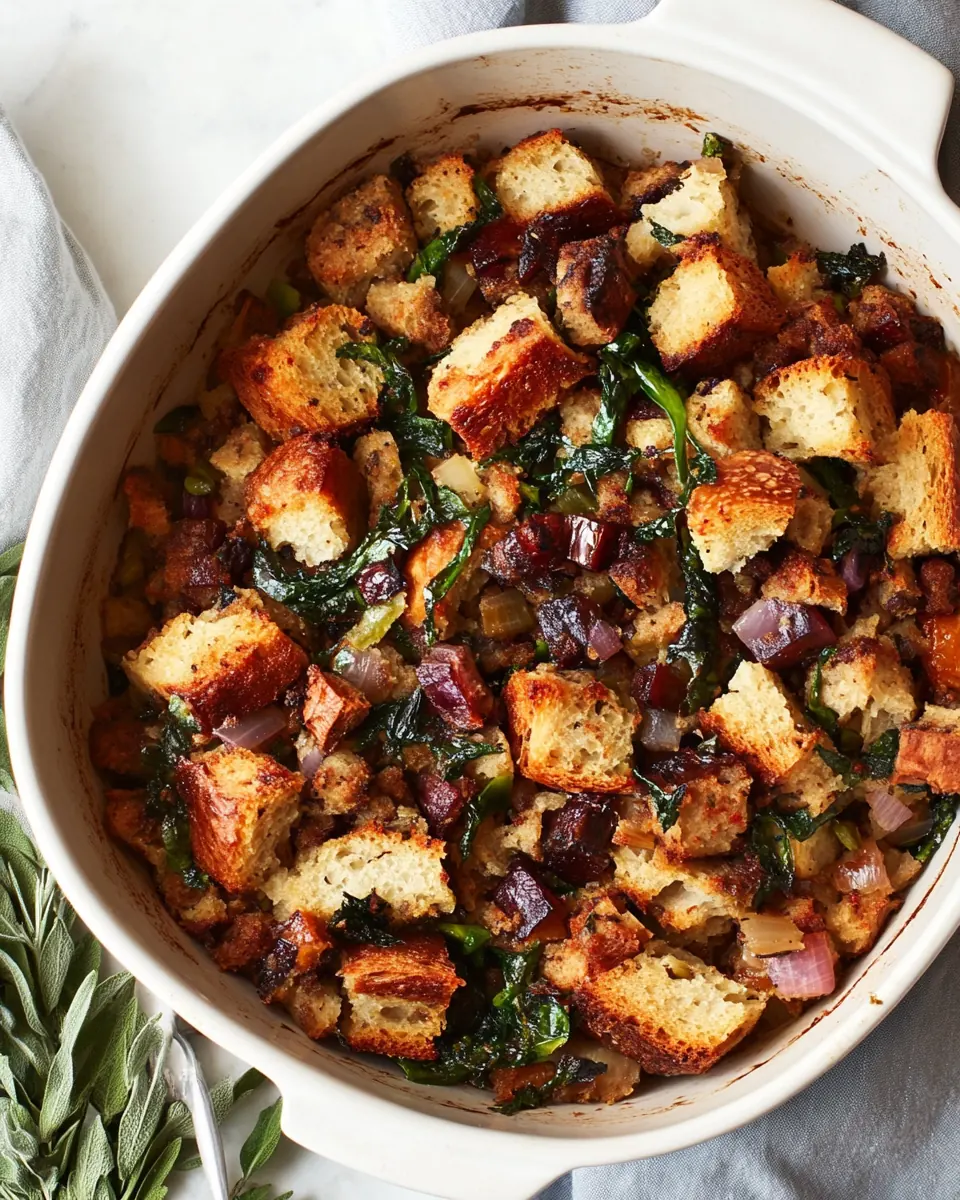
This stuffing is straightforward but rewards attention to detail. Below I expand each direction into sensory rich steps so you know what to look, smell, and feel for. Take your time with the sauté and the final bake to maximize aroma and texture.
- Preheat the oven to 350°F and grease an 8 x 12 or 9 x 13 casserole dish.: The warm oven sets the stage for even baking and a golden top. You should feel the mild heat in the kitchen as it comes up to temperature, and the greased pan will prevent sticking and help the edges crisp. This step ensures the casserole will heat through uniformly. A common mistake is skipping the greasing which can make serving difficult and lose those attractive browned edges.
- In a very large skillet, heat 2 tablespoons of the olive oil over medium heat. Add the onions, mushrooms, 1/2 teaspoon salt, and several grinds of fresh pepper, and let the mushrooms cook until they begin to soften, 5 to 8 minutes, stirring only occasionally. Add the garlic, celery, sage, and rosemary, and cook until everything is soft and the mushrooms are golden brown, 8-10 minutes.: As the oil warms you will notice a gentle shimmer, then the scent of cipollini onions softening and releasing sweetness. The mushrooms will exhale moisture then begin to brown, giving off a deeper, roasted aroma. Stirring only occasionally allows good caramelization, which builds flavor complexity. When you add the garlic and herbs, their fragrance should bloom immediately, perfuming the pan. If the pan is too crowded the mushrooms will steam instead of brown, so avoid overfilling, and scrape up any fond to keep that concentrated flavor in the mixture.
- Add the balsamic vinegar, stir, and scrape any bits off the bottom of the pan. Add the bread and the remaining 1/4 cup olive oil and toss to coat. Add the kale and cook until it begins to wilt, about 1 minute. Add 1 cup of the broth and stir.: The hiss as the vinegar hits the warm pan will release a toffee like aroma from the browned bits, which enriches the whole dish. Tossing in the cubed ciabatta allows each piece to pick up oil and pan flavors, while the quick wilt of kale keeps it bright and slightly tender. When you pour in the vegetable broth you should hear a soft simmer and see the bread soak up liquid, plumping slightly. If the bread becomes soggy and collapses, you may have added too much broth at once, so proceed gradually and stop when pieces feel moist but still hold some structure.
- Transfer to a casserole dish and pour the remaining 1 cup broth evenly over the stuffing.: As you move the mixture into the prepared dish you will catch steam and a mingling of aromas from herb, mushroom, and vinegar. Evenly pouring the remaining vegetable broth ensures uniform moisture so every corner bakes similarly. Press lightly with a spatula to settle the bread without compacting it to mush. A frequent error is packing too tightly which prevents the top from crisping, so aim for airy but joined pieces.
- Sprinkle with the dried cranberries, remaining whole sage leaves and bake for 20 minutes or until golden brown. Let sit for at least 15 minutes or until ready to serve.: During baking the top will brown and the edges will sizzle against the dish, releasing a nutty, toasted scent as the oil and breadcrumbs crisp. The dried cranberries will plump slightly, offering small bursts of sweetness. After removing from the oven allow it to rest, which helps juices settle so slices hold shape. Cutting into it too soon can make servings fall apart, so patience yields cleaner portions and better texture.
Pro Tips and Tweaks
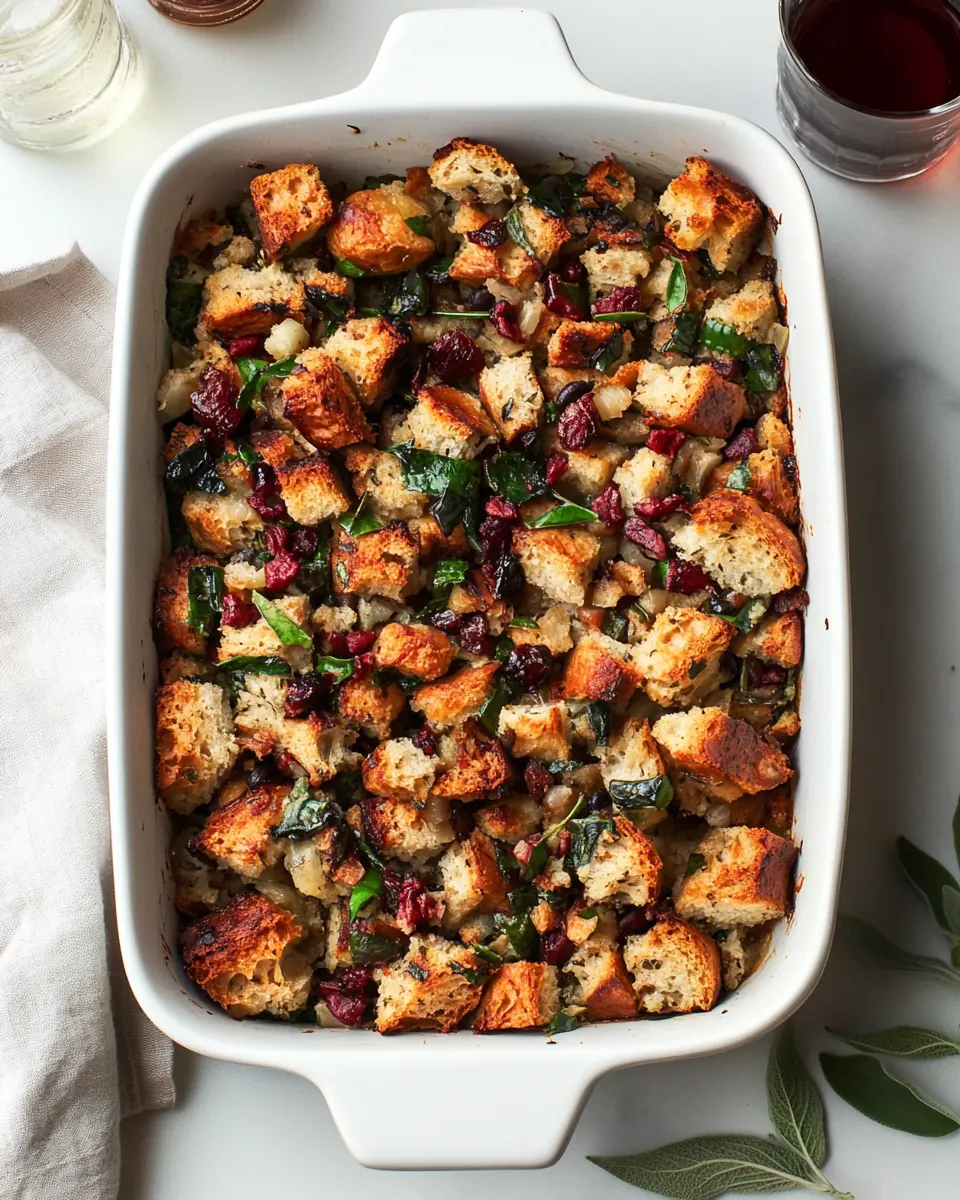
I like to think of these tips as small nudges that yield big results. They focus on timing, texture, and flavor balance so your Vegan Stuffing comes out reliably excellent every time.
- Choose sturdy bread — Crusty ciabatta or nine grain holds up to the broth and delivers toasted edges, which add essential texture to the dish.
- Brown the mushrooms well — Allow mushrooms to caramelize for the richest savory flavor, and avoid stirring constantly so they develop color rather than steaming.
- Measure herbs carefully — Fresh sage and rosemary are potent, so chop finely and use measured amounts to prevent overpowering the balance.
- Adjust broth gradually — Add liquid in stages and stop when the bread feels moist but not collapsed, because excess moisture ruins the desirable contrast of textures.
- Garnish with whole sage leaves — They add visual appeal and an extra herbal note, especially when roasted slightly in the oven before serving.
- Make ahead for convenience — Assemble and refrigerate, then bake when needed, which concentrates flavor and saves time on busy days.
Serve This Vegan Stuffing With
This dish pairs well with a variety of mains and sides, making it versatile across occasions. Whether you are serving a cozy family dinner or a holiday spread, think about contrast in texture and brightness to complement the stuffing.
- Family dinners — Serve alongside roasted vegetables and a simple grain salad for a balanced plate that highlights the stuffing as a hearty side.
- Holiday feasts — Place it on the table with roasted root vegetables and a citrus forward salad to cut through the richness, making it a natural fit for Thanksgiving.
- Vegetarian mains — Offer with baked squash or a lentil loaf to create a satisfying meat free meal where the stuffing can shine as a co star.
- Make ahead and reheat — Store covered in the fridge and add a splash of vegetable broth before reheating to refresh moisture and texture.
- Seasonal pairings — In fall serve with apple slices or a cranberry chutney to echo the dried cranberries and enhance the seasonal profile.
- Serving tips — Spoon into warmed bowls to keep servings hot, and offer extra broth on the side for guests who prefer a moister bite.
FAQ
Conclusion
This Vegan Stuffing stands out for its combination of earthy mushrooms, aromatic herbs, and textural contrast between crisped bread and tender interior. The recipe is approachable yet impressive, ideal for holidays or a comforting everyday meal. Give it a try—you might find it becomes a new staple on your rotation, bringing flavorful satisfaction to the table with minimal fuss.
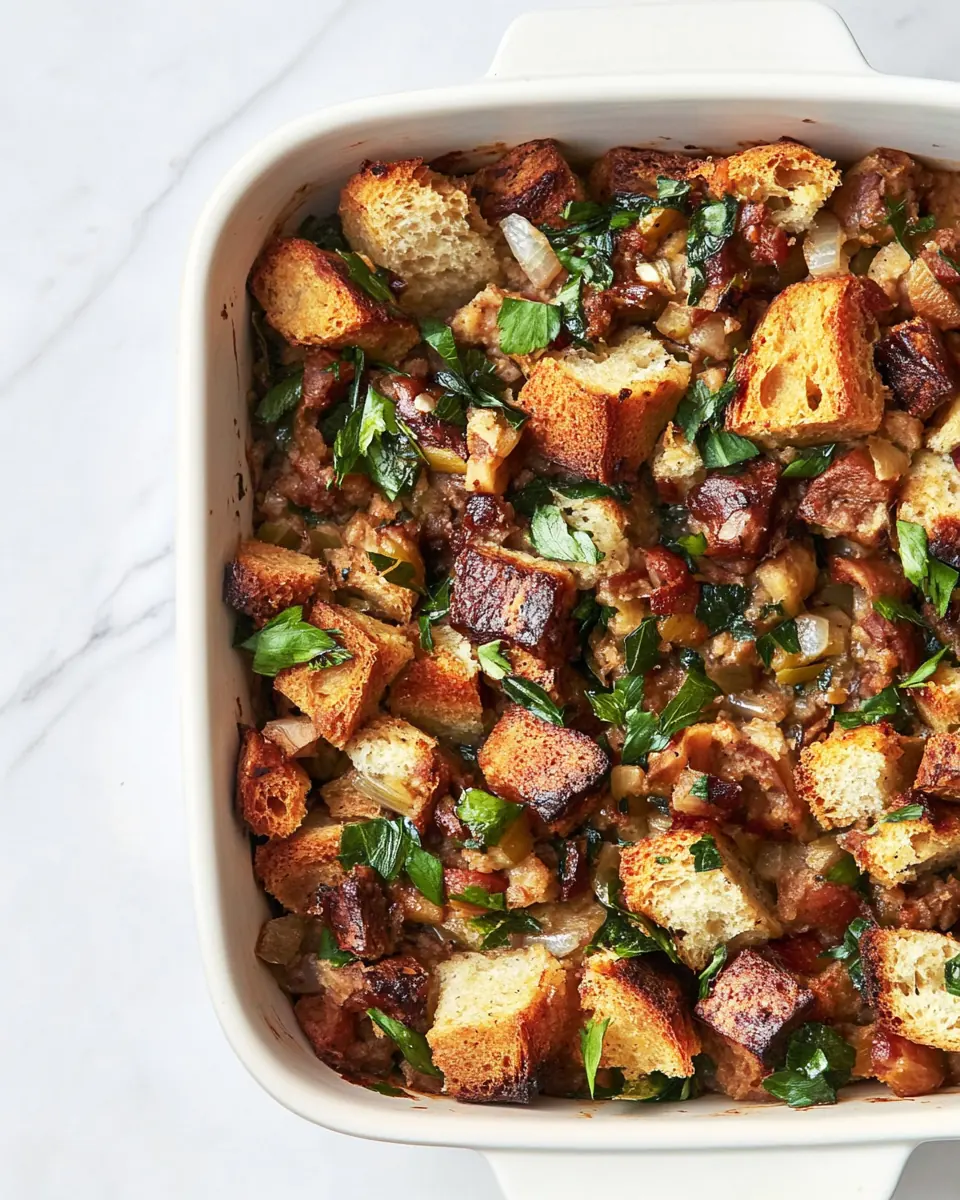
Vegan Stuffing
Ingredients
Equipment
Method
- Preheat the oven to 350°F and grease an 8 x 12 or 9 x 13 casserole dish.: The warm oven sets the stage for even baking and a golden top. You should feel the mild heat in the kitchen as it comes up to temperature, and the greased pan will prevent sticking and help the edges crisp. This step ensures the casserole will heat through uniformly. A common mistake is skipping the greasing which can make serving difficult and lose those attractive browned edges.
- In a very large skillet, heat 2 tablespoons of the olive oil over medium heat. Add the onions, mushrooms, 1/2 teaspoon salt, and several grinds of fresh pepper, and let the mushrooms cook until they begin to soften, 5 to 8 minutes, stirring only occasionally. Add the garlic, celery, sage, and rosemary, and cook until everything is soft and the mushrooms are golden brown, 8-10 minutes.: As the oil warms you will notice a gentle shimmer, then the scent of cipollini onions softening and releasing sweetness. The mushrooms will exhale moisture then begin to brown, giving off a deeper, roasted aroma. Stirring only occasionally allows good caramelization, which builds flavor complexity. When you add the garlic and herbs, their fragrance should bloom immediately, perfuming the pan. If the pan is too crowded the mushrooms will steam instead of brown, so avoid overfilling, and scrape up any fond to keep that concentrated flavor in the mixture.
- Add the balsamic vinegar, stir, and scrape any bits off the bottom of the pan. Add the bread and the remaining 1/4 cup olive oil and toss to coat. Add the kale and cook until it begins to wilt, about 1 minute. Add 1 cup of the broth and stir.: The hiss as the vinegar hits the warm pan will release a toffee like aroma from the browned bits, which enriches the whole dish. Tossing in the cubed ciabatta allows each piece to pick up oil and pan flavors, while the quick wilt of kale keeps it bright and slightly tender. When you pour in the vegetable broth you should hear a soft simmer and see the bread soak up liquid, plumping slightly. If the bread becomes soggy and collapses, you may have added too much broth at once, so proceed gradually and stop when pieces feel moist but still hold some structure.
- Transfer to a casserole dish and pour the remaining 1 cup broth evenly over the stuffing.: As you move the mixture into the prepared dish you will catch steam and a mingling of aromas from herb, mushroom, and vinegar. Evenly pouring the remaining vegetable broth ensures uniform moisture so every corner bakes similarly. Press lightly with a spatula to settle the bread without compacting it to mush. A frequent error is packing too tightly which prevents the top from crisping, so aim for airy but joined pieces.
- Sprinkle with the dried cranberries, remaining whole sage leaves and bake for 20 minutes or until golden brown. Let sit for at least 15 minutes or until ready to serve.: During baking the top will brown and the edges will sizzle against the dish, releasing a nutty, toasted scent as the oil and breadcrumbs crisp. The dried cranberries will plump slightly, offering small bursts of sweetness. After removing from the oven allow it to rest, which helps juices settle so slices hold shape. Cutting into it too soon can make servings fall apart, so patience yields cleaner portions and better texture.
Notes
- Choose sturdy bread — Crusty ciabatta or nine grain holds up to the broth and delivers toasted edges, which add essential texture to the dish.
- Brown the mushrooms well — Allow mushrooms to caramelize for the richest savory flavor, and avoid stirring constantly so they develop color rather than steaming.
- Measure herbs carefully — Fresh sage and rosemary are potent, so chop finely and use measured amounts to prevent overpowering the balance.
- Adjust broth gradually — Add liquid in stages and stop when the bread feels moist but not collapsed, because excess moisture ruins the desirable contrast of textures.
- Garnish with whole sage leaves — They add visual appeal and an extra herbal note, especially when roasted slightly in the oven before serving.
- Make ahead for convenience — Assemble and refrigerate, then bake when needed, which concentrates flavor and saves time on busy days.