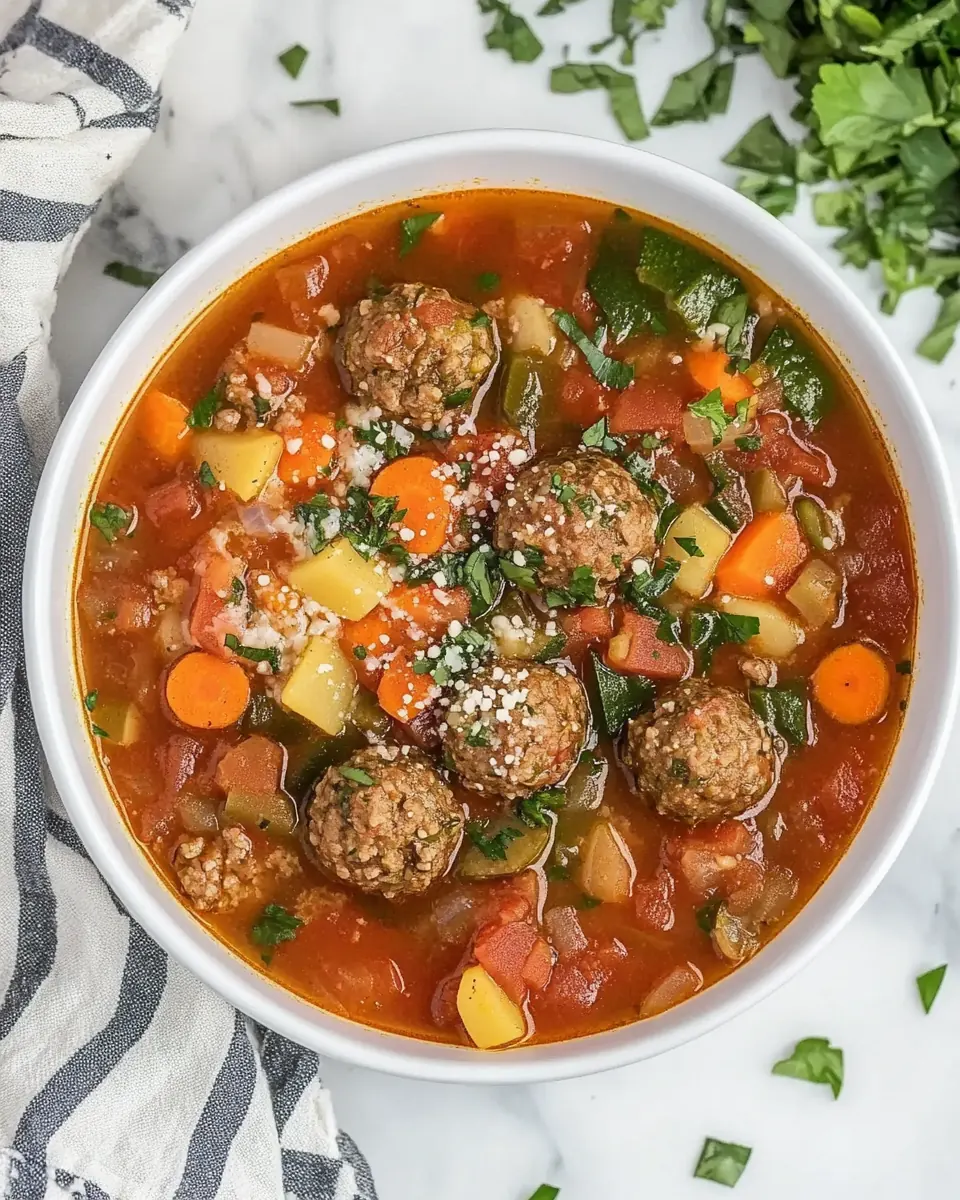
Vegetable Meatball Soup
Vegetable Meatball Soup is the kind of bowl I reach for when the weather outside turns crisp and I want something that feels like a warm hug without a lot of fuss.
I still remember the first time I made this soup for a friend who had just come in from a long day. We started with a small pot on the stove, and by the time the aroma of simmering tomatoes and herbs filled the kitchen, conversation slowed and everyone leaned in. The meatballs floated like little islands among tender carrots and celery, and the ditalini pasta gave the broth a playful texture that everyone loved. That evening stuck with me because it was simple, satisfying, and honest food that warmed more than the body.
Over the years I refined the method so the flavors feel layered and homey. I like to brown the meatballs just enough to get that caramelized note, then let them finish cooking in the broth where they absorb tomato and herb flavors. Using a parmesan rind in the pot is a small trick I swear by, it deepens the savory base without extra work. When guests ask for seconds, I always smile, because this recipe is forgiving and crowd friendly.
Recipe Snapshot
45 mins
15 mins
30 mins
Medium
350 kcal
Italian
Gluten-Free, Paleo
Soups
Large skillet, Stock pot, Sheet pan, Parchment paper
The Beauty of This Vegetable Meatball Soup
Comfort that feels familiar
I love how Vegetable Meatball Soup tastes like a classic family recipe, without needing a long ingredient list. Each spoonful brings together meaty richness and bright, vegetal notes. The broth is soothing, and the little meatballs offer a satisfying bite that appeals to everyone at the table.
Layered, no fuss flavor
What stands out to me is how small techniques make a big difference. Browning the ground beef gives a toasty aroma, while adding a parmesan rind to simmer enriches the broth naturally. These small moves are why I keep coming back to this recipe when I want maximum flavor with minimal ceremony.
Weeknight friendly and flexible
I’ve served this on busy weeknights and at casual gatherings, and it always fits the moment. The recipe is forgiving about timing and can be pulled together with pantry staples like tomatoes, tomato paste, and broth. If you need to tweak quantities or cook the meatballs differently, the soup still holds up, which makes it practical for real life.
Textural balance
The mix of tender carrots, crunchy-sweet celery, and al dente ditalini pasta creates a pleasing contrast. Spinach stirred in at the end brightens the bowl, adding a fresh note that keeps the soup from feeling heavy. I love that contrast of soft and slightly chewy in every bite.
Kid friendly, grown up enough for guests
This recipe bridges the gap between childhood favorites and adult palates. The seasoning is approachable, and the little meatballs are fun to eat. At the same time the broth is complex enough that grown ups notice the depth of flavor, especially if you simmer with a parmesan rind.
What to Gather for Vegetable Meatball Soup
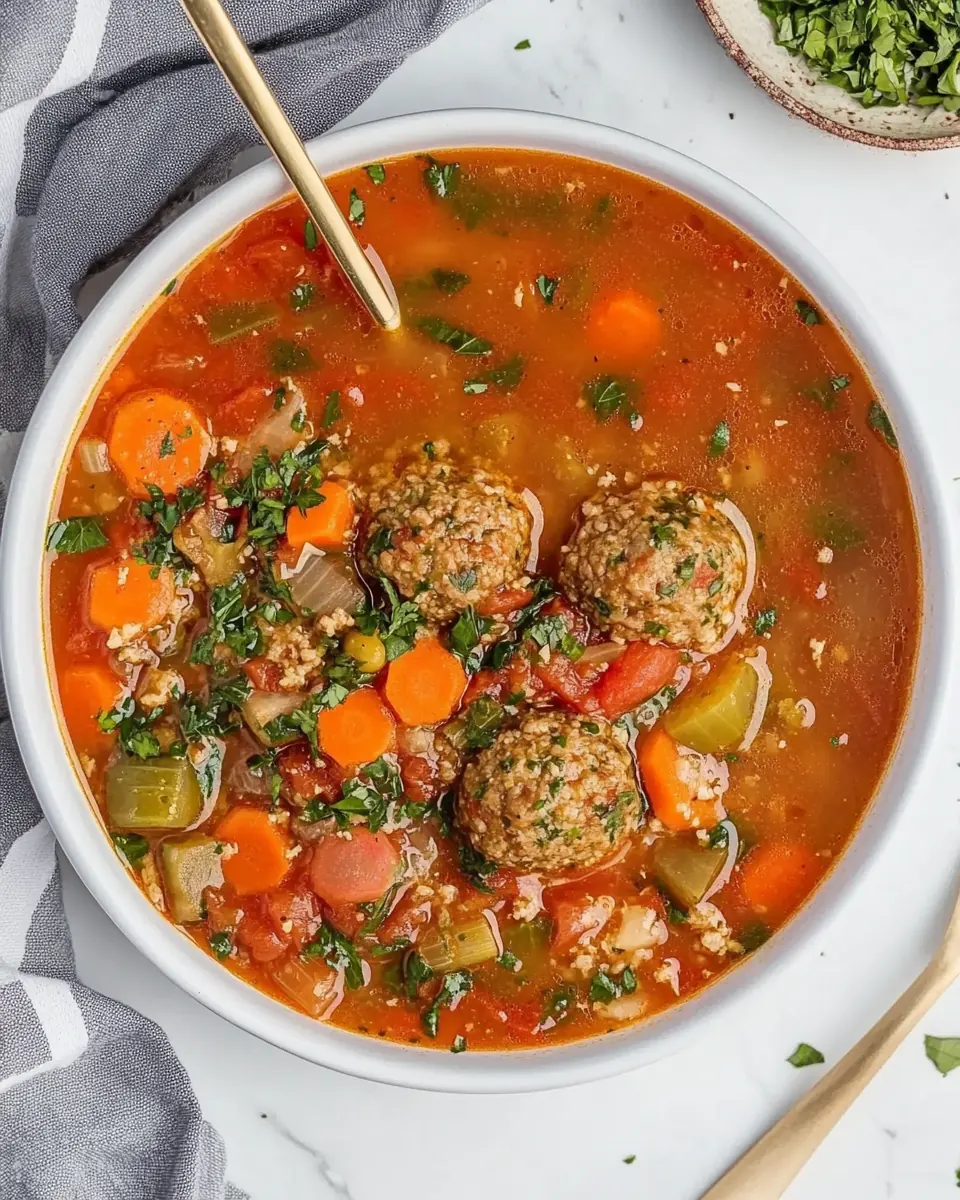
These ingredients combine classic soup building blocks and comforting meatball flavors. I think of the broth and tomatoes as the supporting cast that frames the star players, the meatballs and pasta. Aromatics like onion and garlic give the base its savory backbone, while herbs and parmesan lend depth. Together they create a layered, hearty bowl that is both nourishing and unpretentious.
- 1 lb ground beef, (about 85% lean): Provide rich, flavorful protein and the base for meatballs; browns when seared and combines with other mix-ins to form cohesive meatball texture. Adds savory fat and umami that enriches the soup broth while contributing tender bite after cooking. Balances moisture and structure when mixed with cheese, breadcrumbs, and egg.
- 1/3 c parmesan cheese: Add nutty, salty sharpness and helps bind meatball mixture while enhancing savory depth; melts slightly when mixed and contributes a concentrated umami note. Sprinkle into mixture for flavor balance and use rind in broth for an extra cheesy dimension during simmering.
- 1/2 c breadcrumbs: Contribute absorbent binding power to meatballs, helping retain shape and absorb excess moisture; provide slight textural contrast when mixed. Use fine or seasoned breadcrumbs for consistent results and to prevent meatballs from becoming dense.
- 2 tsp Italian seasoning: Impart classic herbaceous Italian flavor to meatball mixture, blending oregano, basil, thyme, and rosemary notes; enhances overall aroma and ties components together. Use measured amount to avoid overpowering delicate broth vegetables.
- 1/4 tsp crushed red pepper: Introduce gentle heat and a puckering, spicy kick that brightens the meatball flavor without overwhelming other seasonings. Use sparingly to control the heat level of the finished soup.
- 1 lightly beaten egg: Bind meatball ingredients and add moisture, helping proteins and binders adhere while contributing silkier texture; whisk lightly for even distribution. Use just enough to hold mixture together without making meatballs too soft.
- 1 T fresh parsley, chopped: Provide fresh herb aroma and a bright, slightly peppery pop that livens the meatball mixture and finished soup; fold in chopped leaves near mixing to preserve freshness. Adds visual contrast and subtle earthy flavor.
- 2 3 garlic cloves, minced: Deliver pungent, aromatic flavor that supports both meatballs and broth; mince finely to disperse evenly and avoid large pockets of raw garlic. Sauté briefly where appropriate to mellow sharpness and release sweet, fragrant oils.
- 1/2 tsp sea salt: Season the meatball mixture with balanced saline flavor to enhance natural beef taste and overall seasoning profile. Measure carefully to avoid oversalting, especially given broth and cheese contributions.
- 1/2 tsp cracked pepper: Contribute warm peppery spice to the meatballs for subtle heat and complexity; crack fresh for brighter aroma and flavor. Adjust amount to taste to maintain balance with crushed red pepper and other spices.
- 4 carrots, chopped: Provide crisp-sweet vegetal body and aromatic sweetness when simmered in the soup; chop uniformly for even cooking. Adds natural sweetness and texture that complements savory meatballs and broth.
- 3 4 celery, chopped: Offer fresh, aromatic stalky flavor and slight crunch when simmered; chop to similar size as carrots for consistent texture. Releases savory background notes that support the soup's overall vegetable profile.
- 1 yellow onion, diced: Add savory sweetness and aromatics to the soup base; sauté diced onion until translucent to build depth and complexity. Forms part of the classic mirepoix that underpins flavor in the finished broth.
- 3 cans tomatoes (approx. 15 oz. each), (I use 2 diced, 1 crushed): Deliver bright tomato flavor, acidity, and body to the soup; use a mix of diced and crushed textures to create varied mouthfeel. Provides the central tomato backbone that balances richness from meatballs and cheese.
- 1 parmesan rind: Contribute deep, concentrated umami and mellow Parmesan character when simmered in the broth; tuck rind into pot to infuse a subtle cheesy richness. Remove rind before serving to avoid chewy pieces while retaining flavor.
- 8 c chicken or beef broth, low sodium: Provide salty, savory liquid foundation that simmers the soup and cooks pasta; choose low sodium to control final seasoning. Adds depth and allows flavors from meatballs, vegetables, and tomatoes to meld.
- 2 3 garlic cloves, minced: Add fresh garlic aroma and layered savory complexity to the broth when added during cooking; mince to release oils quickly. Use additional cloves here to amplify garlic presence distinct from the meatball mix.
- 1 T Italian seasoning: Introduce Italian herb blend to the simmering soup for continuity with meatball seasoning and to reinforce classic flavors. Sprinkle in early to allow herbs to slowly release essential oils into the broth.
- 1/2 tsp sea salt: Season the broth with measured salt to enhance flavor without overpowering; low-sodium broth makes this step important for final taste balance. Taste and adjust during cooking to achieve desired salinity.
- 1/2 tsp pepper: Provide general peppery seasoning to the soup with a warm, earthy bite; grind fresh for best aroma and adjust to preference. Complements the other spices and lifts the overall flavor profile.
- 1 c ditalini pasta, uncooked: Add tender bite and absorbent starch that cooks in the broth, giving body and substance to the soup; choose ditalini for small, comforting shapes. Cook to al dente so pasta remains pleasant when reheated and doesn't over-swell.
- 2 cups fresh baby spinach: Introduce bright, tender leafy greens that wilt into the hot soup, adding freshness and nutritional value; stir in near the end to preserve texture. Complements tomato acidity and provides color contrast.
- 3 T tomato paste: Provide concentrated tomato intensity and thickening power to the broth; dissolve into base to deepen color and boost savory tomato flavor. Use sparingly and cook briefly to remove raw edge and integrate smoothly.
How to Cook Vegetable Meatball Soup
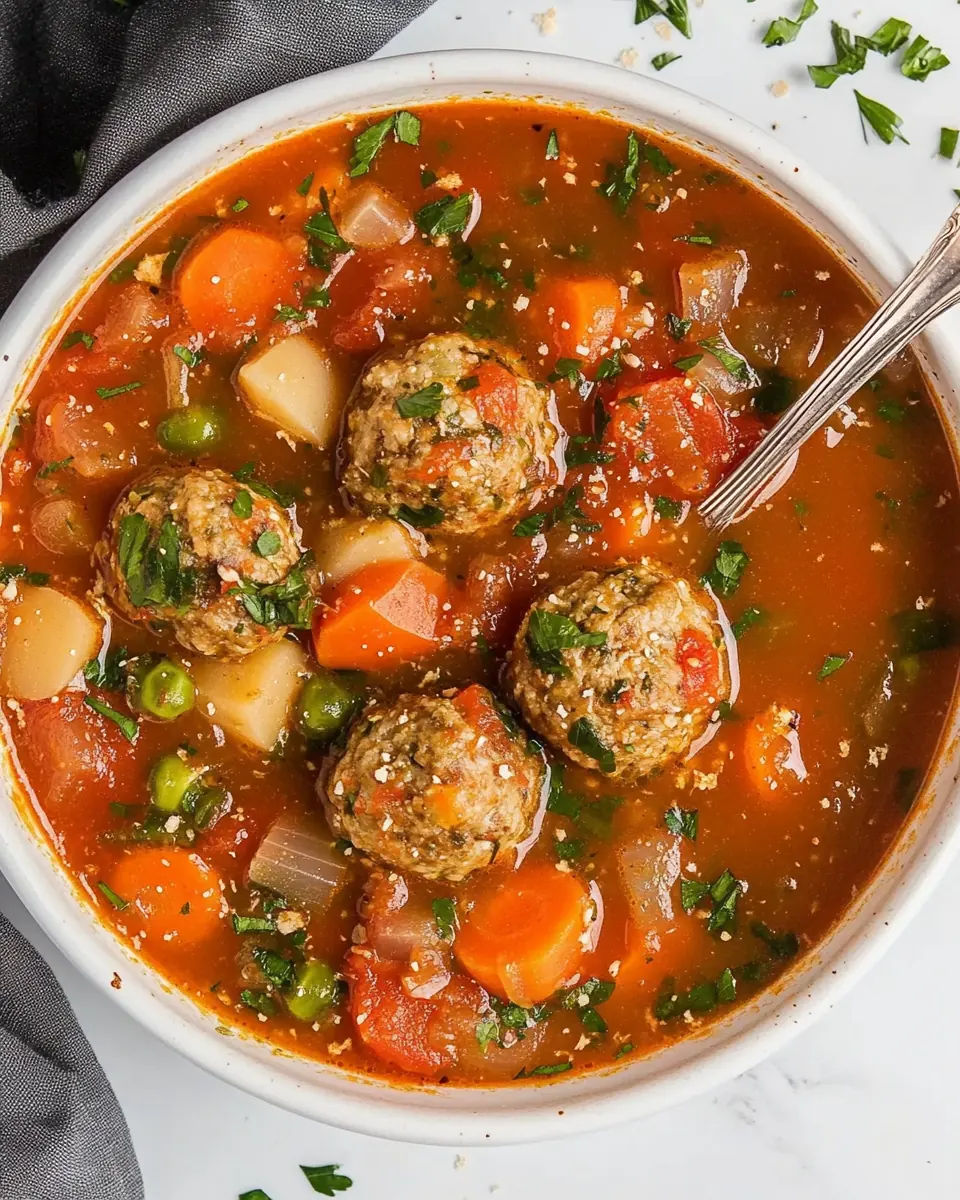
I approach the cooking as a steady, comforting rhythm: a little browning, a solid sauté, and a patient simmer where flavors marry. Below are the steps rewritten from the original directions, and I expand each one with sensory detail, technique notes, and troubleshooting. Read them slowly and enjoy the process.
- Prepare the meatballs: start out by adding all the meatball ingredients into a medium bowl. Use clean hands to combine the ingredients until fully combined. Roll the meatball mixture into small balls (approximately 3/4 inch in size is ideal). You will likely get about 50-60 meatballs depending on the size you make them.: start out by adding all the meatball ingredients into a medium bowl. : The bowl should feel cool to the touch while you add the ground beef , parmesan cheese , breadcrumbs , Italian seasoning , crushed red pepper , the lightly beaten egg , fresh parsley , minced garlic , sea salt and cracked pepper . As the ingredients meet, you will notice the cheese and breadcrumbs begin to absorb moisture, the parsley gives little green flecks, and the egg acts like an invisible glue. Use clean hands and fold gently, the texture should become cohesive but not dense. If the mixture feels tacky yet holds its shape, you are on track. A common mistake is overmixing which compresses proteins and yields a firm, rubbery meatball. Stop as soon as the components are combined, the surface should be slightly glossy from the egg.
- Cook the meatballs stovetop: heat a large skillet to medium-high heat. Add a drizzle of olive oil and when glistening, add the meatballs in batches to brown the outsides, turning once or twice for about 3-4 minutes. The meatballs do not have to be fully cooked as they can cook the rest of the way in the soup. Remove and set aside.: While you press and fold the mixture, feel for uniformity, the breadcrumbs should be integrated and no large pockets of egg or cheese should remain. The mixture will give slightly under pressure, and you should smell the garlic and herbs coming forward. If the aroma of raw garlic is sharp, let the mixture rest briefly in the fridge to mellow flavors and make shaping easier. A pitfall here is working too long which tightens the meat; keep your motions deliberate and minimal.
- To broil: Line the meatballs on a parchment paper lined sheet pan. Broil on high for about 5-7 minutes or until the outside of the meatballs are browned, but not cooked through just yet. Remove from the oven and set aside.: As you roll, watch for consistent size which helps even cooking later in the soup. The meatballs should feel compact but not hard, with a smooth exterior and no crumbling edges. Place them on a tray lined with parchment to prevent sticking. If they are too sticky to roll, wet your hands slightly to smooth the surface. Rolling too large will increase cooking time and change the meatball to soup ratio.
- Prepare the Soup: While the meatballs cook, add a drizzle of olive oil to a heated stock pot or dutch oven pot. Add carrots, onion and celery and sauté for about 3-4 minutes or until the onions become translucent.: Counting them as you go helps forecast how many will fit in your skillet and sheet pan. The sight of dozens of tiny meatballs is satisfying, and they will shrink slightly as they brown. If you end up with too many, freeze extras on a tray for another meal. A common oversight is assuming uniform shrinkage; remember size affects cooking time so adjust later steps if your batch size varies broadly.
- Add the broth, tomatoes, Italian seasoning, garlic, salt and pepper and parmesan rind. Set heat to medium and simmer until the carrots have softened and the broth comes to a low boil. Adjust the heat as needed to medium or medium-high to keep a low boil.: heat a large skillet to medium-high heat. : The pan should be hot enough that a few drops of water sizzle and evaporate. Add a drizzle of olive oil and when it shimmers, the surface will look slick and slightly rippled. Add the meatballs in batches so they have room to brown. You should hear a steady sizzle as the exterior sears, creating browned bits that translate to deep flavor. Turn the meatballs once or twice for about 3 to 4 minutes to develop color on multiple sides. They will not be fully cooked through yet, which is intentional because they will finish in the soup. Crowding the pan lowers the temperature and causes steaming rather than browning, so work in batches for the best crisp, caramelized crust.
- Add in the meatballs, spinach and ditalini pasta. Simmer for about 10 minutes or until the pasta is al dente. Remove from heat, stir in the tomato paste and allow to cool several minutes before serving. Remove the parmesan rind before serving.: When you remove them, they should be nicely browned but still slightly soft in the center. This partial cooking concentrates flavor on the exterior while keeping the interior tender. If you overcook them here, they risk drying out once simmered; undercooking is fine as the simmer will safely bring them up to temperature.
- Remove and set aside.: Transfer the browned meatballs to a plate so the skillet remains available for making the soup base. The meatballs will continue to cool slightly and firm a touch, which makes handling easier when moving to a sheet pan or direct to the pot. Leaving them in the pan can lead to overcooking from residual heat, so clear them away promptly. Be careful not to leave browned bits burning in the pan, which can taste bitter in the final soup.
- To broil: Line the meatballs on a parchment paper lined sheet pan. : If you choose the broil finish, space the meatballs evenly so hot air circulates. Place the pan under a hot broiler and watch as the exteriors take on deeper color in just a few minutes. The visual cue is a more uniform browning and occasionally small blistered spots. Broiling adds an extra texture layer and a slightly smoky aroma which I love. Keep a close eye because broilers work quickly and can go from browned to burnt in moments.
- Broil on high for about 5-7 minutes or until the outside of the meatballs are browned, but not cooked through just yet.: You want a rich golden exterior without losing juiciness inside. The heat will caramelize proteins and fats, offering a roasted note. Rotate the pan if your broiler has hot spots to ensure even browning. A typical mistake is walking away and allowing the tops to char, creating an acrid flavor rather than a toasty one.
- Remove from the oven and set aside.: Once broiled, let them rest briefly so juices redistribute and the exterior firms slightly. This rest time helps when transferring them into the soup as the meatballs will hold together better. If they seem very hot, allow an extra minute so you do not splash boiling fat when adding them to the pot.
- Prepare the Soup: While the meatballs cook, add a drizzle of olive oil to a heated stock pot or dutch oven pot. : The oil should shimmer but not smoke, then add the chopped carrots , diced onion and chopped celery . As they hit the pan you will hear an initial sizzle, followed by a gentle softening and a sweet aroma from the onions. Sauté about 3 to 4 minutes until the onion becomes translucent and the vegetables begin to give. This step builds the aromatic base; undercooking here yields a flat broth, while overcooking toward deep brown will change the flavor toward caramelized notes.
- Add the broth, tomatoes, Italian seasoning, garlic, salt and pepper and parmesan rind.: Pour in the broth and canned tomatoes , then stir in the additional Italian seasoning , minced garlic , sea salt , and pepper . Nestle the parmesan rind into the liquid. As the pot warms, steam will carry tomato fragrance and an herbal perfume from the seasoning. The rind will slowly release savory umami, enriching the liquid. A misstep is adding too much salt early; because flavors concentrate while simmering, season moderately and adjust later.
- Set heat to medium and simmer until the carrots have softened and the broth comes to a low boil.: Maintain a gentle rolling simmer rather than a furious boil, this keeps the broth clear and allows flavors to meld. Watch for small bubbles breaking the surface and for the carrots to become tender when pierced with a fork. Adjust heat between medium and medium-high to maintain this low boil. Boiling too hard will make the broth cloudy and can break down delicate components prematurely.
- Adjust the heat as needed to medium or medium-high to keep a low boil.: This is a balancing act where you control simmer intensity. The goal is a lively but controlled simmer that cooks the carrots through while coaxing flavor from the tomatoes and rind. If the pot threatens to foam or the meatballs jostle too violently, lower the heat to avoid agitation that could disintegrate the pasta later.
- Add in the meatballs, spinach and ditalini pasta.: Gently slide the reserved browned meatballs into the pot, followed by the ditalini pasta and fresh baby spinach . The addition introduces savory, tender components and the pasta will soak up some of the broth as it cooks. The spinach will wilt quickly into deep green ribbons. Stir carefully to avoid breaking the meatballs, and keep the simmer gentle so the pasta cooks without becoming mushy.
- Simmer for about 10 minutes or until the pasta is al dente.: During these minutes the soup becomes cohesive, with the broth tasting fuller as starch from the pasta leaches slightly. You will hear a low bubbling and see the pasta plump; when the pasta yields to a small bite but still has a slight chew, it is al dente. Overcooking here is the most common error, leading to broken-down pasta and a gummy texture. Pull the pot off heat a touch early if you expect residual cooking.
- Remove from heat, stir in the tomato paste and allow to cool several minutes before serving.: Stirring in the tomato paste off heat deepens the tomato presence and slightly thickens the broth without needing extra cooking. The steam and residual warmth will meld the paste in a minute or two. Let the soup rest so flavors settle and the soup is safe to eat. A mistake is adding the paste at the start which can cause an overly concentrated, caramelized tomato flavor instead of a fresh finish.
- Remove the parmesan rind before serving.: Fish out the rind with tongs or a spoon, it will have softened and imparted a rich savory note to the broth. Leaving the rind in the bowl is unpleasant texturally, so be sure to discard it. If you miss it, warn guests to watch for the chewy piece.
Expert Tips about Vegetable Meatball Soup
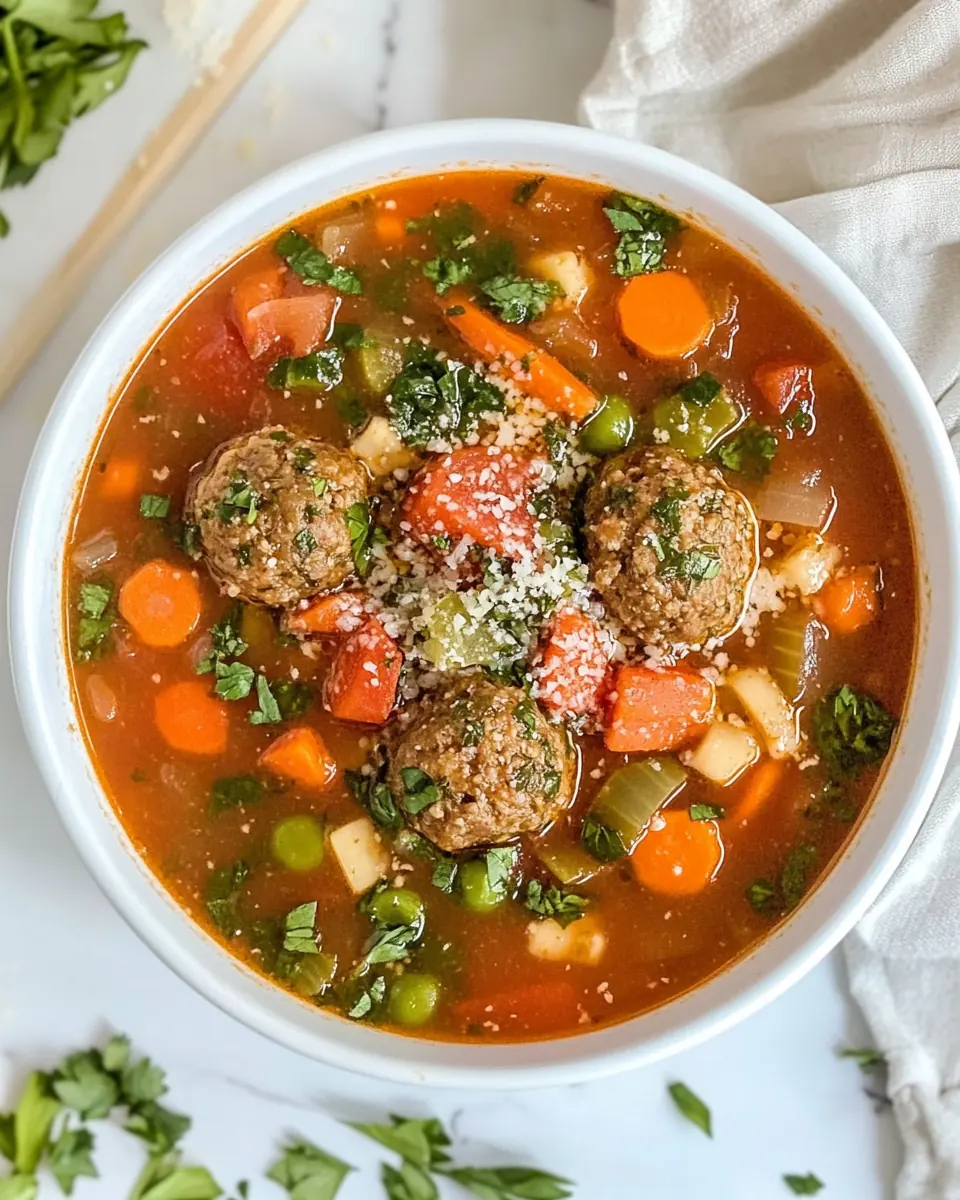
I keep these tips close when making Vegetable Meatball Soup because they preserve texture, build flavor, and prevent common pitfalls. Below are practical pointers I use every time, expanded into full tips to guide you through seasoning, timing, and finishing.
- Chill the mixture: After combining the meatball ingredients, refrigerate for at least 10 minutes to help the mixture bind and make rolling easier; this prevents dense meatballs from overworked proteins.
- Brown for flavor: Sear meatballs in a hot skillet until a deep golden crust forms, those browned bits are flavor engines that translate to the broth when the meatballs finish cooking in the soup.
- Use a parmesan rind: Toss a parmesan rind in the pot while simmering to naturally enrich the soup, it adds savory depth without extra seasoning work.
- Control pasta timing: Add ditalini pasta late in the simmer and pull early if you expect leftovers, pasta continues to soften as the soup sits and can become mushy if overcooked.
- Low sodium broth: Start with low sodium broth so you can adjust salt at the end, canned tomatoes and parmesan can quickly raise salinity during simmering.
- Finish with tomato paste off heat: Stir in tomato paste after removing from heat for a brighter, less caramelized tomato finish that rounds the broth.
Serving This Vegetable Meatball Soup
This soup is versatile and comforting, perfect for weeknight dinners, casual lunches, or cozy winter evenings. Serve it with simple accompaniments and a relaxed table, and it transforms into a meal that feeds both body and conversation.
- Family dinner: Ladle piping hot soup into bowls so everyone can dig in; the small meatballs make this ideal for little hands and adults alike.
- Casual guests: Offer a basket of crusty bread to sop up the broth, or pre-slice bread for quick serving so guests can customize portions.
- Leftovers and storage: Cool soup completely before refrigerating in airtight containers; store without pasta for longer shelf life, add fresh ditalini pasta when reheating.
- Seasonal pairing: This warms up winter nights nicely and works for transitional months when you want heartiness without heaviness from rich gravies.
- Occasions: Serve at a casual supper, during Ramadan Iftar as a warming starter, or bring to a potluck since it travels well and feeds a crowd.
- Presentation: Garnish bowls with a little extra grated parmesan and a few torn parsley leaves for color and a fresh finish.
FAQ
Conclusion
This Vegetable Meatball Soup is special because it balances cozy, meaty comfort with bright vegetable notes, creating a bowl that nourishes and satisfies. I encourage you to try it on a chilly evening, invite a friend, and let the kitchen fill with the savory aroma of simmering tomatoes and herbs. It is forgiving, approachable, and consistently brings people together, which is exactly why I love making it again and again.
Vegetable Meatball Soup
Ingredients
Equipment
Method
- Prepare the meatballs: start out by adding all the meatball ingredients into a medium bowl. Use clean hands to combine the ingredients until fully combined. Roll the meatball mixture into small balls (approximately 3/4 inch in size is ideal). You will likely get about 50-60 meatballs depending on the size you make them.: start out by adding all the meatball ingredients into a medium bowl. : The bowl should feel cool to the touch while you add the ground beef , parmesan cheese , breadcrumbs , Italian seasoning , crushed red pepper , the lightly beaten egg , fresh parsley , minced garlic , sea salt and cracked pepper . As the ingredients meet, you will notice the cheese and breadcrumbs begin to absorb moisture, the parsley gives little green flecks, and the egg acts like an invisible glue. Use clean hands and fold gently, the texture should become cohesive but not dense. If the mixture feels tacky yet holds its shape, you are on track. A common mistake is overmixing which compresses proteins and yields a firm, rubbery meatball. Stop as soon as the components are combined, the surface should be slightly glossy from the egg.
- Cook the meatballs stovetop: heat a large skillet to medium-high heat. Add a drizzle of olive oil and when glistening, add the meatballs in batches to brown the outsides, turning once or twice for about 3-4 minutes. The meatballs do not have to be fully cooked as they can cook the rest of the way in the soup. Remove and set aside.: While you press and fold the mixture, feel for uniformity, the breadcrumbs should be integrated and no large pockets of egg or cheese should remain. The mixture will give slightly under pressure, and you should smell the garlic and herbs coming forward. If the aroma of raw garlic is sharp, let the mixture rest briefly in the fridge to mellow flavors and make shaping easier. A pitfall here is working too long which tightens the meat; keep your motions deliberate and minimal.
- To broil: Line the meatballs on a parchment paper lined sheet pan. Broil on high for about 5-7 minutes or until the outside of the meatballs are browned, but not cooked through just yet. Remove from the oven and set aside.: As you roll, watch for consistent size which helps even cooking later in the soup. The meatballs should feel compact but not hard, with a smooth exterior and no crumbling edges. Place them on a tray lined with parchment to prevent sticking. If they are too sticky to roll, wet your hands slightly to smooth the surface. Rolling too large will increase cooking time and change the meatball to soup ratio.
- Prepare the Soup: While the meatballs cook, add a drizzle of olive oil to a heated stock pot or dutch oven pot. Add carrots, onion and celery and sauté for about 3-4 minutes or until the onions become translucent.: Counting them as you go helps forecast how many will fit in your skillet and sheet pan. The sight of dozens of tiny meatballs is satisfying, and they will shrink slightly as they brown. If you end up with too many, freeze extras on a tray for another meal. A common oversight is assuming uniform shrinkage; remember size affects cooking time so adjust later steps if your batch size varies broadly.
- Add the broth, tomatoes, Italian seasoning, garlic, salt and pepper and parmesan rind. Set heat to medium and simmer until the carrots have softened and the broth comes to a low boil. Adjust the heat as needed to medium or medium-high to keep a low boil.: heat a large skillet to medium-high heat. : The pan should be hot enough that a few drops of water sizzle and evaporate. Add a drizzle of olive oil and when it shimmers, the surface will look slick and slightly rippled. Add the meatballs in batches so they have room to brown. You should hear a steady sizzle as the exterior sears, creating browned bits that translate to deep flavor. Turn the meatballs once or twice for about 3 to 4 minutes to develop color on multiple sides. They will not be fully cooked through yet, which is intentional because they will finish in the soup. Crowding the pan lowers the temperature and causes steaming rather than browning, so work in batches for the best crisp, caramelized crust.
- Add in the meatballs, spinach and ditalini pasta. Simmer for about 10 minutes or until the pasta is al dente. Remove from heat, stir in the tomato paste and allow to cool several minutes before serving. Remove the parmesan rind before serving.: When you remove them, they should be nicely browned but still slightly soft in the center. This partial cooking concentrates flavor on the exterior while keeping the interior tender. If you overcook them here, they risk drying out once simmered; undercooking is fine as the simmer will safely bring them up to temperature.
- Remove and set aside.: Transfer the browned meatballs to a plate so the skillet remains available for making the soup base. The meatballs will continue to cool slightly and firm a touch, which makes handling easier when moving to a sheet pan or direct to the pot. Leaving them in the pan can lead to overcooking from residual heat, so clear them away promptly. Be careful not to leave browned bits burning in the pan, which can taste bitter in the final soup.
- To broil: Line the meatballs on a parchment paper lined sheet pan. : If you choose the broil finish, space the meatballs evenly so hot air circulates. Place the pan under a hot broiler and watch as the exteriors take on deeper color in just a few minutes. The visual cue is a more uniform browning and occasionally small blistered spots. Broiling adds an extra texture layer and a slightly smoky aroma which I love. Keep a close eye because broilers work quickly and can go from browned to burnt in moments.
- Broil on high for about 5-7 minutes or until the outside of the meatballs are browned, but not cooked through just yet.: You want a rich golden exterior without losing juiciness inside. The heat will caramelize proteins and fats, offering a roasted note. Rotate the pan if your broiler has hot spots to ensure even browning. A typical mistake is walking away and allowing the tops to char, creating an acrid flavor rather than a toasty one.
- Remove from the oven and set aside.: Once broiled, let them rest briefly so juices redistribute and the exterior firms slightly. This rest time helps when transferring them into the soup as the meatballs will hold together better. If they seem very hot, allow an extra minute so you do not splash boiling fat when adding them to the pot.
- Prepare the Soup: While the meatballs cook, add a drizzle of olive oil to a heated stock pot or dutch oven pot. : The oil should shimmer but not smoke, then add the chopped carrots , diced onion and chopped celery . As they hit the pan you will hear an initial sizzle, followed by a gentle softening and a sweet aroma from the onions. Sauté about 3 to 4 minutes until the onion becomes translucent and the vegetables begin to give. This step builds the aromatic base; undercooking here yields a flat broth, while overcooking toward deep brown will change the flavor toward caramelized notes.
- Add the broth, tomatoes, Italian seasoning, garlic, salt and pepper and parmesan rind.: Pour in the broth and canned tomatoes , then stir in the additional Italian seasoning , minced garlic , sea salt , and pepper . Nestle the parmesan rind into the liquid. As the pot warms, steam will carry tomato fragrance and an herbal perfume from the seasoning. The rind will slowly release savory umami, enriching the liquid. A misstep is adding too much salt early; because flavors concentrate while simmering, season moderately and adjust later.
- Set heat to medium and simmer until the carrots have softened and the broth comes to a low boil.: Maintain a gentle rolling simmer rather than a furious boil, this keeps the broth clear and allows flavors to meld. Watch for small bubbles breaking the surface and for the carrots to become tender when pierced with a fork. Adjust heat between medium and medium-high to maintain this low boil. Boiling too hard will make the broth cloudy and can break down delicate components prematurely.
- Adjust the heat as needed to medium or medium-high to keep a low boil.: This is a balancing act where you control simmer intensity. The goal is a lively but controlled simmer that cooks the carrots through while coaxing flavor from the tomatoes and rind. If the pot threatens to foam or the meatballs jostle too violently, lower the heat to avoid agitation that could disintegrate the pasta later.
- Add in the meatballs, spinach and ditalini pasta.: Gently slide the reserved browned meatballs into the pot, followed by the ditalini pasta and fresh baby spinach . The addition introduces savory, tender components and the pasta will soak up some of the broth as it cooks. The spinach will wilt quickly into deep green ribbons. Stir carefully to avoid breaking the meatballs, and keep the simmer gentle so the pasta cooks without becoming mushy.
- Simmer for about 10 minutes or until the pasta is al dente.: During these minutes the soup becomes cohesive, with the broth tasting fuller as starch from the pasta leaches slightly. You will hear a low bubbling and see the pasta plump; when the pasta yields to a small bite but still has a slight chew, it is al dente. Overcooking here is the most common error, leading to broken-down pasta and a gummy texture. Pull the pot off heat a touch early if you expect residual cooking.
- Remove from heat, stir in the tomato paste and allow to cool several minutes before serving.: Stirring in the tomato paste off heat deepens the tomato presence and slightly thickens the broth without needing extra cooking. The steam and residual warmth will meld the paste in a minute or two. Let the soup rest so flavors settle and the soup is safe to eat. A mistake is adding the paste at the start which can cause an overly concentrated, caramelized tomato flavor instead of a fresh finish.
- Remove the parmesan rind before serving.: Fish out the rind with tongs or a spoon, it will have softened and imparted a rich savory note to the broth. Leaving the rind in the bowl is unpleasant texturally, so be sure to discard it. If you miss it, warn guests to watch for the chewy piece.
Notes
- Chill the mixture: After combining the meatball ingredients, refrigerate for at least 10 minutes to help the mixture bind and make rolling easier; this prevents dense meatballs from overworked proteins.
- Brown for flavor: Sear meatballs in a hot skillet until a deep golden crust forms, those browned bits are flavor engines that translate to the broth when the meatballs finish cooking in the soup.
- Use a parmesan rind: Toss a parmesan rind in the pot while simmering to naturally enrich the soup, it adds savory depth without extra seasoning work.
- Control pasta timing: Add ditalini pasta late in the simmer and pull early if you expect leftovers, pasta continues to soften as the soup sits and can become mushy if overcooked.
- Low sodium broth: Start with low sodium broth so you can adjust salt at the end, canned tomatoes and parmesan can quickly raise salinity during simmering.
- Finish with tomato paste off heat: Stir in tomato paste after removing from heat for a brighter, less caramelized tomato finish that rounds the broth.