Arugula Chicken Salad
Arugula Chicken Salad is one of those recipes I reach for when I want something bright, fast, and satisfying after a long day in the kitchen.
I remember the first time I tossed leftover roasted chicken with peppery arugula, pillowy mozzarella, and sun ripened tomatoes; the contrast of textures and the bite from a simple vinaigrette felt like a small celebration. That evening I was hosting an impromptu dinner and had only pantry staples, but the flavors came together so cleanly that everyone asked for the recipe. I kept the dressing basic on purpose, because when you have quality olive oil and fresh citrus, less really is more.
Over the years I learned little habits that make this salad sing. For example, I almost always combine half the dressing with the chicken and mozzarella first so those components soak up flavor and stay glossy, while I toss the arugula and tomatoes with the rest so they do not wilt too much. Serving it right away preserves that lovely contrast between crisp greens and tender, warm chicken. I hope this version becomes a reliable favorite in your weeknight rotation, especially on nights when you want something fresh and fuss free.
Recipe Snapshot
16 mins
15 mins
1 mins
Medium
300 kcal
American
Keto, Paleo
Salads
Large bowl, Small bowl, Chef’s knife, Cutting board, Whisk, Salad spinner or towels
The Appeal of This Arugula Chicken Salad
Fresh and Fast
I love this Arugula Chicken Salad because it comes together in minutes, making it perfect when I need an easy weeknight dinner. The prep moves quickly, and you can use leftover chicken or quickly grill a breast. The dressing is simple yet bright, so you get a lot of flavor without fuss.
Textural Contrast
The crunchy, peppery bite of arugula paired with the silky, mild mozzarella and juicy tomatoes creates a satisfying mouthfeel. I always appreciate how each forkful feels balanced, with tender chicken adding substance so it does not read merely as a side salad.
Versatility
This salad adapts to what you have on hand. If I am short on time I use store roasted chicken, and on a relaxed afternoon I’ll grill a breast and let it rest for extra flavor. The dressing can be tweaked, but the core trio of white balsamic vinegar, lemon juice, and extra virgin olive oil is my go to for a bright, balanced finish.
Seasonal and Light
During summer I rely on ripe tomatoes to give the salad juicy sweetness that offsets the peppery greens. The overall profile is light yet filling, which is why I often serve it for lunch, casual dinners, or when entertaining on warm evenings.
Minimal Ingredients, Maximum Impact
There is joy in simplicity, and this salad proves that a handful of good ingredients handled with care can be more impressive than something complicated. The technique of dressing components separately and finishing with a quick toss is a small step that elevates the entire dish.
What Goes Into Arugula Chicken Salad
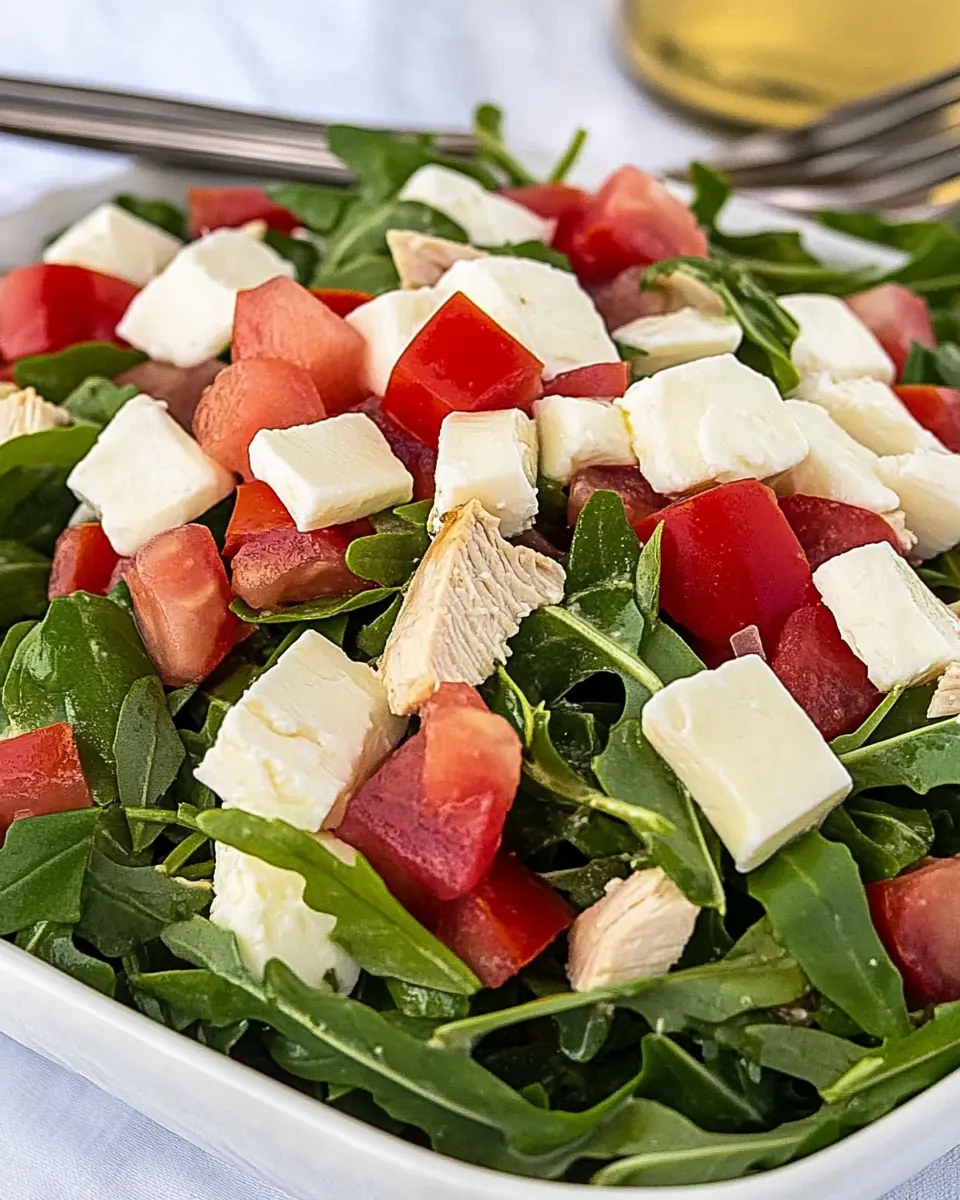
These ingredients reflect a philosophy of freshness and restraint. Each element plays a clear role: the arugula brings peppery structure, the dressed chicken adds savory heft, the mozzarella lends creaminess, and the tomatoes provide juicy brightness. The vinaigrette ties everything together, lifting the salad rather than overpowering it.
- 2 1/2 T white balsamic vinegar (see notes): Adds bright acidity and subtle sweetness to balance the dressing; helps tenderize and meld flavors. Use at room temperature or whisk with lemon and oil for a smooth emulsion, and note that white balsamic is milder than dark varieties.
- 2 1/2 T freshly squeezed lemon juice (see notes): Provides fresh citrusy brightness and tartness to enliven the salad; complements the vinegar and cuts through oil for balance. Squeeze just before assembling to preserve volatile aromas and avoid bitterness from pith.
- 4 T extra virgin olive oil: Creates a rich, silky mouthfeel and carries fat-soluble flavors throughout the salad; serves as the base of the vinaigrette. Use extra virgin olive oil for pronounced fruity notes, and add gradually while whisking to emulsify with the acids.
- 1/2 tsp . Dijon mustard: Acts as an emulsifier and adds a subtle sharpness to stabilize the dressing; helps bind oil and acids into a cohesive vinaigrette. Whisk a small amount with the vinegars before adding oil to ensure a smooth, well-blended dressing.
- salt and fresh ground black pepper to taste: Season to taste and enhance overall flavor balance with salinity and a hint of heat; use sparingly at first and adjust. Grind fresh black pepper over the finished salad to release aromatic oils and provide a bright, peppery finish.
Cooking Instructions for Arugula Chicken Salad
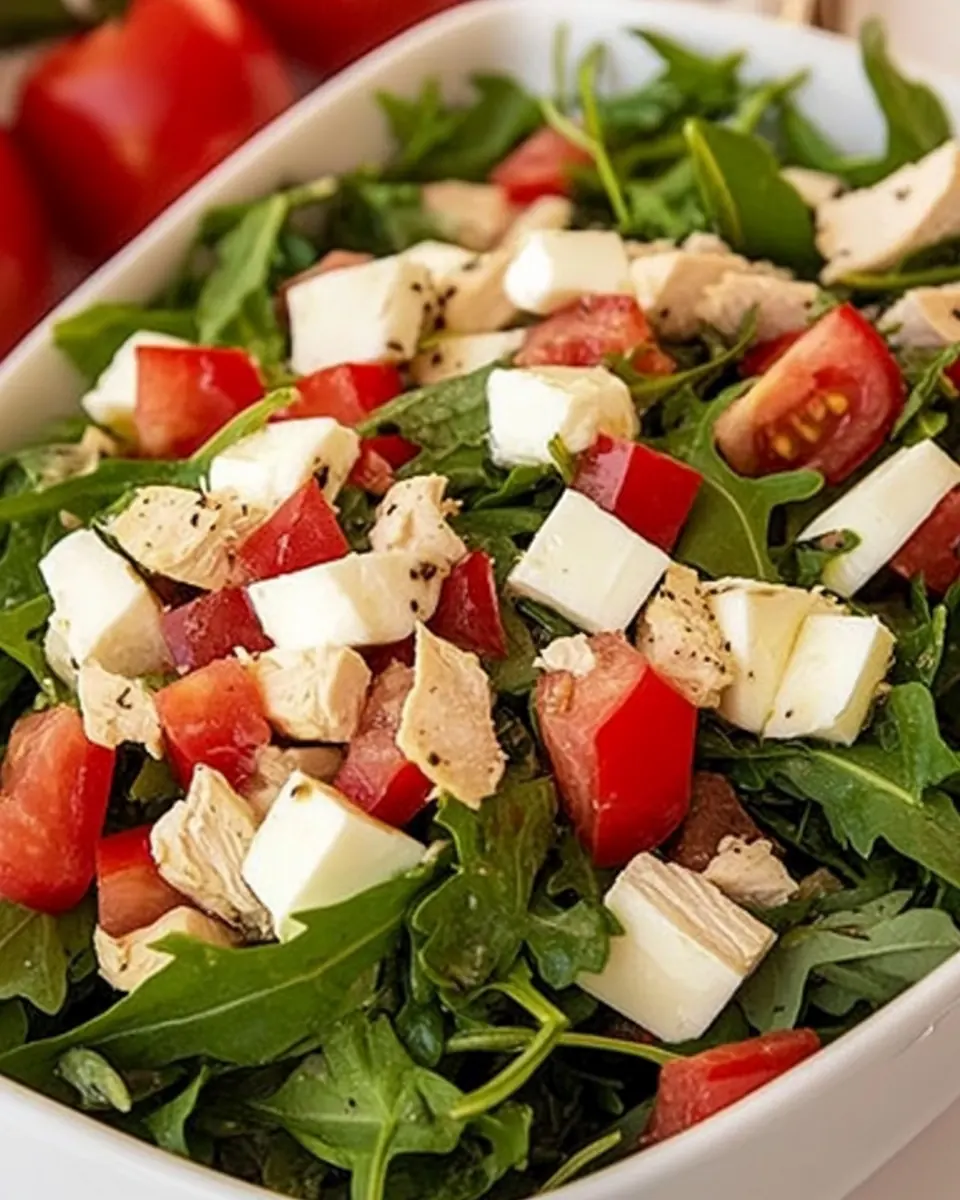
I like to approach these steps with calm and intention. The assembly is simple, but treating each component with a little care yields a much better result. Follow the sequence to keep textures bright and flavors layered.
- Cut leftover chicken breast or grilled chicken breast into pieces.: As you slice the chicken , notice the tender grain and any caramelized edges that carry extra flavor; cutting into uniform pieces helps the dressing cling and ensures even bites. Use a sharp knife to prevent tearing, and avoid chopping so finely that the chicken loses its presence in the salad, which can make the dish feel less substantial. If the chicken is cold from refrigeration, let it sit briefly so the oil and acid in the dressing can better penetrate during tossing.
- Cut up the fresh mozzarella into small cubes.: Fresh mozzarella should be soft and moist, and cubing it lets the cheese distribute evenly so every forkful has creamy pockets. Gently press excess moisture with a paper towel if it seems watery, otherwise the cheese will dilute the dressing. One common mistake is handling the mozzarella roughly, which can make it mushy; use a light touch and clean cuts to keep the texture appealing.
- In a small bowl whisk together white balsamic vinegar, lemon juice, olive oil, and Dijon mustard, and season dressing to taste with salt and fresh ground black pepper.: When you whisk these, watch as the dressing emulsifies into a glossy, cohesive mixture; the aroma of lemon and vinegar should pop through. Emulsifying matters because a stable dressing clings to leaves instead of pooling. If it separates, whisk in a tiny drop more oil or a small pinch of mustard to bring it back together. Over seasoning at this stage can overpower delicate components, so taste and adjust slowly.
- Put mozzarella cubes and diced chicken into a small bowl and toss with half the dressing.: By tossing the mozzarella and chicken first, they soak up flavor and develop a shiny, appetizing coating. You will notice the oil hugging the surfaces and the citrus brightening the proteins. This technique prevents the greens from wilting under excess dressing and ensures those richer elements carry flavor through the salad. Avoid adding too much dressing here, which can make the mix oily rather than lively.
- Wash and dry the baby arugula, then chop coarsely with large chef’s knife if desired. If the arugula is pretty small you can just skip that step.: Properly drying the arugula is crucial; water dilutes the dressing and leads to sogginess. The leaves should look crisp and slightly glossy, with a peppery scent when handled. If your arugula is larger, a coarse chop helps with forkful distribution. A common error is skipping the drying step, which will make the salad watery and lifeless, so use a salad spinner or towels to get the leaves dry.
- Chop tomatoes or cut cherry tomatoes in half until you have about 2 cups chopped tomato.: As you cut the tomatoes , the scent should be sweet and fragrant, and the juice will glisten on your board. The size of the pieces should be bite friendly, providing bursts of sweetness against the peppery greens. If tomatoes are overly ripe and soft, remove some seeds and excess juice to avoid watering down the salad. Over chopping can create a mushy texture, so aim for uniform, medium sized pieces.
- Put chopped arugula and chopped tomatoes into larger bowl and toss with the remaining dressing (or desired amount if you don't like a lot of dressing.): Tossing the greens and tomatoes separately prevents the leaves from becoming limp under dressing and lets you control coating intensity. As you toss, listen for the delicate rustle of leaves and watch them take on a light sheen, indicating proper coverage. If the salad seems dry, add more dressing gradually; if it becomes soggy, stop and serve immediately. A frequent mistake is overdressing the greens, which steals texture and overwhelms the fresh flavors.
- Add the cubes of mozzarella and diced chicken you mixed with dressing and gently toss again.: Adding the dressed mozzarella and chicken last preserves their texture and keeps flavors distinct. When you fold them in, do so gently so the cheese does not break down and the chicken remains intact. The visual contrast of white cheese and golden protein against bright greens makes the plate inviting. If you toss too roughly, the salad will lose its elegance and the cheese may smear.
- Season salad with more salt and fresh ground black pepper (to taste) and serve immediately.: Final seasoning is where everything comes together; small adjustments of salt and black pepper amplify the flavors without masking them. Serve right away to enjoy the textural contrasts at their peak, since sitting will soften the arugula . A common pitfall is letting the salad rest too long, which results in limp greens and muted brightness, so plate and serve promptly.
Tips and Variations
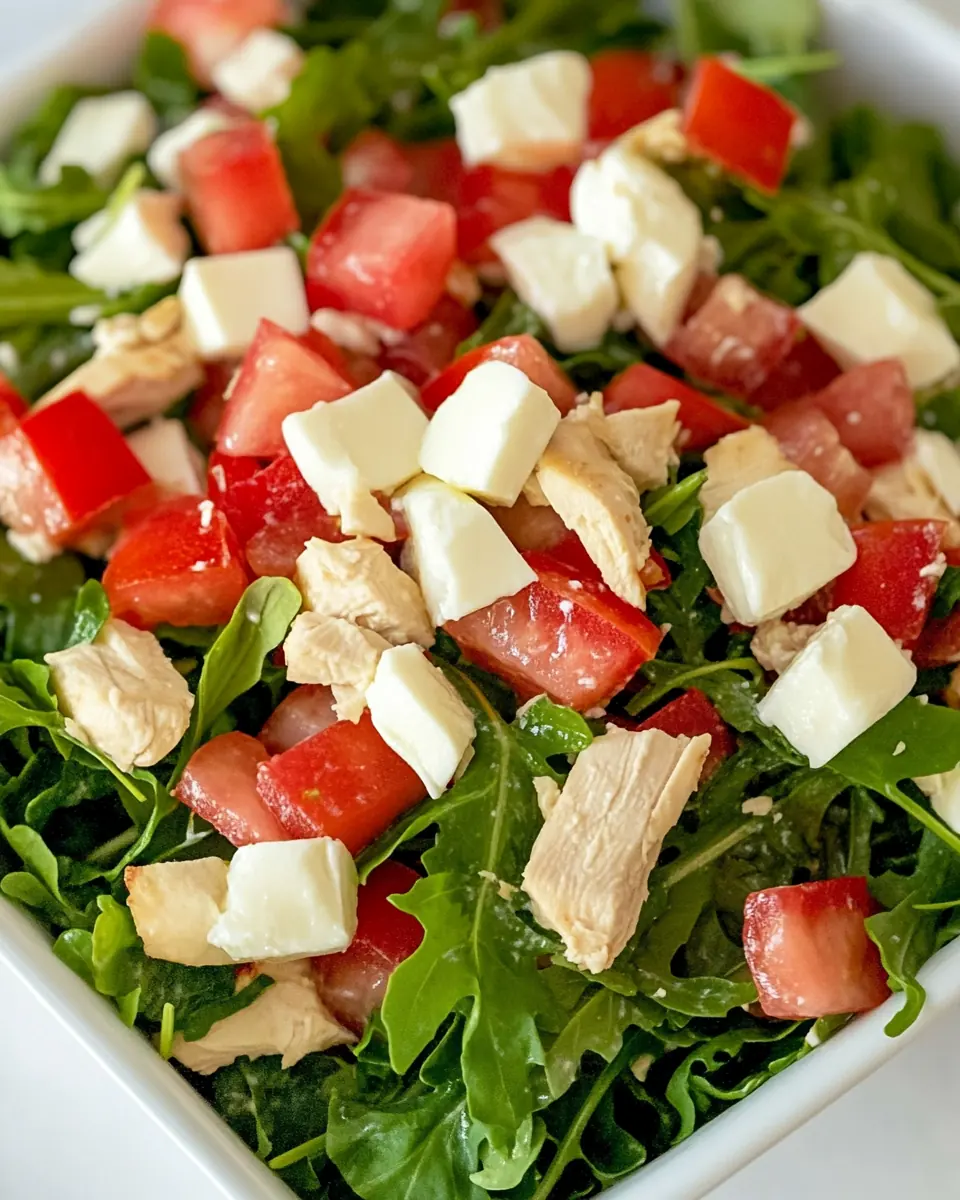
I like offering a handful of useful tweaks and ideas to keep this salad fresh and adaptable. These tips highlight small techniques that make a big difference in texture, flavor, and presentation.
- Use quality olive oil – A fruity extra virgin olive oil elevates the dressing; inexpensive oil will taste flat so invest in a bottle you enjoy tasting on its own.
- Control dressing quantity – Start with half the vinaigrette and add more only if needed, this prevents overdressing and keeps the arugula crisp.
- Warm or cold chicken – Both work, but warm chicken creates a comforting contrast with cool mozzarella, while cold chicken keeps everything refreshingly bright.
- Dry the cheese – If the mozzarella is wet, pat it dry so it does not dilute the dressing or make the salad soggy.
- Lemon adjustment – Add lemon in small amounts, tasting as you go, because citrus can quickly dominate otherwise balanced flavors.
- Serving timing – Assemble at the last minute for best texture, especially if you are preparing for guests so it looks and tastes its freshest.
Serving Suggestions
This salad is flexible and friendly to many occasions, from a light weekday lunch to a component of a casual dinner spread. Think about temperature contrasts and simple accompaniments to round out the meal.
- Lunch bowl – Serve the salad with a slice of crusty bread and you have a balanced, satisfying lunch that travels well to work or a park picnic.
- Weeknight dinner – Pair with a simple roasted vegetable or warm grain for a homey dinner that feels put together without a lot of effort.
- Summer entertaining – Make a big platter for guests, arranging the dressed components so people can help themselves; it shines at casual outdoor gatherings in summer.
- Storage tips – Keep the dressing separate and store components in airtight containers in the refrigerator; assemble within a few hours for best texture.
- Seasonal pairings – In warmer months, highlight ripe tomatoes, while in cooler months choose firmer tomatoes that hold shape better after chopping.
- Quick upgrade – Serve the salad on individual plates topped with an extra drizzle of dressing right before serving for a restaurant style finish.
FAQ
Conclusion
This Arugula Chicken Salad stands out for its bright, balanced flavors and thoughtful contrasts of texture. It’s a simple, satisfying dish that comes together quickly and adapts to what you have on hand, which is why I return to it again and again. Give it a try on a busy weeknight or when you need a light meal that still feels complete; the freshness and quick assembly make it a consistent winner.
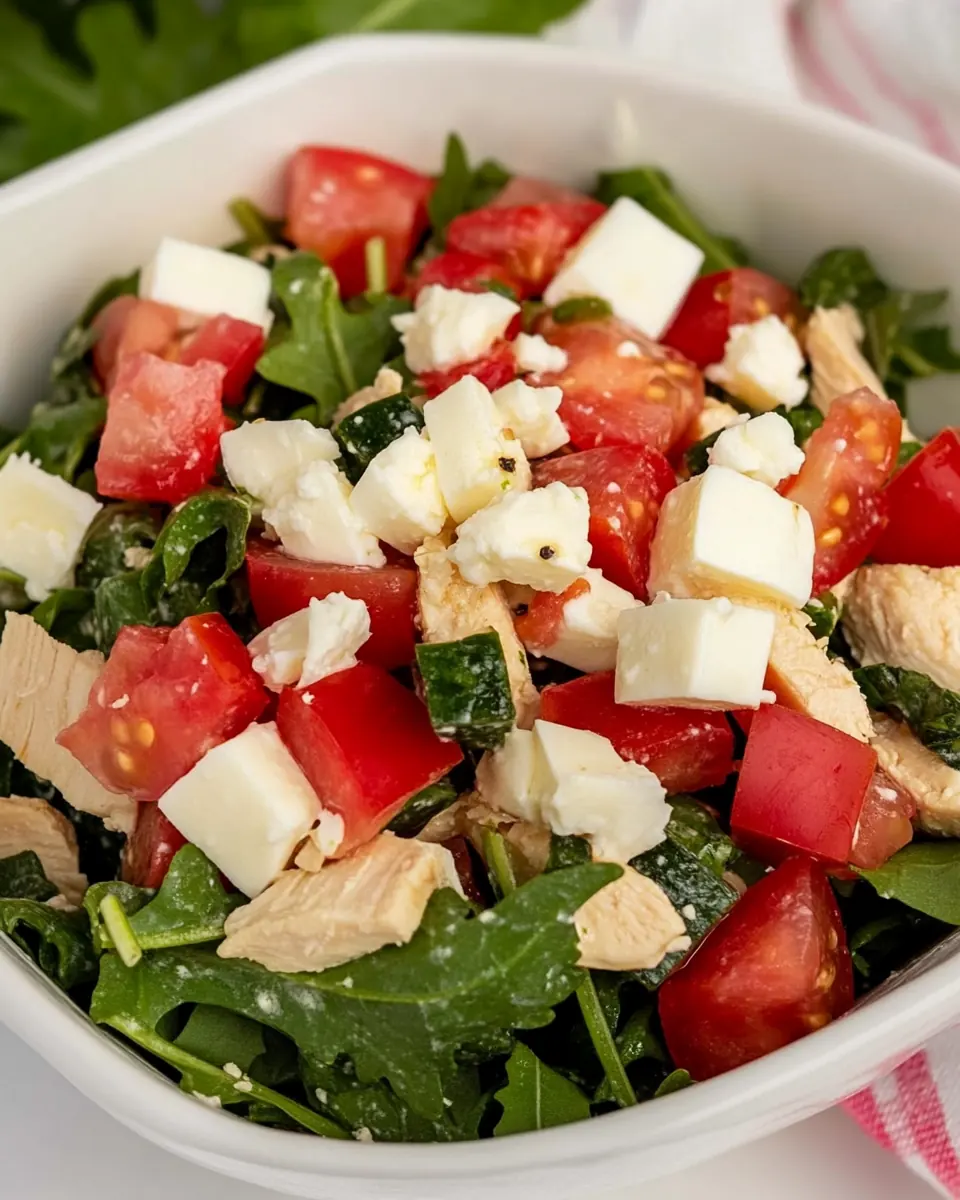
Arugula Chicken Salad
Ingredients
Equipment
Method
- Cut leftover chicken breast or grilled chicken breast into pieces.: As you slice the chicken , notice the tender grain and any caramelized edges that carry extra flavor; cutting into uniform pieces helps the dressing cling and ensures even bites. Use a sharp knife to prevent tearing, and avoid chopping so finely that the chicken loses its presence in the salad, which can make the dish feel less substantial. If the chicken is cold from refrigeration, let it sit briefly so the oil and acid in the dressing can better penetrate during tossing.
- Cut up the fresh mozzarella into small cubes.: Fresh mozzarella should be soft and moist, and cubing it lets the cheese distribute evenly so every forkful has creamy pockets. Gently press excess moisture with a paper towel if it seems watery, otherwise the cheese will dilute the dressing. One common mistake is handling the mozzarella roughly, which can make it mushy; use a light touch and clean cuts to keep the texture appealing.
- In a small bowl whisk together white balsamic vinegar, lemon juice, olive oil, and Dijon mustard, and season dressing to taste with salt and fresh ground black pepper.: When you whisk these, watch as the dressing emulsifies into a glossy, cohesive mixture; the aroma of lemon and vinegar should pop through. Emulsifying matters because a stable dressing clings to leaves instead of pooling. If it separates, whisk in a tiny drop more oil or a small pinch of mustard to bring it back together. Over seasoning at this stage can overpower delicate components, so taste and adjust slowly.
- Put mozzarella cubes and diced chicken into a small bowl and toss with half the dressing.: By tossing the mozzarella and chicken first, they soak up flavor and develop a shiny, appetizing coating. You will notice the oil hugging the surfaces and the citrus brightening the proteins. This technique prevents the greens from wilting under excess dressing and ensures those richer elements carry flavor through the salad. Avoid adding too much dressing here, which can make the mix oily rather than lively.
- Wash and dry the baby arugula, then chop coarsely with large chef’s knife if desired. If the arugula is pretty small you can just skip that step.: Properly drying the arugula is crucial; water dilutes the dressing and leads to sogginess. The leaves should look crisp and slightly glossy, with a peppery scent when handled. If your arugula is larger, a coarse chop helps with forkful distribution. A common error is skipping the drying step, which will make the salad watery and lifeless, so use a salad spinner or towels to get the leaves dry.
- Chop tomatoes or cut cherry tomatoes in half until you have about 2 cups chopped tomato.: As you cut the tomatoes , the scent should be sweet and fragrant, and the juice will glisten on your board. The size of the pieces should be bite friendly, providing bursts of sweetness against the peppery greens. If tomatoes are overly ripe and soft, remove some seeds and excess juice to avoid watering down the salad. Over chopping can create a mushy texture, so aim for uniform, medium sized pieces.
- Put chopped arugula and chopped tomatoes into larger bowl and toss with the remaining dressing (or desired amount if you don't like a lot of dressing.): Tossing the greens and tomatoes separately prevents the leaves from becoming limp under dressing and lets you control coating intensity. As you toss, listen for the delicate rustle of leaves and watch them take on a light sheen, indicating proper coverage. If the salad seems dry, add more dressing gradually; if it becomes soggy, stop and serve immediately. A frequent mistake is overdressing the greens, which steals texture and overwhelms the fresh flavors.
- Add the cubes of mozzarella and diced chicken you mixed with dressing and gently toss again.: Adding the dressed mozzarella and chicken last preserves their texture and keeps flavors distinct. When you fold them in, do so gently so the cheese does not break down and the chicken remains intact. The visual contrast of white cheese and golden protein against bright greens makes the plate inviting. If you toss too roughly, the salad will lose its elegance and the cheese may smear.
- Season salad with more salt and fresh ground black pepper (to taste) and serve immediately.: Final seasoning is where everything comes together; small adjustments of salt and black pepper amplify the flavors without masking them. Serve right away to enjoy the textural contrasts at their peak, since sitting will soften the arugula . A common pitfall is letting the salad rest too long, which results in limp greens and muted brightness, so plate and serve promptly.
Notes
- Use quality olive oil - A fruity extra virgin olive oil elevates the dressing; inexpensive oil will taste flat so invest in a bottle you enjoy tasting on its own.
- Control dressing quantity - Start with half the vinaigrette and add more only if needed, this prevents overdressing and keeps the arugula crisp.
- Warm or cold chicken - Both work, but warm chicken creates a comforting contrast with cool mozzarella, while cold chicken keeps everything refreshingly bright.
- Dry the cheese - If the mozzarella is wet, pat it dry so it does not dilute the dressing or make the salad soggy.
- Lemon adjustment - Add lemon in small amounts, tasting as you go, because citrus can quickly dominate otherwise balanced flavors.
- Serving timing - Assemble at the last minute for best texture, especially if you are preparing for guests so it looks and tastes its freshest.