Cream of Asparagus Leek Soup
Cream of Asparagus Leek Soup arrived in my life on an ordinary spring afternoon when I had more green vegetables than planters on my windowsill. I was carrying a bunch of asparagus home from the market, and the sweet, grassy aroma reminded me of Sunday lunches at my grandmother’s house. I wanted something gentle, soothing, and verdant, so I dug through the fridge and found a few pale leeks that had been waiting for their moment.
I love how asparagus and leeks play together, one offering bright, vegetal notes, the other bringing a silky, onionlike warmth. I decided to make a simple pot of soup that tastes like the first day of the season. The result was creamy without heaviness, bright without being sharp, and comforting without being dull. Every spoonful felt like a small celebration of spring produce.
That first time I topped bowls with a dot of Creme Fraiche and a sprinkle of chives, the contrast in temperature and texture elevated the soup into something memorable. I kept the approach straightforward, because the integrity of the ingredients matters more than clever tricks. When you let each vegetable shine, the finished soup feels both humble and refined, and that’s exactly what I want on a weeknight when the weather is warming up and you still crave something cozy.
Recipe Snapshot
45 mins
5 mins
40 mins
Medium
250 kcal
American
Gluten-Free, Keto
Soups
Large heavy pot, Blender, Ladle
What We Adore About This Cream of Asparagus Leek Soup
Bright, seasonal flavor that feels elegant
I love how asparagus provides a clean vegetal backbone to Cream of Asparagus Leek Soup. The natural sweetness and delicate green notes carry through even after cooking, so this soup tastes like the season in a bowl. It reads as elevated, but it does not require fuss, which makes it approachable for cooks at every level.
Silky texture without heavy cream
Using the right cooking technique and a small amount of Creme Fraiche gives the soup a velvety mouthfeel while keeping it light. I prefer this balance because it allows the vegetables to remain the star, and the texture feels luxurious without weighing you down after a meal.
Minimal ingredients, maximum impact
There are only a handful of components in Cream of Asparagus Leek Soup, and that simplicity is its strength. Each ingredient plays a clear role: leeks soften into a sweet base, garlic lends a whisper of warmth, and the broth ties everything together. When ingredients are few and intentional, you can taste each one.
Easy to scale and serve for any occasion
This recipe scales nicely, so I often double it for dinner parties or keep it modest for a weeknight. It works beautifully as an elegant starter or a light main, and a spoonful of Creme Fraiche on top makes it feel special without much effort. I personally appreciate recipes that handle both solo dinners and small gatherings with ease.
Comforting and fresh at once
There is a comforting warmth from the cooked leeks and asparagus, but the soup never becomes heavy or cloying. That balance makes it a go to when I want something restorative that still tastes lively. The finishing garnish of chives adds a bright lift, so each bowl ends with a fresh note.
Ingredients You’ll Need for Cream of Asparagus Leek Soup
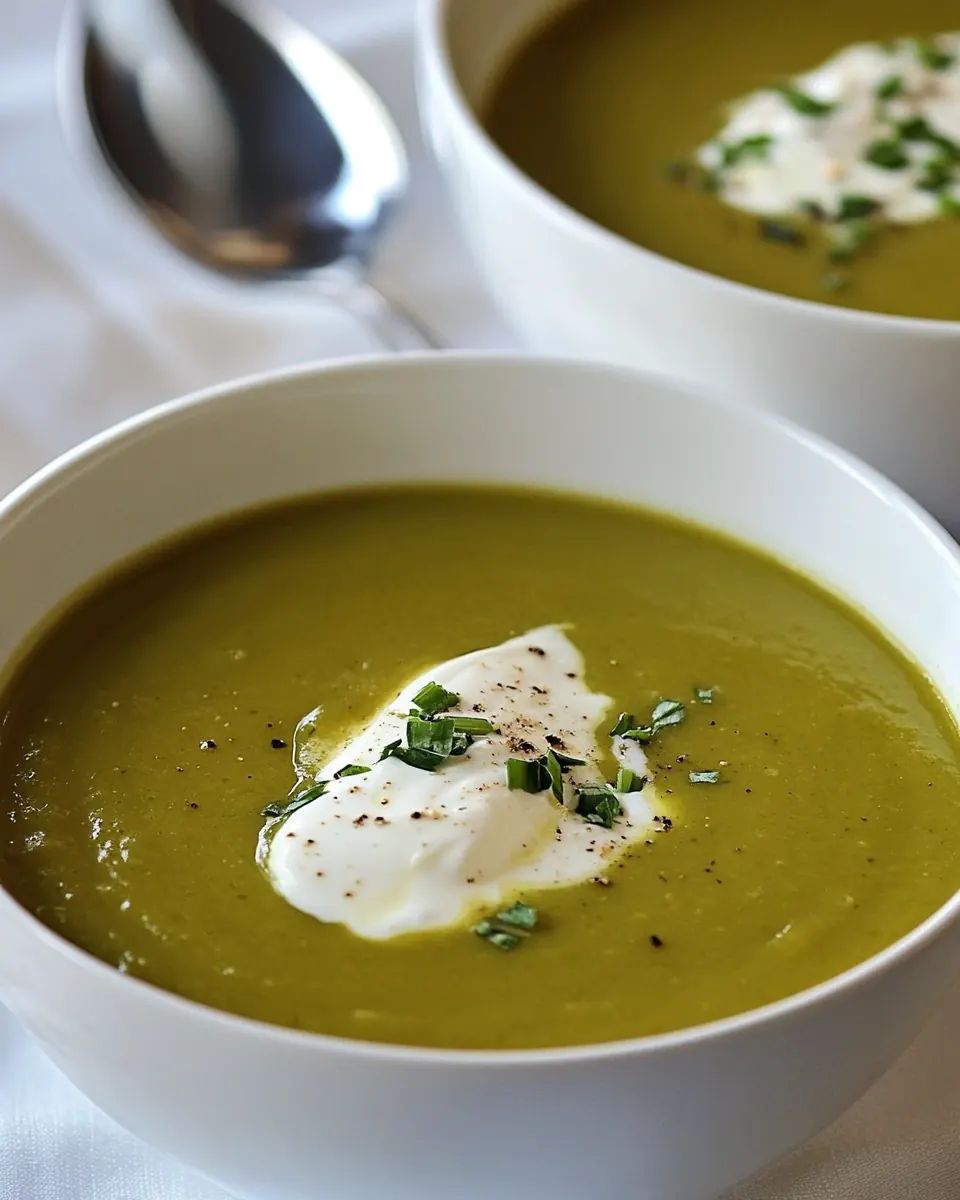
For me, the philosophy behind this ingredient list is simplicity and clarity. The recipe is built around two main players, asparagus and leeks, while a modest amount of butter and garlic form the aromatic base. The broth provides the savory canvas, and Creme Fraiche offers a silky finish. Each item supports the others so the soup tastes cohesive and fresh.
- 2 lbs asparagus, 2 bunches tough ends snapped off: Provide a tender, vegetal backbone for the soup, offering bright green color and a slightly grassy, spring-like flavor; prepare by trimming tough ends and cutting stalks into uniform pieces so they cook evenly and blend smoothly into a silky puree.
- 1 tbsp butter: Add a rich, silky fat that helps soften the leeks and carry flavor; melt gently to sweat aromatics without browning, which preserves delicate flavors and contributes a subtle dairy note to the finished soup.
- 4 leeks, white and pale green only, halved lengthwise, sliced thin: Offer a mild, sweet onion-like base with a delicate, aromatic bite that becomes creamy when cooked; slice thin after halving lengthwise to expose layers for even cooking and to release natural sugars that deepen the soup’s flavor.
- 2 cloves garlic, minced: Supply a pungent, savory lift that brightens the overall profile and layers complexity; mince finely so garlic disperses evenly while cooking briefly to avoid bitterness and to meld with the other aromatics.
- 32 oz container + 1 cup Swanson reduced-sodium chicken broth: Provide the primary cooking liquid and savory foundation for the soup, establishing seasoning and depth; use the specified reduced–sodium chicken broth to control salt levels while simmering the vegetables until fully tender for blending.
- 2 tbsp Creme Fraiche: Introduce a tangy, creamy finish that enriches texture and adds a subtle acidity to balance the soup’s earthiness; stir in at the end or off-heat to preserve its delicate consistency and avoid curdling.
- kosher salt and fresh pepper to taste: Season the soup to taste, enhancing and balancing flavors with salinity and a fresh, peppery bite; add kosher salt gradually and finish with freshly ground black pepper to suit preference.
- chives for garnish (optional): Offer a mild oniony garnish that adds color contrast and a fresh, delicate onion flavor when sprinkled over the finished bowl; snip chives finely and use sparingly to complement rather than overpower the soup.
The Process for Making Cream of Asparagus Leek Soup
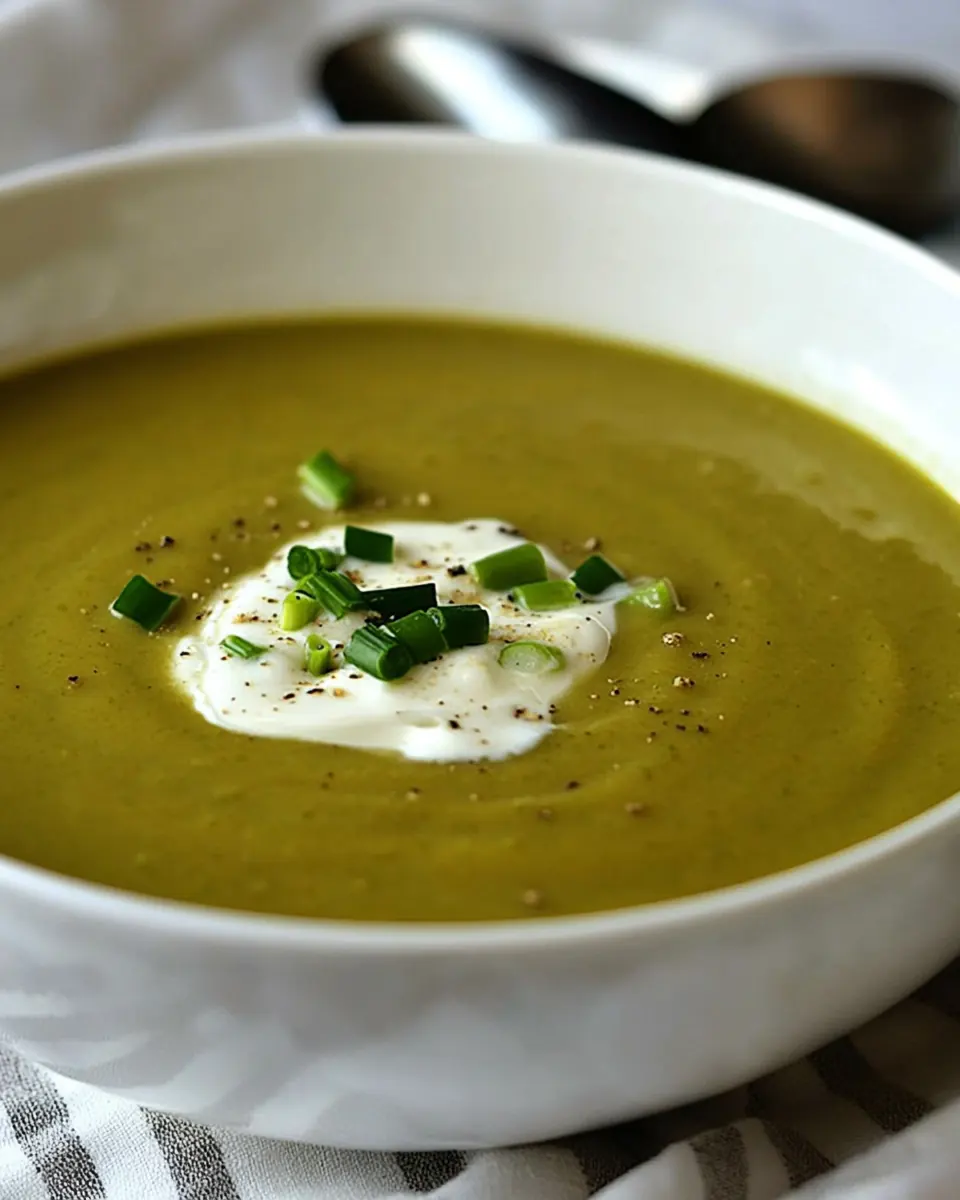
This is the part where patience pays off. I take a calm approach and allow each stage to develop flavor. Below you will find step by step guidance that focuses on what to look for, how it should feel and smell, and what to avoid so the soup arrives silky and vibrant.
- In a large heavy pot, melt butter over medium-low heat.: The kitchen should smell warm and inviting as the butter softens, sending out a subtle nutty aroma. Keep the heat modest so it does not brown quickly, because gentle melting preserves a clean dairy sweetness that helps the leeks soften evenly. If you hear a sharp sizzle immediately, your pan is too hot; lower the flame to avoid browning which would change the intended flavor profile.
- Add leeks and cook, stirring occasionally, until the leeks are soft, about 8 to 10 minutes.: As the leeks cook, they release moist steam and become translucent, giving off a mild onion aroma. The texture should shift from crisp to tender, and the pan may show faint glossy bits where sugars begin to release. Stir occasionally to ensure even softening and to prevent sticking. A common mistake is rushing with higher heat, which can lead to uneven cooking and a slightly bitter edge.
- Add garlic and cook 1 minute, or until fragrant.: A minute of gentle cooking will transform raw garlic into a fragrant, warm note without harshness. You will notice the aroma lift almost immediately, but watch closely because garlic can brown and turn bitter within seconds if the heat is too high. Keep the heat low and stir to distribute the scent evenly.
- Chop the asparagus into 2-inch pieces.: The moment you chop the asparagus , a fresh green scent will become more pronounced. Cutting into uniform pieces helps them cook at the same rate, and two inch lengths are easy to ladle and blend. Avoid cutting into uneven sizes, which can result in some bits overcooking while others remain firm.
- Add to the pot with the leeks.: Dropping the cut asparagus into the warm pan releases a bright vegetal scent as it meets the softened leeks . The contrast in textures will be obvious, with the asparagus initially firm and then gradually relaxing. Stir to coat the pieces in the buttery, aromatic base so flavors marry; neglecting to stir can create uneven seasoning pockets.
- Add the broth and bring to a boil.: Pouring in the broth deglazes the pot, lifting those caramelized bits and integrating them into the liquid. When the mixture reaches a boil, it will steam and smell savory and layered. Bring it to a boil gently to avoid violent bubbling, which can splash and cause uneven cooking. If the boil is too vigorous, reduce to a simmer to maintain control.
- Cover and cook about 20-25 minutes or until asparagus is very tender.: With the pot covered, the vegetables will steam and become tender through gentle convection. You should be able to pierce an asparagus piece easily with a fork when it is ready. This stage is crucial for softening so that the puree becomes smooth. A mistake is undercooking, which leaves fibrous bits; check a few pieces in different parts of the pot for consistent tenderness.
- Remove from heat and puree until smooth with a blender.: Working carefully, blend the hot soup until it is uniformly smooth, watching as the color deepens to a glossy green and the texture becomes velvety. The sound changes from bubbling to a steady whirr, and steaming will ease as it homogenizes. Use a blender in batches if necessary, and avoid overfilling. If you do not blend completely, the texture will be uneven and may feel coarse.
- Adjust salt and pepper, to taste.: After pureeing, taste the soup and add kosher salt and fresh pepper gradually. The aroma should lift and the flavors should harmonize, with salt enhancing the vegetal sweetness and pepper adding a mild bite. Remember that the broth already contains salt, so season cautiously to avoid over salting which can be hard to correct.
- To serve, divide in 5 bowls and spoon in 1 teaspoon Creme Fraiche and chives for garnish.: When the soup is ladled, it should flow smoothly into bowls with a glossy sheen. The cold dollop of Creme Fraiche will sink slowly, creating an appealing contrast in temperature and a creamy note on the palate. Finish with chopped chives for a fresh snap. A common serving error is adding the garnish too early, which can wilt the chives and reduce the visual impact.
Recipe Notes about Cream of Asparagus Leek Soup

This list of notes collects practical suggestions I use every time I make Cream of Asparagus Leek Soup. They focus on technique, ingredient quality, and small adjustments that produce reliably great results.
- Clean leeks thoroughly, slice them lengthwise and rinse between layers to remove soil, which otherwise shows up as grit in the finished soup.
- Monitor heat carefully, cook the aromatics over medium low to coax sweetness without browning, which keeps the flavor delicate and clean.
- Use reduced sodium broth so you can control final seasoning, adding salt gradually after pureeing to avoid oversalting.
- Puree in batches when using a blender, filling it only halfway and holding the lid with a towel to release steam safely.
- Finish with Creme Fraiche at serving time, adding it to hot bowls so the cold cream creates a pleasant contrast and does not break down in the pot.
How to Enjoy Cream of Asparagus Leek Soup
This soup is versatile and elegant, perfect for many occasions from a casual lunch to a refined starter. I often serve it warm with a simple garnish and pairings that complement its green, vegetal profile. Below are ideas for presentation, pairings, and storage to make the most of each batch.
- Serve as a starter for a spring dinner, in small bowls paired with a crisp green salad to echo the soup’s fresh notes.
- Make it a light main by serving a larger bowl alongside crusty bread for dipping, which adds textural contrast to the creamy soup.
- Ideal for lunch, ladle into insulated containers and keep warm for a comforting midday meal that is bright and restorative.
- Garnish thoughtfully with a teaspoon of Creme Fraiche and a sprinkle of chopped chives to add temperature contrast and a fresh bite.
- Pair with proteins like simply roasted fish or a lemony chicken breast if you want a more substantial meal, since the soup’s brightness complements mild proteins well.
- Storage tips, cool the soup to room temperature, then refrigerate in an airtight container for up to four days; reheat gently over low heat and stir in a splash of broth if it thickens.
- Freezing note, while you can freeze the soup, the texture of the dairy garnish changes after thawing, so omit the Creme Fraiche before freezing and add fresh when serving.
- Seasonal pairings, serve during spring when asparagus is at its best to highlight peak flavor and color.
- Occasion ideas, this soup is lovely for a light Ramadan iftar starter, or a refined first course at a small dinner party.
- Presentation tip, drizzle a small circle of Creme Fraiche and use the back of a spoon to create a gentle swirl for an elegant finish.
FAQ
Conclusion
This soup stands out because it celebrates the fresh, green flavors of asparagus and the gentle sweetness of leeks in a silky, approachable format. Give Cream of Asparagus Leek Soup a try when asparagus is in season, and you will have a bowl that feels both comforting and elegant. It’s an easy recipe that delivers on texture and flavor, and it adapts well to small gatherings or a quiet evening at home. I hope it becomes one of your go to spring soups.

Cream of Asparagus Leek Soup
Ingredients
Equipment
Method
- In a large heavy pot, melt butter over medium-low heat.: The kitchen should smell warm and inviting as the butter softens, sending out a subtle nutty aroma. Keep the heat modest so it does not brown quickly, because gentle melting preserves a clean dairy sweetness that helps the leeks soften evenly. If you hear a sharp sizzle immediately, your pan is too hot; lower the flame to avoid browning which would change the intended flavor profile.
- Add leeks and cook, stirring occasionally, until the leeks are soft, about 8 to 10 minutes.: As the leeks cook, they release moist steam and become translucent, giving off a mild onion aroma. The texture should shift from crisp to tender, and the pan may show faint glossy bits where sugars begin to release. Stir occasionally to ensure even softening and to prevent sticking. A common mistake is rushing with higher heat, which can lead to uneven cooking and a slightly bitter edge.
- Add garlic and cook 1 minute, or until fragrant.: A minute of gentle cooking will transform raw garlic into a fragrant, warm note without harshness. You will notice the aroma lift almost immediately, but watch closely because garlic can brown and turn bitter within seconds if the heat is too high. Keep the heat low and stir to distribute the scent evenly.
- Chop the asparagus into 2-inch pieces.: The moment you chop the asparagus , a fresh green scent will become more pronounced. Cutting into uniform pieces helps them cook at the same rate, and two inch lengths are easy to ladle and blend. Avoid cutting into uneven sizes, which can result in some bits overcooking while others remain firm.
- Add to the pot with the leeks.: Dropping the cut asparagus into the warm pan releases a bright vegetal scent as it meets the softened leeks . The contrast in textures will be obvious, with the asparagus initially firm and then gradually relaxing. Stir to coat the pieces in the buttery, aromatic base so flavors marry; neglecting to stir can create uneven seasoning pockets.
- Add the broth and bring to a boil.: Pouring in the broth deglazes the pot, lifting those caramelized bits and integrating them into the liquid. When the mixture reaches a boil, it will steam and smell savory and layered. Bring it to a boil gently to avoid violent bubbling, which can splash and cause uneven cooking. If the boil is too vigorous, reduce to a simmer to maintain control.
- Cover and cook about 20-25 minutes or until asparagus is very tender.: With the pot covered, the vegetables will steam and become tender through gentle convection. You should be able to pierce an asparagus piece easily with a fork when it is ready. This stage is crucial for softening so that the puree becomes smooth. A mistake is undercooking, which leaves fibrous bits; check a few pieces in different parts of the pot for consistent tenderness.
- Remove from heat and puree until smooth with a blender.: Working carefully, blend the hot soup until it is uniformly smooth, watching as the color deepens to a glossy green and the texture becomes velvety. The sound changes from bubbling to a steady whirr, and steaming will ease as it homogenizes. Use a blender in batches if necessary, and avoid overfilling. If you do not blend completely, the texture will be uneven and may feel coarse.
- Adjust salt and pepper, to taste.: After pureeing, taste the soup and add kosher salt and fresh pepper gradually. The aroma should lift and the flavors should harmonize, with salt enhancing the vegetal sweetness and pepper adding a mild bite. Remember that the broth already contains salt, so season cautiously to avoid over salting which can be hard to correct.
- To serve, divide in 5 bowls and spoon in 1 teaspoon Creme Fraiche and chives for garnish.: When the soup is ladled, it should flow smoothly into bowls with a glossy sheen. The cold dollop of Creme Fraiche will sink slowly, creating an appealing contrast in temperature and a creamy note on the palate. Finish with chopped chives for a fresh snap. A common serving error is adding the garnish too early, which can wilt the chives and reduce the visual impact.
Notes
- Clean leeks thoroughly, slice them lengthwise and rinse between layers to remove soil, which otherwise shows up as grit in the finished soup.
- Monitor heat carefully, cook the aromatics over medium low to coax sweetness without browning, which keeps the flavor delicate and clean.
- Use reduced sodium broth so you can control final seasoning, adding salt gradually after pureeing to avoid oversalting.
- Puree in batches when using a blender, filling it only halfway and holding the lid with a towel to release steam safely.
- Finish with Creme Fraiche at serving time, adding it to hot bowls so the cold cream creates a pleasant contrast and does not break down in the pot.