Sheet Pan Thai Glazed Salmon with Vegetables
Sheet Pan Thai Glazed Salmon with Vegetables became my go to when summer evenings called for something fragrant, bright, and truly effortless.
I remember the first time I tossed colorful vegetables and glossy salmon together on one tray, feeling a little reckless about skipping multiple pans. The kitchen smelled of warm ginger and lime while the oven hummed, and I kept sneaking bites of the sauce, mentally noting how the sweet chili clung to the skin. Friends arrived hungry, and what started as a quick weeknight idea turned into a relaxed dinner party staple that kept conversation flowing rather than dominating it.
That night taught me how smart combinations of textures and bold flavors can look and taste like you spent hours, when in reality you spent minutes prepping. The vegetables roast until edges blush with caramel, while the salmon stays tender and glossy under a sticky Thai glaze. I love how a few fresh garnishes lift the whole tray into something festive without fuss. Over the years I refined the balance so every element shines, and this version is the one I reach for when I want simple, satisfying, and crowd pleasing.
Recipe Snapshot
30 mins
5 mins
25 mins
Easy
350 kcal
Thai
Gluten-Free, Low FODMAP
Dinner
Oven, Baking sheet, Small bowl, Whisk
What You’ll Enjoy About This Sheet Pan Thai Glazed Salmon with Vegetables
Bold, Balanced Flavor in Minutes
I adore how Sheet Pan Thai Glazed Salmon with Vegetables manages to deliver big Thai flavors without a long ingredient list. The combination of sweet chili and soy creates that irresistible sweet salty interplay, and the ginger and lime add brightness that keeps each bite lively.
One Pan, Less Cleanup
I appreciate anything that means one pan to wash, and this recipe is exactly that. You get roasted vegetables that crisp at the edges while the salmon steams gently, all on the same tray, so there is minimal babysitting and almost no cleanup stress.
Textural Contrast That Works
I’m always chasing texture, and here the tender flakes of the salmon paired with slightly blistered peppers and crunchy snow peas create a satisfying mouthfeel. The glaze caramelizes just enough to give a sticky coating that complements the roast.
Customizable for Any Table
I like that you can scale this for a quiet dinner or a casual gathering. The vegetables are forgiving, and you can easily swap what you have on hand while keeping the core technique and flavors intact. That flexibility is a major reason I keep this recipe in rotation.
Bright, Fresh Finish
I always finish with chopped cilantro and lime slices because they bring a fresh lift to the rich glaze, making each forkful pop. That final touch turns simple ingredients into something memorable.
Main Ingredients for Sheet Pan Thai Glazed Salmon with Vegetables
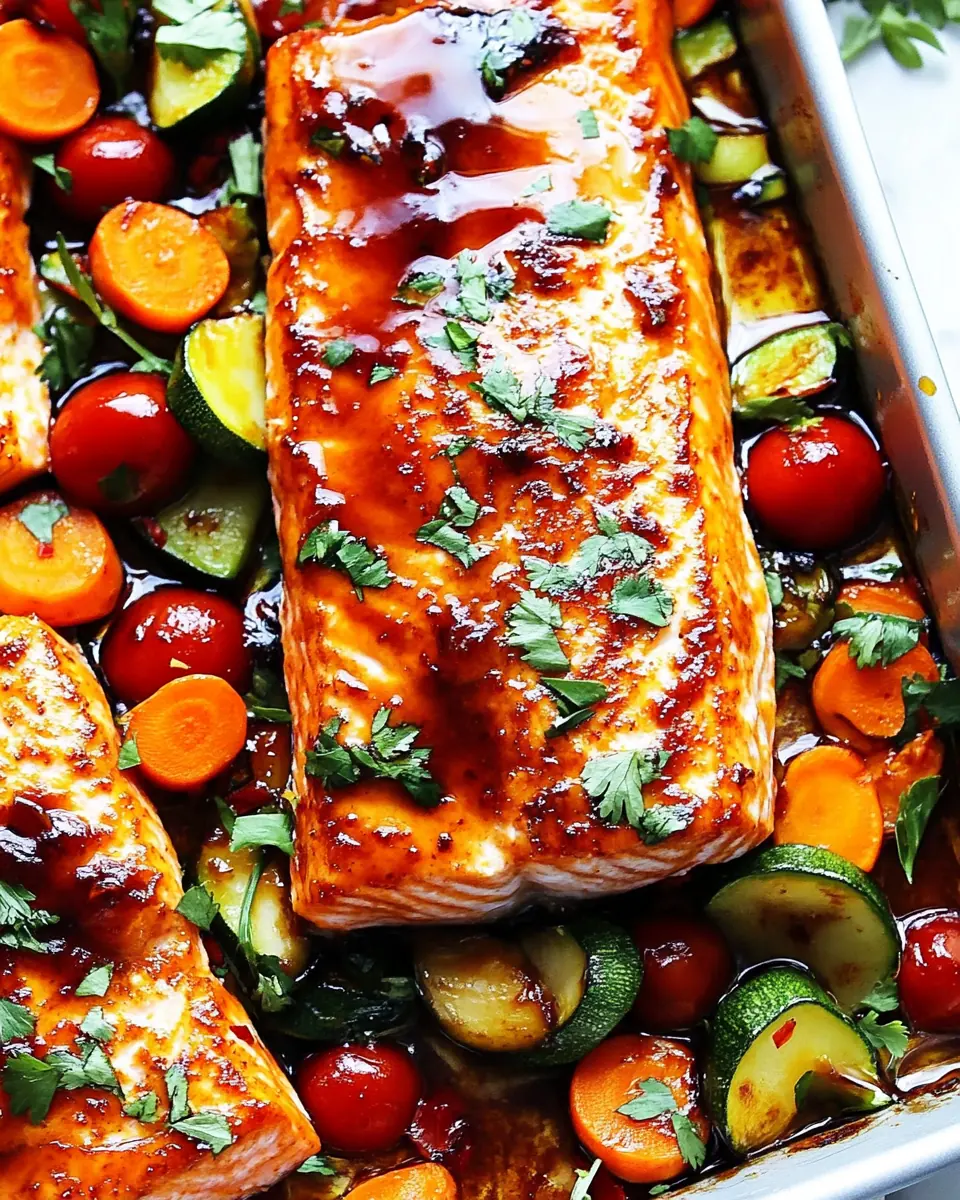
These ingredients are built around a simple philosophy: bold sauce, sturdy vegetables, and quality salmon. The key players are the glaze which binds everything with sweet, salty, and tangy notes, and the mixed peppers and snow peas which provide color and crunch. Together they roast harmoniously, the vegetables offering caramelized sweetness while the salmon stays silky and flaky.
- 4 salmon fillets: Provide rich, flaky protein and a hearty centerpiece for the sheet pan meal; bakes quickly and absorbs the Thai glaze to deliver a savory, tender main course suitable for family dinners.
- 1 chopped red bell pepper: Add crisp, sweet flavor and vibrant color while roasting; complements other peppers and contributes a juicy texture that pairs well with the sticky glaze.
- 1 chopped green bell pepper: Offer mild, slightly vegetal notes and a crisp bite when cooked; balances sweetness from other vegetables and helps create a colorful, textural medley on the pan.
- 1 chopped yellow pepper: Bring bright, sweet flavor and a pop of color; caramelizes slightly under heat to enhance the overall sweetness and visual appeal of the dish.
- 1 chopped onion: Deliver savory depth and aromatic sweetness when softened; provides a flavorful base for the vegetables and releases natural sugars that meld with the glaze.
- 1 cup snow peas: Contribute a fresh, crunchy snap and mild sweetness; retain some crispness when roasted briefly, adding contrast to the tender salmon and other vegetables.
- 2 thinly sliced carrots: Provide subtle sweetness and a pleasant tender-crisp texture when thinly sliced and roasted; help absorb flavors from the glaze while adding a vibrant orange hue.
- 1/2 cup Thai sweet chili sauce: Supply the signature sticky-sweet Thai flavor and glossy coating for the salmon and vegetables; melds with soy and aromatics to create a tangy, balanced glaze that caramelizes in the oven.
- 1/4 cup soy sauce: Offer salty, umami depth to enhance the glaze and seasoning; helps balance the sweet chili sauce and adds a savory backbone to the overall flavor profile.
- 1 tablespoon grated fresh ginger: Introduce warm, spicy citrus notes and aromatic complexity when grated; infuse the glaze with fresh zing that brightens the dish and complements the fish.
- 1 tablespoon lime juice: Provide bright acidity to cut through richness and lift flavors; adds a fresh, citrusy tang that balances sweetness and enhances overall brightness of the glaze.
- 1/2 teaspoon red pepper flakes: Add concentrated heat and a touch of smokiness to the glaze; sprinkle sparingly to introduce an underlying spice that complements the sweet and salty elements.
- Chopped cilantro and lime slices for garnish: Provide fresh herbal brightness and zesty citrus garnish to finish the plate; chopped cilantro adds aroma while lime slices allow diners to add extra acidity to taste.
How to Make Sheet Pan Thai Glazed Salmon with Vegetables
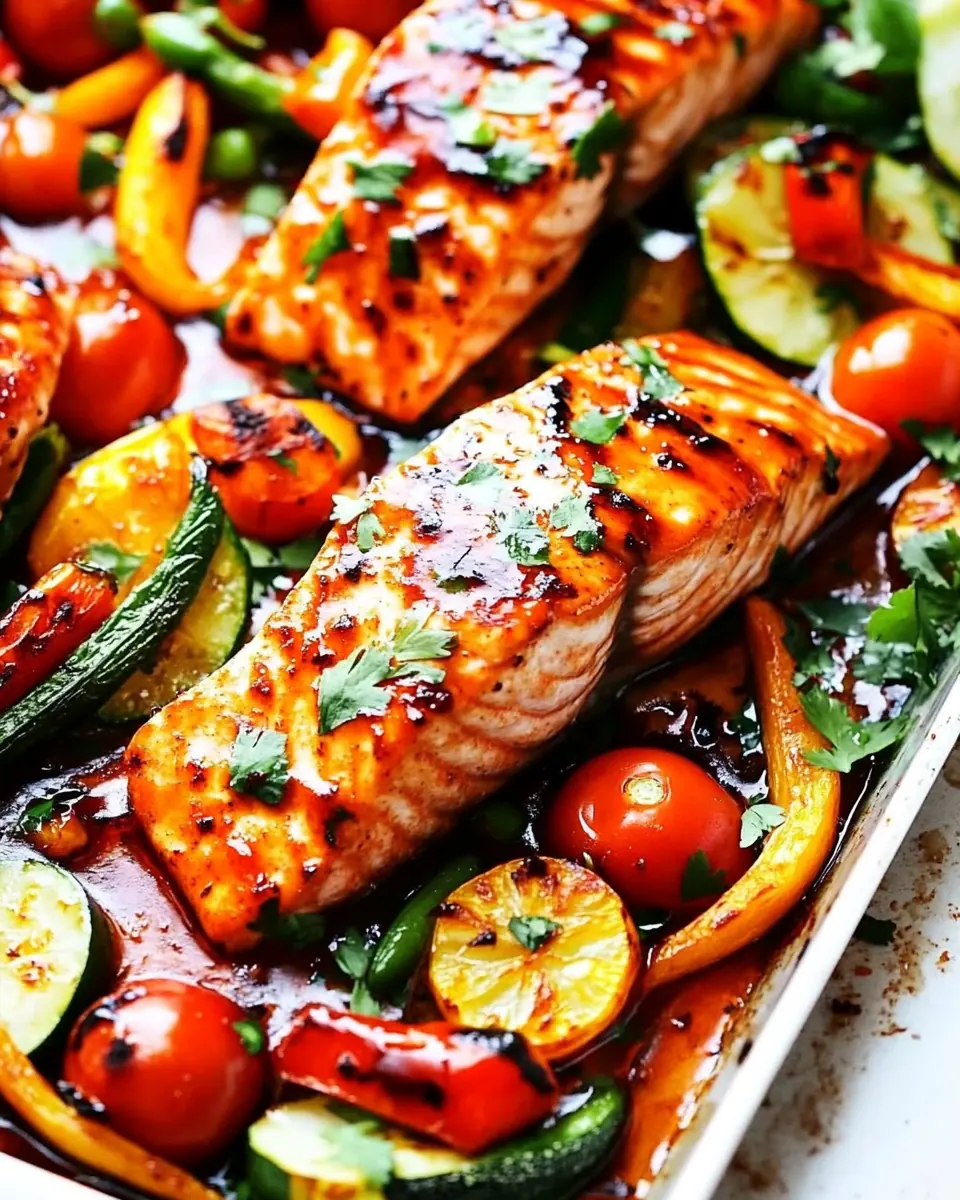
I like to keep instructions friendly and conversational while being precise enough that you feel confident at the oven. The method is straightforward, and following the sensory cues will take you the rest of the way. Read each step, then work through them in order for best results.
- Preheat oven to 375 degrees Fahrenheit and spray a baking sheet with non-stick cooking spray. Lay 4 salmon fillets skin side down surrounded by 1 chopped red bell pepper, 1 chopped green bell pepper, 1 chopped yellow pepper, 1 chopped onion, 1 cup snow peas, and 2 thinly sliced carrots.: As the oven warms you will notice a faint metallic hum and a steady rise in kitchen warmth, signaling the environment that will coax caramelization from the vegetables and gently cook the salmon . This moderate heat allows the sauce to thicken without burning quickly. A common mistake is skipping the preheat which leads to uneven cooking, so always wait until the oven reaches temperature. If your oven is older, rotate the pan halfway through the bake to ensure even browning.
- In a small bowl whisk together 1/2 cup Thai sweet chili sauce, 1/4 cup soy sauce, 1 tablespoon grated fresh ginger, 1 tablespoon lime juice, and 1/2 teaspoon red pepper flakes. Reserve 1/4 cup of the marinade and drizzle the rest of the marinade over the salmon and vegetables.: When arranging the tray listen for the quiet scrape of metal as you nestle pieces together, and aim for a single layer so heat circulates evenly. The visual cue you want is space between items, not crowding, so steam can escape and edges can blister. A rookie error is piling ingredients which causes steaming rather than roasting, leaving vegetables limp. If pieces are overlapping, spread them out or use a second sheet for consistent texture.
- Cover with foil and bake for 15 minutes. Remove foil and broil for another 5-7 minutes until the top starts to blacken.: As you whisk, inhale the mingling aromas of ginger and lime rising from the bowl, the scent giving a preview of the finished dish. This emulsion harmonizes sweet, salty, and bright notes; whisk until glossy so it coats evenly. One slip is under mixing which leads to pockets of strong soy or sweet chili, so take a few vigorous stirs. If your sauce seems too thick, a teaspoon of warm water will help loosen it for better drizzling.
- Remove salmon from the oven and brush remaining marinade on top. Garnish with fresh cilantro and lime slices if desired.: When you pour the glaze you should see it glisten and stream, landing in ribbons that cling to surfaces. The glaze wets the surfaces so they brown attractively and infuse flavor during roasting. Avoid drowning the pan as excess liquid prevents caramelization and yields a steamed finish. If you notice pooling, tilt the pan gently to distribute, or spoon off surplus to maintain crisp edges.
- Cover with foil and bake for 15 minutes: The first stage under foil traps steam, gently cooking the salmon and allowing flavors to penetrate the flesh while vegetables begin to soften. You will hear a faint hiss when you remove the foil later, that trapped steam escaping and revealing the roasted aroma. A typical mistake is leaving the foil on too long, which prevents browning; set a timer and resist peeking early. If your fillets are thicker than typical store cuts, you may need a few additional minutes for the center to reach desired doneness.
- Remove foil and broil for another 5 to 7 minutes until the top starts to blacken: Broiling creates the final caramelized layer, where sugars in the glaze char slightly, producing a smoky fragrant top and a pleasing texture contrast. Watch closely as this step can go from glossy to burnt quickly; listen for the oven fan and watch the color deepen to a golden dark edge. A common pitfall is stepping away during broil, leading to over blackening. If you want a gentler finish, use the oven at a higher bake setting rather than broil and extend the time slightly.
- Remove salmon from the oven and brush remaining marinade on top: As you brush on the reserved marinade the sauce will warm and meld into a shiny finish, and the steam rising will carry those citrus and ginger notes. This finishing stroke intensifies flavor and provides an attractive glossy surface. Beware of adding cold sauce directly to hot fish, which can lower the surface temperature and affect texture; instead, brush evenly and allow the residual heat to meld the flavors. If the glaze seems too thin after broiling, return the pan briefly to low heat to thicken the brushed layer.
- Garnish with fresh cilantro and lime slices if desired: The final green of cilantro and bright zing of lime lifts the whole tray, adding herbaceous aroma and a citrus snap to cut through the glaze. Sprinkle chopped cilantro right before serving to keep it vivid and aromatic. A mistake is adding delicate garnishes too early; they wilt under heat, so garnish at the last moment. If you prefer more citrus, a light squeeze of lime over each fillet brightens the finish further.
Recipe Variations about Sheet Pan Thai Glazed Salmon with Vegetables
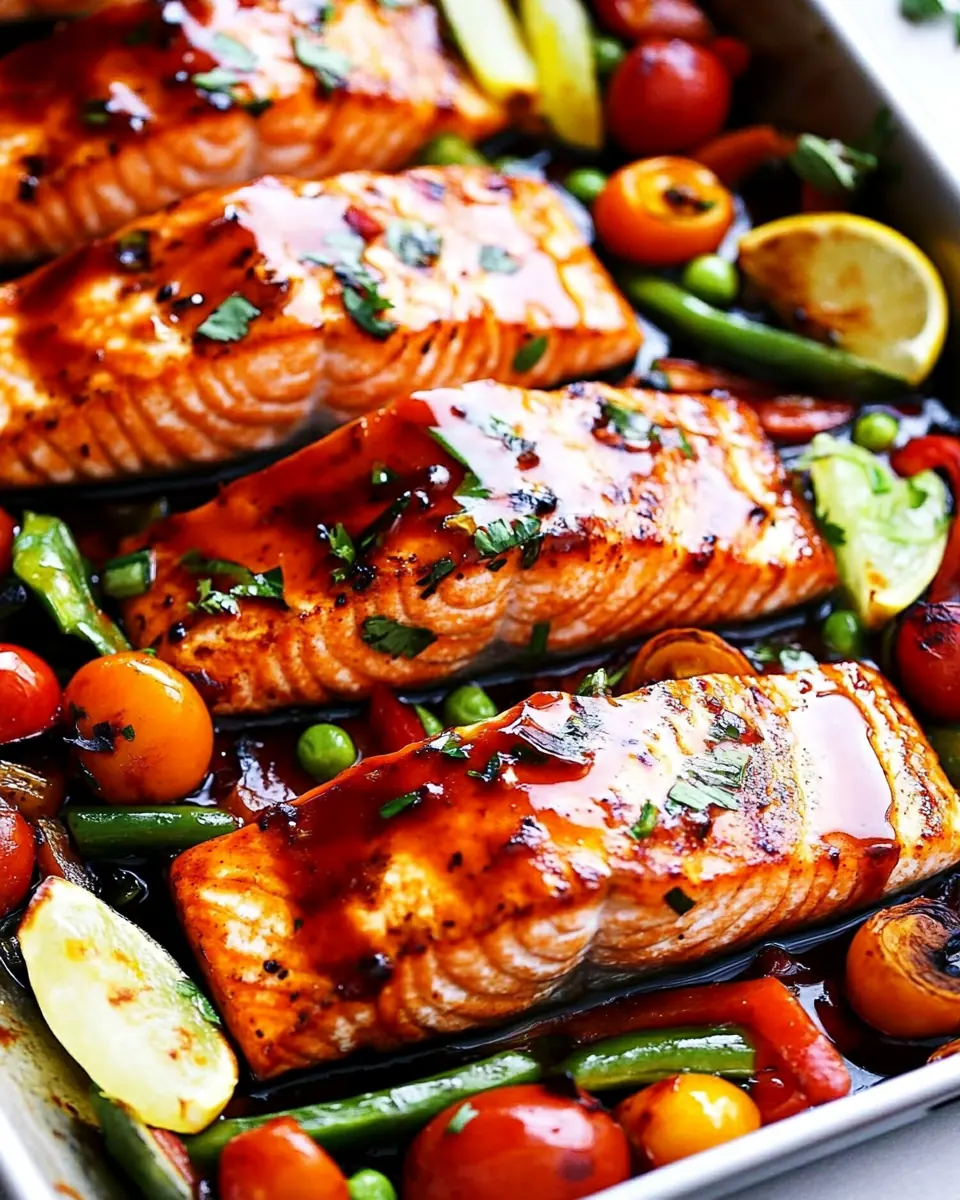
I like to offer a few reliable variations that keep the spirit of the dish while letting you adapt to what you have on hand. Below are thoughtful ideas to change texture, heat, or presentation without straying from the core flavors.
- Swap vegetables by using whatever is seasonal; just match sizes so they roast evenly and keep the same glaze to maintain the Thai inspired profile.
- Adjust heat by varying red pepper flakes or choosing a spicier sweet chili sauce; start small and taste as you go to avoid overwhelming the salmon.
- Make it more citrus forward by increasing lime juice in the glaze and finishing with extra zest for a brighter, tangier finish that cuts through the glaze sweetness.
- Double the glaze for thicker coating, reserving a portion to brush on after broiling so the top remains glossy and deeply flavored without burning.
- Change presentation by serving the roasted vegetables on a platter with the salmon on top for a family style serving that looks polished and makes plating effortless.
Pairing Suggestions for Sheet Pan Thai Glazed Salmon with Vegetables
This dish pairs beautifully with simple sides and occasions that call for bright, casual meals. Think about texture balance and complementary flavors when choosing what to serve alongside the tray, and consider the time of year for seasonal pairings.
- Light grain side such as steamed rice or jasmine rice, which soaks up the sticky glaze and provides a neutral base to frame the bold flavors.
- Fresh salad with crisp greens and a light vinaigrette, offering a cool counterpoint that balances the warm, roasted elements of the tray.
- Casual dinner occasion it works well for easy weeknight dinners and relaxed gatherings where you want something that feels intentional without a lot of last minute prep.
- Seasonal summer menu the bright flavors and roasted vegetables make this ideal for summer meals when peppers and fresh herbs are at their peak.
- Storage tips refrigerate leftovers in an airtight container for up to two days, reheat gently in a low oven to avoid drying the salmon, and add a fresh squeeze of lime after warming to revive flavors.
FAQ
Conclusion
This recipe stands out because it combines bold Thai flavors with an easy one pan technique that yields impressive flavor and minimal cleanup. Give it a try tonight, even on a busy weeknight, and you will find the balance of sweet chili, soy, ginger, and lime turns simple ingredients into a memorable meal. I hope this becomes one of your reliable weeknight or summer dinner choices, bringing color and aroma to the table with very little fuss.
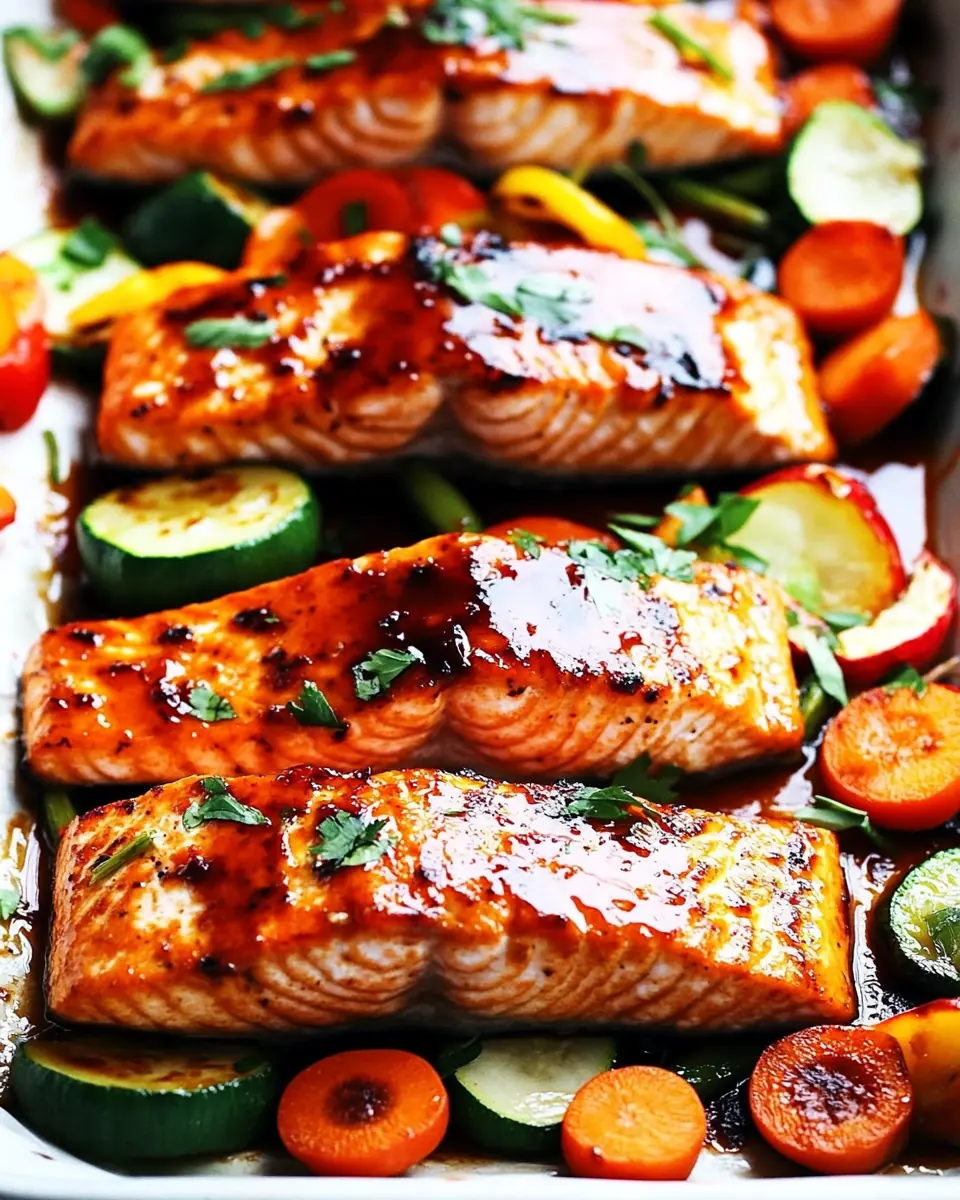
Sheet Pan Thai Glazed Salmon with Vegetables
Ingredients
Equipment
Method
- Preheat oven to 375 degrees Fahrenheit and spray a baking sheet with non-stick cooking spray. Lay 4 salmon fillets skin side down surrounded by 1 chopped red bell pepper, 1 chopped green bell pepper, 1 chopped yellow pepper, 1 chopped onion, 1 cup snow peas, and 2 thinly sliced carrots.: As the oven warms you will notice a faint metallic hum and a steady rise in kitchen warmth, signaling the environment that will coax caramelization from the vegetables and gently cook the salmon . This moderate heat allows the sauce to thicken without burning quickly. A common mistake is skipping the preheat which leads to uneven cooking, so always wait until the oven reaches temperature. If your oven is older, rotate the pan halfway through the bake to ensure even browning.
- In a small bowl whisk together 1/2 cup Thai sweet chili sauce, 1/4 cup soy sauce, 1 tablespoon grated fresh ginger, 1 tablespoon lime juice, and 1/2 teaspoon red pepper flakes. Reserve 1/4 cup of the marinade and drizzle the rest of the marinade over the salmon and vegetables.: When arranging the tray listen for the quiet scrape of metal as you nestle pieces together, and aim for a single layer so heat circulates evenly. The visual cue you want is space between items, not crowding, so steam can escape and edges can blister. A rookie error is piling ingredients which causes steaming rather than roasting, leaving vegetables limp. If pieces are overlapping, spread them out or use a second sheet for consistent texture.
- Cover with foil and bake for 15 minutes. Remove foil and broil for another 5-7 minutes until the top starts to blacken.: As you whisk, inhale the mingling aromas of ginger and lime rising from the bowl, the scent giving a preview of the finished dish. This emulsion harmonizes sweet, salty, and bright notes; whisk until glossy so it coats evenly. One slip is under mixing which leads to pockets of strong soy or sweet chili, so take a few vigorous stirs. If your sauce seems too thick, a teaspoon of warm water will help loosen it for better drizzling.
- Remove salmon from the oven and brush remaining marinade on top. Garnish with fresh cilantro and lime slices if desired.: When you pour the glaze you should see it glisten and stream, landing in ribbons that cling to surfaces. The glaze wets the surfaces so they brown attractively and infuse flavor during roasting. Avoid drowning the pan as excess liquid prevents caramelization and yields a steamed finish. If you notice pooling, tilt the pan gently to distribute, or spoon off surplus to maintain crisp edges.
- Cover with foil and bake for 15 minutes: The first stage under foil traps steam, gently cooking the salmon and allowing flavors to penetrate the flesh while vegetables begin to soften. You will hear a faint hiss when you remove the foil later, that trapped steam escaping and revealing the roasted aroma. A typical mistake is leaving the foil on too long, which prevents browning; set a timer and resist peeking early. If your fillets are thicker than typical store cuts, you may need a few additional minutes for the center to reach desired doneness.
- Remove foil and broil for another 5 to 7 minutes until the top starts to blacken: Broiling creates the final caramelized layer, where sugars in the glaze char slightly, producing a smoky fragrant top and a pleasing texture contrast. Watch closely as this step can go from glossy to burnt quickly; listen for the oven fan and watch the color deepen to a golden dark edge. A common pitfall is stepping away during broil, leading to over blackening. If you want a gentler finish, use the oven at a higher bake setting rather than broil and extend the time slightly.
- Remove salmon from the oven and brush remaining marinade on top: As you brush on the reserved marinade the sauce will warm and meld into a shiny finish, and the steam rising will carry those citrus and ginger notes. This finishing stroke intensifies flavor and provides an attractive glossy surface. Beware of adding cold sauce directly to hot fish, which can lower the surface temperature and affect texture; instead, brush evenly and allow the residual heat to meld the flavors. If the glaze seems too thin after broiling, return the pan briefly to low heat to thicken the brushed layer.
- Garnish with fresh cilantro and lime slices if desired: The final green of cilantro and bright zing of lime lifts the whole tray, adding herbaceous aroma and a citrus snap to cut through the glaze. Sprinkle chopped cilantro right before serving to keep it vivid and aromatic. A mistake is adding delicate garnishes too early; they wilt under heat, so garnish at the last moment. If you prefer more citrus, a light squeeze of lime over each fillet brightens the finish further.
Notes
- Swap vegetables by using whatever is seasonal; just match sizes so they roast evenly and keep the same glaze to maintain the Thai inspired profile.
- Adjust heat by varying red pepper flakes or choosing a spicier sweet chili sauce; start small and taste as you go to avoid overwhelming the salmon.
- Make it more citrus forward by increasing lime juice in the glaze and finishing with extra zest for a brighter, tangier finish that cuts through the glaze sweetness.
- Double the glaze for thicker coating, reserving a portion to brush on after broiling so the top remains glossy and deeply flavored without burning.
- Change presentation by serving the roasted vegetables on a platter with the salmon on top for a family style serving that looks polished and makes plating effortless.