Sweet Potato Souffle
Sweet Potato Souffle is one of those dishes I turn to when I want comfort with a touch of showmanship, the kind of side that earns compliments without much fuss.
I remember the first time I brought this to a holiday table, carrying a warm casserole that smelled like toasted pecans and cinnamon. Guests hovered, asking questions about the texture, the sweet but not too sweet flavor, and the pillowy mash that sat beneath a crisp streusel. That memory stuck with me because this recipe balances creamy sweet potatoes with a crunchy topping, and it manages to feel both homey and a little bit special.
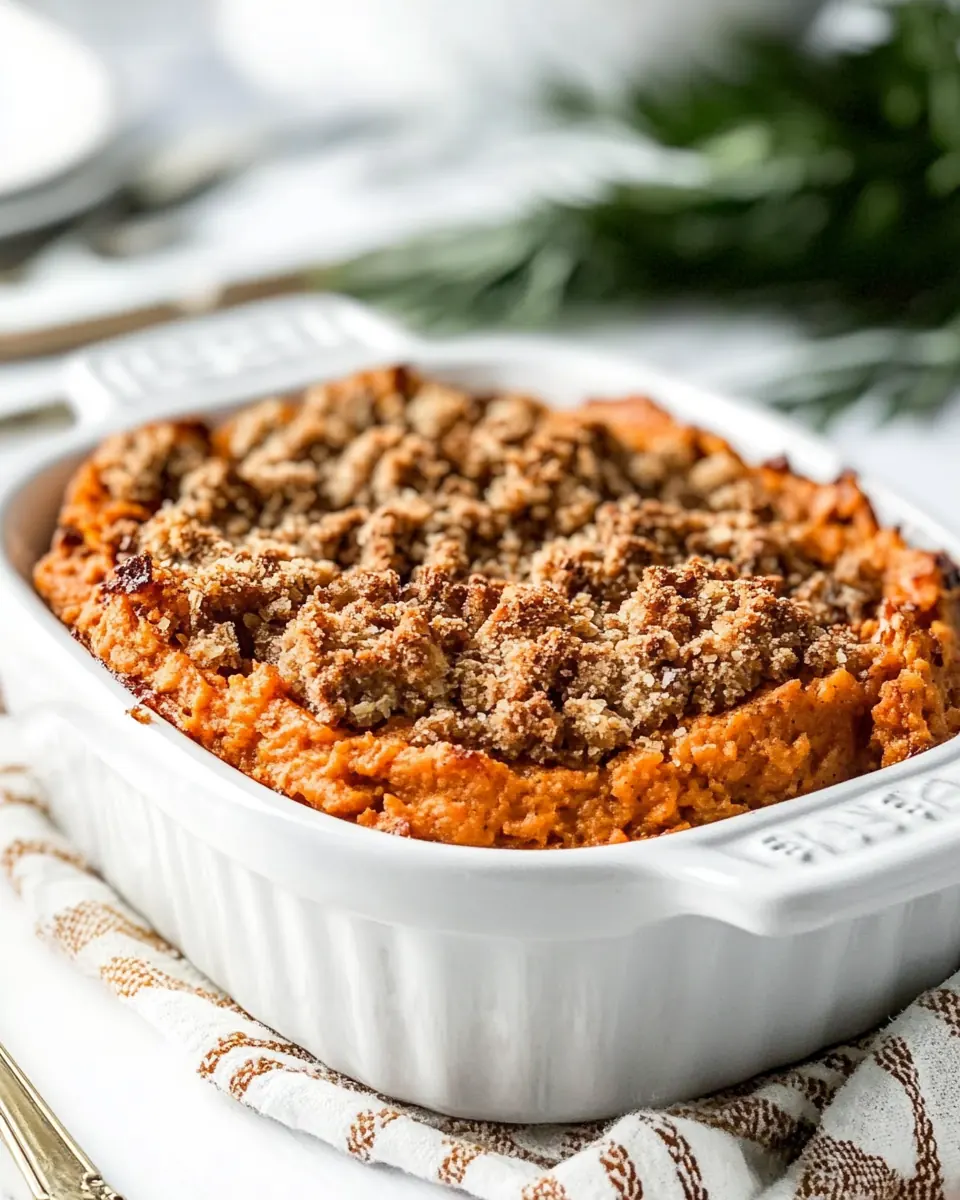
What I love most is how forgiving it is. I have made it on busy weeknights and on slow, lazy afternoons; each time it delivers the same cozy aroma that fills the kitchen and gets people talking. Over the years I learned a few small adjustments that keep the filling smooth and the topping perfectly toasted. I also appreciate how the layers come together visually, the glossy mashed sweet potatoes peeking through a scattering of chopped pecans and flaked coconut.
Recipe Snapshot
1 hr 25 mins
5 mins
80 mins
Medium
250 kcal
American
Gluten-Free, Low FODMAP
Side Dishes
rimmed baking sheet, aluminum foil or parchment paper, 9×13 casserole dish, nonstick spray, large mixing bowl, stand mixer or electric hand mixer, medium mixing bowl
What Sets This Sweet Potato Souffle Apart
Comfort with Texture
I adore how Sweet Potato Souffle pairs a silky, whipped filling with a crunchy streusel. The contrast is what makes every bite interesting. I often tell friends that texture sells dishes more than flavor alone, and here it’s the partnership between soft, fluffy sweet potatoes and crisp chopped pecans that keeps people coming back for seconds.
Holiday Ready Without the Fuss
I’ve made this for Thanksgiving more times than I can count because it looks like you spent hours, while actually letting the oven do most of the work. The recipe scales well, and I like that you can prepare parts ahead, giving you breathing room on busy days. It feels celebratory, yet approachable.
Balanced Sweetness
Between the maple syrup, granulated sugar, and a modest amount of milk, the filling hits a warm, gentle sweetness that complements savory mains. I personally prefer to keep the sugar moderate so the natural sweet potatoes shine through. If you crave more warmth, a touch more ground cinnamon amps the nostalgia.
Kid Friendly and Crowd Pleasing
I’ve served this to kids and picky eaters who usually avoid vegetable sides, and they always ask for seconds. The mousse like filling hides any fibrous texture, while the streusel adds a dessert like finish that wins over skeptical eaters. It’s a reliable crowd pleaser for family dinners or potlucks.
Flexible and Forgiving
One reason I keep coming back to this recipe is its flexibility. You can swap the milk percentage, tweak the sweetness, or use more pecans for extra crunch, and it still turns out well. That kind of resilience in a recipe makes it a staple in my rotation.
Main Ingredients for Sweet Potato Souffle
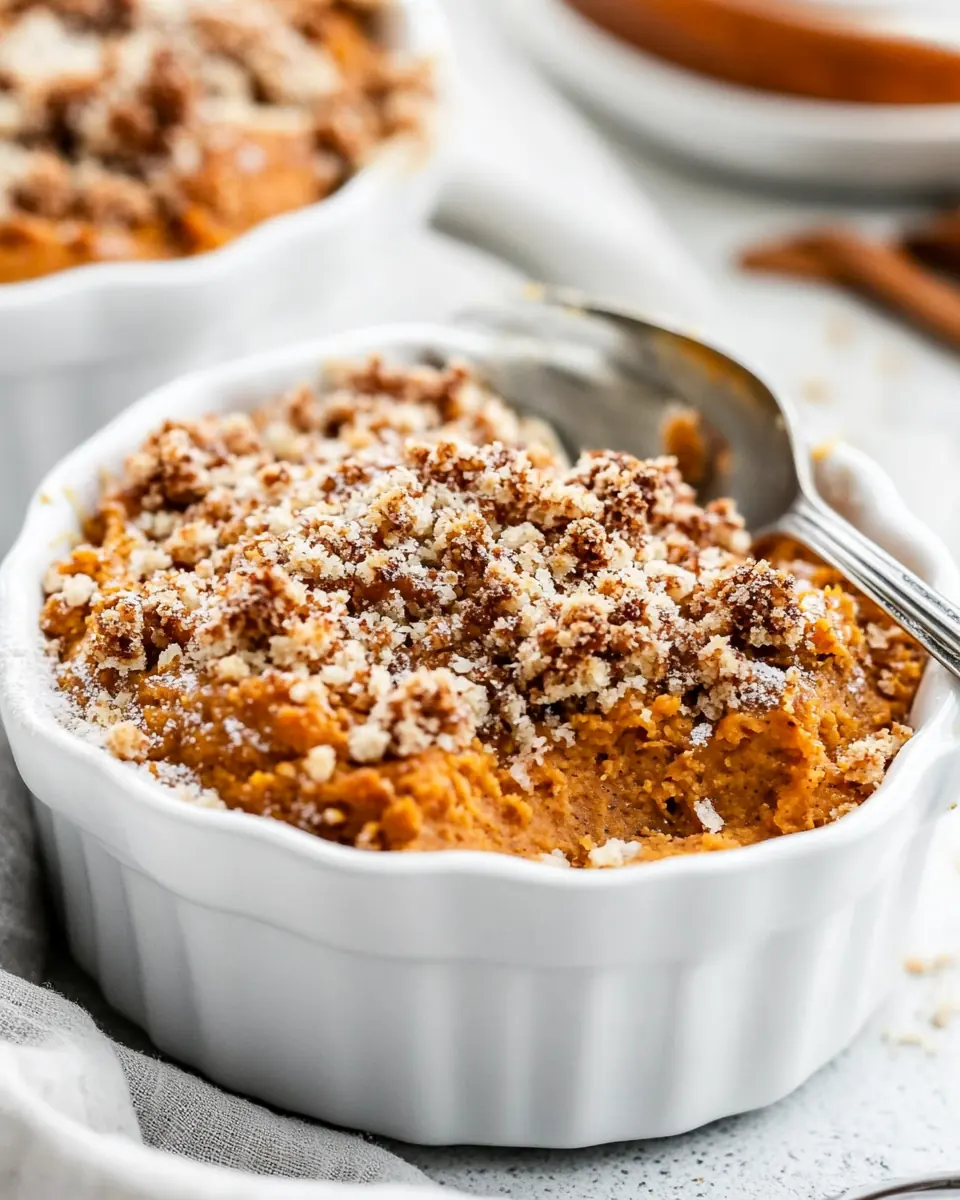
These ingredients form the backbone of a classic, crowd pleasing side. The key players are the starchy sweet potatoes, which provide creaminess and natural sugar, and the streusel components like pecans and brown sugar that bring texture and toasty flavor. Butter binds richness into both filling and topping, while a little milk and eggs create a smooth, souffle like lift. Each element has a job, and together they balance comfort and contrast.
- 5 large sweet potatoes (about 7 cups once mashed): Provide creamy body and natural sweetness when mashed; helps bind and bulk the souffle while contributing moisture and a smooth texture.
- 6 tablespoons unsalted butter melted or at room temperature: Add rich, silky fat and flavor when melted or at room temperature; enriches the custard and improves mouthfeel and browning.
- 2 large eggs: Whisk into the mixture to set the souffle; eggs contribute structure, lift, and a custardy matrix when baked.
- 1/4 cup granulated sugar: Sweeten the base with clean, neutral sweetness; helps balance savory notes and assists in caramelization during baking.
- 1/4 cup maple syrup: Introduce deeper, complex sweetness and a subtle maple flavor; enhances overall sweetness profile and adds moisture.
- 1 tablespoon pure vanilla extract: Contribute aromatic floral-vanilla notes; rounds flavors and enhances perceived sweetness without adding sugar.
- 1/2 teaspoon ground cinnamon increase to 1 teaspoon if you LOVE cinnamon: Provide warm, earthy spice and background complexity; can be increased for a more pronounced spiced flavor profile.
- 1/2 teaspoon kosher salt: Enhance and balance flavors by providing savory contrast; helps bring out sweetness and season the entire dish.
- 1/4 cup milk (I used 1%): Add creaminess and thin the mixture for a smoother consistency; contributes slight richness without overpowering the souffle.
- 1/4 cup unsalted butter: Supply additional butterfat for topping or streusel; adds richness, helps bind topping components, and encourages browning.
- 1 1/4 cups pecans finely chopped: Offer crunchy texture and nutty flavor when finely chopped; provides contrast to the soft souffle and toasty notes.
- 1/4 cup flaked coconut (I used unsweetened; sweetened will work too) (optional): Introduce chewy texture and a subtle tropical note; optional inclusion adds flavor complexity and mouthfeel variety.
- 1/2 cup brown sugar packed: Deliver deep molasses-like sweetness and moisture; helps caramelize the topping and create a rich, brown–sugar flavor.
- 1/3 cup all-purpose flour: Bind topping ingredients and provide structure; offers a neutral, slightly chewy crumb and helps absorb some moisture.
- 1/4 teaspoon kosher salt: Season and amplify other flavors in the topping; small amount balances sweetness and enhances overall taste.
How to Prepare Sweet Potato Souffle
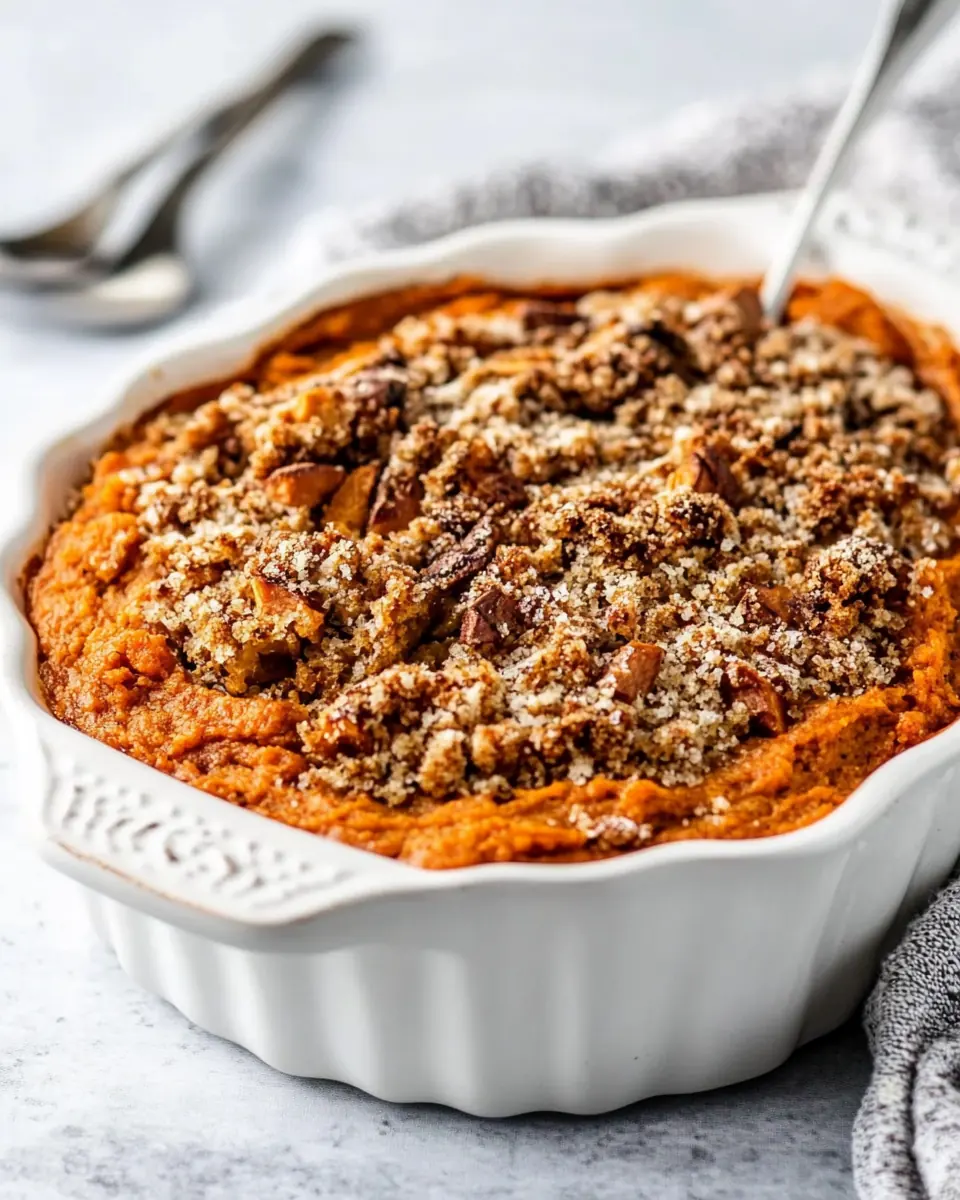
This recipe is straightforward but benefits from attention at each stage. I like to pace myself so the potatoes bake fully and the streusel achieves a golden crunch. Below I expand every direction with sensory notes, reasons why the step matters, and common pitfalls to avoid.
- Preheat the oven to 425°F. Line a rimmed baking sheet with aluminum foil or parchment paper. With a fork, poke holes in the outsides of the sweet potatoes. Bake for 40 to 60 minutes (timing will depend upon the size of your sweet potatoes), until very tender when pierced with a fork. Set aside to cool.: You will notice a sweet, earthy aroma building in the kitchen as the sweet potatoes roast, and their skins will darken and blister slightly, signaling that the sugars are concentrating. The fork holes let steam escape so the potatoes do not burst, and the high heat helps the interior become silky. A key sensory cue is when a fork slides in with almost no resistance, indicating full tenderness. If potatoes are underbaked, you'll get lumps and a denser texture in the filling, so resist removing them early. Avoid wrapping them tightly while hot, as trapped steam can make the flesh watery.
- Reduce the oven temperature to 350°F. Coat a 9×13 casserole dish or similar 2 1/2 quart casserole dish with nonstick spray.: Lowering the oven to 350°F ensures the casserole cooks gently without the topping burning. When you coat the dish, the surface should look evenly glossy, which prevents sticking and makes serving easier. The visual cue is a thin, even sheen of spray. If you skip greasing, the edges may cling as the filling sets, making portions messy to serve. Use a dish close to the stated size for even cooking, because a too shallow dish can overbrown the topping prematurely.
- Once the sweet potatoes are cool enough to handle, remove the peels. Scoop out the sweet potato flesh and place it in a large mixing bowl or the bowl of a stand mixer fitted with the paddle attachment. (You can also use an electric hand mixer.): As you scoop, the flesh should be smooth and moist, not stringy. The act of scooping into a bowl keeps skins from adding coarse bits. Using a stand mixer with the paddle gives a very even mash, while a hand mixer offers more control. Avoid leaving any burnt or dry edges of skin in the mash since they can create gritty bits. If you see fibers, give a brief extra beat to smooth them out but do not overwork or the mixture can become gluey.
- Add the butter, eggs, sugar, maple syrup, vanilla, cinnamon, salt, and milk.: As these ingredients join the warm sweet potatoes , aromas lift immediately, especially the maple and vanilla. The butter melts into the mash creating glossy richness, while eggs will help set the mixture in the oven. Adding milk loosens the texture so it becomes creamy rather than dense. Stir gently at first so nothing splashes, then increase speed or vigor. A common mistake is adding too much liquid at once, which can make the filling runny; adjust milk gradually to reach the desired thickness.
- Beat until smoothly combined.: You should feel the mixture change from slightly lumpy to a uniform, silky mass, and you'll see a glossy surface indicating proper emulsion. The smell will be sweet and warmly spiced. Properly combined, the filling holds together but is spoonable, not pourable. Overbeating can cause the eggs to break down and create a firmer set, so stop once smooth. If you notice pockets of unmixed butter, fold gently until fully incorporated.
- Scoop into the prepared baking dish.: As you transfer the filling, use a rubber spatula to scrape every bit into the dish, leaving a level surface to receive the topping. The filling should sit slightly mounded but even enough so the streusel adheres on top. When spreading, the touch should be gentle so you do not compress the air that helps keep it light. If you press too hard, the texture can become denser after baking.
- Next, prepare the topping. In a medium mixing bowl, melt the butter. Sprinkle the chopped pecans, coconut, brown sugar, flour, and salt over the top. Stir until evenly moistened and combined. Scatter the streusel topping over the sweet potatoes in an even layer.: The butter should be warm and fluid, coating particles of pecans and coconut so they brown evenly in the oven. When mixed, the streusel takes on a sandy, slightly sticky texture that clumps when pinched. Spread it across the surface so there are no large bare spots, and leave some variation in cluster size for a pleasing crunch. A common error is overmixing the streusel which can make it too pasty rather than crumbly; stop once everything is moistened.
- Bake the sweet potato souffle until the topping is lightly browned and your kitchen smells amazing, about 40 minutes. Let rest 5 minutes, then enjoy warm.: During this bake, the topping will sizzle and caramelize, giving off a toasty aroma from the pecans and brown sugar. Look for a golden brown surface with scattered darker spots on nut pieces, and for gentle bubbling at the edges indicating the filling is set. Letting it rest allows residual heat to finish the interior and helps slices hold shape. A common pitfall is overbaking which dries the filling, so check at the earlier end of the time range and cover loosely with foil if the topping is browning too quickly.
How to Switch It Up
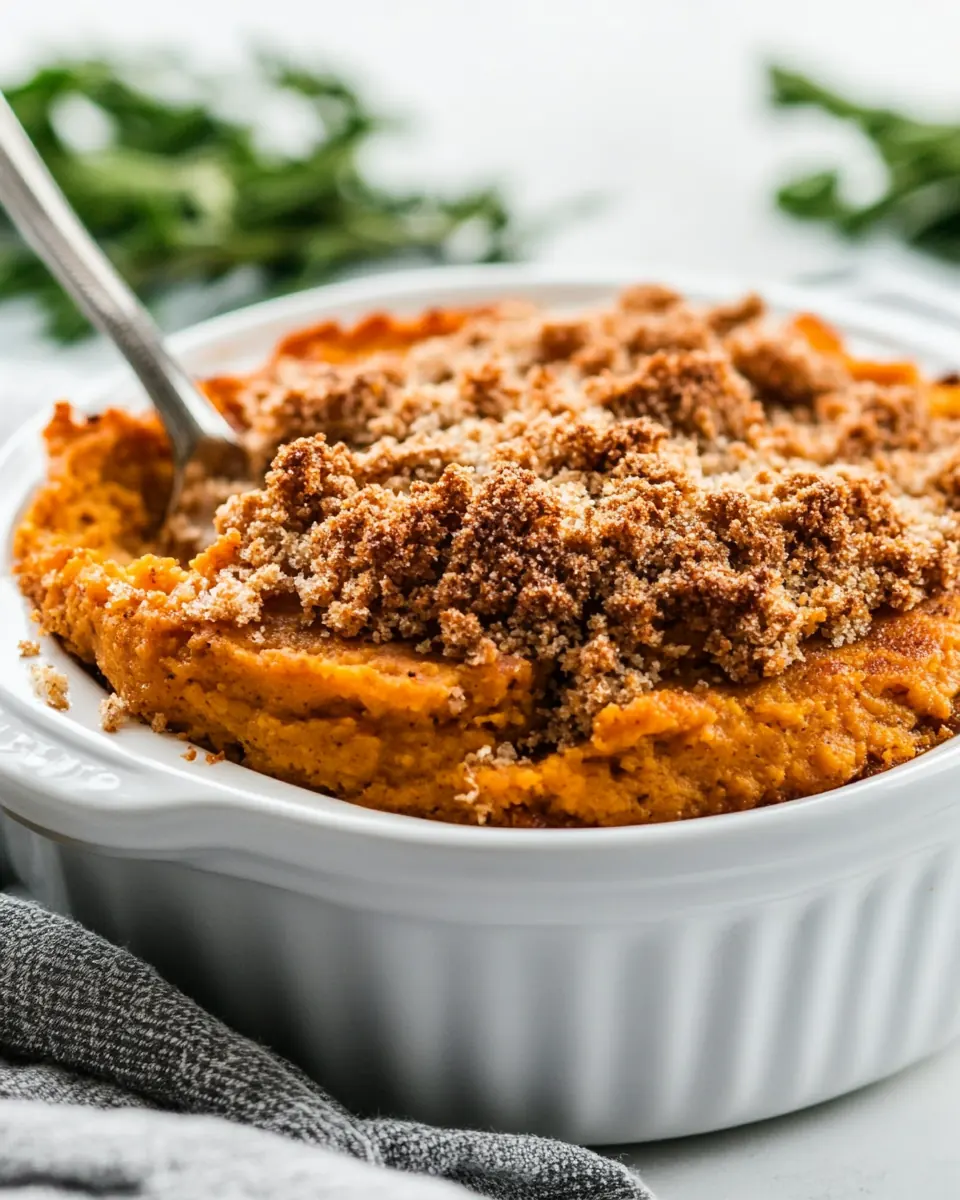
This section offers ways to adapt texture, flavor, and make ahead strategies while keeping the heart of Sweet Potato Souffle intact. Use these tips to personalize the dish based on what you have on hand and the occasion.
- Swap the nuts: If you prefer a different nut profile, try halves of toasted walnuts for a slightly bitter edge that pairs well with brown sugar.
- Adjust the spice: Increase the ground cinnamon to the full teaspoon for a bolder warming note that reads especially festive during cooler months.
- Make it ahead: Prepare the filling and store in the baking dish covered, keep the streusel separate in the fridge and combine before baking to save time the day you serve.
- Change the sweetener: Replace part of the maple syrup with extra granulated sugar if you want a less pronounced maple flavor while maintaining sweetness and moisture.
- Switch milk fat: Using higher fat milk or a splash of cream yields a richer, more custard like filling, while lower fat milk keeps it lighter.
Serving Options for Sweet Potato Souffle
This dish is versatile for many meals and occasions. Serve it warm straight from the oven, and consider pairing options and storage tips to fit your event or weeknight routine.
- Holiday center side: Serve as a Thanksgiving side alongside roasted mains and a crisp green vegetable for balance; it pairs beautifully with savory mains.
- Weeknight comfort: Offer it as a cozy side for simple family dinners, where it provides both substance and sweet warmth without extra fuss.
- Make ahead and reheat: Bake ahead and rewarm in a 350°F oven until heated through, covering with foil to retain moisture, which makes entertaining easier.
- Portion and store: Store leftovers in an airtight container in the refrigerator for up to four days, then reheat individual portions in the microwave or oven.
- Seasonal pairing: In the fall, complement it with spiced beverages and roasted vegetables; in winter, let it sit next to richer proteins for a balanced holiday plate.
- Presentation tip: Sprinkle a few extra chopped pecans on top right before serving to refresh the crunch and brighten the appearance.
FAQ
Conclusion
Sweet Potato Souffle stands out because of its perfect balance of creamy, whipped roasted sweet potatoes and a crunchy, caramelized streusel. The combination of maple, vanilla, and toasted pecans creates comforting flavors that feel celebratory yet familiar. I encourage you to give it a try at your next family dinner or holiday gathering; it holds well, can be partially prepared ahead, and always draws compliments. Enjoy the warm aroma as it bakes and the contrast of textures when you serve it warm, and know that a simple dish can make a memorable centerpiece.
Sweet Potato Souffle
Ingredients
Equipment
Method
- Preheat the oven to 425°F. Line a rimmed baking sheet with aluminum foil or parchment paper. With a fork, poke holes in the outsides of the sweet potatoes. Bake for 40 to 60 minutes (timing will depend upon the size of your sweet potatoes), until very tender when pierced with a fork. Set aside to cool.: You will notice a sweet, earthy aroma building in the kitchen as the sweet potatoes roast, and their skins will darken and blister slightly, signaling that the sugars are concentrating. The fork holes let steam escape so the potatoes do not burst, and the high heat helps the interior become silky. A key sensory cue is when a fork slides in with almost no resistance, indicating full tenderness. If potatoes are underbaked, you'll get lumps and a denser texture in the filling, so resist removing them early. Avoid wrapping them tightly while hot, as trapped steam can make the flesh watery.
- Reduce the oven temperature to 350°F. Coat a 9×13 casserole dish or similar 2 1/2 quart casserole dish with nonstick spray.: Lowering the oven to 350°F ensures the casserole cooks gently without the topping burning. When you coat the dish, the surface should look evenly glossy, which prevents sticking and makes serving easier. The visual cue is a thin, even sheen of spray. If you skip greasing, the edges may cling as the filling sets, making portions messy to serve. Use a dish close to the stated size for even cooking, because a too shallow dish can overbrown the topping prematurely.
- Once the sweet potatoes are cool enough to handle, remove the peels. Scoop out the sweet potato flesh and place it in a large mixing bowl or the bowl of a stand mixer fitted with the paddle attachment. (You can also use an electric hand mixer.): As you scoop, the flesh should be smooth and moist, not stringy. The act of scooping into a bowl keeps skins from adding coarse bits. Using a stand mixer with the paddle gives a very even mash, while a hand mixer offers more control. Avoid leaving any burnt or dry edges of skin in the mash since they can create gritty bits. If you see fibers, give a brief extra beat to smooth them out but do not overwork or the mixture can become gluey.
- Add the butter, eggs, sugar, maple syrup, vanilla, cinnamon, salt, and milk.: As these ingredients join the warm sweet potatoes , aromas lift immediately, especially the maple and vanilla. The butter melts into the mash creating glossy richness, while eggs will help set the mixture in the oven. Adding milk loosens the texture so it becomes creamy rather than dense. Stir gently at first so nothing splashes, then increase speed or vigor. A common mistake is adding too much liquid at once, which can make the filling runny; adjust milk gradually to reach the desired thickness.
- Beat until smoothly combined.: You should feel the mixture change from slightly lumpy to a uniform, silky mass, and you'll see a glossy surface indicating proper emulsion. The smell will be sweet and warmly spiced. Properly combined, the filling holds together but is spoonable, not pourable. Overbeating can cause the eggs to break down and create a firmer set, so stop once smooth. If you notice pockets of unmixed butter, fold gently until fully incorporated.
- Scoop into the prepared baking dish.: As you transfer the filling, use a rubber spatula to scrape every bit into the dish, leaving a level surface to receive the topping. The filling should sit slightly mounded but even enough so the streusel adheres on top. When spreading, the touch should be gentle so you do not compress the air that helps keep it light. If you press too hard, the texture can become denser after baking.
- Next, prepare the topping. In a medium mixing bowl, melt the butter. Sprinkle the chopped pecans, coconut, brown sugar, flour, and salt over the top. Stir until evenly moistened and combined. Scatter the streusel topping over the sweet potatoes in an even layer.: The butter should be warm and fluid, coating particles of pecans and coconut so they brown evenly in the oven. When mixed, the streusel takes on a sandy, slightly sticky texture that clumps when pinched. Spread it across the surface so there are no large bare spots, and leave some variation in cluster size for a pleasing crunch. A common error is overmixing the streusel which can make it too pasty rather than crumbly; stop once everything is moistened.
- Bake the sweet potato souffle until the topping is lightly browned and your kitchen smells amazing, about 40 minutes. Let rest 5 minutes, then enjoy warm.: During this bake, the topping will sizzle and caramelize, giving off a toasty aroma from the pecans and brown sugar. Look for a golden brown surface with scattered darker spots on nut pieces, and for gentle bubbling at the edges indicating the filling is set. Letting it rest allows residual heat to finish the interior and helps slices hold shape. A common pitfall is overbaking which dries the filling, so check at the earlier end of the time range and cover loosely with foil if the topping is browning too quickly.
Notes
- Swap the nuts: If you prefer a different nut profile, try halves of toasted walnuts for a slightly bitter edge that pairs well with brown sugar.
- Adjust the spice: Increase the ground cinnamon to the full teaspoon for a bolder warming note that reads especially festive during cooler months.
- Make it ahead: Prepare the filling and store in the baking dish covered, keep the streusel separate in the fridge and combine before baking to save time the day you serve.
- Change the sweetener: Replace part of the maple syrup with extra granulated sugar if you want a less pronounced maple flavor while maintaining sweetness and moisture.
- Switch milk fat: Using higher fat milk or a splash of cream yields a richer, more custard like filling, while lower fat milk keeps it lighter.