Homemade Lemon Tart
Homemade Lemon Tart is one of those treats I reach for when I want something bright, elegant, and genuinely comforting all at once. The first time I made this tart I was chasing a memory from a seaside bakery, the kind of place where the lemon perfume hangs in the air and every forkful feels like sunshine. I remember rolling the dough on a floured counter while a playlist from that summer hummed in the background, and the simple act of zesting a lemon felt somehow ceremonial and joyful.
Over the years I have refined the balance between tang and cream, and this version leans on a silky lemon curd folded into a light mascarpone filling nestled in a crisp shell. I love how the tart feels fancy without being fussy, it travels well to picnics, and it never fails to be the star of a dessert spread. When guests ask for seconds I know the texture and flavor hit just right.
There is also something meditative about making a tart from scratch, pressing the dough into the pan with your fingertips, and watching the custard set as the aroma of butter and lemon fills the kitchen. I like to prepare parts ahead, chilling the curd and resting the crust, so the final assembly feels calm instead of hurried. This recipe gives you structure, but it also rewards small personal touches, like arranging berries by color on top or using extra lemon zest for a lively finish.
Recipe Snapshot
1 hr 5 mins
45 mins
20 mins
Medium
300 kcal
American
Gluten-Free, Low FODMAP
Desserts
Food processor, Tart pan 8 inch, Oven, Standing mixer, Double boiler
What You’ll Enjoy About This Homemade Lemon Tart
Bright, Balanced Flavor
I adore how Homemade Lemon Tart achieves a lively lemon tang without overpowering the palate. The combination of lemon zest and juice with a gentle amount of sugar produces a curd that wakes up your senses. I often taste as I go, adjusting slightly, and the end result is a filling that is tart yet creamy, not syrupy.
Textural Contrast
The crunchy shell paired with a silky filling is why I keep coming back to this recipe. The pastry gives you that satisfying break beneath a velvety layer of curd and mascarpone, which creates a luxurious mouthfeel. When I bite into it the contrast is immediate, and that interplay lifts every forkful.
Make Ahead Friendly
I love that you can prepare major components in advance, which makes this ideal for gatherings. I usually bake the shell the day before and chill the curd until assembly, which reduces last minute fuss. This flexibility means you can enjoy hosting rather than spending the entire afternoon in the kitchen.
Approachable Yet Impressive
People assume tarts are complicated, but this one is approachable, especially if you break it into steps. I find that guiding someone through the process turns them into a tart convert immediately. It looks restaurant worthy, and yet the techniques are straightforward enough for a confident home baker.
Seasonal Appeal
Because lemons are bright and cheery, this tart feels perfect for springtime gatherings. I often serve it with fresh berries when they are in season, which adds color and a fresh note that complements the citrus. It simply makes celebrations feel lighter and more festive, and I always get compliments when I bring one to the table.
Ingredients You’ll Need for Homemade Lemon Tart
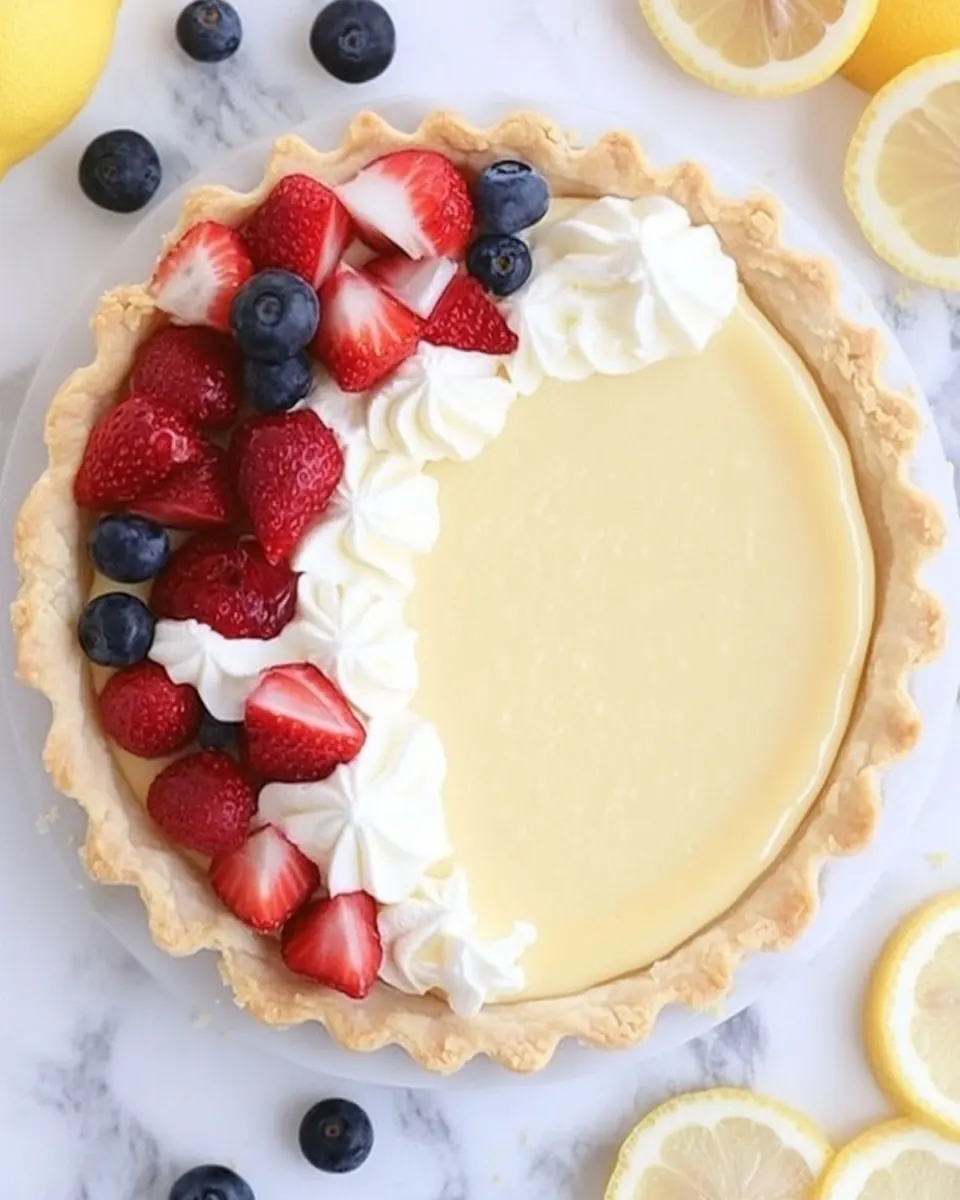
These ingredients are chosen to work together for a balance of texture and bright flavor. The pastry creates the structural contrast, while the curd provides the lemon punch, and the mascarpone base lends a silky richness. I think of the key players as the shell for structure, the lemon for acidity and aroma, and the cheeses for creaminess. Together they create that perfect bite people remember.
- 1 pie dough crust recipe: Provide a buttery, flaky base that holds the filling and provides structure; prepare by rolling and blind-baking according to recipe instructions to ensure a crisp shell. Chill the dough before baking to prevent shrinkage and achieve desirable texture, and crimp or trim edges for an even appearance. Use as the foundation for the lemon cream and toppings, ensuring a stable vessel for serving.
- 1/2 cup powdered sugar: Add a fine, sweet dusting to the crust or filling that smooths texture and balances tartness; sift before use to remove lumps and ensure even sweetness. Sprinkle lightly for garnish or incorporate into fillings for subtle sweetness without graininess. Use measured amounts to avoid overpowering the lemon flavor.
- 2 eggs: Provide lightness and act as a binder in the lemon custard, contributing to set and structure when gently cooked or baked. Beat eggs with sugars to incorporate air and create a silky texture, taking care not to overcook to avoid curdling. Use fresh eggs for optimal flavor and stability in the tart filling.
- 2 egg yolks: Contribute extra richness and help thicken the lemon curd while intensifying the custard's creaminess. Whisk yolks with sugar and lemon components before gentle heating to create a smooth, velvety custard. Temper properly when combining with hot ingredients to prevent scrambling and ensure a glossy finish.
- 1/4 cup of sugar: Supply sweetness to balance lemon acidity and help stabilize the custard; dissolve sugar with eggs and lemon juice for even integration. Adjust sugar slightly if lemons are particularly tart, but maintain ratios to preserve set and texture. Use fine granulated sugar for predictable dissolving and flavor.
- zest of 1 lemon: Provide bright citrus aroma and concentrated lemon oils that enhance flavor and fragrance throughout the filling; zest finely to avoid bitter pith. Incorporate zest into the custard or mascarpone mixture for pronounced lemon character and visual flecks. Use organic or well-washed lemons when including zest.
- juice of 2 lemons, about 6 tablespoons: Contribute fresh lemon acidity and liquid to create the tart curd base; measure juice for consistent balance between sweet and sour flavors. Strain if pulp or seeds are present for a smooth custard, and incorporate gradually while tempering eggs to form a stable curd. Use fresh-squeezed juice for best flavor clarity.
- 1 stick unsalted ice-cold butter, cut up: Provide richness and help thicken the lemon filling while adding a smooth mouthfeel; keep butter cold if specified or melt slowly depending on method. Cut into pieces to ensure even melting and incorporation into the custard or in a technique like tempering for glossy finish. Use unsalted butter to control overall salt level in the tart.
- 16 ounces mascarpone cheese: Add creamy, slightly tangy richness to the filling that yields a luscious texture and stabilizes the custard; soften to room temperature for easy mixing. Beat mascarpone gently to prevent graininess and combine thoroughly with other dairy components for a smooth, luxurious filling. Use full-fat mascarpone for best body and flavor.
- 4 ounces cream cheese: Provide additional tangy creaminess and a firmer structure to the filling when combined with mascarpone; soften before blending to ensure homogeneity. Use cream cheese sparingly to avoid overpowering lemon notes, and whisk until smooth to eliminate lumps. Refrigerate after assembling to help the filling set properly.
- 1/2 cup powdered sugar: Contribute extra sweetness and smoothness to dairy mixtures or dust the finished tart for refined presentation; sift before adding to avoid clumping. Use powdered sugar to gently sweeten fillings without altering texture significantly, and adjust amount to taste for balanced acidity. Sprinkle lightly over berries or crust for an elegant look.
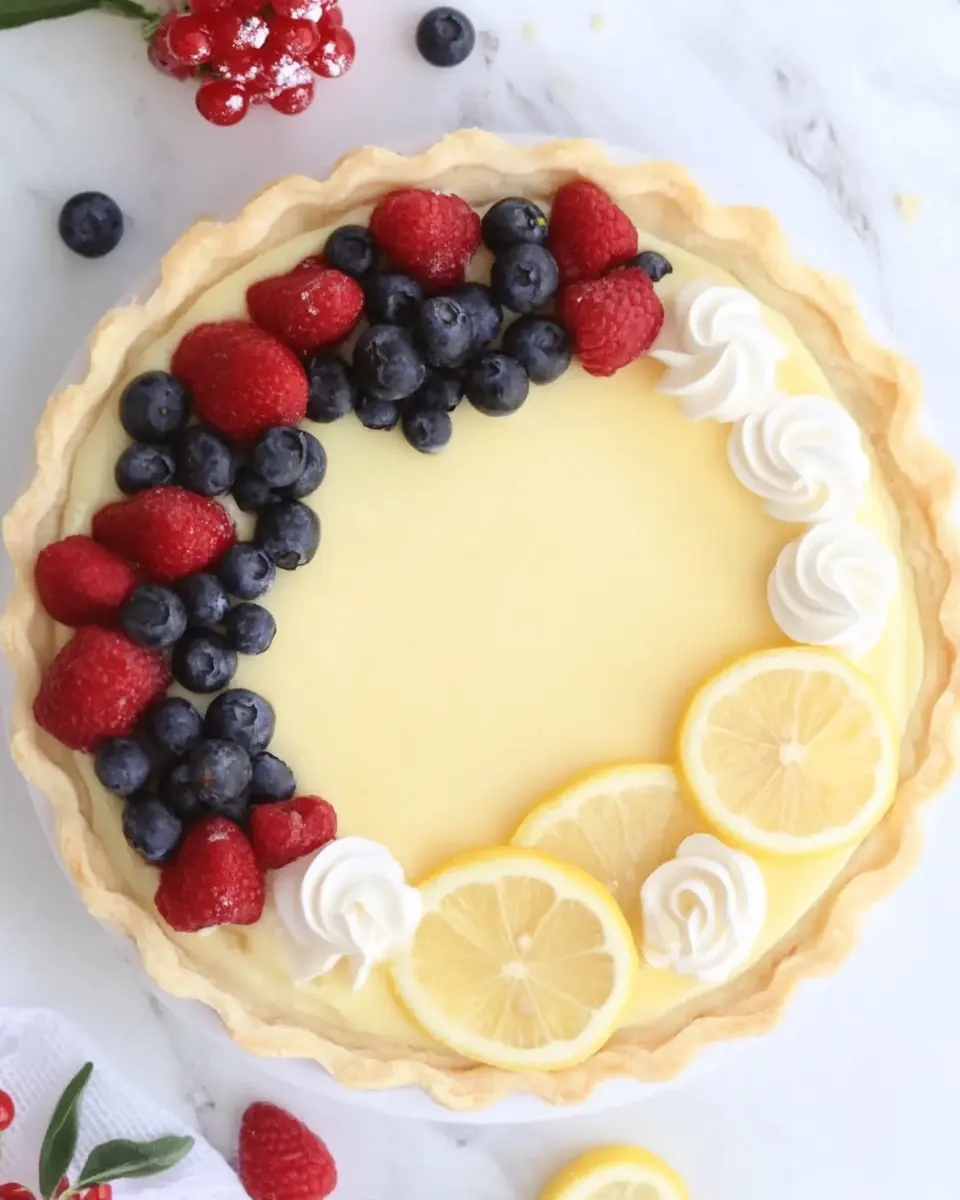
- assorted fresh berries: Offer fresh, bright garnish with seasonal sweetness and color that complements lemon tang; rinse and dry berries gently before arranging. Vary selection for balance of sweetness and acidity, and arrange decoratively on top of the set tart for visual appeal. Serve fresh to preserve texture and flavor contrast with creamy filling.
Putting Together Homemade Lemon Tart
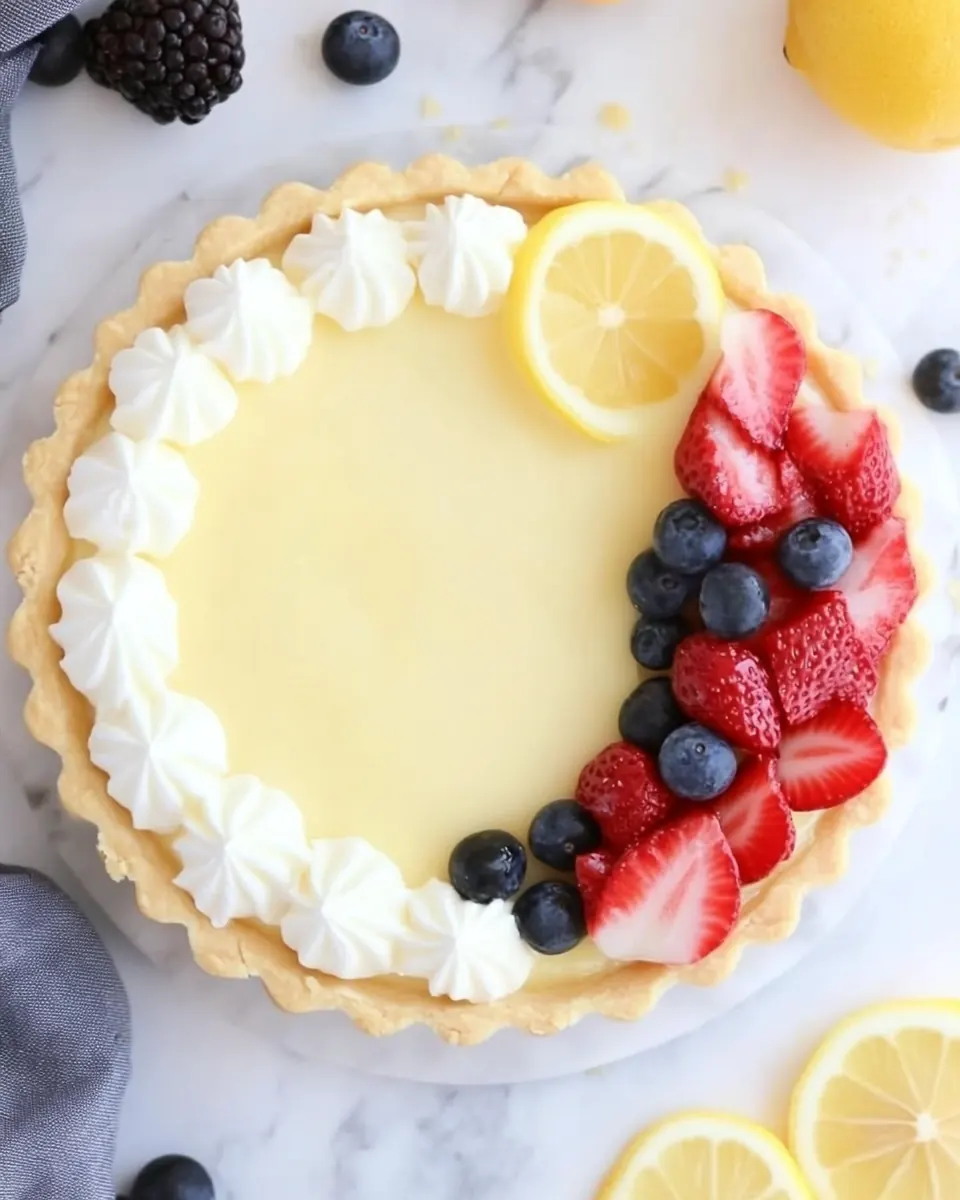
Now we move into the assembly phase where patience pays off. The steps below expand on each direction so you can follow along with confidence, paying attention to sensory cues and why every technique matters.
- In a food processor, add in the pie crust ingredients plus 1/2 cup of powdered sugar and pulse until a dough has formed. Slowly drizzle in the water while pulsing until it becomes a meal-like texture.: The bowl will begin to show clumps of dough and a coarse, sandy texture before it comes together, you should hear a gentle change in the motor pitch as it forms. This method keeps the butter cold which leads to flakier pastry, and pulsing rather than continuous mixing prevents overworking gluten. A common mistake is running the processor too long, which warms the fat and results in a tough crust, so pulse in short bursts and watch for the dough to just come together.
- Transfer the dough to a clean surface and roll it out until it is about 1/8” thick. Form it into a 2” inch deep 8” round tart pan. Trim off any excess.: You will feel the mixture clump slowly as the liquid binds the dry ingredients, and it should resemble coarse crumbs that hold together when pinched. Adding water gradually allows you to stop at the right moment so the dough is neither dry nor wet. If you add too much water, the dough becomes sticky and hard to handle, leading to a dense crust, so err on the side of adding less and adding a teaspoon more only if needed.
- Bake in the oven at 400° for 12-15 minutes or until lightly browned and cooked. Let it cool.: As you roll, the dough should be cool to the touch and roll with a few faint cracks at the edges that you can press smooth. A 1/8” thickness gives a light, crisp shell that bakes evenly. Keep the dough chilled between rolling if it softens, because warm dough stretches and shrinks in the pan. A frequent pitfall is overworking the dough which toughens it, so handle it lightly and use gentle, even pressure with the rolling pin.
- In a large metal bowl over a medium size pot of boiling water, whisk together the eggs, egg yolks, 1/4 cup of sugar, zest of 1 lemon, and juice of 1 lemon until it becomes very thick, like a custard, which is about 2 to 4 minutes. Be sure to whisk constantly. Remove the bowl and whisk in the butter until it has melted. Cool the mixture in the refrigerator until completely cooled.: When fitting the crust into the pan, press gently into the corners and up the sides so there are no air pockets, and trim excess for a neat rim. The depth and diameter give the tart the right proportion of crust to filling, and an even layer prevents soggy spots. If you stretch the dough too much while lining the pan it will spring back and shrink during baking, so allow it to relax and patch any thin spots instead of stretching them.
- In a standing mixture with the whip attachment on high speed, mix the mascarpone and cream cheese until light and fluffy, which takes about 5 to 7 minutes, and then add in the remaining lemon zest, lemon juice, and powdered sugar. Mix until combined, and then fold in the chilled lemon curd.: Use a sharp knife or rolling pin over the pan edge to remove extra dough, then crimp or smooth the rim as you prefer; clean edges create an attractive final presentation. Excess dough can be saved and baked as decor or scraps, but leaving it makes the crust too thick and uneven. A mistake here is leaving ragged edges that bake unevenly, producing dark or underdone spots, so aim for uniform thickness all around.
- Pour the mixture into the cooked pie shell and cool overnight in the refrigerator or until it firms up. Garnish with berries and serve!: As the crust bakes you should see it take on a pale golden tone and smell a warm, toasty aroma of butter . The high heat sets the layers in the dough quickly, promoting flakiness and preventing a soggy bottom. Use visual cues rather than relying solely on time because oven temperatures vary. One thing to avoid is opening the oven repeatedly which drops the temperature and can cause the shell to collapse or bake unevenly.
- Let it cool: Cooling the shell at room temperature allows the structure to firm up and prevents condensation from softening the base when the filling is added. The cooled shell will feel slightly firm and not soft to the touch. Rushing this step by adding warm filling can create a runny center, so give it time to cool thoroughly.
- In a large metal bowl over a medium size pot of boiling water, whisk together the eggs, egg yolks, 1/4 cup of sugar, zest of 1 lemon, and juice of 1 lemon until it becomes very thick, like a custard, which is about 2 to 4 minutes: As you whisk constantly the mixture will gradually thicken and take on a pale, glossy sheen, and the aroma will intensify with bright lemon notes. Using a double boiler provides gentle, even heat so the eggs thicken without scrambling, yielding a smooth curd. A common error is letting the water touch the bowl which can overheat and cook the eggs too fast, so keep a gentle simmer and whisk continuously.
- Be sure to whisk constantly: Continuous whisking ensures even heat distribution and creates a silky texture rather than curdled bits, and you will notice the mixture pulling slightly from the sides of the bowl when it is ready. This motion also traps air that makes the curd lighter. Stopping to answer a call or stepping away risks lumps or cooked egg bits, so stay attentive for uniform consistency.
- Remove the bowl and whisk in the butter until it has melted: As the warm curd meets cold diced butter , whisking will create a glossy, emulsified curd that tastes rich and velvety. The small pieces melt into the curd, rounding the flavor and smoothing texture. If the butter is too warm or added too quickly it can separate, so add it gradually while whisking to maintain a cohesive emulsion.
- Cool the mixture in the refrigerator until completely cooled: Chilling firms the curd and stops carryover cooking, giving a stable base to fold into the cheese mixture. You will feel the curd thicken and the aroma will mellow slightly. A mistake is folding in warm curd which can deflate or soften the whipped cheese, so be patient and cool it thoroughly.
- In a standing mixture with the whip attachment on high speed, mix the mascarpone and cream cheese until light and fluffy which takes about 5 to 7 minutes: The whisk will aerate the mascarpone and cream cheese into a pale, billowy mass that sings when you lift the whisk; this creates the luscious texture for the filling. Whipping at high speed incorporates air which keeps the filling from feeling dense. Overwhipping can break the mixture and cause it to become grainy, so stop when it is smooth and airy.
- Then add in the remaining lemon zest lemon juice and powdered sugar: Adding the additional lemon components and powdered sugar at this stage brightens the cheese base and sweetens it evenly, and you will notice the mixture become slightly looser and more fragrant. This step balances the richness with acidity. If you add too much juice at once the mixture may loosen excessively, so add gradually and taste as you go.
- Mix until combined and then fold in the chilled lemon curd: The folding motion preserves the airy texture while integrating the curd, so you should see ribbons of pale lemon color swirl through the mixture before it harmonizes. Folding rather than beating keeps the filling light and prevents deflation. Vigorous mixing will flatten the aerated base and yield a denser filling, so use gentle, deliberate turns.
- Pour the mixture into the cooked pie shell and cool overnight in the refrigerator or until it firms up: As the filling settles into the shell the surface will smooth and the fridge will help it set to a sliceable consistency, with the aroma of lemon mellowing into a creamy finish. Overnight refrigeration gives the best texture and flavor melding. A common misstep is rushing the chill time, which results in a filling that is too soft to slice neatly, so give it ample time to firm.
- Garnish with berries and serve: Fresh berries add color, freshness, and a subtle textural contrast that complements the creamy filling; arrange them just before serving for the best visual impact. The berries should be dry and cool, not wet, or they can create moisture on the surface. If you prepare the tart too far in advance with berries already on top they may weep, so garnish at the last moment.
Tips and Tricks about Homemade Lemon Tart
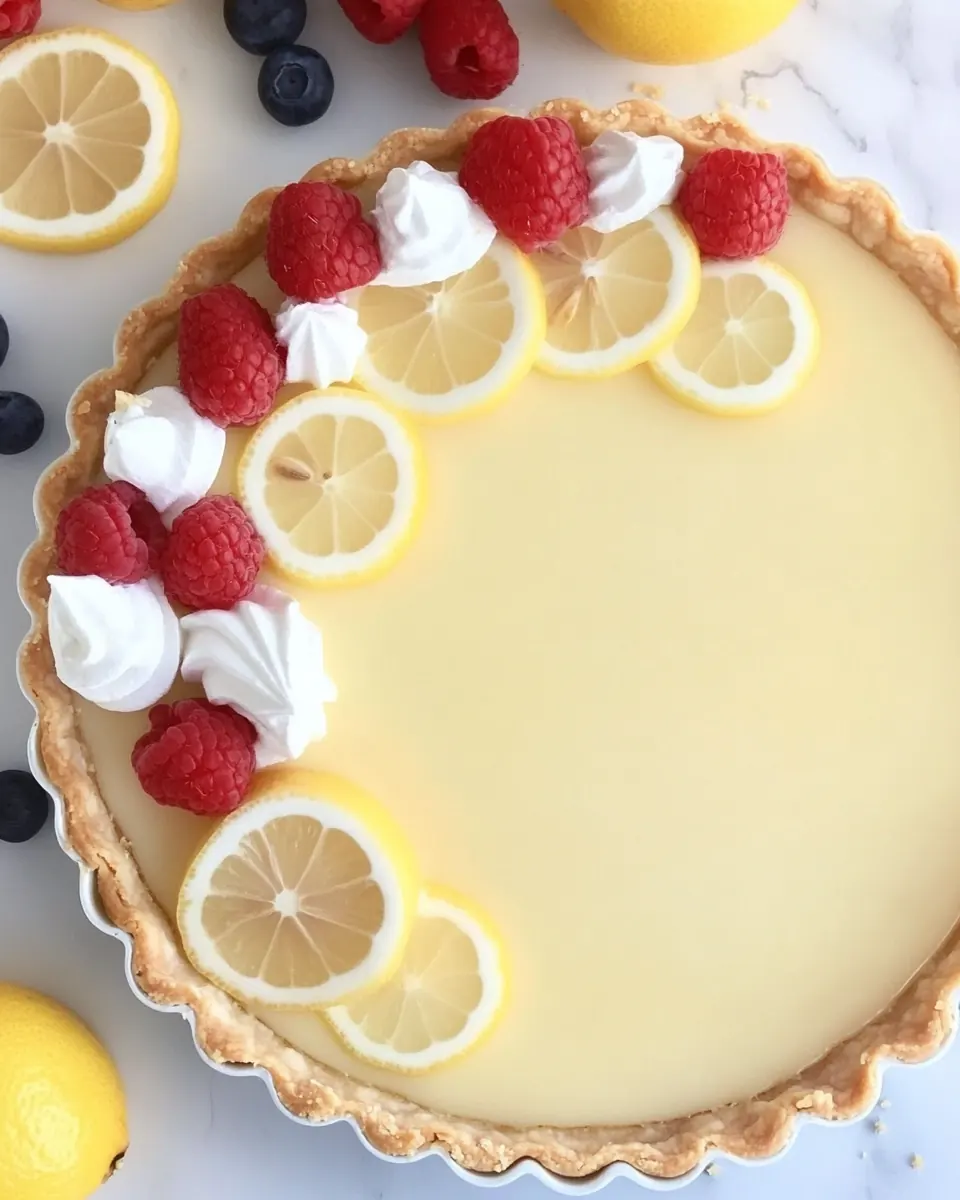
This recipe rewards small details, and these tips will help you get a consistent, impressive result. I include practical pointers I learned after several bakings so you can avoid common pitfalls and enjoy the process.
- Keep ingredients cold: Chilled butter and a cool environment help the pastry stay flaky rather than greasy, improving the final texture significantly.
- Add water sparingly: When bringing the dough together, add ice water one teaspoon at a time so you do not overhydrate the dough which causes tough pastry.
- Watch the curd carefully: Use a double boiler and whisk constantly to achieve a glossy, lump free curd, and remove from heat as soon as it thickens to avoid curdling.
- Temper your eggs slightly: If your curd seems prone to cooking, whisk a small amount of the warm curd into the eggs first before returning to heat to reduce the shock and prevent scrambling.
- Use fresh lemon juice: Freshly squeezed juice gives the brightest flavor, and bottled juice lacks the vibrant aromatic oils found in fresh lemon.
- Chill overnight: For the cleanest slices and best texture, let the assembled tart rest in the refrigerator overnight so the filling sets properly.
Best Served With
This tart shines when paired thoughtfully, whether for a casual afternoon tea or a formal celebration. Below are serving ideas, seasonal pairings, storage tips, and occasions where it truly excels.
- Light tea service: Serve slices with a pot of mild black or herbal tea for an elegant afternoon pairing that complements the lemon notes without overwhelming them.
- Spring brunch: Pair with fresh fruit and a simple green salad for a springtime menu where the tart provides a bright, sweet finish to the meal.
- Special occasions: For birthdays or gatherings, present the tart on a cake stand and garnish with assorted berries and extra zest to create a festive centerpiece.
- Make ahead and store: Cover tightly and refrigerate for up to four days to keep the filling firm and flavors balanced, or freeze wrapped for longer storage, thawing in the fridge overnight before serving.
- Seasonal pairings: In spring serve with strawberries and early raspberries, while late summer berries also work beautifully, offering a pleasant contrast in texture and flavor.
- Portioning: Use a hot, dry knife to slice neat pieces, wiping between cuts for perfect presentation when serving guests.
FAQ
Conclusion
This tart stands out for its bright lemon character, creamy mascarpone body, and crisp pastry shell all working together harmoniously. Try making it for your next brunch or celebration, because the balance of textures and flavors is reliably impressive and not as difficult as it looks. Enjoy the process, take your time with the curd, and savor the moments when your kitchen fills with that irresistible lemon and butter aroma.
Homemade Lemon Tart
Ingredients
Equipment
Method
- In a food processor, add in the pie crust ingredients plus 1/2 cup of powdered sugar and pulse until a dough has formed. Slowly drizzle in the water while pulsing until it becomes a meal-like texture.: The bowl will begin to show clumps of dough and a coarse, sandy texture before it comes together, you should hear a gentle change in the motor pitch as it forms. This method keeps the butter cold which leads to flakier pastry, and pulsing rather than continuous mixing prevents overworking gluten. A common mistake is running the processor too long, which warms the fat and results in a tough crust, so pulse in short bursts and watch for the dough to just come together.
- Transfer the dough to a clean surface and roll it out until it is about 1/8” thick. Form it into a 2” inch deep 8” round tart pan. Trim off any excess.: You will feel the mixture clump slowly as the liquid binds the dry ingredients, and it should resemble coarse crumbs that hold together when pinched. Adding water gradually allows you to stop at the right moment so the dough is neither dry nor wet. If you add too much water, the dough becomes sticky and hard to handle, leading to a dense crust, so err on the side of adding less and adding a teaspoon more only if needed.
- Bake in the oven at 400° for 12-15 minutes or until lightly browned and cooked. Let it cool.: As you roll, the dough should be cool to the touch and roll with a few faint cracks at the edges that you can press smooth. A 1/8” thickness gives a light, crisp shell that bakes evenly. Keep the dough chilled between rolling if it softens, because warm dough stretches and shrinks in the pan. A frequent pitfall is overworking the dough which toughens it, so handle it lightly and use gentle, even pressure with the rolling pin.
- In a large metal bowl over a medium size pot of boiling water, whisk together the eggs, egg yolks, 1/4 cup of sugar, zest of 1 lemon, and juice of 1 lemon until it becomes very thick, like a custard, which is about 2 to 4 minutes. Be sure to whisk constantly. Remove the bowl and whisk in the butter until it has melted. Cool the mixture in the refrigerator until completely cooled.: When fitting the crust into the pan, press gently into the corners and up the sides so there are no air pockets, and trim excess for a neat rim. The depth and diameter give the tart the right proportion of crust to filling, and an even layer prevents soggy spots. If you stretch the dough too much while lining the pan it will spring back and shrink during baking, so allow it to relax and patch any thin spots instead of stretching them.
- In a standing mixture with the whip attachment on high speed, mix the mascarpone and cream cheese until light and fluffy, which takes about 5 to 7 minutes, and then add in the remaining lemon zest, lemon juice, and powdered sugar. Mix until combined, and then fold in the chilled lemon curd.: Use a sharp knife or rolling pin over the pan edge to remove extra dough, then crimp or smooth the rim as you prefer; clean edges create an attractive final presentation. Excess dough can be saved and baked as decor or scraps, but leaving it makes the crust too thick and uneven. A mistake here is leaving ragged edges that bake unevenly, producing dark or underdone spots, so aim for uniform thickness all around.
- Pour the mixture into the cooked pie shell and cool overnight in the refrigerator or until it firms up. Garnish with berries and serve!: As the crust bakes you should see it take on a pale golden tone and smell a warm, toasty aroma of butter . The high heat sets the layers in the dough quickly, promoting flakiness and preventing a soggy bottom. Use visual cues rather than relying solely on time because oven temperatures vary. One thing to avoid is opening the oven repeatedly which drops the temperature and can cause the shell to collapse or bake unevenly.
- Let it cool: Cooling the shell at room temperature allows the structure to firm up and prevents condensation from softening the base when the filling is added. The cooled shell will feel slightly firm and not soft to the touch. Rushing this step by adding warm filling can create a runny center, so give it time to cool thoroughly.
- In a large metal bowl over a medium size pot of boiling water, whisk together the eggs, egg yolks, 1/4 cup of sugar, zest of 1 lemon, and juice of 1 lemon until it becomes very thick, like a custard, which is about 2 to 4 minutes: As you whisk constantly the mixture will gradually thicken and take on a pale, glossy sheen, and the aroma will intensify with bright lemon notes. Using a double boiler provides gentle, even heat so the eggs thicken without scrambling, yielding a smooth curd. A common error is letting the water touch the bowl which can overheat and cook the eggs too fast, so keep a gentle simmer and whisk continuously.
- Be sure to whisk constantly: Continuous whisking ensures even heat distribution and creates a silky texture rather than curdled bits, and you will notice the mixture pulling slightly from the sides of the bowl when it is ready. This motion also traps air that makes the curd lighter. Stopping to answer a call or stepping away risks lumps or cooked egg bits, so stay attentive for uniform consistency.
- Remove the bowl and whisk in the butter until it has melted: As the warm curd meets cold diced butter , whisking will create a glossy, emulsified curd that tastes rich and velvety. The small pieces melt into the curd, rounding the flavor and smoothing texture. If the butter is too warm or added too quickly it can separate, so add it gradually while whisking to maintain a cohesive emulsion.
- Cool the mixture in the refrigerator until completely cooled: Chilling firms the curd and stops carryover cooking, giving a stable base to fold into the cheese mixture. You will feel the curd thicken and the aroma will mellow slightly. A mistake is folding in warm curd which can deflate or soften the whipped cheese, so be patient and cool it thoroughly.
- In a standing mixture with the whip attachment on high speed, mix the mascarpone and cream cheese until light and fluffy which takes about 5 to 7 minutes: The whisk will aerate the mascarpone and cream cheese into a pale, billowy mass that sings when you lift the whisk; this creates the luscious texture for the filling. Whipping at high speed incorporates air which keeps the filling from feeling dense. Overwhipping can break the mixture and cause it to become grainy, so stop when it is smooth and airy.
- Then add in the remaining lemon zest lemon juice and powdered sugar: Adding the additional lemon components and powdered sugar at this stage brightens the cheese base and sweetens it evenly, and you will notice the mixture become slightly looser and more fragrant. This step balances the richness with acidity. If you add too much juice at once the mixture may loosen excessively, so add gradually and taste as you go.
- Mix until combined and then fold in the chilled lemon curd: The folding motion preserves the airy texture while integrating the curd, so you should see ribbons of pale lemon color swirl through the mixture before it harmonizes. Folding rather than beating keeps the filling light and prevents deflation. Vigorous mixing will flatten the aerated base and yield a denser filling, so use gentle, deliberate turns.
- Pour the mixture into the cooked pie shell and cool overnight in the refrigerator or until it firms up: As the filling settles into the shell the surface will smooth and the fridge will help it set to a sliceable consistency, with the aroma of lemon mellowing into a creamy finish. Overnight refrigeration gives the best texture and flavor melding. A common misstep is rushing the chill time, which results in a filling that is too soft to slice neatly, so give it ample time to firm.
- Garnish with berries and serve: Fresh berries add color, freshness, and a subtle textural contrast that complements the creamy filling; arrange them just before serving for the best visual impact. The berries should be dry and cool, not wet, or they can create moisture on the surface. If you prepare the tart too far in advance with berries already on top they may weep, so garnish at the last moment.
Notes
- Keep ingredients cold: Chilled butter and a cool environment help the pastry stay flaky rather than greasy, improving the final texture significantly.
- Add water sparingly: When bringing the dough together, add ice water one teaspoon at a time so you do not overhydrate the dough which causes tough pastry.
- Watch the curd carefully: Use a double boiler and whisk constantly to achieve a glossy, lump free curd, and remove from heat as soon as it thickens to avoid curdling.
- Temper your eggs slightly: If your curd seems prone to cooking, whisk a small amount of the warm curd into the eggs first before returning to heat to reduce the shock and prevent scrambling.
- Use fresh lemon juice: Freshly squeezed juice gives the brightest flavor, and bottled juice lacks the vibrant aromatic oils found in fresh lemon.
- Chill overnight: For the cleanest slices and best texture, let the assembled tart rest in the refrigerator overnight so the filling sets properly.