Eggnog Sugar Cookies
Eggnog Sugar Cookies feel like a warm memory every time I bake them, and the first time I made them was during a snowstorm when the power flickered and my kitchen filled with the scent of butter and spice. I remember laughing as I measured out the flour with cold fingers while a playlist of old holiday songs hummed in the background. That evening I learned that a simple combination of good ingredients can create moments that stick, and these cookies became my holiday go to for handing out to neighbors and for sneaking late at night.
Over the years I refined my approach, choosing a balance of creamy eggnog and a soft but sturdy dough so the shapes hold up while still melting on the tongue. I like to keep a stash in the freezer so I can thaw and roll whenever guests arrive unexpectedly. You will find these cookies friendly to decorating projects, and they match everything from cozy tea cups to festive cookie boxes.
Recipe Snapshot
25 mins
15 mins
10 mins
Medium
150 kcal
American
Gluten-Free, Low FODMAP
Desserts
Mixing bowl, Electric beaters, Standing mixer, Rolling pin, Cookie cutters, Baking sheet, Cooling rack
What Sets This Eggnog Sugar Cookies Apart
Classic holiday flavor in cookie form
I love how Eggnog Sugar Cookies capture that nostalgic holiday note without being fussy. The eggnog in the dough brings a gentle, spiced creaminess that you can actually taste, which makes these cookies feel special even when the technique is simple.
Great texture balance
What stands out to me is the contrast between a tender crumb and enough structure to hold intricate shapes. The measured combination of flour and a modest amount of baking powder creates a cookie that rolls smoothly and bakes up with delicate edges, giving you the freedom to decorate however you like.
Decorating friendly
These cookies are forgiving when it comes to glazing and sprinkles. The powdered sugar based icing adheres nicely to the slightly porous surface, so if you enjoy decorating, these will respond beautifully. I often assemble a small decorating station and make an event out of it with friends, swapping colors and techniques.
Adaptable and festive
Whether you keep them simple or go all out with colors and sprinkles, Eggnog Sugar Cookies fit any holiday table. They pair well with warm beverages and travel well if you are gifting them. I appreciate recipes that scale gracefully, and this one does exactly that, so you can double the batch without losing the texture.
Comforting and familiar
Finally, there is an emotional component I cannot overlook. These cookies often become the small tradition that marks a season, and for me they are tied to visits, small talk, and the hum of the oven. They are simple yet meaningful, and that makes them a dish I return to year after year.
Ingredient List for Eggnog Sugar Cookies
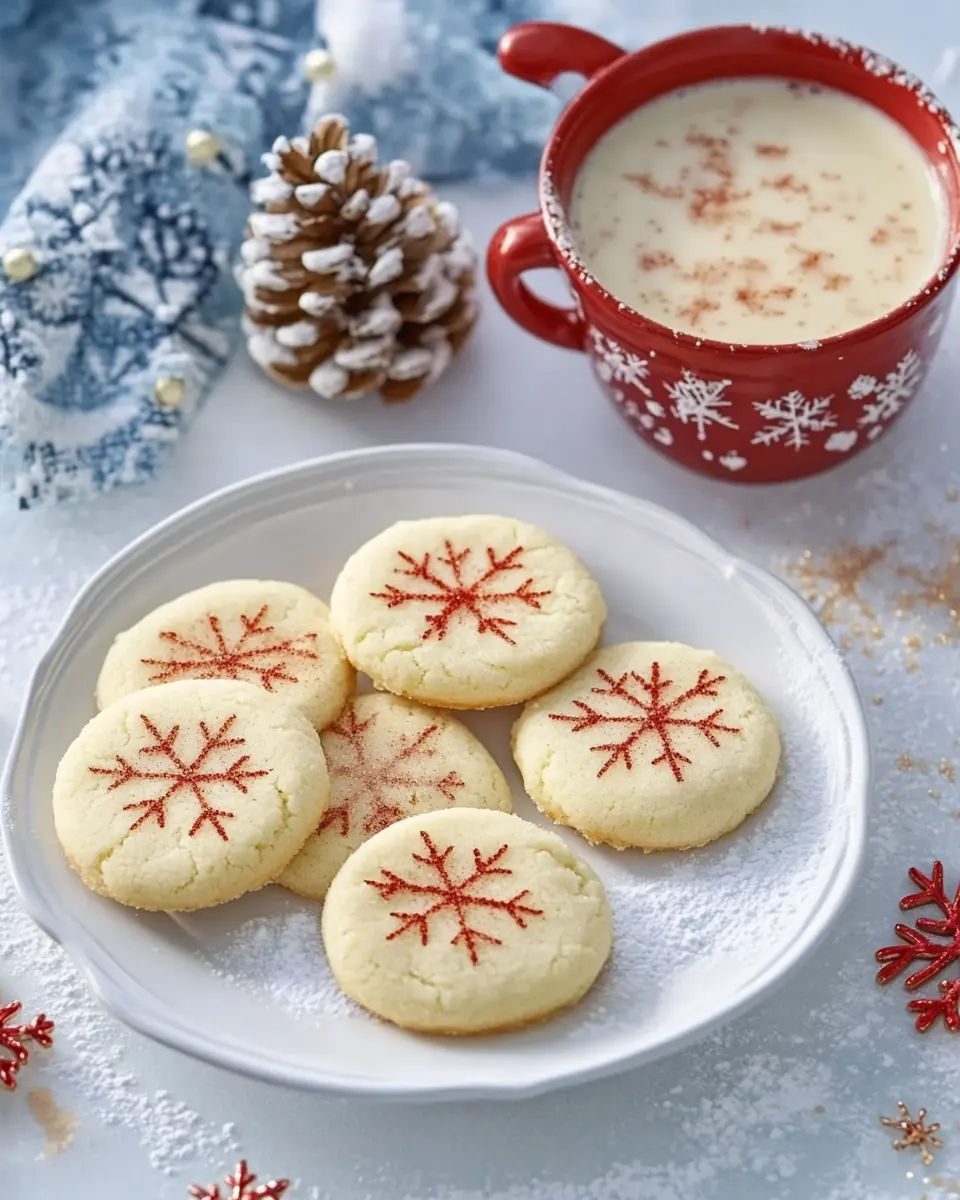
These ingredients are chosen to create a cookie that is both tender and sturdy, easy to roll, and receptive to decoration. The key players are the flour which builds structure, the butter which gives tenderness and flavor, and the eggnog which lifts the cookie with a festive, creamy note. The pairing of granulated and powdered sugar lets you sweeten the dough and then finish with a smooth glaze for decorating.
- 3 1/2 cups flour: Provide structure and bulk to the dough, creating the foundation for tender but sturdy cookies; sift if needed to avoid lumps and incorporate air for a lighter texture.
- 2 teaspoons baking powder: Leaven the cookies gently by releasing carbon dioxide during baking, contributing to slight rise and a soft crumb; evenly distribute through the dry ingredients to ensure consistent lift.
- 1/4 teaspoon salt: Enhance overall flavor balance by cutting sweetness and emphasizing other tastes; dissolve into the dry mix to ensure even seasoning throughout the dough.
- 1 cup sugar: Sweeten and tenderize the dough while helping to incorporate air when creamed with butter; measure precisely to maintain proper dough consistency and avoid overly sweet cookies.
- 1 cup butter: Add richness, moisture, and flavor while aiding in creating a tender crumb; soften to room temperature for easier creaming and uniform incorporation into the batter.
- 1 large egg: Contribute to structure and moisture while helping to bind ingredients together; beat in with butter and sugar to emulsify fats and create a stable cookie base.
- 1 teaspoon vanilla extract: Impart warm aromatic flavor and enhance other ingredients' profiles; blend into the batter to distribute flavor evenly without overpowering the cookie.
- 1/4 cup eggnog: Add vanilla-forward dairy flavor and additional moisture while reinforcing the eggnog theme; incorporate sparingly to avoid thinning the dough and to maintain proper texture.
- 1 cup powdered sugar: Provide a smooth, sweet glaze base that adds brightness and a delicate finish to the cooled cookies; whisk with milk until desired consistency is reached for easy spreading.
- 1 2 tablespoons milk: Adjust glaze consistency to achieve the right spreadability and sheen, adding by tablespoon until the icing reaches a pipeable but stable texture; use less for thicker glaze and more for a runnier finish.
- plant based food coloring: Offer color without animal-derived components for a vibrant, plant–based decoration option; add dropwise to the icing to reach desired hue while avoiding over-saturation.
- dye free Holiday sprinkles: Provide festive, allergen-conscious decoration with no artificial dyes; sprinkle on after glazing to add color, texture, and holiday appeal while keeping decorations dye-free.
How to Prepare Eggnog Sugar Cookies
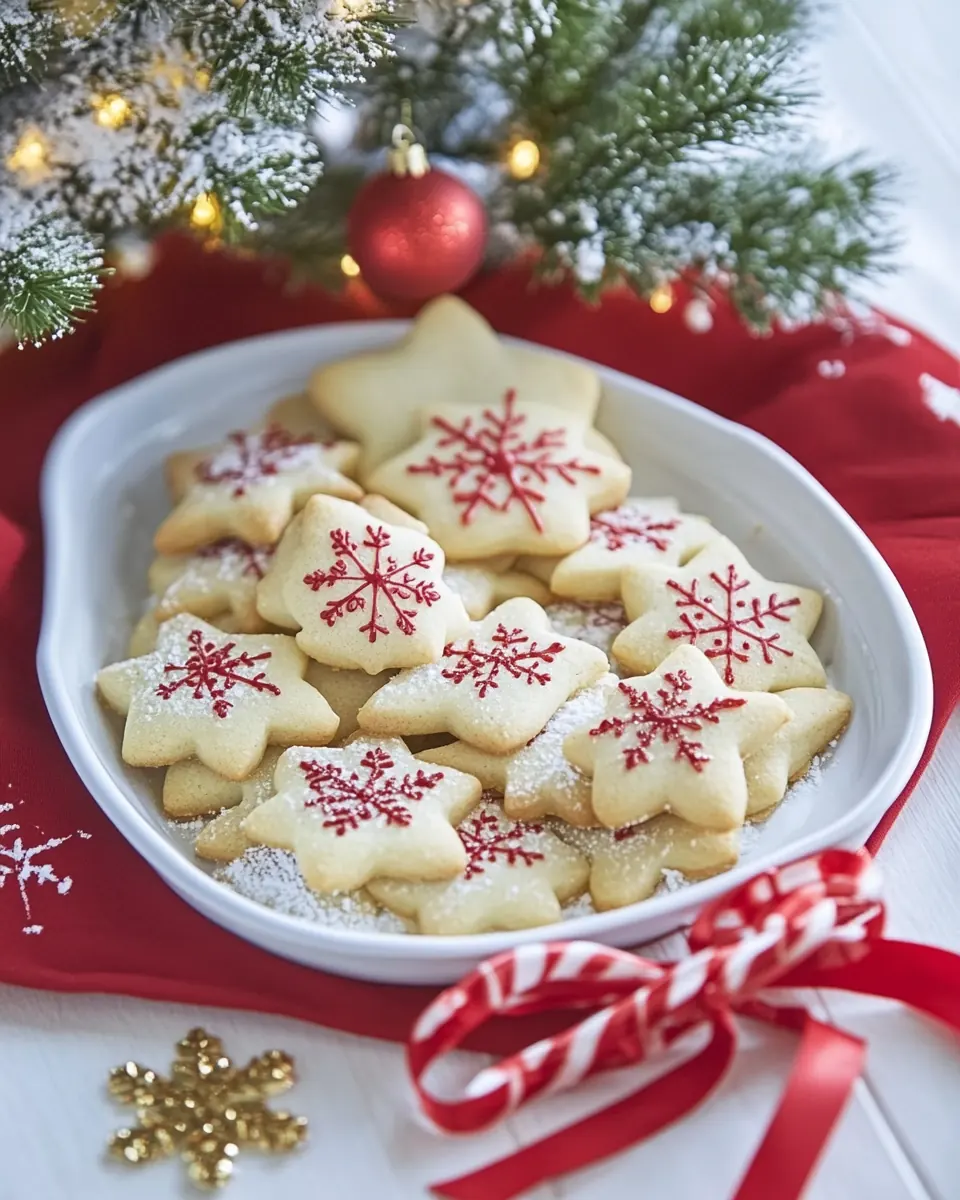
These directions will take you step by step from mixing to decorating, and I like to work with chilled dough for cleaner cuts and brighter edges. Keep your workspace lightly floured, have a lined sheet pan ready, and set the glaze station up so you can decorate right after cooling.
- Sift the flour, baking powder and salt into a bowl.: As you sift, you will notice a fine, powdery aroma and a lighter texture in the bowl, which helps the dry ingredients combine evenly. This step prevents lumps and distributes the baking powder and salt so every bite rises consistently. The visual cue is a smooth, homogenous mound of dry mixture without streaks of any single ingredient. A common mistake is skipping sifting, which can lead to uneven pockets of leavener that create small holes during baking.
- In a separate bowl using electric beaters or in a standing mixer, cream the butter and sugar for 3 minutes on medium to high speed until light and fluffy.: When creaming, you will hear the rhythmic whir of the mixer and see the mixture become paler and airier, which traps tiny air bubbles that contribute to a delicate crumb. The texture should be silky and spreadable, not oily. This aeration is why cookies develop a soft interior and gentle lift. Under creaming leaves a dense, tight mixture that yields heavy cookies, while over creaming can cause collapse in very delicate batters.
- Add the egg and vanilla to the butter mixture and beat until incorporated.: The mixture will look glossy and cohesive once the egg blends in, with a slightly thicker consistency that holds better when you add dry ingredients. You should not see streaks of egg; everything should appear uniform and shiny. This step helps emulsify the fats and liquids so the dough bakes with an even crumb. If the mixture appears broken or curdled, a quick pause and scraping of the bowl with a spatula usually helps bring it back together.
- Turn the speed to low and slowly add the flour mixture alternating with the eggnog until the dough comes together.: As you alternate additions, the mixer will move from airy to denser, and you will see the dough begin to cling to the paddle but still fold onto itself, indicating the right balance of moisture and structure. The eggnog adds softness and flavor without making the dough runny when incorporated gradually. A typical error is dumping all liquid at once, which makes a sticky, unmanageable dough.
- Place the dough onto a piece of plastic wrap, parchment paper or wax paper and flatten into a round shaped disk.: Pressing into a disk gives even chilling and makes rolling easier later. You will feel the dough firming under your hands, and the surface should be smooth and not cracked. This shape cools uniformly, preventing edges from becoming too hard compared to the center. Avoid flattening too thinly, or the dough will chill into a slab that is difficult to roll evenly.
- Wrap the dough disk and chill in the refrigerator until firm, at least thirty minutes to overnight.: Chilling firms the butter and solidifies fats, which helps the cookies hold their shape in the oven and develop clean edges. You will notice the dough losing a tacky quality and becoming cold to the touch. If you try to roll immediately the dough will stick and tear; chilling is essential. Over chilling is rarely harmful, but very long refrigeration can slightly reduce the dough's rollability, so let it sit at room temperature briefly before rolling if it feels too stiff.
- Once chilled, preheat oven to 325 degrees.: Preheating sets the stage for predictable baking, and with butter based cookies a moderate oven allows gentle spread while achieving color control. You should see a steady, even warmth in the oven and hear a faint hum from the heating elements. Baking without a fully preheated oven can lead to irregular rise and color, so always wait until the target temperature stabilizes.
- Let dough sit for about 10 minutes or until soft enough to roll out.: Leaving the chilled dough to warm slightly makes it pliable but not soft, so it rolls without cracking. You will sense the change as the dough yields under the rolling pin instead of shattering. This short rest prevents tearing and helps you get even thickness. If you skip this step and force rolling, the dough can crack and produce uneven cookies.
- Using a lightly floured rolling pin, roll the dough out onto a lightly floured surface until 1/4 inch thick and even.: As you roll, the dough surface should be smooth and free of large cracks, and a light dusting of flour will prevent sticking without drying the edges. The even thickness ensures uniform baking so all cookies finish at the same time. Watch for thin spots which will brown faster; patch them gently rather than overworking the dough.
- Use cookie cutters to cut out desired shapes (I like to start at one end of the dough placing the cookie cutters close together).: Cutting closely conserves dough and results in uniform shapes. You will hear a clean press and see sharp edges on the cut cookies, which signals a good cut. Lift the cutter straight up to avoid stretching the shapes, and gather scraps to reroll once or twice. Overworking scraps makes the dough tougher and the cookies denser.
- Using a spatula, transfer the cut-outs onto a cookie sheet (preferably a lined-silpat cookie sheet).: Sliding the thin spatula under each shape preserves its edge and prevents distortion. The transfer should be confident, and you will notice the cookies sitting flat and evenly spaced on the sheet, which allows hot air to circulate. If cookies wobble or sag, chill the sheet for a few minutes before baking to preserve shape.
- Bake for 10-12 minutes for small cookies and 12-14 minutes for larger cookies rotating the sheet pan halfway through until edges turn golden.: During baking you will see the edges set and the centers remain a touch pale, which is the cue to remove them for the softest texture. A light golden edge indicates caramelization of sugars and perfectly baked cookies. Avoid overbaking as cookies continue to firm as they cool; letting them go too long yields crunchy rather than tender results.
- Cool cookies on a rack.: Cooling on a rack allows air to circulate underneath, preventing sogginess and preserving crisp edges. You will feel the temperature drop and notice the cookies set to the right texture in about ten minutes. Trying to ice piping on hot cookies will melt the glaze, so be patient and cool completely for best decorating results.
- Combine the ingredients in a bowl.: For the glaze, mixing the powdered sugar with milk creates a glossy, spreadable icing; add milk gradually until the consistency is slightly thick but pourable. You will see the mixture transform from powder to a velvety gloss, and the aroma will be sweet and clean. A common pitfall is making the glaze too thin, which will run off the cookie and pool at the base.
- Use to decorate the cookies.: Decorating is where these cookies become personal, and you will feel creative as you pipe, flood, and sprinkle. The glaze should hold decorations and set to a matte finish if left undisturbed. Avoid stacking decorated cookies until completely dry to prevent smudging.
Recipe Variations about Eggnog Sugar Cookies
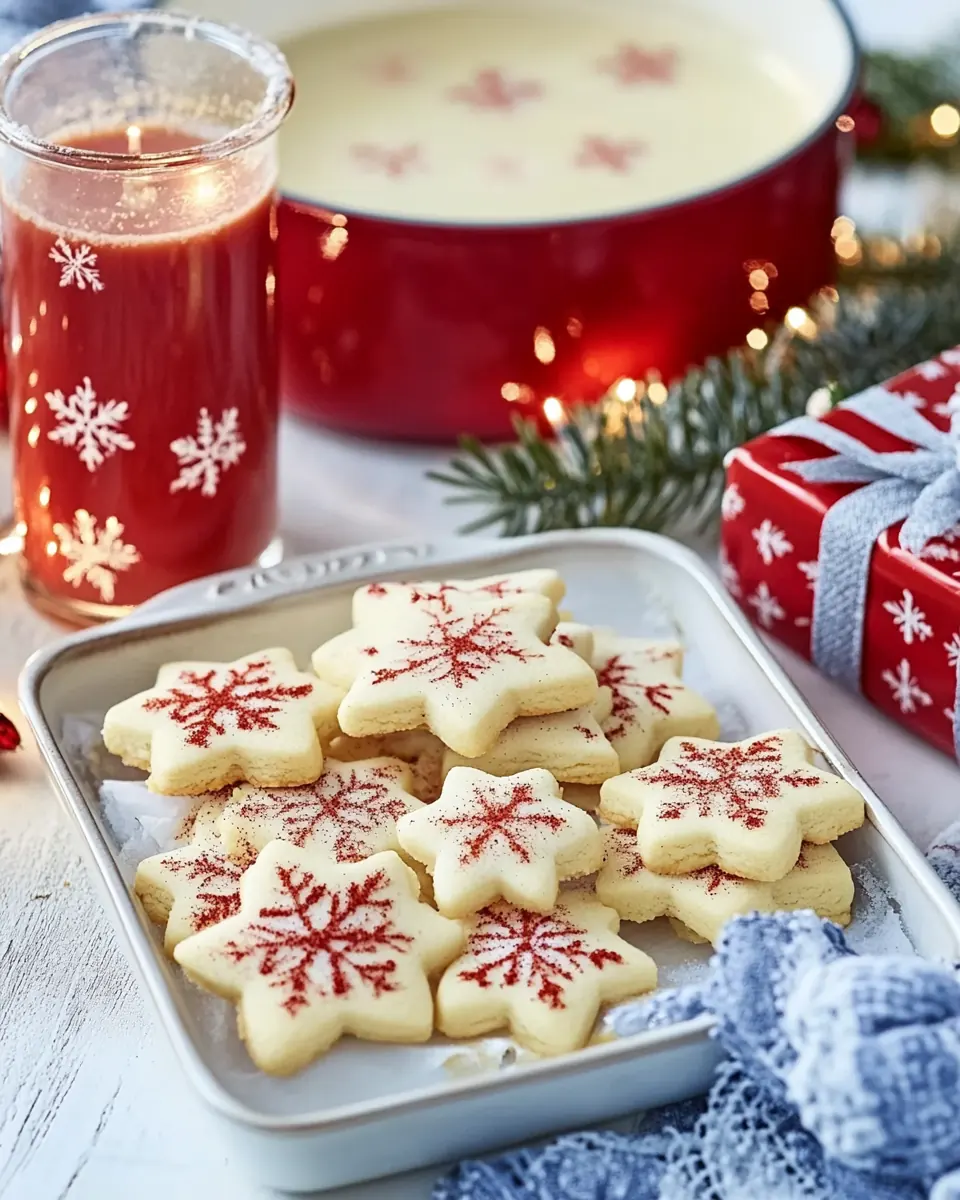
These variations are built to help you make the recipe your own without changing the ingredient list. Each tip starts with a bold phrase to highlight the idea, then offers practical execution notes.
- Classic vanilla boost Add an extra half teaspoon of vanilla to the dough to deepen the aromatic profile while keeping the texture identical, which brings more warmth to the eggnog note and pairs beautifully with a simple white glaze.
- Subtle spice Fold a pinch of ground nutmeg into the glaze instead of the dough to reinforce the holiday flavor without altering the dough handling, which keeps rolling and cutting as easy as the original method.
- Soft pastel glazes Use tiny drops of plant based food coloring in separate bowls of glaze to create a palette of pastel icings, which makes decorating a festive group activity and keeps the visual appeal delicate and refined.
- Sprinkle variation Reserve different textures of dye free Holiday sprinkles for distinct cookie sets, which adds visual interest and provides a contrast in mouthfeel when paired with the soft, tender cookie base.
- Make ahead and freeze Shape, cut, and freeze the unbaked cookies on a tray, then transfer to a bag; bake from frozen adding a couple of minutes to the bake time, which saves time on busy holiday days without sacrificing texture.
Accompaniments for Eggnog Sugar Cookies
These serving suggestions and pairings help you think beyond a plate of cookies and turn them into a full holiday offering. Each list item highlights a practical serving style or occasion, focusing on how these cookies work within moments and menus.
- Tea or coffee station Set out a tray of Eggnog Sugar Cookies next to warm drinks for a cozy afternoon gathering, pairing the buttery cookies with small cups of brewed coffee or spiced tea so guests can nibble between sips.
- Holiday dessert board Arrange cookies alongside simple additions for a festive board, using small bowls of decorations and a stack of napkins so people can build cookie plates on their own, ideal for casual parties and open houses.
- Gift packaging Box a dozen cookies in a flat tin with tissue for neighbor gifts; the sturdy shapes travel well and the glaze helps them look polished and celebratory on arrival.
- Party favor Provide small bags with two to three cookies for guests to take home after a gathering, perfect for holiday dinners or cookie swaps where portability and presentation matter.
- Storage tips Store undecorated cookies in an airtight container at room temperature for up to five days, layering parchment paper between stacks to protect shapes, or freeze cooled cookies and thaw at room temperature before glazing for an easy fresh batch on demand.
- Seasonal pairing Serve during winter holidays and Christmas gatherings where the eggnog note complements other seasonal sweets, creating a cohesive dessert selection that feels curated and festive.
FAQ
Conclusion
Eggnog Sugar Cookies are special because they blend a comforting holiday flavor with a tender, rollable dough that invites decorating and sharing. Give them a try the next time you want a festive treat that looks impressive yet comes together with straightforward steps. I hope these cookies become a small tradition for your gatherings, offering warmth and cheer one sweet bite at a time.
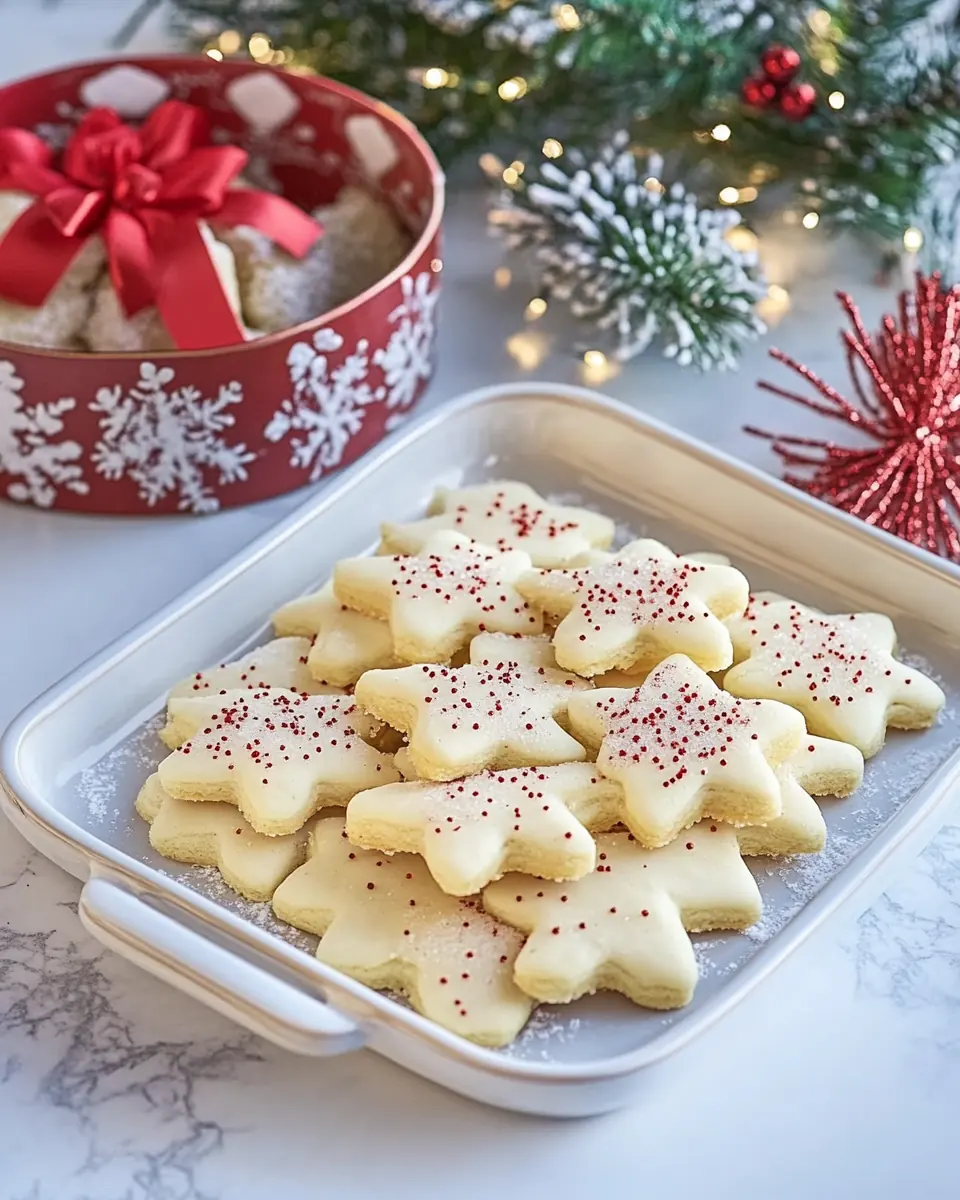
Eggnog Sugar Cookies
Ingredients
Equipment
Method
- Sift the flour, baking powder and salt into a bowl.: As you sift, you will notice a fine, powdery aroma and a lighter texture in the bowl, which helps the dry ingredients combine evenly. This step prevents lumps and distributes the baking powder and salt so every bite rises consistently. The visual cue is a smooth, homogenous mound of dry mixture without streaks of any single ingredient. A common mistake is skipping sifting, which can lead to uneven pockets of leavener that create small holes during baking.
- In a separate bowl using electric beaters or in a standing mixer, cream the butter and sugar for 3 minutes on medium to high speed until light and fluffy.: When creaming, you will hear the rhythmic whir of the mixer and see the mixture become paler and airier, which traps tiny air bubbles that contribute to a delicate crumb. The texture should be silky and spreadable, not oily. This aeration is why cookies develop a soft interior and gentle lift. Under creaming leaves a dense, tight mixture that yields heavy cookies, while over creaming can cause collapse in very delicate batters.
- Add the egg and vanilla to the butter mixture and beat until incorporated.: The mixture will look glossy and cohesive once the egg blends in, with a slightly thicker consistency that holds better when you add dry ingredients. You should not see streaks of egg; everything should appear uniform and shiny. This step helps emulsify the fats and liquids so the dough bakes with an even crumb. If the mixture appears broken or curdled, a quick pause and scraping of the bowl with a spatula usually helps bring it back together.
- Turn the speed to low and slowly add the flour mixture alternating with the eggnog until the dough comes together.: As you alternate additions, the mixer will move from airy to denser, and you will see the dough begin to cling to the paddle but still fold onto itself, indicating the right balance of moisture and structure. The eggnog adds softness and flavor without making the dough runny when incorporated gradually. A typical error is dumping all liquid at once, which makes a sticky, unmanageable dough.
- Place the dough onto a piece of plastic wrap, parchment paper or wax paper and flatten into a round shaped disk.: Pressing into a disk gives even chilling and makes rolling easier later. You will feel the dough firming under your hands, and the surface should be smooth and not cracked. This shape cools uniformly, preventing edges from becoming too hard compared to the center. Avoid flattening too thinly, or the dough will chill into a slab that is difficult to roll evenly.
- Wrap the dough disk and chill in the refrigerator until firm, at least thirty minutes to overnight.: Chilling firms the butter and solidifies fats, which helps the cookies hold their shape in the oven and develop clean edges. You will notice the dough losing a tacky quality and becoming cold to the touch. If you try to roll immediately the dough will stick and tear; chilling is essential. Over chilling is rarely harmful, but very long refrigeration can slightly reduce the dough's rollability, so let it sit at room temperature briefly before rolling if it feels too stiff.
- Once chilled, preheat oven to 325 degrees.: Preheating sets the stage for predictable baking, and with butter based cookies a moderate oven allows gentle spread while achieving color control. You should see a steady, even warmth in the oven and hear a faint hum from the heating elements. Baking without a fully preheated oven can lead to irregular rise and color, so always wait until the target temperature stabilizes.
- Let dough sit for about 10 minutes or until soft enough to roll out.: Leaving the chilled dough to warm slightly makes it pliable but not soft, so it rolls without cracking. You will sense the change as the dough yields under the rolling pin instead of shattering. This short rest prevents tearing and helps you get even thickness. If you skip this step and force rolling, the dough can crack and produce uneven cookies.
- Using a lightly floured rolling pin, roll the dough out onto a lightly floured surface until 1/4 inch thick and even.: As you roll, the dough surface should be smooth and free of large cracks, and a light dusting of flour will prevent sticking without drying the edges. The even thickness ensures uniform baking so all cookies finish at the same time. Watch for thin spots which will brown faster; patch them gently rather than overworking the dough.
- Use cookie cutters to cut out desired shapes (I like to start at one end of the dough placing the cookie cutters close together).: Cutting closely conserves dough and results in uniform shapes. You will hear a clean press and see sharp edges on the cut cookies, which signals a good cut. Lift the cutter straight up to avoid stretching the shapes, and gather scraps to reroll once or twice. Overworking scraps makes the dough tougher and the cookies denser.
- Using a spatula, transfer the cut-outs onto a cookie sheet (preferably a lined-silpat cookie sheet).: Sliding the thin spatula under each shape preserves its edge and prevents distortion. The transfer should be confident, and you will notice the cookies sitting flat and evenly spaced on the sheet, which allows hot air to circulate. If cookies wobble or sag, chill the sheet for a few minutes before baking to preserve shape.
- Bake for 10-12 minutes for small cookies and 12-14 minutes for larger cookies rotating the sheet pan halfway through until edges turn golden.: During baking you will see the edges set and the centers remain a touch pale, which is the cue to remove them for the softest texture. A light golden edge indicates caramelization of sugars and perfectly baked cookies. Avoid overbaking as cookies continue to firm as they cool; letting them go too long yields crunchy rather than tender results.
- Cool cookies on a rack.: Cooling on a rack allows air to circulate underneath, preventing sogginess and preserving crisp edges. You will feel the temperature drop and notice the cookies set to the right texture in about ten minutes. Trying to ice piping on hot cookies will melt the glaze, so be patient and cool completely for best decorating results.
- Combine the ingredients in a bowl.: For the glaze, mixing the powdered sugar with milk creates a glossy, spreadable icing; add milk gradually until the consistency is slightly thick but pourable. You will see the mixture transform from powder to a velvety gloss, and the aroma will be sweet and clean. A common pitfall is making the glaze too thin, which will run off the cookie and pool at the base.
- Use to decorate the cookies.: Decorating is where these cookies become personal, and you will feel creative as you pipe, flood, and sprinkle. The glaze should hold decorations and set to a matte finish if left undisturbed. Avoid stacking decorated cookies until completely dry to prevent smudging.
Notes
- Classic vanilla boost Add an extra half teaspoon of vanilla to the dough to deepen the aromatic profile while keeping the texture identical, which brings more warmth to the eggnog note and pairs beautifully with a simple white glaze.
- Subtle spice Fold a pinch of ground nutmeg into the glaze instead of the dough to reinforce the holiday flavor without altering the dough handling, which keeps rolling and cutting as easy as the original method.
- Soft pastel glazes Use tiny drops of plant based food coloring in separate bowls of glaze to create a palette of pastel icings, which makes decorating a festive group activity and keeps the visual appeal delicate and refined.
- Sprinkle variation Reserve different textures of dye free Holiday sprinkles for distinct cookie sets, which adds visual interest and provides a contrast in mouthfeel when paired with the soft, tender cookie base.
- Make ahead and freeze Shape, cut, and freeze the unbaked cookies on a tray, then transfer to a bag; bake from frozen adding a couple of minutes to the bake time, which saves time on busy holiday days without sacrificing texture.