Sheet Pan Steak Fajitas
Sheet Pan Steak Fajitas are one of those weeknight winners I turn to when I want vibrant flavor with minimal fuss. The first time I made this, I was juggling work emails and hungry teens, and the sheet pan saved the evening. I love how the sizzling peppers and onions caramelize while the steak roasts to a juicy medium rare, all in the same amount of time. It felt like cheating, in the best possible way, to have a restaurant style meal with almost no babysitting.
There is a comfort to the ritual of quick prep, a messy bowl of spices, and the aroma that fills the kitchen when the oven door opens. I usually let the steak rest while I warm the tortillas and chop fresh cilantro, and that five minutes of waiting somehow makes the whole meal taste more deliberate. Friends always ask how I get the peppers tender but slightly crisp, and the trick is high heat and space on the pan so everything browns instead of steams.
Recipe Snapshot
28 mins
10 mins
18 mins
Easy
350 kcal
Mexican
Gluten-Free, Paleo
Dinner
Oven, Sheet pan, Foil, Meat thermometer, Cutting board, Knife
The Beauty of This Sheet Pan Steak Fajitas
One pan, massive flavor payoff
I love how Sheet Pan Steak Fajitas turn a handful of pantry spices and fresh produce into a dinner that tastes far more complicated than it is. The direct high heat of the oven concentrates the sweetness of the bell peppers and the edges of the onion get those golden charred bits that add crunch and aroma. It is a shortcut that never feels like a compromise.
Fast enough for busy nights
When work runs late, I still want something nourishing on the table. This method lets me prep in about ten minutes and walk away, returning to a kitchen filled with savory steam and sizzling notes of garlic and cumin. For hectic evenings, that hands off approach is priceless, and it keeps dinner time calm.
Versatility for any appetite
I appreciate that the components are modular. You can serve the sliced flank steak with warm flour tortillas, pile on avocado and salsa, or keep it lighter with a squeeze of lime and a sprinkle of fresh cilantro. The same roast can feed a crowd or make perfect leftovers for lunches.
Simple ingredients, familiar pantry
There is a comforting honesty to the ingredient list. Basic spices like chili powder, smoked paprika, oregano, and cumin work together to make a deep, warm profile without needing anything obscure. That means you can throw this together any night you have steak and peppers in the fridge.
Minimal cleanup, maximum reward
I always appreciate a recipe that respects my time after the meal. Lining a sheet pan with foil or using one pan keeps cleanup tiny, and the payoff is a bright, craveable dinner that looks and smells like effort, even when it was easy. I keep coming back to this approach when I want bold flavor and no fuss.
What to Buy for Sheet Pan Steak Fajitas
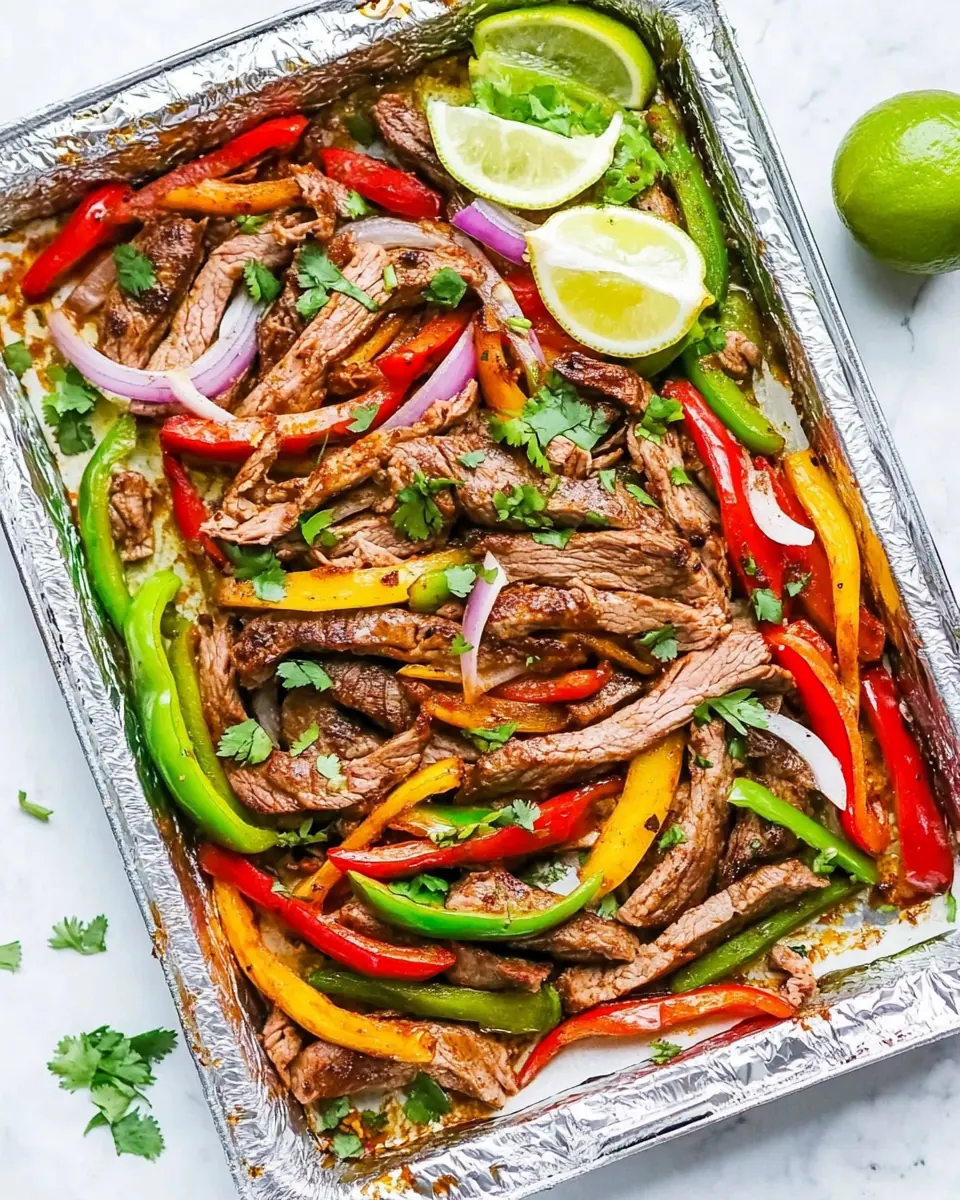
For this recipe I focus on bold, straightforward ingredients that sing together. The key players are a good cut of steak for tenderness and fat, colorful bell peppers for sweetness and texture, and aromatic seasonings to build depth. Each item below plays a clear role, and together they create the classic fajita balance of charred, salty, and bright.
- 1.5 pounds flank steak: Trimmed and thinly sliced to sear quickly and remain tender; provides the primary protein and savory depth to the fajitas. Marinate briefly with spices to enhance flavor and ensure even browning on the sheet pan. Rest after cooking to preserve juices and achieve optimal tenderness.
- 3 bell peppers (red, yellow and green) stemmed, seeded, and cut into 1/2-inch-wide strips: Stemmed, seeded, and julienned into 1/2-inch–wide strips to add vibrant color, crisp-tender texture, and sweet peppery notes. Toss with oil and spices so they roast evenly alongside the steak. Provide visual contrast and fresh flavor in each fajita assembly.
- 1 large red onion cut into 1/2-inch-thick rounds: Cut into 1/2-inch–thick rounds to retain structure and develop caramelized edges when roasted; contributes mild sweetness and a savory bite. Layer with peppers on the pan to allow even roasting and softened texture. Adds aromatic complexity and a pleasant textural contrast to the meat.
- 3 garlic cloves sliced thin: Sliced thin to quickly release pungent, aromatic flavor during roasting; contributes bright, savory undertones that complement the spices. Distribute over the sheet pan so garlic crisps slightly and infuses the vegetables and steak. Avoid burning by ensuring even spacing and tossing with oil.
- 1 tablespoon Olive Oil: Used to coat the steak and vegetables evenly so spices adhere and roasting yields caramelization; provides a neutral, slightly fruity fat for cooking. Measure carefully so vegetables and meat roast rather than steam. Enhances mouthfeel and helps develop a golden exterior.
- 2 teaspoon chili powder: Sprinkled over the meat and vegetables to deliver warm, earthy heat and classic fajita flavor; helps build a balanced spice profile. Combine with other spices to create a cohesive rub that seasons the entire sheet pan. Adjust amount for desired heat intensity.
- 1 tsp smoked paprika: Added to impart a smoky, slightly sweet warmth that deepens the overall flavor profile; pairs well with chili powder and cumin. Blend into the spice mix so the finished dish has nuanced smokiness. Enhance roasted flavor when combined with oil and heat.
- 1 tsp oregano: Mixed into the spice blend to introduce herbal, slightly bitter notes that balance richer flavors in the dish. Use dried oregano sparingly for background complexity without overpowering other spices. Complements the citrus and fresh herbs used as garnishes.
- 1 tsp cumin: Incorporated into the rub to contribute earthy, nutty, and warm undertones typical of Mexican-inspired dishes. Measure precisely to avoid overwhelming the mix while providing characteristic fajita aroma. Works with paprika and chili powder to round out seasoning.
- 1/2 tsp onion powder: Added to the seasoning mix to boost savory depth and enhance onion-like sweetness without additional fresh onion. Use as part of the dry rub to create layered flavor on both steak and vegetables. Helps achieve a more complex aromatic profile when roasted.
- 1 tsp garlic powder: Included in the dry spice blend to amplify roasted garlic flavor and harmonize with fresh garlic slices. Use for consistent garlic presence throughout the dish even after high-heat roasting. Balances and intensifies savory notes in the fajitas.
- 2 tsp salt: Sprinkled to season both meat and vegetables and bring out natural flavors while controlling overall saltiness. Distribute evenly in the spice mix to ensure every bite is properly seasoned. Adjust based on dietary preferences but avoid under-seasoning for best results.
- 1 teaspoon packed brown sugar: Added in small measure to introduce a touch of molasses-like sweetness that balances heat and acidity. Mix into the spice rub so it dissolves and caramelizes slightly during roasting. Enhances depth and rounds sharp spice edges.
- 8 inch flour tortilla: Used to wrap fillings into handheld fajitas and provide a soft, pliable base for assembling the cooked ingredients. Warm slightly before serving to make folding easier and to improve texture. Choose appropriate size to hold generous portions of meat and vegetables.
- 1 lime: Squeezed fresh over the finished fajitas to add bright acidity that cuts through richness and lifts flavors. Roll or quarter for easy squeezing and use as a finishing touch to balance savory and spicy elements. Provides aromatic citrus notes that complement cilantro and avocado.
- salsa: Served as a condiment to contribute tangy, spicy, and sometimes chunky texture that complements the seasoned meat and vegetables. Spoon onto assembled fajitas for added moisture and flavor contrast. Choose mild or hot varieties depending on heat preference.
- avocado: Sliced or diced to add creamy, buttery texture and mild, nutty flavor that mellows spiciness and adds richness. Mash slightly or slice thinly for easy layering inside the tortilla. Enhances mouthfeel and pairs well with lime and cilantro.
- fresh cilantro: Chopped and sprinkled as a fresh herbal finish to bring bright, grassy, and slightly citrusy notes to the dish. Add just before serving to preserve vibrant color and flavor. Complements lime and cuts through the richness of steak and avocado.
Step by Step Guide for Sheet Pan Steak Fajitas
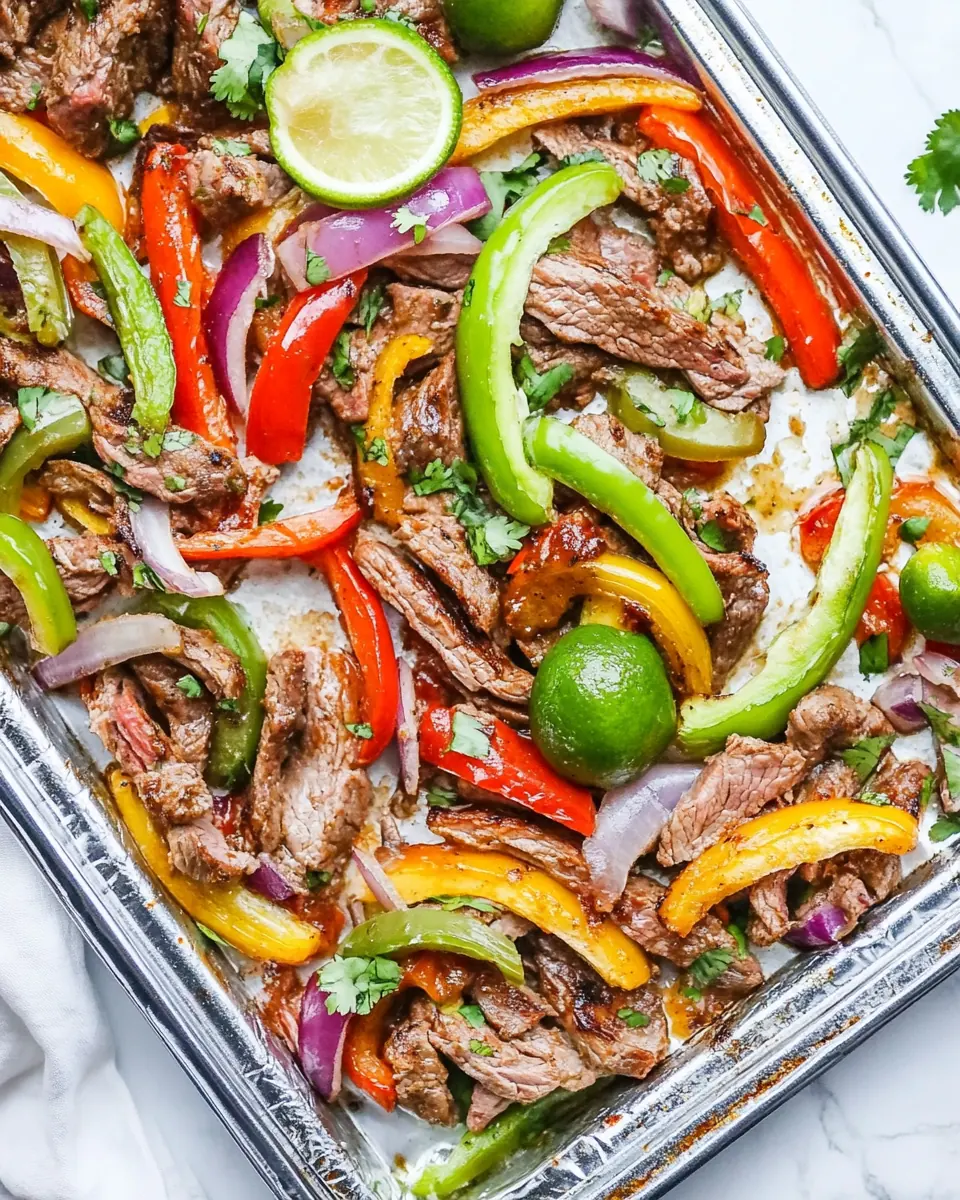
These instructions are written to keep you confident at every turn. I break down the prep, roasting, and resting so you can follow sensory clues instead of staring at a clock. Read through once, then prep the few items you need and enjoy how the aromas change as everything roasts.
- Line two sheet pans with foil for easy cleanup (if desired), set aside. Arrange the oven racks so that one is in the upper third of the oven and one is in the lower third of the oven. Preheat oven to 475 degrees F. Wrap tortillas in a foil packet, set aside.: The kitchen will start smelling faintly of oil and metal as you prepare, and the foil makes cleanup nearly effortless, which is why I always use it. When you line the pans the surface glints, and you can hear the slight crinkle as you press it into place, a small ritual that makes the rest of the cooking feel orderly. This step matters because a clean pan surface prevents sticking and helps the vegetables and meat brown evenly. Common mistake to avoid, do not skip the foil if you want minimal cleanup, but also avoid folding too many layers in one spot or the foil can crease and tear under high heat.
- Stir together spices, salt and sugar for fajita seasoning. Slice onion and bell peppers, toss on a second sheet pan with oil and salt.: You will hear the click of the rack as you slide it into position, and the distance between racks creates two distinct heat zones that help the vegetables and steak cook at slightly different intensities. This staging is essential because peppers roast faster and benefit from a higher rack to brown, while the steak needs slightly less direct top heat to develop a crust without overcooking. A typical pitfall is leaving racks at default positions, which can cause uneven cooking, so take a moment to reposition them precisely.
- Cut the flank steak into 3 pieces to allow for more even cooking, pat dry with paper towels. Sprinkle fajita seasoning all over both sides of the meat. Arrange meat on sheet pan, set aside. When oven is preheated, place the sheet pan with the onions and peppers on the upper rack, bake for about 10 minutes.: As the oven heats you may notice a dry, warming scent and the kitchen thermostat will tick up; high heat is what gives the peppers their blistered edges and the steak a quick roast. This temperature drives Maillard reactions, creating complex browned flavors and attractive color. If your oven runs hot or cool, an oven thermometer will keep you accurate; common mistakes include relying on a preheated light alone, which can mean the oven has not reached the required temperature.
- Remove the sheet pan from the oven and toss vegetables with a spatula, arranging them in an even layer again. Return the peppers and onion to the LOWER rack, place the sheet pan with the flank steak on it on the upper rack. Bake for 8-10 minutes, until flank steak reaches about 135 degrees F internally (use a meat thermometer to check for doneness).: You will want a soft, warm bundle of tortillas at the end, and wrapping them in foil traps steam and protects them from drying out when you warm them in the turned off oven. The packet feels warm and slightly yielding after a few minutes in residual heat, producing pliable tortillas for easy folding. Avoid placing the packet directly on the bottom of an active oven or over high heat before the resting step, as they can crisp too much and lose their flexibility.
- Remove both sheets from oven, transfer meat to a cutting board and allow to rest for 5 minutes. Meanwhile, turn off oven and place foil wrapped tortillas inside to warm up.: The aroma of the spices intensifies as you blend them, releasing an earthy, smoky scent from the smoked paprika and cumin . This step allows the flavors to meld so you get even seasoning in every bite. I like to rub a pinch between my fingers to check freshness, and a dusty, potent scent means they're ready. A common error is not mixing them thoroughly, which can create pockets of overly salty or sweet bites.
- Slice meat against the grain into thin slices, then toss with the peppers and onions. Serve with warm tortillas, salsa, guacamole, limes and cilantro.: When you cut the bell peppers and onion , the sharp knife sound and the burst of fresh vegetable aroma signal the start of roasting. Tossing them with Olive Oil and a bit of salt helps the oil become a glossy sheen on each piece and promotes even browning. Make sure the pieces are similar size so they roast uniformly; a common mistake is uneven cuts that result in some pieces being underdone while others are charred.
- Cut the flank steak into 3 pieces to allow for more even cooking, pat dry with paper towels.: Patting the flank steak dry removes excess moisture so the surface can brown; you will see a matte finish when it is adequately dried. Cutting into three pieces helps the heat penetrate evenly and reduces overall cooking time. The why here is straightforward, moisture prevents a proper sear and leads to steaming, so take the time to dry. Avoid cutting into very small pieces which makes controlling doneness difficult.
- Sprinkle fajita seasoning all over both sides of the meat.: The seasoning will cling and form a thin, aromatic coat that begins to smell warm and savory as it sits on the meat. This crust is the flavor foundation, so be sure to press the mix gently into the surface for even coverage. Letting it sit briefly helps the flavors adhere, but avoid over-salting by measuring your quantities carefully to prevent the steak from tasting too salty after roasting.
- Arrange meat on sheet pan, set aside.: Placing the steak on the pan in a single layer prevents overlapping, which is key for consistent roasting. The steak should sit with room around each piece so hot air circulates and the exterior browns. If pieces are touching, they will steam and lose that desirable roast character, so space them out thoughtfully.
- When oven is preheated, place the sheet pan with the onions and peppers on the upper rack, bake for about 10 minutes.: As the vegetables hit the hot oven they begin to blister and the sugars start to caramelize, producing a sweet, roasted perfume. You will hear a faint sizzle as moisture escapes and see the edges take on little darker spots. This step is important because it jumpstarts caramelization before the steak goes in. A typical mistake is leaving them in too long on the high rack which can cause excessive charring instead of a balanced roast.
- Remove the sheet pan from the oven and toss vegetables with a spatula, arranging them in an even layer again.: Tossing loosens any pieces that stuck and redistributes juices so the next roast produces even coloring; you will notice a deeper, caramel aroma after the toss. Rearranging matters because it keeps pieces from clumping and ensures uniform exposure to heat. Avoid overcrowding when you return them to the oven, as that will cause steaming rather than browning.
- Return the peppers and onion to the LOWER rack, place the sheet pan with the flank steak on it on the upper rack.: Moving the steak to the upper rack places it closer to the oven's hottest element so it can quickly develop a browned exterior while the peppers finish below. You may hear the faint clink as you slide the pan in and then the kitchen will fill with a robust roast smell as the meat and vegetables progress together. This arrangement matters to synchronize cooking times; a frequent error is putting both pans on the same rack which can result in uneven doneness.
- Bake for 8-10 minutes, until flank steak reaches about 135 degrees F internally (use a meat thermometer to check for doneness).: You will notice juices start to bead on the surface of the steak and the edges take on a darker, roasted color; that is your visual cue. Using a thermometer is the most reliable way to hit medium rare at about 135 degrees F, preventing overcooking. This timing and temperature preserve tenderness; common mistakes include guessing doneness by time alone without checking internal temperature.
- Remove both sheets from oven, transfer meat to a cutting board and allow to rest for 5 minutes.: Resting lets the juices redistribute, producing a juicier slice, and you will see the liquid settle rather than running out when you cut. The board will catch any juices and the meat will relax and become easier to slice thinly. Avoid cutting too soon, which causes juices to pour out and leaves the meat drier.
- Meanwhile, turn off oven and place foil wrapped tortillas inside to warm up.: The residual oven warmth gently steams the tortillas in the foil packet, making them soft and pliable. After a few minutes they will feel warm to the touch and flexible for wrapping. Do not leave the tortillas in too long while the oven is still hot, as they can become overly crisp and lose their soft texture.
- Slice meat against the grain into thin slices, then toss with the peppers and onions.: The sound of the knife through rested steak is clean and effortless when you slice against the grain, and the resulting ribbons of meat are tender in every bite. Tossing them with the hot vegetables helps the flavors marry and distributes juices across the pan. The reason for slicing against the grain is to shorten muscle fibers for a softer chew; slicing with the grain will make each bite tougher and stringy.
- Serve with warm tortillas, salsa, guacamole, limes and cilantro.: The final plate should be a riot of color and aroma, with warm tortillas wrapped around savory flank steak and roasted peppers, brightened by lime and herbaceous cilantro . Serve immediately so the textures remain contrasty and fresh. A common mistake is assembling too early and letting tortillas steam, which makes them soggy instead of pliable.
Change It Up
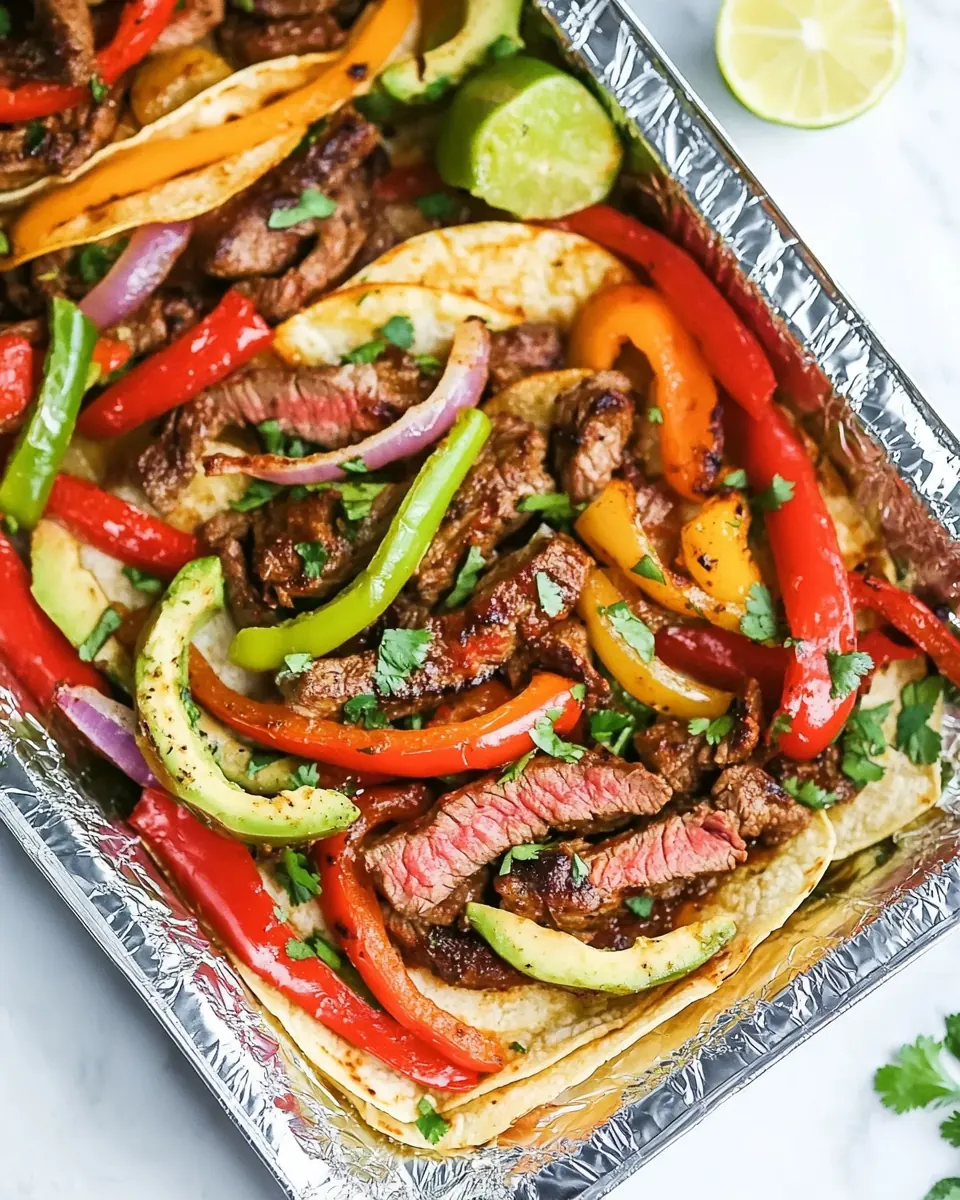
I like to offer tweaks that keep the profile interesting without changing the soul of the recipe. Below are practical variations and serving tricks I use depending on mood and what is in the pantry.
- Serve family style by placing the sliced meat and roasted vegetables on a large platter so everyone can assemble their own fajitas, this makes dinner feel communal and relaxed.
- Make it milder by reducing the chili powder to one teaspoon if you prefer less heat, while keeping the other spices for full flavor without the kick.
- Boost char by briefly broiling the peppers and steak for one to two minutes at the end, watching closely so they do not burn, this adds extra smoky flavor.
- Swap tortillas for warmed corn tortillas for a slightly firmer texture and earthier flavor, though keep the specified eight inch size for balance.
- Turn leftovers into bowls by layering warm rice or greens with reheated slices of steak and roasted peppers, drizzle with lime and salsa for an easy next day meal.
- Add creaminess with a scoop of mashed avocado or a dollop of plain yogurt on each fajita to temper the spices and add silkiness.
Serving Suggestions
These fajitas work beautifully for casual dinners, weekend gatherings, or a relaxed summer cookout. Below are detailed serving ideas that highlight the dish and make it versatile across occasions and seasons.
- Family taco night: Lay out warm flour tortillas, the sliced flank steak, roasted peppers and onions, bowls of avocado, salsa, and chopped fresh cilantro so everyone builds their own. This assembly line keeps things social and easy, perfect for an informal dinner.
- Light lunch bowls: Serve the roasted ingredients over a bed of mixed greens or rice, squeeze lime on top and add a spoonful of avocado to make a filling midday meal. The warm roasted flavors contrast nicely with cool greens for textural interest.
- Entertaining: Plate the sliced steak and vegetables on a large platter with citrus wedges and small bowls of salsa and avocado. This presentation is ideal for guests because it allows people to help themselves and keeps the host relaxed.
- Ramadan or special occasions: These fajitas can be part of a larger spread, paired with simple sides like rice, roasted corn, and salads, offering a flavorful main that is easy to scale for a group.
- Storage tips: Store leftover steak and vegetables in an airtight container in the fridge for up to three days. Reheat gently in a skillet with a splash of water to revive moisture, then assemble into tortillas for a near fresh taste.
- Seasonal pairings: In summer, pair with a fresh tomato salsa or grilled corn salad to echo the brightness of the roasted peppers. The warm, slightly smoky steak complements seasonal produce beautifully.
FAQ
Conclusion
Sheet Pan Steak Fajitas stand out for delivering bold, caramelized flavors with minimal fuss and cleanup. They combine the satisfying char of roasted vegetables with tender, thinly sliced flank steak and vibrant finishing touches like lime and fresh cilantro. Give this method a try on a busy weeknight or for a relaxed gathering, and you will likely find it becomes a go to dinner in your rotation. The combination of quick prep, oven power, and a simple spice blend makes this dinner both approachable and impressive.
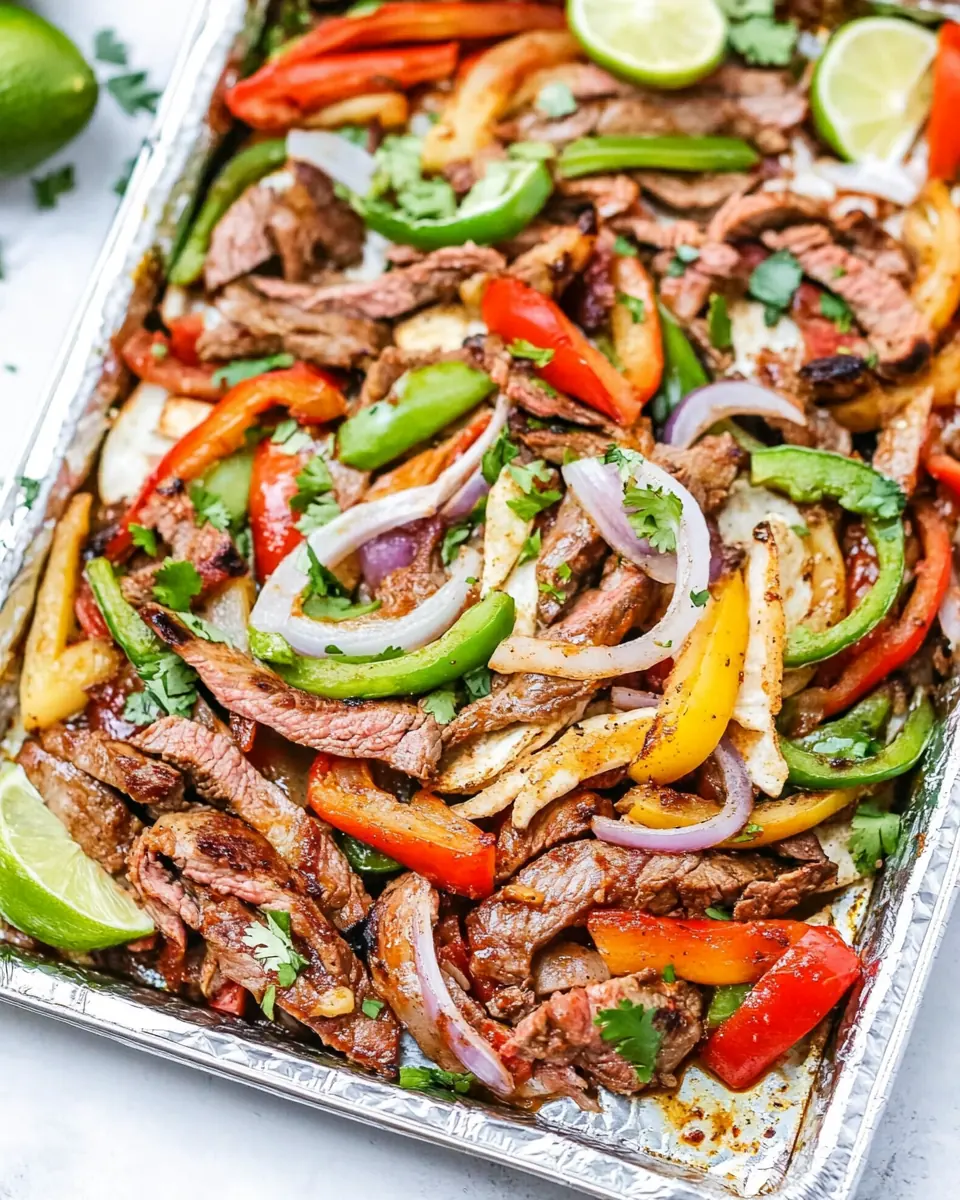
Sheet Pan Steak Fajitas
Ingredients
Equipment
Method
- Line two sheet pans with foil for easy cleanup (if desired), set aside. Arrange the oven racks so that one is in the upper third of the oven and one is in the lower third of the oven. Preheat oven to 475 degrees F. Wrap tortillas in a foil packet, set aside.: The kitchen will start smelling faintly of oil and metal as you prepare, and the foil makes cleanup nearly effortless, which is why I always use it. When you line the pans the surface glints, and you can hear the slight crinkle as you press it into place, a small ritual that makes the rest of the cooking feel orderly. This step matters because a clean pan surface prevents sticking and helps the vegetables and meat brown evenly. Common mistake to avoid, do not skip the foil if you want minimal cleanup, but also avoid folding too many layers in one spot or the foil can crease and tear under high heat.
- Stir together spices, salt and sugar for fajita seasoning. Slice onion and bell peppers, toss on a second sheet pan with oil and salt.: You will hear the click of the rack as you slide it into position, and the distance between racks creates two distinct heat zones that help the vegetables and steak cook at slightly different intensities. This staging is essential because peppers roast faster and benefit from a higher rack to brown, while the steak needs slightly less direct top heat to develop a crust without overcooking. A typical pitfall is leaving racks at default positions, which can cause uneven cooking, so take a moment to reposition them precisely.
- Cut the flank steak into 3 pieces to allow for more even cooking, pat dry with paper towels. Sprinkle fajita seasoning all over both sides of the meat. Arrange meat on sheet pan, set aside. When oven is preheated, place the sheet pan with the onions and peppers on the upper rack, bake for about 10 minutes.: As the oven heats you may notice a dry, warming scent and the kitchen thermostat will tick up; high heat is what gives the peppers their blistered edges and the steak a quick roast. This temperature drives Maillard reactions, creating complex browned flavors and attractive color. If your oven runs hot or cool, an oven thermometer will keep you accurate; common mistakes include relying on a preheated light alone, which can mean the oven has not reached the required temperature.
- Remove the sheet pan from the oven and toss vegetables with a spatula, arranging them in an even layer again. Return the peppers and onion to the LOWER rack, place the sheet pan with the flank steak on it on the upper rack. Bake for 8-10 minutes, until flank steak reaches about 135 degrees F internally (use a meat thermometer to check for doneness).: You will want a soft, warm bundle of tortillas at the end, and wrapping them in foil traps steam and protects them from drying out when you warm them in the turned off oven. The packet feels warm and slightly yielding after a few minutes in residual heat, producing pliable tortillas for easy folding. Avoid placing the packet directly on the bottom of an active oven or over high heat before the resting step, as they can crisp too much and lose their flexibility.
- Remove both sheets from oven, transfer meat to a cutting board and allow to rest for 5 minutes. Meanwhile, turn off oven and place foil wrapped tortillas inside to warm up.: The aroma of the spices intensifies as you blend them, releasing an earthy, smoky scent from the smoked paprika and cumin . This step allows the flavors to meld so you get even seasoning in every bite. I like to rub a pinch between my fingers to check freshness, and a dusty, potent scent means they're ready. A common error is not mixing them thoroughly, which can create pockets of overly salty or sweet bites.
- Slice meat against the grain into thin slices, then toss with the peppers and onions. Serve with warm tortillas, salsa, guacamole, limes and cilantro.: When you cut the bell peppers and onion , the sharp knife sound and the burst of fresh vegetable aroma signal the start of roasting. Tossing them with Olive Oil and a bit of salt helps the oil become a glossy sheen on each piece and promotes even browning. Make sure the pieces are similar size so they roast uniformly; a common mistake is uneven cuts that result in some pieces being underdone while others are charred.
- Cut the flank steak into 3 pieces to allow for more even cooking, pat dry with paper towels.: Patting the flank steak dry removes excess moisture so the surface can brown; you will see a matte finish when it is adequately dried. Cutting into three pieces helps the heat penetrate evenly and reduces overall cooking time. The why here is straightforward, moisture prevents a proper sear and leads to steaming, so take the time to dry. Avoid cutting into very small pieces which makes controlling doneness difficult.
- Sprinkle fajita seasoning all over both sides of the meat.: The seasoning will cling and form a thin, aromatic coat that begins to smell warm and savory as it sits on the meat. This crust is the flavor foundation, so be sure to press the mix gently into the surface for even coverage. Letting it sit briefly helps the flavors adhere, but avoid over-salting by measuring your quantities carefully to prevent the steak from tasting too salty after roasting.
- Arrange meat on sheet pan, set aside.: Placing the steak on the pan in a single layer prevents overlapping, which is key for consistent roasting. The steak should sit with room around each piece so hot air circulates and the exterior browns. If pieces are touching, they will steam and lose that desirable roast character, so space them out thoughtfully.
- When oven is preheated, place the sheet pan with the onions and peppers on the upper rack, bake for about 10 minutes.: As the vegetables hit the hot oven they begin to blister and the sugars start to caramelize, producing a sweet, roasted perfume. You will hear a faint sizzle as moisture escapes and see the edges take on little darker spots. This step is important because it jumpstarts caramelization before the steak goes in. A typical mistake is leaving them in too long on the high rack which can cause excessive charring instead of a balanced roast.
- Remove the sheet pan from the oven and toss vegetables with a spatula, arranging them in an even layer again.: Tossing loosens any pieces that stuck and redistributes juices so the next roast produces even coloring; you will notice a deeper, caramel aroma after the toss. Rearranging matters because it keeps pieces from clumping and ensures uniform exposure to heat. Avoid overcrowding when you return them to the oven, as that will cause steaming rather than browning.
- Return the peppers and onion to the LOWER rack, place the sheet pan with the flank steak on it on the upper rack.: Moving the steak to the upper rack places it closer to the oven's hottest element so it can quickly develop a browned exterior while the peppers finish below. You may hear the faint clink as you slide the pan in and then the kitchen will fill with a robust roast smell as the meat and vegetables progress together. This arrangement matters to synchronize cooking times; a frequent error is putting both pans on the same rack which can result in uneven doneness.
- Bake for 8-10 minutes, until flank steak reaches about 135 degrees F internally (use a meat thermometer to check for doneness).: You will notice juices start to bead on the surface of the steak and the edges take on a darker, roasted color; that is your visual cue. Using a thermometer is the most reliable way to hit medium rare at about 135 degrees F, preventing overcooking. This timing and temperature preserve tenderness; common mistakes include guessing doneness by time alone without checking internal temperature.
- Remove both sheets from oven, transfer meat to a cutting board and allow to rest for 5 minutes.: Resting lets the juices redistribute, producing a juicier slice, and you will see the liquid settle rather than running out when you cut. The board will catch any juices and the meat will relax and become easier to slice thinly. Avoid cutting too soon, which causes juices to pour out and leaves the meat drier.
- Meanwhile, turn off oven and place foil wrapped tortillas inside to warm up.: The residual oven warmth gently steams the tortillas in the foil packet, making them soft and pliable. After a few minutes they will feel warm to the touch and flexible for wrapping. Do not leave the tortillas in too long while the oven is still hot, as they can become overly crisp and lose their soft texture.
- Slice meat against the grain into thin slices, then toss with the peppers and onions.: The sound of the knife through rested steak is clean and effortless when you slice against the grain, and the resulting ribbons of meat are tender in every bite. Tossing them with the hot vegetables helps the flavors marry and distributes juices across the pan. The reason for slicing against the grain is to shorten muscle fibers for a softer chew; slicing with the grain will make each bite tougher and stringy.
- Serve with warm tortillas, salsa, guacamole, limes and cilantro.: The final plate should be a riot of color and aroma, with warm tortillas wrapped around savory flank steak and roasted peppers, brightened by lime and herbaceous cilantro . Serve immediately so the textures remain contrasty and fresh. A common mistake is assembling too early and letting tortillas steam, which makes them soggy instead of pliable.
Notes
- Serve family style by placing the sliced meat and roasted vegetables on a large platter so everyone can assemble their own fajitas, this makes dinner feel communal and relaxed.
- Make it milder by reducing the chili powder to one teaspoon if you prefer less heat, while keeping the other spices for full flavor without the kick.
- Boost char by briefly broiling the peppers and steak for one to two minutes at the end, watching closely so they do not burn, this adds extra smoky flavor.
- Swap tortillas for warmed corn tortillas for a slightly firmer texture and earthier flavor, though keep the specified eight inch size for balance.
- Turn leftovers into bowls by layering warm rice or greens with reheated slices of steak and roasted peppers, drizzle with lime and salsa for an easy next day meal.
- Add creaminess with a scoop of mashed avocado or a dollop of plain yogurt on each fajita to temper the spices and add silkiness.