Pride Swiss Roll
Pride Swiss Roll began as a bright experiment on a rainy afternoon when I wanted a dessert that looked like a celebration and tasted like a tender memory.
I remember mixing bowls lined up like little soldiers, each bowl a different hue, and feeling that childish giddiness return as I folded airy batter into colors. The first bite was worth the fuss, soft sponge giving way to cloudlike whipped cream, and I knew this was a recipe I would reach for whenever I wanted a showstopper that still felt homey.
Over time I’ve learned how to coax that sponge into being flexible enough to roll without cracking, and how to keep the filling light so it never overpowers the gentle cake. Friends have asked for the recipe after seeing it at brunch, and I always tell them the same thing, that patience at the rolling stage is what makes the cake sing. This is the kind of dessert you can make with kids piping the stripes or with a friend who loves color, and it rewards small, careful moves with big applause.
Recipe Snapshot
44 mins
30 mins
14 mins
Medium
300 kcal
American
Gluten-Free, Low FODMAP
Desserts
Stand mixer, Whisk attachment, 13 x 9 inch rimmed baking sheet, Parchment paper, Pastry bags, Wire rack
Why This Pride Swiss Roll Shines
Vibrant and Celebratory
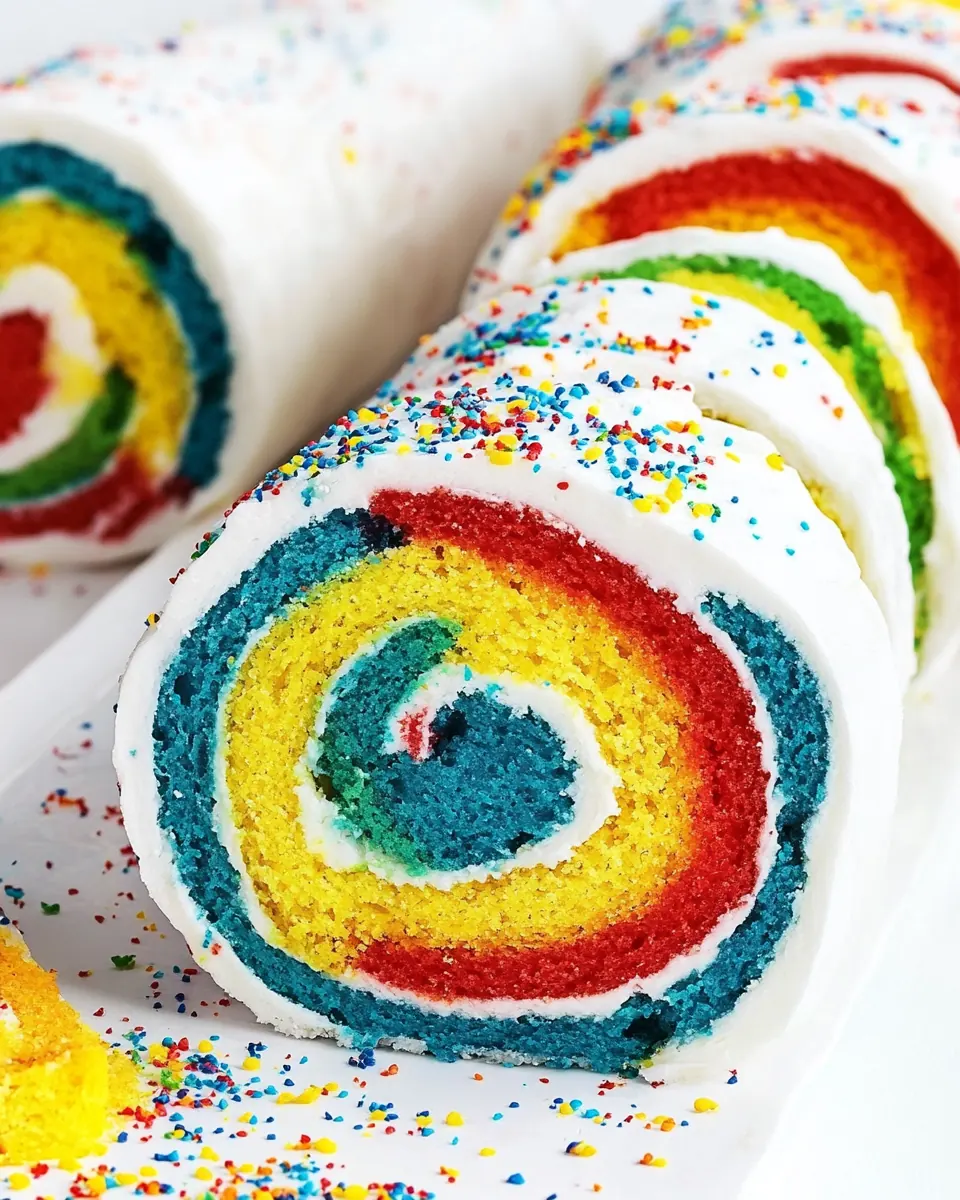
I love how Pride Swiss Roll brings color to the table in a way most desserts don’t. Each ribbon of tinted batter creates a visual story, and when you slice the roll the cross section is an immediate conversation starter. The technique is fun, and I always find that people eat with their eyes first, so the rainbow stripes make it perfect for gatherings where you want one dish to steal the show.
Light Yet Luxurious Texture
The sponge in this recipe is featherlight, and the whipped cream filling stays airy without weighing the cake down. I appreciate that the cake balances silkiness and structure, so the roll holds its shape while still feeling tender on the tongue. When I make this, I aim for a sponge that springs back and a filling whipped to medium stiff peaks, because that contrast is everything.
Approachable Technique
Don’t be intimidated by the piping or the rolling, I promise it is approachable. The instructions break the steps into manageable pieces, and a little practice makes perfect. I often demonstrate piping the stripes and recommend chilling the rolled cake briefly to set the shape, which really helps if you are worried about cracks. You learn quickly with each attempt and the payoff is worth it.
Customizable and Inclusive
This cake is incredibly flexible. You can choose how bold the colors are, or keep them pastel for a softer presentation. Because the ingredients are straightforward, the recipe fits into many menus, from brunch to celebratory dessert spreads. I often adapt the shade intensity based on occasion, but the method remains the same and reliably produces a stunning result.
Great for Sharing and Rituals
Finally, I adore how Pride Swiss Roll turns baking into a ritual. Whether you are making it with a partner, kids, or as a solo project, each step invites attention and care. Rolling the cake, cutting neat slices, and arranging them on a platter becomes part of the joy. I keep coming back to this recipe when I want a dessert that feels like a small ceremony.
What You Need for Pride Swiss Roll
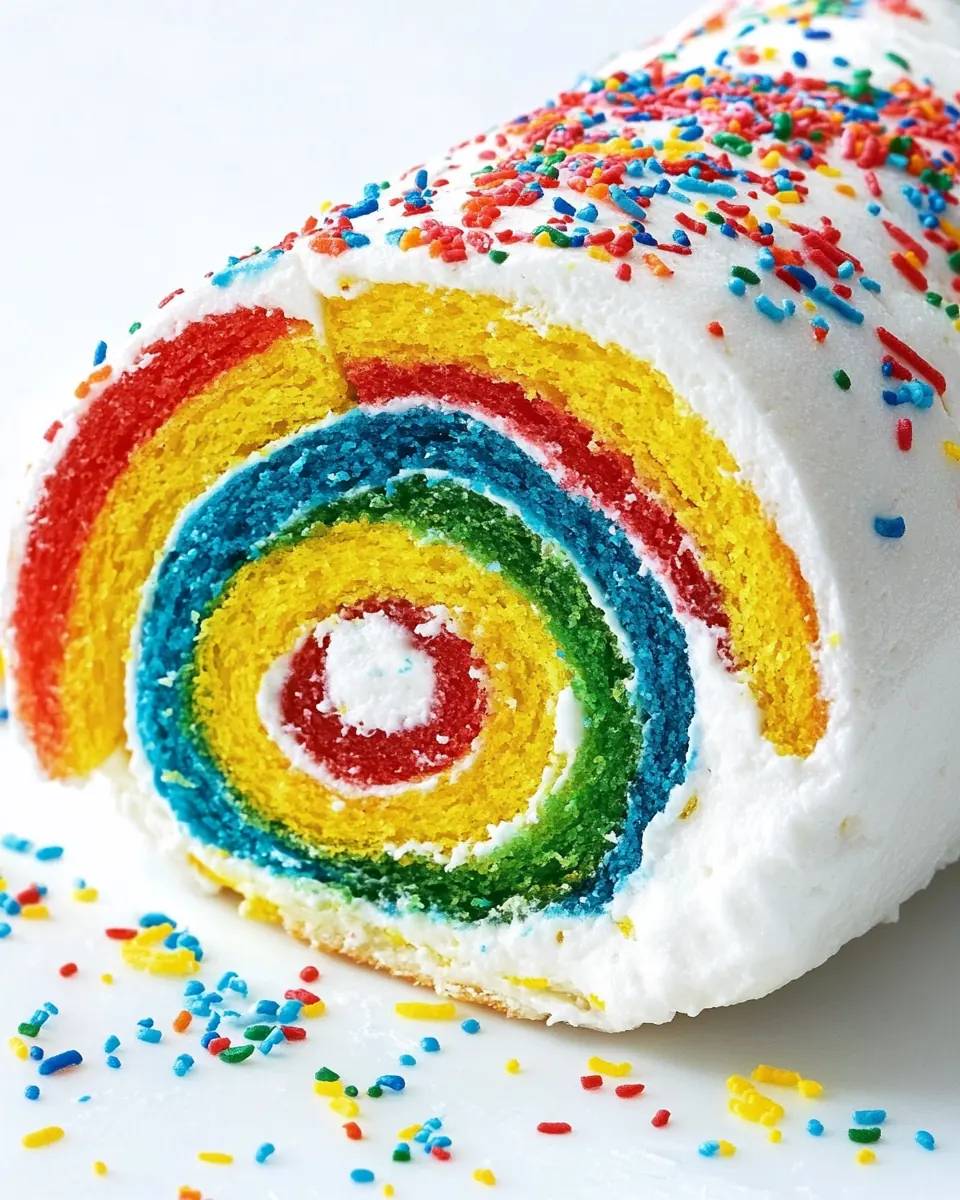
These ingredients are chosen to create a delicate, flexible sponge and a stable, airy filling. The eggs are the primary leavening source, giving lift and structure, while the small amount of all purpose flour keeps the crumb tender. Granulated sugar is split to stabilize both the whites and yolks, and a bit of melted unsalted butter with heavy whipping cream adds richness without making the cake heavy. The final whipped cream filling and a dash of vanilla extract bring the gentle, sweet balance that lets the colored layers sing.
- 5 large eggs (250 grams), separated and room temperature: Beat egg whites and yolks separately to provide structure and leavening; yolks add richness while whites incorporate air for a light sponge. Maintain room temperature for easier whipping and stable volume when folded together for the Swiss roll batter.
- cup (134 grams) granulated sugar, divided: Whisk granulated sugar into both the egg yolks and egg whites as directed to sweeten and stabilize; divided sugar helps create a glossy meringue and tender cake crumb. Adjust quantity carefully to balance sweetness and whipping performance without collapsing the foam.
- 2 tablespoons (28 grams) unsalted butter, melted and cooled: Melted and cooled unsalted butter enriches the batter with tenderizing fat and helps create a moist crumb; cooling prevents cooking the eggs when combined. Use unsalted to control overall saltiness and incorporate gently for an even texture.
- 2 tablespoons (28 grams) heavy whipping cream, room temperature: Add heavy whipping cream at room temperature to loosen the batter and contribute richness and moisture; it helps create a smooth, pliable sponge ideal for rolling. Ensure it is not cold to avoid firming the butter or disrupting emulsification.
- 1/2 cup (63 grams) all-purpose flour: Sift all-purpose flour to provide structure and body to the sponge; it forms the gluten network that supports the air whipped into the eggs. Measure precisely and fold gently to avoid deflating the batter while maintaining a tender cake.
- Assorted gel or paste food coloring: Tint batter portions with assorted gel or paste food coloring to create vibrant, concentrated colors without thinning the batter. Use small amounts to reach desired hues and gel/paste type to avoid adding excess liquid that could affect texture.
- Confectioners’ sugar, for dusting: Dust confectioners’ sugar over the cooled roll for a delicate finish and light sweetness; it also helps prevent sticking when rolling and adds visual contrast. Use a fine mesh sieve for an even, snow-like coating and to avoid clumps.
- 1 cup (240 grams) cold heavy whipping cream: Chill heavy whipping cream thoroughly before whipping to stabilize peaks and create a fluffy filling; cold cream whips faster and holds structure better when sweetened. Use short, controlled whipping to achieve the right consistency for spreading without breaking the roll.
- 1 teaspoon (7 grams) confectioners’ sugar: Sweeten whipped cream with confectioners’ sugar to stabilize and add smooth sweetness; the fine sugar dissolves quickly preventing grittiness. Incorporate gradually while whipping to reach a balanced taste and stable texture suitable for filling.
- 1 teaspoon (4 grams) vanilla extract: Flavor the whipped filling with vanilla extract to add aromatic depth and round sweetness; it enhances the creaminess without overpowering the colors or other components. Add toward the end of whipping to evenly distribute the flavor.
Putting Together Pride Swiss Roll

Getting this cake right feels like choreography, with each movement setting up the next. Below I expand every step so you can follow along with confidence, focusing on sensory cues and small troubleshooting notes that make the difference between a stressed bake and a proud slice on the table.
- Preheat oven to 325°F (170°C). Line a 13 x 9-inch rimmed baking sheet with parchment paper.: The oven should be fully heated so the sponge rises evenly, creating a uniform surface that will accept piping without sinking. You will sense steady warmth once the oven reaches temperature, and a consistent preheat prevents underbaked centers. A common mistake is sliding the pan in too early, which can cause flat spots or uneven baking. Ensure the parchment fits snugly, and press it into corners so batter spreads evenly without pooling.
- For cake: In the bowl of a stand mixer fitted with the whisk attachment, beat egg whites on high speed until doubled in size, 3 to 4 minutes. With mixer at low speed, gradually add ? cup (67 grams) granulated sugar. Increase mixer speed to medium-high, and beat until thick and glossy, 1 to 2 minutes. Transfer egg white mixture to a medium bowl.: In the bowl of a stand mixer fitted with the whisk attachment, beat egg whites on high speed until doubled in size, 3 to 4 minutes. With mixer at low speed, gradually add ? cup (67 grams) granulated sugar. Increase mixer speed to medium-high, and beat until thick and glossy, 1 to 2 minutes. Transfer egg white mixture to a medium bowl. : As you whip the egg whites you will hear the foam transform from liquid to a fast, airy roar, and visually it will change from glossy to sheen with peaks that hold. Adding sugar slowly melts into the foam, stabilizing it; if you dump sugar in too quickly the foam can collapse and become grainy. When done the whites should form glossy peaks and hold a ribbon-like trail from the whisk. Avoid any yolk contamination, which will prevent full volume, and use a clean, dry bowl for best lift.
- Return mixer bowl and whisk attachment to stand mixer. Add egg yolks and remaining ? cup (67 grams) granulated sugar; beat at high speed until thick and pale in color, 3 to 4 minutes. Gently fold in egg white mixture just until a few white streaks remain.: The yolk and sugar mixture will turn pale and velvety, and you should notice a slight ribbon when the whisk lifts through it, signaling proper aeration. Folding in the whites preserves trapped air that yields a delicate sponge. Use a gentle turning motion to combine, and stop while a few white streaks remain so you don’t deflate the batter. Over-folding will collapse the volume and produce a denser cake, which is a frequent slip when trying to fully homogenize the mix.
- In a small bowl, stir together melted butter and cream. Gently fold into batter just until combined. Sift flour onto batter; gently fold in just until no white streaks remain.: The butter and cream add silk and flavor, so when folded in the batter will feel slightly looser but still light. Sifting the all purpose flour over the batter and folding preserves the aeration and prevents lumps. You should see the batter shine slightly from the butter, and the scent will hint at richness. Be mindful not to overmix here, as the flour will develop gluten if worked too long, leading to toughness. If you see the batter deflate dramatically, you have likely overfolded; stop immediately and proceed to coloring.
- Divide batter among 6 small bowls (about 83 grams each); tint batter with food coloring as desired. Transfer each color of batter to a separate pastry bag, and cut a 1/2-inch opening in each tip. Pipe each color of batter into prepared pan in a row.: When you portion and color the batter you will feel its pillowy texture in the spoon; use gels or pastes so the batter stays thick and holds stripes. As you pipe rows across the pan you will see clean edges and bright color contrasts. Keep the piping steady and the flow consistent, because uneven pressure creates gaps or varying stripe widths. If colors bleed into each other, you may have thinned the batter too much or piped too close together; give yourself small spacing and a light hand to keep patterns distinct.
- Bake until cake springs back when lightly pressed in center, 10 to 14 minutes. Let cool in pan on a wire rack for 10 minutes.: During baking you will notice the surface go from glossy to matte and the edges pull slightly from the pan, with a gentle aroma of baked egg and butter. The spring back test is crucial, press lightly and the center should rebound; this tells you that the structure is set but still tender. Underbaking will cause the cake to collapse when rolled, while overbaking makes it dry and prone to cracking. Keep a close eye in the last minutes and err on the side of a slightly moist center for pliability.
- Lightly dust confectioners’ sugar onto cake; top with a clean kitchen towel. Place a cutting board on towel, and carefully invert cake onto towel. Gently remove pan and parchment paper. Starting at one long side, roll up cake with towel into a log. Place, seam side down, on a wire rack, and let cool completely.: Dusting with confectioners’ sugar prevents sticking and adds a delicate sweetness. The inversion will feel delicate as you lift the pan, and you should move slowly to avoid tearing. Rolling warm helps train the sponge to take shape, and the towel gives gentle resistance so the cake rolls smoothly. If you try to roll when it is too hot or if you peel parchment aggressively, the cake can tear. Let the rolled cake cool fully so it holds the shape when filled later.
- For filling: In the bowl of a stand mixer fitted with the whisk attachment, beat cold cream, confectioners’ sugar, and vanilla at medium speed until medium-stiff peaks form.: In the bowl of a stand mixer fitted with the whisk attachment, beat cold cream, confectioners’ sugar, and vanilla at medium speed until medium-stiff peaks form. : Cold heavy whipping cream whips into a pillowy, billowing filling, and you will hear the mixer change pitch as the cream thickens. The mixture should cling to the whisk in soft, defined peaks that hold shape but still yield slightly at the tip. Over-whipping will make the cream grainy and eventually turn it into butter, so stop at medium-stiff peaks. If the cream seems slow to thicken, chill the bowl and continue; warmth is the most common reason for slow whipping.
- Gently unroll cooled cake; spread whipped cream onto cake, leaving a 1/2-border on long side that is bottom seam. Gently reroll cake without towel, and place, seam side down, on a serving plate. Refrigerate until cake is chilled, about 1 hour, before serving. Best served same day. Refrigerate in an airtight container for up to 1 day.: When you unroll the cooled sponge you will see the rainbow spirals laid bare, and the surface should feel dry to the touch from the earlier dusting. Spreading the whipped filling creates a soft cushion that will lift each slice, and leaving a small border prevents filling from spilling when you roll. Reroll with gentle pressure so the shape remains tight but not crushed. Chilling helps the cake set and makes slicing clean. A common error is filling too heavily, which will push out at the seam and make a messy presentation; keep the layer modest and even.
Customization Ideas
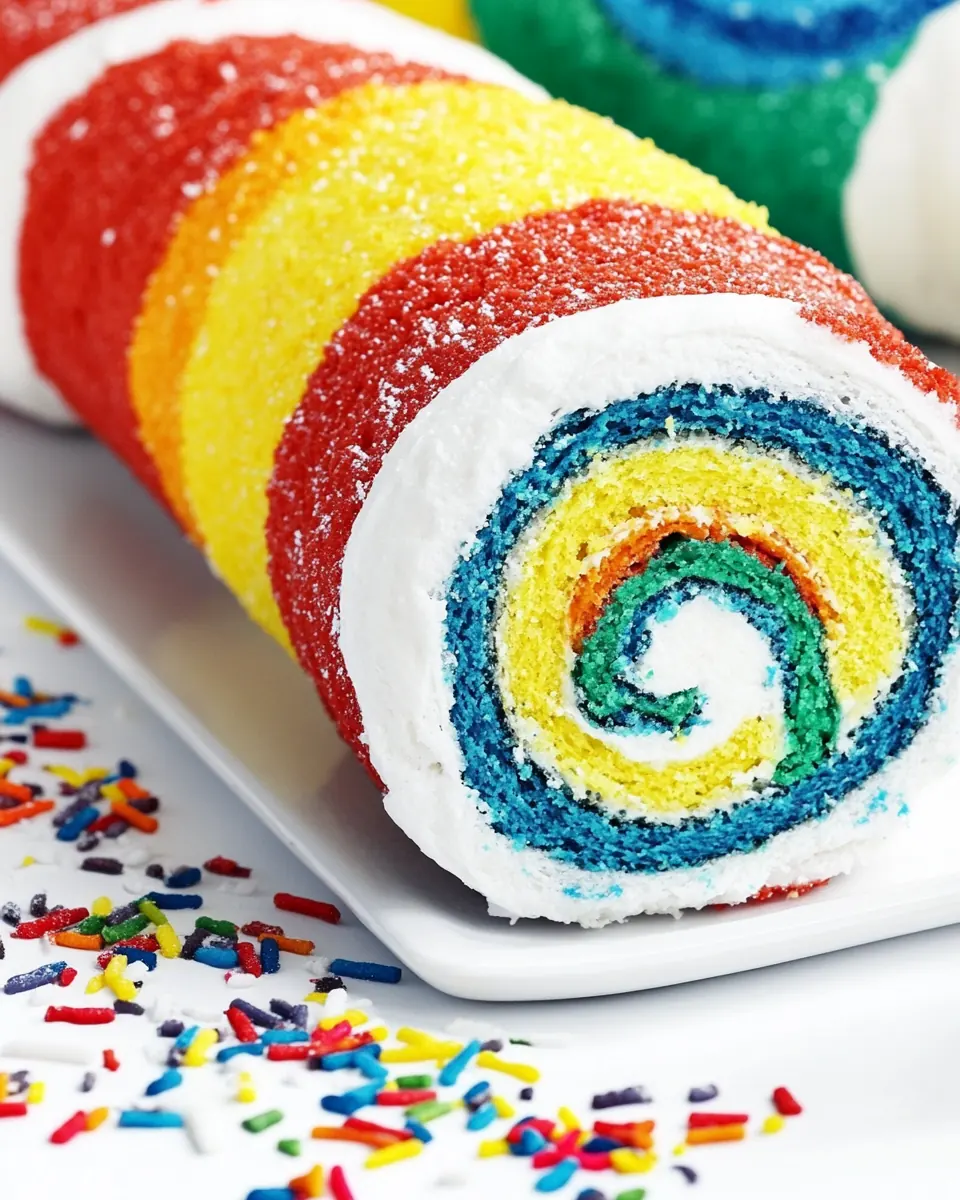
If you want to make this cake your own, there are many small shifts that change the look and feel without altering the structure. Below are practical, tested ideas to tweak color intensity, filling texture, and presentation, each explained so you can adapt intentionally.
- Adjust color intensity by adding gel or paste food coloring a drop at a time until you reach the desired hue, keeping batter consistency intact.
- Make pastel tones by using less gel coloring and mixing more gently so the shades remain soft and blended rather than saturated.
- Stabilize the whipped filling by ensuring the bowl and beaters are cold and stopping at medium-stiff peaks to keep the cream light but sliceable.
- Create alternate patterns by piping dots, chevrons, or concentric rings instead of straight rows, testing one pattern on a small strip first.
- Prep ahead by making the sponge and rolling it the day before, then refrigerating; fill and slice on serving day for freshest texture.
Accompaniments for Pride Swiss Roll
This roll pairs beautifully with light accompaniments that complement its airy texture and sweet cream. I like to offer simple additions that enhance the presentation and eating experience without competing with the striped spectacle. Below are serving ideas, storage suggestions, and occasion notes laid out so you can choose what fits your moment.
- Serve with fresh berries such as raspberries or strawberries for a bright, slightly tart counterpoint to the sweet whipped cream, placing a small pile beside each slice.
- Light dusting of confectioners’ sugar right before serving elevates the look and adds a whisper of extra sweetness without weighing the cake down.
- Offer tea or coffee as companion beverages, especially delicate teas that will not overpower the sponge’s subtle flavor; this cake shines at brunch or afternoon gatherings.
- Storage for short term is best in an airtight container in the refrigerator, where the roll keeps its texture for up to one day; avoid freezing as the whipped filling can become watery when thawed.
- Occasions like birthdays, Pride celebrations, or baby showers benefit from the visual impact of the roll; the colorful slices create a festive table centerpiece.
- Plating suggestion place slices seam side down and slightly angled on a long platter to showcase the spiral, adding minimal garnishes so the stripes remain the focal point.
FAQ
Conclusion
Pride Swiss Roll stands out because it combines striking visuals with a delicate, tender sponge and light whipped cream that is simply irresistible. I encourage you to give it a try, even if piping and rolling seem daunting at first. With patient folding, careful whipping, and a gentle hand while rolling, you will end up with neat slices that look like a celebration and taste like a cozy, special treat. Share it with friends or keep it as a lovely centerpiece for a brunch, and enjoy the smiles it brings.
Pride Swiss Roll
Ingredients
Equipment
Method
- Preheat oven to 325°F (170°C). Line a 13 x 9-inch rimmed baking sheet with parchment paper.: The oven should be fully heated so the sponge rises evenly, creating a uniform surface that will accept piping without sinking. You will sense steady warmth once the oven reaches temperature, and a consistent preheat prevents underbaked centers. A common mistake is sliding the pan in too early, which can cause flat spots or uneven baking. Ensure the parchment fits snugly, and press it into corners so batter spreads evenly without pooling.
- For cake: In the bowl of a stand mixer fitted with the whisk attachment, beat egg whites on high speed until doubled in size, 3 to 4 minutes. With mixer at low speed, gradually add ? cup (67 grams) granulated sugar. Increase mixer speed to medium-high, and beat until thick and glossy, 1 to 2 minutes. Transfer egg white mixture to a medium bowl.: In the bowl of a stand mixer fitted with the whisk attachment, beat egg whites on high speed until doubled in size, 3 to 4 minutes. With mixer at low speed, gradually add ? cup (67 grams) granulated sugar. Increase mixer speed to medium-high, and beat until thick and glossy, 1 to 2 minutes. Transfer egg white mixture to a medium bowl. : As you whip the egg whites you will hear the foam transform from liquid to a fast, airy roar, and visually it will change from glossy to sheen with peaks that hold. Adding sugar slowly melts into the foam, stabilizing it; if you dump sugar in too quickly the foam can collapse and become grainy. When done the whites should form glossy peaks and hold a ribbon-like trail from the whisk. Avoid any yolk contamination, which will prevent full volume, and use a clean, dry bowl for best lift.
- Return mixer bowl and whisk attachment to stand mixer. Add egg yolks and remaining ? cup (67 grams) granulated sugar; beat at high speed until thick and pale in color, 3 to 4 minutes. Gently fold in egg white mixture just until a few white streaks remain.: The yolk and sugar mixture will turn pale and velvety, and you should notice a slight ribbon when the whisk lifts through it, signaling proper aeration. Folding in the whites preserves trapped air that yields a delicate sponge. Use a gentle turning motion to combine, and stop while a few white streaks remain so you don’t deflate the batter. Over-folding will collapse the volume and produce a denser cake, which is a frequent slip when trying to fully homogenize the mix.
- In a small bowl, stir together melted butter and cream. Gently fold into batter just until combined. Sift flour onto batter; gently fold in just until no white streaks remain.: The butter and cream add silk and flavor, so when folded in the batter will feel slightly looser but still light. Sifting the all purpose flour over the batter and folding preserves the aeration and prevents lumps. You should see the batter shine slightly from the butter, and the scent will hint at richness. Be mindful not to overmix here, as the flour will develop gluten if worked too long, leading to toughness. If you see the batter deflate dramatically, you have likely overfolded; stop immediately and proceed to coloring.
- Divide batter among 6 small bowls (about 83 grams each); tint batter with food coloring as desired. Transfer each color of batter to a separate pastry bag, and cut a 1/2-inch opening in each tip. Pipe each color of batter into prepared pan in a row.: When you portion and color the batter you will feel its pillowy texture in the spoon; use gels or pastes so the batter stays thick and holds stripes. As you pipe rows across the pan you will see clean edges and bright color contrasts. Keep the piping steady and the flow consistent, because uneven pressure creates gaps or varying stripe widths. If colors bleed into each other, you may have thinned the batter too much or piped too close together; give yourself small spacing and a light hand to keep patterns distinct.
- Bake until cake springs back when lightly pressed in center, 10 to 14 minutes. Let cool in pan on a wire rack for 10 minutes.: During baking you will notice the surface go from glossy to matte and the edges pull slightly from the pan, with a gentle aroma of baked egg and butter. The spring back test is crucial, press lightly and the center should rebound; this tells you that the structure is set but still tender. Underbaking will cause the cake to collapse when rolled, while overbaking makes it dry and prone to cracking. Keep a close eye in the last minutes and err on the side of a slightly moist center for pliability.
- Lightly dust confectioners’ sugar onto cake; top with a clean kitchen towel. Place a cutting board on towel, and carefully invert cake onto towel. Gently remove pan and parchment paper. Starting at one long side, roll up cake with towel into a log. Place, seam side down, on a wire rack, and let cool completely.: Dusting with confectioners’ sugar prevents sticking and adds a delicate sweetness. The inversion will feel delicate as you lift the pan, and you should move slowly to avoid tearing. Rolling warm helps train the sponge to take shape, and the towel gives gentle resistance so the cake rolls smoothly. If you try to roll when it is too hot or if you peel parchment aggressively, the cake can tear. Let the rolled cake cool fully so it holds the shape when filled later.
- For filling: In the bowl of a stand mixer fitted with the whisk attachment, beat cold cream, confectioners’ sugar, and vanilla at medium speed until medium-stiff peaks form.: In the bowl of a stand mixer fitted with the whisk attachment, beat cold cream, confectioners’ sugar, and vanilla at medium speed until medium-stiff peaks form. : Cold heavy whipping cream whips into a pillowy, billowing filling, and you will hear the mixer change pitch as the cream thickens. The mixture should cling to the whisk in soft, defined peaks that hold shape but still yield slightly at the tip. Over-whipping will make the cream grainy and eventually turn it into butter, so stop at medium-stiff peaks. If the cream seems slow to thicken, chill the bowl and continue; warmth is the most common reason for slow whipping.
- Gently unroll cooled cake; spread whipped cream onto cake, leaving a 1/2-border on long side that is bottom seam. Gently reroll cake without towel, and place, seam side down, on a serving plate. Refrigerate until cake is chilled, about 1 hour, before serving. Best served same day. Refrigerate in an airtight container for up to 1 day.: When you unroll the cooled sponge you will see the rainbow spirals laid bare, and the surface should feel dry to the touch from the earlier dusting. Spreading the whipped filling creates a soft cushion that will lift each slice, and leaving a small border prevents filling from spilling when you roll. Reroll with gentle pressure so the shape remains tight but not crushed. Chilling helps the cake set and makes slicing clean. A common error is filling too heavily, which will push out at the seam and make a messy presentation; keep the layer modest and even.
Notes
- Adjust color intensity by adding gel or paste food coloring a drop at a time until you reach the desired hue, keeping batter consistency intact.
- Make pastel tones by using less gel coloring and mixing more gently so the shades remain soft and blended rather than saturated.
- Stabilize the whipped filling by ensuring the bowl and beaters are cold and stopping at medium-stiff peaks to keep the cream light but sliceable.
- Create alternate patterns by piping dots, chevrons, or concentric rings instead of straight rows, testing one pattern on a small strip first.
- Prep ahead by making the sponge and rolling it the day before, then refrigerating; fill and slice on serving day for freshest texture.